


Likes
Comments
Share


@WhiteWidow
Follow
Perfectly healthy not a single sign of defficiency or burning / overfeeding.
First day of week 2 of flowering, next feeding i will add flowering nutes.

Likes
3
Share

@PapaTerps
Follow
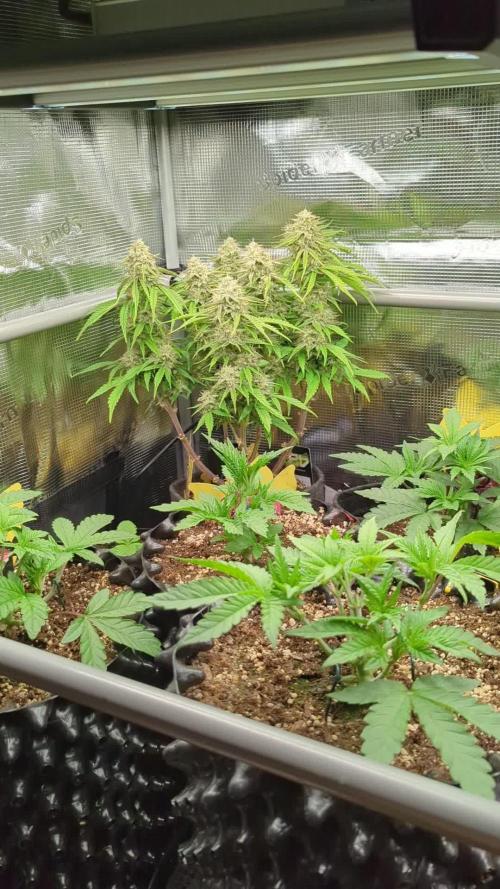
AlienZ Automatic - Greenhouse Seed Co.
Day 82 - watered with 2L of RO tap water, mixed with the defined nutrients in order and then pH'd to 6.3. She's now in week 7 of bloom, so this will be her final week with full nutrients 🙌🏻 She has bulked up well this week, and her flower has started to mature as well as her aroma, which is fruity and citrusy 👌🏻 I've removed a couple of her fan leaves to improve light penetration, but nothing major - that'll all be saved for her final week 👍🏻

Likes
35
Share


@valiotoro
Follow
Hello everyone 😎
Week 7 of flower for the Gorilla Cookies auto from Fast Buds 💥🍪
She grew fast with a beautiful green color,for the nutrient 4ml/L terra bloom & 1ml/L power buds & Green sensation 1ml/L from Plagron
Weight is coming 🦍
Spider Farmer SE-7000 100%
Have a nice day 😋

Processing
Likes
36
Share


@Lordshiva83
Follow
Olá Companheiros de cultivo.
Tropicanna Poison destaca-se das outras duas 🤩, estou contente com as minhas meninas, estão de boa saúde, estão no fim da primeira semana de floração, estão a começar a esticar. Grato 🌱🌲🍀


Likes
2
Share


@The_Doctor_Green
Follow
Entrando en la semana 8 de floración, según el banco son 60 días de floracion pero guiándome por los tricomas, y los peritos se nota que la maduración se habrá retrasado por la temperatura del indoor.

Likes
265
Share


@Budz_Bunny
Follow
Grow report week 4: The training and the topping
Hello dear growers and groweresses,
it’s time for an update on my grow. My plants have completed the fourth week and have grown further. But they have also experienced some measures that I will tell you about.
The training
This week I continued the low-stress training (LST) and tied the plants further. The LST is a method to gently bend and tie the plants to improve the light distribution and air circulation. The goal is to keep the plants low and wide and promote more side shoots and flower heads.
The topping
In addition to the LST, I also applied the topping to make the plants even bushier. The topping is a method to cut off the top of the plant to interrupt the apical dominance and produce more main shoots. The goal is to branch the plant and produce more flowers.
I performed the topping as follows:
I watered the plants well to reduce the stress.
I cut off the top of the plant above the third or fourth node to create two new shoots.
I observed the plants and looked for signs of stress or shock.
The topping also worked well and the plants recovered quickly. They formed two new main shoots that will later become large colas. They also put more energy into the side branches, which will also carry more flowers.
The fertilization
I also fertilized for the first time this week, although I actually wanted to start late with it. I used the Fish-Mix from BioBizz to give the plants more nitrogen. Fish-Mix is an organic liquid fertilizer that consists of fish parts from the North Sea and organic sugar beet extract. It stimulates the biological activity of the soil and the plant growth.
The Fish-Mix did well for the plants and they showed more growth. They formed more leaves and shoots and became greener and healthier. They also absorbed more nitrogen and produced more proteins.
The outlook
I am very satisfied with the result of the fourth week. My plants have been well trained and topped and have shown great growth. I am very curious about the next week, where I have to activate my setup completely to give the plants their final place and pots. It will be exciting for me to see if my system works as I wished.
I will continue to observe the plants and respond to their needs. I will adjust the light intensity, the fertilization and the training to achieve the best results.
Thanks for stopping by and see you next week! 😊

Processing
Likes
6
Share


@Jabberwolky
Follow
The Ladies are going great so far this week the buds are comming in really nice. the smell is wonderfull
Kind soil as a base media and roots organic on the top.
only di water
Its really nice not having to worry about the ppms and ph of water and this n that ...
so far this grow is just want i need
nite time temp dropped below 58 a clp times on me .. i hope it done hurt the outcome to much
Likes
24
Share


@Finniegrow
Follow
Vegetation: To keep temperature and moisture on optimal levels at around 23°C / 65% I'm using two mechanical timers.
- 24/7 on: Fans and water pumps (+Ventilation after 3.11.)
- Timer 1: Lights and Humidifier
18h on / 6h off
- Timer 2 (BROKEN 3.11.): Ventilation
18h (15min on / 15min off) / 6h off
NOTES:
Everything looks good and the roots have appeared from almost every (11/13) rock-wool cube.
From now on I'll mostly water the plants from bottom by adding the wanted amount of nutrient solution on a plate, and then placing the plant on top of for ~15seconds
This week I'm also starting to prepare the hydroponic systems (2x NFT-GT90, and 1x EBB-flow I think) and stronger nutrient solution since my plants are becoming ready to be transferred. Spreader-mat is the base of my plants when I have transferred them in to the hydroponic systems. DO NOT place more than one layer of the spreader-mat as it is not meant to be used like that! As you're cutting the mat for NFT's, be aware to have some extra for your peace to reach nutrient solution below the tray. That way you won't get noise from water dropping when systems are turned on.
Day 15 (1.11.)
Day 16 (2.11.)
First watering with a bit stronger nutrient-solution (~ EC 0,6 / pH 5,9) than before, starting with 50ml/plant and watering once from above. Slowly increasing EC to 0,8.
I cleaned and assembled 2 out of 3 hydroponic-systems which I'm going to use. I'll do the same also to the last system, but it currently has my plants on top of it so I'm going to do it later.
I want to make sure that my plants have built healthy and big enough root system before transplanting to hydroponics. I'm waiting for the rock-wool cubes to be bursting of roots so they won't drown on their first day in hydro. Also, as the plants are bigger before the transplant, I'm able to fill my nutrient-solution tanks full with correct strength nutrient-solution for Mid-Vegetation from the start, therefore no need for that much adjusting later on.
Day 17 (3.11.)
I noticed my other timer which controls the lights had stopped working... The lights were on when they shouldn't have been, I noticed it an hour after they were supposed to turn off. I think I caught up to it early, but it may have been on for maximum of 2 days straight. No worries there since on vegetation-phase the plants don't necessarily need any sleep (Even though you should avoid quick changes like that!).
Roots have appeared from the bottom of every cube and plants are looking pretty healthy. I think they are almost ready for hydroponics.
Day 18 (4.11.)
Few plants are showing symptoms of nutrient deficiences or some sort of sickness, not certain what exactly. I'll be keeping an eye on it. I'll be transferring in to hydroponic systems in maybe a week, so I don't want to stress my plants more than what's necessary.
Increased my solution strength to 0,9 EC with a bit more Cal-Mag than before, and watered the plants for 50-150ml each plant depending on weight and size. I'll be slowly increasing the strength by around 50% during upcoming week. Thanks for tips!
Day 19 (5.11.)
Day 20 (6.11.)
Plants are recovering well from deficiences and I just transferred all of them to hydroponics. I don't have the water pumps on for 24/7 just yet, at this point I water them a couple times a day by keeping the pumps on for somewhere around 15min at a time. Lights are now set to 60% and I also added a tower fan to circulate the air and shake the plants.
Day 21 (7.11.)
Lights are now set to 70% since the Led's and plants are spreaded wider in the tent than before. Distance to plants stays the same at 75cm.
Likes
32
Share


@PEAKYPLANTERS
Follow
Hello everyone, fellow gardeners! Welcome back to a new harvest in Peaky Gardens!
Growing this genetics was fun and easy , one of the three STRAIN has reached its peak and I can't wait to try it....it shines like a diamond! it is so beautiful that I thought of getting a gem to have it set and put on my finger😜
Stay updated
Likes
9
Share


@ProlificGrowth410
Follow
She almost died before she shed her shell and now she the star of the tent..this is my first grow btw so I'm looking forward to my first harvest.

Likes
3
Share


@agustinnnv
Follow
Buenos días, les presento a Capri. Un experimento que quise probar, es una regular que hice vegetar un mes y la pasé a florar el 15 de marzo, queriendo imitar el proceso de una automática para comparar cantidad y calidad a la hora de la cosecha final. Cometí el error de ponerla en una maceta de 7.5L" definitiva". A los 45 días de floración me pedía trasplante a gritos. Podía notar que los cogollos se estancaron y las hojas se volvían amarillas. La pasé a una maceta Air Por de 10L a los 50 días de floración. Hoy por hoy (30/5) se encuentra más asentada, recuperando los tonos verdes y con 63 días de floración. Al parecer tiene predominancia sativa por lo que calculo que tendrá como mínimo 9/10 semanas de flora. Los productos que aparecen, son el historial de fertilizante que le puse desde que nació. A la planta no le hice ningún tipo de poda, creció tal cual sola, solo le saque dos ramas inferiores para hacerlas esquejes. Buen domingo y buenos humos!
Likes
54
Share


@BudXs
Follow
"Chugging" along this week. Weather is hot, girls are loving the all time drip system. Forgot that my nutes and hot sun dont mix well and created a bad case of algae. Will monitor more often and maybe increase the drip flow


Likes
141
Share


@bioaccessory
Follow
Любому, даже долгому путешествию, рано или поздно приходит конец. Вот и мои растения готовы к харвесту, и по срокам, и по внешнему виду, и по состоянию трихом в микроскоп - больше половины янтаря. На следующей неделе планирую собирать урожай, заходите посмотреть! 😍👍
Спасибо, что заглянули, и будьте здоровы! 🙏
Продолжение следует ...😶

Likes
21
Share


@Big0zGrower420
Follow
Super happy with everything so far, plants are growing fast and everything is going smoothly. I have all propped up a couple inches for better light penetration. Gonna need to take the humidifier out here soon so I can maximize all of the space for the plants. Haven't done any cutting, just some LST.

Likes
Comments
Share

@dinosdarko
Follow
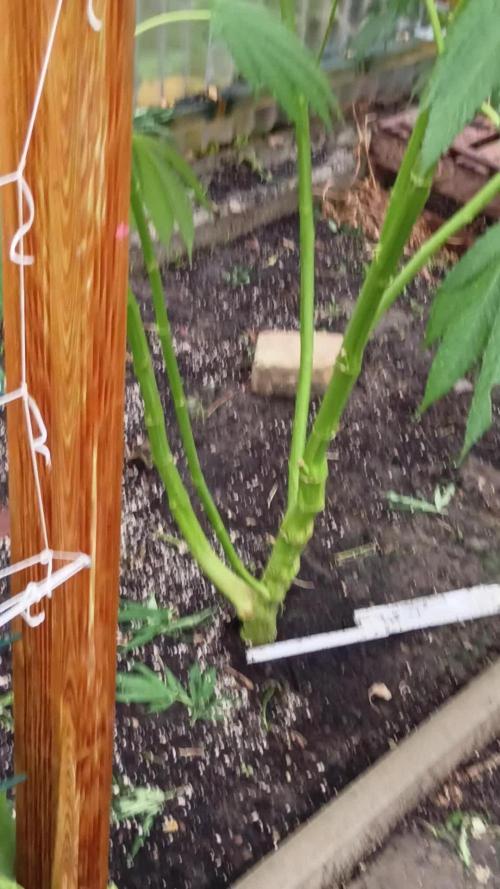
Grade in der Blüte gegangen 6cm Stammhöhe erstes Netz 1,40 zweites Netz 2,5 Spitzen jetzt bei 1,90 qüatrat Netzfüllung 6m

Likes
18
Share


@KurbinTurbin
Follow
This strain was easy to grow, short and very bushy. The smell when drying has an incredibly strong earthy/chocolate aroma which is very pleasant🤤.

Likes
37
Share


@AutoCrazy
Follow
Well has been it’s. This fine looking Mango saw a pot upgrade. I moved her into a 45 gallon pot of my custom super soil mix. The 10 gallon pot she came out of looked so tiny when I took the root ball out and put her in the 45 😂😂
She has taken well to her bigger home and I expect her to really start packing on some size in the coming weeks.
I have been doing a lot of defoliation of the inner and lower portions. I will likely do another round of topping and more LST to really spread things out and maximize the canopy structure.
Onward!!
😎🍿🍻

Likes
8
Share


@LokalGrenz
Follow
Build a soil kind of drys out fast to me so I started to use the barley straw to help with moisture but so far it seems good to go haven’t ph the water yet think imma start next week been using RO water and I’ve used spring deer park water couple times

Likes
37
Share


@DaddyPrime2
Follow
4/30 one of the plants has actually visibly stretched more in the last 48 hrs. Starting to impress me with the pistols. Still way smaller than their projections online but whatever 🤷🏽♂️
5/4 end of the week and I’m pretty okay with their size now 😂 they went through a sizable stretch. I’ll have to get my measuring tape back in the tent because each time I’m adding to this diary, I question whether I’m on the right week or not because they look like dwarfs compared to the end of the week
Likes
39
Share


@ParadiseCrew
Follow
Big girls dont cry
did a bit of defoliation today on them, after taking the pics