


Likes
Comments
Share


@Skunky
Follow
DAY 2
She's oh so slow to finish. Still more clear and cloudy than amber so i'll need to wait some more... I actually prefer the more amber type of high... I can wait... :)
Maybe I'll need to feed her plain ph'd water one more time but let's see...
Merry X-MAS to ALL! 👻
DAY 5
Wow... that was fast. She kinda turned amber in 2 days. The buds in the middle are now like a bit over-ripe, a lot of amber and the ones outside are just a little under-ripe. I'm done. No more waiting now. I thought about harversting only parts but I'm really done with this one. I'll leave her in the dark for 1 more day and then I'll chop her down. Luckily she's about to dry out completely so the drying process will work just fine... FINALLYYYYYYYYYY!!!!!!!!!!!!! 26 WEEKS MUAHAHA.... Next: back to autoflower... LOL!

Likes
2
Share


@I_Identify_As_A_Dan
Follow
Day 42
Shes massive... if she stretches much in flower... then I'm in for some problems 😂😂
By next week she will probably be done vertically growing.
You would never say she had issues to start off with.

Likes
33
Share


@Ksouth1
Follow
Last week went well after I realized that I had the light a tad too close and I had to up cal-mag 1 mL per gallon more. She is showing improvement. It seems that she just had some spotting on some fan leaves as a result of the light being too close. Adjusted the lst ties and other than that, it's been smooth sailing for her. Started giving her big bud during feedings. I am going to say that the next run of this strain will be a good one! Has great potential. Wish I had the light for her to be under by herself from the start, but things happen. I am a believer in the quality of Mars Hydro LED lights and I am going to be using them from now on. I will update as she progresses. Until next time happy growing to everyone!

Likes
20
Share

@DapperDabber
Follow
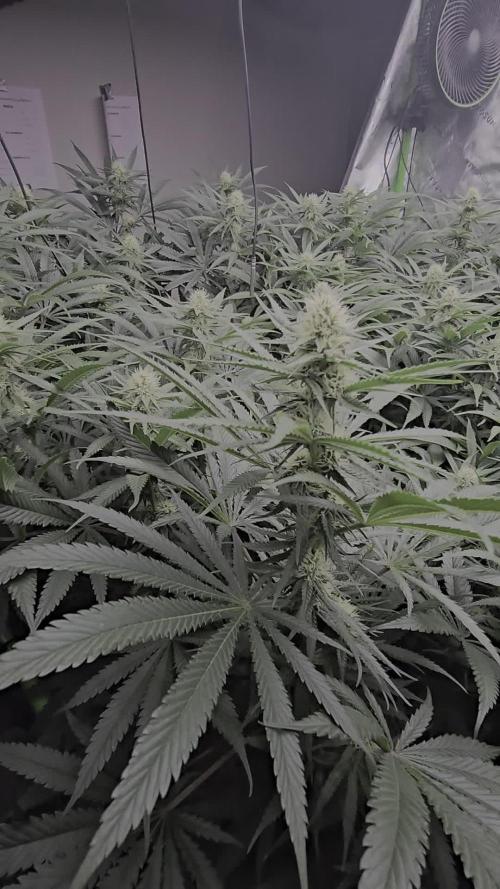
I wish I had more to say but these ladies are just happily chugging along!
My humidity is either spiking or that probe is having... ? complications.
I'll open up the windows to dry it out down there, it's not crazy to think the sub-irrigation and high transpiration of flowering is dumping water into their lung room. 🤔🤔 Also it was raining and snowing the last two days, so maybe a de-humidifier will have to get budgeted 🤓
I've never had mold issues and I don't want i start!
Again, they're coming along effortlessly! Coming soon I'll probably top dress and get rid of the rice hulls, as well setup the automated watering because they're drinking so dang much!
Thanks for reading and take care!

Likes
17
Share

@Organic473
Follow
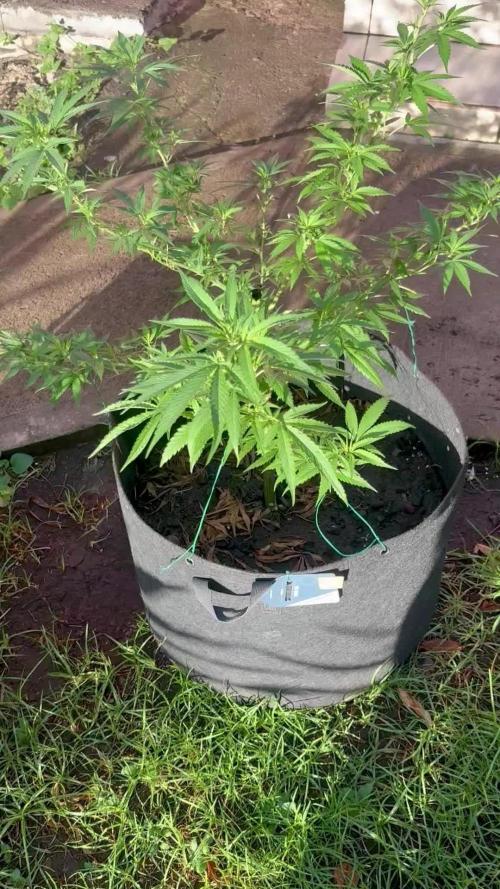
Fighting the humidity this girl is showing she will still have some smokable buds when she enters flower mode.

Likes
4
Share

@Bear_Grows_Green
Follow
Top dressed #1 mum waiting for #4 mum to dry back and will do the same


Likes
3
Share


@Andres2pistilos
Follow
Día 17/11 se hace el cambio del fotoperiodo a 12 horas de luz
Este día también regué con EC de 2.0 y pH ajustado a 5.8 en esta oportunidad agrege un poco de Pro Silocate de grotek que tenis guardado. Se mantiene el uso de cloro a razón de 0.2 ml x 4 litros de agua.
Baje la luz a 60 cm de la planta más alta del cultivo y se mantiene a 100% de potencia
23/11/24: Realicé defoliacion, mantengo el foco a 60 centímetros.
EC se mantiene en 2.0 - pH 5.8

Likes
13
Share


@GrowGuy97
Follow
Overall happy with this solo cup grow, wish I could have got a little more but I ended with 6.3 grams dry weight, bud looks amazing. Post more of a update after I smoke it in a few days! Thanks for following & happy growing friends!
Likes
20
Share


@ohighoan
Follow
Now that I see how these girls turned out it was probably a blessing I had some herms to cut out because there would’ve been no room. Especially in the pc/ssh tent because Pcrit and Sundae Driver were looking to be the biggest plants before I found balls and cut them down. The humidity has been surprisingly high but we’ve had warmer, wet weather for this time of year. I’m not sure I would’ve been able to keep it down with a tent packed wall to wall. I’m just thankful for how everything has worked out. If I ever do two plants per earthbound again I’ll make sure to veg for less time. I’m hoping to give these girls another week but the weather once again is going to be warm and wet so I will probably need to cut them down


Likes
18
Share

@DogDoctorOfficial
Follow
🌸 BlueBerry – Week 6 Flower Report
Grower’s Journal | Zamnesia BlueBerry
⸻
🌱 The Girls This Week
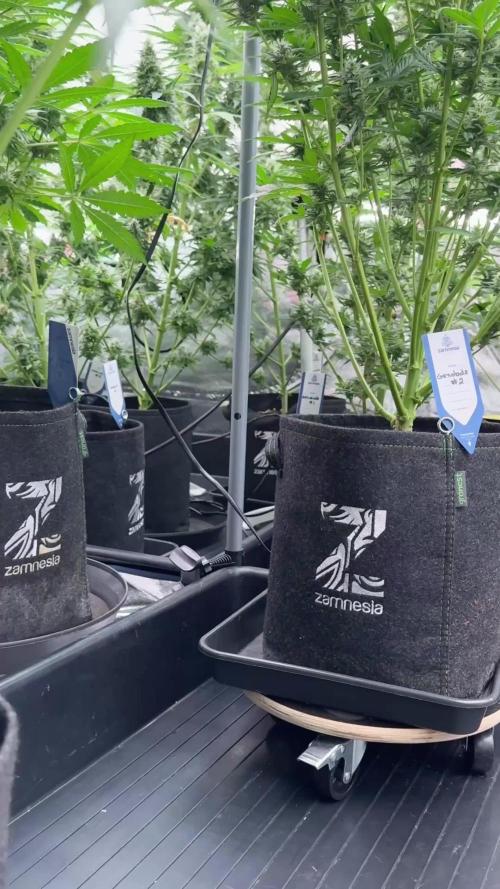
Both BlueBerry ladies are now true queens, stretching big, stacking huge colas, and getting so heavy that yo-yos are holding them up. Without support, branches would fall under their own weight, which is a good sign of strong flower density but also a reminder of the importance of plant training.
The frost continues to thicken, and the trichomes look spectacular up close, sparkling in photos and videos like tiny glass forests.
⸻
⚠️ Trouble in Paradise – Bud Rot
But with big flowers also come risks. This week, Bud Rot (Botrytis cinerea) showed up on BlueBerry #2.
• Conditions: High humidity (65%+, sometimes higher) combined with dense flowers created the perfect environment for rot.
• Detection: Early spotting saved the plant. We caught it in time before it spread too far, but it still left its mark.
• Action Taken:
• Carefully removed every infected area.
• Isolated affected material to prevent spores spreading.
• Improved airflow around the canopy by moving plants and adjusting fans.
👉 For anyone learning, here’s a great educational read by Zamnesia: Bud Rot Grower’s Guide. https://www.zamnesia.com/grow-weed/563-bud-rot-cannabis-grower-guide
⸻
🌿 Bud Rot – What It Is & How to Prevent It
Bud Rot is caused by the fungus Botrytis cinerea. It thrives in humid, poorly ventilated conditions, especially inside large dense colas where moisture can hide.
How to prevent:
• Keep humidity lower during flower (ideally 40–50%).
• Maintain constant airflow across and through the canopy.
• Defoliate strategically to open airflow inside dense plants.
• Avoid watering late in the cycle to reduce night-time moisture.
What to do if it appears:
• Act quickly. Remove all affected buds immediately.
• Sterilize scissors/tools between cuts to avoid spreading spores.
• Keep monitoring daily — once it appears, it can spread fast.
Bud Rot is every grower’s nightmare, but also one of the most important lessons in environmental balance.
⸻
💡 Lessons Learned (and Moving Forward)
This 8x8 setup is teaching us a lot. For the next run, I’ll be redesigning the airflow system entirely to prevent these issues. For now, the plants are still thriving, and catching the rot early means we can continue with this grow.
Big flowers are a blessing, but they require serious air control. We’re already working on solutions, including an AC and new placement strategies, which I’ll cover in more detail on YouTube.
⸻
📸 The Beauty Side
Even with this challenge, the girls are stunning:
• Massive colas held up by yo-yos.
• Sparkling trichome close-ups showing the magic of Week 6.
• Heavy branches bending under the weight of their own production.
The resilience of BlueBerry genetics shows through, they continue to push strong, healthy growth despite the setback.
⸻
🔮 Looking Ahead – Week 7
What to expect:
• Further bulking and resin production.
• Stronger terpene expression, the BlueBerry scent growing richer.
• More vigilance against humidity and bud rot, especially as flowers keep swelling.
What not to expect:
• Major structural changes. From here, it’s all about ripening and finishing strong.
⸻
💬 Final Thoughts
Week 6 has been both a celebration and a reminder: heavy, beautiful flowers need perfect conditions to stay healthy. Bud rot may have appeared, but it was caught, managed, and turned into a learning moment for this run and for future ones.
The BlueBerry ladies are still shining, still heavy, still legends in the making. This is why we grow, why we learn, and why we share, because even challenges make the story richer.
📲 Don’t forget to Subscribe and follow me on Instagram and YouTube @DogDoctorOfficial for exclusive content, real-time updates, and behind-the-scenes magic. We’ve got so much more coming, including transplanting and all the amazing techniques that go along with it. You won’t want to miss it.
• GrowDiaries Journal: https://growdiaries.com/grower/dogdoctorofficial
• Instagram: https://www.instagram.com/dogdoctorofficial/
• YouTube: https://www.youtube.com/@dogdoctorofficial
⸻
Explore the Gear that Powers My Grow
If you’re curious about the tech I’m using, check out these links:
• Genetics, gear, nutrients, and more – Zamnesia: https://www.zamnesia.com/
• Environmental control & automation – TrolMaster: https://www.trolmaster.eu/
• Advanced LED lighting – Future of Grow: https://www.futureofgrow.com/
• Root and growth nutrition – Aptus Holland: https://aptus-holland.com/
• Nutrient systems & boosters – Plagron: https://plagron.com/en/
• Soil & substrate excellence – PRO-MIX BX: https://www.pthorticulture.com/en-us/products/pro-mix-bx-mycorrhizae
• Curing and storage – Grove Bags: https://grovebags.com/
⸻
We’ve got much more coming as we move through the grow cycles. Trust me, you won’t want to miss the next steps, let’s push the boundaries of indoor horticulture together!
As always, this is shared for educational purposes, aiming to spread understanding and appreciation for this plant. Let’s celebrate it responsibly and continue to learn and grow together.
With true love comes happiness. Always believe in yourself, and always do things expecting nothing and with an open heart. Be a giver, and the universe will give back in ways you could never imagine.
💚 Growers love to all 💚
Likes
5
Share


@Enemy61390
Follow
They smell great. Not a hard grow, but not stabilized genetics. 4 different phenos all with differing flowering times. Make it tough when you use your grow tent as a dry tent to contain smell. Had to buy another tent just to dry the ones that were finished instead of risking them herming. 5.8 oz dried and trimmed bud. Didn't weigh larf/trimmings but will be dry sifting it for the press.
Likes
37
Share


@Roberts
Follow
Tiny Potter grow for the contest is coming along nice. She just stretched a lot. She is progressing into flowering nicely. She is really root bound badly. So draining is extremely slow. I feed her twice a day to try to keep wet, and ph in check. She is growing great. Curious to see how she finishes. 🤞 for another trophy 🏆. She has done great under the Mars Hydro FC4800 light. Thank you Mars Hydro. 🤜🤛🌱💡.
Thank you grow diaries community for the 👇likes👇, follows, comments, and subscriptions on my YouTube channel👇. ❄️🌱🍻
Happy Growing 🌱🌱🌱
https://youtube.com/channel/UCAhN7yRzWLpcaRHhMIQ7X4g
Likes
16
Share


@DeepRootsGrowTrees
Follow
GORILLA MELON / 420FASTBUDS
Week #6 OVERALL
WEEK #5 VEG
This week she is growing good. I have no issues to report. Right now she's under heavy training 💪 and she's responding well as she's being grown in a bud cup!! Stay Growing!!
Thank you for stopping by and taking a look it's much appreciated!!
Thank you 420FASTBUDS!!!!
BUDTRAINER.COM
BUD CLIPS/ BUD CUPS
420FASTBUDS / GORILLA MELON
Likes
296
Share


@StarLorr
Follow
Welcome to my Ðivine ØĠ Ķush diary.
In this diary:
Seeds: sponsored by Ðivine Șeeds
Media: Promix HP
Nutrients: Advanced Nutrients, Diablo Nutrients, Gaia Green Power Bloom.
Light and Weather: Şun☀️and Mother Earth.🌎
___________________________
Wet Weight: 1391 grams
___________________________
Wet Trimming with my trimming bowl was a humongous time saver!!
______________________________
Took me about 6 hours to wet trim.
______________________________
I wanna Thanks Ðivine Seeðs for the Opportunity to grow and smøke your Ðivine Plants👊🏼😉
______________________________
Thanks for stopping by, likes and comments are appreciated!👊🏻😎
Keep on growin!
Keep on tokin!!!
😙💨💨💨💨💨


Likes
4
Share


@Jmaninthemidde420
Follow
Love this strain looking forward to growing it in my window setup hope you all think it’s interesting.
Processing
Likes
10
Share


@4F1M6
Follow
I started germination of 2 Jack F1 beans on 29/12/2020. I pre moistened my rockwool cubes with ph balanced water to 6.4. Made sure the plugs were just damp and not soaked. Using a small wooden dowel I increased the size of the plugs pre made holes. Than I sowed my beans into the holes. Ripped off a small piece of rockwool and mulched it up. Lightly filled the holes in with the mulched rockwool. Than stuck the plugs into a misted humidity dome, to complete germination.
Shouldn't take anymore than 4-5 days to see some sprouts. Once I see some cotlydon leaves bursting to the surface. I will get the plugs planted into some 1 gallon pots. Plus get these ladies situated into their new home. Cant wait!
Just some background information on my last run with the Jack f1. It was relatively strong during veg. But was middle of the pack in size after the 6 weeks of vegetative growth. After the flower stretch she became the largest quick! With a enormous stretch rate of 300%... Yes she tripled in size. Forcing me too super crop her which she didnt like at all. Setting her back and definitely hurting her all around yeild.
Despite the staggering, unexpected stretch amount. Leading to the stress inducing supercropping. She still pulled off immaculate bud structre, density, and trichome production.
She just took much longer than she should have... and didnt pack on the whopper size buds I'd expect out of these genetics. Definitely learned alot out of my first go. So I'm amped for the second run with this variety.
This time around I'm going to anticipate the stretch and cut veg time shorter. To roughly 4 weeks or 1 ft in height. Also utilize a bit of very light lst to their side branching to open them up a little bit. Without stressing them out... well hopefully.

Likes
35
Share


@Ganjagrandaddy
Follow
Day 42 Flowering and the frosty monster has paid a visit. The glistening of the trichromes when the light hits them right.
The Red hot cookie looks so good bud wise and I am gutted to not have a full version to sample. The same with the sweet Afghani Delicious too. They should offer a few joints but that will be about their total.
Amnesia Haze is absolutely stomping it now..
Her bud growth has been excellent this week and they started their swelling a few days ago.
The Los at 60Lstruggled to keep the. fed so I have also introduced the shogun sumo boost and pk warrior 9/18. She has now got a lot of frost on her mains and sugar leaves but is till producing fresh happy white pistils daily. She has at least 2 weeks left tobswrll before the ripening starts. Her buds are rock solid to touch and give off a fruity/diesel terpene smell.
seeing her many mains and the beautiful buds she is producing now is a welcome site. She has spread out excellent for the lights footprint and seeing all those side branches become such full mains is a relief. I love this strain to grow so far . Seeing how well she stacks up for long colas is an inspiration for future grows and certainly a new growers dream 1st grow.
She is an hungry lady and easily takes the full 8L of feed every other day with just a touch of run off. I plan to do a controlled drought for approx 8/9 days at day 49 amd then a last feed before harvest following. There is a lot of study results to suggest this increases thc content and oils similar to stem splitting and other methods , so I thought I would give this a go too. Lets see how it works....
Be safe
Processing
Likes
51
Share


@Silverback_Guerilla
Follow
11/24:
Looks like the Emerson Effect/14 hour photoperiod is working...stretching has commenced.👍
11/25:
Had to raise the lights 5 inches today. The big Sucrose Overdose and a Zkittlez are really stretching.
I'm using platforms of varying heights for the shorter plants to keep the canopy level.
11/27:
Raised the lights another 5 inches and fed today.
11/28:
Raised the lights another couple inches this morning...now, I'm thinking I should have topped them...that's a foot in about 3 days...doh!😏
They're already starting to show signs of budding up, so I'll just have to do some supercropping and tie down the taller mains.
11/29:
Raised the lights a couple more inches and supercropped the tallest Sucrose Overdose.


