




Likes
223
Share


@Tropicannibis_Todd
Follow
💩Holy Crap We Are Back At It And Loving It💩
👉WE R SO CLOSE NOW👈
Growmies we are at DAY 70 and there all just killing💀it👌
The Gorilla Punch Is Amazing 👏 But so is the OG
👉We are in full flowering mode for the👈 OG 👍 GP 👍 the AF was the hold out but shes finally flowering👈
So Shit , I gave them just a tad to much nutes at the start feeding 👈 But I have since fixed it
So I'm still doing some low stress training 🙃 and some defolation 😳
Lights being readjusted and chart updated .........👍rain water to be used entire growth👈
👉I used NutriNPK for nutrients for my grows and welcome anyone to give them a try .👈
👉 www.nutrinpk.com 👈
NutriNPK Cal MAG 14-0-14
NutriNPK Grow 28-14-14
NutriNPK Bloom 8-20-30
NutriNPK Bloom Booster 0-52-34
I GOT MULTIPLE DIARIES ON THE GO 😱 please check them out 😎
👉THANKS FOR TAKING THE TIME TO GO OVER MY DIARIES 👈

Likes
18
Share


@cheetah844
Follow
A tall one right off the bat here. I've never grown a strain with so much CBD in it along with THC. I'll enjoy watching this run, wishful thinking if everything goes right.

Likes
13
Share


@Lickey
Follow
Just finishing week 4. Damn fungus gnats got me down. Laying some mosquito dunk water on them and expect / hope to have that eradicated soon.
Going to do my second leaf stripping in first day or two and a second top dressing, which I do every two weeks up to week 5 or 6.

Likes
11
Share

@Miketama
Follow
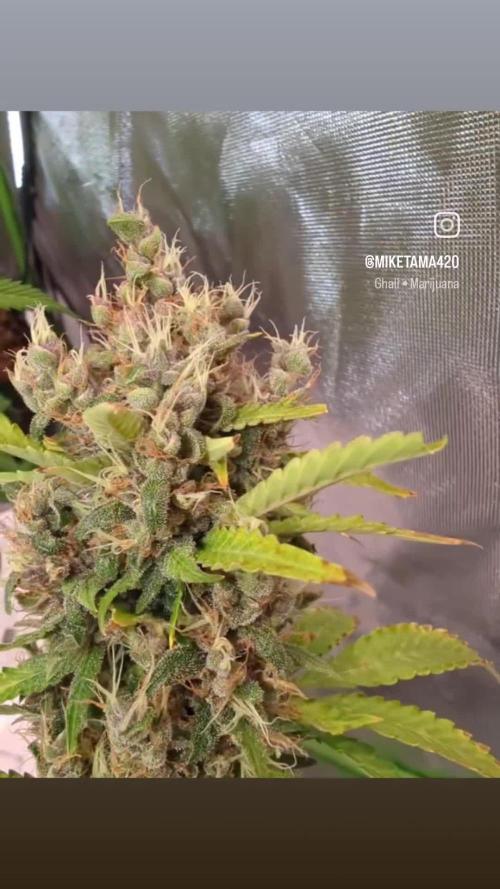
However, the final look was a total curveball. A severe heatwave hit the grow room right when the buds were already fully formed. Being an Indica-dominant strain with Afghan heritage, she really didn't tolerate that sudden intense heat. To cope with the temperature, she went into survival mode and triggered heavy late-stage foxtailing. Even though the weight was already there, the buds lost their typical Indica compactness and started stretching out with endless new white pistils, creating an airy, Sativa-like silhouette. It definitely cost her a few grams of extra density, but the sheer volume is impressive.
Interestingly, I ran this plant alongside a Sativa-dominant strain in the same tent, and they completely traded places structurally. You can check out how the heat impacted her tent mate in my Pablo Escobar Auto Diary.
Key Lesson: Dense, cool-loving Indica genetics like this one will be saved for winter cycles from now on to avoid late-season density loss. Still, with 570g wet, she is going to provide an incredible, heavy evening stash! 🍁💨
https://divineseeds.net/de/auto-purple-opium/

Likes
9
Share


Likes
18
Share


@SpotWeed420Original
Follow
Bueno ! Acá les dejo la última semana ! De nuestra hermosa planta ! Subiendo el corte y más adelante subiremos las flores curadas y secadas !! Logrando obtener una estructura de copa desde el día uno y teniendo una dura batalla sobre el mal control de la ec y teniendo excesos de minerales como os contaba en los diarios anteriores ! Logrando tener varias ramas con flores abundantes y sólidas no unas flores llenas de tricomas y un olor maravilloso ! Bueno dando a conocer la linda experiencia de este banco 🏦 lograremos seguir en este lindo proyecto!


Processing
Likes
13
Share


@Cheesefarmer420
Follow
Another week done, finished up week 6 of flowering, week 10 of the whole grow. The buds are continuing to fatten up, inching closer and closer to harvest. Noticed the first few Amber tricombs on some of the upper buds, going to be leaning off the big bud and switching to overdrive to help aid in ripening and the final bulk. I’d like the run them another 4 weeks giving them a full 9-10 weeks in flower. But will judge harvest on a near 45/55 or 50/50, Cloudy/amber tricomb production.


Likes
82
Share


@BigBadLion
Follow
Heeey all!
Sorry for the huge amount of photos but this week was crazy. So many things happened and my lack of knowledge clearly showed up. I ended stressing one of my plants for no reason! 😱
At the start of the week everything was normal until I noticed that one of Roko's buds looked weird. It seemed to be too dry and orange for my tastes and I didn't know what it was. Obviously I started to ask around and I got so many mixed messages haha. Some people said it was nothing and I should not worry about it and others said they were 100% sure it was botrytis or budrot... aaaaaaaand I got paranoid lol. 😵😨
At first I tried to keep calm and ignore it for one day but the next one the bud looked even worse and that's when I feared the worst. What if it's really budrot? In general the values I write in here are approximates or an average of the week.. and usually my tent never goes over 60% of RH (in the dark it stays between 50% to 60% when I water them and on some rare occasions it reaches 65%). This time, after I checked the thermometer it said "75% of RH" but I did not know if it was during their sleep time or maybe some time after the lights went on) so once again I feared the worst! What if the plants stayed all the night with that amount of RH? Was that enough time for them to develop budrot? What if it's still nothing? Yikes. 😭
I had to do something and I did, I wasn't going to risk everything! I started removing the worst looking leaf to see if there was anything mushy or ugly between it and the pistils but I didn't see anything (maybe I was safe and that was something else? Or maybe the budrot was even deeper and I could not see it?) After reading I realized that the best idea was to cut the bud in half and then slice it to "see" if there was anything inside... so I did it and absolutely nothing showed up 😖! Those were good news! Sadly tho the poor plant had to go thru some stress after cutting that bud in half (at least from what I saw the insides were tightly packed and the photos showed some really cool stuff)
The rest of the week was uneventful (compared to what I feared haha) and some leaves started to change even more in color (I love it). I think I'll start with the flush next week or the one after that one. There are some amber trichomes...!
Thanks all for checking my diary! Hopefully you'll all find the pictures interesting!
PD: None of the plants have seeds in them, even when one of the sliced buds seemed to be making them!
Likes
8
Share


@DoMoNe
Follow
Following https://www.royalqueenseeds.com/blog-how-to-grow-autoflowering-cannabis-n83
"WEEK 9: THE FINISH LINE APPROACHES" #57 10.5. - #63 16.5.
#57 10.5.
-Watered with 1,5liters/pot
#58 11.5.
-nothing done today
#59 12.5.
-its been VERYwarm (on our standards) today, so tent temp gone up to 32degrees, ill have to and open up the side vent clearly
#60 13.5.
-temps still too warm.
#61 14.5.
-watered/flushed
#62 15.5.
-nothing done yet
#63 16.5.
-watered/flushed
Likes
6
Share


@sa2_gr
Follow
Heu guys !
Plants start to pre flower, everything is going good, few nutriments fails but overall it's pretty much ok
Pretty sad about the Zake and the Shimo in the front that pretty much had no stretch 😓
Cant complain since im working from seeds !
See ya next week ✌️

Likes
20
Share


@jonesy_grows
Follow
After seeing the roots just about fill the totes, I decided to flip to flower. I did some lollipopping towards the end of last week, and removed a lot of larfy little branches.
I added some big bud on top of my base nutrients, because Ive had good results with that.
Im going to maintain a 10-12" light distance, and increase my light from 80% to 100% power after the stretch is over.
You guys, I cant believe how heavily these girls are feeding, ppms were set to 1450ppm last night, 1300 this morning, 950 this afternoon.
I added more big bud to up the pk a bit, and get my ppms back where they were.
I cant wait for them to really hit stretch, I think theyre going to explode in the next few days!

Likes
7
Share


Processing
Likes
9
Share


@GhawkGrows
Follow
Following full strength full line of Cyco Nutrients feeding chart now and they seem to be growing Healthy and at a steady pace finishing up week 2 of feeding chart

Likes
13
Share


@GardenOfSixx
Follow
Fed my girl her last flowering compost tea about 3 days ago. She is absolutely beautiful. Loving her environment and thriving. Bud production looks lovely and even producing tricomes already. I'm very please with this week. Will water with recharge on day 21 and then one last defoliation. Very easy going plant.


Likes
8
Share


