


Processing
Likes
Comments
Share


@Yiyis_Grow
Follow
Buenas noticias para esta semana.
1. La semana pasada comenté que tenía una planta desordenada, pues no me había percatado que la karpa tenía un orificio abierto en el techo y estaba entrando contaminación lumínica cuando dormía y por eso estaba débil.
2. Un loco que sabe más que yo, me dijo que las puntas amarillas es algo bueno en mis plantas y no algo malo, por lo que están saludables.
3. Las flores tuvieron un gran avance y ya se notan de mejor tamaño y un excelente aroma.
4. El calor y la humedad hacen que cada planta consuma 2 lts de líquido al día.
5. Voy a iniciar Pk1314 esta semana que sigue.
Malas noticias
1. Ya no tengo mota seca jajaj
Buenos humos


Processing
Likes
6
Share


Likes
6
Share

@all_about_420
Follow
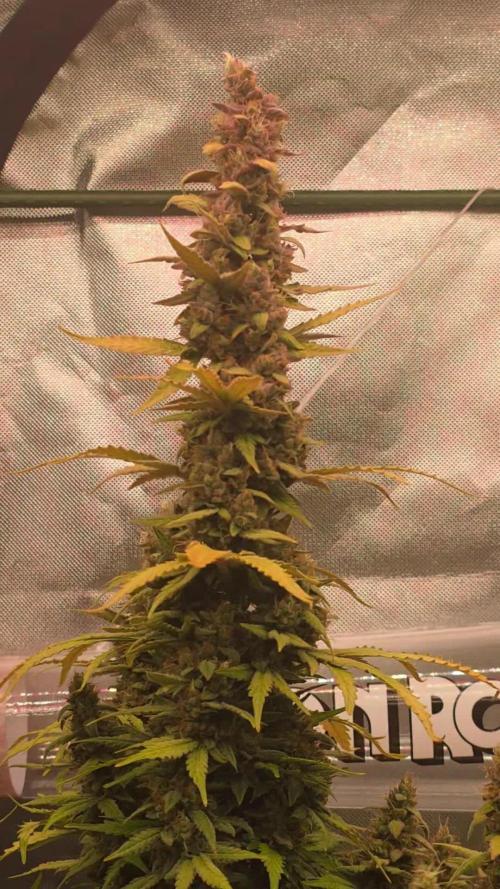
Wir stehen kurz vor der Ernte.
Die Farben und die Blätter sprechen für sich, das ist eindeutig der Herbst.
Dem Duft nach, könnte ich direkt reinbeißen.
Aufs ernten freue ich mich schon, da die Mimosa Cake mit eher weniger Blättern ausgestattet ist, so wie ichs gerne hab.
Das macht die Arbeit leichter und schöner...


Likes
12
Share


@KalooNie
Follow
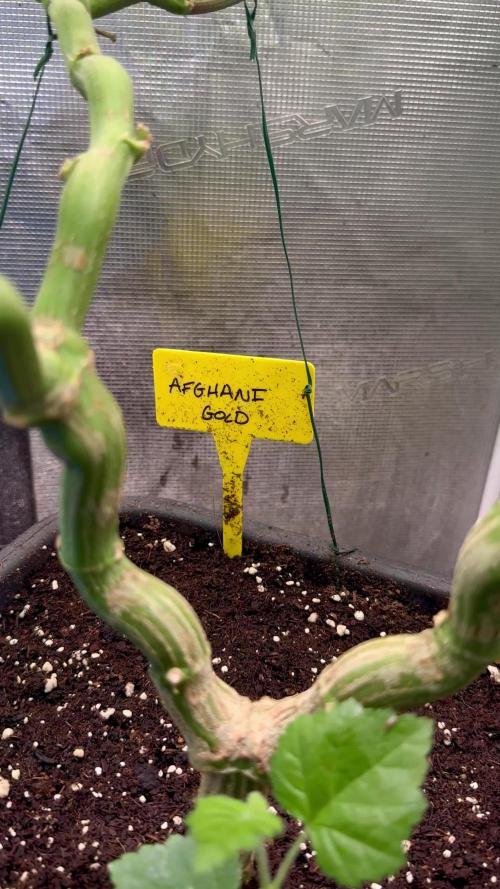
These gals are doing fantastic! Smell is really starting to come out now, smells like a very strong citrus pine 👌🙌 Switched them to full strength flowering nutes and they're doing pretty well. I probably should have transitioned them a little earlier but a little stress doesn't hurt, they're growing just fine! Heat is also an issue but they'll manage 😅
8-4-18 :: Largest plant's bucket got empty on accident; Filled a 15gallon reservoir of full strength nutes and pumped the solution into the bucket as always. Next day my largest plant is dying and the other two are fine, looks like lockout. Flushed for a day and then added nutes, no improvement.. Orange pistils are appearing pretty fast on it too as if it's trying to ripen but not grow. My heart is broken😰
UPDATE: Realized I was an idiot and didn't plug up the holes I drilled into the top of the buckets (I stick a hose in there to fill them up) and the roots were exposed to light.


Likes
8
Share

@Sobreruedas
Follow
This week I flipped the photoperiod to 12/12 since the scrog net was already filled.
I also performed a selective defoliation to improve light penetration and airflow through the canopy.
The LED power was increased by 10%, and it’s currently running at around 500 PPFD to support the transition into flower 💡🌸
Now it’s time to let her stretch and see how she responds during the first weeks of flowering 💪🌿

Likes
110
Share


@SlowpokeFuegobud
Follow
💜 💚 😍🥤💜💜 💚 😍🥤💜💜 💚 😍🥤💜💜 💚 😍🥤💜💜 💚 😍🥤💜
Dear growmies, welcome to the Purple Lemonade Fast Flowering diary!! ❤️
The little seed popped the fastest of all the seeds of this run! 🏆 Vigorous!!
Can't wait for this journey! 😍
DAY 1
Soaked the seeds in Humic Acid for 2 hrs, then used some of it to pimp the water and soak the paper towels. 💧
Thanks @Fast_Buds for your awesome genetics, growing Fastbuds is always a bit like riding a ferris wheel! Woohooo!! 😜 🙏 💚
Thanks to my sponsors @Green_Buzz_Nutrients, their nutes never ever let me down!! Check out my diaries on how well they work! 💚 😘 In case you want to give them a try, you can find a generous discount code in the setup description further down the road ⬇️
You can find more brand hot updates on my IG, where I share real time events from my growroom, don't miss this! 😝
_______________________________________________________________________
Purple Lemonade FF
As refreshing as cold lemonade on a hot Summer day. 🌞
• Quench your thirst. Just as good as lemonade on a hot Summer day.
• The gentle giant. Up to 550 g/m2 of gorgeous pinkish-purple buds.
• Refreshing for the mind and body. The ideal all-day strain with a perfectly balanced effect.
• Sweet n’ sour terps. Mouth-puckering lemon flavors that’ll hypnotize your taste buds.
• Properly purple. The perfect choice for purple hash and extractions.
Arising from a cross between purple and citrus Cali genetics, Purple Lemonade FF (Fast Flowering) offers a complex high made up of perfectly balanced cerebral and body effects that are ideal for daytime use. Expect an extremely enjoyable high that boosts your mood while deeply relaxing your whole body and getting
rid of muscle pain. This meticulous cross produces up to 550 g/m2 of some of the most beautiful purple buds, with pinkish and reddish hues that will catch everyone’s attention. The beautiful purple buds are ready for harvest in 7-8 weeks and come hand-in-hand with unbelievably sugary citrus terps that are just as refreshing as a cold lemonade on a hot Summer day. It’s the ideal variety for the sweet-tooth stoner seeking strains that deliver both in quality and quantity of resin.
Bud Description 🦔
Purple Lemonade FF grows chunky, spade-shaped buds that boast a whole range of pinkish-purple hues with rich, dark orange pistils shooting out of every direction. This variety stands out for the, oftentimes, lilac trichomes that give them a gorgeous pink tint and make for outstanding purple concentrates. The buds give off a delicious tart lemon aroma that reveals a sweeter, more fruity scent as you break the buds open. Definitely a must for flavor chasers and those looking for pungent terpene profiles.
Smoke Reports 💨
Purple Lemonade FF offers an effect that’s just as unique as the flavor. Expect a potent uplifting high that gives you that energy boost you need to get things done while 100% happy and stress-free. The effect gradually transforms into a wave that works its way along the limbs and through the muscles, deeply relaxing your body and putting you in the right mindset to go through a busy day with a huge smile on your face. This is an excellent all-day smoke as it not only increases energy but can also help combat chronic pain, migraine and stress.
Plant Appearance 💄
This feminized photoperiod variety develops a thick and strong structure, growing a medium-sized main cola with multiple shorter side branches, typical of hybrid strains. Purple Lemonade FF develops fairly short internodal spacing with gorgeous purple buds growing stacked on top of each other, making it the perfect choice for growers of all levels looking to get lots and lots of top-shelf purple weed, as this variety can produce up to 550 g/m2 in a 7-8 week flower cycle.
Grow Tips 🤓
This is a super fast feminized photoperiod version that takes approximately 7-8 weeks to flower with a 5-week vegetation cycle,, this means you can have faster harvests by shortening the veg cycle or have a longer veg cycle for bigger yields. Purple Lemonade FF (Fast Flowering) makes for a great candidate for growers of all levels as it’s a vigorous strain that will thrive with basic maintenance both indoors and outdoors. This is a resin powerhouse so make sure to have your trim bin close by as all the resinous sugar leaves will make for the most mouth- watering hash and extracts.
Flavor 😋
Expect a long-lasting citrus zest that taste just like it smells. Purple Lemonade FF reeks of a delicious blend of sweet fruits and tart citrus that’ll make your mouth water. On the inhale, expect sour flavors that taste just like lemon candy with hints of orange and a really subtle earthy background. And on the exhale, the citrus flavors open up, giving place to a more sugary berry fruitiness that leaves your whole mouth tasting like an extremely sweet weed-infused lemonade.
https://2fast4buds.com/seeds/purple-lemonade-fast-flowering
_______________________________________________________________
Setup:
140x70x200 cm Spiderfarmer tent
2x Monkey 16W fans (not oscillating)
1x Secret Jardin 30W
1x box fan 50W oscillating (on lowest level)
LED
Full Spectrum 320W AGLEX AGL-320W-MA
5,6 kg
foldable, dimmable
864 pieces Samsung LH301H
864umol/s
2,7umol/J
full spectrum white + RED 660nm + IR 740nm
wavelength range 380-780nm
covering 3x4ft
Green Buzz Nutrients https://greenbuzzliquids.com/
❗ Use code GD42025 for generous 25% discount (for orders of minimum 75€)
Biobizz Lightmix + coco + wormcastings + perlite
Carbon Active Granulate Filter 125/360 cm³/h
PrimaKlima exhaust EC 125-400/240 cm³/h
Likes
9
Share

@ThatsmyGrow
Follow
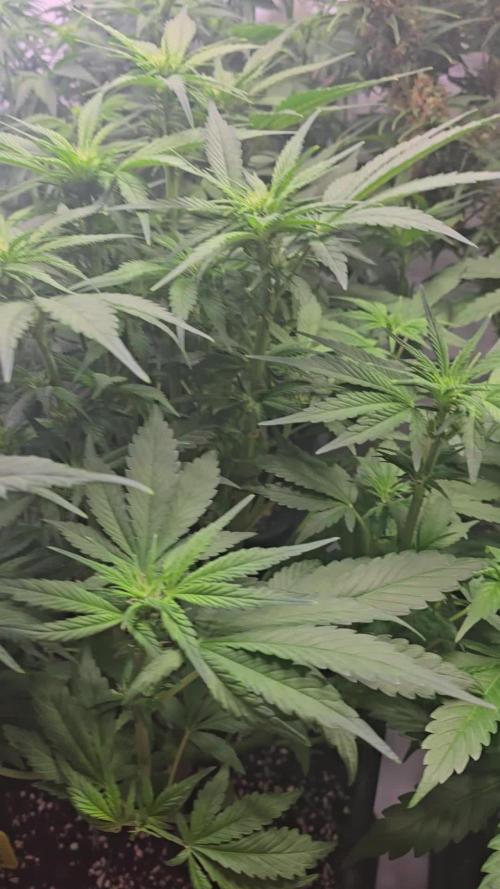
Another good week for the RF3, it seems she will get fat buds, i like it how she turn
Likes
229
Share


@Crashoverite
Follow
Week 10
Hi everyone,
Everything going brilliantly. Girls are gaining weight, trichomes development it's amazing. As for now some buds up to 10-20% amber and some are still almost 100% clear and milky. Leaves are still pretty green and I may keep nutrients for this week but all will depend of trichomes palette before switching just to water.
Please stay tuned for daily updates
Have a great week everyone
Peace and love ✌️💚
25/09 Day 64
Watering approximately 2.5l per pot. runoff 50-100ml. This lasting on avarage for 2-2,5 day.
27/09 Day 66
All going smooth. Girls are covered with frost. Noticing some more amber trichomes. Will keep watering them with nutrients tonight and will keep observing closely their development before cutting off nutes completely.
30/09 Day 69
We are approaching final days of this amazing journey😁After closer look decided to flush this morning. Only water and Fish Shit on ratio 0.4ml per 1 ltr. Flushed with approx 3 ltr per pot. Runoff 50-100ml. Runoff ph 6.4.
01/10 day 70
It's the end of week10
Currently trichomes at some buds up to 20-30% amber 😍 and on the rest milky with small groups of amber 5% As its a soli grow we have a good few days for development. Not sure about harvest day yet but I would say 6-14 days at most.
Thank you so much for all support, likes and comments 😊✌️💚
Stay tuned as best still to come 😁
Peace and love brothers and sisters

Likes
2
Share


@KannaGrowing
Follow
Estamos en la tercera semana de crecimiento vegetativo.
Nuestras plantas ya tienen unos 15 centímetros aproximadamente, y han superado la fase crítica.
Recordamos que hasta ahora solo estamos regando con agua, aún no hemos incorporado los fertilizantes.
Seguimos manteniendo la humedad relativa bastante alta, y la temperatura entre 22 y 24ºC.
Pero aumentamos la potencia al 50% de ambas luminarias.


Likes
51
Share


@nonick123
Follow
Día 50 (09/12) Busy time
Solo riego!
Día 51 (10/12) CBD Auto 20:1 #1 no para de crecer! ¿Parará el stretch? 💥
OG Kush Auto avanzan las manchas en las hojas... ¿Será deficiencia o carencia?
Día 52 (11/12) CBD Auto 20:1 #1 está demandado más agua. Subo a 1500 ml / día de H2O RO
CBD Auto #2 está relentizando el consumo de agua (el top se muestra húmedo). ¿Estará entrando en la fase final de floración?. Según FastBuds le quedan 11 a 18 días!
OG Kush Auto también demanda más agua! Subo a 1250 ml / día de H2O RO
Día 53 (12/12) CBD Auto 20:1 #1 es increible como no para de estirarse y de formar nudos y hojas! Parece una Sativa pura que nunca para de crecer en floración!
CBD Auto #2 empieza a mostrar algunas hojas con senescencia. Se acerca la cosecha!
LSD-25 Auto está haciendo unos cogollos densos y duros como rocas 😍💥 No está tampoco lejos de la cosecha! 💥💨😁
OG Kush Auto produciendo una resina brutal en las hojas de azúcar! 😍
Día 54 (13/12) CBD Auto 20:1 #1 no para el stretch. Le hago una poda de bajos y ligera defoliación
OG Kush Auto está generando una cantidad de tricomas increíble. Además huele a Kush deliciosamente 😍😍😍
Día 55 (14/12) CBD Auto 20:1 #1 para un poco el consumo de agua en ¿Fin del stretch? Casi toca la lámpara de nuevo!
CBD Auto 20:1 #2 empieza a mostrar la senescencia.
Reviso los tricomas con muchos turbios y alguno transparente. ¿Estará en una semana más aproximadamente? 🤔
Día 56 (15/12) OG Kush Auto ha bajado un poco el consumo de agua
La cantidad de tricomas que está haciendo es insana e increíble. Y como huele! 😍
LSD-25 Auto muestra los tricomas trasparentes y algunos turbios. ¿Quizás dos semanas para la cosecha?
💦Nutrients by Bio Tabs - www.biotabs.nl/en/
🌱Substrate PRO-MIX HP BACILLUS + MYCORRHIZAE - www.pthorticulture.com/en-us/products/pro-mix-hp-biofungicide-plus-mycorrhizae
"GDBT420" 15% DISCOUNT code for the BIOTABS Webshop https://biotabs.nl/en/shop/
Likes
16
Share


@GrowerGaz
Follow
Sadly th police came and took my harvest the day before harvest , so the journey ends here


Processing
Likes
13
Share


@BedroomGrower
Follow
I am updating the harvest pages with the new images taken with the microscope, you can find here the extra images for the varieties not included in the diary, while for the varieties in the diary you find the images in the harvest pages.
Likes
Comments
Share

@SolitudeCorners
Follow
Week 5 (Day 29–35)
~~cropsalt~~~
10/07/26
Water 130L
A 1050ml
B 1050ml
Silica35ml
PH 6 EC2
15/07/26
Water 140L
Balance 50ml
A 1050ml
B 1100ml
PH 6 EC 2.3
Feed 1.30min
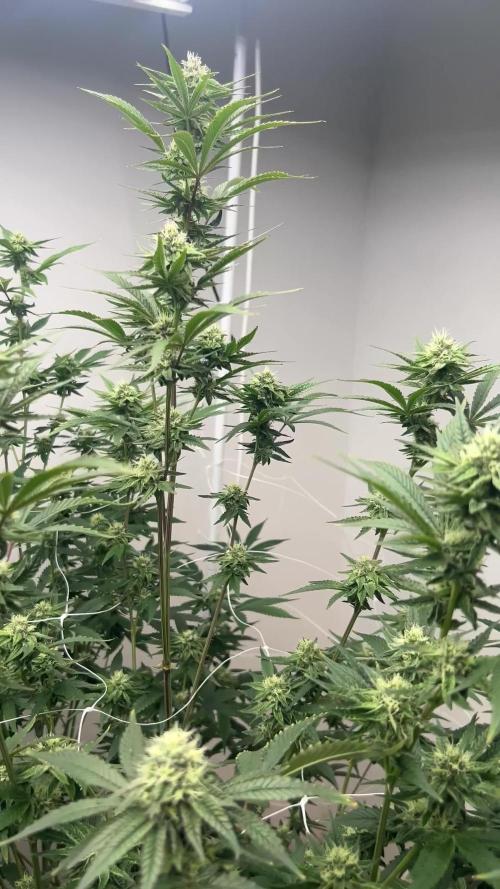
The stretch was mostly finished, allowing the plants to shift their energy toward flower production. Bud sites began stacking rapidly across the canopy, with strong trichome development becoming visible on both flowers and sugar leaves.
The canopy remained vigorous despite noticeable differences in phenotype structure. Some plants continued stretching above the net while others stayed compact, requiring occasional branch support to maintain an even canopy.
Irrigation was kept consistent with multiple short feed events throughout the lights-on cycle, maintaining stable moisture levels and healthy dry-backs in the rockwool. The crop responded well with strong leaf posture and steady daily growth.
Overall, the room entered the early bulking stage with excellent plant health and increasing resin production.
⸻
Week 6 (Day 36–42)
Flower bulking became much more noticeable this week. Individual calyxes continued swelling, creating tighter and denser flower formations across the canopy. Trichome coverage increased significantly, and terpene production became much stronger throughout the room.
The crop maintained healthy color and strong vigor with no major deficiencies observed. Larger tops started gaining weight while lower flower sites continued catching up, resulting in a more uniform canopy.
Environmental conditions remained stable, allowing the plants to focus on biomass production. Irrigation continued with frequent shots during the 12-hour lights-on period to match the plants’ increasing water demand while maintaining proper runoff.
Different phenotypes continued expressing unique characteristics—some producing longer spear-shaped colas, while others focused on tighter internodes and heavier resin coverage.
The room is now fully entering the peak bulking phase, where maintaining irrigation consistency and environmental stability will have the greatest impact on final flower quality.
Current Status
* Strong flower stacking across the canopy.
* Resin production increasing daily.
* Healthy green foliage with good turgor.
* Irrigation strategy remains stable with positive plant response.
* Entering the main flower bulking phase before ripening begins.
Likes
2
Share


@dwotTV
Follow
Transplanted in the afternoon of 10/23 because they were rooting out of the pucks. Got some humidity dome cups coming tomorrow and another inline fan to handle intake to try to dial in things a bit more. Fugue State #2, in the black pot is still a bit shell shocked, hopefully it opens up soon.
Well both #2 and #3 damped off / shell shocked to death, so there's just one left, c'est la vie. #1 is trucking along well and ready for week 2.
Sprayed with Neem Oil on 10/24
Fed Light Fox Farms Blend on 10/25
Treated with NemAttack on 10/26

Likes
22
Share


@RDWCGrowing
Follow
12/25/2023-Germination Day 1
Merry X-mas 2023 I decided to start a run of SolFIre Gardens Hoodz Candyz S1. I am going to do a cup filled with RO water a touch of Hydrogen peroxide and let it sit for 24-48 hours until I see tap root then I am going to put it into a rapid rooter.. Tap root Down and put it about 1/4 of the say down the Rapid rooter.
I made some modifications to my basket on this run.. I have taken a few Pods that I use for my cloning machine and decided that I am going to try and use them as sure plants, so that I can take my water right up to the bottom of the basket this time and see if these can make my planting more consistent.
12/26/2023-Germination Day 2
Tap root achieved Planting Commencing
12/27/2023-Germination Day 3
Misted the dome lightly misted the rapid rooter and added a little water to the bottom of the pan to encourage root growth to the pan.
12/28/2023-Germination Day 4
Ground Hogs day
12/29/2023- Germination Day 5
She is up, she has broken surface, I misted the root riot, and around the bottom of the tray to try and entice root growth down rapidly.
12/31/2023- Germination Day 6
Ground Hogs Day
1/1/2024-Germination Day 7
HAPPY NEW YEARS!!.. I did it I planned it out so my planting day would fall on New Years and it worked.. Yay!!!
1/2/2024- Germination Day 8
Since the roots are not to the water yet, I am pouring one cup of water lightly on the hydroton around the lady to try and encourage root growth down to the water..
1/3/2024- Germination Day 9
Ground Hogs day, will continue until roots hit the water.
1/4/2024- Germination Day 10
Ground Hogs day, will continue until roots hit the water. I will just continue to top feed until roots are in the water.. Shouldn't be more than a few more days.
1/5/2024- Germination Day 11
Ground Hogs day, will continue until roots hit the water. I am going to change the water Sunday and kick off Week 1, I will just continue to top feed until roots are in the water.. Shouldn't be more than a few more days.
1/6/2024- Germination Day 12
Ground Hogs day, will continue until roots hit the water. I will just continue to top feed until roots are in the water.. Shouldn't be more than a few more days.
1/6/2024- Germination Day 13
Ground Hogs day, will continue until roots hit the water.
1/7/2024- Germination Day 14
Ground Hogs day, will continue until roots hit the water.

Likes
24
Share


@Starplatinumsrealdad
Follow
I was pleasantly surprised by the yield from these 2. Plant #1 (back left this grow) yielded a whopping 4.79 ounces, my 2nd biggest producer this grow! #2 yielded 3.57 ounces, which while the lowest of the 4, is still an extremely respectable yield for a single plant in a 4 plant tent! Especially one that received as little attention as this one did. #2 remained resilient the entire grow, however due to the placement of my tent received the least amount of attention/defoliation, which is consistent with its yield. #1 was more easily accessible, and while it did have cal mag & ph issues early on, still received significant defoliation and care, hence the larger yield. Overall very happy with this strain, I have 3 of these seeds on hand, so there’s a good chance you’ll see another Critical Orange Punch diary from me in the future! Thanks again to everyone for their comments, advice, and support! I’ll be starting a new grow/diary in a few weeks, so keep an eye out! Until then, happy growing!!



Likes
6
Share


@mEluv420
Follow
Did some defoliation at 20. april for more exposed light.
Watering 3L every 2-3 day ish.
A lot of new growth.. So excited for the next weeks!
