


Likes
Comments
Share


@Mr_nugs_lover_David
Follow
She grew up nicely very healthy and strong and she produced a decent amount of organic clean cannabis, It's great and just what I work for because I'm a patient that needs to grow his weed and doing it making sure I grow them naturally and organically. The result is a very fruity and and tropical aroma, the purple color makes her even more beautiful. It's just a dream man, I love it, I just love to grow this strain, the 4 plants I grew had the same aroma very tropical and fruity, super sweet.

Processing
Likes
28
Share


@Hawkbo
Follow
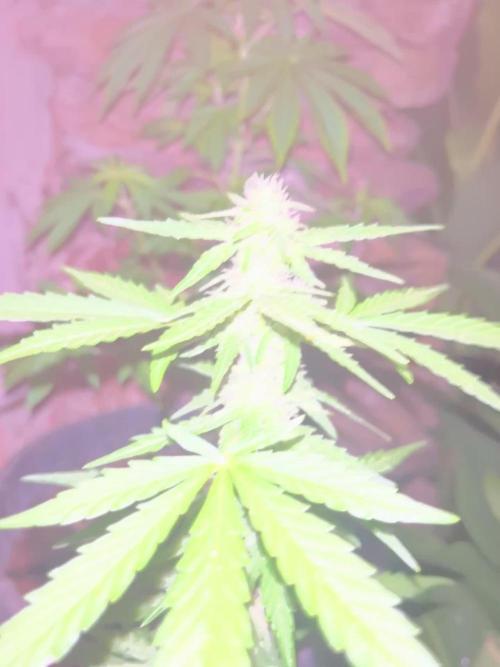
Pics and video were taken a few days ago been busy as shit lately so the update is a little late. I'm gunna put the video up first on all of them then go back and upload the pics so if come back if the pics arent up yet.


Likes
1
Share


@Marmotaaaas
Follow
Buenas van hermosas estas ningún problema aparentemente an avanzando de maravilla y están a full

Likes
12
Share


@PedroAndHisPlants
Follow
Day 43 (Second Grow, Flowering Phase):
Hey everyone!
We’re well into day 43 of our second grow and deep into the flowering phase. 🌸 The transition has been amazing to witness, with our plants showing significant bud development. The plants are producing beautiful, dense buds, and it’s incredible to see the daily changes and the rapid development.
We’ve been maintaining the humidity between 50-60%, but we’re keeping a close eye on it to prevent any issues. We’re considering whether to get a dehumidifier to bring it down to the ideal 40-50%. The SCROG net continues to work wonders, ensuring even light distribution and supporting the heavy buds. Our Timor shield mantis is still patrolling the garden, keeping pests at bay naturally. She’s become quite the guardian!
The plants are looking healthy and vibrant. We're excited to see how they continue to develop over the coming weeks. Any tips or advice for optimizing this stage? Let us know in the comments!


Processing
Likes
5
Share


My miracle baby she started to grow a little bit in soil and then she look like she just stopped so I did an emergency cannabin ectomy yeah I just made it up and put her in Hydro then she took off again this little girl is like the Energizer Bunny @fastbuds420
Likes
8
Share

@Momentum
Follow
Die Autos von Sweet Seeds diese Saison waren sehr fragwürdig 😉 Bin froh mich jetzt mit meinen Photos beschäftigen zu können ✌️


Likes
10
Share


@DogDoctorOfficial
Follow
💙 Project Blue Tent – Week 13 💙
🥒 Pickle Lemon Haze F1 – Pheno B
🌸 OH MY GOD, SHE'S BEAUTIFUL! Frost, White Pistils, and Another Girl Approaching the Finish! ❄️😂
Hello everyone, and welcome back to another chapter of Project Blue Tent! 💙🌱
My friends, seriously...
IS SHE BEAUTIFUL, OR IS SHE BEAUTIFUL?! 😂❄️
Every week, I walk into this room thinking I already know what to expect. Four girls, two cultivars, the same environment, the same equipment, and the same general approach.
And then I look at the flowers again.
And there I go, grabbing the camera and spending another ridiculous amount of time admiring these girls!
😂📸💙
This week, we're giving Pickle Lemon Haze F1 – Pheno B her own spotlight.
And what a beautiful girl she is!
She's dense, compact, seriously frosty, and carrying plenty of those beautiful white pistils. Her colours are developing towards lighter shades, and much like her Pickle Lemon Haze sister, she's showing a different finishing progression from our Blue Waffle F1 girls.
The flowers are looking fantastic, the aroma is amazing, and I'm genuinely curious to see how everything develops from here.
Will the Pickle Lemon Haze girls need more time than the Blue Waffles?
Will we end up harvesting some plants before the others?
Or will the entire room surprise us and finish closer together than we're expecting?
Let's see, my friends!
We're not going to decide the ending before the plants show us what's happening.
For now, we're keeping the ecosystem running, making our latest environmental adjustments, reducing the nutrient concentration, and observing each plant individually.
Same room. Same equipment. Same passion.
But every girl has her own story.
And today, Pickle Lemon Haze F1 Pheno B is the star of the show!
💙🥒🌸
🌿 SAME TENT, SAME ECOSYSTEM – FOUR PLANTS, TWO CULTIVARS
Let's begin with the bigger picture.
Project Blue Tent brings together four plants sharing the same growing environment.
We have two Blue Waffle F1 plants and two Pickle Lemon Haze F1 plants.
They're sharing the tent, the irrigation system, the reservoir, the overhead lighting, the supplemental under-canopy lighting, and the general environmental conditions.
We're maintaining a consistent approach across the room while documenting each plant separately.
And this is where things get interesting.
Even when plants share the same environment, their individual development doesn't have to be identical.
Different cultivars can express different characteristics, and individual plants can show their own variations as flowering progresses.
That's exactly why we're keeping separate diaries.
We want to document what we actually observe rather than treating all four girls as one identical group.
And Pickle Lemon Haze F1 Pheno B has plenty of individual characteristics worth documenting.
She's compact and dense, with beautiful flowers, impressive frost, lighter colours, and plenty of white pistils still showing.
She's looking fantastic, but her progression appears a little different from the Blue Waffle girls.
We're not going to assume that means we know her exact harvest date.
Instead, we'll continue observing her development alongside her sisters and see where the journey takes us.
That's what makes this project so enjoyable.
Four plants. Two cultivars. One ecosystem.
And four individual stories unfolding side by side!
💙🌱
🌸 PICKLE LEMON HAZE F1 PHENO B – DENSE, COMPACT, AND ABSOLUTELY FROSTY!
Let's talk about this beautiful girl!
One of the first things that catches my attention is her flower development.
The flowers are looking dense and compact, with an impressive amount of visible frost across the developing buds and surrounding sugar leaves.
The structure is established, the flowering sites are developing throughout the plant, and we're now concentrating on observing how everything progresses towards the finish.
This is the stage where I love comparing the photographs from different weeks.
Earlier in the project, our attention was focused on building the structure.
We were topping, training, managing the canopy, performing defoliation, and supporting the branches through the flowering stretch.
Now, we can appreciate the results of that earlier work while giving the flowers the attention they deserve.
And Pheno B certainly deserves it!
She's beautiful from a distance, but the close-up photographs reveal another level of detail.
The trichomes, the pistils, the flower structure, and all those little details that make macro photography so rewarding.
Honestly, my friends, I could spend hours looking at these photographs.
And knowing me, I probably will!
😂📸❄️
? WHITE PISTILS – SHE'S STILL WRITING HER STORY
One of the most noticeable things about Pheno B this week is the number of white pistils still visible across her flowers.
They're giving the buds a beautiful appearance, and they're one of the characteristics that stand out when we compare her with the Blue Waffle girls.
The Pickle Lemon Haze plants are showing lighter colours and still have plenty of white pistils, while the Blue Waffles appear to be progressing towards the finish a little faster.
At least, that's what we're observing at the moment.
And I find that fascinating!
We're keeping the same general environment and nutritional approach across the room, yet the plants are showing differences in their development.
Of course, white pistils alone don't determine whether a plant is ready for harvest. Their appearance can vary throughout flowering, and different parts of the same plant can mature at different rates.
So we're looking at the complete picture.
The flowers, the trichomes, the pistils, and the overall development of each individual plant all matter when we're assessing maturity.
For now, Pheno B is still showing plenty of white pistils, and we're going to keep watching her closely.
There's no need to rush.
She'll tell us more as the weeks progress, and we'll document what we see.
💙🌸
🎨 LIGHTER COLOURS – ANOTHER INTERESTING DIFFERENCE
Something else I'm enjoying observing is the colour development.
Pickle Lemon Haze F1 Pheno B is showing lighter colours as she progresses through flowering.
Compared with the Blue Waffle girls, her appearance is taking a different direction.
And that's one of the things that makes growing different cultivars in the same environment so interesting.
The same room doesn't mean every plant will express the same colours or follow precisely the same visual progression.
Genetics, plant development, and environmental conditions can all influence what we see.
We're not going to attribute every difference to one particular cause without enough evidence.
Instead, we're recording the observations and comparing the plants as the project continues.
Right now, Pheno B is looking beautiful with her lighter colours, dense flowers, and impressive frost.
And if she continues developing in the direction we're seeing now, I'm very curious to see how her appearance changes over the coming weeks.
The Blue Waffles are showing their own characteristics, while the Pickle Lemon Haze girls are giving us another expression to appreciate.
Same ecosystem, different expressions.
That's the beauty of documenting the individual plants!
💙🥒🌿
❄️ THE FROST – AN ABSOLUTE PLEASURE TO PHOTOGRAPH
I know, I know.
I keep talking about the frost.
But look at her!
😂❄️
The close-up photographs reveal beautiful details across the flowers and sugar leaves, giving us another opportunity to appreciate the plant beyond what we can see from a normal viewing distance.
This is why I enjoy macro photography so much.
When you're looking at an entire plant, your attention naturally goes towards the overall structure, the canopy, and the distribution of the flowering sites.
But when you get closer, the details become the main attraction.
The trichomes.
The pistils.
The textures of the flowers.
The small features that make every close-up worth examining.
And Pheno B is giving us plenty to work with!
The visible frost is impressive, and I'm genuinely happy with the photographs we've managed to capture.
We're not simply taking pictures to fill the diary.
We're creating a visual record of the plant's development, allowing everyone following Project Blue Tent to see more of what we're observing inside the tent.
And honestly, I think that's one of the best parts of documenting a grow.
We can share the experience with the community, even when everyone can't be standing beside us looking at the flowers.
So, my friends, enjoy the photographs!
Because this girl deserves every bit of attention she's getting.
💙📸❄️
📸 THREE PHOTO STACKS – 664 PHOTOGRAPHS COMBINED!
And now, let's talk about the photography!
For Pickle Lemon Haze F1 Pheno B, we created three separate photo stacks.
Here's the breakdown:
Photo stack 1 – 204 photographs.
Photo stack 2 – 213 photographs.
Photo stack 3 – 247 photographs.
That's a combined total of 664 individual photographs across the three stacks!
😂📸
Now, that's a considerable amount of work for a few final images.
But that's part of the fun.
Focus stacking allows us to combine photographs taken at different focus distances to create a final image with greater depth of field.
When we're photographing small details, the area in focus can be extremely narrow.
One part of a flower might be perfectly sharp, while another section just a little further away falls outside the focus plane.
By combining multiple frames, we can bring more of those details into focus in the finished image.
Of course, the quality of the result depends on the original photographs, the shooting conditions, and how well the stacking process handles the images.
But when everything comes together, the results can be beautiful.
And that's what we're trying to achieve with these stacks.
We created three different views of Pheno B, each giving us another opportunity to appreciate the flower structure and visible frost.
Some of the other girls have more stacks this week, while Pheno B has three.
That's simply how the photography worked out.
Every plant presents different opportunities, and we're working with the time and conditions available to us.
The goal isn't to produce the same number of photographs for every diary.
It's to document every plant as well as we can.
Three stacks. Hundreds of frames. One beautiful Pickle Lemon Haze F1 Pheno B!
And I'm delighted to have them included in her diary.
💙📸🌸
💡 OVERHEAD LEDS – GRADUALLY REDUCING THE OUTPUT
Now, let's move back to the shared room setup.
We're continuing to adjust the overhead lighting as the plants approach the final stage.
The current approach is to run the main LEDs at approximately 90% and gradually reduce the output by around one or two percentage points per day.
We're taking a measured approach rather than making sudden changes.
The objective is to manage the lighting while observing the plants and maintaining a balanced environment.
More light doesn't automatically guarantee a better result, and maximum output isn't necessarily the goal at this stage.
We've already established the canopy and completed the major structural work.
Now we're concentrating on the final stage of development, making deliberate adjustments and observing the plants' responses.
The lighting is one part of the system, but it doesn't work in isolation.
Temperature, humidity, airflow, irrigation, and the condition of the plants all matter too.
So we're continuing to look at the complete environment rather than focusing on one setting alone.
And, as always, we're documenting what happens rather than promising a particular outcome.
💡🌿
💡 TWO LUMIFLORA 150W FIXTURES – UNDER-CANOPY LIGHTING
The two LumiFlora 150W full-spectrum under-canopy fixtures remain part of our setup.
They're arranged in an X-cross configuration beneath the canopy, supplementing the primary lighting from above.
For now, we're keeping their output around 90–95%, with the possibility of reducing it closer to the end.
The purpose of this experiment is to explore supplemental lighting beneath the canopy and observe how the lower flowering sites develop.
With a substantial plant structure, the amount of light reaching different parts of the canopy naturally varies.
That's why we're interested in seeing how the lower portions of the plants develop under this arrangement.
We're not assuming that the additional lighting automatically produces a particular result.
Instead, we're documenting the setup, keeping the other conditions as consistent as possible, and observing the plants as they progress.
This is one of the interesting aspects of Project Blue Tent.
We have the equipment, we have the plants, and we have the opportunity to follow the development over time.
And now we're watching the results unfold.
💙💡🌿
🌡️ TEMPERATURE AND HUMIDITY – PREPARING FOR THE FINISH
The temperature adjustments apply to the entire room, so Pheno B is sharing the same general environmental conditions as her sisters.
Our current approach is to maintain a daytime air temperature around 25°C and bring nighttime temperatures down to approximately 19–20°C.
The solution and substrate temperatures are being kept around 21°C.
We're also maintaining our normal relative humidity target of approximately 55%.
These adjustments form part of our approach as the plants move towards the final stage.
We're looking at the relationship between temperature, humidity, lighting, and plant development rather than treating each parameter separately.
We want to maintain a balanced environment and observe how the different cultivars respond.
One interesting detail is that the Pickle Lemon Haze girls are showing a different visual progression from the Blue Waffles.
However, we're not assuming that the temperature adjustments alone explain those differences.
We're recording what we see and allowing the individual plants to show us how they develop.
If the room conditions remain stable while the plants continue progressing, we'll have a clearer record of what happened throughout this stage.
And that's exactly what we want from this project.
Consistent records, individual observations, and no unnecessary assumptions.
💧 IRRIGATION AND DRAINAGE – THE SAME SYSTEM FOR ALL FOUR GIRLS
The automatic irrigation and drainage system continues supporting the four plants.
All four girls share the reservoir, which allows us to maintain the same general nutritional approach across the tent.
The recorded watering volume is approximately 1.6 litres per plant over 24 hours.
That's the reference value in the diary, although actual demand can still vary between individual plants.
We continue monitoring the system and observing the plants rather than assuming that every plant will behave identically.
The irrigation setup is an important part of the overall ecosystem, but when everything is running as intended, we don't need to make unnecessary changes.
The goal is to maintain consistency while allowing us to concentrate on the plants themselves.
And that's what we're continuing to do this week.
The system remains established, the plants are progressing, and our attention is increasingly focused on the flowers and the approaching finish.
💧🌱
⚗️ NUTRITION UPDATE – LOWER EC, GREEN SENSATION DISCONTINUED
Now, let's document the current nutrient program correctly.
As explained in the previous Project Blue Tent reports, we've stopped using PLAGRON Green Sensation.
We've also reduced both Hydro A and Hydro B, while keeping Power Buds in the recipe for the moment.
This is an important change because it explains why the EC has come down.
We're not simply reducing the A and B components while leaving the entire previous recipe untouched.
Green Sensation has been removed from the current mixture as well.
At this late stage, I've decided that I don't need to continue adding the PK product to the reservoir.
The current recorded recipe is:
PLAGRON Hydro A – 1.8 ml/L
PLAGRON Hydro B – 1.8 ml/L
PLAGRON Power Buds – 1 ml/L
PLAGRON Green Sensation – discontinued
PLAGRON pH Plus and pH Minus – used as required for pH adjustment
The current diary readings show a pH of approximately 6.0 and an EC of 1.86 mS/cm.
We're continuing with the lower nutrient concentration and monitoring the plants as they progress.
The pH target remains close to 6, with small variations being acceptable within our intended range.
We don't need to chase an absolutely fixed number throughout the day if the reading is already where we want it.
We monitor, adjust when necessary, and keep the records accurate.
Because all four plants share the same reservoir, this nutritional adjustment applies to the entire tent.
That consistency is an important part of our approach.
And just as importantly, the written diary needs to reflect what we're actually using.
From this week onward, we're recording Green Sensation as discontinued, Hydro A and B at the reduced rates, and Power Buds as remaining in the recipe for now.
That's the current situation, and that's what we'll continue documenting.
💙🌱
🥒 PICKLE LEMON HAZE VS. BLUE WAFFLE – WHO WILL FINISH FIRST?
This is the question I'm really looking forward to answering!
We have two different cultivars growing side by side in the same tent.
The Blue Waffle girls appear to be progressing towards the finish faster, while the Pickle Lemon Haze girls are still showing plenty of white pistils and lighter colours.
Both Pickle Lemon Haze plants are looking beautiful, dense, compact, and frosty.
But their visual progression appears to be a little slower than that of the Blue Waffles.
And now I'm curious to see what happens next.
Will the Blue Waffles be ready first?
Will the Pickle Lemon Haze girls need additional time?
Will we have a staggered harvest, or will the plants come closer together as flowering progresses?
I genuinely don't know.
And I don't want to pretend that I do!
The appearance of the pistils and the colours of the flowers are useful observations, but they don't tell us everything about maturity.
We'll continue checking the trichomes, observing the flowers, and looking at the overall condition of each individual plant.
The decision will be based on the plants themselves, not simply on the fact that they're sharing the same room.
If some girls are ready before the others, we'll have to decide how to manage that.
If they all finish together, fantastic!
Either way, I'm looking forward to seeing how the four individual stories come together.
This is exactly why keeping separate diaries is worthwhile.
We can follow each plant individually and compare their progress without assuming that they'll all follow the same timeline.
Let's see what the next chapter brings!
😂💙🌸
🔭 WHAT I'M WATCHING NEXT
As we move closer to the finish, my attention is on the details.
I'm watching the flower development and the changing appearance of the pistils.
I'm monitoring the trichomes and the overall maturity of Pheno B.
I'm observing how the lighter colours develop and whether her appearance continues changing over the coming weeks.
I'm also watching the effects of our gradually reduced overhead lighting output, the supplemental under-canopy lighting, and the lower nutrient concentration.
And, of course, I'm comparing her progress with that of her Pickle Lemon Haze sister and the two Blue Waffle girls.
Will the differences in their development become more noticeable?
Will the Pickle Lemon Haze plants continue taking their time?
Will the Blue Waffles be ready first?
We'll keep documenting the journey and let the plants answer those questions.
No rushing.
No assumptions.
Just observation, patience, and plenty of photographs!
💙📸🌿
💙 FINAL THOUGHTS – OH MY GOD, SHE'S BEAUTIFUL!
My friends, what a pleasure it is to document this girl!
Pickle Lemon Haze F1 Pheno B is looking absolutely fantastic.
She's dense, compact, seriously frosty, and carrying plenty of beautiful white pistils.
Her colours are moving towards lighter shades, and her overall progression appears a little slower than that of the Blue Waffle girls.
But that's exactly what makes this stage so interesting.
We have four plants sharing the same room and the same general conditions, yet we're seeing differences in their development.
The lighting setup remains established, the under-canopy fixtures continue supplementing the main LEDs, and the irrigation system keeps supporting the plants.
We've reduced the nutrient concentration, stopped using Green Sensation, and kept Power Buds in the recipe for now.
We're also gradually lowering the overhead LED output and maintaining the cooler environmental conditions we've established for this stage.
And through all of this, Pheno B is continuing to give us plenty to admire.
The photographs are beautiful.
The frost is impressive.
The aroma is amazing.
And I'm genuinely curious to see how she develops from here.
Will she finish after the Blue Waffles?
Will the Pickle Lemon Haze girls need a little more time?
Will we harvest the room in stages?
Let's see!
For now, I'm happy to keep observing, keep documenting, and give every girl the time she needs.
Because that's what this project has always been about.
Learning, experimenting, appreciating the individual plants, and sharing the journey with the community.
Same tent.
Same ecosystem.
Same passion.
Same love.
But every plant deserves her own moment in the spotlight.
And today, that moment belongs to Pickle Lemon Haze F1 Pheno B.
She's beautiful, my friends.
Simply beautiful!
😂💙🥒🌸❄️
💬 COME JOIN THE DOGDOCTOROFFICIAL DISCORD COMMUNITY!
And before we finish, the invitation remains open to everyone!
If you're already part of our Discord family, you know how much fun we have together.
And if you haven't joined yet, come and say hello!
We welcome growers of all experience levels who want to share their gardens, exchange ideas, discuss equipment, share photographs, and learn from one another.
It's a place to meet people who enjoy the same hobby, ask questions, and become part of the community.
We also organize giveaways and photo championships, with prizes for the winners!
So don't be shy.
Come introduce yourself, share what you're working on, and join the conversation.
💙 DogDoctorOfficial Discord:
https://discord.gg/dogdoctorofficial
Everybody is welcome!
🙏 A HUGE THANK YOU
A huge thank you to Zamnesia for making Project Blue Tent possible and giving us the opportunity to document these beautiful Blue Waffle F1 and Pickle Lemon Haze F1 plants individually.
Thank you to PLAGRON for the Hydro nutrient line supporting this project and helping us document the nutritional changes throughout the journey.
A massive thank you to Zamnesia for the Phytonaut LED lighting, curved scissors, and clip fans that have become important parts of this ecosystem.
Thank you to Mars Hydro for the irrigation and drainage equipment helping us maintain consistency throughout the tent.
And a special thank you to LumiFlora for the 150W full-spectrum under-canopy fixtures that we're using to explore supplemental lighting beneath the canopy.
Thank you to GrowDiaries for giving us a platform where we can document the plants, share our photographs, record our observations, and learn from the entire process.
And, of course, thank you to everyone following Project Blue Tent!
Your support makes sharing every individual chapter even more enjoyable.
Four plants. Two cultivars. One beautiful ecosystem.
We're getting closer to the finish, but there's still plenty to observe, photograph, and appreciate.
Until next week, my friends...
Keep growing.
Keep learning.
Keep taking photographs.
And keep enjoying the journey!
Growers Love, happy growing, and take care everyone! 🌱💙🥒🌸❄️

Likes
24
Share


@DaddyPrime
Follow
9/19 tied up some of the drooping branches on the bottom that have fallen from their own mass/weight. Shes been smelling so so awesome this whole time. Each day more frost, resin and trichomes cover the buds
9/22 looked at trichomes through magnifier. They're magnificently long with big heads. Not very many amber heads though. Like maybe 30% clear, 60% cloudy and 10% amber. Thats just a rough guesstimate, I may change that ratio later

Likes
17
Share


@kizdog
Follow
Honestly not much to say about the dry and trim, which is definitely a good thing. 12 days hanging in the tent, and the plants were ready to trim. me & the Mrs. absolutely sailed through it. Stores like a dream, and smokes the same. Not a crazy amount of flavour, but the aroma that it has is lime and cream. And the taste is more earthy and spicy. Loving and savouring every bit of it. Sorry I’m very late with this, but I’ve been busy getting my next plants started! You should see them come up soon, as I’m quite behind in my posting. I’m very happy! 🤟💚


Likes
6
Share

@bkickstand
Follow
Grow Diary: Week 8 – Training and Sunlight Transitions
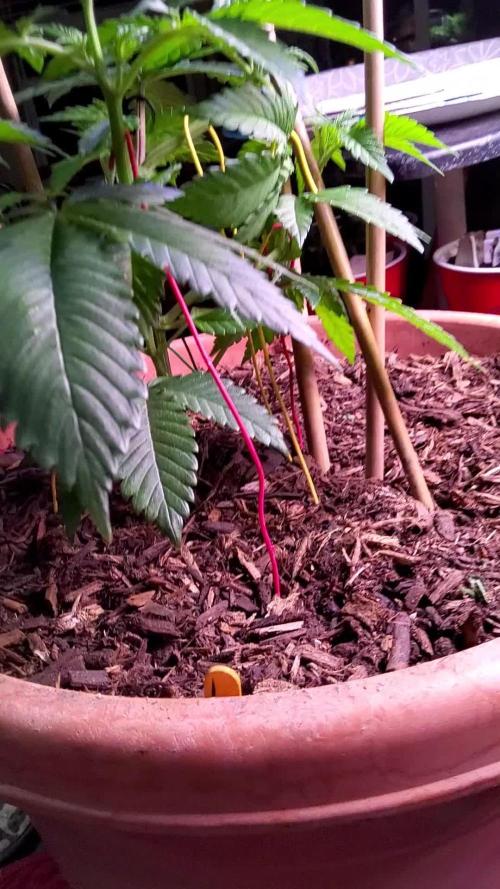
The Durban Poison quartet is hitting its stride this week. Looking at the latest photos and video, it’s clear that the training regimen is paying off. The focus of Week 8 has been "Low Stress, High Reward" as the plants prepare for their final move.
Plant Progress: Structural Integrity
The visual profile of DP1, DP4, DP5, and DP6 is looking fantastic. The foliage is a thick, vibrant green, and the node spacing is tight, indicating they are getting optimal light levels.
Training Technique: The colored LST stakes (red, yellow, and green) are doing a great job of pulling the main stems and secondary branches down. This is creating a level canopy, ensuring that no single "top" is hogging all the sun.
Leaf Profile:You can really see those classic Sativa fan leaves coming in—long, slender fingers that are starting to overlap.
Root Health:** The main stalks are thickening up nicely, showing good woody strength that will be necessary once they are in the larger 25-gallon bags.
The "Defensive Perimeter" Status**
The video and photos show the African Marigolds are making great progress in their Solo cups.
Current State: They are showing multiple sets of true leaves and look ready for their supporting role.
Placement: Having them staged right next to the DP plants on the deck ensures they are already familiarizing themselves with the local environment before the big transplant.
The Indoor/Outdoor Rotation
The photos highlight the flexibility of the current setup.
Sun Chasing: The plants were captured both under the supplemental indoor lighting and out on the deck. This "hardening off" process is crucial for preventing leaf scorch when they eventually move outside full-time.
Mobility: The use of the various pots and the proximity to the garden furniture shows how easy it is to shuffle these girls around to catch the best rays or find shelter from the wind.
Observations & Nutrition
The soil looks well-aerated with a healthy amount of wood-based organic matter. The plants aren't showing any signs of "clawing" or nutrient burn, which means the current organic feeding schedule is hitting the "sweet spot."
Next Steps:
1. The Big Move: All eyes are on the upcoming transplant. The plants are definitely reaching the limit of their current containers.
2. Monitoring: Keep an eye on the LST stakes; as the stems thicken, we’ll want to ensure the wire isn't cutting into the "skin" of the stalks.
3. Hydration: With the plants getting larger and the Colorado air staying dry, we'll be watching the soil moisture closely to ensure the microbes stay happy.
-Keep growing and stay mindful ✌️

Likes
8
Share

@RBG
Follow
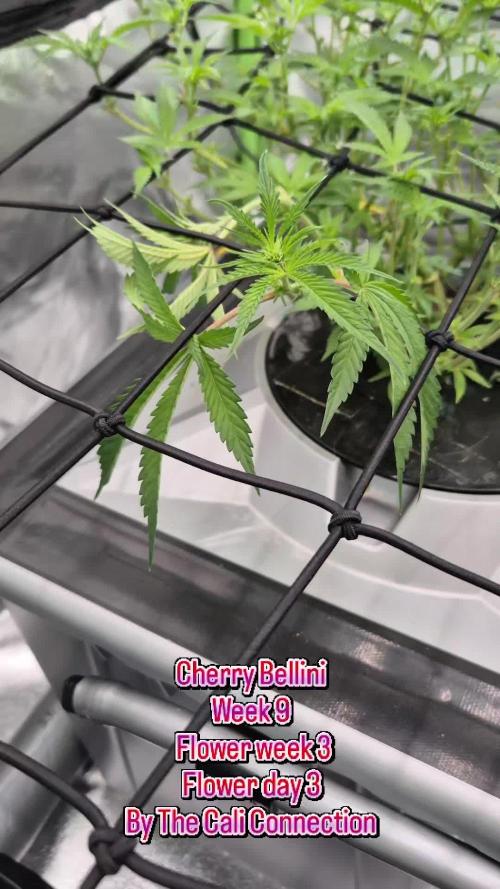
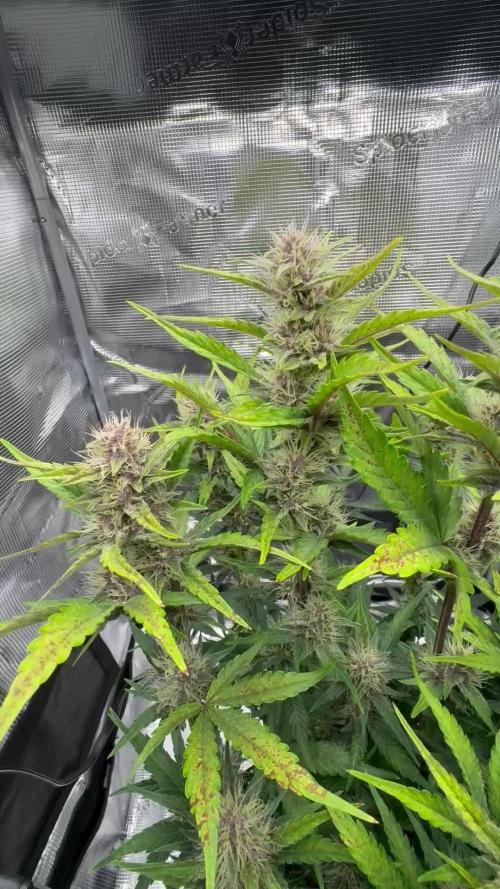
28/10/25
Nutrients change today ( a day early ) because i didnt like how she smelt, so flushes, filled hit with 400ml sleeps then flushed, refilled and nutrients
Floramax veg 1
Floramax Rezin plus
Floramax flowering enhancer
Floramax Organabud
Green Planet vitathrive
Isn cal mag
Green planet massive bloom
Green planet bud booster ( 30ml scoops x 4 )
Cyco platinum series silica
Sleeps with the fishez ( HOCI )
Hit 4.8 e.c, changed 100L got 2.3-2.4e.c, 6.1ph. Used a lot but wanted to get rid of the Green planet line plus the ISN cal mag as im switching out to sensi cal mag
Week 3 here we go!
29/10/2025
Light defoilation trying to use the scrogg net as much as possible to get as much light in as i can

Likes
8
Share

@420DeepGrow
Follow
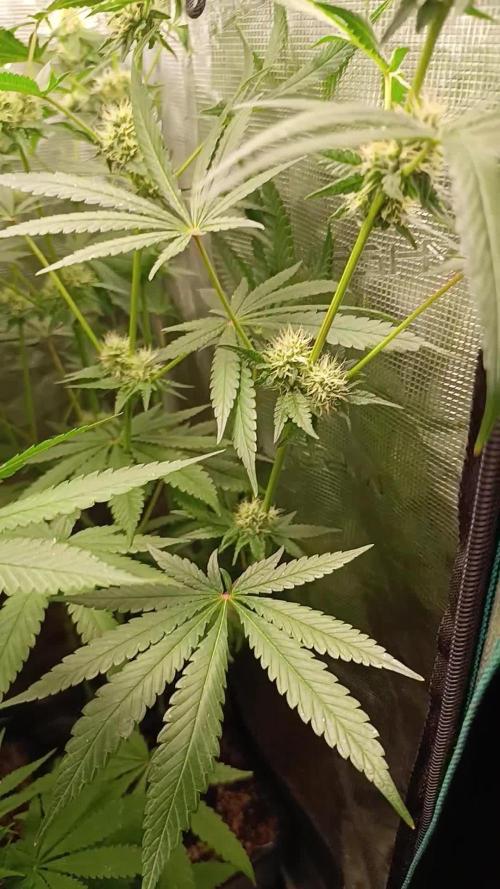
📆 Semana 6
El stretch llega a su fin y las plantas centran definitivamente su energía en el desarrollo de las flores. Los cogollos comienzan a compactarse con rapidez, los cálices se apilan y la producción de resina aumenta de forma muy evidente. El fenotipo más vigoroso ha sido trasladado al armario de mayor altura para que pueda completar su desarrollo sin limitaciones, mientras el resto mantiene una estructura uniforme y preparada para afrontar la fase de máximo engorde.
⚡ EC: 1.6–1.7
💧 pH: 6.2–6.4
🌡️ Agua: 19–21°C
🌫️ Humedad: 40–45%
💡 Luz: PPFD 900–1000 | Fotoperiodo 12/12
🔥 Nota: Tras realizar el lollipop, la canopia presenta una mejor ventilación y penetración de la luz. Mantengo todos los parámetros estables para favorecer un engorde uniforme, evitando excesos de sales y permitiendo que las plantas expresen todo su potencial.
Seguimos creciendo fuerte! 💪


Likes
19
Share


@Sergio_721
Follow
So far it seems to be fine even if the high humidity worries me even if the temperatures are still high then they have stopped growing and will finally focus on the flowers and slowly we recover these small deficiencies
Likes
4
Share


@adam_pawloski87
Follow
@twenty20mendocino Ateam R&D Update ~ Let’s go day 91 an these girls are doing amazing! Looking nice an healthy we will let these girls recover for a few more days from the heavy defoliation and on Sunday we will be giving them the big flip , Let’s go flower!! Updates coming soon !
Sangria has been doing her thing , been drying for12 days now so Sunday we will be giving her the trim and jar her up, but updates coming soon yall!! Let’s have an amazing productive day as well as a great safe weekend, peace love an positive vibes to y’all Cheers an blaze on 😶🌫️💨💨💨💨

Likes
34
Share


@rhodes68
Follow
11/15 Week 2 and very happy
For now feedings remain :
In two cups PH 5.9 - .6ml each of CocoTek A&B and Fish Sh!t (for the metabolics) to generous runoff.
No reason to change until transplant when I add the root juice
Feeding daily may increase to twice daily when the EC meter gets in Monday as I have found some insight on coco from this:
https://www.amazon.com/Coco-Cannabis-Growers-Dr-M-J-ebook/dp/B07G9LR4W2/ref=sr_1_1?keywords=coco+for+Cannabis%3A+A+Grower%E2%80%99s+Guide&qid=1573956241&s=digital-text&sr=1-1
Free Kindle book if you have Kindle Unlimited.
11/16 New Pic and Vid
11/18 Moved to veg tent and transplanted into 1 gal intermediate fabric pots. Looking good
Almost forgot -
Fed cocotek and kangaroots when transplanted at 5ml/gal and 10ml/gal respectively. Going to start increasing the concentration of the cocotek upwards and keeping an eye out for def
11/19 Feedings will be twice a day in these pots
5ml Cocotek A&B (well 10 total) 4ml Fish Sh!t (seem to like the stuff) / gal at 6.0 ish not going to get anal about it just careful
Possibly add 3ml of CalMag should I see a wisp of reason to do so.
Like what I am seeing so far
Getting more Fastberry those were my last two seeds.
Meter got in - TDS of the above feed is 575 with tap water being 210 giving a nuet level of 365 well within seedling and early veg limits, so plenty of room down the road.
Will be working it up as I feel right but I am getting a water filter, not RO perhaps but it needs to come down.
Heh wont be needing Si that's for sure