


Likes
Comments
Share


@Batista
Follow
Another week has passed.
We noticed uneven growth and the presence of 3 leaves per node.
This week the air humidity is very low, so we are watering every day.
We also did the Main-Lining on the third node, we used the top part to make a clone, started the LST and did supercropping on the side branches.
This is the first time we've done Main-Lining and suppercropping, so let us know if we're doing something wrong.
Tips are very welcome!

Likes
37
Share


@masterofsmeagol
Follow
8/19 Rained again last night. No damage but medium is drenched. The 9lb kush I've been struggling with seems to be improving. I spent a lot of time on her yesterday and at least an hour this morning defoliating and pruning her. New growth and flowers look promising. I'm cautiously optimistic. I defoliated what needed it. I needcto qpplyvorganocide again. I can see random signs of septoria leaf spot. I really have been off my fame lately. I'm back on it now. This week the garden will be rearranged and I'll pull that big GDP back and better support the blueberry for flower. That NYCSA is a beast. It's resilient as all hell and just continues getting bigger and fuller. Despite pr9blems in the garden this girl seems absolutely fine. At least I don't have that defeated feeling anymore. I've got flowers on a few different plants. I'll try to get a couple pictures. I may take rapacaps advice and add a cheap plastic roof for later flower. I'm not sure if the explosive flower growth is due to the liquid kool bloom but I think I'm going to switch back to tiger bloom as it works better with the other nutes. I'll jeep this updated but I've got work to do.
8/20 Well it Rained again last night. This is getting discouraging. Now my other 9lb kush has the bottom branch all droopy like there's a borer or something. Realistically with the temp swings and the weather I think it's a firm of root rot or pythiym damage which isn't good. I posted pictures of the stalks and would be grateful if anyone has any advice. I'm go8ng back down to look again for a borer hole but i didn't see one. What it looks like to me is that the petroleum jelly I put on the stalks (to battle ear wigs) seems to keep them moist or something inviting mold or fungus. I'm kind of at a loss. I don't really know where to go from here. I don't know if I should just replant the severely damaged plant away from the rest of the grow, bag it and get rid of it or leave it be and hope for the best. I certainly don't want anything spreading. I'm getting tigerbloom today as my plants still need to eat and I'm nervous about the liquid kool bloom. It's probably fine but still. I'll update after I put in more work and research more today. Any advice helps. UPDATE: No borer holes. The stalk looks fucking horrible. It's supposed to rain today. I'm going to give it one more day then I'll amputate that branch and get rid of the other plant if I don't see an improvement. Perhaps I'll plant it in the ground. Don't really know what to do. Family bar b que today so my options are limited.
8/21 FED TWO GALLONS TO THE GARDEN. ONLY USED .5TSP/GAL OF LIQUID KOOL BLOOM. Did not feed dieing plant. Back to super hot weather 80° at 9am. Did a lot of research last night. I also went to several commercial growers and asked advice. What I came up with was a fusarium infection of pythiym infection
(Crown rot). I looked at all my stalks and they all have bark and are darker where I applied the petroleum jelly. I'm also NEVER using DE again. It fucking ridiculous amounts of water. Everyone swears by it bit it's not going in my garden again. Since use I can just watch water sit right on the GD soil. I tried to get some examples of what I'm talking about with the stems. I amputated that lowest bottom branch I trained (which was huge). I didn't have time to dispose of the other plant before my wife's doctor's appointment. I'll update when I go back over. I'm sure this won't help and may hurt but I used Bee Safe 3 in 1 on the wound and around the stalks of the plants I saw discoloration on. I didn't touch the NYCSA even though I see some discoloration. I may just be seeing things. That plant I'd super healthy and I don't want to risk losing it. It doesn't seem to have the stem rot like the others. At least I'm not the only one having problems. I hears some pretty bad stories. Still. I'm heart broken. I'll keep this updated after I go back over. FUCK. I MAY just go back to indoor. UPDATE: Got back from the appointment and the rest of the plant was all droopy just like the other 9lb kush (and the branch amputated). I wondered about that because other branches looked worse. I got the totally dead 9lb kush out and found some root rot. AFTER wheeling the bag out I found earwigs and other insects where the bag had been. Awesome. I used h202 to try to wipe down anything that looked Fingal in the stem. It sucks because it seems like that liquid kool bloom pushed them over the edge into flower. Cotton balls where there was nothing. So that's both my 9lb kush plants and the largest plant of the year the GDP that have all bit the dust. If you grow cannabis you know how I'm feeling. I KEEP TRY8NGVTO UPLOAD THE MINUTE VIDEO I TOOK BUT I CLICK ON SOMETHING ELSE AND IT DISAPPEARS. WIFI SLOW. HAVE TO WAIT FOR 5G
8/22 What do I say? Fusarium? Pythium? Stem rot? I'm going to have to get a tent to do some indoor to get the medicine I need for me and my wife. I took the last 9lb kush out and disposed of it. Well it's still in the bag. I'm hoping maybe it might come out of it (beyond hope and far away from the others (but I'm going to toss it today). This blows so hard. Flowers are just starting to develop. I like the liquid kool bloom. It seems to make flowers explode when there was none before. At least on the plants I have left. Actually even the dieing ones started flowering. I'm really concerned considering that one plant (at least) has septoria and every plant has that petroleum jelly on it. Cautio to people that use that. It seems thats where the rot started or is. In spots I spread the petroleum jelly. Anyway my NYCSA has the smallest amount of "funky looking stuff on the stem" so I'm hoping it will make it. Cotton balls starting to appear. If I lose the whole fucking crop I'm gonna go ape shit. UPDATE: Spoke with a few others and did more research. I removed my braces on the bottom of all the plants. It looks like the pjelly and the brace allowed for some type of contaminate. Other growers think I'm being too bleak. They think things will turn out okay. They are more knowledgeable about cannabis than me but I'm with these particular plants everyday. They're probably right and my anxiety is just getting g to me. It's scary seeing a healthy plant completely die in such a short time. After removing the other 9lb kush I could easily see extreme rootbound roots still too the size of the 1 gallon they came in. The bag was PACKED FULL of tight roots so they definitely made it down. The plant however just fell over when I pushed it. I had roughed it up a big before. Anyway I'm praying to the cannabis gods to not take what I have left.
8/23 Fucking pouring again. This sucks. I've gotten loads of advice and made another friend on here. I forgot my phone so I couldn't take pictures this morning. My spirits are up a little seeing that others are at least attempting to help. I'm headed to the grow shop after a night of research to grab supplies to battle this. I'll update later. EDIT: I picked up plant doctor at the grow shop. It was 50% off and I couldn't find anything with trichodermia. However, I've heard good things about this plant doctor. It's systemic and can be used as a root drench and a foliar spray. BIGGEST selling point for me is that it SPECIFICALLY lists fusarium, grey mold. Pythiym crown rot, black mold and all kinds of other shit. The thing that sucks is it's raining and it's not supposed to stop for a few days. That's going to make application more difficult. Oh well. I think I may do a root drench on the one plant that has a wilted bottom branch. I'll keep this updated. Thank you everyone who reached out. Especially growing grannies and my commercial buddy who is always here for me. However he has no experience with this so I'm kinda on my own here. EDIT: I couldn't find trichodermia and I don't have time to wait around and order. I found plant doctor which literally lists it treats all the possibly pathogens my issue could be. Even has a section for medical Marijuana. I did a root drench on the plant up front in the middle AND I did a foliar spray. Might as well get the septoria too. It's systemic but it gets in faster through the leaves I guess. It started sprinkling and I want to test this stuff out before I go ham with it. I did give some to the to other plants bit left my best AND THE TWO SMALLER ONES alone for now. I'm not seeing those issues on the NYCSA and I don't want to risk damaging it. I chose tge root drench as it's raining and the instructions for fusarium WAS a root drench. Thank you all for your help. I will close out tge question once I know it's figured out. Wish me luck. DID A SHORT VIDEO BUT WIFI IS SUPER SLOW SO I NEED TO WAIT TO UPLOAD IT. Went back over. Finished foliar spraying the other two and left the NYCSA and two Littles alone. Hopefully this works. I did I short video. Who knows if it uploads. UPDATE: Went back over and finished foliar spraying. Took a bunch of pictures and did a video but it didn't upload. I'm hoping this will do it. Plants actually look good. And they're flowering nicely! It's too bad I had to do a foliar bug this us supposed to combat PM and septoria as well.
8/24 It Rained last night but hasn't Rained today yet. It's supposed to and uts overcast. I'm really considering putting a roof on my grow (like rapacap suggested) for flower to decrease mold chances. Plants looked happy. I saw no negative effects from the Plant Doctor. I even sprayed a branch of the NYCSA and the stem and a little around tge roots. I finally feel like I can take a breath. I've been working so hard and worrying about losing g everything. I may have been able to save that 9lbkush but I don't think bit was worth taking the chance. The sun is peaking out now. My buddy at the grow shop called and set a side general hydroponics armor si 0-0-4 silica supplement cause it was 90% off. I pad like a buck sixty lol. I'll incorporate that next feed or water. Whatever comes first but it will be good to get it in the regimen. I was worried plant doctor might hurt but the girls seemed to kike it and I went ham on the worst plant. I mixed according to medical Marijuana guidelines on the label
(Theres another label on the internet, it's not on this one, it's at the very bottom and just recommdations from commercial growers. I hope this stuff works. Things look better already though. That liquid kool bloom is the bees knees. That's making flowers pop up like crazy! I think I'll stick with it. I was going to use beastie bloom and cha ching later on (and still might) but I hate the lockout bullshit. I've done a bunch of videos but most don't get uploaded as i forget to upload when I leave and wifi is slow here. Anyway at least I've got a few good ones left and pleating the words of my commercial poll buddy, "barring anything catastrophic you should be fine. I know your anxiety gets the better of you sometimes." Couldn't be a truer statement. I'm still getting a tent and doing indoor though. I'm going to need to.
8/25 Did some slight defoliation. I think today I'm going to reorganize my grow space. Things are looking better though. Plants look healthier. Flower is on and they are going to beat hell. I'm glad I took a cutting from NY 9lb kush. I also took one from the NYCSA. THose are tge little ones. The 9lb kush is flowering pretty good. Too bad it's just on a 3 gal. The NYCSA us in a 10 gal grow bag though and is doing amazing. I still see septoria on the leaves. I'm sure I'll need to reapply plant doctor but thus far I'm impressed. Things LOOK better. I don't even remember the last time I watered. It Rained last night. Looks sunny today. I'm going to feed tomorrow. I want the soil to dry out though. We usually don't get consistent rain like this. It's a first for me. I'll update later if I get stuff done.still wondering if I should amputate that wilted branch or give it a bit. It's still attached right now. I'll get some sealant and do some more research.


Likes
14
Share


@MrReeferMadness
Follow
Thought I'd show you guys some root growth. The 3 plants in the video are all gorrila zkittlz.... Non of which look the same or are growing the same way lol. No complaints its just interesting too see such difference characteristics from the same strain.
GS#3 The tallest isn't as busy but has huge root growth and strong branches (thinest leaves darkest green)
GS#1 The smallest the probability the most symmetrical but shortest in root growth (widest leaves and lightest green leaves)
GS#2 The Mid size plant is basically a mix of both all round


Likes
120
Share


@DogDoctorOfficial
Follow
Welcome back to another thrilling update on our Lego Ninja Tropical Tangie Run. Week 7 has been an exhilarating journey of rapid growth and breathtaking canopy development. Our Tangie is proving to be an extraordinary ninja superstar!
Last week, we embarked on an exciting transplant adventure. Our fearless Tangie had outgrown her previous home, so we bravely transferred her to a spacious 25-liter fabric pot. With the assistance of Aptus Holland Mycor Mix, we ensured a smooth transition, providing her with beneficial mycorrhizal fungi. These underground helpers are like her very own ninja squad, supporting her root system and establishing a strong foundation.
To continue supporting her growth and development, we incorporated the incredible Aptus All-in-One Pellets into the soil. These pellets act as potent ninja power capsules, packed with essential nutrients. Each watering session delivers the perfect dose of nourishment, fueling our Tangie's journey to greatness. She's thriving with optimal health and vitality.
And let's not forget our loyal companions, the trusty Lego Ninja buddies. They have remained steadfast by our side throughout this green adventure, offering both moral support and an unwavering display of ninja vibes in the grow room. Who would have guessed that little plastic warriors could be such fantastic companions?
After the successful transplant, it was time to introduce our Tangie to the art of scrogging. We skillfully installed a scrog net, creating a framework for her to weave her way through. This setup resembles a challenging ninja obstacle course, encouraging her to grow horizontally and maximize her bud production. It's truly remarkable to witness her impressive moves as she gracefully and sexily fills up the space.
Of course, proper nutrition remains crucial for our Tangie's ninja training. Instead of using Aptus Holland Veg Watering Mix and All-in-One Liquid separately, we have now transitioned to solely relying on the pellets. These convenient premixed pellets integrated into the soil eliminate the need for additional liquid NPK. This simplification allows us to focus on other essential aspects of her training.
To ensure she remains pest-free, we have been diligently conducting leaf picking sessions, which also serve as an opportunity to check for any unwanted visitors. So far, our Tangie has passed with flying colors, and her vibrant 9-fingered leaves are a fantastic sign of her overall health.
As our Tangie continues her epic ninja journey, she basks in a PPFD of 600. These photons act as her loyal ninja training partners, stimulating robust photosynthesis and fostering explosive growth. With each photon absorbed, she becomes increasingly formidable, ready to take on any challenge that lies ahead.
In summary, Week 7 has been an absolutely exhilarating chapter in our Lego Ninja Tropical Tangie Run. The successful transplant, the magic of Aptus products, the support of our Lego Ninja buddies, and the installation of the scrog net have all played vital roles in our Tangie's remarkable progress. We owe a tremendous SHOUT OUT to Aptus Holland, Dutch Passion, and Grow Diaries for their continued support and exceptional products for the love and for it all, without them nothing we see here wold be possible.
Join us for the next update, where we will delve deeper into the fascinating world of ninja training techniques and witness the unfolding of our Tangie's extraordinary ninja powers. Until then, continue cultivating with joy, embrace the indomitable ninja spirit, and remember that every plant has the potential to become a botanical ninja superstar!
As always thank you all for stopping by, for the love and for it all , this journey of mine wold just not be the same without you guys, the love and support is very much appreciated and i fell honored and blessed with you all in my life<3 <3 <3
#aptus #aptusplanttech #aptusgang #aptusfamily #aptustrueplantscience #inbalancewithnature #trueplantscience #dutchpassion #dogdoctorofficial #legoninjago #growerslove
With true love comes happiness <3 <3 <3 Always believe in your self and always do things expecting nothing and with an open heart , be a giver and the universe will give back to you in ways you could not even imagine so <3 <3 <3
Friendly reminder all you see here is pure research and for educational purposes only
<3 <3 <3 Growers Love To you All <3 <3 <3


Likes
12
Share


@StonedandSteady
Follow
AutoBlueberry 10th w/ 5th W/ Flower breed by #DivineSeeds #DivineSeedsSquad #DivineSeedsBreedingCompany
3rd feed of #NukeHeads Nutrients #PlutoniumBloom and a look at my #Opium by #DivineSeeds at her 4th day of Dry! Can't Wait to Blaze!!! This AB is Flowering out and her Smells are Super Strong of Gasy and Candied Blueberries! I recently Trained down her branches to expose more Bud sites and Removed the Biggest fan leaves to expose the Bud site's to this Glorious #OsreeQB1000w Full Spectrum Grow Light! I've also Super Cropped, Topped um, Defoliated, Leaf tucked, and Implement the 3D's method like my Broski #TigerfishOrganics to remove the Dead, Dying and Diseased leaves!
Origin:Afghani/Thai
Type:50% Indica/ 40% Sativa/ 10% Ruderalis
Flowering:56 days
THC:22%
Harvest:400-550 g/m2
Height:110-150 cm
They were Growing under the #Growatt600w and in my #TopoLite 24×24×48 Grow Tent but I've Upgraded and Updated it to my #OsreeQB100W I'm also using #TNBNaturals #TheEnhancer Co2 Despersal Canister and using thier Ph⬆️⬇️ for my Decolinated Tap Water!
Green and Growing Up Great! She's Growing into her 5th week of Flower! She's Growing in my special blend of ProMix potting mix, a 1/2 bag of Earthworm castings and 2 light handfuls of Diatomaceous Earth mixed Up well for before transplanted! Diatomaceous Earth: Diatomaceous earth is made from the fossilized remains of tiny, aquatic organisms called diatoms. Their skeletons are made of a natural substance called silica. WHAT IS DIATOMACEOUS EARTH?
In a nutshell, DE comes from the fossilised remains of small marine organisms called diatoms. Over a 30 million year period, these hard-shelled algae collected on the bottom of bodies of water, eventually forming into a type of sedimentary rock. Fast forwarding, it wasn’t until around 1836 that a German peasant Peter Kasten discovered the ivory-coloured, powdery substance while drilling a well in northern Germany. Ever since, the usefulness of DE for multiple purposes, including industrial and horticultural applications, has been well-reported. Just sprinkle some diatomaceous earth on top of your soil and watch mother nature's secret weapon work its magic.CONDITIONS THE SOIL
When it comes to growing cannabis, everyone strives to provide the best soil to grow the best plants—but there’s always a way to make it even better. Making the soil a better medium is called soil conditioning, which is exactly what diatomaceous earth does. It works by improving the retention of moisture in your potting soil, holding a large amount of fluid and drying at a rate that’s much slower. This natural soil additive also helps to retain nutrients and allows for better oxygenation of the substrate. NATURALLY CONTROLS PESTS
DE is an all-natural, safe-to-use substance that doesn’t harm the cannabis plant with toxic chemicals. The nature of diatomaceous earth makes it useful against most types of insect infestation you might be experiencing; and unlike chemical insecticides, insects can’t develop a resistance to the effects of DE. So once they’re gone, they’re gone for good. DE is an abrasive. and when used as an insecticide, it gradually scrapes away an insect’s exoskeleton, absorbs the fluids, and dehydrates insects and other critters to eventual death. IMPROVES PLANT STABILITY
When using DE in your soil, it can be especially beneficial as it frees up nutrients so that they are made available to the plants as needed. This works via the silica content of DE being absorbed into the plant tissue, which helps improve the plant’s ability to respond and receive more nutrients as DE activates. This in turn results in greater yields and better stability under small pH fluctuations!
https://divineseeds.net/
https://instagram.com/divine.seeds?igshid=osxe2v7en33v https://divineseeds.net/
Thanks Again to All my Friends, Family's, Teams, Sponsors, Followers and Subscribers!!! Your Genetics are Merry Magnificent, Mega Marvelous and Mighty Medical! Love um!!! I really Can't stress enough how Thankful and Grateful I am of All of you and what you've Shared with Us! Means the World!!! It's definitely a Pleasure being able to Grow with these Phenomenal Grow Lights! Please Enjoy! BudBrothers4-Life! Cheers Famz!!! Much Props and Much Topz!💯🔥 #Osree #GrowStarStore #Growatt #TNBNaturals #TNBTeam #GrowYourOwn #Bliss
https://instagram.com/osree.light?utm_medium=copy_link
https://instagram.com/as420.ca?igshid=1f116alw054wp
The Grow Bags: https://www.as420
https://instagram.com/tigerfish_organics?utm_medium=copy_link
https://www.facebook.com/Tigerfishorganic/
#TigerfishOrganics YouTube Channel Link: https://youtube.com/channel/UC6OSXTda1JYaVNoCxdcYqIg

Likes
7
Share


@x_grower
Follow
Last week the plants grew looking very healthy although I still have a feeling the low humidity is slowing their growth, by the end of the first week I started raising the EC to make the increasing for this week smoother, run-off EC is substantially increasing so I will start to fertigate them twice a day for this week.

Likes
8
Share


@Edeplant
Follow
LED dimmed down to 40%, i.e. 48 Watt.
Tatanka Pure CBD Seed died on 2nd day (watch Video).
Replacing it with Painkiller XL and Northern Light auto - hopefully they spout fast and healthy this time.

Likes
13
Share


@Elpicor
Follow
04/05/2025 - 84 day
Finally harvested😇 both strains smells like a mix of tropical skittles also if they're quite different, Flushed 2 week ago then just watering, very happy with my harvest, waiting summer time for enjoy it, harvest week for dried buds pics in three weeks or one month.
Likes
4
Share


@KhaVigga
Follow
now im start to using many kind of sugar till harvest, beer-fpj-molasses-coconut water...

Likes
25
Share

@Bncgrower
Follow
In the penultimate week, the buds are dense and hard, with a very pleasant sweet citrus scent. In these 15 days before harvest, I start watering only with RO water and a pH of 6.0 - 6.4. At the beginning of the last week, and around 3 days before harvest, I flush with RO + Cleanse 10mL.


Processing
Likes
7
Share


@Kushizlez
Follow
(Days 28-35)
(Day 29) Everything seems to have recovered fine from topping so I transplanted into their 1.7 gallon pots. They were pretty rootbound so this should make them nice and happy. Going to start LST after recovery. Got a ton of holes poked around the rim of the bucket which should make tying down easier.
I’ve been asking around on some forums and reading some articles and I’ve decided to switch out my MH bulb for the included HPS bulb. Apparently HPS bulbs will stretch the nodes out quite a bit more and provide higher PAR value for the same amount of electricity. My plants are looking pretty small for day 29. Although, that could just be from stuffing 15 plants under one 250-400w light.
I’ve been powering the lights up to 400w at night and back down to 250 during the day. 400 just gets it too hot during the day (86-88) without ventilation. That temperature should be fine in veg once my co2 has really built up some mycelium.
(Day 32) Just got 14/15 topped. The BCTG runt is just going to be lst’d and not topped or fimmed. I decided to just fim the plants I started later so they’d have a bit more time to recover and catch up to the others. I also LST’d all 9 quite well. Almost had a stem break but she’s doing just fine now. The deformed bbb was accidentally fimmed and as a result it’s got a very trippy looking main stem that has branched off into 6 mains.
I definitely have fungus gnats. Fuckers must have got in with that coco I bought from hydro store. This has never happened to me with just promix but the benefits of coco are too much to pass up. I might order an OG BioWar/capsbennies/grubgrenade to help naturally get rid of them.
I’m getting some confirmed yellowing on bottoms of the zkittlez and WW’s. They must be heavy feeders because no other plant in the tent is getting yellow like that. I’m going to feed a compost tea, top dress everything at full strength and mulch in some worm castings to help break it down faster. Will also do a foliar spray with some insect frass, microbes and m1pps.
(Day 33) Got some more of that marine phytoplankton stuff to help stabilize my RO water. It’s got a good amount of soluble magnesium and trade minerals in it so that should help stop the yellowing on the zkittlez and WW.
(Day 34) Things are looking great so far and they’re all recovered from topping/transplant/lst and thriving. Some slight yellowing and a few of the plants are cupping from heat and high humidity. I just put in a dehumidifier to help bring the rh down. The m39/zkittlez bagseed plant is just outpacing everything in the tent by 4-6 days. No wonder organized crime used to grow it. I hear it can completely flower in 45 days with a solid yield and very little trimming or leaf matter. It’s very weak on the high and smell though. Nonetheless it should be nostalgic to try those old terps. There is still a small chance that it’s a super vigorous zkittlez plant too.
Plants should be showing sex this coming week. Hoping for 8+ fems but I can make do with just 4. 1-3 is unlikely but that would piss me off beyond belief. I’ve heard of it happening though.
Processing
Likes
1
Share


@Esebees
Follow
Cambiamos de fotoperiodo y las plantas rápido han pegado el cambio y ya sacan los primeros pelitos
Likes
16
Share


@MountainFlowers
Follow
Final Report:
Grow:
The plants has grown very beautiful and healty without pests and diseases. They grown bushy and with medium height during all the life cycle.
I had try to use LST in third veg week but i did't made correctly and after that i dicided to return to grown normally without any particolar tecnique.
I used a littel more fertilizer then mine usual and that made the plants grown fast with only a littel bit of leaf margin burn which I solved by decreasing the quantity.
In the first two weeks of flowering stage the plants started grow not to very tall (except for one) and the number of the branches increase, in this phase i only defoliated when the fan leaves turn yellow in late stage.
During all flowering stage the flowers grown but they remained very soft, they turned dense and bigger in the last weeks and this time i waited until almost all of them were mature before harvest the plants(I waited a littel more respect OG Kush CBD).
I changed the taller plant from one grow room to another(in the sixth week) when she became too high and she couldn't stay more in the smaller grow box(nothing changed in the enviroment between the two boxes).
Equipment and grow box:
The enviorment of grow box has been optimized every stage with the right temperature, umidity and air flow.
Vegetative temp/umidity --> 23-29 °C/45-55%
Flowering temp/umidity --> 20-26 °C/40-50%
The air flow was created by two pc fans and one big fan.
Harvest:
This time the plants were full of dense buds but the lower branches had many fluffy flowers(i used them to make some hash) but the result not change too much .
The result of this grow is amezing compared to my old expiriences.
I harvested the flower and i made a fast curing process after i washed the crop and i let them to dry with a fan on it.
After five days a take the branches which were to dry and i did the final trimmig before put all the harvest in a open jar for finishing to dry.
I collected all the leaves, fluffy buds and trimming scraps in a bag and i let them dry.
I harvested the taller plant before the other two because she had matured earlier(with the OG Kush ladies).
Later i put the bag in the freezer and when i collect and dried all the scraps from OG Kush and Dandoverde Haze i did some Ice-O-Lator hash.
I used 250g of trimming stuff and i made 11.50 g of hash, I had use a set of 5 bag and i take the resin from the 160µ - 120µ - 73µ- 25µ bags.
I pressed all the resin in a great block of tasty strong hash.
Always better every time 😊💪
Total harvest ---> 126g only of dense buds and 11.50g of hash.

Likes
28
Share


@Harrythehat
Follow
Day 1
Top up 1 x 10 lire with 60 ml bloom
nutrient change tomorrow.
nothing near harvest yet
Day 2
nutrient changed refilled @ 60 ml per 10 litres
top ups will be 50 ml now
day 3
1 x 10 litre top up 50ml bloom
day 4
2 x 10 litres with 50 ml bloom in each top up
Still no signs of trichomes turning
used maybe 12/4 litres
nutrient use has dropped a little bit must be getting near to harvesting some soon
day 5
2 x 10 litre top ups with 50ml bloom in each probably used around 17 litres
day 6
2 x 10 litres 50 ml bloom in each used around 16 litres
last day of this week 1 x 10 litre 50 ml bloom

Likes
13
Share


@Growyourownathome2x2
Follow
7th of May Day 59 day 11 of 12/12 4 plants are looking healthy the stretch has started and and the canopy is starting to get a bit dense I may rom I’ve some large fan leaves on day 14 of 12/12 to give better airflow and allow for the lower growth to get more light, I can picture the colas already 😁🍁 ppm still going in at 650 ph 6.5, i top dressed each plant with fish blood and bone mean 3 table spoons to each 3gal pot on day 1 of flower
Likes
11
Share

@MaryJaneJo
Follow
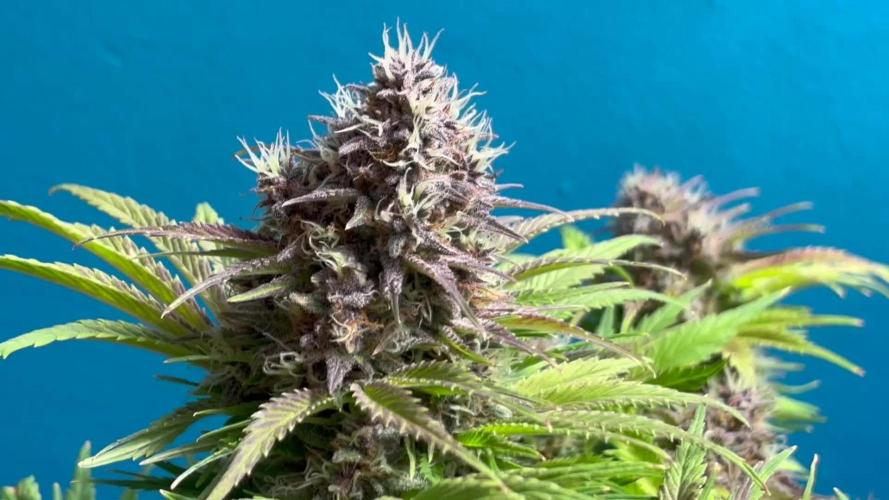
This video was taken just before the chop. It took me forever to cut the first branch __she seemed too pretty to touch with scissors.
Feelings aside now.
Time slipped again and it turned out to be her 9th week. Trichome checks were tricky because of the side lighting, often too close to the plant, so they were not consistently filling up__mea culpa. If I only had more space… & had not damaged the main stem…
As for patching up the broken stem, I am not sure it was a great idea. She grew OK, but the stem at the patch spot looked like it had maybe 40% living tissue left.
BAK__ more in a jiff.👽
Likes
9
Share


@420DeepGrow
Follow
Gracias a James, Royal Queen Seeds, Marshydro y XpertNutrients sin ellos esto no seria posible.
💐🍁 Wedding Crasher:
Para crear las semillas Wedding Crahser, los criadores de Royal Queen Seeds cruzaron la deliciosa Wedding Cake con la Purple Punch.
Los cogollos resinosos de la Wedding Crasher desprenden un característico aroma a uvas, con un ligero toque de vainilla. Si la fumas en porro o vaporizador, podrás disfrutar de una hierba suave y dulce con un fondo de frutos del bosque. Los efectos de la Wedding Crasher son alegres y energizantes, pero también relajantes
En lo que respecta a sus cosechas, esta variedad produce hasta 500g/m² en interior en condiciones óptimas, tras una floración de 9-10 semanas
🚀 Consigue aqui tus semillas:
https://www.royalqueenseeds.es/semillas-feminizadas-de-marihuana/538-wedding-crasher.html
💡FC6500: Eficiencia líder en el mercado: la lámpara de cultivo LED FC-E6500, que ostenta un estatus líder en el mercado, es una solución rentable con un PPE de 2,8 µmol/J y un rendimiento máximo de 2,5 g/vatio. Ofrece un PPF alto de 2026 umol/S y es adecuada para una cobertura de vegetación de 1,50 m x 1,50 m y una cobertura de flores de 1,20 m x 1,20 m.
Iluminación versátil y uniforme.
https://marshydro.eu/products/mars-hydro-fc-e-6500-730w-commercial-led-grow-light/?gad_source=1&gclid=Cj0KCQjw1qO0BhDwARIsANfnkv9IIrYSbmJqz8PqpJOIyWwJfp5bc3SGJgUV68USLQ4tjmXDYwoBuAsaAue3EALw_wcB
🚥 MarsHydro ADLITE UV/IR/RED:
Para lograr un crecimiento óptimo de las plantas y maximizar los rendimientos es un arte simple que depende en gran medida de las condiciones ambientales adecuadas. Reconociendo las limitaciones de la iluminación natural y las soluciones de iluminación tradicionales para satisfacer estas necesidades únicas, lanzamos ADLITE. Estas luces especiales UV, IR y roja están diseñadas para llenar áreas del espectro, proporcionando las altas longitudes de onda que las plantas necesitan para un crecimiento y desarrollo óptimos.
🚀 Consigue aqui tu Adlite:
https://marshydro.eu/collections/adlite-supplemental-lights/
🏠 : Marshydro 1.50 x 1.50 x 1.80, carpa 100% estanca con ventanas laterales para llegar a todos los lugares durante el grow
https://marshydro.eu/products/diy-150x150x200cm-grow-tent-kit
🌬️💨 Marshydro 6inch + filtro carbon para evitar olores indeseables.
https://marshydro.eu/products/ifresh-smart-6inch-filter-kits/
🍣🍦🌴 Xpert Nutrients es una empresa especializada en la producción y comercialización de fertilizantes líquidos y tierras, que garantizan excelentes cosechas y un crecimiento activo para sus plantas durante todas las fases de cultivo.
Consigue aqui tus Nutrientes:
https://xpertnutrients.com/es/shop
📆 Semana 14:
Última semana de lavado de raices antes del corte final, ha quedado una planta con cogollos muy compactos y llenos de resina.
Likes
57
Share


@Silverback_Guerilla
Follow
I didn't weigh them wet...never do...but the dry weight was 430g for both plants!
Plant A: 229g
Plant B: 201g
Very heavy, very resinous, very tasty...awesome ganja!
I pressed a few ounces of it for the rosin, and it yields very very well.
Final thoughts:
My favorite strain from this grow. Not quite as tasty as the Zenzations, but the yield was spectacular and it's muy potente!
Yield: 10/10
Potency: 9/10
Flavor: 8/10
Aroma: 9/10
Density: 10/10
Resin production: 10/10
Muchas gracias, Sweet Seeds!
Likes
3
Share


@Barcelona_Farmers710
Follow
Booommm! Llegó la hora tan esperada Farmers nuestras flores llenas de resina acabandose de formar, la verdad que estas genéticas ayudan mucho al desarollo del cultivo espero que os guste!! Un banco seguro y confiable para una locura de olores y terpenos!!💚