Likes
Comments
Share


@Jerry101
Follow
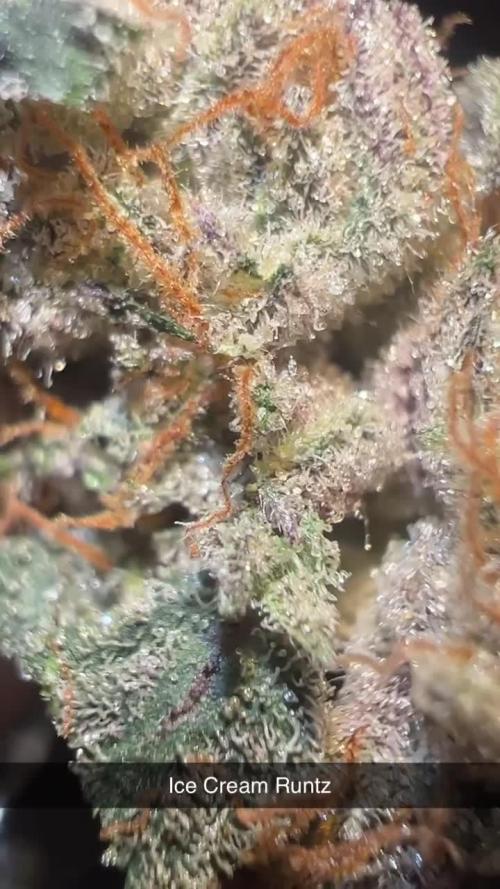
I didn't get to this until midweek. Humidity was higher than I like and soil moisture was low. Rotated this plant 90 degrees clockwise to ensure even light. Added 36 oz of water on top of what the drippers are delivering. Drippers were also moved 90 degrees to ensure even soil moisture. Humidity was lowered to 45%.
Starting flush this week. Began with pH'ed water only in the dripper. Will be adding water only with no nutrients for the rest of the week. Pistils are about 50% brown and the trichomes are getting cloudy. Buds are looking good. This plant still has about a week until harvest.
By the end of the week the buds are filled out. The pistils have mostly turned brown. The trichomes are clear, milky, AND amber... in the same view. Many shots are both clear and amber. I want a more active high so this plant is coming down next week. I think it is ready. It is very confusing seeing so many clear and amber trichomes on the same bud.

Likes
128
Share


@Tropicannibis_Todd
Follow
💩Holy Crap We Are Back At It And Loving It💩
Growmies we are at DAY 21 and she's just killing💀it👌
So I'm starting to see she needs watering every single day and now need nutrients 🙃
Lights being readjusted and chart updated .........👍rain water to be used entire growth👈
👉I used NutriNPK for nutrients for my grows and welcome anyone to give them a try .👈
👉 www.nutrinpk.com 👈
NutriNPK Cal MAG 14-0-14
NutriNPK Grow 28-14-14
NutriNPK Bloom 8-20-30
NutriNPK Bloom Booster 0-52-34
I GOT MULTIPLE DIARIES ON THE GO 😱 please check them out 😎
👉THANKS FOR TAKING THE TIME TO GO OVER MY DIARIES 👈

Likes
51
Share


@Bones_1986
Follow
She is still in a nice routine of having 2/3 liters every 2 days. Like clockwork. Will be using overtime instead of big bud in a week.
Finally stopped growing vertical growth I believe at 37 inches, now I'm excited how fat these buds are gonna get.
The 5 gallon has so many Colas they are beautiful.
Day 45 -
Buds are really starting to fill in and fatten up. Drinking 3 liters every 2 days now with pots drying out fully
Day 47 -
my 3 gallon pot i am feeding half dose nutes compare to the 5 gallon pot which is needing more N. she is much more thirsty drying out faster too. Makes sense she is double the size in all ways.
Likes
18
Share


@lino06000
Follow
17/07/22 des fruits apparaisse dans une grande majorité ,j'ai essayer de scrog les chessecake et les wedding glues en bon débutant j ai casser une branche que j'ai essayer de reparer a la macgyver tout sa en photos!.je suis très satisfait du milieu de cette semaine !
22/07/22 demain dernier jour de la semaines des fruit a 90% partout plutot bien lancer mais pas très homogene j'ai pas mal de progrés a faire^^
très bonnes semaine a suivre
Likes
1
Share


@Not_A_Farmer
Follow
Just starting vegetative stage as it looks like we made it through a week of seedling stage very nicely ! Watering about an ounce every 36 hours! In all these plants are like 10 days old. Keeping them in ac germ kit ppfd for smaller ones is 185 and other one is 200! Have added nothing just going with the original 75% promix ap with 25% worm castings! See you next week

Likes
12
Share


@DeepRootsGrowTrees
Follow
MIMOSA by ROYAL QUEEN SEEDS
Week #17 Overall
Week #16 Veg
This her last week of veg She's showing signs she about to start the flower phase that's always exciting to see that change. Stay Growing!!
ROYAL QUEEN SEEDS
MIMOSA

Processing
Likes
15
Share


@FishTankGrow
Follow
New Grow reusing old equipment from a fish tank LED and an IKEA fabric wardrobe. 😃
I hung two 75W LED Acan/Eco lamps inside the IKEA TENT I had laying around.
I bought a bag of Miracle Grow Organic soil and two pots at Home Depot for $20.
Pulled a fan out of an old computer.
Bought a $13 humidity and temperature gauge with Bluetooth. 😃
Ordered my Fox Farm nutes and Cal Mag on Amazon. $30 & $10.
RO comes from the fish tank setup.
Bought my seeds at Growers Choice.
Let’s see how this goes!😷
12/9 - 18 hours in water glass.
12/10 - 24 hours in paper towels. 1/2” tap root.
12/11 - Straight into soil. 😁

Likes
16
Share


@GreenMunchkin
Follow
Alright grow cycle, mistakes, improvements, etc...
She did stay in veg for too long, her growth was slow and not the best and so she took quite long, next time i'll be there from the beginning so I can take care of her throughout.
But her growth is really fun. It is a tall growing sativa with fairly tight noding when trained accordingly, producing long filled colas. The buds grow fairly dense and fluffly but do air out a little when dried. Trichome production was pretty impressive as well as terpene production.
She had thrips since her early days but did not seem to mind them at all. I did spray them initially but once flower started I stopped. I believe predatory mites might have been feeding on the pupae in the soil, if that is what this specific species of thrips did, the reason I say that is I could never see adults only larvae. Whatever the case maybe they were there but the population never really increased.
Something I did not mention during the grow is that those plants were played music during the days, music that is apparently developed for plants.
The 10L pot was WAY too small for a true sustainable living organic and to provide enough space for the plant, that was a mistake, I'd say a 20L would be the bare minimum and still. The bigger the better.
The hempy transfer did not hurt the plant and I believe even helped to some extent, BUT, I am still running test on the subject and so can't confirm anything, here are my observations
Roots did not colonize the perlite, a little on top and the sides but that was it, I was expecting to see a big root mass in there.
I believe hempy are great for salt fert as it hold a soup of nutes where the plant can feed from since the coco only holds very little
Whereas in nature most nutrient are in the top soil where the highest amount of decomposition happens, this is where the highest microbial activity happens and so where the plant will find food. Living organic is trying to reproduce nature and so there is no need for the plant's roots to gather at the bottom of the pot. Although it could have potentially provided the plant access to a larger amount of water and possibly more oxygenation of the pot. Those are all theories, please speak up if you have other proofs.
In conclusion , unless i get proven otherwise by someone or my latest running experiment , I will not be using hempies again as I believe it brings more complication and issues than a simple fabric pot.
The lights, The 600w at the start was good, then I decided to add a 400w...😂 That was completely overkill and not necessary. Waste of electricity. And they started suffering from too much light it seems at some point, I raised the light by a good 30 cm and they were fine.
600 is more than enough.
I am happy about how the soil performed but it has room for improvements.
As for the watering technique I have been watering large ammount every few days, next time I will be giving constant small amount of water each day and a soak every week or so, I believe the soil might perform better under those conditions.
She was also an easy plant to harvest whit her long colas which had very little foliage, I do trim in excess as I like my buds extra clean but the buds are not excessively bushy.
The trims were use to make some bubble hash, around 100g of wet trims yielded around 1.5-2g of bubble hash.
I did add a negative effect but only because it wouldn't give me a smile otherwise, but to be honnest it barely dries your mouth.
The soil is going to be recycled and reused in a next grow.
I can't think of anything else at the moment but if you have any question don't hesitate.
Likes
12
Share

@Kevin97
Follow
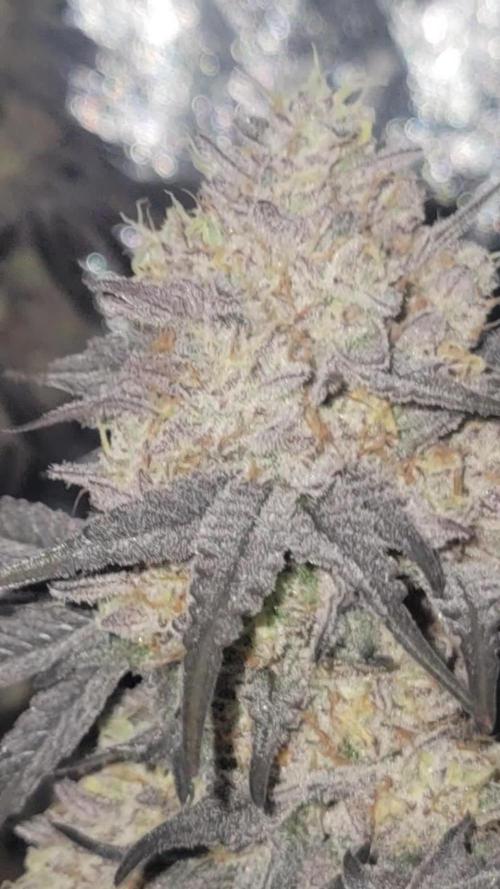
8iem semaine la korenji arrive a la fin la eaballz eclate toujours bientôt la coupe


Likes
12
Share


@HIAZ_urbanbudfarmer
Follow
These girls are getting close to harvest.
Calyx closed & swelling up, most of the pistills turned orange/brown & are starting to curl in. Waiting on delivery of a new 60× microscope to check the trichomes , buds are very frosty.
Have stopped feeding nutrients & have started flushing with plain ph'd water.
Then reduced watering to twice a day so there not taking in as much moisture before harvest. Probably starve them of water completely for a couple of days to bring out more moisture, & apparently THC.
A lot of smell about them. Very sticky!
Likes
2
Share


@SimeonToko
Follow
Buds are forming nicely. Pushing a EC of 2.4 this week and a PPFD of 60-725 on a 24 hour light cycle. Putting them in overdrive and they are loving it. Can’t wait until I harvest these two beast. GSM is 40 inches and the GH is 32 inches.

Likes
4
Share

@Abendkraut
Follow
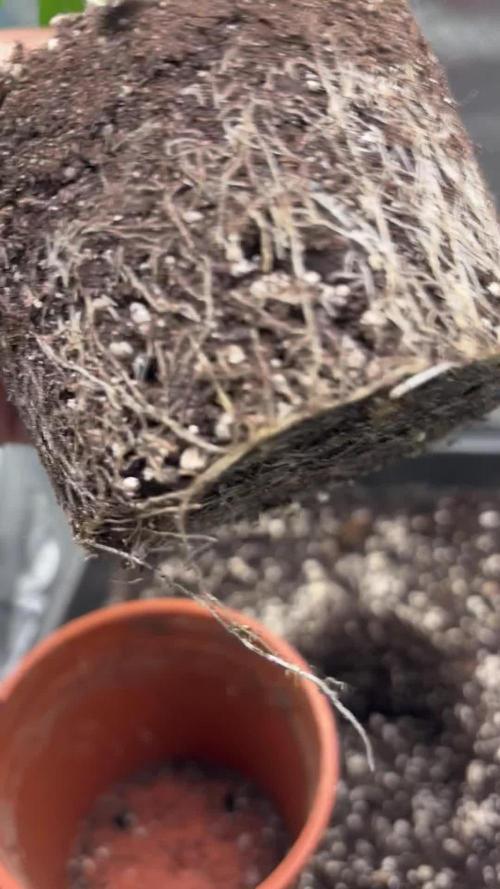
As mentioned in the last entry I've repotted the Sticky Broccoli, the roots base is well established and healthy looking. The new pot is filled with the same Royal Mix Plagron Soil and pre humidfied the soil with a water and Power roots mix containing ratio of 1ml/L.
Update 25/01: Added pictures after topping

Likes
31
Share


@JonnyKush
Follow
everything seems to be growing well! seems to have recovered great, is stretching well the color looks great! I have 3 other growing plants that follow the same diet but they seem to have suffered. she, on the other hand, looks very healthy.
Day 40
Flowering begins! I can say I see her healthy. this is because, not having given her a green sensation with water regulated by ph down but only water with ph down, she was regular at 6.5 for all weeks. this suggests the importance of checking the values every time I change something in the power supply.
keep following me to see the progress. I like it and leave an opinion or some advice. good luck and happy day 🌱💚

Likes
93
Share


@Ferenc
Follow
Hi! First of all, this is my first time in my life. I planted 2 different kind of plants one is autoflowering (Gelato Cookie D'ohpe), Gelato Cookie Doh-ope Auto By Dr Krippling Seeds
Gelato Cookie Doh-ope Auto. Ground breaking genetics have gone into the Triple G range. Grand Heft Auto’s genetics main characteristics is its big composition, and heavy yields. Whilst stabilizing their specially selected Girl Scout Cookies strain with the GHA a number of times, they also crossed this with an amazing Gelato Auto. GGG3’s fruits are ripe with aroma’s and flavor. Yields are approximately 80 gr/plant and the aroma from these flowers are special. The taste from these dense, sticky buds are sure to have you coming back time after time for more of this great tasting flower. The other one is feminized (Purple Punch).
Purple Punch Feminized Seeds By Barney’s Farm.
Purple Punch Feminized Seeds are a 90% indica dominant hybrid. with a combined lineage of Larry OG x Granddaddy Purple this genetic is capable of an indoor yield of up too 700g/m2. Expect aromas of Baked Apple Pie as well as Cherry and caramelised Blueberries. Also expect a short bushy plant with great trichome production and a THC count of 25%. This high yielding, high THC hybrid is an all-round quality genetic with a fast harvest window of 50 to 60 days. Yet another great addition to Barney’s Farms Cali Connection Range. I started counting my day from the day I started germination. 2 different seeds, one is autoflowering (Gelato Cookie D'ohpe) and the other one is feminized from The Bakery Co. called Purple Punch. I started germination by putting them to the water for 12 hours in the evening on Sunday. After twelve hours I put them between paper towels. It started sprouting very quick, the next day I needed to put them to the soil. Purple Punch the feminized one started growing faster, bigger sprout, compare to the autoflowering Gelato Cookie D'ohpe. I started using a 60 W led lamp for the seedling stage this lamp has 2 head 30-30W that was divided for the two plants 30 W each. The next day they came out of the soil and started their life. The Purple Punch was growing faster. First, I had my own made place made of kitchen foil under my computer desk :D, and then I purchased a grow tent which is 140x60x60. I did not use any ventilation the first week and kept the humidity 85-90 percent, and I used trigger spray on the plant also. Watering the first 7 days was 10 ml in the morning and after 12 hours later also 10ml, so every morning and evening 20ml a day. I also used trigger spray to keep the soil wet around and sprayed the plant also. I never use tap water at any stage I buy still water from the shop and they love it. I want 100 percent organic plants so my nutrition will be bat guano mix with acacia honey. My soil mix is Coco coir, perlite mix 70:30 which is mixed with a soil that consists of 20% sphagnum peat moss, 35% garden peat, 10% high-quality organic Worm-Humus, 30% perlite, and 5% Pre-Mix. These two kinds of soil ratio are 50-50 Percent.

Likes
23
Share


@eecc_photo
Follow
Hello people...
So heres the new strains COOKIES AND CREAM by SEEDSTOCKERS.
New setup with Heavengrowlights 320w, lets see hoy they do.
left a couple of timelapses for the germination process
cheers feel free to coment

Likes
4
Share


@TheSurfBud
Follow
Nice sweet smell... could say what strain it is because its from sweetseeds sweet auto mix 10 pk of the best..
Definitely going to enjoy this one ...
Grow went well and fast 62 days flat...
Likes
163
Share


@JamMAKEcan
Follow
She's a bad mama jamma.. WEEDSEEDEXPRESS great job .. All left is to smoke her ..in about 4-5 wks...lolol


Likes
20
Share


@Skunklerman
Follow
Having trouble keeping humidity up as my grow is in the basement. Have home humidifier set to 35% but not enough even with a humidifier in the tent set to 60. Lights out isn’t an issue, it’s when lights on and the 6” exhaust is running that my temps are good but rh too low.
UPDATE 12/21: The girls are back on track I fixed the whole home humidifier and added more humidifiers so my humidity is up to 50s. Plants are extremely healthy and the soil ecosystem is dreamy. Lots of worms at subsurface, cover crop is spreading and growing well and the plants are loving life.