


Likes
Comments
Share


@Silverback_Guerilla
Follow
9/18:
I harvested one of them. Washed and hung to dry.
9/21:
I harvested a couple more. Washed and hung to dry.
9/23:
I harvested the last one. Washed and hung to dry.
10/7:
I smoked some. I liked it.
10/8:
I smoked some more. I'm really glad I have almost 15 ounces of it.😋
a) 69g
b) 79g
c) 93g
d) 84g
e) 88g
Final thoughts:
Easy to grow and train. The two I did some training on produced the most. The buds are dense while growing and remain so after they've dried and started to cure. They redden up beautifully in the jar and have a very mild but sweet minty/flowery smell that comes through in the flavor as well. It's a very strong Sativa buzz which is surprising considering they were the fastest FFT's to finish...among mostly Indica varieties.
Potency: 8/10
Yield: 8/10
Flavor: 8/10
Aroma: 8/10
Bag-appeal: 8/10
Trouble-free: 10/10
NOTE: I couldn't find the photos I took of the first one I harvested, but it was the smallest (and stinkiest) of the bunch.

Likes
39
Share


@Randyb4
Follow
Day 85 First day of Week 12, day 11 of flower
Day 86 Day 12 of flower
Watered Plants with 4 gallons of distilled mixed with spring water with 5.3ml/gal of micro, 4.6ml/gal of grow, and 6.0ml/gal of bloom. PH- 6.4@72°F. Plants look good, buds/hairs forming. Really tight node spacing.
Day 89 Day 15 of flower, first day of Week 3 of flower
Watered with 4 gallons of distilled water with ½tsp/gal of recharge pH-6.6@63°F.
Day 91 day 17 of flower
Watered with 4 gallons of distilled water with 3ml/gal of "Fish Shit" pH-6.3@70°F.
Plant A- 34¼" from the floor, 25¾" from the soil.
Plant B- 31¾" from the floor, 22½" from the soil.
Plant C- 30¼" from the floor, 21¼" from the soil.
Plant D- 34½" from the floor, 25⅜" from the soil.

Likes
Comments
Share

@SolitudeCorners
Follow
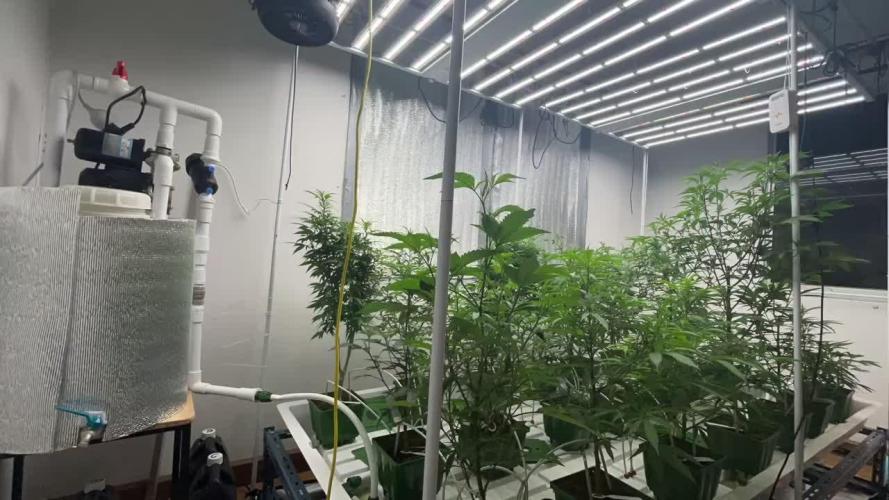
Week 3 Flower (Bloom Week 3) – Daily Tasks
Evening (Lights On)
Check environment (temp 24–27°C, RH 55–60%).
Inspect leaves and buds for pests, mold, or deficiencies.
Water/feed (depending on medium): balanced bloom nutrients with slightly higher P and K.
Ensure good airflow (oscillating fans).
Adjust plant training (light defoliation if leaves block bud sites).
Check for early signs of stretch finishing.
Evening (Before Lights Off)
Ensure irrigation is not too late in the cycle to avoid wet medium during dark period.
👉 In Week 3 bloom, the plants are finishing their stretch and starting to put more energy into forming bud sites.
Main job is: Setting Scrog net 2layers ,Control environment (VPD, airflow) ,Support the plant with bloom nutrients.


Likes
11
Share


@Neetly
Follow
Week 0 Day 1
Alrighty my first grow ever but I’ve done my research through growweedeasy.com. And I’ve decided to go with 70/30 mix of coco coir and pelucite into 5 gallon fabric pots dosed with Cal Mag; and I’m planning on feeding it with FloraTrio next week.
Week 0 Day 2
They split around hour 19! Gonna wait for it to grow a little more then transfer into rapid rooter that came with the kit. Just Transferred into the rooter and keeping it warm on top of my pc, hoping to see some sort of sprouting by day 3/4 and good weather to transfer these babies over. So far, I’m just keeping the ziplok bag moist with 5.5-6.5 pH balanced water.
Week 0 Day 3
Transferred the rooters into the final pot for the rest of their growth, these puppies are fast growers ! pH is a consistent 6.0, and I’m keeping them in my garage since it’s 60F outside. Hoping for warmer weather, at least when she sprouts her first couple of leaves.
Week 0 Day 4
Just transferred the pots outside, hoping to get those sprouts some fresh sunlight. And hoping the good weather holds up. I think I should be able to start the coco coir nutrient schedule tomorrow. Going to base it off this schedule, Week 1
( https://www.growweedeasy.com/wp-content/uploads/2014/12/coco-coir-flora-series-schedule.pdf )
Week 0 Day 5
Growth has been good so far, unfortunately it seems like one of the super lemon haze girlies didn’t make it :( i’ve started to feed them the nutrients from the seedling section of the schedule. Keeping an eye out for any changes.
Week 0 Day 6
Spotted a couple of aphids, gonna look into natural insecticides/ordering ladybugs as a natural predator.

Likes
13
Share


@Seven1AteChef
Follow
Week 3 for my replacement. Seeing some yellow leaves at the base. Not freaking out yet because the top leaves are okay.
The 9 week plant whew! Before I could only smell it if I rubbed the stems. Now, I get a slight smell as soon as I open the tent up. It’s not overpowering at all, and really pleasant.
Is it okay if the goers touch the wall of tent?

Likes
5
Share


@Bak2Blk
Follow
7/18: I was a little worried about the girls over the weekend because they started drooping and the leaves twisting. I gave them a good feeding of Big Bloom and they've completely bounced back. I switched them over to 12/12 Sunday night and lifted the lights a bit. So far... extremely happy with this grow. Best one yet so far. 😍😍
7/19: The bf did another large defoliation. I'm crying. Buwahhahaha jk... I hate it but of course I know it has to be done.
7/21: Of course my girls have already bounced back like the bf hadn't even touched them. They're doing pretty awesome right now. I'm very happy. I lifted the lights up some but boosted their power SLIGHTLY. Will be alternating Big Bloom, pH'ed water only, Calmag, pH'ed water only Calmag, pH'ed water only, Big Bloom for the duration of flower until a few weeks before harvest then pH'ed water only for flushing purposes before the harvest. 😊😚
7/23: The girls are thriving with my feeding, watering and calmag schedule. I'd attempted to tuck some of the branches again under the net but they aren't having it. They popped themselves right back free lololol 😍👊
Likes
44
Share


@Buffynuffy
Follow
It’s amazing watching these plants grow, it’s been an experience already and so much to go with this grow and with all the learning to come I hope it looks okay to you guys anyone who would like to comment please do I’d love to hear other’s thoughts!

Likes
20
Share

@squalino
Follow
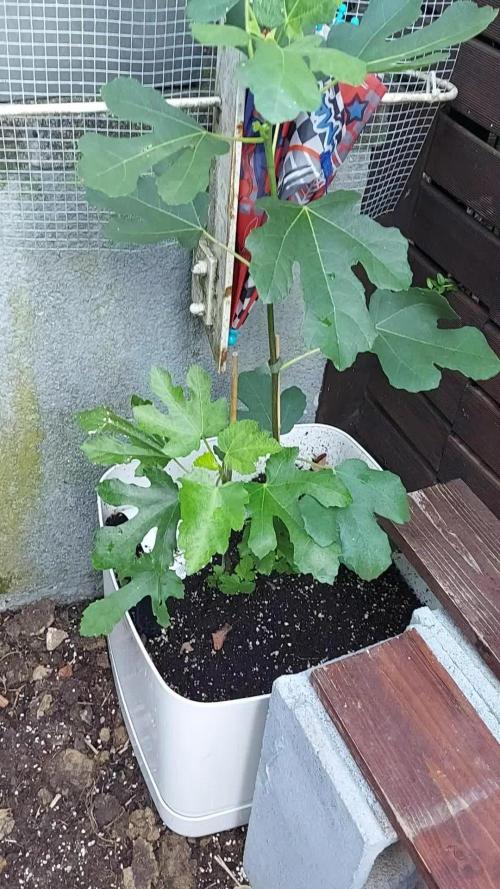
franchement je suis assez satisfait. les engrais biotabs fonctionnent à merveille je trouve .bon je suis pas un expert en figues 🤣🤣 mais celon moi elle grandi bien , elle a refait une belle jeune pousse qui grandit bien a l'ombre de sa mère malgré ses chaleurs accablante de cette dernière semaine.
Processing
Likes
29
Share


@Grey_Wolf
Follow
Ginger Nut Cookies & Aussie Music Videos
Fastbuds GSC x Barneys Red diesel
6 weeks of flowering completed
9th April 2020
Hi Everyone I hope you are all feeling well and keeping busy during the lockdown.
It's raining cats and dogs here (lucky there's no chinese around LMFAO)
and the humidity is 100% so today Ive chopped this little lady down and she is now drying up in my shed with fans going 24/7.
I was quite pleased with the amount of bud I got off her and it's smelling fantastic and is very sticky.The trichomes were very milky with a few amber as well. 😍
very easy to grow no fuss and no problems but we'll have to wait and see as to whether she is a good smoke or not .
Now for this weeks Aussie Music videos 👊
Because we are almost at the end of this grow I thought I had better add a few extra songs this week to make sure I get a decent selection of Diffrent music videos for you all to check out.
So for this weeks selections I chose
Empire of the Sun 👊
Walking on a Dream
https://youtu.be/eimgRedLkkU
Big Pig 👉 (from Bill n teds excellent adventure) 👊
I can't break away
https://youtu.be/f_rfXVdYelA
Peking duk 👊
Reprisal
https://youtu.be/4GboBAg2Syo
The white stripes 👊
Seven nation army
https://youtu.be/0J2QdDbelmY
Grinspoon 👊
Chemical Heart
https://youtu.be/58mXxWuUqYw
The hilltop hoods 👊
Leave my lonely
https://youtu.be/yKifJ4Q5ph0
And Silverchair 👉Not bad for a bunch of 16yr olds which they were at the time this video was made
https://www.youtube.com/watch?v=RZD982yrmx4
The Next update will be the Final harvest update with the dried n trimmed buds etc. I will also have to add another heap of tunes in that I had wanted to play ,
so keep an eye out for my next Update of Ginger Nut Cookies & Aussie Music videos .😀
Until then Stay safe and Keep lit And we'll all get thru this Together 🙏 👍
Likes
8
Share


@BoredSangheili
Follow
Seems like this was a bubblegum variety strain judging by the smell and structure of the plant. I would recommend it, If I knew what it was.

Likes
8
Share

@GUGU_choices
Follow
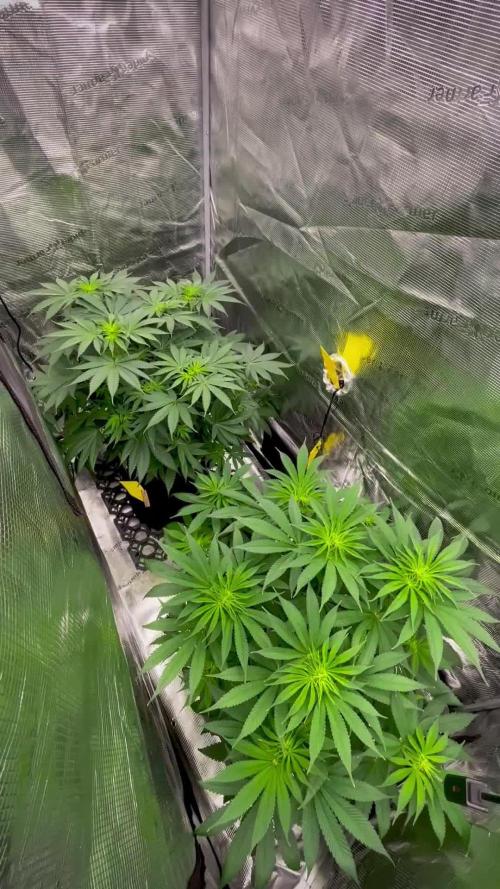
Peace growers. I report that the Jack Herer plants have completed their first week of flowering. They have managed the change to the 12-12 regime just fine, they are healthy and they lack nothing. It looks like the two plants will fill the entire space of the grow box beautifully. I look forward to what the next days will bring.. Three days before the switch, I added 4g/l Bio Bloom flower fertilizer from Green House Feeding to the substrate. We will see in the next period how far the plants will grow.. I really like it, so let's go week by week for the final result..
-
Peace growers. Hlásím, že rostliny Jacka Herera mají za sebou první týden květu. Změnu režimu 12-12 zvládly v pořádku, jsou zdravé a nic jim nechybí. Vypadá to, že dvě rostliny krásně zaplní celý prostor grow boxu. Těším se, co přinesou další dny.. Tři dny před přepnutím přidáno do substrátu květové hnojivo 4g/l Bio Bloom od Green House Feeding. Uvidíme v dalším období, kam až se rostliny vytáhnou.. Moc se mi to líbí, tak pojďme týden po týdnu za finálním výsledkem..


Likes
178
Share


@NuggetPawn
Follow
Hey Guys,
Growth has taken off a lot this past week, have had to add a heater to the grow which isn’t ideal but with warmer months coming this should only be temporary. I have the thermostat set to start the heater when temps go below 23°c. Watching Dr Bruce Bugbee on YouTube, he stated that growth does start to suffer below this temperature.
One of the plants has some odd colours and growth which I’m pretty sure is Mg deficiency, which is probably due to that particular girl being more sensitive to PH swings than the rest of the ladies.
I have had to insulate some of the circulating pipes as the water cooler was struggling to keep the water baths cool. Seems to have helped keep temps down a couple more degrees, I mate have to reconfigure where my water cooler is in the piping run after this grow
Finally a special thanks to the GD team for selecting my previous diary for DOTM, very flattering considering some of the great content that was submitted for March 2020!
Happy growing all!


Likes
4
Share
@ThatsmyGrow
Follow
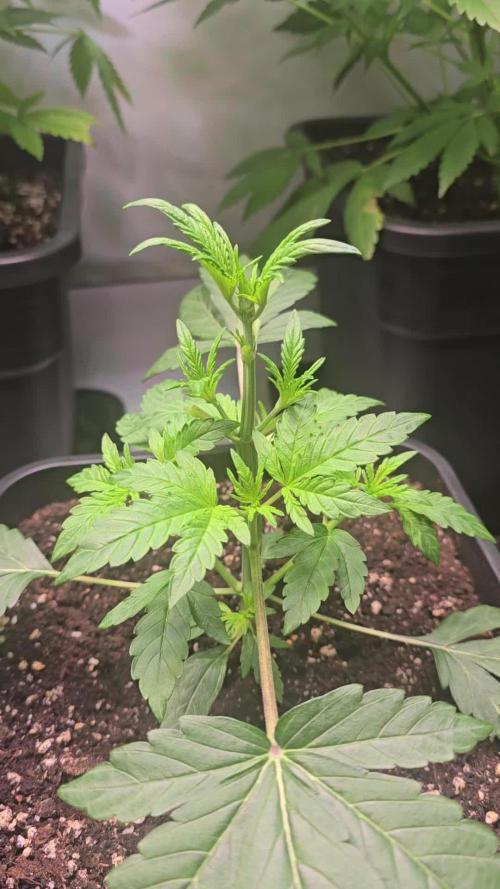
It's growing slowly but well. I removed the leaves at the top to allow better light penetration.

Likes
7
Share
@SpunkyTerps4200
Follow
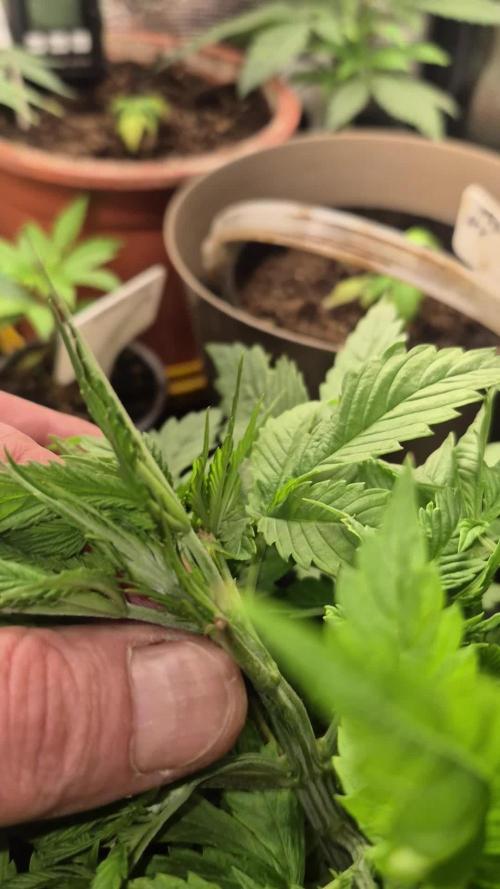
Soo this week the trop cookies ff has been doing g great.. I've been contemplating when to put her into flower.. I will wait a few more days now till she perks back up from her last training session then I will put her in the flower tent.. I really love this plant she has been very healthy and vigores.. lots of tops and she will me huge I know ittt.. thanks for following guys!!! End of week 5 let's good few more days huh!!!?? I think kk sooooo peacock guys looked u all.. check out the g runtz!!!!


Likes
22
Share


@DogDoctorOfficial
Follow
🌱 White OG - Week 11 VEG
Strain: White OG by Seedsman Seeds
Stage: Week 11 Vegetative
Grower: DogDoctor
Medium: PRO-MIX HP Mycorrhizae + Bacillus
Pot: 30L Fabric Pot
Lighting: Future of Grow LEDs
Climate Control: TrolMaster
Nutrients: Aptus Holland Clean Program
Environment:
🌡️ Temp: 18.3°C
💧 pH: 6.0
⚡ EC: 1.0
⸻
🔄 The Last Week Before the Flip
Week 11… a moment of calm before the bloom storm. A critical phase in our girl’s journey. This is the week we prepare her for greatness. 💪
✅ Defoliation Madness:
This week, we defoliate the hell out of her. That’s right—removing those large fan leaves that block light, those unnecessary suckers that won’t make it to the top floor, and freeing up her inner structure to breathe and expand.
Why now? Because right before flipping to flower is the perfect time to help her redirect energy to the strong tops and main branches. It reduces the risk of mold, improves air circulation, and ensures even light distribution. Plus, it gives us a blank canvas for the flower stage to explode onto. 🌸💥
✅ Clamp Release & Scrog Setup:
We gently remove the training clamps, and in she goes into the SCROG net. But not in a rigid way—we’re inviting her to stretch, encouraging her to reach out and take up space. She’s a big mama now, and it’s time she gets the full stage. Each branch is dancing through the net like a diva ready for her solo performance.
✅ Roots on a Mission:
She’s hungry for life. Roots are peeking out from the fabric pot, diving toward the light, the floor—everywhere. This PRO-MIX soil is magic, and with the help of the Aptus Clean Mix, she’s thriving. Her root zone is bright white and packed with potential. Healthy roots, healthy shoots, happy fruit.
⸻
Feeding This Week
We’re still rolling with the Aptus Clean Line for this stage. Simple, effective, elegant.
🔹 Regulator – Helping her stay strong and stress-free.
🔹 RO Water Conditioner – Stabilizing and prepping our base.
🔹 All-In-One Liquid – Feeding her exactly what she needs without overcomplication.
⸻
🌐 Shout Outs & Love
Forever grateful to our amazing partners and supporters:
💚 Seedsman Seeds
💚 Aptus Holland
💚 Future of Grow LED
💚 TrolMaster
💚 PRO-MIX Soil
💚 Cannakan
💚 GrowDiaries
💚 The entire community—lovers, haters, followers, and the in-betweeners—you’re all part of this journey. 🌍
Come say hi on Instagram [@DogDoctorOfficial] and check out the Dognabis Cup – First Edition—open now! 🎉 Let’s celebrate passion, plants, and positive vibes.
⸻
🌸 Let’s Bloom
White OG is ready to bloom. She’s strong, structured, and full of fire. Next week begins a new chapter—the flowering stage. Let’s see what she has in store.
🌱 Stay kind. Stay curious. Stay growing.
Much love,
DogDoctor 💚🐾
#GrowDiaries #WhiteOG #ToppingMadness #AptusHolland #Mainlining #PlantTraining #GrowersLove #SeedsmanSeeds
As always, this is shared for educational purposes, aiming to spread understanding and appreciation for this plant.Let’s celebrate it responsibly and continue to learn and grow together!
💚Growers Love 💚 🌿
DISCOUNT CODE - SeedsmanSeeds - DOGDOCTOR 10% off
As always thank you all for stopping by, for the love and for it all , this journey of mine wold just not be the same without you guys, the love and support is very much appreciated and i fell honored and so joyful with you all in my life 🙏
With true love comes happiness 💚🙏 Always believe in your self and always do things expecting nothing and with an open heart , be a giver and the universe will give back to you in ways you could not even imagine so 💚
Friendly reminder all you see here is pure research and for educational purposes only
💚Growers Love To you All and remember to keep that smile big and alive 💚

Likes
21
Share


Likes
15
Share


@Messypies
Follow
Buds are really frosting up coming to to harvest. Most trichs are showing as cloudy with the occasional 1 Amber. Will run 1 more week under the light. 3 /4 days of regular tap water (de-Chlorinated ) followed by 48 hours of darkness before the chop. I wish I had the space initially to train to its full potential but exited to get 4 new autos on the go.


