




Likes
16
Share


@Tipton
Follow
Day 45 in flower... Trichomes are about 80% milk and no amber... The paint and big Z are 7-9 weekers and orange cake is 9-10... Def few weeks on the orange cake... But getting close to how I like it on the other two... The smells are outta this world... Orange cake smells like orange cake... Very orange like it's nuts... Never smelt anything like it tbh... The paint is a different pheno than previous ones because there's usually a chemical skunk smell but this is a fruity pebble smell with layers of earth smell and a sticky presence that doesn't go away for a long time lol... The big Z is another sweet smelling but more along the smell of a mouth full of Skittles and that dirt earth smell aftertones... They're awesome and I'm really excited!
Day 46
They fattened up over night! Coming to n end... I did find little clusters of amber trichomes on the paint and I can't find many clear on the big Z... So it's right where I want it!

Likes
10
Share


@CelticSmokey88
Follow
Annoying the weeks aren't correct om this diary will do bettee next

Likes
Comments
Share

@JamesRenato
Follow
Na primeira semana de floração a preocupação aqui no meu grow, é com relação ao espaço. Vou ter que providenciar algum suporte para distribuir melhor as flores dentro do foco de luz e sustentar o peso depois que os buds começarem a engordar. A nutrição segue com a mesma base porem com menos nitrogênio e mais fósforo, potássio, cálcio e magnésio.

Likes
12
Share


@PacoMendoza420
Follow
First day of week 4, the plants are grown big enough to top but they didn't develope enough side branches to start mainlining. I hope I can use this technique as soon as the plants recover from the topping.
On day 4 just the first of the three shows sign of complete recover while the side branches still don't want to grow up. I fed the plants with a tea full of microbes and good organic stuff.
End of week 4, the only thing needed for the lower branches to catch up was increase the height of the lamp. Now they are really happy looking forward to the second and last month of veg



Likes
30
Share


@FatnastyzBudz
Follow
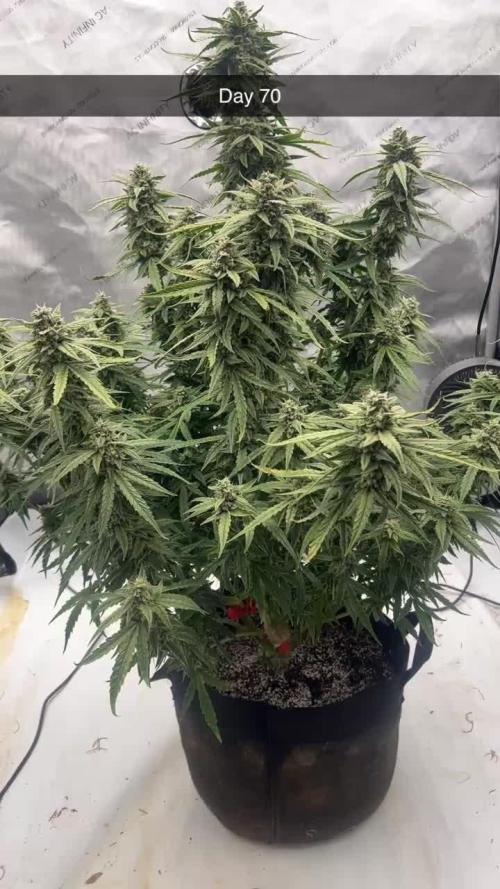
Week 8
Day 49
Week 3 of flower
FINALLY I think shes done stretching!!
She definitely went a LOT longer, than I thought.
Canopy is broken all to hell, spacing is a little cramped, but it is still working out fantasticly! The buds look like tiny pineapples or cone heads. Let the swell go! Biggest lady yet! Packed her with another 8ml kelp and 1 tsp recharge.
3-13
Day 52 from seed, week 4 flowerish.
More so playing with pictures.
Very pleased with progress. Buds lookin nice!
Enjoy!


Likes
13
Share


@Robeeriegenetics
Follow
Second week of flowering in the bag, and they’re all looking really healthy, even healthier than when I first threw them in the flower steady as she goes


Likes
37
Share


@MrJones
Follow
Cream Mandarine XL-Auto #2 / FOOP Nutrients
======WEEKLY GOALS =======
🌞Drying Environment - 62/65F & 60% RH should take about 10 to 14 days to dry.
========Plant Update===========
📝 PRE-HARVEST REPORT- Currently the buds are in curing totes and will trim up on Friday or Saturday / Purchased a Trim Bag will see how it goes. Hope to have a completed Harvest Report by Sunday!
===========================
▶️Monday 04.26.21 / Flushing with H20 PH 6.2
▶️Tuesday 04.27.21 / Flushing with H20 PH 6.2
▶️Wednesday 04.28.21/ Flushing with H20 PH 6.2
▶️Thursday 04.29.21 /Flushing with H20 PH 6.2
▶️Friday 04.30.21 /Flushing with H20 PH 6.2
▶️Saturday 05.01.21/ Flushing with H20 PH 6.2
▶️Sunday 05.02.21 / Harvested today!
▶️Saturday - 05.08.21 Dry tent is staying within the scope of the environment.
▶️ Sunday - 05.09.21/ Dry Room Variables 55%/58% RH and 65F/68F Light Air Movement / In Darkness.
▶️ Monday - 05.10.21 / Start of Week 2 in the Dry Tent Moving Along Nice and Slow Dry Room Variables 55%/58% RH and 65F/68F Light Air Movement / In Darkness.
▶️ Tuesday - 05.114.21/ Dry Room Variables 55%/58% RH and 65F/68F Light Air Movement / In Darkness.
▶️ Wednesday - 05.12.21/ Dry Room Variables 55%/58% RH and 65F/68F Light Air Movement / In Darkness.
▶️ Thursday - 05.13.21/ Dry Room Variables 55%/58% RH and 65F/68F Light Air Movement / In Darkness.
▶️ Friday - 05.14.21/ Dry Room Variables 55%/58% RH and 65F/68F Light Air Movement / In Darkness.
▶️ Saturday - 05.15.21/ Dry Room Variables 55%/58% RH and 65F/68F Light Air Movement / In Darkness.
▶️ Sunday - 05.16.21/ Dry Room Variables 55%/58% RH and 65F/68F Light Air Movement / In Darkness.
▶️ Monday - 05.17.21 / Moved the buds into drying/curing totes with stems on for a week- Dry Room Variables 55%/58% RH and 65F/68F Light Air Movement / In Darkness.
▶️ Tuesday - 05.18.4.21/ Currig, Dry Room Variables 55%/58% RH, and 65F/68F Light Air Movement / In Darkness.
▶️ Wednesday - 05.19.21/ Removed the buds from the steams and continuing to cure in the totes. Planning to trim on Friday or Saturday.
▶️ Thursday - 05.20.21/ Removed the buds from the steams and continuing to cure in the totes. Planning to trim on Friday or Saturday.
▶️ Friday - 05.21.21/
▶️ Saturday - 05.22.21/
▶️ Sunday - 05.23.21/
▶️ Monday - 05.24.21/

Processing
Likes
20
Share


@Hawkbo
Follow
Day late on the update, pics/vids were taken on time tho just been a crazy week of harvests and trimming and keeping up with these. I linked up with Rain Science Grow Bags on Instagram and got them to offer all my followers and friends a discount of 10% off entire order from their site with the code ' bangdang ' so if anyone is in the market for a pot upgrade use that code. I got them in the mail 3 days after I ordered. Reason I went with Rain Science is because they offer identical air flow for rapid growth as the radicle bags, just using a different material and a tighter knit so water doesnt flood out the sides during feeds and when you pick these up when the coco is dry, it wont fly all over the tent like with the radicles. They're the optimal bag for autoflowers especially.
These are the 3 in the back they are growing perfectly so far
Likes
4
Share


@Erich2025
Follow
The plants are growing pretty well and I did some trimming and LST to prepare them for flower next week.
There is one phenotype that is really short and bushy compared to the other 2.
i just fed the plants once nutrients because i did transplanted my plant like every 10 days.
They are very resistent against LST, trimming and topping.
🌴🍪🔥
Likes
1
Share


Likes
2
Share

@Bncgrower
Follow
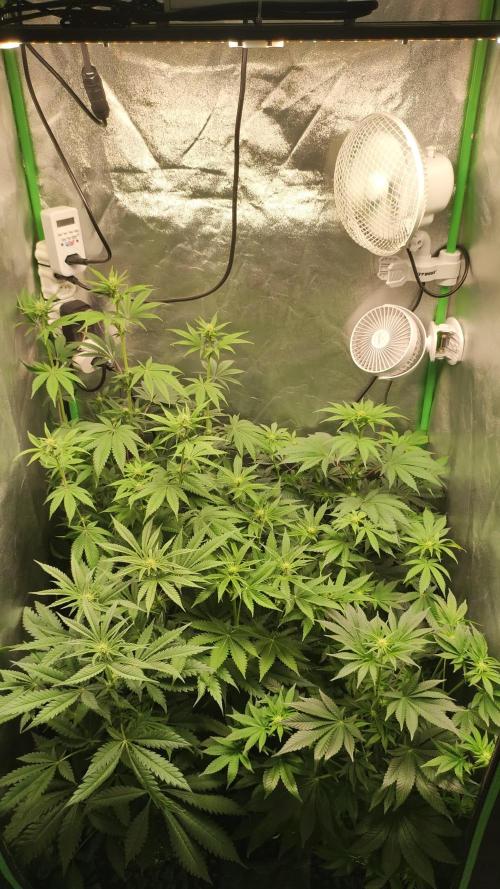
Second week of flowering completed, they are all very beautiful and healthy. I apologize for the poor quality of the photos, I've been very busy lately so I haven't been able to give them much attention. Luckily I automated the watering process, otherwise it would be very difficult days. But completing the initial 21 days, I will do a good defoliation and take photos of them separately.
Peace be with you all!✌️🙏


Likes
93
Share

@LGreen
Follow
🌿 Schönen Sonntag & einen entspannten 1. Advent aus der richtigen Zeitzone =)
🌱 Wochenupdate
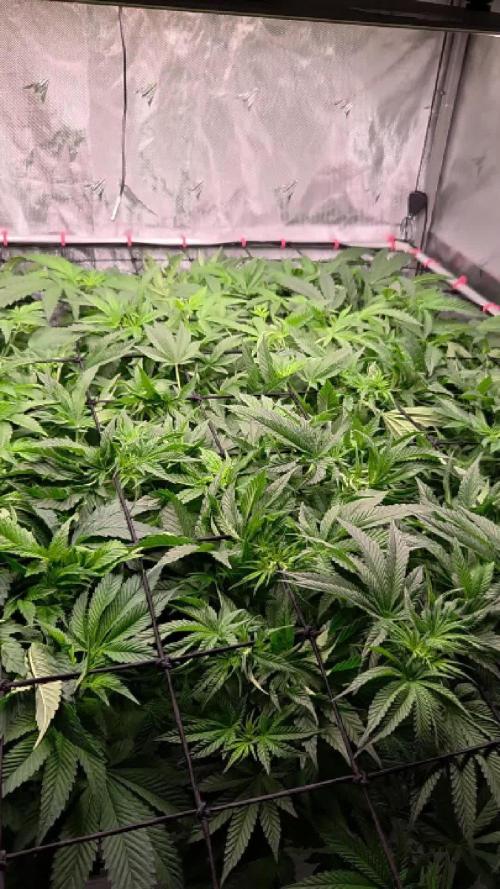
Diese Woche wurde echt viel gefummelt 😄 Im Fokus standen Canopy-Aufbau und selektives Entlauben =)
Bin da wirklich pingelig und könnte das den ganzen Tag machen… echt schlimm 😅
Was ich jetzt schon sagen kann: Blueberry Cupcake hat mit Abstand den krassesten Stretch hingelegt.
Purpz hat ihren Platz auch relativ gefüllt, performt echt gut und ist fast gleichauf mit BBCC.
Notorious zieht auch, soll aber wohl etwas später definierter drücken. Mir gefällt ihr Wachstum richtig gut.
Guzzlerz macht sich auch echt gut für ihren schlechten Start.
Ihre Sides gehen mittlerweile richtig steil. Ein paar mehr Triebe wären nice gewesen, aber da lag sicher auch einiges an mir.. :D
Abseits meiner Dummheiten lief alles absolut smooth. Eine tolle Veg und richtig gute Stretch-Phase bis jetzt =D🔥
🌿 Pflanzenstatus & Training
Ich halte die Canopy aktuell noch flach – für zwei, drei Tage =) Anschließend steht das Verteilen auf die Meshes an. Danach dürfen sie endlich nach oben =D
Die Richtungen sind grob gelegt, erste Ansätze sieht man auch schon =D Ich kann’s echt nicht erwarten… Budporn ist einfach magisch 😄🔥
Über die Tage sind immer wieder größere oder verdrehte Blätter rausgeflogen – hauptsächlich, um Luft und Licht auf möglichst viele Triebe zu bekommen 😊
Man kann wirklich ohne Bedenken ~30 % Biomasse rausnehmen, wenn die Vitalität das zulässt, ohne sichtbaren Stop im Wachstum 🌱
🌬️ Luft & Ventilation
Hab jetzt noch zwei Clip-Ventis dazugezogen. Die Angst vor Schimmel kickt langsam wieder =D
Es laufen jetzt zwei unter und zwei über der Canopy – jeweils gegenüberliegend und zirkulierend.
Ich muss gestehen, dass ich den Boundary-Layer-Disruption-Effekt kenne bzw. davon weiß, und ihn durchaus stimmig finde 😊 Aber bis jetzt war die Angst vor Schimmel in irgendeiner Ecke doch größer 😂
Ich hab nicht den Eindruck, dass es negativ ist, zirkulierende Luft auf die Pflanzen zu richten, solange man nicht voll draufpustet 💨
⚙️ System
Läuft nach wie vor stabil =) Die Top-Ups halten die Nährlösung sauber auf Kurs.
Gestern hat sich klar abgezeichnet, dass wir mitten im Stretch-Peak sind 😄 Sie ziehen massiv Kationen und verursachen dadurch einen deutlich messbaren pH-Drop.
Das ist für mich das Signal, das Training in den nächsten Tagen zu beenden 🌿😊
800 PPFD
1,0 kPa VPD
700–800 ppm CO₂ im Durchschnitt
💚 Special Mention
Der Aufwärtstrend setzt sich fort 😊 Man mag es kaum glauben, aber sie macht sich wirklich gut – sie deckt sogar etwas mehr als die Hälfte ihres Quadranten ab 💚
Bin echt froh, dass sie es geschafft hat und meinen Scheiß noch mitgetragen hat 😂
Danke fürs Lesen echt verrückt, wie viele inzwischen dabei sind – freut mich wirklich mega 😊💛
Eine schöne, entspannte Adventszeit euch allen 🌲😊

Likes
32
Share

@BudVision
Follow
Hello growers,
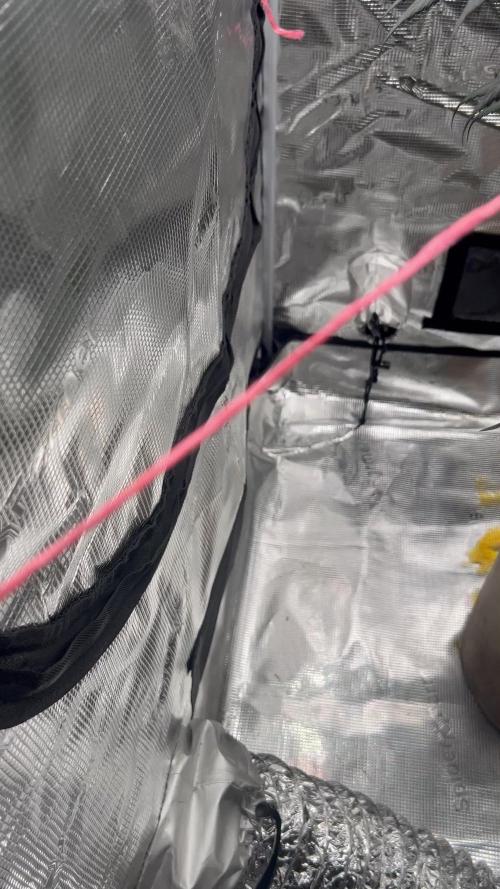
as I mentioned last week, La Bomba was left alone in the coop and she’s doing amazing. I’m just watering now and waiting for the right moment to harvest. The aroma is incredible, somewhere between a sweet profile and that loud gassy fuel, a truly unique combination. I gently spread her branches with a few strings so the light can reach the lower buds. The buds are hard and the whole plant looks beautiful.
Peace and happy growing ✌️