


Processing
Likes
Comments
Share


@BigBaby420
Follow
Weird growth on the leaves of one of my plants. Looks healthy otherwise. White widow is beginning to pop out for life.

Likes
3
Share

@Sundancers
Follow
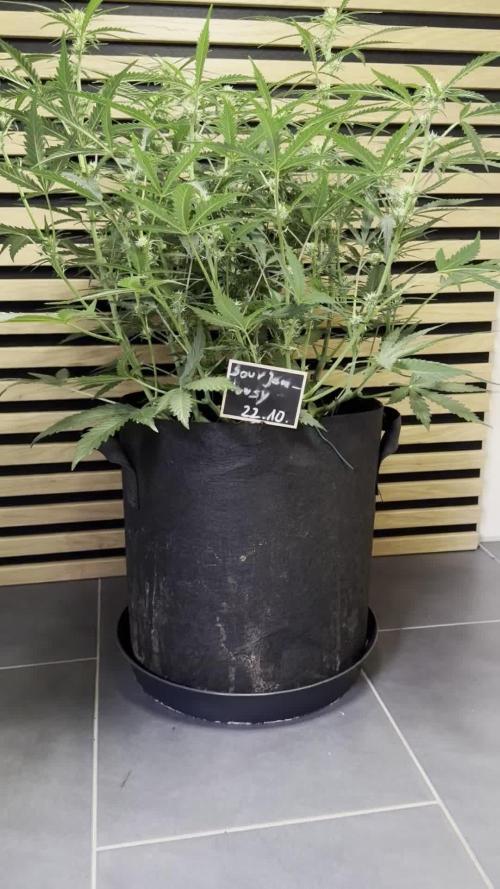
Sie hat den letzten Frisörbesuch sehr gut überstanden. Heute stand Entlaubung auf dem Plan sowie Entfernung zu kleiner Blüten.
Ihre Sonnensegel sind extrem spitz und lang: Was für ein sative Monster! Diese Blattform gefällt uns sehr. 😍
Wir sind gespannt auf den Stretch der Blüten und hoffen das sie nicht zu instabil wird.
Sie hat ein sattes grün und zeigt keinerlei über- oder unterdüngende Eigenschaften.😎

Likes
39
Share


@Ginger_gnome
Follow
Everything is looking done. Been checking when lights turn on and just before you go out and the trenchomes are looking full and starting to turn amber. So first thing tomorrow there all going to get chopped down.
Well that's all for this week
Happy growing everyone.

Likes
27
Share


@R_Dank
Follow
10 days into flower with the first taste of bloom! Happy with how things are going.. don’t know why my videos won’t play

Likes
9
Share


@LetsGrowSome
Follow
Starting week 4 flower now. Theses ladies are doing great. No signs of any deficiency thus far. Decided to hold off on potash at this point. Noticed ladies fighting for light hard and middle lady trying to take it all. I removed the exhaust fan and opened the tent on the sides. Then I added another king led 4000w light. Both 24 in with bloom only turned on at a par of 850. That was done on Saturday, and by Sunday could already see a big difference in bud production. Added recharge with last watering. Hoping the ladies continue on happy and building!

Likes
13
Share

@DutchBarnacle
Follow
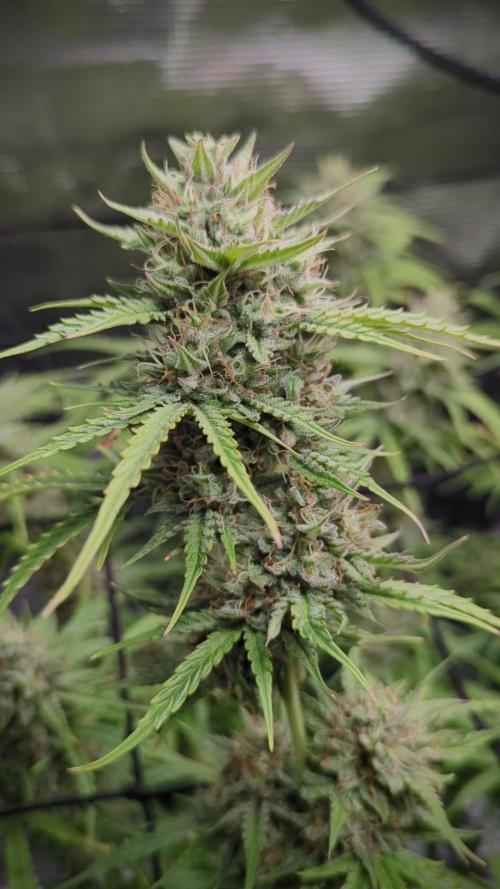
Week 8!
Day 58: 2L (pH6.8) + 1ml CalMag + 1ml PK13-14
Today I learned that CalMag contains about 5% nitrogen. So, her nutrient solution comes down to about a half dose of 5-13-14 with added calcium and magnesium - kinda. More importantly, I assume it thus would be worth trying to abstain from CalMag just before harvest.
Also, she seems thirsty and since her last nutrient solution was a week ago, I figured we might as well try a half dose of PK13-14. I'm aware she's still got the organic feed, but I'm also curious to learn whether this will burn her again - now that she's bulked up. The remainder of the week will probably consist of watering.
Day 59: Still damp
Decided to try and even out the canopy further. Remaining two highest branches have been pulled outward, light has been lowered. While the highest apex still reaches about 900 PPFD - which is more than ideal - the entire canopy now receives on average 600 PPFD, while slightly turning down the light intensity from 85% to about 80%.
Addition: after browsing other diaries; the Northern Light Automatic strain information pages on Growdiaries.com, and RoyalQueenSeeds.com, I noticed that about 10 weeks after germination is her expected harvest time. That's one week out!
I'll thus dial down on the nutrition and keep an extra eye on her water consumption. About half of her pistils are still white. If those start to turn rusty and her water consumption slows down, I assume her leaves will also start going yellow.
With the nutrition solution of yesterday she should hold out until harvest, so any leaves turning yellow this week won't be caused by a deficiency, I assume.
Day 62: Soil is dry but cool to the touch, no water
Nothing much going on currently. She's done most of her bulking I assume. While the soil is dry, she's not showing signs of thirst so I'll water her tomorrow. I'm curious whether watering will increase the bud size.
Day 63: 2L (pH6.5) bottom water.
Opened up the tent about an hour before lights-on to water her with 2L tapwater pH-ed at 6.5. Instead of the regular top watering, I gave her a royal gulp on the soil and poured the rest in her runoff tray.
Day 64: Humid, no water.
Some extra defoliation of withered leaves. She won't be needing those as we're nearing the last week. There's the sporadic amber coloured trichome here and there. I've picked up advice saying that, when in doubt, you should give her another week or so and check again. Enjoy the last picture of this week, the money shot!
Likes
12
Share


@Daviz_42
Follow
Sin duda para los amantes del terpeno anaranjado es una clarisima ganadora, es pura mandarina, citrico, refrescante, imagino una extraccion con esta genetica tiene que ser increible.


Likes
6
Share


@CannaGrown
Follow
We are in the first week where the growth was good, watering was done only with water without adding fertilizers.

Likes
38
Share


@Green_Mountains
Follow
Another good week!! I defoliated the smaller of the 2 plants mid-week... I think she is doing very fine.
A small hiccup with the feed that same night. Only a few leaves are showing any sign on nutrient burn. I went ahead and fed them again today.
I plan on watering them in a day or two... they were very thirsty this afternoon!! So, I definitely need to up the watering. I've still been feeding 3 quarts twice a week.
Otherwise, all seems to be going well!!
They are frosting up very nicely!! So exciting!!
Peace!!
Update for grow question: @The8thChevron thanks!!! I pulled them and will hope for the best for now. So close to the finish line. If I see more trouble brewing I will pull the plant. I don't know how to answer directly to you on the grow question.... Thanks again!!


Likes
6
Share


@Stickygreens420
Follow
8/19/2023 Day 46 Veg: she is finally starting to develop some additional branching. I've been LST and leaf tucking. I was thinking about doing some additional defoliating, but I don't want to slow down her growth anymore.
8/20/2023: started the subirrigation today, with filtered water with a 6.0 ph.
8/21/2023: she is definitely reacting positively to the bottom watering. She was praying more than usual this morning, so hopefully the growth will continue to puck up speed now.
8/23/2023: defoliated a few more of the big fan leaves, to allow more light to the lower branches.
8/24/2023: had to fill up the water again for the subirrigation. Used plane water with a 6.2 ph. Plant is doing great.

Likes
1
Share

@TheBulldozerSicily
Follow
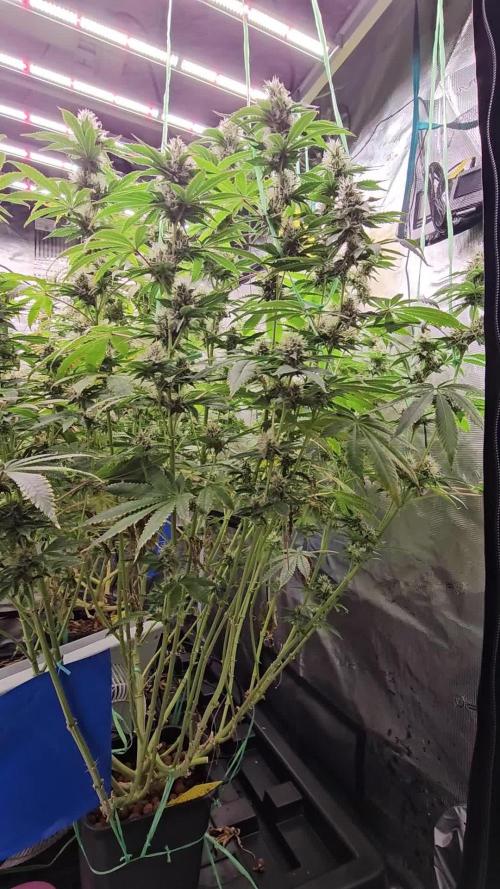
Ripeto sempre le stesse cose, pultroppo senza commento non mi fa pubblicare le foto. Le piante vanno alla grande, tutto perfetto. Peccato me ne è morta una altrimenti il box era completamente pieno! Ma va bene. Ci rifaremo la prossima volta


Likes
16
Share


@Chocolopeison
Follow
Estuvimos un poco desaparecido por andar un poco desmotivado pero aquí vamos nuevamente, las nenas van bastante bien en la semana 8 la cambiamos a maceta de 3.5L y aprovechamos de darle GREAT WHITE SHARK, la técnica que usamos es de amarrar el central ya que le hicimos supper cropping y apical a nuestro central, amarramos el apical que le hicimos super cropping y le dimos fuerza a varios brazos. Para ir controlando la altura de los brazos le hicimos poda a pical a los que estaban tomando más altura y así poder ir equiparando los brazos. La verdad que no se cuantos brazos tengo que sacar y aun me quedan unas 4 semanas para poder desocupar mi armario de floración y poder pasarlas a flora, así que intentaremos hacer una muy buena estructura antes de pasarlas a floración. La defoliación la aplico cada vez que saco foto ósea semanal y trato de ir manteniendo de a 4 nudos o 6 nudos
La alimentación se mantiene igual lo que si no se si lo dije pero:
Rhizotonic: Lo estoy usando solo en trasplantes y cuando hago alguna poda.
Cannazym: Lo estoy usando 1 vez por semana.
Orca y Myco Chum: Lo estoy usando 1 vez cada 1-2 semanas
Alimentación diaria: Calmag, silicia, supervit y canna coco a+b
Alimento a cada una con 250-350 cc de solución, 2 horas que encienden las luces y 2 horas antes de que se apaguen. Gracias a esta receta no eh tenido tanta variedad en mi runoff y las nenas se mantienen muy sanas.
Saludos


Likes
5
Share


@FlavorzChaser
Follow
Week 3 G14 everything is great I've increased the biobizz to 2ml still adding nitrozyme once a week and a little cal mag I've tied the top in a pony tail for 24/48hrs so branches underneath stretch I used a covid mask string very handy 17th added a net but the holes are a little small and it increases humidity so I've removed it.if your running a mars or any Chinese lights as you know they run hot and increase humidity check out video for a simple hack.
Likes
8
Share

@Foxtail89
Follow
Läuft würde ich sagen...
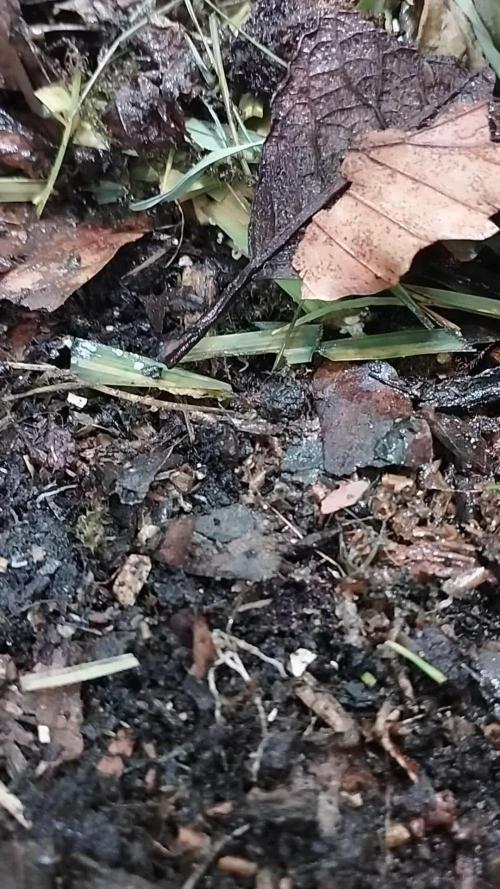
Unterste Etage jetzt an BT45 quasi komplett weg. Teilweise auch weggetrocknet da ich etwas zu sparsam gieße denke ich. Immer kurz nach dem Stresspunkt (untersten blätter verlieren Spannung) und nicht davor. Der Mulch ist etwas zu feucht, die neuen wurzeln die durch den Topdress kommen haben zu wenig luft...werde die nächsten Wassergaben (nur wasser) etwas 3-4cm unter die oberfläche spritzen (Kanüle 100ml Spritze).
Aber Alles über dem Netzt knackig Grün. Gelbe Spitzen waren vom Lichtstress letzte woche sind aber etwas "schlimmer" geworden trotz gedimmter Lampe. Könnte also auch ein leichter überschuss sein (Tee letzte Woche), dagegen spricht, dass in den Blättern im Schatten keine Spitzen gelb sind.
Gehe es also mit Dünger langsam an. Habe beim letzten gießen etwas! Melasse, ganz wenig Asche und noch weniger Guano mit Teichwassser gegeben.
Nächste Runde gibts noch einen Bananentee und ggf etwas Melasse. Das kommt alles ne woche später wirklich an. und dann sollte sie ab anfang Woche 9 hungern. Rechne normaler Weise mit ner Woche mehr als der Breeder sagt. Also 10 Wochen mit 1-2 Wochen Strakem Hunger am Ende. (Andere Vorschläge mit Begründung! willkommen)
RLF bei 42% was wichtig ist...habe etwas Budrot Angst...werde keine Blätter mehr wegnehmen, da mache ich zu viel Schäden und erstelle erst recht Eintrittststellen für den Grauschimmel.
Likes
6
Share


@mikheil007
Follow
Vanilla Latte is very special strain for me: I've never grown the plant like this: thank you Humboldt Seed Company for such a good job

Processing
Likes
70
Share


@CBD_Sweden
Follow
@MephistoGenetics,
Hi all the happy people here in GrowDiaries.
This is my second cultivation ever and it will be fun to try a bigger space than my closet grow.
First, I'm just going to say I'm done with the construction of my new growroom.
The room is 2.14 meters by 1.7 meters and has a ceiling height of 2 meters.
It provides a floor area of 3.6 square meters.
I use a 54 Watt Lightwawe T5 for germination and 2 Pcs 400 Watt HPS lamps.
I have a channel fan that replaces the room air about 40 times an hour to get a comfortable environment in the room, the air enters a fresh air intake from the outside.
The air is purified through a carbon filter to then leave the room to the rest of the basement.
Then I use that heat to heat the rest of the basement.
I will use 10 pcs 15 liter Autopots to grow with and a 100 liter water tank that supplies the pots of water and nutrition.
I will grow completely organically in soil and will watercure my buds to get the best possible medicine for me.
But there are no cultivation rooms to be displayed here, so I continue with what is most important.
Today I have put my seeds in paper towel and hope the seeds have germinated within a few days.
I am very excited to see how the new growroom will work and how this Illuminauto 21 - Sour Crinkle will turn out.
Illuminauto 21 - Sour Crinkle (Grape Crinkle x Sour Crack)
Two of our fastest and frostiest varieties collide to make a sweet and sour delight!
Expect super frosty, compact nugs that won't be a toke for novices.
Destined to be a great strain for extraction work too!
Plant size - Small - Medium
Cycle time - 60-65 days from sprout
Indica/Sativa - 80/20
Frost level - Extra Ridiculous
https://www.mephistogenetics.com/product-page/illuminauto-21-sour-crinkle
.................................................................................................................................................................................................................................................................................................................................................
2017-08-21. Started to germinate the seed.
.....................................................................................................................................................................................................................................................................................................................................................
2017-08-23. Seed germinated and put in small pot in the humidity dome.
.........................................................................................................................................................................................................................................................................................................................................................
2017-08-27. Slow and steady she grows.
---------------------------------------------------------------------------------------------------------------------------------------------------------------------------------------
2017-08-28. Transplanted in 15 liter autopot. Check the roots on this girl
-----------------------------------------------------------------------------------------------------
2017-08-29. New movie of the girl.
-------------------------------------------------------------------------------------------------------------------------------------------------------------------------------------------------------------
2017-08-29.
Hello to you who read my diary, I just want to say that I am pleased that you have chosen to check in with me and in my diary.
I just want to say that I do this for myself and for a steady flow of my medicine.
Everything you read and see in my diary is 100% honest and I will never distort or beautify anything here.
I document my crops so that I can learn from my mistakes and also to look back at those different crops.
I try to update with pictures every day and with text if something special has happened in the garden.
This is my strainhunt for the best medicine and the beginning of my journey with cannabis and the cultivation of it.
-----------------------------------------------------------------------------------------------------------------------------------------------------------------------
2017-08-30. Cleaned the room this morning, just vacuuming and cleaning with chlorine solution. Im testing the fan to control temp and humidity, it works great.
Added some pics and a movie. Everything is looking great right now.
-------------------------------------------------------------------------------------------------------------------------------------------------------------------------------
2017-08-31. 3 new pics.
---------------------------------------------------------------------------------------------------
2017-09-01. New pics and a video from the grow room today.
------------------------------------------------------------------------
2017-09-02. New pic.
----------------------------------------------
2017-09-03. New video from this morning.
---------------------------------------------------------------------
2017-09-04. Week 2 starts now, new pics.
-----------------------------------------------------------------------------------------------------------------------------------------
2017-09-05. KL 08.00. Cleaned the room this morning, just vacuuming and cleaning with chlorine solution.
KL 12.00. The girl got 2 liters of water with nutes in it, added a video.
---------------------------------------------------------------------------------------------------------------------------
2017-09-06. KL 08.00. The girls woke up after their beauty sleep, the leaves are always a bit down after 6 h of darkness, but they will stretch now when the HPS lamp starts.
Everything looks good and I keep trying to tuck the leaves so they get the maximum amount of light where needed. Added pics and video.
--------------------------------------------------------------------------------------------------------------------------------------------------------
2017-09-07. Day 17 from sprouting. I have never tested PH in my grows, when growing organic in soil iv learned that it adapt PH by it self. But im curious by nature so i had to test.
Kl 10.00 Tested PH in the soil, it was 6.9 and tested my tap water and it was 6.8. Added video of the girl.
Kl 22.30. New pics.
------------------------------------------------------------------------------------------------------------------
2017-09-08 KL 08.00. Good morning, added new video.
2017-09-08. Kl 23.50. Gave every girl 3 liters of water and nutes, added new video.
------------------------------------------------------------------------------------
2017-09-09. Kl 21.00. Defoliated a lot and added pics.
-----------------------------------------------------------------
2017-09-10. Kl 08.00. Last day of week 2. New video.
2017-09-10. Kl 23.00. 3 new videos.
