The Grow Awards 2026 🏆
Likes
Comments
Share
@DrDuhboto
Follow
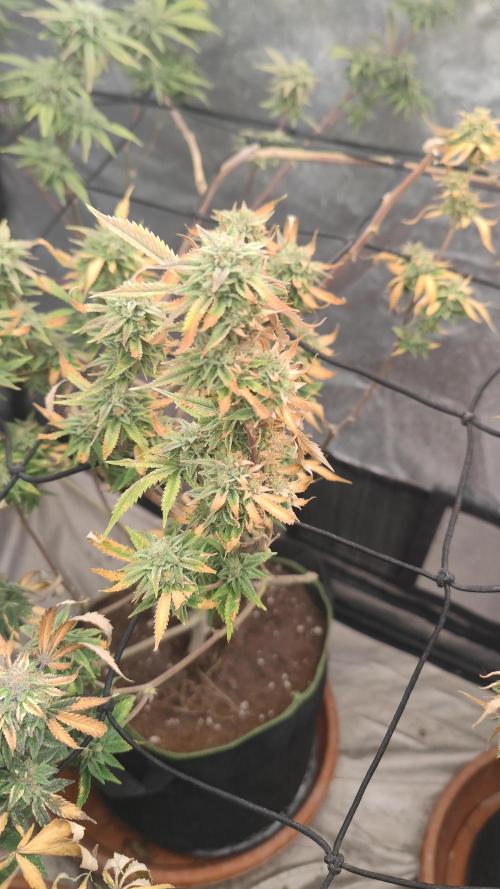
Plants have recovered well from the cold snap, Small calcium def still but it isnt getting worse. The buds are large and fairly dense already. Smell is amazing like citrus and melon.
Likes
103
Share
Very well, my friends! We are ready to try the Technique Scrog in the Peaky Gardens for the first time. Although we practice manual irrigation, we will point to direct the airpot vessels to collect the water in inside after having it leaked into the boast! Hard stems like tree trunks Stay up to date
Likes
6
Share
Buds are fattening up nicely. Red hairs are starting to come in on some of the buds. Overall, looking very frosty and healthy. It's a little mind blowing that this grow - which seemed so slow to start has gone into overdrive.
Likes
23
Share
Another week down and things just keep getting better and better with this one. Big fat buds laced in resin and the smell is soooo good and strong! Very strawberry-like with a ton of gas that my carbon filter is doing a poor job of covering up. Oh well, smells good. :) I will start flushing about mid way through its growing week and then chop shortly after. It’s getting so close to finished I’m just waiting for more amber. I’m mostly cloudy right now.
Likes
4
Share
Venga familia que ya viene la cosecha de estas Terp & Toni de Seedstockers, que ganas que tenia ya de darles machetazo. No veas que ma me dio esta variedad desde principio de floración entre carencias y a mediados una maldita plaga de trips. Las flores aparte, se ven resinosas. a sido una genética con la que disfruté cultivarla, es algo complicada cultivarla pero merece la pena si eres cultivador con experiencia no te será problema cosechar. Agrobeta: https://www.agrobeta.com/agrobetatiendaonline/36-abonos-canamo Mars hydro: Code discount: Eldruida https://www.mars-hydro.com/ Hasta aquí es todo , espero que lo disfrutéis, buenos humos 💨💨.
Likes
15
Share
7/27 My phone ran out of storage and wouldn't let me take a video. I tried deleting several other videos bit that didn't work either. Finally I wad able to upload a few RANDOM pictures from the "website" camera. But no video. Everything looked so beautiful tjis morning too. Not watering was the right choice. I defoliated a couple septoria leaves on the reveg 10th planet that wad about to receive its third dose of Plant Doctor. The chem dog #4 and mk ultra this will be their second treatment. Seeing the positive impact of the product and finding a few septoria leaves I decided to treat every plant in the garden with plant doctor. I'm still going to do the diy Dr. Zymes but Plant Doctor had been working good and I want to suppress as much as possible. Everything looks great. I started by giving the thirstiest plants a half gallon of water. I then did a root drench of 3tsp per gallon on every plant but the 10gal. A gallon of solution was used on each plant. I really feel like this is a good mood. Previously AFTER I applied Plant Doctor the plants would have a noticeable positive effect shortly after. I'm hoping this will be the case here. I think stretch has stopped. I have one special Kush that has buds already but EVERYTHING is in early flower. I'll fix the phone and get a video up there. EDIT: WENT BACK AROUND ONE TO DO A LITTLE DEFOLIATION. EVERYTHING LOOKS REALLY GOOD TO ME. I DID DEFOLIATE A COUPLE SEPTORIA LEAVES. BUT REMOVING A LEAF OR TWO FROM A MONSTER REVEG IS NOTHING. REALISTICALLY I SHOULD BE REMOVING MORE FOR BETTER AIR FLOW. THATS SOMETHING ILL NEED TO DO. SO HAPPY THINGS ARE DOING GOOD. EVERYTHING IS IN VARIOUS STAGES OF FLOWER. NEXT FEED ILL BE USING A BLOOM NUTRIENT. NOT SURE BUT PROBABLY LIQUID KOOL BLOOM. 7/28 Didn't have much time this morning. I've got a wife with medical problems and I'm trying to redue my house before the end of the summer so I'm busy to say the least. Still no pm. Not many pests either. The rose bushes behind them have been DEMOLISHED by jpn beetles. I see no negative active reactions from treating everything with plant doctor 3tsp/gallon. The first plant I treated with it was that 10th planet and its gotten three treatments and looks great. I'll get a spot here or there once in a while but for the most part it's supressed. I have some pruning to do. Everything os in early flower but that one special kush is pretty far ahead. EDIT: SINCE IT WAS MID 80S I WENT OVER AROUND 1 TO CHECK THE GIRLS. THEY LOOKED GREAT. I DEFOLIATED A COUPLE SEPTORIA LEAVES BUT ONLY A COUPLE. I STOPPED AT A LOCAL SHOP AND SHOWED MY BUDDY A VIDEO. HE SAID TO NEVER SPRAY ANYTHING WITH LEAF SEPTORIA WITH "ANYTHING" BECAUSE OF HOW IT SPREADS. I DIDNT MENTION THE CONTRADICTORY EVIDENCE THAT I'VE FOUND IN MY RESEARCH BUT HEY. HE HASNT LED ME WRONG. PLANT DOCTOR SEEMS TO BE DOING THE JOB. THAT AND DEFOLIATING ANYTHING I SEE. IVE WORKED TOO HARD TO LOSE THEM TO A DISEASE THAT MAINLY EFFECTS THE LEAVES. PLANT DOCTOR WILL KEEP IT SUPPRESSED. 7/29 Today is supposed to be really hot. In the 90's. I watered everything a gallon except the thirstier plants got 1.5 and the 10's got 1/2 gallon. I defoliated a few septoria leaves. I'm sure there will be a few more after watering. Instead of alleviating my concerns my buddy kinda got in my head with the septoria talk. Things will be fine. Everything LOOKS gorgeous. He even said, "They look really good and healthy" and "not to get complacent defoliating." The plant in the 50 seems to be worse off than the others. I'll keep an eye on it but if I got spots near the sugar leaves I might just cut that little runt. This was all preventable too. Person mowing the lawn BLEW DISEASED GRASS, SHRUBS AND BIRD SEED IN MY CAGE RIGHT AFTER TRANSPLANT. I legit had to dig out at least a dozen sunflowers or other seeds that sprouted. Realistically things will be fine. The plant I've been treating for three weeks with plant doctor looks great. So do the others. Everything looks good. I just get occasional leaves I previously would've overlooked or attributed to something else. As long as I can keep it suppressed enough through flower I'm good. Anything that isn't good enough will go towards extracts. EDIT: WENT OVER AROUND ONE. A COUPLE PLANTS IN TJE BACK THAT I WATERED FASTER WERE LIGHT SO I SPLIT A GALLON WITH THEM. THE 10TH PLANET THAT HAS GOTTEN THE FULL PLANT DOCTOR TREATMENT IS DOING AWESOME. I DID HAVE TO DEFOLIATE A HANDFUL OF LEAVES. HONESTLY I THINK IVE PROBABLY HAD THIS YEARS PRIOR AND DIDNT RECOGNIZE IT. IM PRAYING EVERYTHING WORKS OUT. IM DOING MY PART. I'M GOING TO HAVE TO DO SOME MORE RESEARCH. 7/30 Came over to the 10th planet plant in the front row all the way in the back was drooped all down and is yellowing up pretty good. I defoliated what I could and gave it a gallon and a half of water. I defoliated any sep leaves I could find. If that plant foesnt pick up like they normally do I may need to ditch the plant. If it continues to get yellow and look unhealthy I'd rather get rid of it than risk more damage. It was light as a feather so I assume it will be fine. I'll update as I go. Everything else looked good though. EDIT: DESPITE IMMENSE ANXIETY I GOT THAT FEELING SO I WENT AND CHECKED THEM. THE ONE I WATERED DID PICK BACK UP BUT IT HAS A LOT OF YELLOW LEAVES. THE 10TH PLANET THATS DOING GOOD WAS BONE DRY AND STARTING TO DROOP. I GAVE IT 1.5 GALLONS. THE HUGE MK ULTRA ALSO WAS STARTING TO DROP AND LIGHT AS A FEATHER. I GAVE THAT A FULL WATERING CAN WHICH IS DAMN NEAR 2 GALLONS. THE REST WILL GET WATERED TOMORROW. NO SIGN OF SEP THIS TIME. I WASNT THERE LONG BUT STILL. THE OTHER PLANTS WERE LOOKING GOOD AND ALL PRAYING TO THE SUN. TOMORROW ILL WATER AND FEED. 7/31 Came over this morning to one of my plants on the 10 drooped right over. I shouldve watered it yesterday when I did the others that were light. Coincidentally the three that needed the water were the 3 revegs. I watered what didn't get it yesterday with a gallon each. I then fed everything a powerade bottle. Started liquid kool bloom today. We shall see how that goes. I defoliated quite a few leaves. I think I may have had sep in the past on some plants and just didn't notice. Plants still look good but I keep a good eye on them. And I defoliate a lot. I've taken my buddies advice and not sprayed anything. I don't really have any pests. A pillar here or there or a "A" cricket or jpn beetle. Of there is one four eyed plant bug but I can't seem to kill it. I've almost caught it a couple times. Anyway like usual I'll keep this updated. 8/1 Girls looked good this morning. I has to water the 10th planet in the front back and one of the 10s. Defoliated a few yellow leaves and picked off a couple sep leaves. It rained a little and I'm really surprised that I haven't seen MORE sep leaves. These girls are resilient. One more day and it's plant Dr day. That 10th planet that has had 3 treatments and will just receive its first "preventative dose" after the three big ones is doing amazing. That one special kush I the front is flowering much faster than anything else. I'm grateful for what I have. EDIT: WENT OVER TO SEE IF I NEEDED TO WATER AROUND 1PM. EVERYTHING LOOKED GOOD. THE FURTHEREST KUSH WAS A LITTLE LIGHT BUT IT CAN WAIT FOR TOMORROW. I DEFOLIATED ANY FADING LEAVES OR ANYTHING THAT EVEN LOOKED LIKE SEP. ALL PLANTS ARE IMPROVING AND LOOKING REALLY GOOD. MK ULTRA IS GOING FIRTHER INTO FLIWER TOO. FOUND ONE JPN BEETLE WHOCH I PROMPTLY KILLED. AROUND THE GOUSE THERE ARE ROSE BUSHES. LUCKILY. JPN BEETLES ARE ON TOP OF EACH OTHER FUCKING AND DESTROYING THE PLANT. IM VERY LUCKY DAD LETS ME KEEP THESE AS TRAP PLANTS. I WENT OUT AND PROBABLY COLLECTED 50 BY BRUSHING THEM IN SOAPY WATER. I HAD TO DO THAT 2 OR 3 TIMES A DAY ONE YEAR. IM SO GRATEFUL ROSES ARE THERE FAVORITE FOOD. PLANNING TO WATER TOMORROW AND I MAY APPLY PLANT DOCTOR A DAY EARLY. IM NOT SURE. IT WILL HAVE TO BE A DAY LATE OR A DAY EARLY. ILL PLAY IT BY EAR. I THINK THEY COULD WAIT REALISTICALLY. IM JOT SEEING MANY BAD LEAVES. KNOCK ON WOOD. 8/2 Must've rained last night. Plants looked great this morning. Wife had an early appointment so wi was at the garden before 6. It's getting to he cold in the mornings. That one special kush is so far ahead of everything else flowering wise. The others are catching up. I only found a couple leaves that looked like sep leaves. Plant Doctor tomm and the first preventative dose for the 10th planet I treated first. That's doing phenomenal. I may end up needing to spray for pillars later in the season. I'll keep this updated.
Likes
5
Share
Likes
37
Share
Music in video: ➡️ INSTAGRAM: https://www.instagram.com/niwel17/?hl=fr ➡️ TWITTER: https://twitter.com/NiwelMusic17 ➡️ SOUNDCLOUD: https://soundcloud.com/niwel-516897768 ➡️ FACEBOOK: https://www.facebook.com/Niwel-Music-... ◆ CONTACT: [email protected] ◆ **************************************** Yesterday, day 105 and 62 days after the switch to 12/12, Kim, Jannine and Iris were harvested. 5 days in advance, I flushed the girls and after the EC was sufficiently reduced, I watered them one more time using FloraKleen. The next day, I watered with plain tapwater and runoff EC was the same as our tapwater. That Wednesday, was the last day I gave them water. On Friday, they had their 12 hours of light for the last time. I forgot to make a family picture just before harvest, but I did make a movie during those last hours of light. After 36 hours of darkness, I harvested on sunday. The coco had dried up quite a bit. The pots felt light to the touch, but when I removed Jannine from the tent (the one that was always in the middle), she immediately collapsed under the weight of her own buds! The same happened to Kim, only Iris was able to holdup most buds, but with a lot of effort. Apparently they had support from each other and the walls of the tent all that time. The buds were promising: heavy, hard and dense. Can't wait to see how they work out after drying and curing. Even the buds lower on the plants were not nearly as fluffy as my first grow, but more like little marbles. My first grow, I trimmed everything wet, but this time, I only removed the fan leaves and some of the bigger sugar leaves. Also, I kept the branches bigger this time. I threw a lot of the little buds in the trim pile, but since they were still looking and feeling like some good buds (but just small) I decided after harvesting the first plant, to throw them in separate containers. So I now have the trim from all the plants, mixed with some of the smaller buds from Jannine and two separate containers with the smaller buds from both Iris and Kim. It went into the freezer fresh, directly after harvest. Since I am lazy, I ordered a bubble washer, which will be delivered somewhere this week, to ease up the hash making proces. Can't wait to try some of the hash from these girls! As for most of the buds, they are drying in the tent. The circumstances could be a lot better: for weeks during flower, RH in our house was at 60%, but in the 24 hours directly after harvest, it came down to 40%. The weather changed from very humid to very dry and it will be like this until the end of the week. Considering it's about 23 degrees C in the drying room (maybe 22 during night) and the fact it will become increasingly warmer the next few days, I am worried about the buds drying to fast (by far my biggest concern), but also loosing some potency. It is now 24 hours after harvest and the buds are still pretty wet, so at least 3 days of drying should be possible, maybe 4. A few days slower would be better, but probably unlikely. Anyway, this ends my second grow. Off course, I will be back with the final results in a few weeks, after drying, curing, making hash of the trim/popcorn buds and off course, testing it all. I expect to start a new grow somewhere in august. Thanks all for following along and all the help during some troublesome moments. I hope you all have a great summer! Stay safe, keep growing!
Likes
22
Share
@Gembel94
Follow
Habe am gestern am 23.12.2024 15l Wasser gegeben heute 10L
Likes
18
Share
@Diips
Follow
d.50 a few spots appeared on the leafs. gave a 10 ml dose of bio p k and waiting a week before giving a dose of orgatrex and bactrex edit: d.50 i also gave 0.5 ml of calmag from Biobizz edit d.53 will i be giving her the orgatrex and bactrex treatment ✌️🌞 d.53 she got 20 ml orgatrex, 1g of bactrex and 0.5 ml of biobizz calmag d.54 added scrog and did lst with clips to even out the height and space… still need to adjust it.
Likes
15
Share
@Dabking
Follow
Had an issue, hence the yellow leaves. I believe I fixed it, so time will tell
Likes
34
Share
Yellow butterfly came to see me the other day; that was nice. Starting to show signs of stress on the odd leaf, localized isolated blips, blemishes, who said growing up was going to be easy! Smaller leaves have less surface area for stomata to occupy, so the stomata are packed more densely to maintain adequate gas exchange. Smaller leaves might have higher stomatal density to compensate for their smaller size, potentially maximizing carbon uptake and minimizing water loss. Environmental conditions like light intensity and water availability can influence stomatal density, and these factors can affect leaf size as well. Leaf development involves cell division and expansion, and stomatal differentiation is sensitive to these processes. In essence, the smaller leaf size can lead to a higher stomatal density due to the constraints of available space and the need to optimize gas exchange for photosynthesis and transpiration. In the long term, UV-B radiation can lead to more complex changes in stomatal morphology, including effects on both stomatal density and size, potentially impacting carbon sequestration and water use. In essence, UV-B can be a double-edged sword for stomata: It can induce stomatal closure and potentially reduce stomatal size, but it may also trigger an increase in stomatal density as a compensatory mechanism. It is generally more efficient for gas exchange to have smaller leaves with a higher stomatal density, rather than large leaves with lower stomatal density. This is because smaller stomata can facilitate faster gas exchange due to shorter diffusion pathways, even though they may have the same total pore area as fewer, larger stomata. Leaf size tends to decrease in colder climates to reduce heat loss, while larger leaves are more common in warmer, humid environments. Plants in arid regions often develop smaller leaves with a thicker cuticle and/or hairs to minimize water loss through transpiration. Conversely, plants in wet environments may have larger leaves and drip tips to facilitate water runoff. Leaf size and shape can vary based on light availability. For example, leaves in shaded areas may be larger and thinner to maximize light absorption. Leaf mass per area (LMA) can be higher in stressful environments with limited nutrients, indicating a greater investment in structural components for protection and critical resource conservation. Wind speed, humidity, and soil conditions can also influence leaf morphology, leading to variations in leaf shape, size, and surface characteristics. Small leaves: Reduce water loss in arid or cold climates. Environmental conditions significantly affect gene expression in plants. Plants are sessile organisms, meaning they cannot move to escape unfavorable conditions, so they rely on gene expression to adapt to their surroundings. Environmental factors like light, temperature, water, and nutrient availability can trigger changes in gene expression, allowing plants to respond to and survive in diverse environments. Depending on the environment a young seedling encounters, the developmental program following seed germination could be skotomorphogenesis in the dark or photomorphogenesis in the light. Light signals are interpreted by a repertoire of photoreceptors followed by sophisticated gene expression networks, eventually resulting in developmental changes. The expression and functions of photoreceptors and key signaling molecules are highly coordinated and regulated at multiple levels of the central dogma in molecular biology. Light activates gene expression through the actions of positive transcriptional regulators and the relaxation of chromatin by histone acetylation. Small regulatory RNAs help attenuate the expression of light-responsive genes. Alternative splicing, protein phosphorylation/dephosphorylation, the formation of diverse transcriptional complexes, and selective protein degradation all contribute to proteome diversity and change the functions of individual proteins. Photomorphogenesis, the light-driven developmental changes in plants, significantly impacts gene expression. It involves a cascade of events where light signals, perceived by photoreceptors, trigger changes in gene expression patterns, ultimately leading to the development of a plant in response to its light environment. Genes are expressed, not dictated! While having the potential to encode proteins, genes are not automatically and constantly active. Instead, their expression (the process of turning them into proteins) is carefully regulated by the cell, responding to internal and external signals. This means that genes can be "turned on" or "turned off," and the level of expression can be adjusted, depending on the cell's needs and the surrounding environment. In plants, genes are not simply "on" or "off" but rather their expression is carefully regulated based on various factors, including the cell type, developmental stage, and environmental conditions. This means that while all cells in a plant contain the same genetic information (the same genes), different cells will express different subsets of those genes at different times. This regulation is crucial for the proper functioning and development of the plant. When a green plant is exposed to red light, much of the red light is absorbed, but some is also reflected back. The reflected red light, along with any blue light reflected from other parts of the plant, can be perceived by our eyes as purple. Carotenoids absorb light in blue-green region of the visible spectrum, complementing chlorophyll's absorption in the red region. They safeguard the photosynthetic machinery from excessive light by activating singlet oxygen, an oxidant formed during photosynthesis. Carotenoids also quench triplet chlorophyll, which can negatively affect photosynthesis, and scavenge reactive oxygen species (ROS) that can damage cellular proteins. Additionally, carotenoid derivatives signal plant development and responses to environmental cues. They serve as precursors for the biosynthesis of phytohormones such as abscisic acid () and strigolactones (SLs). These pigments are responsible for the orange, red, and yellow hues of fruits and vegetables, while acting as free scavengers to protect plants during photosynthesis. Singlet oxygen (¹O₂) is an electronically excited state of molecular oxygen (O₂). Singlet oxygen is produced as a byproduct during photosynthesis, primarily within the photosystem II (PSII) reaction center and light-harvesting antenna complex. This occurs when excess energy from excited chlorophyll molecules is transferred to molecular oxygen. While singlet oxygen can cause oxidative damage, plants have mechanisms to manage its production and mitigate its harmful effects. Singlet oxygen (¹O₂) is considered a reactive oxygen species (ROS). It's a form of oxygen with higher energy and reactivity compared to the more common triplet oxygen found in its ground state. Singlet oxygen is generated both in biological systems, such as during photosynthesis in plants, and in cellular processes, and through chemical and photochemical reactions. While singlet oxygen is a ROS, it's important to note that it differs from other ROS like superoxide (O₂⁻), hydrogen peroxide (H₂O₂), and hydroxyl radicals (OH) in its formation, reactivity, and specific biological roles. Non-photochemical quenching (NPQ) protects plants from damage caused by reactive oxygen species (ROS) by dissipating excess light energy as heat. This process reduces the overexcitation of photosynthetic pigments, which can lead to the production of ROS, thus mitigating the potential for photodamage. Zeaxanthin, a carotenoid pigment, plays a crucial role in photoprotection in plants by both enhancing non-photochemical quenching (NPQ) and scavenging reactive oxygen species (ROS). In high-light conditions, zeaxanthin is synthesized from violaxanthin through the xanthophyll cycle, and this zeaxanthin then facilitates heat dissipation of excess light energy (NPQ) and quenches harmful ROS. The Issue of Singlet Oxygen!! ROS Formation: Blue light, with its higher energy photons, can promote the formation of reactive oxygen species (ROS), including singlet oxygen, within the plant. Potential Damage: High levels of ROS can damage cellular components, including proteins, lipids, and DNA, potentially impacting plant health and productivity. Balancing Act: A balanced spectrum of light, including both blue and red light, is crucial for mitigating the harmful effects of excessive blue light and promoting optimal plant growth and stress tolerance. The Importance of Red Light: Red light (especially far-red) can help to mitigate the negative effects of excessive blue light by: Balancing the Photoreceptor Response: Red light can influence the activity of photoreceptors like phytochrome, which are involved in regulating plant responses to different light wavelengths. Enhancing Antioxidant Production: Red and blue light can stimulate the production of antioxidants, which help to neutralize ROS and protect the plant from oxidative damage. Optimizing Photosynthesis: Red light is efficiently used in photosynthesis, and its combination with blue light can lead to increased photosynthetic efficiency and biomass production. In controlled environments like greenhouses and vertical farms, optimizing the ratio of blue and red light is a key strategy for promoting healthy plant growth and yield. Understanding the interplay between blue light signaling, ROS production, and antioxidant defense mechanisms can inform breeding programs and biotechnological interventions aimed at improving plant stress resistance. In summary, while blue light is essential for plant development and photosynthesis, it's crucial to balance it with other light wavelengths, particularly red light, to prevent excessive ROS formation and promote overall plant health. Oxidative damage in plants occurs when there's an imbalance between the production of reactive oxygen species (ROS) and the plant's ability to neutralize them, leading to cellular damage. This imbalance, known as oxidative stress, can result from various environmental stressors, affecting plant growth, development, and overall productivity. Causes of Oxidative Damage: Abiotic stresses: These include extreme temperatures (heat and cold), drought, salinity, heavy metal toxicity, and excessive light. Biotic stresses: Pathogen attacks and insect infestations can also trigger oxidative stress. Metabolic processes: Normal cellular activities, particularly in chloroplasts, mitochondria, and peroxisomes, can generate ROS as byproducts. Certain chlorophyll biosynthesis intermediates can produce singlet oxygen (1O2), a potent ROS, leading to oxidative damage. ROS can damage lipids (lipid peroxidation), proteins, carbohydrates, and nucleic acids (DNA). Oxidative stress can compromise the integrity of cell membranes, affecting their function and permeability. Oxidative damage can interfere with essential cellular functions, including photosynthesis, respiration, and signal transduction. In severe cases, oxidative stress can trigger programmed cell death (apoptosis). Oxidative damage can lead to stunted growth, reduced biomass, and lower crop yields. Plants have evolved intricate antioxidant defense systems to counteract oxidative stress. These include: Enzymes like superoxide dismutase (SOD), catalase (CAT), and various peroxidases scavenge ROS and neutralize their damaging effects. Antioxidant molecules like glutathione, ascorbic acid (vitamin C), C60 fullerene, and carotenoids directly neutralize ROS. Developing plant varieties with gene expression focused on enhanced antioxidant capacity and stress tolerance is crucial. Optimizing irrigation, fertilization, and other management practices can help minimize stress and oxidative damage. Applying antioxidant compounds or elicitors can help plants cope with oxidative stress. Introducing genes for enhanced antioxidant enzymes or stress-related proteins over generations. Phytohormones, also known as plant hormones, are a group of naturally occurring organic compounds that regulate plant growth, development, and various physiological processes. The five major classes of phytohormones are: auxins, gibberellins, cytokinins, ethylene, and abscisic acid. In addition to these, other phytohormones like brassinosteroids, jasmonates, and salicylates also play significant roles. Here's a breakdown of the key phytohormones: Auxins: Primarily involved in cell elongation, root initiation, and apical dominance. Gibberellins: Promote stem elongation, seed germination, and flowering. Cytokinins: Stimulate cell division and differentiation, and delay leaf senescence. Ethylene: Regulates fruit ripening, leaf abscission, and senescence. Abscisic acid (ABA): Plays a role in seed dormancy, stomatal closure, and stress responses. Brassinosteroids: Involved in cell elongation, division, and stress responses. Jasmonates: Regulate plant defense against pathogens and herbivores, as well as other processes. Salicylic acid: Plays a role in plant defense against pathogens. 1. Red and Far-Red Light (Phytochromes): Red light: Primarily activates the phytochrome system, converting it to its active form (Pfr), which promotes processes like stem elongation and flowering. Far-red light: Inhibits the phytochrome system by converting the active Pfr form back to the inactive Pr form. This can trigger shade avoidance responses and inhibit germination. Phytohormones: Red and far-red light regulate phytohormones like auxin and gibberellins, which are involved in stem elongation and other growth processes. 2. Blue Light (Cryptochromes and Phototropins): Blue light: Activates cryptochromes and phototropins, which are involved in various processes like stomatal opening, seedling de-etiolation, and phototropism (growth towards light). Phytohormones: Blue light affects auxin levels, influencing stem growth, and also impacts other phytohormones involved in these processes. Example: Blue light can promote vegetative growth and can interact with red light to promote flowering. 3. UV-B Light (UV-B Receptors): UV-B light: Perceived by UVR8 receptors, it can affect plant growth and development and has roles in stress responses, like UV protection. Phytohormones: UV-B light can influence phytohormones involved in stress responses, potentially affecting growth and development. 4. Other Colors: Green light: Plants are generally less sensitive to green light, as chlorophyll reflects it. Other wavelengths: While less studied, other wavelengths can also influence plant growth and development through interactions with different photoreceptors and phytohormones. Key Points: Cross-Signaling: Plants often experience a mix of light wavelengths, leading to complex interactions between different photoreceptors and phytohormones. Species Variability: The precise effects of light color on phytohormones can vary between different plant species. Hormonal Interactions: Phytohormones don't act in isolation; their interactions and interplay with other phytohormones and environmental signals are critical for plant responses. The spectral ratio of light (the composition of different colors of light) significantly influences a plant's hormonal balance. Different wavelengths of light are perceived by specific photoreceptors in plants, which in turn regulate the production and activity of various plant hormones (phytohormones). These hormones then control a wide range of developmental processes.
Likes
37
Share
🌱 Week 3: Mutant Magic—The Veggie Vibes Begin! 🌱 Hey Grow Fam! We’re officially cruising into Week 3 of veg with these Mentha de Croco mutants from @TerpyzGenetics, and WOW, they are stealing the show with their funky, unique traits. The diversity in their growth patterns, leaf shapes, and overall structure has me in awe every single day. It’s like watching a gallery of nature’s art come to life! 🌿✨ This week, I’m excited to share something extra special—a photo showcase capturing the magic up close, featuring some incredible macro shots of water drops and reflections. Plus, I’ve included a behind-the-scenes video to show you how these shots came to life, proving it’s all-natural and no digital effects! 🌟📸 Tent Life: Keeping It Steady This week’s conditions remain rock-solid, giving these beauties the stable environment they need to thrive: • Temperature: Holding steady to ensure smooth growth. • Humidity: Keeping it nice and high to encourage lush, healthy foliage. • Lighting: The Future of Grow (FOG) LED is still set at 200 PPFD, which is perfect for building strong, compact plants with tight node spacing. Consistency is the name of the game here, and it’s paying off beautifully. 🌟 Nutrition: Feeding the Funky Mutants 🌿 The feeding schedule this week continues with the amazing Aptus Holland organic-mineral lineup. Here’s the mix that’s keeping these plants healthy, happy, and thriving: • Regulator (0.15 ml/L): This is my go-to for fortifying cell walls and helping plants handle any environmental stress. It’s like a shield of armor for them! • CalMag Boost (0.25 ml/L): Calcium and magnesium are crucial for strong stems and vibrant, green growth—an absolute must for mutants showing off their unique structures. • All-in-One Liquid (1 ml/L): The backbone of the nutrition program, delivering a balanced diet of essential nutrients for steady, healthy development. • Start Booster (0.25 ml/L): Packed with root-stimulating microbes and nutrients, this ensures the root systems stay strong and can support the impressive foliage growth above. Why I Love Aptus Holland: This organic-mineral line perfectly blends nature and science. It’s clean, efficient, and gives the plants exactly what they need without overloading or causing buildup. The results? Happy, resilient plants that thrive from root to tip. 🌱✨ Growth Highlights: The Funk Unfolds! 🌿 Each plant is starting to show off its unique traits, and I couldn’t be more excited. Mutant genetics like these are a grower’s dream, bringing surprises and individuality with every leaf that unfolds. I’m noticing: • Leaf Diversity: Wide blades, funky asymmetry, and new textures emerging. • Steady Growth: Compact, strong plants with great structure—perfect for setting up the next stages of training and growth. This week, I also took some time to capture the magic of these plants through photography. Using my trusty Sony and Nikon cameras, I snapped some macro shots featuring stunning water drops with beautiful reflections. These photos really showcase the intricate beauty of nature that’s so easy to overlook. 📸 Behind the Scenes: To top it off, I’ve included a video showing how these photos came to life. No tricks, no effects—just a little patience, the right light, and the magic of macro photography. It’s my way of sharing not just the plants’ journey but also the creativity and wonder that comes with it. 🌟 Grower Reflections & Tips 💡 💚 Observation is Key: Take time to really “read” your plants. Each one is unique, and mutants often need a little extra attention to their quirks. 🌱 Embrace Creativity: Whether it’s training techniques, feeding strategies, or photography, let your passion shine through—it’s all part of the journey. 💧 Steady Feeds, Happy Plants: The balance of Aptus Holland nutrients is keeping these plants perfectly happy without overfeeding. Light but consistent wins the race in these early stages! Shoutouts & Grower’s Love 💚 A big thank you to: • @Terpyz Genetics for these incredible, unique seeds. • @Aptus Holland for the nutrition line that keeps these mutants thriving. • @Future of Grow for the perfect lighting setup. • @Trolmaster for the best controls in the market. • @Grow Diaries for providing a platform to share this journey with the grow fam. • And YOU—the amazing community that makes this all worthwhile. Whether you’re a follower, a fellow grower, or just stopping by, your energy means the world! Let’s keep celebrating these mutants and spreading positivity. Until next week… let’s grow, let’s grow, let’s grow! 🌱✨ Genetics - Mentha De Croco https://terpyz.eu/products/menta-de-croco-fern-type?_pos=1&_sid=e9237cbcb&_ss=r DogDoctorOfficial Discount Codes @ terpyz.eu - DOCTOR 15% off Nutrition - @aptusholland https://aptus-holland.com/ Led Power @ F.O.G. Future Of Grow https://www.thefuturofgrow.com/en/online-store/BLACK-SERIES-600-p489093171 Controls @ TrolMaster https://www.trolmaster.eu/tent-x As always thank you all for stopping by, for the love and for it all , this journey of mine wold just not be the same without you guys, the love and support is very much appreciloved and i fell honored with you all in my life With true love comes happiness Always believe in your self and always do things expecting nothing and with an open heart , be a giver and the universe will give back to you in ways you could not even imagine so Growers Love To you All 💚
Likes
67
Share
Smells amazing 🤩 i havent trimm yet just take the big leaves with no trichromes on it as usual drying on custom 📦 box 👌💪💪💪💚💨💨💨
Likes
18
Share
Genetica sapziale l’unica ad avere sentori viola e rossi nelle cime. Molta resina e un odore spaziale! L’ho assaggiata che non ho resistito e ragazzi è qualcosa di straordinario!! Consigliata a tutti!! ❤️🔥🌲
Likes
9
Share
@Luv2Grow
Follow
Day 50 - Starting week 8 today and she’s looking beautiful. She definitely not as big as I was expecting but she’s really starting to fatten up, looking and smelling amazing. Can’t wait for these last couple weeks for her to finish and chop her. Day 51 - All is looking good and hoping by the end of week 10 she’ll be ready or close to ready for chopping. Starting to get milky trichomes but still quite a few clear. The next couple weeks are gonna be fun to watch her fatten up more. Day 52 - She definitely looking good and getting a lot of milky trichs but there’s still a bit of time before she’s ready to chop, at least that’s what I’m thinking. Might do a split harvest if she calls for it but hoping she’ll be ready by week 10 or 11 at the latest. Just need her to fatten up a bit in the middle. Day 53 - Gave her a feeding of water today and continuing to watch her fatten each day. She’s starting to get really frosty and smelly and I’m loving it! Excited for the last few weeks. Day 54 - All is looking good still and it’s like this girl is almost turning into one big giant frosty bud and couldn’t be happier with how easy she’s been to grow so far. Right now she’s almost 100% milky trichs and looks like she still has a little more time to go still. I’m going for a little more couch lock so need those ambers to start showing up. Day 55 - All is looking good still, just watching her fatten up everyday. Day 56 - Last day of week 8 and she’s smelling sooo sweet and getting frostier everyday. Thinking about just giving her pH’d water from here on out. I’m guessing another week or two and she should be finishing up but just gonna continue watching trichs. Waiting for them to start turning amber. Still a few clear in there but not many, mostly all cloudy now.
Likes
11
Share
@Aeries
Follow
No.1: She went outside 1 week after #3 but is healthy and happy. No.3: loving life and twice the size of #1. Did some defoliation of 4 big fan leaves.
Likes
17
Share
@valiotoro
Follow
Hello everone 😎 What a beautiful girl 😳 I start to introduce bloom nutrient & Homemade bloom powder She is under the Mars Hydro SP-6500 70% Have a nice day 💥