


Likes
Comments
Share


@RSAFirstOrganicGrow
Follow
Saw a few burnt tips at the start of the week so I’ve only been feeding water. Other than that I still just hope to harvest, at least. So far so good she’s been quite strong from the get go!
I hope to last another week, exciting times ahead!


Likes
Comments
Share

@JVKdopegrow
Follow
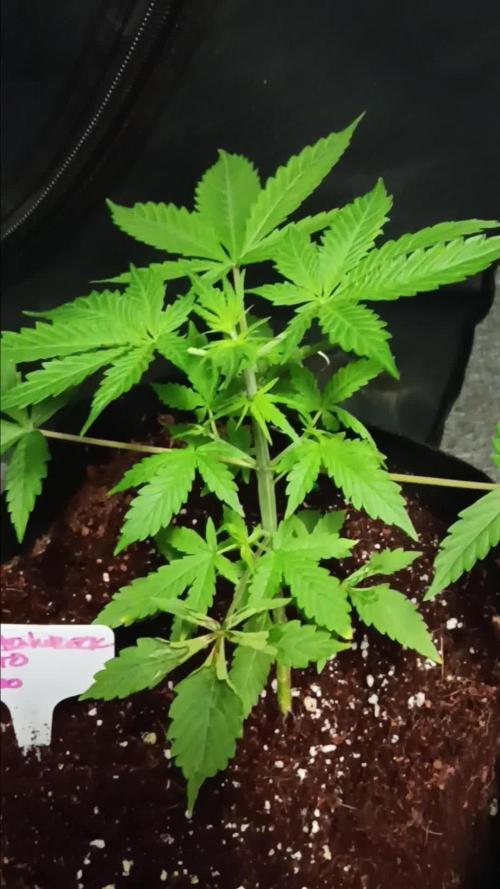
Veg week continues for these little ladies. Slight LST for one girl, just because. Pretty shape and color for both. So far so good, increasing nutes with each feeding.

Likes
18
Share


@Gdubgrows
Follow
Day 39 - Watered the Gold Leaf today by dunking it. 8.4 PH going in and 6.3 for the runoff. The PPM was only 500 or so, but I'm guessing it is because of the dunk. The soil test was still 5.3 on one side and up to 5.7 on the other. I checked right away so maybe it has gone up. GDP #1 seems to need water, but GDP #2 will need another day. The Gold Leaf is reaching the 25" limit for flipping, but the net should help show things down a little so the other 2 can catch up.
Day 40 - Both GDPs needed water and got dunked. PH was 8.5 and the runoff showed 6.2. A soil PH check came back at 5.9. I am hoping that the small jump will help. I realized I would not be able to test the runoff with the stand and saucers I was using so i got new ones. This lowered my potential flipping height, but with the SCROG I am hoping to keep the goldleaf down long enough for the GDP to catch up.
Day 41 - The Gold leaf is tall enough to bend down and the GDPs are almost there. I'm anxious to see how many bud sites I can get through the net before I defoliate and flip to flower. I don't think I should wait much longer with 3 plants in a 2x4 and the gold leaf getting close to 25 inches.
Day 42 - 2x4 is too crowded so decided to order a 5x5 and move them over before I flip to flower. The gold Leaf is dry again. Watering with 3 gallons to try and get the PH up and the PPM down. The PH of the water I am using is 7.5
Day 43 - Watered Gold Leaf today. Going in the PH was 7.5 and the PPM 250. The runoff showed 5.9 and the PPM was 870. The soil test after work showed on one side as 6.1 and the other 6.0. Getting better, but I want to be closer to 6.5 before I flip them. The 5x5 tent will give me the room needed for that.
Day 44 - Watered the GDPs today. The water going in had a PH of 7.5. The PPM was around 255. The runoff had a PH of 6.2 and a PPM of over 850. Both were very similar. At least one more week without nutes unless there is a problem.
The ladies all seem to be showing a bit of magnesium deficiency. I started using a foliar spray for now with 1ml cal mag in 500ml of water with a PH of 6.5. Might need to add cal-mag to the next watering. The 2x4 is way too crowded with the 3 of them in there together. Hopefully the new tent shows up soon.
Day 45 - The Gold Leaf is getting worse. It looks like lockout again. The other side of the spectrum this time. Probably too alkaline... 😒 From now on I will be feeding with water with a PH of 6.5. For now I added a few drops of micro and bloom to the foliar spray and applied it once more. It seems like it will need more water in a day or two so that should help.

Likes
4
Share


@JardineiroBr
Follow
Essa é a minha Moby que está mais bela , segue com muitos cristais de THC e um aroma bem forte, os tricomas estão transparentes então ainda leva umas semanas amadurecendo, o menor dos vasos , esse de 5 litros é me parece um dos melhores resultados , chego a conclusão que plantas automáticas rendem suficientemente bem em vasos den5 a 7 litros.

Likes
7
Share


@Maven26
Follow
Foliage has been trimmed back a bit. She replaces the leaves in two days. Girl is taking over the tent shared spaces.
Likes
14
Share


@MadeInGermany
Follow
Hey guys :-)
This week the lady was watered 3 times with 1 l each time. ( Nutrients see table above )
It is developing well and will soon be in bloom 😃.
Apart from that, everything was cleaned in a controlled manner and osmosis water was treated.
Stay healthy 💚🙏🏻
👇🏼👇🏼👇🏼👇🏼👇🏼👇🏼👇🏼👇🏼👇🏼👇🏼👇🏼👇🏼
You can buy this Nutrients at :
https://greenbuzzliquids.com/en/shop/
With the discount code: Made_in_Germany you get a discount of 15% on all products from an order value of 100 euros.
👇🏼👇🏼👇🏼👇🏼👇🏼👇🏼👇🏼👇🏼👇🏼👇🏼👇🏼👇🏼
You can buy this strain at :
Clearwater Seeds
Water 💧 💧💧
Osmosis water mixed with normal water (24 hours stale that the chlorine evaporates) to 0.2 EC. Add Cal / Mag to 0.4 Ec Ph with Organic Ph - to 5.8 - 6.5
MadeInGermany

Likes
1
Share
@JVKdopegrow
Follow
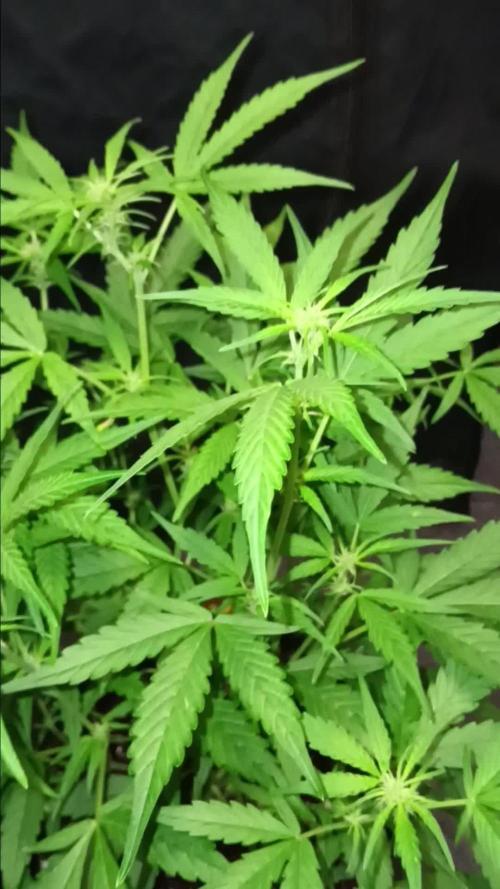
Bud sites have all blossomed into flowers. Great shape as she has stretched to her full size. Slight defoilation as I dealt with a tent wide white fly issue.
Likes
5
Share


@Ninjabuds
Follow
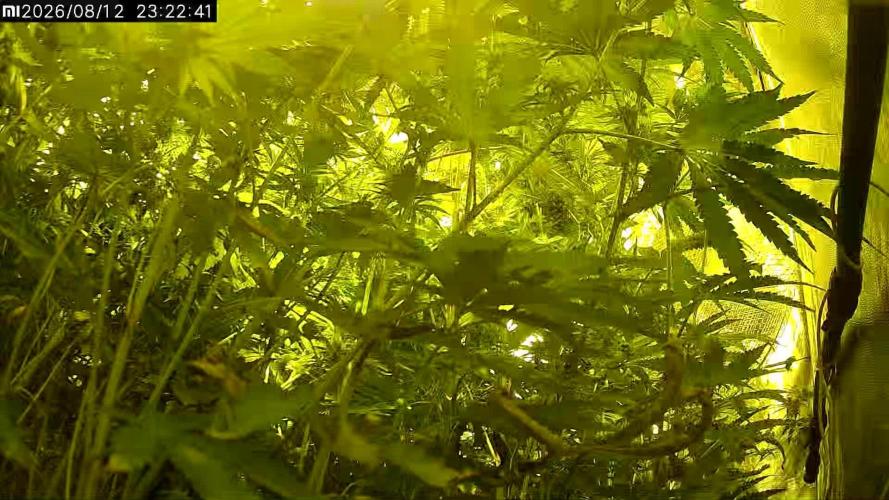
My strawberry gorilla is really starting to be a pleasure to grow. At 1st I had it in a small tent with my gorilla cookies and the other plant was taking all the light and the tent was so small I kept having to cut back at both the plants so they would fit in the tent but now they are in the bigger flower tent by themselfs and man all the lollipoping did wanders for this plant it’s got some nice big colas. You could definitely get this plant to make huge colas if done right. Only my 3 auto so I’m figuring it out.


Likes
142
Share

@MadeInGermany
Follow
Hi everyone :-)
This week a lot of nice things happened in the flower tent :-)
Everyone looks super nice, and is growing stronger and more beautiful week by week 😍👌.
The blue cheese smells like a dream ;-) As usual from this variety 👍.
The kosher tangie is also very, very tasty 👏🏻.
Both got Pk 13/14 this week for the last time :-)
Everyone else is developing very well 👍, That will be the last diary with several strains together :-)
In future everyone will come individually 👌.
I wish you a lot of fun with the videos, have a nice weekend, stay healthy 🙏🏻 and let it grow 😎👌


Likes
37
Share


@Ferenc
Follow
Last couple of days... No watering from today, (Day 129) and the light will be switched off as well from tomorrow (Day 130) so I will harvest them
approx on Day 132
or 133 on the 18th week :)

Likes
26
Share


@pifflestikkz
Follow
Day 43
12/08/24 Monday
Feed today, it was warm again so they drank the whole 300ml each so I have topped up another 150ml to see run off to prevent salt build up.
All thriving 😍✌️💚
ACOP and Melonade Runtz structure is stunning 💪
Divines Overdose is getting chunky and showing nice stack potential 👌
Leaving these to just run there natural course, will allow me to best pick my next SOG run with micro autos indoor 😎
Video update
Day 45
14/08/24 Wednesday
De-chlorinated tap water pH 6 only today.
Day 48
17/08/24 Saturday
Another watering today using de-chlorinated tap water pH 6 only.
Orange bud is tall!! Top her next time.
Critical orange is lovely and compact.
Overdose is nice and compact,
Melonade Runtz nice compact structure also.
Picture and video update ✌️ 💚




Likes
8
Share


@Huntress007
Follow
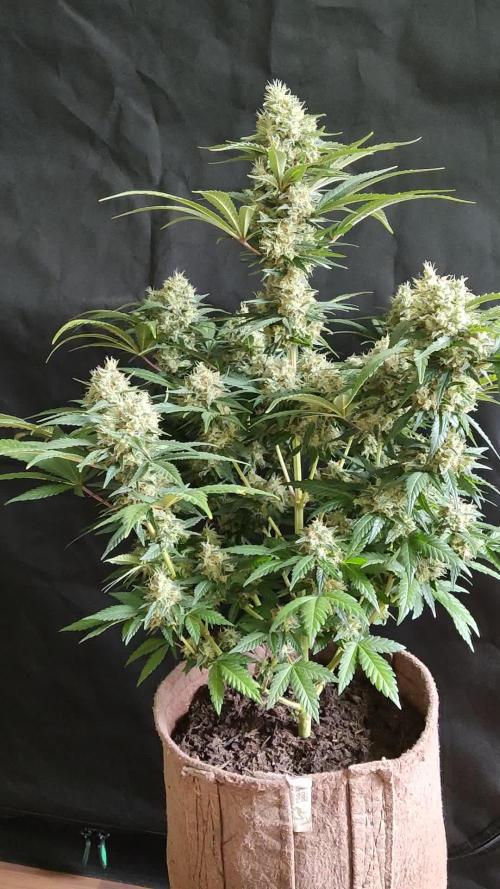
This plant is doing amazing and it’s surprisingly very sweet and sticky! 😂 smells are delicious 🤤 sticky to touch!
Likes
2
Share


@Alejandroalvez123
Follow
Fueron 3 plantas que compartían espacio con otras 5 en un espacio de 1m2

Likes
3
Share


@Happygrowing
Follow
Mi aspettavo qualche grammo in più e un gusto differente ma comunque mi ha insegnato molto sulla crescita e sugli errori da non commettere di nuovo in futuro.
Come qualità di cima sono belle come non troppo compatte con un forte aroma.
Seccate per 14 giorni a 60%di umidità e 21 gradi Celsius.
Conciata per 14 giorni e consumata.


Likes
74
Share

@Ferenc
Follow
Day 36, 25th of October 2021:
Week 6 ;)
First day of the 6th week....
This week is not about LST anymore it is FIMing week that means all of them have FIMmed on all of their "heads" so like each plant approx 6-8 times....
Together, they have strong smell even without flowering lol 😆
So yeah, Mastdoson Kush is still the same very strong and resistant I beleive they won't strech that much so no need any Topping for them. They should stay short and bushy hopefully with nice buds :)
RQS girls:
Gelato Cookies 🍪 is amazing nothing really changed she will be I think a larger lady when starts flowering. I am not sure about streching but I reckon a double size maximum. I am very satisifed with this genetics lovely and first class.
Northern Light for me looks a bit tiny but little bushy so we will see it is obvious that she does not need Topping at all for her midget style...
There are nice branches but she has got some deficiency.
Hopefully it won't effect on her performance in the future I am so curious about her. It is okay if she won't get large -large but I expect a chunky lady at least :)
Spliffs Seeds ladies:
Well, CBD Medi Kush is my favourite lady from here she will be another strong and big plant I think. Very cool I like this one even the smell already amazing!
Smooth chill.... all good 👍. I think she will be a problem free strain in the future but let's see ;)
Afghani Gold typical bushy midget Indica with fan big leafs 🍃 nice creation she will be nice as well, I don't reckon with big strech :)
We will see what comes and obviously I am excited here as well. I wanna see a chunky lady. Hopefully she will fulfill my dreams lol 😆
Spliffs Strawberry 🍓 the typical Sativa with that "saw blade" style leaves...
Well, here I am afraid a bit of streching as she just FIMmed and Sativa however, I beleive she will be cool with that :) She looks pretty a bit lighter in colour.
Honestly I don't really have big experience with Sativas mostly Indicas and hybrids but I am pretty sure that I can handle the situation. I know it will take a bit longer for her to flower and also she won't be the chunky numero uno but I still expect great things haha :)
Blue Berry she is the hybrid lady and still looks a bit pale for me obviously she has got some deficiency but she will make it let's see what comes when she turns to flower.... I am excited 😁
I wanna give them several days before the darkness period which is 3 days and the from next week switching to 12/12. They are FIMmed only so it doesn't really stress them to give them much extra time to recover before flowering.
I think it will be the right time to switch on the next week because I can see they really want to flower 🌼 ☺️ 😅
But for now lamp is still 18 hours on, set to be on 150W (approx 60% of the max) ventilation is on for 10 minutes in every 2 hours but the extraction fan is 18 hours on with the lamp...
Humidity approximately is the same 50% and the temperature as well +/- 1-2 Celsius.
Water intake increased approx 0.12-0.15L per day per plant.
Fertilization is the same Epsom salt once a week, and then 2x a week Biobizz Family included BioGrow, BioBloom, TopMax and of course - Vitalink bat gunao also.
Ratio is above. So that's all let's see 👀


Likes
28
Share


@SooSan
Follow
Dans l'ordre :
Blueberry
Dutch Passion
Blueberry
00 Seed
Blueberry
PEV Seed
Blueberry
Bulk Seed
Animal Cookies x Blue Monkey
Exotic Seed
Red Hot Cookies
Sweet Seed
DoSiDos x Purple Punch
PEV Seed
Purple Shot
Exotic Seed


Likes
29
Share


@CannbellFarms
Follow
Was such a pleasant harvest from start to finish, no issues at all. A tip for next time would be to have the SCRoG lower as I couldn’t really tuck any node sights this time round, smells absofuckinglutely amazing from 3RD week bloom onwards!