




Likes
4
Share

@carlitoshaze44
Follow
Seguimos con más avances!
23/3/26
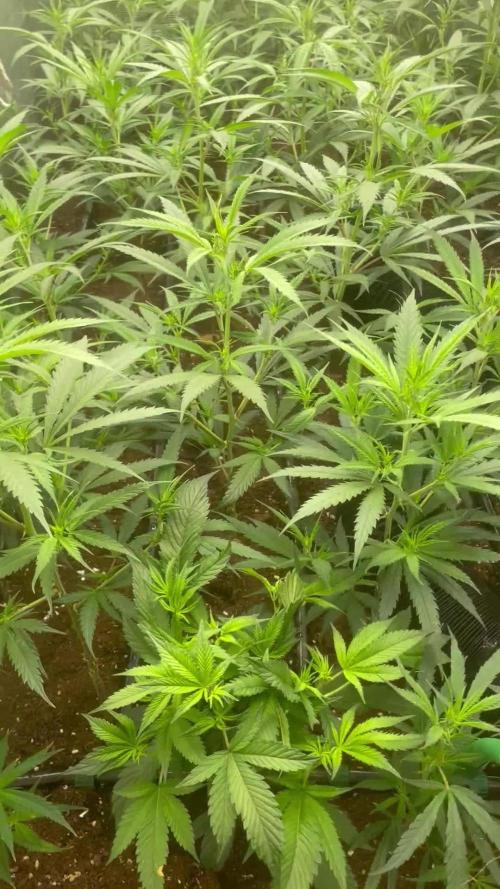
Seguimos con 45 amnesias muy sanas! Y libres de plagas al menos por el momento!
En esta semana daremos otro fumigado para prevenir cualquier ataque que venga en las próximas semanas.
Tengo que decir que en estos últimos tres días los avances de las niñas fueron increíbles de las 45 solo se quedó atrás 1.
Tenemos entonces 44 plantas que se han desarrollado bien y entran en la floración al 100x100.
En esta semana iré reduciendo el nitrógeno hasta que vea la formación de las primeras flores y comenzaré a trabajar con las concentraciones de productos de floración.
Esta vez quiero ver qué tal con el 4en1 de plagron greensensation+sugar royal.
Que ya e visto y catado los resultados varias veces muy buenos! Por cierto.
Atami bloombastic +atamiflavor.
Que no e tenido la oportunidad de probar con ellos hasta ahora.
Tengo ganas de ver qué tal los resultados con estas haze.
Que esta vez llevaremos hasta el final de la maduración ya que este cultivo será exclusivamente para fumar en flores .
Quiero la máxima expresión de sabor.
26/3/26
Espectacular!! Nítido! Solo deciros que en 24horas la evolución es impresionante las bacterias más el clima! Más las ? lombrices! Todo va como tiene que ir! Muy contento espero que todo acabe de una manera espectacular.


Likes
4
Share


@MistaOC
Follow
**************
13.03. Day 1
**************
🤞🏼😎
I have new cuttings. Sour Frootz from Karma Genetics. I planted the cuttings in 0.2 L pots. I only applied fertilizer to the large pot.
So Let’s grow again 💚💯
*******************************************
18.03. Day 6
sprinkled with bactrex and transferred into the large pots
*******************************************
Likes
29
Share


@CannbellFarms
Follow
Monday 12/12
- week 3 bloom begins, light height is 14” from canopy but only 6” from main colas
- small plants is far far behind in height now sadly don’t think it will catch up now
Tuesday 13/12
- heavy defoliation on the 3 large plants
- light defoliation on the small one
- raised the SCRoG and moved sites around to space them out
- cleared some small and stringy sites from the bushy back right plant
Likes
21
Share


@Hashy
Follow
I got back near the start of this week and had a mess to clean up. All my fault as I forgot to turn the waste pump timer on at the wall. The grow has done OK really considering its been left to timers to control it. I'm going to invest in some that I can control remotely as there was one feed I could have done without this time.
The AK47 has come on quite a lot this week. A few issues that I'm not worried about. This is looking like she is going to be a week or two longer then most the other strains in the grow. But is looking promising.
Day 57 Saturday 29/10/22
****Away****
Feed=autofeed 2.5hrs
Est Volume= 17L, Ec= , PH=
Est Left= 10.5L, Used= 6.5L = 1L each
Est total used=19.5L
Est total each=3.25L
Est total Runoff= 1.2L, Ec= , PH=
Est total run each= 0.2L
Day 58 Sunday 30/10/22
Actual volume left= 6L ec1.66 ph 6.7
Used 24L =4.5L more then expected.
Actual runoff= 4.2L Ec2.45 ph 5.4
Runoff 3L more then expected.
Each got 4L =0.75L more then expected
Each Runoff =0.5L runoff
Big mess as i forgot to turn waste pump on at the wall for the timer to work.
Clean up.
Big defoliation on all.
Day 59 Monday 31/10/22
Day 60 Tuesday 1/11/22
Feed=autofeed water 3.5hrs
Volume= 10L, Ec=0.25, PH=6.8
Left= 1L, Used= 9L = 1.5L each
Runoff= 0.5L, Ec=3.33, PH=5.9
#1 H=60CM, D=42CM, DLI=33.9, PPFD=471
Day 61 Wednesday 2/11/22
Day 62 Thursday 3/11/22
Day 63 Friday 4/11/22
Feed=autofeed 3hrs
Volume= 12L, Ec=1.34, PH=6.5
Left= 3L, Used= 9L = 1.5L each
Runoff= 1.1L, Ec=2.93, PH=5.9
#1 H=60CM, D=42CM, DLI=33.7, PPFD=468
Viparspectra xs2000
65% power 7 days
£0.30 /Kwh = £6.55 for the week.
Thanks for stopping by.
Take it easy.

Likes
13
Share


@Rob96
Follow
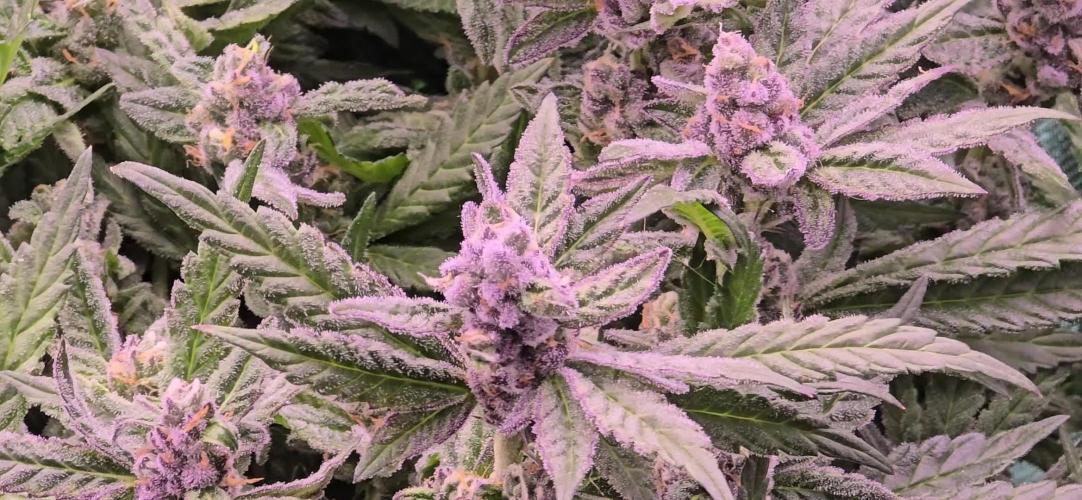
Decided to cut these now as trichs are all looking nice and milky with few ambers, buds are looking really nice, nice few tint of darker colours in there too really happy with result, hanging to dry now and will update the final week once all dry, been a great plant overall no issues and finished with some really nice looking weed hopefully smokes as nice as it looks




Likes
30
Share


@BudXs
Follow
Oh it was a special week. Day 21 of flower marks the Silver Back Guerilla defoliation day!!!!
I left one be. For him. To prove me wrong. BUT!!! That one had some dead leaves at the bottom that needed removal, not the defoliated plants!!
Time will tell as to if what Im doing is right. I stick to my guns that this works for my room. Even though I read differently, removal of foliage has lowered my rh. Could very well be outside environment, however.
By day 21F the room was a bush again. In my opinion, it needed the heavy defo to breathe. As for light penetration, I am extremely happy with the amount of heads receiving direct light. Im a pig in shit
Thanks for looking, I dont want to hear your opinion on defo or schawazze, unless youre SBG


Likes
11
Share


@Dendegrow
Follow
Radical Juice – Week 5 of Flowering
The Radical Juice is thriving! 🌿🔥 The buds are stacking up beautifully, and the trichomes are becoming more visible day by day. The difference in the experiment with my homemade fertilizer is still clearly noticeable—the plant that received it during the vegetative phase is visibly stronger and healthier than the control group.
I’m really excited to see how this continues to develop! Stay tuned, like & follow to keep up with the progress. 😎
---
Radical Juice – Blüte Woche 5
Die Radical Juice entwickelt sich prächtig! 🌿🔥 Die Buds stapeln sich schön, und die Trichome werden von Tag zu Tag sichtbarer. Der Unterschied in der Versuchsreihe mit meinem selbstgemachten Dünger ist weiterhin deutlich zu erkennen—die Pflanze, die ihn in der Wachstumsphase bekommen hat, ist kräftiger und gesünder als die Vergleichsgruppe.
Ich bin gespannt, wie sich das Ganze weiterentwickelt! Folgt mir, um nichts zu verpassen. 😎

Likes
7
Share

@3rnest
Follow
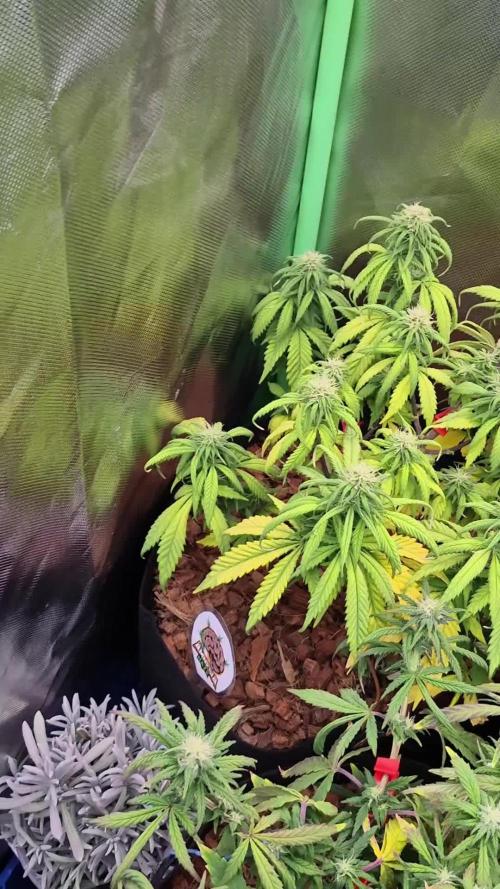
Leider habe ich noch nicht das optimale Setup gefunden, da die Pflanzen nach meinem Geschmack noch etwas zu klein sind und die Blätter sich zu früh verfärben.
Ich habe sie diese Woche noch mal gut gegossen und den pH-Wert etwas erhöht. Ich hoffe sie legen jetzt noch etwas zu und wachsen etwas besser.

Likes
7
Share


@Luv2Grow
Follow
Overall the grow was simple and she took care of herself. Even after snapping her main branch in the early stages, she bounced back and didn’t miss a beat. She took to LST without any issues and was definitely a delight to grow. Will definitely be growing this one again and I’ll give a finally dry weight and smoke report in about 7-10 days.
Likes
60
Share


@SooSan
Follow
12/12 + 28 jours
Mon 1er Schwazzing !!!
Photos et vidéos avant et après la defoliation
1️⃣
🏠 90x60x90
☀️ FC-E 4800 => puissance a 70%
🍁
1x Black Bomb / Philosopher Seed
2x Amnesia Lemon / PEV Seeds
1x Blueberry / PEV Seeds
1x Blueberry / 00 Seeds
1x Wappa / Paradise Seed
1x Dark Phoenix / Green House Seed
1x Quick Sherbet / Exotic Seeds
1x Mango Cream / Exotic Seeds
1x Banana Frosting / Sensi Seed
1x Hindu Kush / Sensi Seed
4x Fast Mix / Sweet Seed
📎 https://growdiaries.com/diaries/122084-grow-journal-by-soosan
📎https://growdiaries.com/diaries/124052-grow-journal-by-soosan
2️⃣
🏠 30x60x50
☀️TS1000 => puissance a 80%
🍁 4x Quick Sherbet - Exotic Seed
📎 https://growdiaries.com/diaries/122080-grow-journal-by-soosan
Sponsorisé par Mars Hydro


Likes
3
Share


@NYGROW
Follow
Week 10 buds keep growing but the girls got some kind of deficiency… it started at the top of the plant … I’m almost done with the blue dream hopefully this don’t mess her up in her last week or weeks..
other than that she’s a big girl !!! The purple dream seems to be doing fine hopefully she don’t end up dying on me before harvest …
Likes
9
Share


@HIAZ_urbanbudfarmer
Follow
Since 1 of the Tropicana Cookies seedlings died earlier on in veg, it left a spot in veg set up.
Due to temperature rising each day as we approach the start of summer, water temperature in Dwc constantly rising to around 25/26 degrees Celsius.
Adding & changing out frozen water bottles 3 times a day!
Unfortunately still rising over the course of the day.
As much as Dwc growing interest's me it's just not pheasable to grow in summer with out a water chiller!!!
Risk of root rot is extremely high. Lost a few plants to root rot last year in summer & it seems that the White Widow Auto had started getting a bit of root rot, even adding frozen bottles didn't help.
Needed to get her out of Dwc before it got any worse.
Since I lost a seedling earlier, I've decided to take her out of Dwc & plant her into the now vacant pot, that's hooked up to a top feed recirculating hydro system. Ever since transfering her she has thrived. Changed light hours for her from 24hrs on to 20 hrs on 4 off. Started to show pistills on day 35/ last day of week 5 veg!
Processing
Likes
2
Share


@K8T80
Follow
Haven’t posted in a while it’s been 68 days since I’ve planted. Nearly at 10 weeks. Growing slower than I thought I would. The white hairs are growing just waiting for the buds to fatten up now!

Likes
18
Share

@Hashy
Follow
Harvest report for New York Turbo Diesel.
Breaking ground to harvest was 84 days.
Wet weight was 186 grams
Dry weight =37g
Power used for 12 weeks. 246.3Kw used on lighting. £73.89 at £0.30 a Kw
Average 2.932 Kw a day =146 Watts power an hour during lights on.
Dry weight from this grow.
#1 49g
#2 37g
#3 46g
#4 39g
#5 51g
#6 52g
Total 273g
True g/W = 273÷146=1.87g/W
This was one great grow and there are a few strains I'm really considering running again straight away. This strain is one that I want to grow again but give her more space to flourish. She has grown decent solid buds absolutely coated in trichomes.
One thing I have learnt during this grow is that the idea of cramming 9 autos into my tent was a stupid idea and trialling it with 6 plants was wise.
Likes
26
Share


@TheWhiteRussian
Follow
This thing was very easy to grow. Liked low PPMs in flower. Around 600 was plenty for her. Will report taste and effects when curing is complete.


