


Likes
Comments
Share


Likes
22
Share


@DETOX
Follow
SEMANA 2 - DÍA 8
Tengo experiencia con la gama PURE AUTO de la casa, por lo que puedo afirmar que en todas las tandas que hago, alguna sufre malformación genética, y eso influye en el proceso.
En esta ocasión, le agregue al sustrato un 50% de coco y estoy regando como de costumbre, con lo mínimo (50ml), a ver si soy capaz de estirar la planta a 1 metro.
De momento es todo, nos vemos en la próxima.
Saludos y felices humos.


Processing
Likes
6
Share


Likes
39
Share


@DogDoctorOfficial
Follow
Time to clean up this 2309, she still is my fav hope she enjoys her haircut hihihi
Man she love it , next day she was back on to her praying mode <3<3<3
Tester 2309 is by far my favorite from day one, not only because i like the number but because from a early age she spoke to me like non of the others did, and now, man i mean now she is by far the one showing bigger trichomes production and her smell, i mean is so strong for the time being, she is an herbal mix with flowers and some spicy notes, this for now she is evolving day by day, just amazing, she took the defoliation like a big girl and with the week coming to an end her resin production levels and it all i mean ... <3 <3 <3
added defoliation edited video , hope you guys have fun <3 <3 <3
As always thank you all for stopping by, for the love and time you guys spend on my stuff, i fell blessed and humble, many thanks to you all <3<3<3
Genetics - Fast Buds Tester 2309
Ligth - LUMATEK ZEUS 465 COMPACT PRO
Food - APTUS HOLLAND
#aptus #aptusplanttech #aptusgang #aptusfamily #aptustrueplantscience #inbalancewithnature #trueplantscience #fastbuds #dogdoctorofficial #growerslove
With true love comes happiness <3 <3 <3 Always believe in your self and always do things expecting nothing and with an open heart , be a giver and the universe will give back to you in ways you could not even imagine so <3 <3 <3
All info and full product details can be find in can find @
https://2fast4buds.com/ wen released
https://aptus-holland.com/
https://autopot.co.uk/
https://lumatek-lighting.com/
Have a bunch more diaries going on, fell free to drop by and say hi dont be shy <3 <3 <3
<3 <3 <3 Growers love to you all <3 <3 <3

Likes
14
Share


@GoldenWeedGrower
Follow
D85/F41 - 24/06/23 - She's almost ready, I think I'll start the flush soon
D86/F42 - 25/06/23 - Temp is still too high, I'm trying to refresh the environment with air conditioning
D87/F43 - 26/06/23 - First Thricomes Video. I'm going to start the flush today and I'll arwest next WE
D88/F44 - 27/06/23 - Flushing
D89/F45 - 28/06/23 - Flushing
D90/F46 - 29/06/23 - Flushing
D91/F47 - 30/06/23 - She's ready. Tomorrow I'll cut her

Likes
14
Share


@MG2009
Follow
12/22/2021
Starting the over night soak in H2O2 water, then onto soil mix to finish germination.
Soaking in H2O2 and water, about an ounce h2o2 mixed with .500ml spring water. It aids in breaking down seed shell, and sanitize seeds at the same time. I will sow directly into soil as breeder suggest.
12/25/2021
All I5 seeds sprouted in water little 1-2 mm tap roots, potted into small cups and reppot as necessary, should get 100% germ rate if I don't hurt them tiny tap roots putting them in soil.
12/28/2021
Lemon OG 100% germ rate, Biscotti Skunk 4 of 5, Grape Skunk 4of5,and I will take the blame if others don't take because of miss handling, so very happy with the germination rate I'll give it 100% Thanks @QCS for given me the opportunity to grow your genetics.🙏🏻
Ps.
ROJI OGS will go next round I'd like to do them alone I think she will be special.
Biscotti Skunk
Biscotti Skunk Cannabis Seeds Feminized
With a noteworthy lineage, Biscotti Skunk is a mix between the Cookies variant and Kush on one end, acting as the base layer for flavors and effects, while the Skunk addition rounds it off beautifully on the other end, creating Biscotti Skunk a totally unique marijuana strain.
This strain works good indoors or outdoors it produces nice big buds. The flowering period for her is 8 to 9 weeks Outdoors this plants will be ready to harvest at the beginning of October, and offer yields of around 700g per plant in ideal conditions.
The effects you can expect from Biscotti Skunk strain are relaxation with a good creativity boost, followed by a gradual energizing body feel.
A bud with a very complex flavor profile, this indica-leaning hybrid Skunk come from planting 50 Skunk F2 seeds and one of the fenotip came out looking like this. We liked the strain so much that we have finally duplicate the strain.
Grape Skunk is one of those tangy, tropical smokes. Her flowers give off the unmistakable scent of tropical citrus, with some accents of grape.
THC levels is between 20% and 24%. Grape Skunk is a large producer under optimum conditions. A dense cannabis plant with pink purple colors.
Growing Grape Skunk cannabis is easy and great for first time grower. This strain is also great for relieving stress and anxiety, as well as reducing chronic pain, nausea, and insomnia.
Lemon Og Kush Cannabis Seeds Feminized
This strain joins the OG Kush genetics, with strong Indica and physical effect, cross with a Skunk plant which has a very distinctive and special lemony flavor.
The result of this crossing between these two robust genetics a plant with similar structure than the OG, average internodal distance, columnar structure that can branch a little more if the plant has enough space and substrate. Still, it mantains the average height of the OG Kush , producing lots of flowers in relation to its average size.
Production can reach 550g/m2 in about 8-9 weeks , which will allow us to harvest our plants before the rainy season arrives, without worrying about molds: it is a mold resistant marijuana strain.
Regarding the flavor, it huge amount of resin and terpenes will release a strong fuel and lemon smell, which is noticeable even when we smoke, reaching every corner of our palate. Moreover, its effect is very medicinal , ideal to eliminate nausea and stimulate appetite, deeply relaxing both body and mind.
Lemon Og Kush Cannabis Seeds Feminized
This strain joins the OG Kush genetics, with strong Indica and physical effect, cross with a Skunk plant which has a very distinctive and special lemony flavor.
The result of this crossing between these two robust genetics a plant with similar structure than the OG, average internodal distance, columnar structure that can branch a little more if the plant has enough space and substrate. Still, it mantains the average height of the OG Kush , producing lots of flowers in relation to its average size.
Production can reach 550g/m2 in about 8-9 weeks , which will allow us to harvest our plants before the rainy season arrives, without worrying about molds: it is a mold resistant marijuana strain.
Regarding the flavor, it huge amount of resin and terpenes will release a strong fuel and lemon smell, which is noticeable even when we smoke, reaching every corner of our palate. Moreover, its effect is very medicinal , ideal to eliminate nausea and stimulate appetite, deeply relaxing both body and mind.
It's obvious I get regular seed at this point. But feminized information was all they had on website,assuming it's all the same.

Likes
16
Share


@Magic_frequency
Follow
Sorry guys as i have not weigh my buds much because ive been smoking them little by little 😂😂👌 so on my first harvest i had 12Gs. And on this one i think about 15-20gs well i need to weigh them when they are dry. Posting now cause i might be busy. Hopefully next grow i will have more time organizing my journals ❤️
Likes
18
Share


@xtchill
Follow
Even tho there is a slight defiency they are smelling and looking amazing
Not long until harvest now.

Likes
Comments
Share

@c1note
Follow
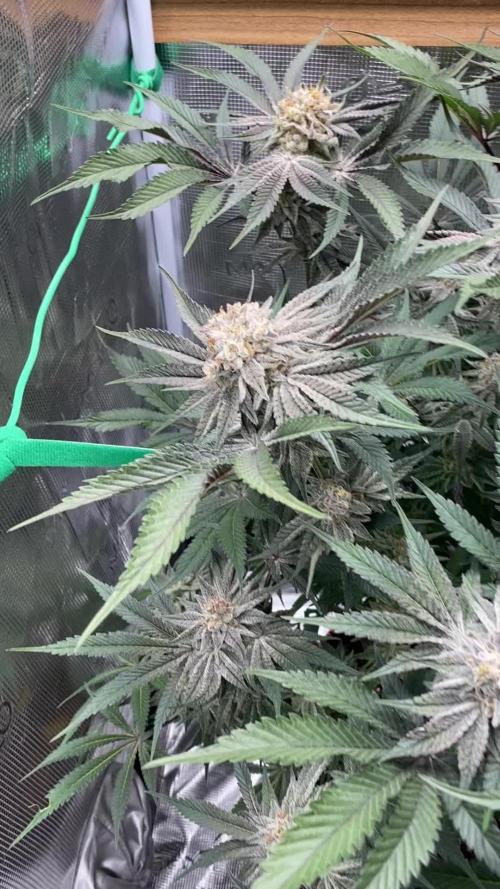
05.01 letzten 2 Tage. Die Trichome sind fertig, 5ter Tag nur Wasser. Dli 20-24.

Likes
60
Share


@SooSan
Follow
12/12 + 123 jours
Vu qu’il y a 16 plantes mais que sur growdiaries on ne peut mettre que 8 variétés j'ai divisé en 2 diaries pour le bas de la tente
1️⃣
🏠 90x60x90
☀️ FC-E 4800 => puissance a 60%
🍁
Black Bomb / Philosopher Seed
Amnesia Lemon / PEV Seeds
Amnesia Lemon /PEV Seeds
Blueberry / PEV Seeds
Blueberry / 00 Seeds = 17g
Wappa / Paradise Seed = 11g
Dark Phoenix / Green House Seed
Quick Sherbet / Exotic Seeds = 14,5
Mango Cream / Exotic Seeds
Banana Frosting / Sensi Seed = 11g
Hindu Kush / Sensi Seed
Mix 1 / Sweet Seed = 26,5g
Mix 2 / Sweet Seed = 15g
Mix 3 / Sweet Seed = 22,5g
Mix 4 / Sweet Seed =
📎 https://growdiaries.com/diaries/122084-grow-journal-by-soosan
📎https://growdiaries.com/diaries/124052-grow-journal-by-soosan
2️⃣
🏠 30x60x50
☀️TS1000 => 100w = 54g
🍁
Quick Sherbet - Exotic Seed = 12g
Quick Sherbet - Exotic Seed = 12g
Quick Sherbet - Exotic Seed = 17,5g
Quick Sherbet - Exotic Seed = 12,5g
📎 https://growdiaries.com/diaries/122080-grow-journal-by-soosan


Likes
4
Share


@Skinnytalls420
Follow
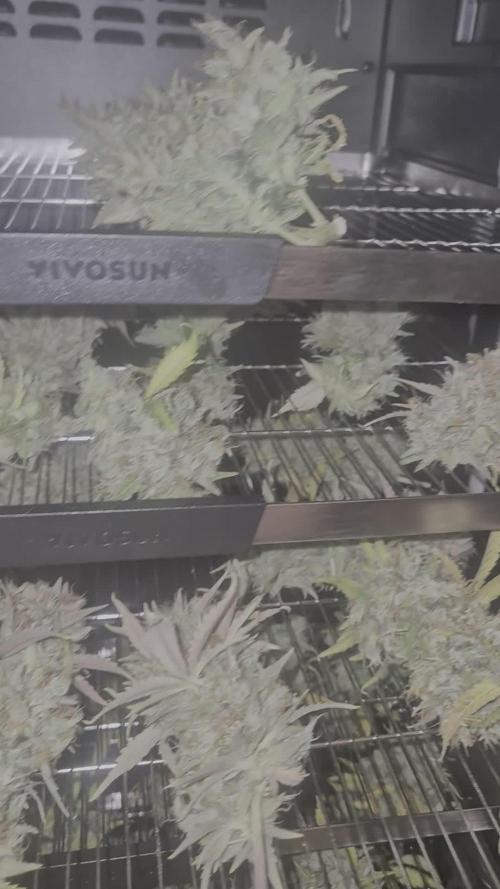
This is now in my top 10 autos very happy with the outcome!!! Smells amazing very nice I’m over the moon




Likes
9
Share


@Headies
Follow
So Friday will be day 70. I messed up a lot, did lst and used big pots so I'm thinking these might go 3-5 more weeks. They smelled so amazing a few times today though. First the purple punch, then the sour diesel, then the girl scout cookies, each gave off aromas one after the other a few times today. The purple punch smalls so sweet and delicious.
Likes
3
Share


@Krautbauern
Follow
Day 24
Topped the Ladies
Started to fertilize Bio Grow
In 1-2 weeks i will send them in the flower stage


Likes
96
Share


@1Right_Angle
Follow
Sept 25th a.m.
- fed ea. Congo and Natural Mystic 1/2 volume H2o/ Molasses mix; C 2.75L / NM 2.5L
- fresh LST where needed
- light survey showed an imbalance with taller autoflower in the mix. It was LST’d into a lower profile and moved deeper into the corner.
Light distance for the Congo etc is now dialed-in after a bit of a shuffle.
*** reminder Oct 8 is Lights-Out *** 36 hrs of darkness
26th
- followed-up on yesterdays LST and put some actual direction on the Nat Mystic Branches. Its a tightly spaced unit but the branches are getting into some open air now. Look-out for what happens next
27th,
- everything looks great this morning. Big feeds tonight if soil allows; 6.5L congo / 6L NM
** topping observation **
In an effort to produce a 16 cola plant using Topping methods, i am in the middle of a side by side topping experiment, and it does look like one method, Does has an advantage over the other!
Waiting for each branch to grow past its first Node, and then produce a second Node, this will be the place to top, once the plant grows Past this 2nd node, on each branch.
What results is that you only snip each branch Once, after the original Topping. 5 snips will produce 16 Tops. Allow each branch to grow past the 2nd node, then Top. It will produce 4 nodes naturally on each branch. Better overall spacing/symmetry
The other significant feature of this response, is that the Durban Poison was a full week behind the Congo & N.M., and it has caught-up and Passed the progress of the natural mystic.
Both of these plants (congo/nm) used the extra topping on the upper branch, and its required longer periods for the 4 bud-sites to develop per branch and extend away from the plant.
It required more delicate fiddling than the (d)Urban Poison. ****
- short video of the Tent uploaded this morning
- no feed tonight, too moist
29th a.m.
- soil said Go this morning; 6.5L h2o/nutes for the congo & 6L for the natural mystic
- Collected details from N.M. & Congo run-off
- pulled Northern Light express auto from the tent and replaced her with a 3.5 week old Green Mountain Grape. Move was done to help acclimatize to the cmh lite, ahead of Flower
BONUS, you can actually see a bit of a droop on the Congo leaves… this mornings feed was 2 days overdue; the pot was actually lite & confirmed for me the condition of the soil is OK and not waterlogged.
Pushed her a little bit towards a Drier Bottom since her last feed. Nice to see that as I crank it up
- GMG has been super-cropped on the 28th, to help establish an even canopy
- Slip, Snap, lost a Cola. Even though it was the runt, its gonna be missed
30th
- OK, did a little homework last nite and the timing could not be better for me, with regards to Flushing 3 plants, ahead of the move into Flower.
This stems from capturing some of the run-off after a bigger feed. What resulted is I found a high EC value on the Natural Mystic (3200) that indicates a build-up of Salts in the soil. The Volume 33% says its a bit much… i have been aggressive in my nutrient values but its been incremental. Regardless N.M. gets a quick bath to flush out this bit o History.
Congo had less liquid come through but was still an elevated value (EC 2300) and will receive a Flush as well.
((d)URBAN POISON barely had any liquid come out. It will be flushed as well. Call it a tune-up, I’m in.
* should anybody see something from those results that I’m missing or misinterpreted… Id be happy to hear about it. Please & Thanks
pH probably has something to do with it too, but I don't care right now
Effluent details:
-Nat Myst released 2L out the bottom after being fed 6L : I’m going to reduce the volume of Water & Nutes fed, targeting 15% run-off. (5L next feed)
-Congo released 600ml after 6.5L was fed; Which is a reasonable amount in active use; close to 10%
- with height a constant issue in a tent, in my basement… i’m super happy with how low this whole grow has stayed through Veg. Kinda shocked actually… pic #23
- flushed Natural Mystic w/ 20 gallons water
- (the little kids pool that I inflate, to flush-in… of course, sprouted a whole shitload of leaks in the Bottom when I was about 18 gallons in. And Yeh, the discharge hose on my electric pump DID COME OUT OF THE SINK DRAIN, 2x.
I had water everywhere lol. Actually out in the garage taking care of things right now)
Oct 1
- last day week 7
- re-applied the pins holding Nat Mystic in place. She is damp, Healthier & Hungry soon; target = 2 Meals b4 Lights-out. With Congo flush 100% happening… both Meal volumes tbd
- been a busy week & things are about to change again. Learnings impact all the different grows. I’ve never flushed Mid-grow; and I’m liking-it !

Likes
2
Share

@Kokothegrower
Follow
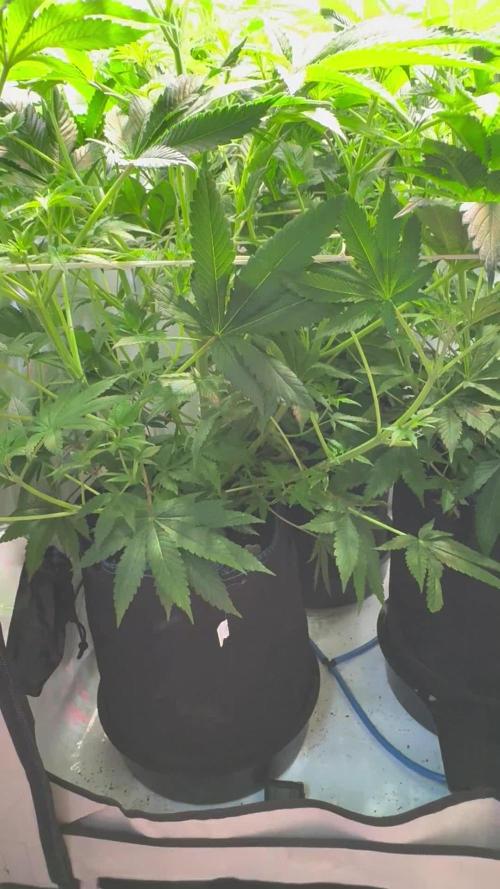
Es ist wieder eine Woche vergangen und alle Pflanzen funktionieren sehr gut mit dem Dope Soil in Kombination mit Autopot. Einzig die Papayana will sich noch nicht so richtig strecken, kommt hoffentlich noch. Entspannter könnte es nicht gehen, Osmosewasser mit Calmag in den Behälter, fertig. In den nächsten Tagen werde ich entlauben und anschließend prophylaktisch Raubmilben und Nematoden rein.
Edit: Entlauben erledigt, Raubmilben prophylaktisch auch drin. Bilder zeigen vorher und nachher.
