


Processing
Likes
Comments
Share


Likes
9
Share


@Cestlaweed
Follow
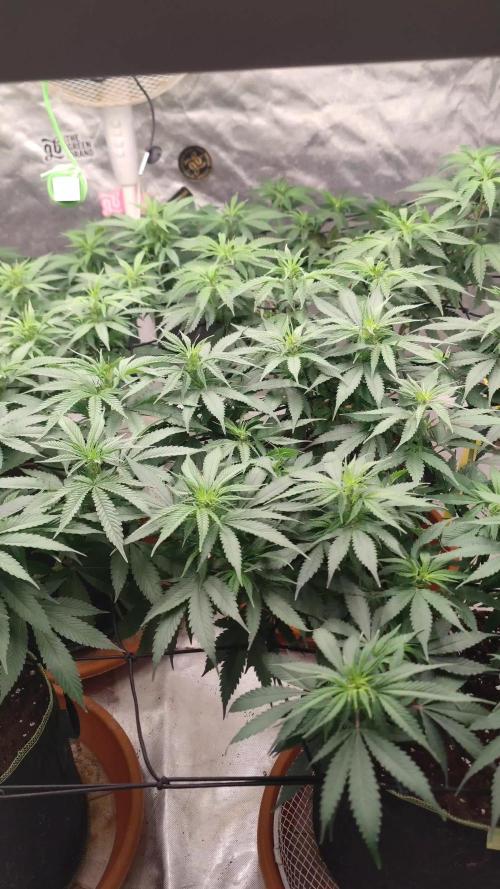
Comienza el engorde en algunas cepa.
Se cambió el sistema de extraccion de temperatura (cooltube) y de olor y aumento distancia de foco, logrando reducir temperatura de 31-32 a 27-29.
Primer doblés a LSD 25, primeros signos de entrar a prefloración.


Likes
4
Share
@Chrisandweed
Follow
Pues HOY, miercoles 22 de abril, hago el cambio de fotoperiodo, a 14-14! De momento todo va según lo planeado, main lining hasta este punto, vigorosas y recias, se sienten muy sanas y beben muchisimo, de momento 3 litros por planta cada dos dias, veremos a ver ahora con la floracion.
Ahora esta primera semana voy a hacerle diferentes aplicaciones buscando cosas jajajajaja hoy la voy a hacer aplicación foliar del delta y no recuerdo si tocaba tambien a riego. Luego, algo que tengo ganas de ver, es usar el calcio ahora entre esta semana y la siguiente de aplicación foliar, pero en esta ocasión no solo para fortalecer la planta, sino para activar la hormona Ca²+ creo que se llama, que en sí es el mensajero de la planta que le dice, eeehh, haz mas resina que estás tirando poca! Y así la fuerza.. habrá que ver jajaja pero bueno, hoy arrancan las 14 horas de luz y 14 horas de oscuridad 🔥🔥
Las plantas, el dosel lo tienen sobre los 40cm, espero no tener que hacer super cropping, no soy fan.
Actualización jueves 23-04-2026: el video es del despertar tras sus primeras 14h de oscuridad. Aún no hay porqué ver nada respecto al cambio de fotoperiodo, lo interesante es lo vigorosas que están en el momento del cambio 🔥🔥🔥🔥💪🏾💪🏾💪🏾
Likes
11
Share


@GREENPHOENIX6262
Follow
*03/07 - Week 5 Flower - Closing in on harvest - will begin flushing soon - leaves are turning yellow - smell is amazing, tropical fruity smell - carbo-flushing and water flushing this week end*
Likes
23
Share


@DedicatedJOKER
Follow
So got my SOG up, the right side was topped and the left side was fim'd on one side. Preparing for flower in a few days.


Likes
Comments
Share


@Geili_Seili_fireinfireout
Follow
Woche 4-5 ziemicher stillstand. Woche 6 beginnt sie zu explodieren
Likes
3
Share


@Renatissima
Follow
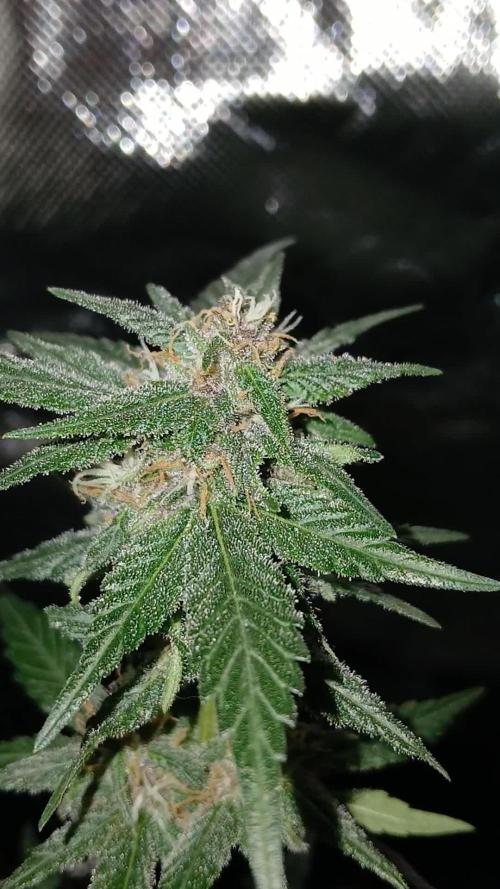
* Watering 2l every 3 days
* Always tuck in the leaves to expose lower tops
* Check the trichomes for amber



Likes
16
Share


@Chocolopeison
Follow
Comenzamos la floración con estas chicas, estoy muy encantado con ellas la verdad para que les voy a mentira, muy ansioso de empezar a ver sus flores, pretendemos fertilizar solo hasta la semana 5 por ahora. Estamos solo con 1 riego diario estuvimos de 1L ahora lo subimos 2L y lo recibieron muy bien.
Algo en particular es que estamos probando cannaboost folear, se lo estamos dando 3 veces por día a la planta hace 10 días y no vamos a parar hasta el día 21 de floración para luego cambiar a dosis radicular, estamos haciendo esto para economizar cannaboost y comparar resultados con su dosis full que ya la eh testeado.
A las nenas se les hizo super cropping (en mi instagram pueden ver un tutorial @chocolopeison) hace 7 días a las cuales también le agregamos unos soportes y hoy ya la pasamos a floración recuperadas con una gran defoliación de bajos. Ahora esperaremos día 14 para hacer otra defoliación, super cropping y guiado de malla que pronto estaremos instalando.
La iluminación estamos con 540W de qb (2 @heavengrowlight y 1 @meijiu)


Processing
Likes
12
Share


@Mistertemps
Follow
They are still plumping up nicely I’ve been only feeding ph water up until the end of this week. I’ve done a mix of ph’ing and not(laziness) started to notice purple leaves and buds last couple days. Just waiting for more green to disappear from the leaves.
Likes
7
Share


@Madman2020
Follow
(39 day VEG)(56 day flower)(107 day clone to harvest)
Co2@800 Made a huge difference
70klux is to high lighting. 60-65 was best
87f+ leaf temp is to high in flower - 80did well
Hot temps made the leaves ugly
Auto irrigation went wrong because the water pressure was not even on all 11 spouts.
Two box fans were not enough. It seems more wind make denser buds
The plants closer to the fans were denser
The Liquid humic acid i think made a small difference.
That “Grow More Liquid kelp” exploded growths during veg stage
The southern AG microbes did well to keep my roots healthy(once a week)
I should have topped the clones at the 3rd node so itd be easier to harvest
I lollipopped plants day 1 flower, day 21 flower, and start of week5.
I defoliated before flower, day 14 flower, wk7 flower, and 2 days before harvest
I want to defoliate the week before harvest and flush 5days before harvest
————————
Harvest
Wet Trimmed
First 3 days 55%RH then 52-60% for 17 days. Ill split branches to speed drying next time
Temp 68F
Indirect Fans
After Drying:
Homemade tumbler/trimmer
Pvc pipe inserted into a barrel made from chicken wire and bucket lids tacked together. Sits inside of a tote bucket. The tote bucket holds the trimmings and kief that falls from buds
Put into mason jars
——-
Weight:
1: 71g
2: 48g
3: 78g
4:41g
5:56g

Likes
2
Share


@51sGarden
Follow
Posting this as I’m on the last few days of the 3rd week from germination
Great progress, a lot of roots for such a short period but not too much plant growth, will start watering daily instead of watering every 2-3 days
Topped the girls today (Day 18 from germ) and starting to do mainline on all the Bubba kush.

Likes
8
Share


@CalGonJim
Follow
How RQS Compares to Your Standouts
Brothers Grimm (your "otherworldly" stars: Montel Iced Tea, Body Count, Bubbles Blueberry F4, Ricky’s Hash Plant, Black Tangi Tea)
These are landrace-influenced, heirloom-style genetics with exceptional resin, unique flavors, and structure.
They outperform RQS in quality, potency, and "wow" factor in your tents. RQS tends to be more commercial/hybridized for ease and yield, while Brothers Grimm prioritizes distinctive traits and consistency in experienced hands.
Humboldt Seed Company autos (your top autos for resin, especially OG Triploid)
Humboldt focuses on West Coast legacy genetics with heavy resin production.
Clearly superior to RQS autos in trichome density and overall quality. RQS autos are faster and easier for beginners but often lack the resin "frost" and depth you get from Humboldt.
Fast Buds (fast, flavorful, reliable autos — you like them a lot)
Excellent speed and flavor profiles.
You noted they're in a "different class" — fair point. Fast Buds emphasizes quick cycles and modern hybrids with nice terps, while RQS autos can feel more generic or require more coaxing.
Quick Thoughts on Your Observations
Brothers Grimm (Montel Iced Tea, Bubbles Blueberry F4, etc.): These are clearly the stars in your current setup. The strong smell, unique leaf morphology, and overall vigor in small pots show they're expressing well under your conditions.
They reward careful growing with quality that feels special — resin, flavor complexity, and effects that fit your low-dose, functional style better than most commercial lines.
Your homemade cross (Gelato 44 × Bubbles Blueberry F4 pollen = "Blueberry Knockout"): Nice work on your first intentional cross-pollination!
Getting viable seeds and decent plants from a garage-level cross is a real win. It’s not "pretend breeding" — it’s exactly how many great lines started. The fact that it turned out "pretty nice" is encouraging.
However, as you noted, combining a Royal Queen Seeds Gelato 44 (solid but commercial) with Brothers Grimm Bubbles Blueberry F4 (higher-quality, more unique genetics) creates a hybrid that can show the best of both, but also some inconsistency. If the RQS side brings easier growth but less depth, while the Brothers Grimm side brings the special traits, the offspring can be hit-or-miss depending on which phenos you kept.
RQS Gelato 44 / Mike Tyson 2.0 vs. Brothers Grimm: Your experience matches what many growers report. RQS lines are generally more "user-friendly" and higher-yielding for beginners or volume grows, but they often lack the resin density, terpene complexity, and unique expressions you get from Brothers Grimm. The Tyson 2.0 collaboration added hype, but in your tents it landed at 7/10 while Brothers Grimm hit "otherworldly." That gap in quality is why you're leaning toward sticking with the professional, boutique genetics going forward.
3/30 11:17PM Gelato 44 & Punch Pie were nice right off the tree the little buds put me right to sleep last night!! The Autos are 7-10 but the Photos are 8/10


Likes
6
Share


@gr3g4l
Follow
Esta semana empieza con sol y termina nublado.
Parece que ya dejaron de crecer 172 ctms la nº1 y 152 la nº4. A partir de ya deberian ser los cogollos que empezarian a engordar.
Esta semana iniciamos con el Bud para mirar de potenciar un poco más los cogollos.
Likes
31
Share


@JonnyKush
Follow
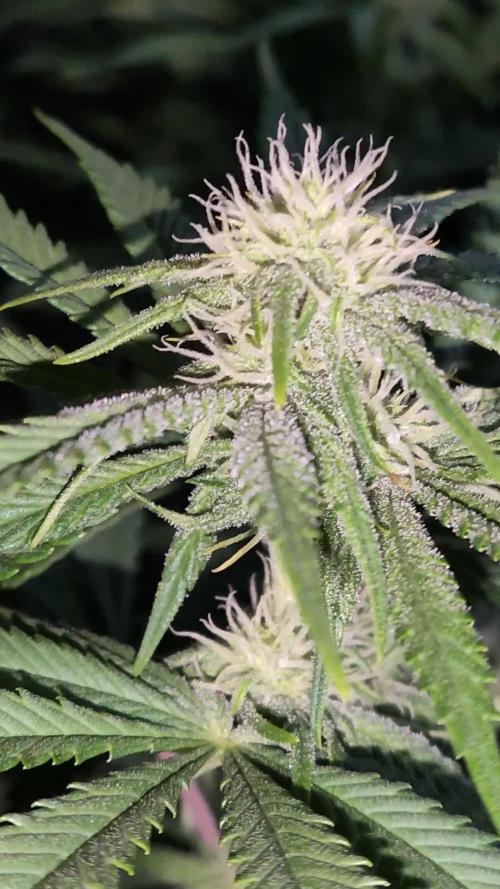
everything seems to be growing well! seems to have recovered great, is stretching well the color looks great! I have 3 other growing plants that follow the same diet but they seem to have suffered. she, on the other hand, looks very healthy.
Day 40
Flowering begins! I can say I see her healthy. this is because, not having given her a green sensation with water regulated by ph down but only water with ph down, she was regular at 6.5 for all weeks. this suggests the importance of checking the values every time I change something in the power supply.
keep following me to see the progress. I like it and leave an opinion or some advice. good luck and happy day 🌱💚


Likes
79
Share


@Roberts
Follow
Alien OG Autoflower grew great, and finished beautifully. Strong smell, frosty, and sticky. She grew great under the Mars Hydro FC4800 light. It was my first time using the Gen 1:11 nutrients. I really like them, and will use again till I run out or get more. She will hang dry 24 hours then be put into the cannatrol for a 8 day cycle. I got a great grow to try it out the first time. 🤞. Thank you Aeque Genetics, Gen1:11, and Mars Hydro. 🤜🤛🌱🌱🌱
Thank you grow diaries community for the 👇likes👇, follows, comments, and subscriptions on my YouTube channel👇. ❄️🌱🍻
Happy Growing 🌱🌱🌱
https://youtube.com/channel/UCAhN7yRzWLpcaRHhMIQ7X4g
