




Likes
27
Share


@pifflestikkz
Follow
She has been Chopped
20/07/24 Saturday
Buds wet weight 937g
Wet trim and larf 167g
Over all 1104g
That's over a kilo from a auto 😁👌💚
Very pleased!!!
The buds have been wet trimmed and I have updated picture.
I have now hung all buds in the dark dry tent for 7-10 days.
I do not weigh the base what's the point. But here is are buds hanging, and the chopped base pic- with root zone 😍
Check back for cure and smoke review in a few weeks.
So disappointed my other 3 terp tree.co seeds failed. I will try this breeder one last time and hope the photos come strong and germinate 🤞
Thanks to everyone who has followed my journey with this one, it's been fun.
Keep growing and smoking you legends ✌️💚
Likes
27
Share


@Oetelando
Follow
We Have Week 9 Day 1.
Everything looks good and the Trichomes get Brown.
Some of the Strains get Harvested in 5-6 days and the rest in 8-10 days.


Likes
53
Share


@DogDoctorOfficial
Follow
Week 3 Flower Report: Blackberry Auto's Blossoming Brilliance!
Greetings, fellow cultivators! Week 3 of flowering unfolds with an aura of anticipation as my Blackberry Auto continues to dazzle with its blossoming brilliance. Let's delve into the verdant spectacle and marvel at the beauty unfolding before our eyes.
Burgeoning Buds and Floral Flourish: As the third week of flowering commences, Blackberry Auto's buds undergo a magnificent transformation, swelling with vigor and vitality. Each bud is a testament to nature's artistry, with velvety textures and glistening trichomes adorning the floral landscape.
Hydration Harmony and Nutrient Nirvana: The AutoPot Aquavalve maintains its steadfast rhythm, ensuring Blackberry Auto remains hydrated and nourished as she channels her energy into bud production. With a carefully curated nutrient regimen, the plant enters a state of nutrient nirvana, optimizing growth and resin production.
Aromatic Alchemy and Visual Enchantment: The air is suffused with an aromatic symphony as Blackberry Auto's buds exude tantalizing fragrances of sweetness and fruitiness. Meanwhile, the visual enchantment continues to captivate, with hues of purple and indigo intensifying amidst a backdrop of lush green foliage.
Tender Care and Gentle Guidance: Amidst the flowering fervor, I continue to provide tender care and gentle guidance to Blackberry Auto, ensuring she receives the support needed to flourish. Low-stress training techniques are employed to promote even canopy distribution and maximize light penetration, fostering optimal bud development.
Anticipation and Gratitude: With each passing day, anticipation builds for the imminent harvest, a culmination of months of dedication and care. I extend my heartfelt gratitude to @fastbuds_official for blessing us with this botanical masterpiece. To Aptus Holland, my main sponsor, your unwavering support fuels this green journey and enables the flourishing of Blackberry Auto's potential. Kudos to Grow Diaries for providing the platform to document and share this journey, and a shoutout to the community for the camaraderie and shared passion that enriches our collective cultivation experience.
As we embark on the third week of flowering, I invite you to join me in celebrating the resplendent beauty of Blackberry Auto in bloom. Together, let's revel in the magic of nature's creation.


Likes
28
Share


@deFharo
Follow
🖐️👨🌾 Bienvenidos entusiastas de la marihuana clandestina!
Esta planta de raza libanesa, completamente establecida en su maceta, vive y crece feliz a la espera de mostrar todo su potencial en floración. Una semana más y cambio el horario a 12/12h.
Grande ha sido el crecimiento y fortalecimiento esta semana, el consumo de agua se ha duplicado, riego profundamente cada 3 días, aunque todavía no he llegado a la tasa máxima de agua que tengo previsto para esta maceta de 15L, actualmente la lleno con 1600ml, pero en las próximas semanas llegaré al máximo que tengo previsto será de 2400ml, de momento mientras esté en crecimiento vegetativo no quiero saturar de humedad el sustrato para favorecer la expansión de las raíces.
Esta semana dos riegos con Bio Estimulantes, una aplicación foliar a principios de semana y he añadido una mezcla de enmiendas secas para alimentar al sustrato y a la Microbiología
La planta se desarrolla muy saludable y compacta, ajusto regularmente las ataduras de las ramas para controlar la altura e igualar, en lo que pueda, la altura de todas las plantas de la carpa de cultivo, el objetivo es conseguir una altura máxima de 70cm para todos los cultivos, todavía quedan al menos 3 semanas de crecimiento, la actual, con horario de 20/4h, y las dos siguientes con horario de floración 12/12h, mientras tanto sigo intentando aplastar mis cultivos con intensidad de luz, he habilitado mis 3 lámparas principales del dosel al 100% de intensidad y a 15-20cm de los ápices, hasta que la planta pare de crecer voy a conservar los dos COB azules y el panel, las 3 lámparas con 450nm, cuando pare el crecimiento y comience la pre flora haré un cambio radical de estas lámparas y añadiré otras, para esta temporada tengo preparado un gran arsenal de luces para floración con espectros de color con muchos rojos y naranjas imitando al sol de agosto y septiembre (2100K, 2400K, 2700, 660nm, IR, UV)... todo por la causa!
HASTA LA PRÓXIMA...
SALUDOS A TODOS!
================================
Info de la cepa Black Lebanon de Super Sativa Seed Club: https://supersativaseedclub.com/cannabis-seeds/black-lebanon.html
"Esta es la Black Lebanon original que data de los años 80, una auténtica planta de Hash..." Super Sativa Seed Club
- Genética: Landrace
- Indica dominante
- Tiempo de Floración - 09 semanas
- Rendimiento en interior: 500 g/m²
- THC: 20%
- Sabores: Hachís, bayas, afrutado, ligeramente terroso
================================

Likes
15
Share

@masterofsmeagol
Follow
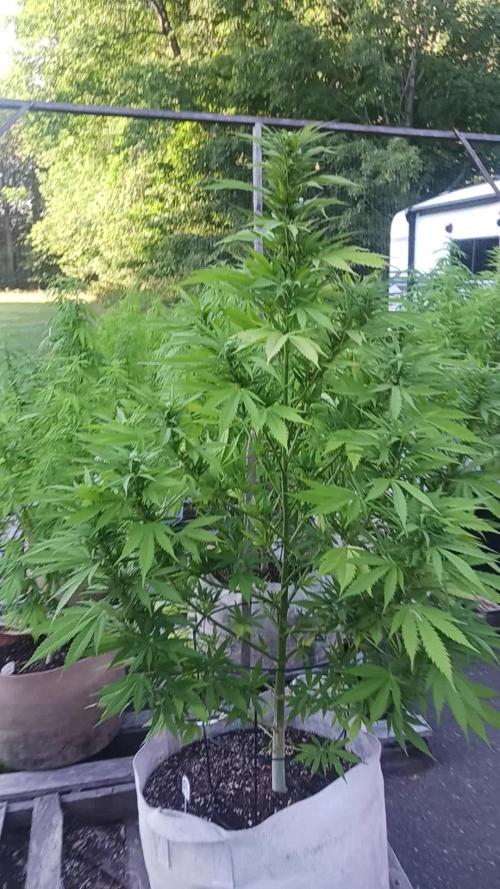
8/3 Went over to treat the 10th planet that needed water with plant doctor around 10:30. I was in the garden at 6 but didn't have much time. That plant seems to be curled up or "droopy". It DID need water. I defoliated a few sep leaves off it but I didn't see any today. I guess I don't ever really see the leaves "up" or praying like I do with the rest of tge plants. It's starting to flower like the rest though. Today is the day everything is supposed to get its second or third plant doctor dose but I decided to wait until they need the water. I don't think 24hrs will mean much. I've been staying on top of defoliation but I'm seeing some pillar damage. I'd like to spray bt but what my buddy said about spraying with septoria is still in my head. Maybe I can use citric acid. That way it won't "wash away" spores it will just eat them. At least I think. And I hope lol. Birds get most of the pillars but I hand pick some too. I need to pick up nutes. Wondering if I should just get grow big again. I don't use much but plants are switching to flower and leaves are fading. I have big bloom and kool bloom bit neither have nitrogen. I still need some sort of nitrogen. Especially since that could be a deficiency. Not sure if it's the transition or a condition with the sep. I see some interior small leaves bleeding out and some dying. I'm wondering if what I thought was earwig damage years prior was really a combo of sep and they just ate the evidence. I'm super grateful though. I've got some resilient girls and they're doing well. The special kush in flower is gorgeous as well. Looks like I'll have an early plant. Short flowering time on this strain. Smells pungent.
8/4 Treated everything in the garden with plant doctor except the 10th planet I got yesterday. I need to take a closer look at that plant. It rarely looks "happy" like my others. I'll check it again later. 3tsp per gallon and 1gal a plant. The 10s got a half gallon. This seems to be working great. I have some defoliation to do on the tenth planet I was talking about earlier. Everything is in some form of flower. The flowers on that early special kush are getting bigger. I'll update this later.
UPDATE: WENT BACK OVER AT NOON TO TAKE A LOOK AT THAT OTHER 10TH PLANET TO SEE IF IT PICKED UP AT ALL. IT DID. IM GLAD I CAME OVER TO CHECK THOUGH. MAKES ME FEEL BETTER. THE OTHER 10TH PLANET LOOKS HORRIBLE O. FILM FROM ONE ANGLE LOL BUT ITS REALLY A GREAT LOOKING PLANT AND IM USUALLY FILMING AT LIKE 6AM. JIST WANTED TO STICK UP FORCMY GIRL AND HER BAD HAIR DAY. ITS BEEN HIT AND A FEW OF HER LEAVES ARE TACOED. SHE GOT HER FIRST "PREVENTATIVE" DOSE OF PLANT DOCTOR WHICH WAS HALF A TSP/GALLON. IT REALLY SEEMS TO BE DOING SUBSTANTIALLY BETTER. EVERYTHING IS. IM HAVING TO LOOK HARDER AND AM HAVING TROUBLE FINDING LEAVES EFFECTED BY SEPTORIA. KNOCK ON WOOD. IM EXCITED. THIS IS GOING BETTER THAN I THOUGHT. IM STILL GOING TO BE MONITERING LIKE I USUALLY DO.
8/5 Watered the 10th planet I dodnt get yesterday. Looked and didn't see any sep leaves. Phone was dead so I vouldnt do a video. Went back over at like 130pm and did a quick video and checked out the girls. Everything is looking good and transitioning well. I WANT to use a diy Dr. Zymes with citric acid as I've noticed a few pillars. Only reason I've hesitated is because my buddy said not to spray it. But if what I spray it with "eats" it I would think it's ok. But what do I know. Birds get a great deal of them. I watch them on the camera sit on the cage and wait for one to stick it's head up before snatching it up. Still need to get either more grow big or a bloom product with nitrogen. I was able to defoliate that other 10th planet of anything suspect. It's hard work but it's worth it in the end.
8/6 It's like 81 at 4pm. I didn't have time to video this morning but i went back over. WATERED EVERYTHING THIS BUT THE 50 AND THE 10TH PLANET I GOT YESTERDAY. Temps are supposed to pick up soon and it will be in the 90's again. We've had like NO rain. I searched for leaves that had signs of sep to defoliate. I may find one or two but for the most part things are doing great. Overall I'm happy.
8/7 Bought a new bottle of grow big. Wanted to switch to the roots organic teas but I cant do that invthe middle of an already complicated grow. I'll switch nutes next season. I'm noticing some pillar damage. Not much amd I've been hand picking them. I've found a few in curled up leaves. I watered the 10th planet in the front corner that didn't get it yesterday. I hope the watering yesterday will hold them until the morning. I'm still thinking about doing an application of diy Dr. Zymes to clear up any random pests. I'll ask a question and see what other growers on here have to say.
EDIT: MY SPIDEY SENSES STARTED TINGLING SO I WENT OVER TO CHECK ON THE GIRLS THIS AFTERNOON. THE MK ULTRA THAT I LEFT NATURAL WAS STARTING TO DROOP. THE REST OF THE GIRLS COULD WAIT. I MIXED WATER FOR ONE OF THE TENS BUT DECIDED AGAINST IT. I DONT WANT TO OVERWATER AND I THINK IT CAN MAKE IT. I GAVE THE MK ULTRA A FULL WATERING CAN WHICH IS ALMOST TWO GALLONS. IT WAS PUCKING UP BYVTHE TIME I LEFT AND WASNT EVEN ALL THE WAY DOWN. IM GLAD I CHECKED.
The ONLINE cannabis community can be such a joke. There ARE good groups but this places sucks. I put a question up as PART of the research I was doing and ive received some dumb answers but this was aggressive too. I had it figured out prior to reading the answer but it caught me off guard. I decided that since Im able to keep it suppressed with what im doing (leaf septoria on a couple of plants) than don'tchange it. I've dealt with it before and kept it suppressed but not nearly as well. It was a yes or no question really. Stated for outdoor experienced growers as I was looking to avoid the copy paste/ look how smart I am bullshit. I just have an anxiety disorder and like to hear numerous responses before I act. I figure it out and log on and I get some smart ass response from an INDOOR grower. When I SPECIFICALLY asked for EXPERIENCED OUTDOOR growers (as the question is unique to the outdoor environment and indoor growers seem snobby and seem to get jealous when they see my massive plants a quote what they just searched on the internet). I can read shit on the internet as well and had prior to posting. I'm sorry if my success with a product (that you are unaware of "but can't see how it could work" (despite not knowing the active ingredients by your own admission) and lots of hard work have prevailed. When I have to ditch a plant it's 1/4 to a full elbow. Not an 1/8th. So I won't be burning shit. I hate when people say that. There are cases for it but many new growers have been led astray with stupid advice like this. ESPECIALLY if everything is going GOOD! If a plant was less than perfect I'd put it in my concentrates bag. Not much fits through a 25 micron screen. But by all means burn your plants. I have no idea how I have ZERO wpm this year but I would hear shit like this for a couple leaves "with gravel on them" on a 10ft tall plant that yielded like a pound. So I don't know why I listen or why I even responded. Even if it WAS wpm I would've kept it and washed it. It must be nice to be able to work 20 weeks on something numerous times a day put a bunch of money in it and when you hit flower burn it because you don't want to do the extra work. You can easily tell the people that don't grow outdoors. It's a completely different game. But since I've already written it I'm leaving it. One more thing. You didn't even know what the active ingredients in my product were. How can you make ANY statements about the efficacy of ANYTHING without knowing what it is? You said "unless it's a bunch of silica" that provokes an immune response. It's not silica hun. I've been hunting for years for something that works. Go back to your closet.


Processing
Likes
Comments
Share


@Steviegrows
Follow
Looks like they've recovered from nutrient burn once I backed off the nutes. I also checked the PH after mixing the 3 parts and the Micro doesn't seem to be bringing the PH down enough, it only goes to 7.3. I use Nectar for the Gods PH down to bring it around 6.5. Some of the leaves look a little light in color and slightly burned at the tips, I think they might be light stressed even though Ive get my lights spaced a safe 24" away. I LST where I can this week. The plants are so short that its difficult to do effectively.


Processing
Likes
26
Share


@eldruida_lamota
Follow
Buenas tarde familia, actualizamos el diario de las skunk de Zambezaseeds, y es que estoy tan sorprendido , es una cepa que produce flores muy muy compactas, sigue floreciendo con lo cual sigo regándolas solo agua ajustando el ph a 6,5 .
Temperatura y humedad dentro de los parámetros, 1/3 anda algo sobre fertilizada de las últimas semanas las 2/3 están como la seda , aún así todo pinta fenómeno tengo muchas ganas de cosechar y probar esta variedad y ya queda menos , pasen buen finde semana fumetillas.

Processing
Likes
3
Share


@Ilusionweed1
Follow
Buena semana para estas nenas,creciendo de manera impresionante y con unas buenos brazos, teniendo algunos problemas con las hojas, resuelta que el humificador el agua no era purificada lo que implicó que las hojas de las niñas se estaba llenando de mucho calcio que no la dejaba respirar bien, trate de quitarle las manchas y quedo peor, pero de todo se aprende, cambie el 💧 a agua purificada y listo aunque algunas quedaron manchadas 🔮del resto quedando hermosas muy sanas y con tallos muy fuertes 🌾seguiré informando como van estas nenas 🍃
Likes
16
Share


@SirBudAlotts
Follow
Wow! So I have reached the end of this journey with 4 wonderful ladies 🚺 ❤️ 💕..
This was the easiest grow of my life lol! And she packed on size and stinky aromas everywhere..
Big shout out to the Kannabia Team!!!! Excellent strain, amazing colors, fat Colas, everything that makes you smile during harvest! Thick Frost coating..
Also big shout out to everyone that has been keeping an eye on this diary..Much love from my heart grow community ♥️
Perfecto 😀😃🌿🌿


Likes
22
Share


@Slobasian
Follow
Love every plant each one is growing differently stacking different even the visual difference of one strain growin two different ways combined smells of diesel, pez candy and lemons

Likes
9
Share

@GreenEldritchGardens
Follow
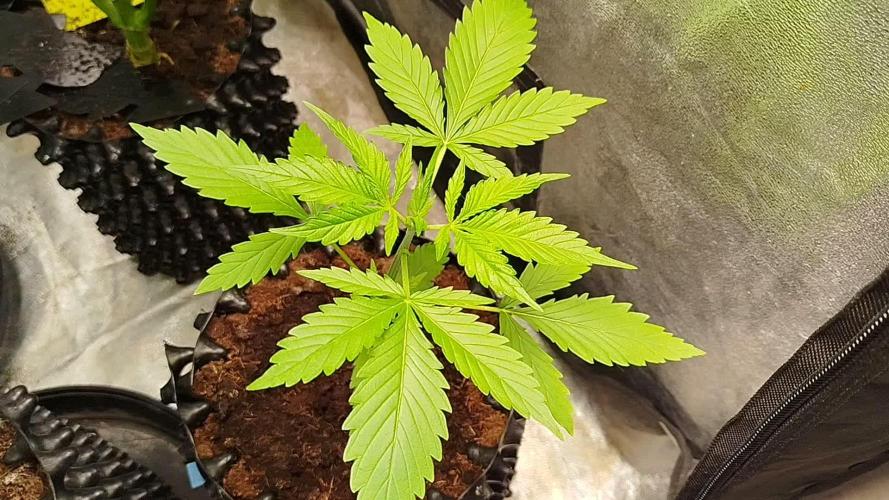
The Z up is now back to the tent, seems happy because the leaves are shining a lot and showing vivid colors.
This should be last week of veg, so gonna boost her up to flower with good nutes.
Likes
59
Share


@AsNoriu
Follow
Day 77. Girl is down, she needed few more weeks, but I guess proved that in any conditions weed can be grown ;)
No food, just 1.5-2 grams max of Ecothrive Biosys was used, rest only water.
Root system small, but stayed healthy.
Happy Growing !!!
Likes
18
Share


@EaRtH
Follow
Entering third week...all of my plants have developed second pair of leaves and third one is growing already!
Had an issue with watering as in first week I have overwatered, last week I have underwatered.
One of the plants is significantly behind other two, however I hope that she will survive.
14.10. - Starting with 1ml/l of Bio Grow and Bud Candy to see how they'll respond. Also done the first LST.
10.10.2023 - 16.10.2023
Likes
2
Share


@Do_it_Dan
Follow
Got to say I'm impressed.. be sad next week when she gets the chop, actually really enjoyed doing this one, I hope she taste as swell as she smells, happy growing and stay green ✌️ 💚 👌

Processing
Likes
11
Share


@Andres
Follow
just wait ... its growth. it's ok ... it's in a small greenhouse in a bottle ... now see how it behaves in the last remaining summer ... in the open air ... it has good color ... and I see her happy...
Likes
16
Share


@MendocinoGreeno
Follow
Hi to all friends of the green leaf,
So, the move to the big tent went well, you can see the strawberries like the space, they started to expand immediately. Today I gave them one last "big" training, they are all starting to bloom nicely.
Oh, and lest I forget, for the first time I'm experimenting with adding CO2, I used the normal fermentation process, using yeast, sugar and water. I mixed it all up in a bottle, made a hole in the cap for the tubing, and placed the end of the tubing in a circulation fan.
So, have a nice time and keep it growing !
Peace✌️
