Likes
Comments
Share


@Santica_Garden
Follow
Also guys I have been filling these diaries out wrong and I have recently realised. Lol. But I will try and do better from now on. Happy Growing everyone




Likes
1
Share
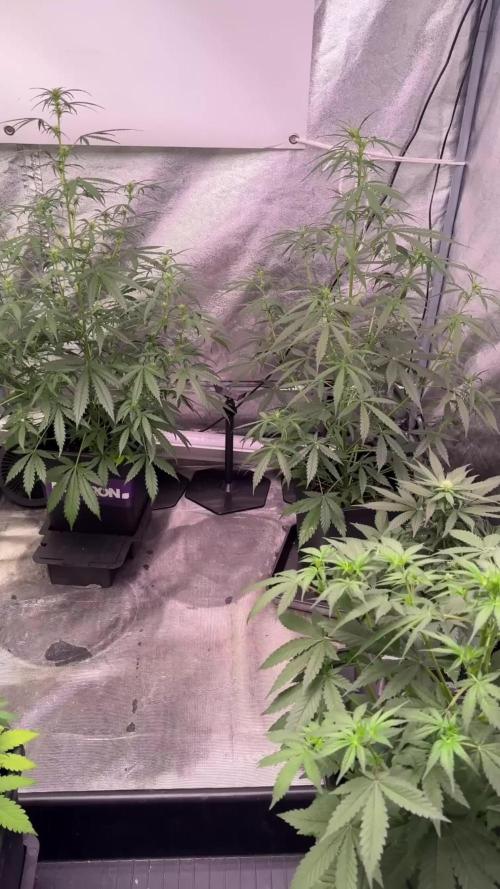

@DogDoctorOfficial
Follow
🍮 Chem Brûlée – Pheno A
Week 5 | Giant Leaves, Big Dreams
Welcome back to another chapter of the 8×8 Adventure!
If you’ve been following this project from the beginning, you’ll know that every phenotype is writing its own story. Although they all share the same room, the same environment, the same lighting schedule, and very similar nutrition, each plant continues to express herself in completely unique ways.
That’s exactly why I love phenotype hunts.
This project follows every plant individually using the 12/12 From Seed method, allowing each lady to decide for herself when she’s ready to leave vegetative growth behind and begin flowering.
This week…
Chem Brûlée Pheno A left absolutely no doubt.
Flowering has officially begun.
⸻
🌼 The First Flowers
One of the most exciting moments during any grow is seeing those first bright white pistils appear.
These delicate hairs are the female reproductive organs of the plant and mark the true beginning of flower production.
During these first weeks, the plant is shifting priorities.
Instead of investing all her energy into producing stems and leaves, she now begins building the framework that will eventually become dense, resin-coated flowers.
Every new white hair is another small step toward harvest.
It’s always an exciting stage to witness.
⸻
🍃 Those Incredible Fan Leaves
The first thing anyone notices about this phenotype…
Those leaves.
They’re absolutely enormous.
Some of these fan leaves are nearly twice the size of my own hands—and I definitely don’t have tiny hands!
Large fan leaves often indicate a plant that is photosynthesizing efficiently, capturing as much light energy as possible to fuel rapid development.
They’re essentially giant solar panels.
As long as they’re healthy, standing proudly, and maintaining a rich green colour, they’re doing exactly what nature designed them to do.
At this stage I prefer to let them work.
Every healthy leaf is another energy factory helping build the flowers that are only just beginning to form.
⸻
🌱 Gentle Training
Training continues to remain incredibly simple.
No aggressive bending.
No topping.
No heavy defoliation.
Instead, we’re relying mainly on gentle leaf tucking and subtle low-stress training to improve light penetration while allowing the plant to maintain her natural structure.
Sometimes the best training isn’t forcing a plant into shape.
Sometimes it’s simply helping her reveal the shape she already wanted to grow.
So far…
She’s rewarding that patience beautifully.
⸻
💧 AutoPot Life
Chem Brûlée Pheno A is growing on the AutoPot irrigation system.
Once the root system becomes established, the AquaValve automatically delivers nutrient solution from below whenever the plant drinks enough to lower the water level inside the tray.
There’s no timer.
No electricity controlling irrigation.
No daily watering routine.
The plant simply feeds herself whenever she needs it.
It’s a remarkably elegant system that encourages consistent moisture levels while reducing stress caused by repeated drying cycles.
This week I’ve also included photos comparing the nutrient solution used in the AutoPot reservoir with the hand-feeding mix used for the non-AutoPot plants.
Although the recipes are very similar, the EC differs slightly because plants growing on AutoPots receive a constant supply of nutrients, allowing for a more stable feeding strategy.
Every cultivation method has its own rhythm.
Learning those rhythms is part of becoming a better grower.
⸻
🍽️ Feeding Strategy
This week we adjusted the nutrition slightly to support the transition into flowering.
The bloom nutrients are now beginning to take over while still providing enough support for the final stretch before flower production accelerates.
As always, every adjustment is based on observation rather than routine.
Healthy plants tell you what they need.
You simply have to learn how to listen.
⸻
🌡️ Environmental Conditions
The room continues running beautifully.
Average conditions this week included:
• Day temperature: 31°C
• Night temperature: 25°C
• Relative humidity: 67%
• Nutrient solution: 21.6°C
• Root zone: 21°C
• CO₂: 639 ppm
Humidity remains slightly higher during this transitional phase because the plants are still producing large amounts of fresh vegetative growth while stretching into flower.
Over the coming weeks, humidity will gradually be reduced as flowers begin gaining density.
The room itself is really starting to come alive now.
Every day the canopy looks fuller, healthier, and more vibrant than the day before.
Watching an entire room evolve together never gets old.
⸻
📸 Capturing the Journey
This week’s update includes bird’s-eye views, side profiles, close-ups, and room shots to document every stage of Chem Brûlée A’s development.
One of my favourite details is simply seeing those giant fan leaves from different angles.
Months from now they’ll be part of the story, reminding us where this beautiful lady began before her canopy disappears beneath a forest of flowers.
That’s why I enjoy documenting everything.
Not just the destination…
But every step that leads there.
⸻
🔮 Looking Ahead
Next week I expect Chem Brûlée A to continue stretching while producing many more pistils across the canopy.
Bud sites should become more clearly defined, and the first signs of flower stacking will begin to appear.
Training will remain minimal, allowing her natural structure to continue developing while we simply guide her when necessary.
Sometimes the biggest changes happen quietly.
This feels like one of those moments.
⸻
💚 Thank You
A huge thank you to everyone following this 8×8 Adventure.
Whether you’re here to learn, compare phenotypes, improve your own garden, or simply enjoy watching these incredible plants grow, I’m grateful you’re sharing this journey with me.
Special thanks to:
💚 GrowDiaries for giving growers around the world a place to learn, document, and inspire one another.
Zamnesia for providing the genetics that make this phenotype hunt possible.
🌱 Plagron for the nutrition supporting every stage of this grow.
💡 Future of Grow LED for delivering the light that powers every day of development.
🌿 TrolMaster for helping maintain a stable environment around the clock.
And finally…
Thank you to every grower, follower, supporter, silent reader, friend, and even the occasional critic. Every visit, every comment, every bit of encouragement helps make these diaries something truly special.
I’ll see you all next week, where Chem Brûlée Pheno A will continue transforming those giant solar panels into the energy needed to build what promises to be some truly beautiful flowers.
Until then…
Growers Love and happy growing, everyone. 🌱🍮💚


Likes
15
Share


@CanadianFillmore
Follow
Here we go with do-si-dos on week 6. She's seems to be the least nutrient hungry of the group, minimal signs of deficiency. Very impressed with the growth of this girl and the snowy crystals that are forming on the leaves and buds.

Likes
8
Share


@Spliffi
Follow
Heya👍🤙👍🌱
Almost Done. I like early Harvest.
Check out my Facebook profile:
https://www.facebook.com/share/v/H6PnoahTHrEzm63U/?mibextid=oFDknk
Big BIG BIG thank you to Sebastien, Heather from Fastbuds420. You guys are the best. Can't wait for the next live.
Even Bigger shout out to Hydroponic.co.za. My local Hydro Shop and Sponsor. Thank you Sir.
👍🤙👍🌱

Likes
19
Share


@Sublyme_ness
Follow
no doubt i overdid it with too much veg nutes too late and let it dry out.. back right corner of tent is a pain in the ass..
it didnt fade like the other bb and had the start of thrips munching away. if anything prob not bruces full potential... oh and given i deshelled it, it seems to have had an effect, took long to come out, wasnt so vigorous, wanted to flower real quick.. i didnt use as much soil in this pot it seems. owing to it being short i had to keep raising the canopy height, then i stuck a screen on top. one central mass of buds looked like it had grown in the dark. definitely needs to be pruned properly to allow light everywhere if you wanna keep small.
Likes
5
Share


@TheGreenGroomer
Follow
what’s up guys, today’s day 1 of week 5 in veg and it’s looking like this will be the last day before i flip to flower. the plan is to switch to 12/12 right after today, but my ppms are sitting at 370 which isn’t ideal at all. definitely need to get that sorted quick before the flip. she’s still been growing super fast and handled defoliation and topping like a champ. that mag deficiency is still hanging around even with foliar sprays and feeding recommended nutes, so i’ll be dialing everything in asap. excited to move into flower though, it’s about to get good.

Likes
7
Share


@Probation2Propagation
Follow
Will put final dry weight numbers up. I’m expecting around 6oz

Likes
36
Share


@BrigadeDesTerps
Follow
Que dire mise à part que se strain est tous simplement magnifique ? Il porte bien son nom, il commence à être bien Frosty! Et la couleur violet commence à apparaître de plus en plus! Les bud sont beau et dégagent une belle odeur fruité, le plant a une sacré couverture résineuse, je pense qu’elle pourrais être parfaite pour faire des extraction!
Cette semaine je lui ai donné un thé de compost oxygéné, on va voir comment elle va réagir.
Recette du tco pour 20 litres. (Grammes : gr)
50gr biochar
250gr zéolite
3gr granulé Micro-Organisme IT45
10gr pollen d’abeilles
10gr levure de bière
3gr endomychorize
10gr consoude
20gr vers de farine
10gr cendre coque de ricin
12gr ortie microniser
15gr Kelp
10gr spiruline
10gr de cbd living soil
20ml de miel liquide
30ml de mélasse
20ml d’acide humiques et fluvic
Mettre tous les ingrédients (sauf la mélasse ,l’acide h/f et le miel) dans un filtre 400micron, le placer dans un seau avec de l’eau (10litres). Rajoutez le miel et 10ml de mélasse
Y mettre un micro bulleur alimenter sur une pompe à air et faire oxygéné le mélange pendant 24h. Rajout de 10ml de mélasse après 12h le début de la mise en route de la pompe.
A la fin des 24h rajoutez le restant de mélasse et d’acide h/f, mettez y en plus 10litres d’eau au mélange.
Reste plus qu’à arroser!
Pour la Frosty j’y ai incorporé 7litre de mélange
La veille j’ai préparé le pot à l’arrosage avec 500ml d’eau et 2gr de Bacillus IT35 Amyloliquefaciens X5
Bacillus Amyloliquefaciens : rhyzosphère, probiotiques. Aspersion et arrosage. Utilisable pour toutes cultures.
La bactérie Bacillus Amyloliquefaciens se fixe dans la rhizosphère en se nourrissant des exsudats racinaires. En contrepartie, elle stimule la croissance racinaire en sécrétant des métabolites de croissance et solubilise le phosphore en sécrétant des phytases (enzymes).
Effet probiotique consistant en l’utilisation de micro-organismes bénéfiques pour la nutrition et la santé des plantes.
La spiruline, le plus riche et le plus complet des amendements organiques
La Spiruline est une algue aquatique connue comme complément alimentaire, la Spiruline est aussi un amendement organique et écologique très complet.
D'une grande qualité nutritive, elle apporte à vos plantes une quantité de nutriments, dont l'azote, phosphore, potassium, minéraux, acides aminés, vitamines, chlorophylle et protéine.
Le charbon végétal actif est capable d’absorber jusqu’à cinq fois son poids propre en eau ainsi que les éléments nutritifs qui s’y trouvent. Il joue ainsi le rôle de catalyseur et d'amplificateur pour les fertilisants traditionnels, qu'ils soient d'origine organique ou minérale. Ce pourquoi il est idéal pour activer un sol et pour les thés de compost oxygénés.
Le charbon végétal améliore la diffusion et la disponibilité des éléments nutritifs dans le sol et offre des conditions propices au développement des micro-organismes.
Le Biochar peut être introduit dans une grande variété de sols. Il est particulièrement efficace dans les sols pauvres, difficiles et acides.
Pour faire agir rapidement et efficacement sa capacité d’amendement, le charbon végétal est enrichi et biologiquement activé avec des micro-organismes. Le Biochar se comporte ainsi comme un structurateur et un activateur dans le but de valoriser les sols.
Composition :
• Charbon végétal actif 31%
• Matière organique 33%
• Matière sèche 75%
• C/N : 17
• PH : 7,2
• Azote (N) : 2,1 % dont 1,2 % azote organique
• Phosphore (P205) : 0,74%
• Potassium (K20) : 1,18%
• Calcium (Ca) : 6,8%
• Magnésium (MgO) : 0,65%
Le pollen est l'ingrédient de base de la fabrication du miel par les abeilles. Riche en vitamines et minéraux, il est qualifié « d'aliment parfait », y compris pour les plantes !
Les zéolithes sont des roches cristallines, présentant des capacités d'adsorption particulièrement importantes vis à vis des polluants que l'on rencontre dans l'eau et dans certains liquides, ainsi que dans l'air et les gaz. Elles sont extrêmement poreuses comme les charbons activés et elles peuvent être chargées électriquement pour opérer comme des échangeurs d'ions.
La zéolithe est un produit naturel qui respecte notre environnement. Utilisé dans le milieu industriel depuis de longues années déjà, ce minerai aux propriétés filtrantes particulières commence à se vulgariser dans le domaine de la piscine privée, de l'aquariophilie, des bassins d'agrément, de la récupération des eaux de pluie, ou encore de la culture des bonsaïs et autres plantations diverses par exemple...
4 points techniques majeurs :
- Grâce à leur propriété hydrophile, les zéolithes peuvent adsorber l'eau jusqu'à 30% de leur poids total et sans aucune variation de volume : pas de gonflement en présence d'eau ni de craquement en cas de déshydratation comme certaines argiles. Les zéolithes sont d'ailleurs de puissants agents anti-mottant (anti-agglomérant). Cette propriété est très appréciée dans le cas des terrains de golf et autres aires de jeux.
- Les zéolithes ne captent pas l'eau de façon irréversible, elles se comportent comme une réserve au voisinage des racines. Celles-ci peuvent capter l'eau en fonction de leur besoin. Les zéolithes permettent ainsi de réduire les besoins d'arrosage jusqu'à 35 %.
- Une zéolithe se comporte comme une "Zone de Stockage" qui retient l'azote et les éléments minéraux nutritifs au voisinage des racines et les relâche lentement en fonction des besoins de la plante. Cela se traduit par une croissance harmonieuse mais rapide du végétal.
- La capacité d'adsorption et l'énorme rapport surface/volume des zéolithes, vont permettre à la fois la rétention de la solution du sol et une bonne oxygénation au voisinage du système racinaire. Les zéolithes favorisent donc l'organisation biologique des sols en contribuant au développement de la micropopulation. L'apport en nutriments (N, P, K) est réduit de 20 à 25 %. Ces derniers, adsorbés par la zéolithe, sont beaucoup moins sensibles au lessivage et à l'évaporation.
Composition minéralogique :
* Chabasite 70 %
* Phillipsite 2 %
* Feldspath 5 %
* Augite 3 %
* Illite - Mica 2%
Analyse atomique:
* Sio2 52 %
* AL2o3 17 %
* CaO 5,7 %
* K2O 6,1 %
* MgO 2 %,
* Na2O 0,6 %
* Fe2O3 3,6 %
Amendement calcaire, dolomie et gypse avec préparation microbienne à base de Bacillus Amyloliquefaciens IT45 et Saccharomyces cerevisiae LYCC6420
Formulation : micro granulés (1 – 1,6 mm) à base de rhizobactéries favorisant la croissance des plantes qui se multiplient et colonisent rapidement la zone des racines, et de levures Saccharomyces cerevisiae souche LYCC ayant un effet probiotique.
Les PGPR produisent des enzymes qui solubilisent le phosphore à partir de complexes inorganiques et organiques dans le sol et stimulent la croissance des racines efficaces augmentant ainsi la zone d'interception des éléments nutritifs. Les levures LYCC permettent une occupation de la rhizosphère par une flore bénéfique.
Composition :
• Matière sèche : 96,8%
• Matière organique : 91,5%
• N total : 6,6% dont N soluble dans l'eau 0,17%
• P total : 2%
• K total : 1,7%
Micro-granulés :
• Oxyde de calcium (CaO) total : 30%
• Oxyde de magnesium (MgO) total : 7%
• Anhydride sulfurique (SO3) : 13%
La levure de bière est une matière vivante qui permet un meilleur fermentation pour les thés de compost oxygénés notamment conseillé pour accompagner les croissances ou apporter un gros coup de pousse pendant la floraisons.
La levure stimule la vie des sols également à l'arrosage direct en apportant tout aussi bien que dans le TCO sa population l'espèce micro-bactérienne positive pour votre sols ainsi que des oligo-éléments et diverse vitamines.
Composition :
• 2,8% (N) total dont 1% (Norg),
• 2,3% (P205)
• 1,6% (K20)
• 35% de MO
• C/N : 8. PH : 8,4.
Sous forme de poudre mouillable. Il contient des spores du champignon mycorhizien Rhizophagus Irregularis MUCL57891 avec des levures inactivées spécifiques. 2000 spores/gramme d’endomycorhize Rhizophagus Irregularis MUCL57891 et Saccharomyces Cerevisiae LYC6420 inactivée. Se connecte efficacement au système racinaire et forme un vaste réseau souterrain de filaments, qui agissent comme des extensions pour atteindre les nutriments et l’eau au-delà de la rhizosphère
Composition :
• Poudre contenant 2000 spores/g. d’endomycorhizes Rhizophagus irregularis
La Consoude (Symphytum Officinale) est une plante présentant de nombreuses propriétés.
Particulièrement riche en Potassium (K) organique, la consoude est une alliée idéale pour les périodes de floraison. La consoude a tout pour plaire : riche en vitamine B12, elle agira également comme stimulateur racinaire, mais aussi comme biostimulant cellulaire, grâce aux alcaloïdes, aux allantoïnes et jusqu'à 30% de protéine !
100% déjection de vers de ténébrions.
Très riche en microorganismes, le guano de vers de farine est une matière directement composté par les vers. En effet, c'est bien la digestion de matières végétales par des larves, insectes ou autres arthropodes qui valident le processus de compostage, que ce soit en zone de production de cultures d'insectes, pour le compost maison ou la dégradation de litière forestière.
Les bactéries et autres champignons obtenus grâce au système digestif de nos vers, permettent la dégradation accélérée des éléments nutritifs dans vos supersoils, et les symbioses permettant l'assimilation des éléments nutritifs.
Cette bio-activation intense mettra dans vos sols, à la disposition de vos plantes, un panel tellement varié de nutriments frais qu'il nous est aujourd'hui technologiquement impossible de pouvoir tous les nommer et de les compter.
Le guano de vers de farine fournit une grande polyvalence. Très équilibré, il s'utilise en entretien ou en apport ciblé seul ou en complément de d'autres amendements ou fertilisants organiques.
Il agit comme un puissant activateur de sol et/ou de substrat.
Cendre coque de ricin NPK 0,1-18,6-16,5. 0,1% (N-Azote), 18,6% (P205-Phosphore), 16,5% (K2O-Potasse), 11,7%(Ca0), 9,1 (Mg0) - Origine : Inde
ACTION SOL • rend rapidement accessible au sol Phosphore, Potasse, Magnésium et Calcium.
ACTION PLANTE • Apport aux stades agronomiques propices. • Produit riche en éléments fertilisants : combinaison NPK 35%. • Régularité de l’apport, milieu et fin de floraison. . Favorise la sénescence.
Analyse chimique :
• NPK 0,1-18,6-16,5
• N-Azote 0.1%
• P205-Phosphore 18,6%
• K2O-Potasse 16,5%
• CaO-Calcium 11,7%
• MgO-Magnésium 9,1%
Ortie bio micronisée Stimule la vie du sol et la végétation.
Composition :
• 2,8% (N) total dont 1% (Norg),
• 2,3% (P205)
• 1,6% (K20)
• 35% de MO
• C/N : 8. PH : 8,4
KELP poudre
ascophyllum nodosum
- amendement sol
Croissance et floraison - Meilleure germination - Meilleur développement racinaire Meilleure assimilation - Résistance aux stress osmotiques - Augmente la production de chlorophylle = plantes plus vertes = lumière mieux captée - Lutte contre le stress osmotique - Développement des Micro-Organismes dans le sol – Riche en vitamines, fer, iode, oligo-éléments, hormones de croissance auxines et cytokinines - Idéal en épandage et pour les thés de compost oxygénés.
Important : notre Kelp est un goémon noir mais il n'est pas le varech bien moins fertile de la même famille qui est l'algue qui pullule et pollue la Bretagne, notre algue pousse uniquement à plus de 50 mètres de fond dans les grands courants froids au large de la Norvège.

Likes
5
Share

@GREENPHOENIX6262
Follow
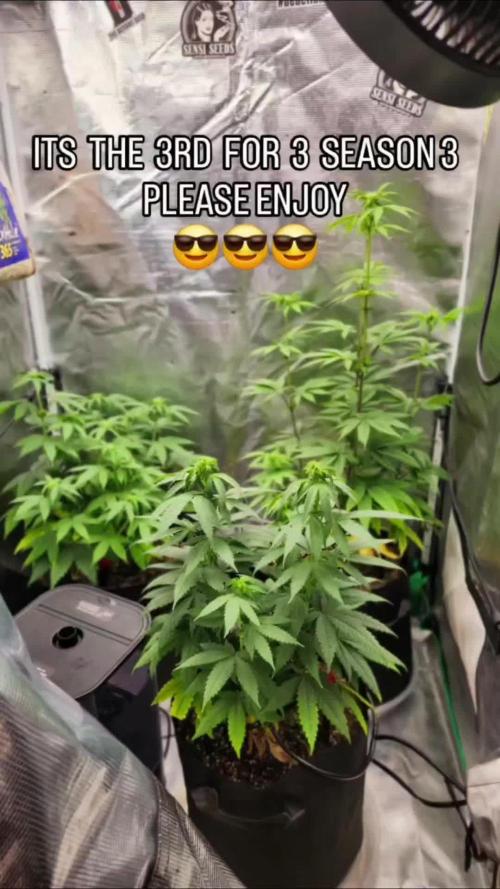
09/20 - The ladies are coming out of pre-flower accordingly - Increased thier dosage by about 20% and will continue to increase gradually as the weeks past - still running high humidity but for only about 8-10hrs during lights on.


Likes
9
Share


@Krautbauern
Follow
The clone is in the same height as the rainbow triangle. we set the Forbidden Nectar a little bit up because she is the smallest one…indica dominant
After 25 days of flowering we recognized that the forbidden nectar is already starting to purple a little bit (last picture)

Likes
23
Share


@PapasGrow
Follow
Girl Scout Cookies XTRM 🍪❄️
From AMS - Amsterdam Marijuana Seeds 🌱
Lights by MarsHydro FC3000 🚀🚀
Tent - 100x100x180 Mars Hydro 🏕️
From Www.Mars-hydro.com
2xScrog used on GSC XTRM. She is extreme indeed. 🍪✨
Green house feedings are keeping it simple!🏆
+ Tested out Hesi Boost. ⚡
Flowering week 8 ✅
For final weeks moved out of tent to max out her potential in the flowering room.

Likes
55
Share


@420DeepGrow
Follow
Sorprendido por la noticia de mi primera colaboracion con MarsHydro 😊🙏 y muy sorprendido tambien por el envio de las semillas por parte de Sweet Seeds.
La marca numero uno en focos 💡, carpas de cultivo ⛺️, extractores 🌬️ y demás aparatos que necesitas para tu cultivo.
Para esta aventura arrancaremos con 💡Mars Hydro TS 1000 Full Spectrum LED Grow Light 150W Regulable y 1 semilla autofloreciente a un ciclo de 20/4.
Verdaderos 150w con este TS1000, la mejor luz de cultivo LED para principiantes.
Ofrece una luz adecuada para 2-4 plantas 🌱. Su precio razonable, la marcada mejora del rendimiento y el control variable de la producción la hacen amigable para los nuevos cultivadores. Todo un tesoro para cualquier cultivador que este comenzando.
Usaremos para esta aventura una carpa de 60x60x90, MarsHydro una carpa para los más exigentes.Con una solapa de cremallera mejorada, dobles cremalleras de metal con forro,reflectante diamante tipo Mylar, postes de metal para una estructura mas solida, no se puede pedir nada mas.
Garantizando una respuesta en solo 24 horas tanto si has usado antes la marca como si no.
Que decir de Sweet Seeds, uno de los mejores bancos de semillas a nivel mundial, con cepas que te sorprenderan.
Variedad muy productiva y resinosa que produce niveles de THC de hasta el 24%, y niveles muy altos de terpenos.
Excelente aroma y sabor, muy dulce, intenso y denso, con tonos de mango, pinceladas terrosas y amaderadas, y leve fondo de Skunk.
💡 MarsHydro TS1000:
https://www.amazon.com/gp/product/B07PLY1WKK
⛺️ 60 x 60 x 90 MarsHydro:
https://www.amazon.com/dp/B081PN2QDN/
🌻 Tropicanna Poison XL Auto:
https://sweetseeds.es/es/the-red-family/3211-tropicanna-poison-xl-auto.html#
Comienza el perido de floracion, aunque se anticipo la semana pasada, en la etapa anterior se aplicó agua y humus de lombriz.
📅 Dia 29: Riego con nutrientes EC 800
📅 Dia 30: Descanso
📅 Dia 31: Descanso
📅 Dia 32: Riego con nutrientes EC 750
📅 Dia 33: Descanso
📅 Dia 34: Descanso
📅 Dia 35: Riego con nutrientes EC 450
Likes
31
Share


@The_Bearded_Grower
Follow
Welcome to 📅 Day 22 of veg 4/5/2021 and boy am I happy with the growth on the girl under the MH TS1000 she is growing fast and strong and that's just what I want to see later today I will be mixing a new batch of nutes but that's about it
Update 📅 Day 25 of veg 4/8/2021 she is still growing very fast under the TS 1000. I have done some more LST as she grows. I have noticed some problems in the leaves but it is very little and I hope it will not get worse only time will tell. Happy growing and keep your stick on the ice 🏒
Likes
69
Share


@DeepWaterGrower
Follow
[DAY 50] - 20/07/2022
- TS1000 45 cm away - 100% (150 watt);
- 30° C, 50% RH;
- PH 6; EC 1.4 - 1.5;
- A few days ago I switched to the full flower feed, but I am experiencing plant nutrition problems:
1) On 8 liters of solution, from EC 0 to EC 1 I inserted: Silicate + CalMag + A + B;
2) From EC 1 to EC 1.4 only with the addition of Bloombastic (Bloom stimulator did not raise the EC) (I don't know exactly the amount of BLOOMBASTIC, it is too viscous to be able to measure it precisely, that's why I only report the increase in EC, it is more precise as a info).
After less than 24 hours the EC turns out to be 1.5 (it was 1.4 a day ago), the plant is therefore eating badly or in any case in an unbalanced way.
The only difference from before is the addition of Bloombastic. I have the feeling that: raise from 1 to 1.4 of EC with only Bloombastic (so only P and K) is too much and the plant is leaving some of these nutrients in the DWC as it doesn't need them.
I am therefore afraid of approaching an excess of P and K and for this reason I have also uploaded photos of the leaves, maybe someone more experienced will already be able to notice signs of excesses of these two nutrients.
If, on the other hand, Bloombastic is not to blame for this EC elevation, I don't really know what it is.
- I found ONE SINGLE LEAF completely ruined, it was practically dead and detached from the plant (leaf was under the scrog net, so didn't take light anyway).
[DAY 51] - 21/07/2022
- TS1000 40 cm away - 80% (120 watt);
- 30° C, 60% RH;
- Today and tomorrow I will not be home and I preferred to keep the lamp at 120 watts in order to better manage humidity and temperature.
[DAY 52] - 22/07/2022
- TS1000 40 cm away - 80% (120 watt);
- 30° C, 60% RH;
- Plant is drinking about 1.5 liters per day, the solution temperature is always very high but the plant is holding up well.
[DAY 53] - 23/07/2022
- TS1000 40 cm away - 100% (150 watt);
- 30/31° C all day long, 60% RH;
[DAY 54] - 24/07/2022
- TS1000 40 cm away - 100% (150 watt);
- 30/31° C all day long, 60% RH;
[DAY 55] - 25/07/2022
- TS1000 40 cm away - 100% (150 watt);
- 30/31° C all day long, 70% RH;
- The humidity has increased these days, we are on average 70% with peaks of 80%. I hope that the weather situation will improve;
- Plant is continuing to grow day by day, so I think I am still in the last days of the stretching phase. Concluded this phase (when?) I will remove a lot (or a bit?) of leaves and branches that are not getting enough light.
[DAY 56] - 26/07/2022
- TS1000 40 cm away from the center of the canopy - 100% (150 watt);
- 30/31° C all day long, 70% RH;
Likes
19
Share


@Chucky324
Follow
Hello. This is the end of week 8 and the beginning of week 9 of flowering.
I started my flushing on Sun. Ph adjusted tap water. Our tap water here is between 7 and 7.5 and has to be adjusted
If I put 1 drop of ph down per gallon... I get about 5.7 ph. Good to grow with.
I'm hoping to start harvest on Aug 11th and that will be 10 weeks in flowering. Just the way I like it.
Next flush will be on Thur.
We've reached the end of the underground comic... Weirdo #9.
Look for more weird comics in my other diaries and I'll continue putting them in my new diaries.
OK. Have Fun.
Chuck.