


Processing
Likes
Comments
Share


Likes
2
Share

@Chucky324
Follow
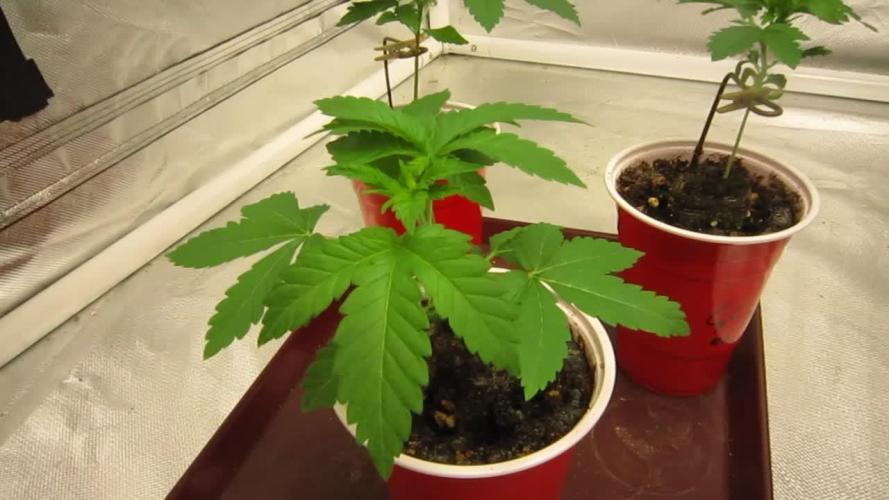
Hello. This is the end of week 2 and the beginning of week 3 of veg.
These plants are growing slowly, but doing good. Hope they can pick up some steam and get going.
These plant are going into my other grow room with the strain Grapes. There is 8 spaces in there, so I'm hoping these plants will get going soon.
But it is what it is. They will grow how they want... not how I want. 😒 Life's like that!
Next week this tent will have Kush Mints in it. I have to vacuum up the pollen from the males that were in the other grow room from this spring.
OK. Be Great. Chuck.
Chuck.


Likes
6
Share


@Lickey
Follow
Looking good height wise. But humidity is high at 68% and she is getting blackening / darkening of lower leaves that continue to fall off.

Likes
21
Share

@Targona
Follow
22 days since my little girl sprouted from the seed🌱
The third week of growth of my Break-up Cake Auto 🥧💚
Nutrients:
Plagron and Biobizz 💓💚:
This week I am applying the classic root stimulator Plagron Power Roots: Plagron Roots root stimulator is a biological root stimulator that supports the formation of the root system. It contains 7.2% humic acids, 3% kelp (a beneficial extract of brown seaweed), 3% metabolites and 0.3% thiamine (vitamin B). It acts not only on the roots, but also on the entire plant. It increases the plant's defenses and is absorbed very quickly. 🍃🍃
----------------------------------------------------------------------
BioBizz Bio Grow is a 100% organic, but also vegan-friendly fertilizer with BIO certification. Designed for the growth phase. Supports soil microorganisms and is ideal for use in all types of soil substrates and coco 💩💚
------------------------------------------
Plagron Vita Race (Phyt-Amin) - is an organic foliar nutrient rich in iron that improves growth, photosynthesis and plant resistance. It is applied as a spray on the leaves during the growth and early flowering phase 💩🌱
----------------------------------------------------------------------------------------------------------
BioBizz Calmag is a 100% organic, but also vegan-friendly fertilizer with BIO certification. Biobizz Calmag was designed for professional growers and home growers who need an extra dose of calcium and magnesium. It contains the addition of humic acid 💩☘️- I only apply it once a week.
-------------------------------------------------------
Biobizz Bio pH-/ Biobizz Bio pH+ is a 100% natural and vegan-friendly pH regulator. Suitable for all types of substrates and crop types. For use in growth and flowering. 💩🍋🌱
-------------------------------------------------------
PRO-MIX CONNECT MYCORRHIZAL POWDER - in the substrate
Generally:
Break-up Cake Auto 🥧💚
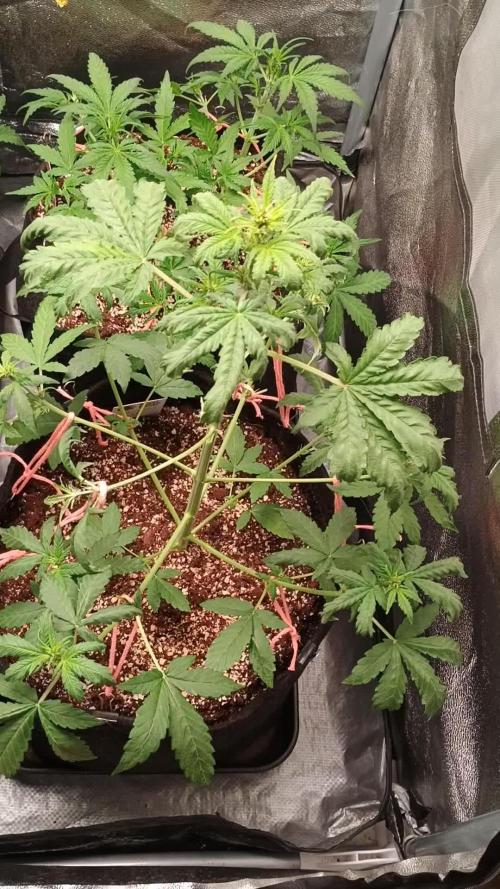
The plant is already in pre-flowering 🌺, but flowering has not yet begun, so this week I am still giving nutrients for vegetative growth.
However, this week - the third week - in most cases it does LST and defoliation twice 🍃 🌿
I think the plant is slower because it is growing poorly, anyway it was able to cope and in the end it is a strong, sturdy and beautiful plant, even if it is different. I am very proud of it 💚💪👍
I use the new PH and EC meter Aqua Master Tools P110 PRO, the measurement is fast and accurate. So far I manage to keep the PH and EC as they should be. I use Biobizz Bio +/- for correction. These are excellent products.
I think that the plants definitely have a very good effect of spraying with Vita-Race and the excellent PRO-MIX Connect Mycorrhizal powder for root support. All the girls have been very strong and stable since they were little 💚
Training:
As I mentioned above, I did the first LST and defoliation, the plants usually quickly re-leaf, other branches also grow quickly. So in this third week I do two defoliations and two LSTs 🍃🌿
This plant is a little different, but I still did a very good LST and the plant is now making two main buds 🌺
The girls are growing in a tent:
Mammoth Pro+ 80, with reinforced reflective Mylar 600D foil
Lighting:
Mars Hydro TS1000, this light is sufficient for lighting in my growing space. The plants respond effectively and the light is technically very well managed - I try to have 50cm between the light and the plants, so I regularly move it up.
Mars Hydro TS1000 Quantum Board 💡💡💡
Power: 148W
Dimensions: 90 x 90 cm
Dimensions: 360 x 330 x 34 mm
Chip brand: Epistar
Thanks for the likes
See you soon 😍😻

Processing
Likes
20
Share


@Mr_nugs_lover_David
Follow
She's looking so beautiful,very nice strain to grow for sure,I'm trying to give her a good shape before flowering starts. I add organic liquids nuts only once a week and looks like she loves it,let's keep up the work!! 💚💛❤️🌱🤩

Likes
35
Share


@MadeInGermany
Follow
Info:
Unfortunately, I had to find out that my account is used for fake pages in social media.
I am only active here on growdiaries.
I am not on facebook instagram twitter etc All accounts except this one are fake.
Flowering day 36
since time change
to 12/12 h.
Hey guys :-) .
The buds developed really well this week 👍.
They get wider, bigger, and firmer.
They are already starting to smell very tasty.
This week it was poured 3 times with 1.2 l each (nutrients see table above).
Unfortunately I found a couple of single trips that tell me that the trips still haven't completely disappeared.
Since I'm not a neem at this stage I will inject more oil and the lady has already finished over half of her cycle, I will let her run like this and the newcomers will be treated again 👍.
So I hope that at the next round all of them will finally be gone.
I had the problem more than 5 years ago and it took a long time until everything was ok again and there was no animal left.
Otherwise everything was checked and everything was cleaned.
I wish you a lot of fun with the update.
Stay healthy 🙏🏻
You can buy this Nutrients at :
https://greenbuzzliquids.com/en/shop/
With the discount code: Made_in_Germany you get a discount of 15% on all products from an order value of 100 euros.
You can buy this Strain at :
https://greenhouseseeds.nl/
☝️🏼☝️🏼☝️🏼☝️🏼☝️🏼☝️🏼☝️🏼☝️🏼☝️🏼☝️🏼☝️🏼☝️🏼
Green House Seeds Company Cup Clone 🏆
Type:
Wonder Pie
☝️🏼
Genetics:
Wedding Cake x OG Kush
👍😍
Vega lamp: 2 x Todogrow Led
Quantum Board 100 W
💡
Flower Lamp : 2 x Todogrow Led
Cxb 3590 COB 3500 K 205 W
💡💡☝️🏼
Earth: Canna Coco Professional +
☝️🏼
Nutrients :
Green Buzz Liquids :
Organic Grow Liquid
Organic Bloom Liquid
Organic more PK
More Roots
Fast Buds
Humic Acid Plus
Growzyme Big Fruits
Clean Fruits
Cal / Mag
Organic Ph - Pulver
☝️🏼🌱
Water: Osmosis water mixed with normal water (24 hours stale that the chlorine evaporates) to 0.2 EC. Add Cal / Mag to 0.4 Ec Ph with Organic Ph - to 5.8 - 6.4

Likes
4
Share


@TheSurfBud
Follow
Nice sweet smell... could say what strain it is because its from sweetseeds sweet auto mix 10 pk of the best..
Definitely going to enjoy this one ...
Grow went well and fast 62 days flat...
Likes
17
Share

@THcHunteR23
Follow
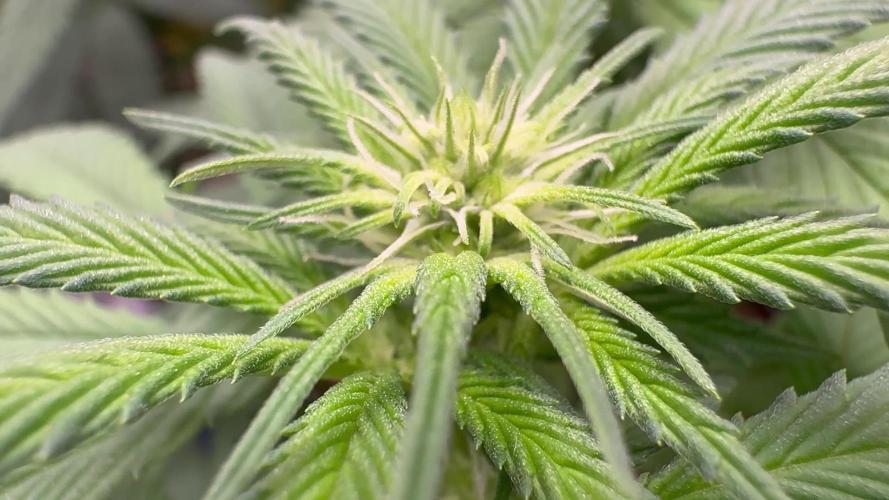
Super elle prend 2 l d’eau à tout les 2 3 jours . Elle a l’air très robuste et facile à mener à terme. Jusqu’à présent j’adore !

Likes
3
Share


@GarciasGarden
Follow
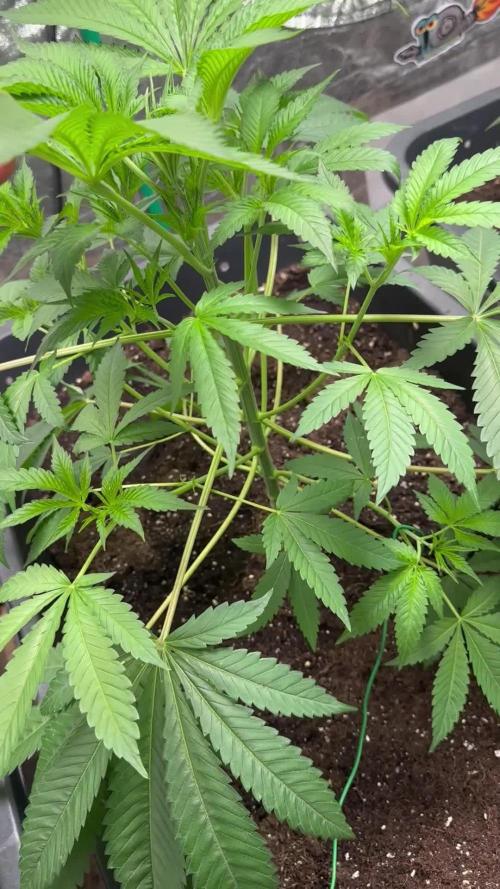
Stressful grow honestly I have ptsd from my last grow being a complete Hermie den I literally had to check them every single day wondering if the swollen ovule’s were actually seeds lol well anyway I had to harvest at week 6! And this shit still came out ridiculously good smell✔️Taste✔️Bag appeal✔️✔️✔️ Great strain can’t wait to grow it again !


Likes
56
Share


@Prilyfe13
Follow
May 24, 2024 Day 99
This is the last week for these ladies. They have until the end of this week and then harvest no matter what. I'd much prefer to harvest them sooner, but I don't have space in my dry tent. It's only a 2x2 and the Tropicana Cookies just finished up and will be in there for about 7 days.
Banana Purple Punch A needs a half gallon of water today. She's not done yet and she's all dried up. So I'll give her that half gallon of plain water today PHed to 6.1 and that's it. She should be dry again in a week.
I'll be checking trichomes today as well. I'll update when I finish up.
Banana Purple Punch B is amazing. She smells wonderful and now with the Tropicana Cookies out of the tent, her aroma can shine. Wow.
I'll be checking trichomes as well today.
She also finished up her reservoir but she's still pretty moist. It must have emptied yesterday. This may last the week. I'll need a few days for her to dry out as well. So I might have to add a bit more water. Maybe a quarter gallon? Just enough for her to last the rest of the week. I'll see how she is tomorrow.
The environment is still a bit wonky. The humidity is still in the mid 50's% with the temp being around 73°. It's currently at 76° and 57% humidity.
Grow System Environment:
Temp: 73.2°
RH: 56.7%
VPD: 1.17 kPa
May 25, 2024
It's rainy today and naturally, the humidity in my room is stupid high. So in the tent the humidity is back to 60%. I'll be opening the tent door again every couple of hours today.
Banana Purple Punch A is starting to look like a hot mess. Tops are starting to flop over and there's a super weird fade going on. Leaves that just curled up and turned super dead yellow. Some of the leaves are showing purple, and the tops are getting purple hues. Still a bit of a mess.
Banana Purple Punch B is getting more and more purple. Her leaves are starting to lighten up as well. We can certainly see the start of the fade. The tops have nearly all purple sugar leaves. The buds are still pretty green. I wonder how it works with this one. We shall see over the next 6 days. I might have to add a half gallon of water to her reservoir. She's already a bit too dry to last the week. So I'll do that later today I think. Maybe first thing tomorrow.
Harvest time is 6 days away now. Both ladies are looking super close to being done. Hell, I may even go past the ideal time by a couple days. That's perfectly fine. I could use a good sedative.
The environment is back to being an absolute mess. The temp is at 75°, which is fine. But the humidity is back up to 60%. Hopefully I can get the humidity to drop a bit.
Grow System Environment:
Temp: 75.1°
RH: 55.1%
VPD: 1.30 kPa
May 26, 2024
These 2 are shaping up to be some heavy yielders. Both have massive buds and are on their way to being fully done. Another 5 days I think and they will be ready for harvest. However, I may have to keep them in there for a few extra days. The Tropicana Cookies in the dry tent are taking a bit longer to dry than I anticipated.
Banana Purple Punch A looks great. I ended up using a piece of a plant tie to prop up one of the most leaning tops. Looks great now. Much more light penetration to the lowers.
Banana Purple Punch B is absolutely amazing right now. MASSIVE buds that weigh a whole lot. She finally has a distinct purple look to her. And it's just getting more and more purple. When she is done, I believe she will have some beautiful foliage and lots of dark purple leaves.
She got about 1/3 of a gallon of water today to the reservoir. She was dry and she has much too long to go before she should be that dry.
The leaves are all starting to turn a bright green and fading into deep purples and yellows with orange. Fall foliage indeed.
I'll also be doing a full defoliation in 3 days I think. I want to clear as much foliage as I can before wet trimming. It doesn't seem as though wet trimming will be all that bad. There's sugar leaves, but they are big instead of plentiful. So it should be pretty quick. Drying may pose an issue. If the humidity keeps up like this, I'll have a lot of trouble keeping it below 62% in the dry tent. We have a few days left anyway, so maybe it will go back down by then.
The light is the same. I did take the DLI today and the average is about 40 mol/m²/d, so that's fine. I'd much rather it be closer to 36 mol/m²/d, but then it would interrupt the Sour Diesels in the tent that just started to flower.
The environment is really off today. It's super humid out and it's showing and killing my good vibes. The temp is a bit low at 73°. I would prefer it to be 75° during the day. It helps with all the plants in the tent. Oh well not won't stay low for long. It should start to creep up later today. The humidity is still super high at 63% today.
Grow System Environment:
Temp: 75.2°
RH: 60.9%
VPD: 1.15 kPa
May 27, 2024
Both ladies got a half gallon in their reservoirs today. Both were way too dry for now, sona half gallon should last them at least the night. Just 4 more days and we can harvest. Unless this humidity doesn't let up, then I have to wait even longer for the Tropicana Cookies to dry. AND risk mold! Damn it!
Banana Purple Punch A is starting to get floppy. I hooked some of the tops to each other so they will stand. A couple outer branches were starting to fall as well, so the were also tied up. Hopefully that solves the issue for the next 4 days. Maybe 5 or even 6 now. Too long in my opinion.
She doesn't have much in terms of fading but it's starting at least. Her leaves are all messed up. So I'm not bothering with the fade honestly. If she fades, she fades. I'll be defoliating in 2 days anyway. Then wet trimming, so the leaves aren't really a thing to bother with now.
She also has lowers with white pistils. They are developed, but the pistils are still white. Those are going to change in. Matter of days.
Banana Purple Punch B is shaping up to be the best plant of this run. She's actually the shortest, but has the best structure and the most solid buds and a lot of them. She's also doing quite well in her final days.
Her leaves are turning dark purple with the lowers turning bright green. She got a quarter gallon of water yesterday and drank it up almost immediately. I think I'll have to keep her watered for the next couple of days. She will certainly dry out quickly when I stop watering, so I think she will only need a couple days to fully dry out.
Currently, she is about 34% soil moisture content. Not bad at all. It might go up to 45% with the half gallon, but no higher.
I haven't done trichomes in a few days. I may get a video in today or tomorrow. Both plants could use a good viewing. Not that it matters, as I have to schedule my harvest, regardless of doneness. But we'll check them for science.
The environment is back to being the bane of my existence. Seriously, it's driving me insane. So the humidity is WAY up at 65% with the temp being around 74°. It's horrible. I really don't want to keep opening the tent. It just takes away precious light space.
The average night temp was also high at 70° with the humidity still being up at 64% I have no idea how these ladies haven't gotten bid rot or mold. Maybe it's because it's like a wind tunnel in there. Exhaust on full power, two 6 inch oscillating clip fans facing each other. There's no space untouched by some sort of airflow. It's not a heavy wind, but like a light breeze.
Update: I finally took some trichome videos and was a bit surprised at what I found. Both plants have tons of cloudy barely any clear and a good amount of amber. The extra 4 to 6 days may be a bit too long. We shall see. Some of the lowers still have white pistils and only have amber trichomes on the leaves. So there's time for them to finish up. We'll see how this works out.
Grow System Environment:
Temp: 74.3°
RH: 60.8%
VPD: 1.11 kPa
May 28, 2024
Very late entry today. I was quite busy wet trimming Banana Purple Punch A for the chop.
Yep, you heard it. The chop. One of the Tropicana Cookies finished drying today and I thought it was time to harvest her. So she got a full wet trim and is hanging in the dry tent.
She weighs in at a total of 22.26 oz wet hang. She has heavy buds, so the weight retention should be impressive. Maybe 5 oz? Maybe 4. Not bad.
Banana Purple Punch B will be harvested when the last Tropicana Cookies is done. That should be in about 4 to 5 days. Currently I have her moved to the back of the tent with the Sour Diesels taking over the rest. She looks great. More and more purple.
The environment is still crazy. Super high humidity and nothing I can do about it. I've tried AC, no AC and just started the heater. Something has to work.
Grow System Environment:
Temp: 72.5°
RH: 63.2%
VPD: 0.98 kPa
May 29, 2024
Nothing to do today.
Banana Purple Punch A is on her first day of drying and I expect it to take 10 to 14 days based on the current environment in the dry tent.
I did put a dehumidifier in there to help clear it out. It won't be permanent. Just until I can get the humidity back down to 60%. Then it will come out and go back in the 3x3. This will then help regulate the humidity for Banana Purple Punch B.
Banana Purple Punch B looks great! She will be harvested whenever the dry tent has a free spot. Should be in about 4 to 6 days, unless the humidity drops below 60% and then maybe 3, but I doubt it.
I also finally was able to take her off the risers and it worked a charm. The Sour Diesels in the tent aren't being overshadowed anymore and she is at a perfect light distance.
With the drop of the risers, the canopy DLI is now 38 mol/m²/d. Over the next few days, it should make the buds even more purple and dense.
The 3x3 environment is around 63% and at 73°. Still super high. The dehumidifier should start working soon. We will see a small drop in humidity. Maybe a jump in temp, but I need to get the humidity down somehow. The temp is nice and low for this lady, but not great for the other plants. I'd rather it be around 75° or even better 74.5°.
Because I was able to remove the risers from Banana Purple Punch B, I finally could lower the light for the Sour Diesels. The DLI is at 38 mol/m²/d with the power at 60%. Looking great!
Grow System Environment:
Temp: 73.3°
RH: 63.2%
VPD: 1.01 kPa
May 30, 2024
Lots to do today. Well, this afternoon. I finally pulled the final Tropicana Cookies out of the dry tent and now it's ready for Banana Purple Punch B. I may actually leave her in the dark for a day or 2 just under her sister plant that is currently drying.
Banana Purple Punch A is enjoying her second day of drying. It's actually a bit dry in the tent now. A good day out. But a bit too dry for a solid week. It should increase when I put her sister in the tent. She still has a good way to go. Maybe another 8 days if I can push it that far.
Banana Purple Punch B will be getting fully defoliated this afternoon. Then I think I'll put her in the dry tent for a day or 2. A nice dark period to stress her out a bit. Not to mention it will increase the humidity a bit in there as well.
I'll do a full wet trim in a day or 2 when she is done with the dark period. It should also give her time to fully dry out her container. And give a final push in trichome production.
I'm not going to bother with the environment today. It won't matter until tomorrow. Then I'll get dark tent data.
Grow System Environment:
Temp: 72.4°
RH: 57.1%
VPD: 1.13 kPa


Likes
154
Share


@CBD_Sweden
Follow
@FAST_BUDS,
Hi all the happy people here in GrowDiaries.
This is my second cultivation ever and it will be fun to try a bigger space than my closet grow.
First, I'm just going to say I'm done with the construction of my new growroom.
I put some pictures on the construction here in week one.
The room is 2.14 meters by 1.7 meters and has a ceiling height of 2 meters.
It provides a floor area of 3.6 square meters.
I use a 54 Watt Lightwawe T5 for germination and 2 Pcs 400 Watt HPS lamps.
I have a channel fan that replaces the room air about 40 times an hour to get a comfortable environment in the room, the air enters a fresh air intake from the outside.
The air is purified through a carbon filter to then leave the room to the rest of the basement.
Then I use that heat to heat the rest of the basement.
I will use 8 pcs 15 liter Autopots to grow with and a 100 liter water tank that supplies the pots of water and nutrition.
I will grow completely organically in soil and will watercure my buds to get the best possible medicine for me.
--------------------------------------------------------------------------------------------------------------------------------------------------
2017-09-18. Week 5 starts. Added new video. Girl Nr 1 is 46 cm high and Nr 2 is 33 cm.
---------------------------------------------------------------------------------------------------------------------------------------------------------
2017-09-19. 2 new fans is installed in the grow room. Added pic and video.
-----------------------------------------------------------------------------------------
2017-09-20. Kl 10.00. New video. The Nr1 girl is 52 cm high and Nr 2 is 32 cm.
Kl 23.00. Did some massive defoliation, added video and pics
------------------------------------------------------------------------------------------------
2017-09-22. The girls have recovered well after my massive defoliation. Girl number 1 is now 56 cm tall and number 2 is 35 cm. They have received 6 liters of water and nutrition today.
--------------------------------------------------------------
Likes
14
Share


@Canna96
Follow
Hey now, hope everyone is having a great weekend and staying safe. Another great week for the ladies, as they are now about 2 weeks into flower, and the stretch is winding down. I am still feeding them silica, cal mag, and flower nutrients maxi bloom by GHE. I will start to add a PK booster this week. I also will be switching to light from V1 to F1 sometime this week, and also integrating the UV/IR bar into the light cycle later this week. I will run the UV/IR bar for approximately 30 minutes prior to lights off to get started.
The 5X5 is really starting to fill up nicely, I am running two dehumidifiers outside of the tent and I am able to maintain around 50% RH in the tent during lights on, and around 55% RH with lights off.
Still very happy with the Spectrum X from Medic Grow. I am running her at 90% in the V1 cycle and will be transitioning to the F1 cycle later this week. Overall, the plants seem very happy and healthy. The temperature and humidity is significantly dropping so that helps keeping the tent cool and not overly humid. This is by far the best time of year to be flowering plants in my region.
I hope everyone has a great weekend, Thanks for stopping by, Stay Safe and Blaze On!!! 💪
Website: https://medicgrow.com/
https://growdiaries.com/grower/medicgrowled

Likes
10
Share


@extraterrestrial1
Follow
-------------------------------------------------
Day 22
Water: N/A
Humidifier: 45% (LOW-MIST)
Fan Speed: High
Light on @ 19:00 (26.4° celsius @ 48% RH)
Light off @ 13:00 (22.8° celsius @ 56% RH)
-------------------------------------------------
Day 23
Water: N/A
Humidifier: 45% (LOW-MIST)
Dehumidifier: On
Fan Speed: High
Light on @ 19:00 (27.6° celsius @ 46% RH)
Light off @ 13:00 (27.1° celsius @ 51% RH)
-------------------------------------------------
Day 24
Water: N/A
Humidifier: 45% (LOW-MIST)
Dehumidifier: On
Fan Speed: High
Light on @ 19:00 (26.2° celsius @ 51% RH)
Light off @ 13:00 (22.7° celsius @ 40% RH)
-------------------------------------------------
Day 25 (Feed day: 15 tbsp Worm castings + 5 tbsp 2-8-4 Gaia Green Power Bloom)
Water: 0.5 Gallon RO water + 5ml Remo VeloKelp
Humidifier: 50% (LOW-MIST)
Dehumidifier: On
Fan Speed: High
Light on @ 19:00 (27.1° celsius @ 48% RH)
Light off @ 13:00 (23.0° celsius @ 50% RH)
-------------------------------------------------
Day 26
**LST**
Water: N/A
Humidifier: 50% (LOW-MIST)
Dehumidifier: On
Fan Speed: High
Light on @ 19:00 (26.8° celsius @ 48% RH)
Light off @ 13:00 (23.5° celsius @ 50% RH)
-------------------------------------------------
Day 27
Water: N/A
Humidifier: 50% (LOW-MIST)
Dehumidifier: On
Fan Speed: High
Light on @ 19:00 (27.7° celsius @ 48% RH)
Light off @ 13:00 (23.4° celsius @ 50% RH)
-------------------------------------------------
Day 28
Water: N/A
Humidifier: 50% (LOW-MIST)
Dehumidifier: On
Fan Speed: High
Light on @ 19:00 (26.7° celsius @ 50% RH)
Light off @ 13:00 (23.2° celsius @ 50% RH)
-------------------------------------------------


Likes
2
Share

@pickonme2002
Follow
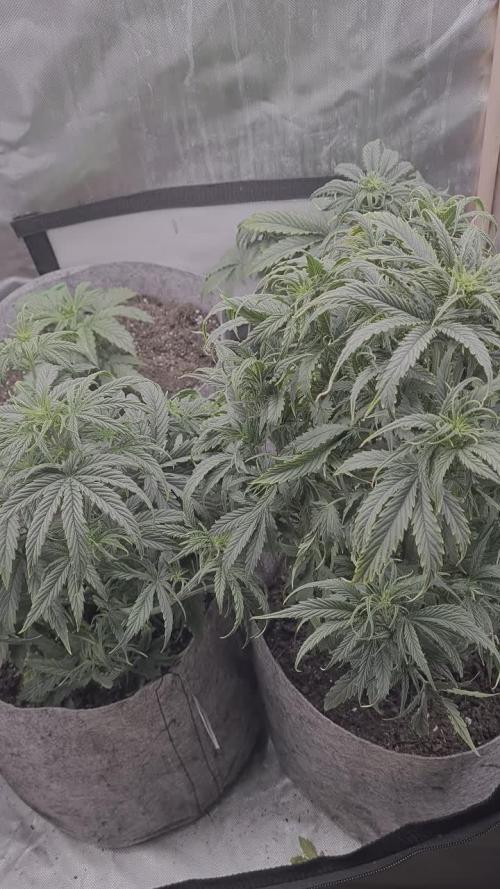
Defoliated 3 of the 4 2x Royal Critical and 1x F1 Orion. The zombie has started to grow will be a couple of weeks behind the rest. But its ALIVE its ALIVE 😂. They are soaking up the water and will add nutrients from next week 6

Likes
1
Share

@GERGrowDesigns
Follow
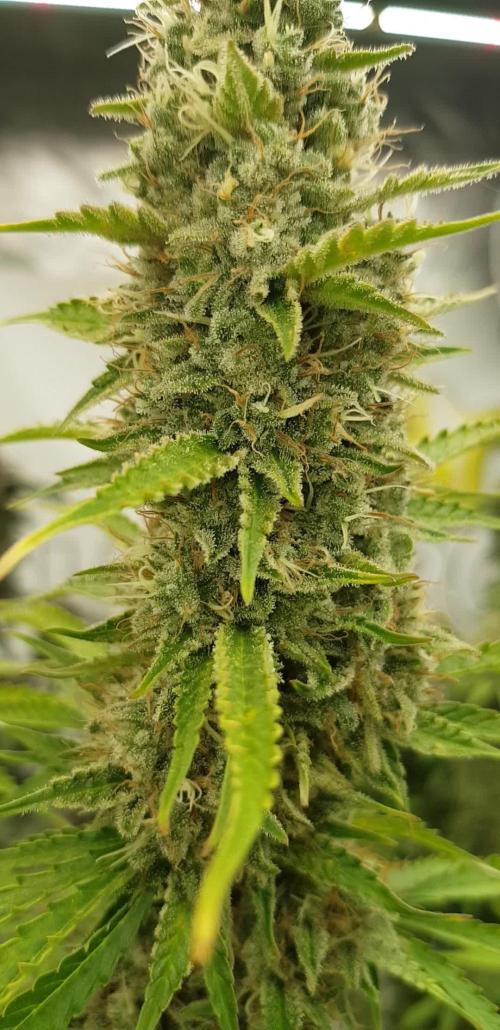
Welcome to Flower Week 9-10 of Divine Seeds Auto White Widow
I'm excited to share my grow journey with you all as part of the Divine Seeds Autoflowering Competition 2025. It's going to be an incredible ride, full of learning, growing, and connecting with fellow growers from all around the world!
For this competition, I’ve chosen the Feminized Automatic strain: Auto White Widow
Here’s what I’m working with:
• 🌱 Tent: 120x60x80
• 🧑🌾 Breeder Company: Divine Seeds
• 💧 Humidity Range: 50
• ⏳ Flowering Time: 58 Days
• Strain Info: 20%THC
• 🌡️ Temperature: 26
• 🍵 Pot Size: 3
• Nutrient Brand: Narcos
• ⚡ Lights : 200W x 2
A huge thank you to Divine Seeds for allowing me to be a part of this amazing competition and Sponsoring the Strains. Big thanks for supporting the grower community worldwide! Your genetics and passion speak for themselves!
I would truly appreciate every bit of feedback, help, questions, or discussions – and of course, your likes and interactions mean the world to me as I try to stand out in this exciting competition!
Let’s grow together – and don’t forget to stop by again to see the latest updates!
Happy growing!
Stay lifted and stay curious!
Peace & Buds!

Likes
5
Share


@Herbie
Follow
Mrs Big B is about to have her sweet stretch to Budville so I hope I've shaped her well enough to take full advantage of the light space.
If not a traditional 'Super crop' will solve any future spacing issues. Ha ha.
Due to an accident in her younger days she's sort of become a triple stem after topping.
I'm hoping I get something cool looking as a result.
I trimmed a few lower buds that would soon be overshadowed by the canopy and not worth her effort.
Weekly does of Biobizz triple nuits and tap water just to top up and irrigate. Because shes not drinking loads yet.
My LST may need refining..... but we learn every mistake right?