Likes
Comments
Share
@JayKane33
Follow
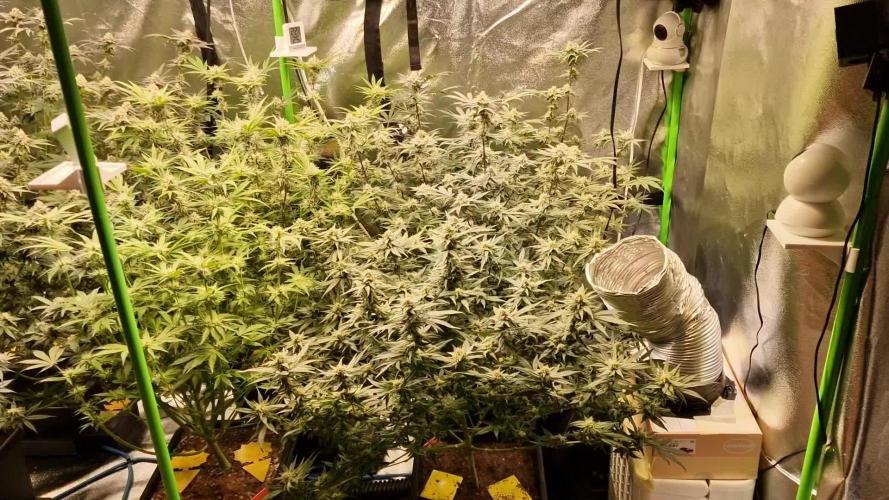
The girls are looking good, vibrant and healthy. I'm watering every other day now, up from every three days because they're up taking more liquids. Top dressing as I see fit, once every 4 waterings. Water mixture always has SuperThrive, Molasses and Potassium within it though.
Likes
8
Share
@Lord_21
Follow
Here’s 6 weeks of my baby. I tried LST for 3 days. So let’s wait!!
Likes
18
Share
...and here I am, at the end of this fantastic journey, with so much knowledge I have got in this process, including regarding myself! Fantastic!! I harvested one week early because I got some issues with mold! Thank you people for helping me when I got into some trouble hahaha Love you all! :-) Peace and freedom!
Likes
9
Share
** COST ** TO RUN - Used previous ⛺️ setup : 0.00USD - Monthly electricity : 36.73USD <-- other ladies sharing ⛺️ - 3 Gallon Fabric pot : 0.15USD - Bonsai wire : Apx. 0.03USD - Reused soil from last run : 0.00USD FOR NUTRIENTS - Jadam Microbial Solution : 0.00USD - Fermented Plant Juice : 0.00USD APPLYING - JMS : 30ml / 1 Litter - FPJ : 30ml / 1 litter TOTAL COST : 36.91USD Throughout the week, I give compost tea, and fermented plant juice once each ^^ Its almost time!! Trichrome are cloudy, but its hard to find amber Trichromes yet. According to Fastbuds she will be ready in 4 days ^^; Hope you guys have a wonderful day today ^^v *** Please Like, comment & share *** Highly appreciated -----/-----<@
Likes
18
Share
week intel: we getting close to end of ripening , this week i raised drought , Nitrogen and E.C stress by feeding them 2 times per week and raised e.c to 3 to cause real stress that will help increase terpenes production stresses : Nitrogen deficiency Stress by removing the fertilizers that has N in them Drought stress via removing one meal in week high E.C stress around 1.7 and the other feeding day 3.0 , 2 times a week feeding: no more Nitrogen i feed them 2 times this week with this order : day 1 : i feed them high with Bio-Bizz Top-Max + Feeding Booster about 850 ppm - 1.7 e.c to cause a medium e.c stress. day 3 : no more feeding this day day 5 : i feed them very high dose of Bio-Bizz Top-Max + Feeding Booster around 1500 ppm - 3 e.c to cause high e.c stress guide of the week : be patient in the last weeks, never hurry for harvest because its the time of ripening in last 2 weeks you should let plants to do their work last weeks of ripening is the time to break the limits we should cause 3 stresses as i said above Nitrogen stress , Drought Stress , E.C Stress
Likes
38
Share
I've been pulling fan leaves this week . 1. To slow the top down . 2. To encourage side branch growth. 3. So they can remain in very small pots in a small space until I have space to let them grow properly.
Likes
6
Share
Hello Diary, White Widow has finished its second week of flowering. The areas around the flowers themselves are lighter, due to the young leaves and the pistils themselves on the flowers, so it is clearly visible where all the flowers are forming. I am happy with how the flowers are developing and I therefore have much more motivation to take photos. White Widow has started to stagnate in growth, this week she has grown 13 cm., the most compared to her roommates on the "Farm". I would say that at this stage White Widow is taking on her final form and will now direct most of her energy into the development of the flowers. The leaves are a healthy dark green color and so far I do not show any signs that the plant is lacking anything. Watering was every three days, I continued to add CalMg and Bio-Bloom Fertilizer. The conditions in the grow box are now much better. The temperature is around 28 degrees and the humidity is below 50%. White Widow is generally progressing great, which I am very happy about. Here is a short overview of the week. 24/08/2024 - Day 31. Watering. I prepared 9 liters of water. I added CalMg 1 ml/liter, Bio-Bloom Fertiliser 1.5 ml/liter and then lowered the p.H. to 6.0. With this amount I watered all three plants evenly. 27/08/2024 - Day 34. Watering. I repeated the same procedure as three days earlier. 28/08/2024 - Day 35. End of the second week of flowering, or the fifth week from the beginning of the vegetation. Photographing and measuring the height of the plants. White Widow - Day 35. - 63 cm That's all from me for this week, see you soon.
Likes
27
Share
This girl is rocking guys!! The solid buds, the sweet and fresh smell and this gorgeous look with all those shiny crystals… I’m simply in love for this strain! All the buds are very sweet and give you this feeling of sativa high, which keep you focus on what you are doing! But if you smoke it a bit too much… you get totally lost between hundred ideas and thoughts! Easy to grow and great yield!
Likes
21
Share
@Bluemels
Follow
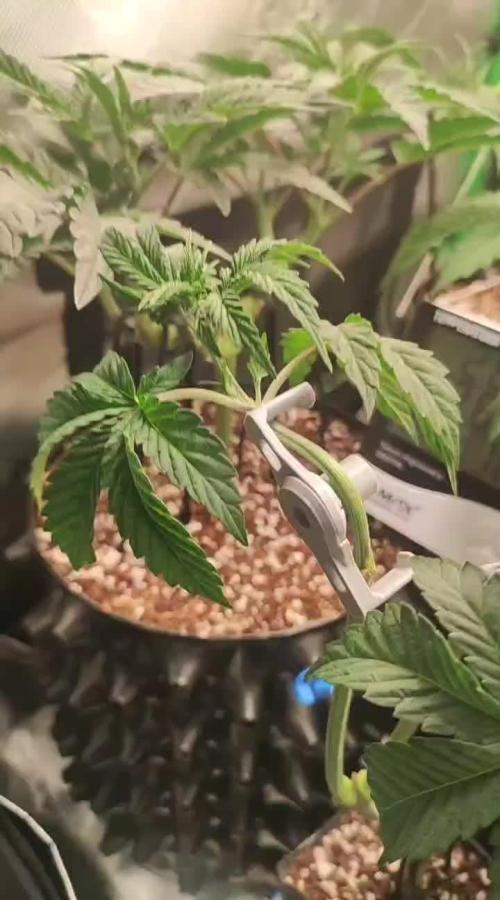
Die letzte Woche hat die Cookie Gelato sich sehr gut erholt 😘 Die Idee mit den Tütchen über den Stummeln war so mittelprächtig. Einige Triebe sind tatsächlich am nächtsten Tag grüner geworden, doch bei einigen anderen sind die Blättchen feucht geworden und hatten braune Spitzen 😬 also schnell ab mit den Tütchen die Luftfeuchtigkeit leicht erhöhen und die Pflanze in Ruhe lassen.😴 Und die Gute hat sich erholt! Wenn nun alles gut läuft, morgen wollte ich nochmal etwas entlauben 😨 aber dieses mal ganz wenig, schicke ich sie in 4 Tagen in die Blüte. Sofern ich nicht wieder in einen Schnippelwahn verfalle 😬😈 Heute ist mir beim biegen ein Ast gebrochen 😭 Glücklicherweise ist er nicht ganz durch gewesen, habe ihn mit Zahnstocher und Klebeband repariert 😜 Hoffe mal dieser sich noch wieder erholt 😬 Der Ast hat sich leider nicht erholt 😢 Ich habe den Ast daneben getoppt und aus Einen Zwei gemacht 😌
Processing
Likes
59
Share
@Island
Follow
Week 5 - One more excite week, smelling much strong, nugs are becoming bigger each day it past. OG still very healthy and thirst. Brazilian summer its almost to begin, air temperature inside the grow box it start to get warm, around 28º to 30º. Anxious to see what this baby can do, Harvest time is coming 😍 Cheers from Brazil.
Likes
42
Share
@Brown832
Follow
Everything is going good happy with the progress, I flipped the lights about 5 days ago and put another net up yesterday just to see the stretch progress, I started to use bio bloom and bio topmax with feeds. Hopefully I start to see some little buds forming. 😃
Processing
Likes
25
Share
******** Week 7 - January 21 to 27/20 (Days 43 to 49 from seed popping) Well this girl has sure kept one guessing as to when the heck the outcome is going to be. She was slow getting going but she has kept a constant pace of growth and has been getting bigger and developing more every week👍 She set her buds in this week and has started focusing more on buds and seems to be less on growing stems😁 Her stems have strengthened more over the last couple of weeks and are getting pretty stiff......yes! Shouldn’t have to get out too many eye-poking bamboo stakes ahead. Bud diameter is good now and not as tiny. They are starting to grow up as well, swelling. Top cola is filling in as well. How much will she fill in....time will tell. Not sure just how big her root mass is but don’t expect its huge and bound, sides of pot give when some pressure applied down lower. Have noticed other pots with a good amount of roots are firm when squeeze the bottom. Missed some of the purpling of the stems and saw more of it at the end of the week. Will be giving her some Epsom Salt next week. Also, brown spotting on tops of leaves seem to be starting. Suspect the pH may have gotten out a bit or something locking out the P uptake???? Next week, just keep her happy and ensure the medium has the correct pH. Expect more bud swelling to come😶 Slow but steady.......... Little more detail: Jan 21/20 - Day 43 - looked hungry in the morning and then again in the afternoon. - AM feed - 1L with just Dual Fuel A and B at 1.5ml/L with a 725ppm and 5.85pH. - PM feed - 2L with Mass & Terp @ 3ml, Rhino & Rezin & LW8 & DF @ 1.5ml, CalMag @ 0.5ml = 1300ppm. added 1L water to drop to 1000ppm with a 5.9pH. - runoff water - 500ppm with 5.8pH. - leaves are dark but she is happy. She is eating:) Raise the pH though. Jan 22/20 - Day 44 - Feed in PM: 2L - Mass & Terp @ 3ml, Rezin & LW8 & DF @ 1.5ml, CalMag @ 0.5ml = 1300ppm with 5.9pH. - They are perky today….further down the plants as well. Standing up and happy. Liked the water yesterday. - SW1 is now the talest girl in the tent. The Kush is coming out with long narrow branches. - This was a heavy feed today. Everyone is perky and happy so lets push it a bit! Jan 23/20 - Day 45 - Light feeding today. Supplementals only. - 2L with Sensyzime @ 2ml, LW8 & Rezin @ 1.5ml = 80ppm 6.1pH - everyone happy so keep it light....got a good one in yesterday. - the double bud on her was noticed today!!! Little reward for screwing with me so far😛😝 Jan 24/20 - Day 46 - AM feeding: Massive @ 2ml, DF & LW8 & Rezin @ 1.5ml = 925ppm 6.2pH - everything happy in PM. She seems to have taken the heavier feed well. - There might be some tip burn forming but not obvious yet. Jan 25/20 - Day 47 - AM feeding. 2.5L 0f full strength as listed above = 1275ppm with 6.1pH. - added a little more water to bring the ppm down to 1,100......brought her down just a bit. - runoff water 530ppm with 5.6pH. - pH is a little low......got to bring her up some more. - cola swelling last night, taller for sure as well. - Looking nice actually. Will have to support her. - She is now 32” tall and 28” across. Jan 26/20 - Day 48 - She is happy this morning. Didn't see big growth overnight but everyone happy this AM. - AM Feed: Mass@ 5ml, Terp@ 4ml, Vitathrive&Rezin&LW8@ 2ml, Rhino&DF@ 1ml = 1150ppm with 6.1pH. - Didn’t go to sleep before lights out today.....first time so far. - Decided to downsize other Skywalker into 1 gal pot to compare against this 3 gal pot grow. - SW1 is showing signs of P burn!! Brown random spots, and some larger. On new growth right now at tops. Jan 27/20 - Day 49 - have had good luck so far with the other girls and a quick 2 gallon flush. All seemed to be pushed a bit from Wednesdays feeding. - SW1: 2L - Sensyzime @ 2ml, LW8 @ 1.5ml = 45ppm 6.0pH @ 11:00am - Runoff not tested - SW1 was supplemental feeding. She is showing brown spots on leaves. High Potassium?? Lots with supplementals maybe pushing this too high. - First time running Terpinator. Have used Bud Factor X in past. Well fellow growers.......that wraps up another week......damn they do go fast when you look back.....always seems long looking forward though!! Grow em big n fat🙏💪
Likes
19
Share
@Naujas
Follow
everything turned out very well :) and it's only with 50w and with 40x40cm space :) It was an interesting journey with her, a slightly different cultivation and old mistakes were discovered :) the flowers are not dense, but they are really very, very sticky :) I'm happy:)
Likes
13
Share
This thing shocked me by how much it stretched, so much so that I have now moved the lights vertically around the plant. Bud development has been amazing. The buds have that fat dense look with the slight genetic foxtails on top. I had a small issue with humidity due to the res of the hydro system being in the tent but have added a dehumidifier now keeping RH around 43% temps @ 24.5C. Drinking around 5-6 litres per day atm!
Likes
43
Share
The greenhouse is now packed. The night's got a little bit warmer, weather was partly cloudy and the temperatures during the day went up to 30 in the greenhouse. They are ready for the final transplant and to be finally outdoors. This will happen after the next week. Also most of the other plants will go to they're final place. Time to say goodbye. The plants recovered well from topping. Having my troubles to decide wich one of the two Mimosa Evo and Jack Herer plants might be the stronger ones? One i keep the other will go to some friend....
Likes
68
Share
Removed autoflower and put her in her own pot outside the tent. Foliars applied in strong blue 430nm with 4000Hz tone. 20-minute dose prior to application. In essence, you're seeing a combination of the infrared light reflected by the plant, which the camera perceives as red, and any residual visible blue light the plant reflects, which results in a purple hue. I was doing more stretching of the stems, adjusting weights, just a little too much, and it snapped almost clean. I got a little lucky in that it was still connected, wrapped her almost instantly while holding her in place with yoyo's. The core framework is now in place. If your soil has a high pH, it's not ideal; you want a pH of 6.4, 6.5, or 6.6, which is ideal. If you are over a pH of 7, you have no hydrogen on the clay colloid. If you want your pH down, add Carbon. If you keep the pH below 7, you will unlock hydrogen, a whole host of new microbes become active and begin working, the plant will now be able to make more sugar because she has microbes giving off carbon dioxide, and the carbon you added hangs onto water. Everything has electricity in it. When you get the microbes eating carbon, breathing oxygen, giving off CO2, those aerobic soil microbes will carry about 0.5V of electricity that makes up the EC. The microorganisms will take a metal-based mineral and a non-metal-based mineral with about 1000 different combinations, and they will create an organic salt! That doesn't kill them, that the plant loves, that the plant enjoys. This creates an environment that is conducive to growing its own food. Metal-based: Could include elements like iron, manganese, copper, or zinc, which are essential nutrients for plants but can exist in forms not readily accessible. Non-metal-based: Examples like calcium carbonate, phosphate, or sulfur are also important for plant growth and potentially serve as building blocks for the organic salt. Chelation in a plant medium is a chemical process where a chelating agent, a negatively charged organic compound, binds to positively charged metal ions, like iron, zinc, and manganese. This forms a stable, soluble complex that protects the micronutrient from becoming unavailable to the plant in the soil or solution. The chelate complex is then more easily absorbed by the plant's roots, preventing nutrient deficiency, improving nutrient uptake, and enhancing plant growth. Chelation is similar to how microorganisms create organic salts, as both involve using organic molecules to bind with metal ions, but chelation specifically forms ring-like structures, or chelates, while the "organic salts" of microorganisms primarily refer to metal-complexed low molecular weight organic acids like gluconic acid. Microorganisms use this process to solubilize soil phosphates by chelating cations such as iron (Fe) and calcium (Ca), increasing their availability. Added sugars stimulate soil microbial activity, but directly applying sugar, especially in viscous form, can be tricky to dilute. Adding to the soil is generally not a beneficial practice for the plant itself and is not a substitute for fertilizer. While beneficial microbes can be encouraged by the sugar, harmful ones may also be stimulated, and the added sugar is a poor source of essential plant nutrients. Sugar in soil acts as a food source for microbes, but its effects on plants vary significantly with the sugar's form and concentration: simple sugars like glucose can quickly boost microbial activity and nutrient release. But scavenge A LOT of oxygen in the process, precious oxygen. Overly high concentrations of any sugar can attract pests, cause root rot by disrupting osmotic balance, and lead to detrimental fungal growth. If you are one who likes warm tropical high rh, dead already. Beneficial, absolutely, but only to those who don't run out of oxygen. Blackstrap is mostly glucose, iirc regular molasses is mostly sucrose. Sugars, especially sucrose, act as signaling molecules that interact with plant hormones and regulate gene expression, which are critical for triggering the floral transition. When sucrose is added to the growth medium significantly influences its effect on floral transition. Probably wouldn't bother with blackstrap given its higher glucose content. Microbes in the soil consume the sugar and, in the process, draw nitrogen from the soil, which is the same nutrient the plant needs. Glucose is not an oxygen scavenger itself, but it acts as a substrate for the glucose oxidase (GOx) enzyme, effectively removing oxygen from a system. Regular molasses (powdered if you can), as soon as she flips to flower or a week before, the wrong form of sugar can delay flower, or worse. Wrong quantity, not great either. The timing of sucrose application is crucial. It was more complicated than I gave it credit for, that's for sure. When a medium's carbon-to-nitrogen (C:N) ratio reaches 24:1, it signifies an optimal balance for soil microbes to thrive, leading to efficient decomposition and nutrient cycling. At this ratio, soil microorganisms have enough nitrogen for their metabolic needs, allowing them to break down organic matter and release vital nutrients like phosphorus and zinc for plants. Exceeding this ratio results in slower decomposition and nitrogen immobilization, while a ratio below 24:1 leads to faster breakdown and excess nitrogen availability. Carbon and nitrogen are two elements in soils and are required by most biology for energy. Carbon and nitrogen occur in the soil as both organic and inorganic forms. The inorganic carbon in the soil has minimal effect on soil biochemical activity, whereas the organic forms of carbon are essential for biological activity. Inorganic carbon in the soil is primarily present as carbonates, whereas organic carbon is present in many forms, including live and dead plant materials and microorganisms; some are more labile and therefore can be easily decomposed, such as sugars, amino acids, and root exudates, while others are more recalcitrant, such as lignin, humin, and humic acids. Soil nitrogen is mostly present in organic forms (usually more than 95 % of the total soil nitrogen), but also in inorganic forms, such as nitrate and ammonium. Soil biology prefers a certain ratio of carbon to nitrogen (C:N). Amino acids make up proteins and are one of the nitrogen-containing compounds in the soil that are essential for biological energy. The C:N ratio of soil microbes is about 10:1, whereas the preferred C:N ratio of their food is 24:1 (USDA Natural Resource Conservation Service 2011). Soil bacteria (3-10:1 C:N ratio) generally have a lower C:N ratio than soil fungi (4-18:1 C:N ratio) (Hoorman & Islam 2010; Zhang and Elser 2017). It is also important to mention that the ratio of carbon to other nutrients, such as sulfur (S) and phosphorous (P) also are relevant to determine net mineralization/immobilization. For example, plant material with C:S ratio smaller than 200:1 will promote mineralization of sulfate, while C:S ratio higher than 400:1 will promote immobilization (Scherer 2001). In soil science and microbiology, the C:S ratio helps determine whether sulfur will be released (mineralized) or tied up (immobilized) by microorganisms. A carbon-to-sulfur (C:S) ratio smaller than 200:1 promotes the mineralization of sulfate, when the C:S ratio is low, it indicates that the organic matter decomposing in the soil is rich in sulfur relative to carbon. Microorganisms require both carbon and sulfur for their metabolic processes. With an excess of sulfur, microbes take what they need and release the surplus sulfur into the soil as plant-available sulfate A carbon-to-sulfur (C:S) ratio higher than 400:1 will promote the immobilization of sulfur from the soil. This occurs because when high-carbon, low-sulfur materials (like sawdust) are added to soil, microbes consume the carbon and pull sulfur from the soil to meet their nutritional needs, temporarily making it unavailable to plants. 200:1 C:S 400:1: In this range, both mineralization and immobilization can occur simultaneously, making the net availability of sulfur less predictable. This dynamic is similar to how the carbon-to-nitrogen (C:N) ratio regulates the availability of nitrogen in soil. Just as microbes need a certain amount of nitrogen to process carbon, they also require a balanced amount of sulfur. Both mineralization and immobilization are driven by the metabolic needs of the soil's microbial population. Sulfur is crucial for protein synthesis. A balanced ratio is particularly important in relation to nitrogen (N), as plants need adequate sulfur to efficiently use nitrogen. A severely imbalanced C:S ratio can hinder the efficient use of nitrogen, as seen in trials where adding nitrogen without balancing sulfur levels actually lowered crop yields. Maintaining a balanced carbon-to-sulfur (C:S) ratio is highly beneficial for plant growth, but this happens indirectly by regulating soil microbial activity. Unlike the C:N ratio, which is widely discussed for its direct effect on nutrient availability, the C:S ratio determines whether sulfur in the soil's organic matter is released (mineralized) or temporarily locked up (immobilized). Applied 3-day drought stress. Glucose will hinder oxygenation more than sucrose in a solution because glucose is consumed faster and has a higher oxygen demand, leading to a more rapid decrease in oxygen levels. When cells respire, they use oxygen to break down glucose, and this process requires more oxygen for glucose than for sucrose because sucrose must first be broken down into glucose and fructose before it can be metabolized. In a growth medium, glucose is a more immediate and universal signaling molecule for unicellular and multicellular organisms because it is directly used for energy and triggers a rapid gene expression response. In contrast, sucrose primarily acts as a signaling molecule in plants to regulate specific developmental processes by being transported or broken down, which can be a more complex and slower signaling process. Critical stuff. During wakefulness (DC electric current) life can not entangle electrons and protons. During the daytime, the light is sensed as multiple color frequencies in sunlight. Coherence requires monochromatic light. Therefore, at night, IR light dominates cell biology. This is another reason why the DC electric current disappears during the night. The coherence of water is maintained by using its density changes imparted by infrared light released from mitochondria in the absence of light. This density change can be examined by NMR analysis, and water is found to be in its icosahedral molecular form. This is the state that water should be in at night. This is when a light frequency is lowest and when the wave part of the photoelectric effect is in maximum use. 3600
Likes
7
Share
such an beautyful strain! the colors are really outstanding and the scent is incredible! loads of resin production on this one, not the highest yield but insane quality!
Likes
200
Share
@Ferenc
Follow
Day 65, 14th of November 2020: Amazing week.... RQS Wedding Gelato does not strech a lot and pistils coming out nicely.... Original Sensible Seeds has amazing gentics they are so strechy except Black Ghost OG, rest of them crazyyyyyyy..... I also broke two of the sides from Gelato Original Sensible Seeds but fixed with tape and now all good lol 🤣🤣🤣 Pre flowers out and I really hope they stop growing lol. I also noticed that the Original Sensible Seeds strains have nice purple colours of the fan leave's stem. All the same fertilization happens every 2nd day with the mix above and ratio. One more thing: I set the lamp 15 minutes shorter to switch off earlier so they receive 11:45 of darkness. I would like to imitate the nature when longer nights come with time till the 4th week (when they will receive 13 hours darkness a day 15 minutes minus 4 times = 1hour) so every week 15 min longer darkness for 4 weeks and then back to 12/12 to have bigger buds from the 4th week....