


Likes
Comments
Share


@GrowmieDeLaStreet
Follow
Day 78:
I checked the trichomes today and I'm pretty sure I saw cloudy ones. Hard to say even with the microscope, but I decided to wait at least until tomorrow before flushing. So I fed them today with the same solution as the previous week.
Day 79:
I saw more than one cloudy trichomes this morning so the final flush was given. This should, SHOULD, now be a smooth ride until the end. The buds are stacked, packed with trichomes and... damn that smell!
Day 80:
Nothing to read
Day 81:
Nothing to read
Day 82:
First watering since the flush with tap water, nothing else to read.
Day 83:
Nothing to read
Day 84:
I don't think they'll all be ready at the same time. I think they'll go in clockwise order starting with the bottom left one.

Likes
29
Share


@Prilyfe13
Follow
May 3, 2024 Day 78
This week is the last week of nutrients before a week or so of flushing. I'm still not seeing any fade, but most of the buds are turning a beautiful purple pink color. At least on Tropicana Cookies. Tropicana C isn't quite there yet. Maybe a few days behind. Some purple is starting to show though.
No watering for today. I have the reservoirs full of diluted nutrients. I added a half gallon of plain PHed water yesterday. However, these plants aren't taking in much. The soil is getting saturated and the plants aren't drinking as much. I think it may be nutrient lockout. Or just the age of the plants. They slow down when nearing the end. How near, I don't really know. Maybe a week or so before harvest? Either way, the soil moisture used to be around 49% to 51% saturation. Now it's at 57% which has been unheard of through the whole run. I just can't tell which problem it is.
Tropicana Cookies looks great! Lots of bud through the whole plant, not big, but getting denser and slightly fatter. As I said before, her buds are getting super purple with tons of orange pistils. The trichomes are a mix of clear, cloudy and amber. Mostly clear and cloudy with amber being about 5% throughout.
Tropicana C looks great as well. One top is leaning hard and no wonder. It's covered top to bottom is dense bud. Still not big buds by any stretch of the imagination, but they seem hard as rocks. I haven't felt them to find out. I'll figure that out on trimming day after drying.
She doesn't have the purple coloring like her sister, at least not yet. Some buds are starting to show the purple, but nowhere near as much.
The lighting will be changed at some point within the week. Maybe closer to the end of the week. The light is far away enough where I shouldn't get any trichome issues. I definitely won't be getting light stress at all, so I may leave the light as it is for as long as I can.
The environment is still a little wonky. The temp is the same, hovering between 75° and 76°. I'm doing my best to keep it under 77° as 78° can cause a potential breakdown of trichomes. Gotta be careful at this crucial time.
Grow System Environment:
Temp: 73.2°
RH: 55.0%
VPD: 1.23 kPa
May 4, 2024
May the 4th be with you! Star Wars all the way!
A little bit of a thing for these two today.
First, I need to comment on how purple these buds are getting. Second, I think they only have days left. Maybe a week. But based on how they look and their trichomes, I wouldn't be surprised if they were ready in 5 days. That being said, I think it's time to start flushing.
There are a couple reasons I think they are almost ready.
For one, they have nearly all orange pistils. Just a few colas here and there. They still have a decent amount of white, but they will be gone later today if not tomorrow.
The trichomes are a good 60% cloudy, 30% clear and about 5% amber. I'm leaving 5% out for margin of error.
Finally, this could also be a lockout, they are taking significantly less water. At this stage it is to be expected, but I do have a nutrient issue with both of them. So it could be that as well. Or a combo of the two.
All that being said, I think it's safe to say they are ready for flushing.
Tropicana Cookies is noticably stronger than her sister, or her buds are just heavier. But, this lady has no hard leaning branches. Some leaning a bit inward, but that was how I trained them.
On the other hand, Tropicana C has quite a few branches leaning hard. I had to prop one up against a stronger cola to keep it up in place. Another is leaning inward so I have that propped between 2 other colas to prevent light blockage.
Both plants look kinda terrible right now with top leaves having spots everywhere from too much of something. Or lack of Phosphorus? Something. I need to learn this stuff.
I think the lesson learned here is to make sure to time everything properly and not pay attention to every detail in a feeding schedule. The one I used was based on 3 weeks of veg and 6 weeks of flower. I had 5 weeks of veg and am now on week 6.
Flowering seems to be on point, but the longer veg stage messed me up. So I will be following the feeding schedule provided by Advanced Nutrients. Just cut the nutrients way down.
The light power will be dropped this week. I plan on dropping it 10% mid week and another 10% by the end of the week. The DLI should drop back down to 40 mol/m²/d inside and 38 mol/m²/d outside. By end of week, I plan to have the DLI down to 38 mol/m²/d. However, I have 2 other plants in the tent that are about a week behind these two. So I may have to change my plans for lighting and leaves it up for the rest of the week and drop it down to 38 mol/m²/d next week. But I don't think I have more than a week left. Oh well. I also won't be able to run a dark period. The plants are too big to fit in a 2x2 tent. So they will be harvested right away.
I'll just keep the temp down below 75° for the rest of the week. The other strain is Banana Purple Punch, so it should benefit from the lower temps as well. I shouldn't have any trouble with mold or anything. The plants come out of the tent everyday and the airflow is fantastic. So the high humidity shouldn't be much of an issue. I'll do everything I can to drop it as much as possible anyway.
Grow System Environment:
Temp: 74.1°
RH: 57.9%
VPD: 1.19 kPa
May 5, 2024
A bit to do today. Both ladies need top offs. Tropicana Cookies much less so. Tropicana C is almost empty while Tropicana Cookies is about half full. She has to be super close to harvest. The trichomes show it as well. Not quite there, but almost. That being said, I'm switching to Flawless Finish for the rest of the grow. They will need about a week of flushing and then I think they will be done.
Tropicana Cookies is looking great! Her buds swelled up to an acceptable size. They definitely aren't nearly as big as my Gorilla Cookies, but that was an insane plant. Anyway, I'm not seeing any signs of fading. Just nutrient burn. However, I rarely get fade. Maybe it will start later this week. Anyway, I'll have to clean the reservoirs out. I may have to do that today. Just plain water though, then next watering will be Flawless Finish.
Tropicana C is definitely putting on weight. Her colas are starting to pull more and more branches down. Leaning everywhere. I have 2 that will completely fold over, so I have to wrap them around other branch leaves to lock them in place. Her buds aren't purple though. It's starting to come through now, but nowhere near as her sister plant. However, her pistils are like glowing orange. Beautiful. She still has a good 40% white pistils. I like to see a minimum of 75%, but I rely mostly on the trichomes. Regardless of color, she is still quite the beauty.
Both ladies are extremely strong to the nose now. Even with my exhaust fan at 100% power, it still doesn't pull all the smell out. It's could also be the combo of these two and the two Banana Purple Punch plants in there tent as well. Either way, they look and smell great!
The lighting will have to stay where it is for the rest of the week. I don't think it will be a problem. I have the light 24" away from the plants and shouldn't have any stress at all. The reason being is those two Banana Purple Punch plants. They still have a good 10 days left while these two only have about 5 to 7 days left. So it will stay exactly where it is.
The environment is driving me nuts. I can't for the life of me get the humidity to stay below 60%. I swear it's the gods messing with my shit. Lol. The temp is still controllable. I want to bring it to 74°, but then I risk higher humidity. But if I crank the heat, the temp could get too high and damage the trichomes. What a sticky place to be. I'll just have to open the door periodically throughout the day while this humidity is out of control.
Grow System Environment:
Temp: 73.0°
RH: 59.8%
VPD: 1.09 kPa
May 6, 2024
Not a lot going on today. No watering needed, no light changes, nothing. Just some pics and environmental adjustments.
Tropicana Cookies looks great! She's very close to harvest. I'll be checking trichomes again in 2 days. I'd say 5 days left on her. She just needs more amber trichomes. And she could do with less clear trichomes. Although, the majority of them are cloudy, this is an indica dominant strain. So I like a little more amber than that of a sativa.
Honestly, it levels out the harvest time. Sativa's take slightly longer so less amber means less time. More amber on the indica strains takes slightly longer than their shorter lifespan. So they tend to level out for harvest time.
Also, what I thought was more damage to the leaves, I'm starting to think it's the start of the fade. Even with the Flawless Finish flushing out the extra nutrients, the leaves are still showing "damage". So maybe it's the start of senescence? Or residual nutrients still in the soil. Probably that now that I think about it. It will take days for the issue to subside.
I'd also like to note that the damaged leaves aren't crispy at all. They still feel like they are very healthy. So instead of cutting them off like I planned, I'm going to leave them on and use them for a timeline for the rest of the plants.
Tropicana C also looks great! Her branches are bending over all over the place. Just the outside ones and taller colas. They may be small buds, but they are solid and a plethora of them.
I'm finally seeing purple. So she is definitely the same phenotype, just got slightly delayed by probably 3 days or so. I'd say give this one another 5 to 7 days. It's could be up to 10 days which is no big deal as I have other plants in the tent that won't be done for another week or 2. So I'm not too worried.
Both ladies have a crisp and fruity aroma. Even though it's a crispy smell, it's strong and engulfs the smell gland things in a citrus, sweet, fruity, I guess gassy and earthy aroma.
They aren't taking as much water in anymore, so it's definitely nearly time. I don't really see it doing much right away. As I said earlier, Tropicana Cookies is still advancing in the nutrient burn. Maybe it was a deficiency the whole time? Someone mentioned missing Phosphorus which I think is Big Bud that I used at the complete wrong time.
We aren't changing the light at all. The other 2 plants in the tent need it to be where it is for another week, and these 2 should be done in an week or less.
The environment is still wonky with the temp at 75° and the humidity at 58% and bouncing into 60%. I managed to get my room down to 48% earlier, but now it's up to 52%. I'll have to do my best to keep up with the temperature in the tent. Try to keep it below 75° if I can. Also, I really cannot get the temperature to drop below 67° at night. The average is and has been 68° for the majority of the grow. However, last night's humidity was absolutely insane with an average of 67%. I really can't stand weather sometimes. It's a good thing I pull my plants out everyday and inspect them. Otherwise I think I'd have some mold issues. So far we are good to go. I'm also opening the tent periodically throughout the day to let more dry air in and clear out the moisture to room level. Today should be good with the lower temps outside and in turn lower humidity.
Grow System Environment:
Temp: 73.8°
RH: 62.4%
VPD: 1.05 kPa
May 7, 2024
Not a lot going on today. I might top off the reservoirs tonight, but mostly tomorrow.
So leaf damage continues to spread. I swear this better be senescence. It's weird, because it's spotty. All over the place. Like not rust, but yellow and orange. It still looks like leaf damage to me. I don't know.
As I've said before, I don't get a lot of fade from my plants, so I'm not really sure what to look for. for example is this spotting. The timing is right for senescence, but I'm not really seeing solid color change. Is that "fade"? I can't see it as fade. It still looks like damage. I guess I'll see what happens over the next few days.
Tropicana Cookies looks great! Her buds are almost all purple now. Some of the lowers are still green, but I don't expect the whole plant to turn purple. However, it may happen over the next few days.
Tropicana C is weighing down a ton of tops now. They are falling over like dominos. Some are bending half way over. The tallest one has essentially collapsed under its own weight. I used some plant ties to hold it up with other tops. I had to weave a couple tops together just to keep them from falling over when I placed it back in the tent. Then they untangled and flopped over against the other plants and tent wall. A promising sign of some super dense buds. Considering how small they are, they must be heavy indeed. Super dense. I can't wait!
The smell is so strong now that it's permeating through my air sealed door into the rest of the house when the tent is open. I even have the exhaust fan, that runs to the outside of the house, at full power. And an AC unit that exhausts outside as well. Still the smell is wonderfully overwhelming. Excellent!
Lighting is staying the same until the end of the week. Then I'll be dropping it down to 36 mol/m²/d for the rest of the grow. It's to accommodate the other strain in the tent.
The environment is getting better. The humidity my room dropped down to 42%, so the humidity in the tent dropped to 54%. Not good at all, but much better than 60%+ for days. The temp is at 76°. I'd still like to see it at 74°, but I'll be able to do that when I get the humidity under control.
Grow System Environment:
Temp: 73.7°
RH: 54.6%
VPD: 1.25 kPa
May 8, 2024
Trichome Day! We only have pictures today. I'll do a video for next week. Speaking of next week, after checking the trichomes, I believe these two will be done by the end of next week. I know I'm pushing it off a bit, but they just aren't ready yet.
Tropicana Cookies has started to fade. Her sugar leaves and some of the fan leaves are developing beautiful dark purples. The rest of the leaves are starting to lighten up as well. We are looking super good.
Tropicana C on the other hand is a bit behind. I'd say 3 days maybe 4. No idea why, but she is. Also, her branches have to be weak AF to be bending all over the place. The buds aren't that big or heavy. So yah, just a weak plant. Definitely from my nutrient regimen. She smells great though and she is getting more purple in her buds, so she will hopefully turn out like her sister plant with super bright purple buds. I think they are the same phenotype, so this one should turn purple too. I think.
One issue I may run into is timing. I need to harvest both plants at the same time so I can fit the 4 sour diesels I have in the 3x3 with the other 2 that are currently going. It might be a tight call. If they are indeed 4 days apart, I may overdo it with Tropicana Cookies and possibly underdog it with Tropicana C. We shall see.
The lighting is just going to stay the same. There's no point in dropping it now. The other plants in the tent still need it and these 2 are so close to being done, it really won't matter.
The environment is a nightmare. I cannot get the humidity below 60% now. It may go down later this afternoon, but not enough. It's maddening. I'll just keep opening the tent every couple hours to let fresh air in, even though the exhaust fan is running full speed.
Grow System Environment:
Temp: 74.0°
RH: 57.6%
VPD: 1.19 kPa
May 9, 2024
It's the last day of week 11 and we are embarking on the final few days.
Nothing to do today, but there are a few notes I'd like to make.
Tropicana Cookies has mere days left. Her buds are almost all purple now from top to bottom. Not only that, but the leaves are also turning purple. Some of the bigger fans leaves are starting to fade. It started with the damaged ones and is slowly working through the other leaves. Just a few at a time.
Something I noticed is how much water her container is holding. I may have to pull the wicks. I guess it makes the most sense. I'll do that later today. Mostly because the bottom of the container is dripping saturated. I'm worried it will cause some last minute over watering issues.
Tropicana C is falling all over the place. And I mean all over. She has some weird bud growth as well. Some of the tops bent over, but not only that, folded over themselves where the tops are now facing the bottom of the container. It looks like I missed something when placing the plant back in the tent. It's just strange how she is doing this and the other one isn't at all.
But this one... I feel like all these bending branches are going to impact the light coverage for the whole plant. Especially the outside where the branches are just falling over. I don't have a support like that, and the other tops are too weak to hold the outside branches up. I'll just have to deal with it. If it comes out messed up and larfy, I'll just use it for concentrate.
I'm starting to get an idea of the potential yield. Both plants have tons of buds, but Tropicana C seems to have less dense buds, even though she in bending over everywhere. I'd say that Tropicana Cookies has a potential for 3 oz dried and trimmed. Tropicana C might yield 2.5 oz, but I'm thinking closer to 2 oz. We shall see. She still has a few days more. Maybe a week.
The light is the same. It's kind of a good thing. The leaning branches still need light, and they are about 2" lower than the light. That dropped the DLI a little and now I don't have to worry. However, it didn't do anything for Tropicana Cookies.
The environment is still kind of wonky. Day time temps are around 76° with the humidity still high at 55%. The night temp was really good though. The average was finally down to 66°. So that's good for the last few days.
Grow System Environment:
Temp: 72.6°
RH: 58.6%
VPD: 1.11 kPa

Likes
18
Share


@BLAZED
Follow
Week 12 (14-4 to 20-4)
14-4
Temps: 19.7 to 23.5 degrees
Humidity: 45% to 68%
Watering: 1000 ml. EC: 0.4
15-4
Temps: 19.2 to 27.1 degrees
Humidity: 52% to 69%
Watering: 1000 ml. EC: 1.5
Light set from 65% to 70% strength.
Did a big defoliation today. (Schwazzing)
Removed 141 grams of leaves.
16-4
Temps: 20.6 to 25.8 degrees
Humidity: 54% to 66%
Watering: 1000 ml. EC: 0.4
17-4
Temps: 18.5 to 23.8 degrees
Humidity: 60% to 68%
18-4
Temps: 18.7 to 24.2 degrees
Humidity: 56% to 71%
Watering: 1000 ml. EC: 0.4
19-4
Temps: 18.4 to 24 degrees
Humidity: 54% to 70%
Watering: 1000 ml. EC: 0.4
20-4
Temps: 18.3 to 24.2 degrees
Humidity: 51% to 71%
Watering: 1750 ml. EC: 0.4
Light is at 70% strength with a distance of 37/40 cm.
Also installed a stronger exhaust fan as the humidity is getting a bit high.


Likes
4
Share


@NuttyYeti
Follow
She looked a little sad this morning, you can see she's a little droopy in the pics. I water her once a day but the pot is so small I'm going to have to start doing twice a day.

Likes
37
Share


@Roberts
Follow
It was a interesting grow I had Spider mites in flowering. I treated with lady bugs. Seemed to do the trick. All my other autos got hplvd. This likely had it too at end with close proximity to them. She made it. Great looking plant, and smell. Thank you Mars Hydro. DO NOT BUY AMS. The owner is a convicted criminal, and he stole 550 dollars from me. It's not worth it.
Thank you grow diaries community for the 👇likes👇, follows, comments, and subscriptions on my YouTube channel👇. ❄️🌱🍻
Happy Growing 🌱🌱🌱
https://youtube.com/channelUCAHN7YRZWLPCARHHMIQ7X4G


Likes
12
Share


@Tattooflashandweed
Follow
Ten days sence last post, more defoliation has been done. The stretch has stoped and frost on leafs is coming strong. 50 more days of buds getting bigger ... lets go.

Likes
4
Share
@420Junglist
Follow
We are finally flowering these ladies. All the Fast buds strains grew so nice during veg. With ideal conditions these ladies will thrive. They enjoy not to strong of feeding. I was around 3/4 of what the doses say on the bottle. Added in a 240w Qboard from kingbrite to make it 620w++!
Been less then a week and they are slowly stretching. Now that I'm in flowering stage I will doing more bud pics.
Likes
Comments
Share


@GrowDiaries
Follow
Growers' rating for Exotic Seeds with Adam iLL!
Time to shine! Watch Exotic Seed receive their grower-approved rating from the growdiaries.com crew. A big nod to an standout in the growing game! #ExoticSeed #GrowDiaries
Likes
150
Share


@RussianGrower
Follow
Hello, again in touch Russian grower. Today my girls 70 days, 10 weeks. The fruits make me very happy, and the smell knocks me down. Soon I plan to make the harvest Bubblelicious Auto, my patience is not enough, and in appearance we can say that this is a full Mature flower.
Despite the additional air filtration and automated odor neutralizers for bathrooms, the smell is coming out the door. But it remains to endure quite a bit, so I'm not afraid. The most difficult is behind, but a lot of pleasant in the future.
Bubblelicious Auto - The smell of these plants has become simply stunning, like a hammer blow to the face, I hope the quality of the final product will not be worse. They look like beautiful porn Actresses 😍 In the microscope I see amber trichomes.
Neville Haze Auto-lives up to my expectations. They do not have enough space for full flowering, but soon they will be spacious. Because of their neighbors, I can't really smell them. The plant is very cheerful, progressing, but I think it will bloom for at least three weeks.
I also have some good news, mail delivery brought me measuring instruments, so now my diaries will be more accurate.
I Express my gratitude to all those who follow my progress and support me. Your moral support is very important to us. I'm not going to stop, and promise to please you with new and more interesting diaries. Hope all goes well and the police pass by me! 😎


Likes
9
Share


@karchutos
Follow
Por ahora todo va bien, la Mandarin parece un poco estancada en el crecimiento respecto a la Nl5.

Likes
31
Share


@THCpapa
Follow
Week 7 in the comedy of my garden journey, and my green squad has decided to embrace the art of being vertically challenged – they're like the plant version of a pocket-sized superhero team. "Short and sassy" seems to be their new motto.
In an attempt to uplift their spirits, two of the ladies scored a new, roomier 3-gallon final home – it's like they moved from a cozy apartment to a botanical mansion, hoping a change of scenery would inspire some vertical ambition. They're probably comparing their new homes and deciding who has the fanciest leafy chandelier.
However, the plot thickens as one plant emerges with a leafy fashion statement that's a bit too avant-garde – discoloration that could rival a Picasso painting. Is it a magnesium deficiency or an oxygen rebellion? The plant might as well be holding a tiny protest sign that says, "Give me answers or give me wilting!"
Playing the role of a plant detective, I cranked up the fans, turning my grow tent into a botanical wind tunnel. It's like a leafy hurricane is sweeping through, and my plants are either loving the breeze or planning their escape. As a bonus, I threw in a leafy spa day – deformation and topping, because who doesn't love a good horticultural makeover?
But wait, there's more! In the midst of the botanical sitcom, the humidity decided to play the villain in this leafy drama. It's like the humidity gauge is staging a rebellion of its own. So, armed with misters and perhaps a leafy motivational speech, I'm on a mission to turn my grow tent into a tropical paradise and give my plants the humidity vacation they didn't know they needed.
Week 7 – where the plants are short, the homes are upgraded, the leaves are avant-garde, and the humidity is throwing a curveball. Stay tuned for the next episode of "The Green and the Humid" – because in the world of my garden, every week is a new episode filled with laughs, surprises, and a touch of leafy chaos! 🌿🌧️🎭


Likes
2
Share

Likes
Comments
Share

@Naujas
Follow
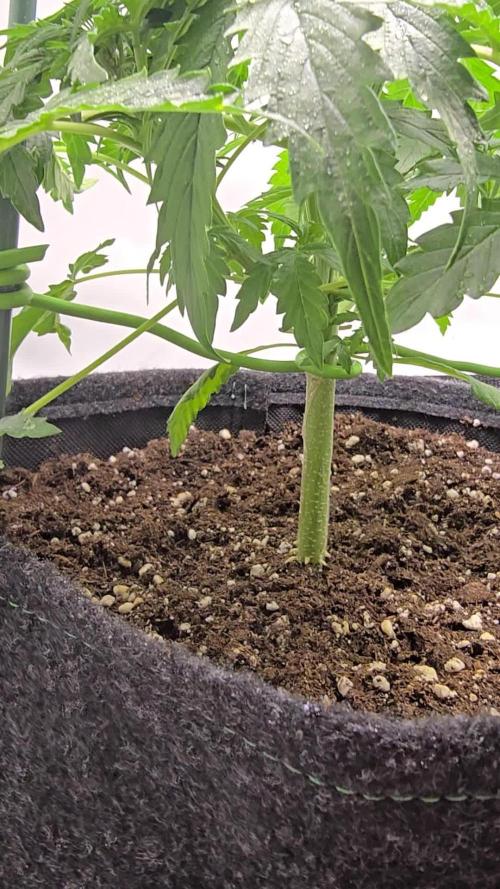
28 dienos!!! Mergaitė jau atrodo gražiau, jai auga tik kelios šakelės, turėtų išaugti gražus krūmas, džiaugiuosi, kad ji atsigavo, dabar lauksiu jos augimo šuolio, mergytė jau rodo lytį, tad manau, kad žydėjimas jau netoli :) sėkmės visiems.:)
Likes
2
Share
@Olduffybastard88
Follow
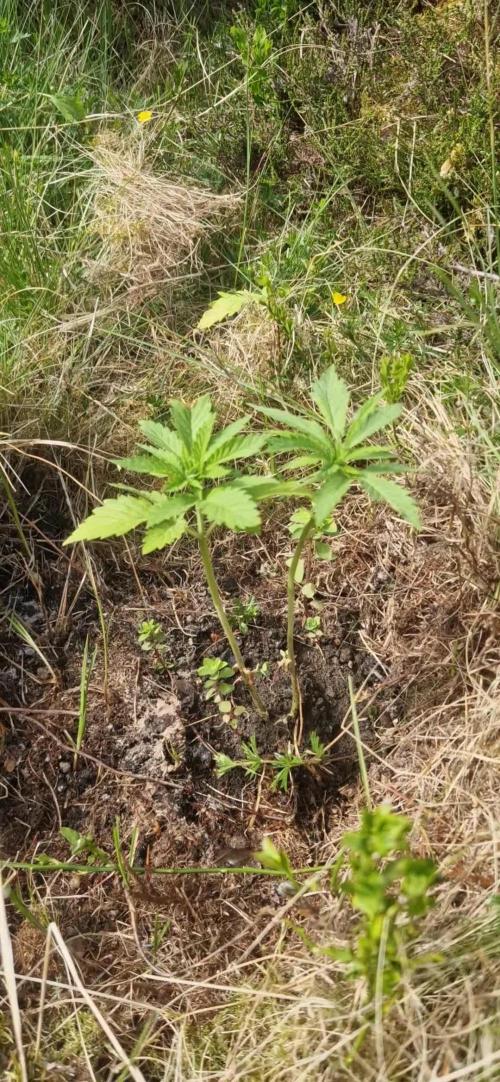
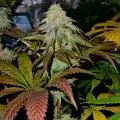
Went up and seen how the girls are getting on there first week out in the wild by themself and I'm. Over the moon there all safe and happy weather looking great for the next week



Likes
4
Share


@m0use
Follow
***Sponsored Grow*** = Medic || https://medicgrow.com || Grow = ***Sponsored Grow***
First ever CBG Grow, all thanks to @SeedStockersOfficial / @Seedstockers
I asked them for some sample seeds ages ago and they responded in kind, they let me pick out a few strains and sent some others, this was one of the ones I picked.
I also received from them their CBD 1:1 Silver Lime Haze Auto, CBD Northern Lights, Blackberry Gum Auto & O.G. Kush Auto, really looking forward to the sliver lime haze and blackberry gum. Might grow these ones out door this year for fun, autos seem to do better then photoperiods for me on my deck.
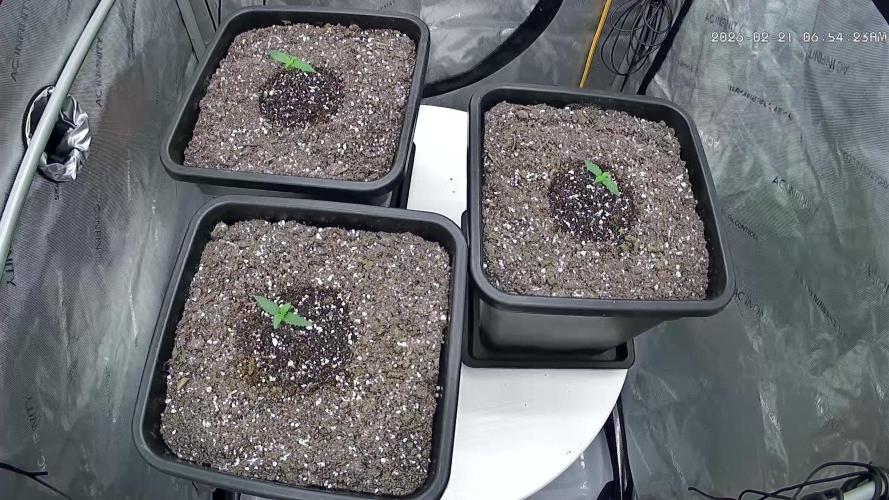
As of now I've scarified the seed, soaked in water for 20hr then moved to paper towel till a 1mm or less tap root was showing then planted in the medium.
This grow has a lot of new things happening. its my first attempt at indoor growing using dry crystal fertilizers, the brand of nutrients I'm using is Lotus. It was also a gift from another user @SanderanderS as shipping to them would have been astronomical for the stuff they wanted. I have noticed some weird things like boated packaging, off gassing and weird consistency with the nutrient line up so far and been in contact with the reps online about it, They said everything is normal and not to worry.
Another new thing with this grow is how it will be grown under the new LED's by Medic Grow. They will be under two of their MINI-SUN 2 240W LED grow lights using their V1 Spectrum, Its good from seed to harvest. You can find more information about this in the foot note.
Just going to wait for another week till It pops up and will update as follows. Watered in with PH of 6.2 and a EC of 0.6 or 340ppm 500 scale.
This is part of a 5 part diary in conjunction with medic grow led lights, in the beginning it was to be 6 plants but one of the selected strains died out and its replacement/backup seeds also failed. Sorry to say Humboldt Seeds Raspberry Diesel was a big flop all 3 seed did not meet my expectations, really wanted to try that one it looked nice. Can add that to the failed 4 seeds of Seedsman Cookies Chill :(
***Sponsored Grow***
Official Website:
https://medicgrow.com/
+
https://seedstockers.com/
Facebook:
https://www.facebook.com/medicgrowled
+
https://www.facebook.com/SeedstockersBarcelona/
Twitter:
https://twitter.com/medicgrow
+
https://twitter.com/seedstockersb
Instagram:
https://www.instagram.com/medicgrow420/
+
https://www.instagram.com/seedstockers_seeds
YouTube:
https://www.youtube.com/channel/UCNmiY4F9z94u-8eGj7R1CSQ
+
https://www.youtube.com/channel/UC4GiFYrIWeNtwtXjcivCmfw
Growdiaries:
https://growdiaries.com/grower/medicgrowled
https://growdiaries.com/grow-lights/medic-grow
+
https://growdiaries.com/grower/seedstockersofficial
https://growdiaries.com/seedbank/seedstockers

Likes
4
Share

@SMOKINGMONKEY
Follow
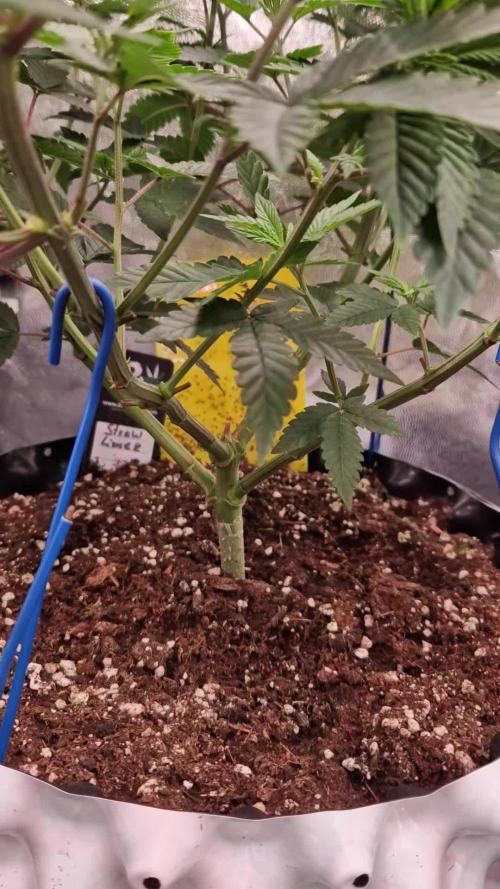
WEEK 5
Day 36 Gaia Green 2-8-4 (5 tbsp/plant) 40 oz am
Day 38
40 oz water am
Added bungees for trellis
Day 40
40 oz water am minor defol
Day 42
48 oz water am
Stretch Complete?
Lemon Cherry Cookies = 22 inches
Purple Lemonade = 25+ inches
Strawberry Gorilla = 29+ inches
Likes
10
Share

@TrickzGrowz
Follow
Man merkt aufjedenfall das Sie eine woche Vorsprung hat, im Gegenzug zu ihren Mitbewohnerinnen.
Schöne dunkle grüne Blätter... an manchen Stellen aber sieht es so aus, als würde ein Problem sein. So hellere stellen an den Blatträndern.
Gerne mal in die Kommentare schreiben was ihr denkt.
Likes
11
Share


@Coughy
Follow
Trichs seem to be further along then last grows, I can only assume the extra light and/or higher heat has cause them to finish a bit faster. Right now we are sitting on a majority of 70% cloudy, literally only a couple ambers through out. Wanting to harvest a little earlier this grow, hopefully day 59 or 60. Sooooo, 10-11 more days till chop.
Day 51
Starting a flush, drained and filled with tap water, 2mL/L of flushing agent to help dissolve/bind salts. 3 hour cycle runtime with flushing agent. Drain/fill with high quality ROH2O, pH’d, H202 for disinfection.
