


Likes
Comments
Share


@Teamdirtbag2
Follow
Just doing great. Really nice growth last week.
Greenhouse is ready. So all will be moving. To a new home.

Likes
151
Share


@VanCplGrows
Follow
Day 8:
Week 1 went pretty well. Unfortunately, i think the humidity domes were helping filter the light intensity and when i removed them the seedlings became light stressed.
I've moved the two 24W LED light strips up a couple of inches. Light levels are reading approximately 11,000 LUX at seedlings.
Day 9:
- no change
Day 10:
- watered both plants lightly with a 70 ppm solution of Remo Nutrients' "Micro", "Grow" and "VeloKelp". Only .25ml of each per gallon of water. Our tap water sits at around 25-30ppm and the total ppm measured was 101.
- water pH @ 6.4/6.5
Day 11:
- Increased circulation fan speed to provide gentle movement of seedlings, to encourage stem strength.
Day 12:
- no change
Day 13:
- watered lightly with dechlorinated tap water, pH'd to 6.4
Day 14:
- Increased HLG Elite 360 fixture intensity from 10% to 20%
- Lowered fixture from 48" above canopy to 36"
- Plants receiving approximately 14-16,000 lux, an increase of about 3-4,000 lux.

Likes
125
Share


@Regenwurm
Follow
Die 12 Blütewoche ist erfolgreich abgeschlossen!
Tage der Wachstumsphase = 32 Tage.
Tage der Blütephase = 84 Tage
Wachstum h in Blütewoche 9= 0 cm
Blütenbildung: sehr Hoch
Die Blütenkelche sind Mitten in der Produktion und verfärben sich.
Die Trichome sind bei beiden ladies im gesamten trüb. Heißt, der Harvest Day nähert sich. Ich denke 14-18 Tage 👌
In dieser Woche den Ladies einige Blätter abgenommen das in der Endphase das Licht die buds erreicht.
Der Wasserbedarf der Pflanze ist gleichbleibend moderat.
Diese Woche 4 Tage von 7 gegossen
Mutation 1= strähnige Blüten (wie bei der Dr. Greenspoon öfter mal vorkommt)
Mutation 2 = Gigantismus (doppelt so viele DNA Ketten wie regulär)
Mutation 3 = Sekundäre Blüten an Blättern
2 mal in dieser Woche mit Purolyt Mischung 1:25 besprüht
Lichtstärke: 87 %
Lichtabstand: 36 cm
Std Tag/Nacht: 12/12
Temperatur Tag: ca. 24-25 Grad
RLF Tag: 50-55%
Temperatur Nacht: 20-21 grad
RLF Nacht: ca. 50 %
VPD Wert: ca. 1.2
PH Wert Wasser/Düngelösung: 6,4
EC Wert: 1,0
Ventilator Oszillation: Stufe 2
Befeuchter: aus
Entfeuchter: mit Steuerung an
Zusätzlicher Entfeuchter: 1 Stk außerhalb vom Zelt im Raum
Bewässerung: 1* Wasser PH 6,6 EC 0,1/ 3 * bewässert mit Dünger mit den o.g. Mengen
Purolyt Besprühung: 2 mal
Controlling: Grow Control
Dünger: Greenbuzz Nutrients
Licht: Pro Emit Vollspektrum
Abluft: EC Carbon Active 750 m3 gesteuert/PrimaKlima 480m3
https://greenbuzznutrients.com/de/
Danke an Greenbuzz
Ihr bekommt 25 % Rabatt bei der Nutzung des Codes auf der GB Homepage
https://greenbuzzliquids.com/de/shop/
Code: GD42025
(Mindestbestellwert 75€)

Likes
4
Share


@Young_agronomist
Follow
Харвест был тяжелым и занял 3 часа , так как она была огромной .
Как итог 1350 г мокрых и протримленых шишек . Все цветы отлично созрели , даже те , которые находились ниже . Я дал ей достаточно времени созреть и она меня очень удивила
✊🏻🔥

Likes
5
Share


@CaliBlueDreamin
Follow
Goodish news. What I thought was fungus I now believe to be a combination of light damage/lockout/overwatering because it was only on upper leaves and didn't rub off. Trimmed first few dry branches and started cute with boveda. Harvested 2 more branches off red and a few small branches off of white. Flushing white this and harvesting a bigger chunk of red and white next week. Blue and yellow need more room to spread their buds so hope to make that happen soon.

Likes
3
Share

@Northern_Ent
Follow
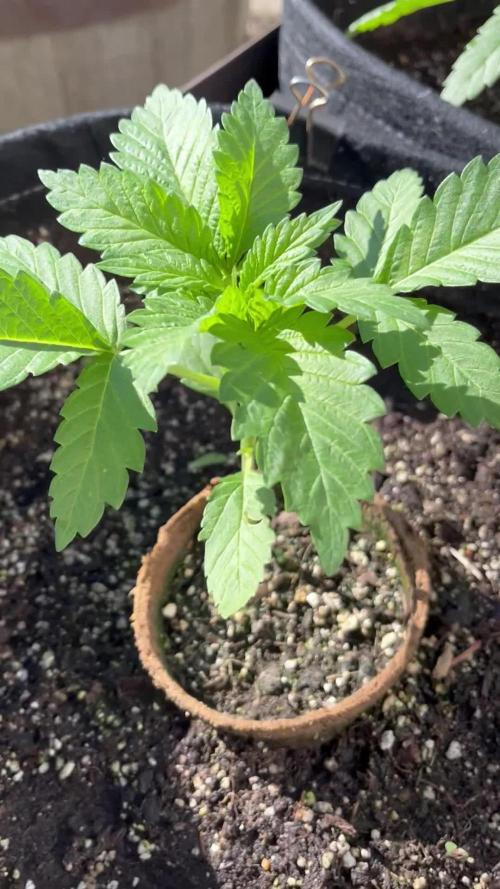
June 13: cool and rainy spring but she will start growing quickly with warmer temperatures near the solstice.
This backup seed is actually about 5 weeks old and not seven.
June 14: nice weather today but supposed to get rainy again this week.
June 17: did first topping for the manifold. Rain again today.
June 18: more rain again today.

Likes
7
Share


@Ieiogrow94
Follow
Eccoci di nuovo qui!!!
Super eccitato per questa nuova collab con Anesia Seeds, team davvero al top, che mi ha dato l’opportunità di testare questa nuova genetica e di condividere i progressi con tutti voi!!!
Come sempre partiamo nei bicchieri per poi travasare.. Questa volta verrà svolto tutto sotto la Lumatek Zeus 465 ProC, mi aspetto molto da questo ciclo!!
Settimana pazzesca!!!!
Piante davvero incredibili!!!
Grazie a tutti per il supporto ❤️🍀🔥

Likes
4
Share




Likes
10
Share


@Mikeinthekeys
Follow
Pulled a sprout out and planted in another pot. started another diary for that one but its not looking so good.
Likes
14
Share


@Momgrowsthechronic
Follow
Welcome to Week 6, Day 42 for the Sweet Seeds Gorilla Girl XL Autoflowering grow. All four of these lovely ladies are now fully into flower and the tent has filled up considerably. Even though this grow cycle is not going to produce the XL plants I was originally hoping for, this strain seems to have a lot of bud sites compared to other autos I have grown previously. Had these plants reached their full potential- I truly believe that this could/would have been a massive harvest. I fertilized them again in Week 6 with their final dose of a Grow based formula at 2 mls/gallon. They will be switched over a Bloom based fertilizer in Week 7 at a rate of 2.5 mls/gallon. I am still watering every 4th day and all four plants are receiving 3 litres each or 0.75 of a litre per plant per day. There is something killing off the foliage from the bottom up on the plant in the front of the tent on the left hand side. Not sure what the problem is so I am simply removing the dead/dying foliage as needed and hoping that she’ll have enough leaves to make it through to harvest.
Mom’s Tip for Week #6- When it comes to Fertilizer- $Less$ = More… For me, successfully growing Cannabis indoors means trying to mimic what nature normally provides for free. Sun, fresh air, water and nutrient rich soil are all essential for healthy, happy plants. At some point during the grow (usually 4-6 weeks in) the plant has used up all of the nutrients originally present in the soil thus requiring the grower to have to supplement with some type of fertilizer. I see many growers photographing and showing off their huge displays of colourful bottles and I gasp when I read their long lists of 10-15 different fertilizers and supplements being added to every single batch of water. Not only is this unbelievably expensive and overwhelming but time consuming and completely unnecessary for a successful grow. For those seeking an Organic path there are options such as homemade compost tea or powdered formulas consisting of bat guano, glacial rock dust, bone meal, alfalfa meal, etc. I often use a Canadian made brand called “Gaia Green Organics", mixed in at the start to create my own super soil thus carrying the plants through their first 4-6 weeks of life needing nothing more than PH’d water. The organic fertilizers are usually more expensive and often have a slower uptake by the plants themselves as they tend to feed the soil first which in turn feeds the plants. For novice/newbie growers and those with fast flowering strains such as Autos- a non organic, liquid, water soluble fertilizer is often the way to go. They are generally cheap, easy to use and quickly taken up by the plants when they need it most. My ride or die brand is "Flora Nova” by General Hydroponics and it comes in a 1 part nutrient grow and bloom formula catering to my plants’ needs from start to finish. This company has many options available including all kinds of additional supplements to be used in conjunction with their standard grow/bloom formulas but I’ve never found these products all that necessary or beneficial. Using them in the past has led to over fertilization resulting in burnt foliage, stunted bud development and harsh flavours when smoking/vaping the final product. Not only does $Less is More$ apply to how many fertilizers you are giving your plants but it also applies to how much. Most photosensitive strains can easily tolerate a full dose (as per the manufacturer’s recommendations) and thrive with being fed every time you water. But Autoflowers and some smaller photosensitive strains seem to respond differently to a slight tweak- keeping in mind that if you start small, you can always add more but if you start big, you can’t take back what’s already been given. I will generally only fertilize at half of what the manufacturer recommends for a photosensitive strain- every other or every second watering. Starting out at a quarter dose for the initial feeding which can sometimes be as low as 1.25 mls per gallon and working my way up from there. It doesn’t seem like much but within hours I can see my plants responding positively with increased/sustained turgor, greening up a little and increased resin production which equals "smell/scent". For me, I can smell when I’ve just fertilized my plants- it’s a stronger smell than the normal scent that they give off with a plain watering. If you’re lucky, you’ll end up growing a greedy Autoflowering strain that seems to want more than what you’re giving it. Rather than increasing to a higher dose in a single feeding, try feeding more often at the same dose- so if you’re feeding every other or every second watering, try feeding every watering at the same dose (trying not to increase above half of the manufacturer’s recommendation for the photo strains). Occasionally I will increase beyond the halfway dose to accommodate for the plants’ needs in late flower as most fertilizer companies list an increase to adequately feed during late flower anyhow. I guess the main message for this week is to keep it simple as nature intended. Learn to read your plants and supplement the small amount of nutrients that your plants don’t already have in the high quality soil you initially provided. Cannabis cultivation can be overwhelming at first but the $Less is More$ approach will save you time, money and the realization that you’ve accidentally fried your plants!


Likes
59
Share


@Papablob
Follow
01/04 Elle a l'air de bien réagir au pliage. 🙂
03/04 elle est un peu ralentie tout de même.
06/04 Aie! un accident.. Bon alors gros défoliage..
Likes
20
Share


@DrGanj
Follow
Lights flipped 2/2/21 (date today 12/2/21)
She's taken a while to show her first pistils but she is doing so now. Stretched a fair bit so far but hoping for a bit more as still have plenty of room in this tent. She should be getting algae feed too but I'm out and awaiting a delivery. I'll be adding this in as soon as it arrives.


Processing
Likes
32
Share


@Platinouuu
Follow
Saludos, por aquí mis hijas, que opinan amigo? Estoy muy deseoso de cambiarlas a floración. Buenos humos

Likes
120
Share


@NugLife420
Follow
These ladies are really starting to stretch. Especially the Red Hot Cookies, holy cow they are getting big quick. Starting to see preflowers on all of the ladies. I will update throughout the week. 😀


Likes
45
Share


@Kitties_and_Colas
Follow
~_~_~_~_~_~_~_~_~_~_~_~_~_~_~_~_~_~_~_~_~_~_~_~_~_~_~_~_~_~_~_~_~_~_~_~_~_~_~_~_~_~_~_~_~_~_~_~_~_~_~_~_~_~_~_~_~_~_~_~_~_~_~_~_~_~_~_~_~_~_~_~_~_~_~_~_~_~_~_~_~_~_~_
We planted 5 seeds, our goal is 2 plants of this strain for this 4x4 (all extra plants will live out in the 5x5)..we're using a brand new light for this grow, the Solux350 by Hortibloom! 💡🌱(https://hortibloom.com/products/solux-350-led-grow-light)...
This tiny fixture emits a ton of light for its size..we have 20 seedlings under her, hung at the recommended 24inches and at 25% power..I'm really excited to see what this light is capable of! Thanks for dropping by and happy harvests everyone!! ❤️💡🌱😽💨
⚡Hortibloom/Solux 350⚡
Specifications ⚙️:
Diodes: Samsung LM281 Pro / Osram DR (1,440 total)💡
Driver: Inventronics 350 watt🔌
PPF: 1015 μmol/s ☢️
PPE: 2.9 µmol/j 〰️〰️
Lifespan: 50k+ hrs ⌛
Weight: 14.3lbs lbs (6.5kg)
Veg Coverage: 5 x 5 ft 🌱
Flowering Coverage: 4 x 4 ft 🌼
-The Solux 350 uses an aluminum heatsink (no fan) for quiet operation 👂⬇️
-IP65 waterproof ratings, tolerant to high humidity grow environments 💦 ..
-Many units may be daisy-chained via RJ14 and dimmed from a single controller 💡~💡~💡~💡~💡
~_~_~_~_~_~_~_~_~_~_~_~_~_~_~_~_~_~_~_~_~_~_~_~_~_~_~_~_~_~_~_~_~_~_~_~_~_~_~_~_~_~_~_~_~_~_~_~_~_~_~_~_~_~_~_~_~_~_~_~_~_~_~_~_~_~_~_~_~_~_~_~_~_~_~_~_~_~_~_~_~_~_
~_~_~_~_~_~_~_~_~_~_~_~_~_~_~_~_~_~_~_~_~_~_~_~_~_~_~_~_~_~_~_~_~_~_~_~_~_~_~_~_~_~_~_~_~_~_~_~_~_~_~_~_~_~_~_~_~_~_~_~_~_~_~_~_~_~_~_~_~_~_~_~_~_~_~_~_~_~_~_~_~_~_~

Likes
Comments
Share

@DogDoctorOfficial
Follow
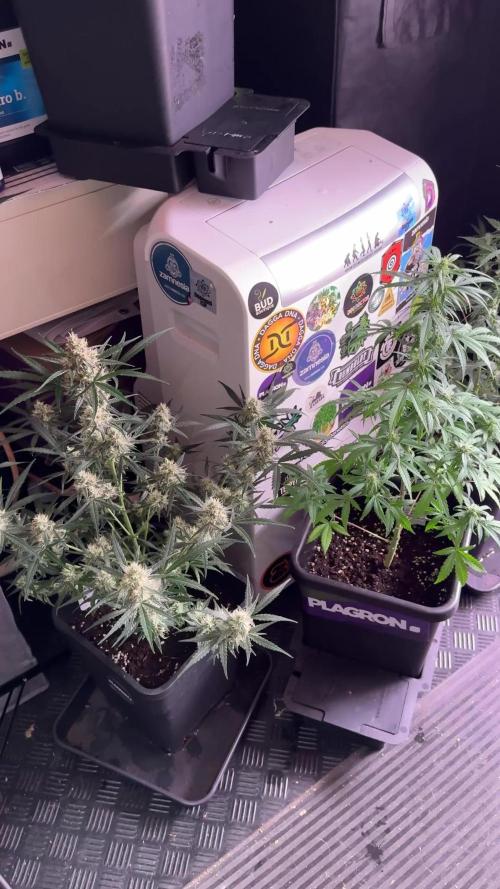
🌸 Pink Rosay Auto by Zamnesia | Pheno B | Week 8 (Flower Week 5) 🌱
The Tiny One That Refused To Give Up
If I were growing only two or three plants, I'm going to be completely honest...
I probably wouldn't have kept her.
Pink Rosay Pheno B is tiny.
Not small.
Not compact.
Tiny.
She's easily among the smallest plants I've ever grown.
And that's exactly what makes her so interesting.
Because this is the whole point of the 8×8 Adventure.
I'm growing twelve different genetics side by side, and instead of selecting only the plants that immediately impress me, I'm giving every phenotype the opportunity to tell me who she is.
And this little lady?
She's definitely telling us.
She isn't going to produce the biggest harvest in the tent.
She probably won't even come close.
But she's healthy.
She's flowering.
She's developing beautifully.
And she's still here.
Sometimes that's enough reason to keep watching.
🌸 Week 5 Flower – Tiny, But Still Building
The stretch is essentially behind her now, and her personality couldn't be clearer.
Pink Rosay Pheno B has remained incredibly compact throughout the entire grow.
Her nodes are tightly packed.
Her branches remain short.
Her entire structure feels almost miniature compared with the plants surrounding her.
But when you look closely...
There are flowers everywhere.
Those tiny branches are carrying developing buds, and the white pistils continue appearing across the flowering sites.
She's slowly turning this miniature framework into a miniature flowering plant.
And there's something strangely beautiful about that.
She isn't trying to become something she's not.
She's simply doing what her genetics told her to do.
✂️ Defoliation – Opening The Little Lady Up
Just like her sister, Pink Rosay Pheno B also received a selective defoliation this week.
Again, this wasn't because she was unhealthy.
Quite the opposite.
She's looking beautiful.
The reason was simply that her extremely compact architecture creates a very dense little package of foliage and flowers.
With so much plant compressed into such a small vertical space, selectively removing some unnecessary leaves helps open the structure.
The goal isn't to strip the plant.
It's not about removing healthy leaves just because we can.
And it's certainly not about making the plant look pretty for a photograph.
The idea is to create a little more space between foliage, flowers, light and moving air.
I removed leaves that were contributing to congestion and cleaned up portions of the lower and interior structure where development was unlikely to justify keeping excessive foliage.
But I didn't remove everything.
There are still flowers down there.
And I'm leaving some of them.
Because this is an experiment.
I want to see what this tiny phenotype can actually do.
💡 Let The Photons Move
With a plant this compact, light management becomes particularly interesting.
The Future of Grow Black Series provides the primary light from above, while the Lumiflora under-canopy system adds another source of illumination deeper in the room.
But there's an important distinction here.
Adding light doesn't automatically mean every flower needs to be exposed directly to it.
The plant still has its own architecture.
Leaves overlap.
Flowers sit underneath other leaves.
Some areas naturally receive less light.
By selectively opening the canopy, we're simply allowing more of the available photons to travel through the structure rather than being intercepted immediately by layers of foliage.
It's not about making the plant brighter.
It's about making the light distribution more useful.
And with a plant this tiny and dense, every little opening makes a difference to the way light and air move through her.
🌱 The Smallest Plant With A Big Lesson
This is probably the part of her story I appreciate most.
If you only looked at her height, you could easily conclude that something went wrong.
But nothing went wrong.
She simply expressed herself differently.
That's one of the reasons growing multiple phenotypes is so valuable.
Put two sisters next to each other and suddenly the differences become impossible to ignore.
One can stretch.
One can stay short.
One can develop large branches.
Another can produce a miniature architecture.
Same genetic family.
Completely different personalities.
And instead of asking:
"Why isn't she like her sister?"
I prefer asking:
"What can she show me if I let her finish?"
That's the experiment.
And that's why she's still here.
🌼 Flowers, Pistils & Personality
Despite her size, the flowering development is genuinely beautiful.
The flowers are becoming more defined, with fresh white pistils continuing to emerge from the developing calyxes.
The deep green foliage provides an incredible contrast against those bright white hairs.
And the more I look at her, the more I realise that her size is actually part of her charm.
She's almost like a miniature version of a full-sized flowering plant.
Everything is there.
Just compressed.
Tiny branches.
Tiny leaves.
Tiny flowers.
Tiny structure.
But the same biological process is happening.
She's still capturing light.
She's still producing energy.
She's still moving water and nutrients.
She's still building flowers.
And she's still telling us what her genetics are capable of.
❄️ She's Still Getting Frostier
Another thing that keeps this little plant interesting is the resin development.
She's beginning to show that frosted appearance across the flowers and surrounding sugar leaves, adding another layer to what is already an incredibly attractive little plant.
I don't expect her to suddenly turn into a giant producer.
But I do think she could produce something interesting in terms of flower quality.
And if the final amount ends up being very small?
That's okay too.
I've already been thinking that her eventual harvest may make more sense as a small personal extraction project rather than trying to treat her like a traditional high-yield plant.
Something like an ice-water wash could give those flowers another purpose.
But that's a decision for much later.
For now...
She's growing.
And that's what matters.
💧 Consistency Is Still The Strategy
The beauty of this phenotype is that she hasn't needed special treatment.
She's been receiving the same general cultivation philosophy as the rest of the room while being observed individually.
Hand watering gives me the opportunity to assess her every day and make sure her needs are being met without forcing her into a feeding strategy designed around a larger plant.
The important thing isn't trying to make her bigger at this point.
That chapter is over.
Now the objective is simply to allow her to finish as strongly and naturally as possible.
She's healthy.
She's flowering.
She's producing resin.
So we keep the environment stable and let her do the rest.
🌡️ Environment
The room continues providing a remarkably stable environment for all these different phenotypes.
Current conditions remain around:
Day temperature: 29°C
Night temperature: 25°C
Relative humidity: 60%
Solution temperature: 21°C
Root-zone temperature: 21°C
CO₂: approximately 639 ppm
This is one of the things I love most about this project.
Twelve different plants.
Twelve different personalities.
One environment.
And every phenotype gets to show us how she responds to the same cultivation philosophy.
👀 Looking Ahead – Let's See What She's Got
At this point, I'm not expecting miracles from Pink Rosay Pheno B.
And I don't mean that negatively.
I mean that realistically.
She's tiny.
Her total flower mass will naturally be limited by the amount of plant she's carrying.
But that's okay.
The goal now isn't to turn her into something she's not.
It's to see how beautifully she can finish as herself.
The flowers should continue swelling.
The pistils will eventually begin their transition toward maturity.
Resin production should continue increasing.
And that little compact canopy should slowly transform from a collection of tiny flowers into a finished miniature harvest.
Maybe she'll surprise me.
Maybe she won't.
Either way...
She's already taught me something.
❤️ Final Thoughts – The Little Lady That Stayed
Pink Rosay Pheno B is probably never going to win a competition for plant height.
She isn't going to dominate the canopy.
She isn't going to produce a mountain of flowers.
And honestly?
That's okay.
Because this project was never only about growing the biggest plant.
It's about observing genetics.
It's about giving different phenotypes the room to express themselves.
It's about learning that sometimes the plant you would have removed from the garden is the one that ends up teaching you something you wouldn't have learned otherwise.
If I had only been growing a couple of plants, I might have looked at this tiny Pink Rosay early in the grow and decided that her journey wasn't worth the space.
But I didn't.
I gave her a chance.
And now she's standing there, covered in flowers, getting frostier every week and quietly proving that she still has a story to tell.
She may be the smallest plant in the room.
She may produce the smallest harvest.
She may eventually become a tiny jar of flowers...
Or perhaps an even tinier ice-water experiment.
But before any of that happens, she deserves exactly what every other phenotype in this project receives:
Time.
Time to grow.
Time to flower.
Time to express herself.
And time to show us what she can do.
A huge thank you once again to Zamnesia for these wonderful genetics, Plagron for supporting the nutrition throughout this journey, Future of Grow for the incredible Black Series lighting, Lumiflora for bringing additional light beneath the canopy, TrolMaster for maintaining environmental control and everyone following this crazy 8×8 Adventure here on GrowDiaries.
Every plant doesn't need to be the biggest.
Every phenotype doesn't need to be a winner.
Sometimes...
the smallest ones simply need someone willing to let them finish their story.
And this little lady isn't finished yet. 🌸
Until next week...
Tiny plant. Big personality. Still here. Still shining. 🌱✨
Growers Love and happy growing! 💚
Processing
Likes
40
Share


@GreenZealand
Follow
This is the week 2!
Well, the plant looks really healthy, and she kept growing up, straight to the light!
Good to see that even after the strange beginning, with the stem crooked, she recover her path!
This week, I'm also planning to start feeding them with some NPK.
Just need to read a little bit more about it and buy nutrients.
Probably I'll try Canna stuff. Anyone know if it's good?
