


Likes
Comments
Share


@herewegrow
Follow
Day 51 - Stour Stomper 1 is looking very frosty, excited for her to start swelling. The runt is just a little behind but still looking great. 4AM1 really chunked up quickly, quite far ahead of 4AM2. Getting pretty stinky in there. Some lower leaf issues but nothing devastating.

Processing
Likes
13
Share


@Canadian
Follow
the plans have been doing very well and despite being very hungry they seem to be doing very well I just need to start feeding them instead of once a week probably twice a week because they are very hungry now that they are in full flower mode .
thank you for reading I will continue to update have a happy grow


Likes
22
Share


@Chumpkilla
Follow
8/14/23 - Day 62 - The buds are getting bigger and starting to connect. There are so many buds so close together that for sure these are bound to be big buds. I'm noticing the smell is starting to get stronger as well.
The roots are still looking great. We did another water change today, a couple of days late. I just forgot to do it.
There are some pictures in here of my RO Water Setup. I have a water hose that I hook to the RO unit, and then it passes a 1:1 ration of water to wastewater. Right now, it's all done manually by me, but I have plans to make it automatic.
I had to throw this update in as I was sitting at my computer. I opened the door to where the box is, and my wife said, "WHOA..... things are going well in there, huh?". I was in the room doing some peaking in the box. I then closed the door and went inside. My wife yelled that out from the other room, triggered by using her nose..... lol So now I need to air the room out before I open the door to leave after visiting the box. Lol, I need an airlock of sorts!
I actually have a carbon filter and inline fan I could hook up and run when I walk into the room. I can have it turn off after X number of minutes......Looks like another project!
8/15/23 - Quick update. Today is day 63!
8/16/23 - Day 64 - Overnight, she looks much bigger. The buds are looking like the Hulk right now. We're going to hit it with some more nutes these next couple of weeks.
If you are looking for this experience, check out https://www.getleaf.co/

Likes
13
Share


@Robeeriegenetics
Follow
Ooooooweeeeeee they’re all doing so good even the extras that I threw in flower with out cloning are doing great .. in just 2 more weeks I’ll throw the donor plants into flower
Likes
8
Share

@DogDoctorOfficial
Follow
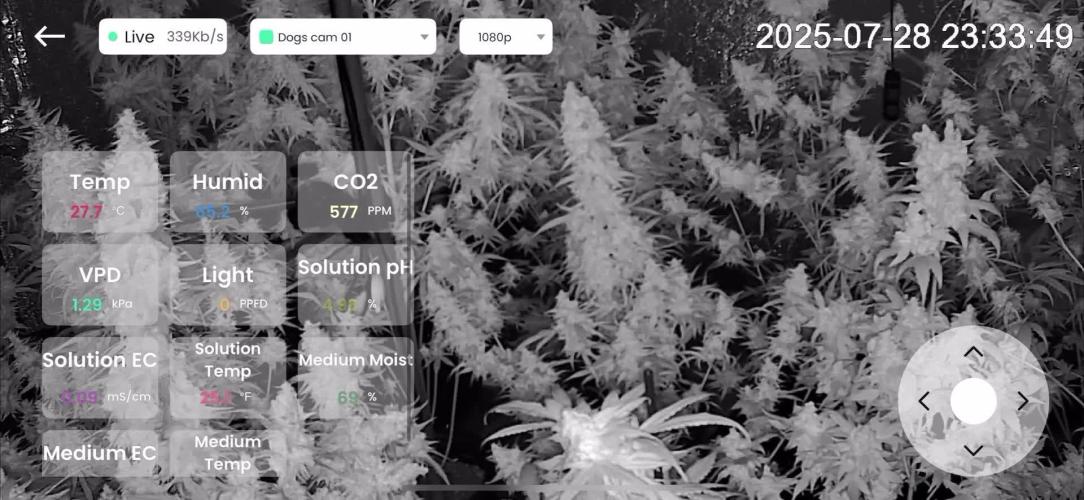
🌸 Week 6 Flower – Gelonade Diaries
The Gelonade girls continue their elegant dance into flower, both Pheno #1 and Pheno #2 shining in their own unique way. Their structures remain remarkably similar, tall, strong, and full of energy, while each holds onto her own personality, expressed in leaf form and flower shape.
This week we noticed a few small spots on the leaves. Nothing dramatic, nothing to sound alarms about, but enough to remind us that plants, like people, sometimes whisper when they need something. It could be calcium, it could be another minor imbalance, but the key is observation. We’ll keep a close eye, watching for patterns, listening to what the girls want to tell us, and adjusting gently if needed.
🌱 Quick Recap (For Those Just Joining)
From the start, this run has been about detail and care.
• Germination was clean and quick, the girls leaping from seed into life.
• Veg was marked by strong branching, healthy leaves, and the unforgettable funky unicorn foliage of Pheno #2.
• Transplanting into super soil and fabric pots gave them the room to spread their roots and breathe.
• The shift into flower was smooth, guided by careful lighting, steady feeding, and a balance of Aptus and Plagron nutrients.
• Weeks 4 and 5 saw sativa-like stretch, white hairs bursting across every cola, and canopy lights filling every corner with photons.
Now here we are in Week 6: the garden maturing, the flowers stacking, the personality of the genetics truly revealing itself.
💧 Feeding & Balance
The recipe continues to revolve around Aptus Regulator, CalMag Boost, Top Booster, and Plagron’s Power Buds, Sugar Royal, and Green Sensation, with Aptus All-In-One Liquid helping tie the orchestra together. We’re keeping EC balanced, always mindful that the soil already provides a strong foundation.
💡 What’s Happening & What’s Next
This week is all about observation. Flowers are swelling, resin begins to sparkle in early traces, and aromas start to hint at what’s to come.
What to expect: denser buds, richer pistil coloration, and a canopy that will soon demand defoliation for airflow.
What not to expect: miracles overnight. This is the stage of patience, where the magic brews quietly within each calyx.
💚 Closing Thought
The Gelonades remind us that growth is rarely flawless. A spot on a leaf is not a failure, but a message. Perfection isn’t the goal, balance is. And balance is exactly what these girls are showing us week after week.
May the flowers swell with grace,
may the leaves whisper their truths,
and may the grower’s patience
be rewarded in full bloom.
PS: Understanding Foxtailing
One of the girls, our Pheno #2, is starting to show signs of foxtailing. For those new to the term, foxtailing refers to when buds grow in elongated, irregular patterns instead of stacking neatly into the dense, conical shape we often expect. The result is a flower that looks “spiky” or “funky,” almost as though the plant is growing multiple little towers from a single cola.
Why does this happen? There are two main sides to the story:
• Genetic Foxtailing: Some strains naturally express this trait, especially sativa-leaning hybrids. In this case, foxtailing is simply part of the plant’s personality, often leading to extra surface area for resin glands, which can even mean more trichomes and aromas.
• Environmental Foxtailing: Stress factors can also trigger it — high heat, intense light (too much PPFD), or shifts in feeding can encourage buds to keep stacking in odd ways rather than finishing their round formation.
In our case, the temperatures have sometimes pushed higher than ideal, and the lights are running strong, so those factors might play a role. But genetics also carry a heavy influence, and Gelonade — being sativa-leaning, can naturally lean toward these elongated flower expressions.
Is foxtailing a problem? Not at all. While it can look unusual compared to the “textbook” cola shape, it doesn’t reduce quality. In fact, it can increase flower mass and surface resin coverage, giving us more material and potentially more complex aesthetics. Some growers even treasure it as a unique expression of their plant’s individuality.
So while Pheno #2 may look a little funky, we see it as a gift, more fruit, more character, more story to tell. This is the garden’s way of reminding us that beauty doesn’t always fit a mold, and that variation is part of the magic of growing.
📲 Don’t forget to Subscribe and follow me on Instagram and YouTube @DogDoctorOfficial for exclusive content, real-time updates, and behind-the-scenes magic. We’ve got so much more coming, including transplanting and all the amazing techniques that go along with it. You won’t want to miss it.
•GrowDiaries Journal: https://growdiaries.com/grower/dogdoctorofficial
•Instagram: https://www.instagram.com/dogdoctorofficial/
•YouTube: https://www.youtube.com/@dogdoctorofficial
⸻
Explore the Gear that Powers My Grow
If you’re curious about the tech I’m using, check out these links:
• Genetics, gear, nutrients, and more – Zamnesia: https://www.zamnesia.com/
• Environmental control & automation – TrolMaster: https://www.trolmaster.eu/
• Advanced LED lighting – Future of Grow: https://www.futureofgrow.com/
• Root and growth nutrition – Aptus Holland: https://aptus-holland.com/
• Nutrient systems & boosters – Plagron: https://plagron.com/en/
• Soil & substrate excellence – PRO-MIX BX: https://www.pthorticulture.com/en-us/products/pro-mix-bx-mycorrhizae
• Curing and storage – Grove Bags: https://grovebags.com/
⸻
We’ve got much more coming as we move through the grow cycles. Trust me, you won’t want to miss the next steps, let’s push the boundaries of indoor horticulture together!
As always, this is shared for educational purposes, aiming to spread understanding and appreciation for this plant. Let’s celebrate it responsibly and continue to learn and grow together.
With true love comes happiness. Always believe in yourself, and always do things expecting nothing and with an open heart. Be a giver, and the universe will give back in ways you could never imagine.
💚 Growers love to all 💚
Likes
2
Share

@420DeepGrow
Follow
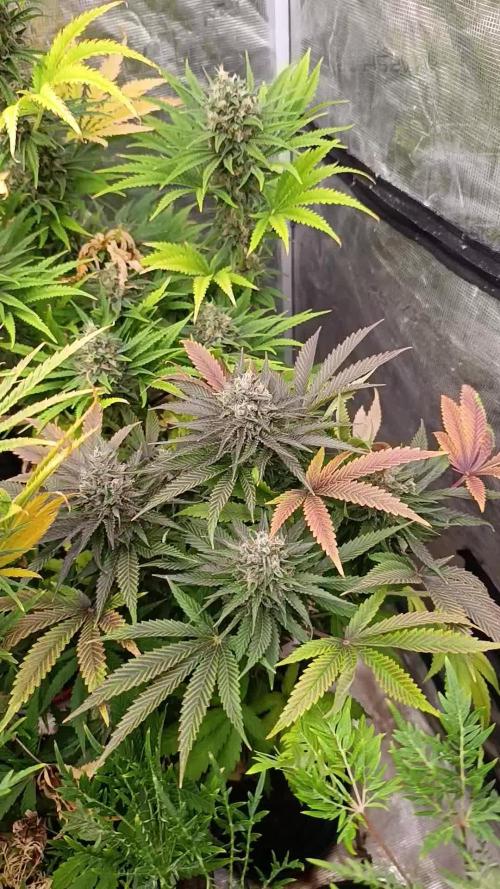
📆 Semana 8
La Ice Cream Haze entra ya en su fase final: cogollos más duros, más resina y los tonos morados ganando terreno en hojas y flores. El aroma se afina, dulce y cremoso, con un punto afrutado que se intensifica al mínimo roce. La planta ya no crece, madura: pistilos oscureciendo y cálices bien hinchados.
Última semana aplicando nutrientes antes del lavado de raíces
¡Seguimos creciendo fuerte 💪!


Likes
17
Share


@BLAZED
Follow
Week 13 (24-4 to 30-4)
24-4
Temperature: 23.8 degrees (lights on) 18.9 degrees (lights off)
Humidity: 66% (highest) 53% (lowest)
No pictures.
Opened the reservoir for a couple of minutes.
25-4
Temperature: 24.7 degrees (lights on) 18.9 degrees (lights off)
Humidity: 66% (highest) 52% (lowest)
Increased the strength of the light from 60% to 65%.
26-4
Temperature: 25.2 degrees (lights on) 19.5 degrees (lights off)
Humidity: 66% (highest) 51% (lowest)
No pictures.
I emptied the reservoir, there was 2750ml left.
I made a 15L new feed and added it to the reservoir.
Opened the reservoir for a couple of minutes.
27-4
Temperature: 26 degrees (lights on) 19.9 degrees (lights off)
Humidity: 65% (highest) 47% (lowest)
28-4
Temperature: 26.4 degrees (lights on) 21.5 degrees (lights off)
Humidity: 64% (highest) 47% (lowest)
Opened the reservoir for a couple of minutes.
29-4
Temperature: 26.4 degrees (lights on) 20.6 degrees (lights off)
Humidity: 64% (highest) 39% (lowest)
Increased the strength of the light from 65% to 70%
Opened the reservoir for a couple of minutes.
30-4
Temperature: 27.4 degrees (lights on) 21.1 degrees (lights off)
Humidity: 62% (highest) 47% (lowest)

Processing
Likes
2
Share


@Alejangrow
Follow
They've been in flower for a week now. ⏰
No sign of sex yet. ♀️
Loving how they're brushing out.
The health of the plants looks well. 😄

Likes
25
Share


@eldruida_lamota
Follow
Ya estoy de vuelta y esta vez se trae la quinta semana de crecimiento de estas Casey’s rollex O.G. de Dutchfem. Están fenómeno los 3 ejemplares van al mismo ritmo y entre nudos tenemos muy poca distancia, se nota su genética indica, la temperatura va de 21/23 grados ya sea de día o de noche.
.
La humedad anda entre 50% y el ph está en 5,8/6,0.
.
AgroBeta:
1 ml x L Growth black line , vía radicular.
0,2 ml x L Tucán , vía radicular.
0,2 ml x L Flash Root , vía radicular.
0,05 ml x L Gold Joker, vía radicular.
.
Hasta aquí es todo familia, espero que os vaya gustando el proceso tanto de crecimiento como la futura floración 💨💨💨 buenos humos.

Likes
11
Share

@eldruida_lamota
Follow
Que pasa familia, vamos con la tercera semana de crecimiento de estas Gorilla cookies Auto de FastBuds.
Tiene muy buenas reseñas y pues me animé a colocar 4 plantas.
Alimentamos nuestras plantas con Agrobeta.
Por supuesto el ph se mide en cada riego y se mantiene en 6.2, regando cada 24 horas e intentando mantener la humedad un poco alta al principio.
La temperatura está entorno al 22/24 grados y la humedad anda sobre el 60%.
De uno de los ejemplares la cague un poco, como siempre que no falte, al quitar la piel de la cáscara de la semilla? Pues arranque los cotiledones sin querer, pero no pasó nada salió adelante y todo perfecto.
Mars hydro:
Code discount: EL420
https://www.mars-hydro.com/
Agrobeta:
https://www.agrobeta.com/agrobetatiendaonline/36-abonos-canamo
Hasta aquí todo, Buenos humos 💨💨💨

Likes
4
Share


@SuperGluedGrow
Follow
These photos were taking yesterday and I meant to post than but here we are. They seem to be doing well, growth seems to be picking up a bit but I've noticed slight burns and I think I just started nutrients a little bit too early. A new addition to the tent is a 4th seed I planted today, I'm goign to breed the best female and male, hopefully I get two females and one male but well see.


Likes
33
Share


@Professor_Chaos
Follow
She was grown in a 24 oz. cup with NO ISSUES.. Which leads me to believe that "rootbound" is nothing but a myth.. I have grown 4 other girls in even smaller cups.. Same outcome.. No issues whatsoever.. I will be updating more as the harvest progresses.. Im going to dry and cure the same way I did the White Widow I recently harvested.. Which is.. In the box I will run the fan for 24 - 48 hours.. Once I notice the plant is beginning to shrivel up some I will stop using the fan and go with how the buds feel.. I would rather jar them up too early because if the hygrometer reads 70% humidity then I can just lay her out for another few hours and jar her back up.. Once she is able to sit in the jar and doesnt go over 68% than i will only burp once every 2 or 3 days for about a week.. It all depends how dry she gets before curing.. Not going to count my chickens before they hatch.. That is just the way I have been able to dry and cure without ruining any terpenes since my environment is not all that great for drying and curing cannabis.. Anyways.. Will be updating as I go!!! So happy and excited.. But when I wake up I already know that Im going to jump up to check on her in the tent like I have been for the past 106 days lol.. Anyways.. Will be updating!!!
Day 108.. About 20 hours after harvesting.. She is still smelling lovely.. In the past it would start smelling like hay.. But I've figured out how to slow the drying process down with my awful environment.. I also cut the fan off for now.. I may cut it back on later today or tomo.. We shall see!!!
Day 109.. About 48 hours of drying.. Not sure if its the box I'm smelling along with the skunk.. But it's kinda smelling a bit weird.. Almost hay like.. Ugh.. I will be PISSED if I ruined this one.. Stems are still super bendy.. Not even close to snapping.. I'm going to leave the fan off for now.. The warmth in the room the box is in is probably enough to help dry.. Hopefully not gonna dry too fast.. Leaves are still not crisp.. So that's another good sign.. We will see what happens!!! So excited to give this nasty bitch a taste!!!
Day 4 of drying (after harvest)... Ok.. So I havent been noting anything down.. But this is what has happened so far.. The plant was pretty much dry on the 3rd morning.. Or so it felt.. Crispy.. Smaller stems were snapping.. So I put it in jars.. I havent weighed it yet tho.. Will do that later.. But after about 12 hours in the jars (3 Qt sized jars btw) the hygrometers were reading 72%, 74% and 78%.. So I left them out overnight for about 16 hours or so.. Maybe not even that long.. I put them in jars early this morning and left for work.. After about an hour or 2 in the jars, they were reading about 56% - 57%.. I hope I didnt over dry them overnight.. I went ahead and grabbed a nice sized nug to teat out for today.. Stoned asf.. Thats for sure.. But the smoke is still pretty harsh.. I can smell the skunk for sure still.. Its actually really stinky lol.. Like, not an attractive smell whatsoever lol.. But its for sure the terpenes.. Not any issues with them.. But when I get home.. I'll be able to get a better, longer reading on the huds today after last nights drying...
... Later.. Ok so one jar is reading at 62% second jar is reading 57% and the last jar is ready 54%... They all still smell great : 1: but I'm wondering if a nug from the 62% jar is not going to be as harsh as the jar at 54%.. Hmm.. May try that out later tonight..
... Even later.. Lol
So yeah the 62% jar is much smoother.. No harshness whatsoever.. Ok.. I see where I make my mistakes.. But can still save the smells and tastes.. Im sure the other jars will eventually lose the harshness.. I hope.. My Berry Ryder never lost any harshness.. That was harvested and a little overdried like over 6 months ago.. Still harsh.. But this strain doent smell like hay.. The worst smell you can smell when it comes to drying and curing.. For me atleast.. If it smells like hay.. The tepenes are long gone lol.. I have had my first 3 harvests come out like f'n hay.. But I think I got it figured out.. For the most part.. Just need to get better temps in drying.. Hmm.. Fuck it.. Maybe even use a evaporative cooling humidifier in the room with it.. Not in the box (obviously cuz the one I got would fill the drying box pretty much.. Its huge asf).. Load it up with ice daily.. Damn I forgot I had that thing.. I need it for my tent now actually.. Got a 20oz cup with a 4 week old ZkittleZ Glue (Photoperiod) from Expert Seeds.. Not even flowering yet that already smells dank asf.. Flippin it in the next few couple days actually.. Dont have a diary on her tho..anyhoo.. Will be updating and adding some updated pics in the AM...
About 4 days of curing... Well each jar is a bit different.. I am noticing that jar #1 is at 63% humidity and smells dank as fuuuuck.. No need for any humidity pack.. At least not right now. Jar #2 is at 58% humidity with a humidity pack and it smells pretty danky as fucky too.. But not as strong as jar #1.. And jar #3 is at 55-56% humidity with a humidity pack and doesnt really smell much.. It does.. But for sure not as strong as jar #1 and #2.. Which brings me to my next issue.. I bought these Integra Boost 62% Humidity Packs... They worked well about 6 months ago.. I left these others sealed up and protected for ANYTHING.. and now they fucking suck.. Is there a time limit on these fuckers? Does Boveda 62 Packs do the same shit??? Ugh.. Wasted money like a mf'r.. If I took the packs out of jar #2 and #3 it would not change the humidity whatsoever.. I thought they would at least do SOMETHING.. a couple more digits up.. But hell no.. I even handled the fuck out of them hoping to stir em up and "active" em or some shit lol.. But nope.. Nothing.. These things suck.. Boveda 62 is my next purchase.. But I'll wait for my next harvest.. Smh.. Maybe if I double up they will work better? Such a fucking waste.. It was about 65 or 66 grams all together.. I already smoked about a gram to try it out.. So now ill just say its 64 grams. Not bad for a 24 oz cup grow in my opinion...
By the way.. Integra Boost 62% Humidity Packs SUCK!!!. They did work the first time I used them. But about 30 - 60 days later I used 2 more gor these jars.. And it cant keep anything above what it naturally was in the jar.. Sometimes I feel like mixing them up in their package.. Like crumpling the whole thing up and moving all the gel, or whatever thats inside, around to help.. Activate it?? Lol it brought it up 1%.. Thats it.. I even put 4 of them in a jar of bud that was already 58%.. With all 4 Integra Boost packs.. 60% on a good day lol.. Boveda packs too a few days to start working.. But ai had to kinda "activate" them as well.. After 4 days of "activating" and NOW the jars are 62% - 63% from natually about 57% and 58%... The third jar is natually at 62% - 63% so I just burp that one once a week.. Smells so super skunky! Tastes amazing.. Nugs are pretty dense also.. Lots of red hairs (dead pistils) which kinda help for the bag appeal more than anything.. As a kid growing up.. I always thought it was the hairs that got you high.. I also thought that you could just plant them outside anytime of the year.. And that the thc was stored in the roots.. Thats why they hang plants upside down.. So my first couple harvests as a kid (2 grams max and only flowered for probably 5 weeks if not only 4) and hug the entire plant upside down including the dirty ass roots that I had in the mud ai was using to grow them in. Smh.. What was I thinking?!?! Haha... Anyways.. Boveda packs are working.. Integra Boost packs stop working if you dont use them up within a month.. Smh.. Trash.. Fucking trash

Likes
9
Share


@StickyFingah420
Follow
Planta fácil de cultivar, de estatura media y producción importante de tricomas.
Sus fragancias son dulces parecidas a la panela, canela, especias y un fondo un poco kush con notas a crema.
Flores hermosas macizos, compactas y totalmente cubiertas de fragante resina, las tonalidades son hermosas, al moler se despliegan todos los aromas y ese tono violeta en el interior de las flores.
Gracias a fastbuds una vez más por su confianza y a toda la gente que sigue el contenido.
Buenos humos!


Likes
53
Share


@Roberts
Follow
I am dropping a Merlin Mintz autoflower from Aeque Genetics. This is a new release from them. I will be growing her in Athena blended line nutrition. She will be growing under the Spider Farmer G5000/UVR40 lights. Thank you Aeque Genetics, Spider Farmer, and Athena. 🤜🏻🤛🏻🌱🌱🌱
Thank you grow diaries community for the likes, follows, comments, and subscriptions on my YouTube channel. I greatly appreciate all the support. 🌱🌱
🌱https://youtube.com/channel/UCAhN7yRzWLpcaRHhMIQ7X4g
Likes
70
Share


@KilgoreTrout
Follow
So not much change as far as conditions. I added Zeus juice for a bit of a boost on the humic acid front. I’ll be honest I haven’t noticed a change. Otherwise all is going well. I think I’m max a week from flipping. I might even flip on Wednesday. The scrog is about 80% full.
You can see from my pictures I need to defoliate. So I think I’ll plan on doing that on Sunday. Let the rebound a bit and flip no later than next Friday. But more like Wednesday is more likely.


Likes
29
Share


@XiggYgreen
Follow
Hi all growers 🌱
She is like she was never in growbox. Beautifully she grows also on balcony..
I will just give her some but little bloom nutrients and watter her when she wants to 🌱 Regulary but I will watch over she
Happy growing I wish for all 🙏💚🌱
