


Likes
Comments
Share


@Bvercuiel
Follow
I’ve noticed the first week before my seeds germinated my humidity was only at 50%, I’ve then placed plastic containers over my seedlings and got it higher and they sprouted the next day. Currently my temps is at 26deg and humidity at 57-62%

Likes
48
Share


@UkDank420
Follow
The ladies all taking their own shape and starting to stack on the nugs now really looking forward to seeing how these turn out and how they taste etc the buds smell lovely 😊

Likes
29
Share


@nonick123
Follow
Día 13 (06/05) Nos acercamos al final de la fase plántula. A ver si ahora empiezan a crecer de forma explosiva!
He sido muy estricto con los riegos, dejando que el top hasta el nudillo se seque completamente!
Día 14 (07/05) Hago una mejora en la tienda. Hasta ahora tenia intracción pasiva, pero ahora he instalado una turbina para que impulse aire fresco dentro de la tienda
Día 15 (08/05) Con el calor que hace me sorprende que las macetas sigan aguantando la humedad, pero al hundir el nudillo sigue húmeda. Mañana haré un riego de nuevo
Día 16 (09/05) Relleno el top con sustrato para compensar la compactación y dar mas soporte a las plantas
Riego con 300 ml solo H20 - pH 6,2
Día 17 (10/05) Baño de sol de dos horas.
Día 18 (11/05) Baño de sol de dos horas
Día 19 (12/05) Riego 750 ml H2O + Regulator 0,15 ml/l + CaMg-Boost 0,25 ml/l + Startbooster 0,25 ml/l - pH 6.2
💦Nutrients by Aptus Holland - www.aptus-holland.com
🌱Substrate PRO-MIX HP BACILLUS + MYCORRHIZAE - www.pthorticulture.com/en/products/pro-mix-hp-biostimulant-plus-mycorrhizae

Likes
4
Share


Likes
14
Share


@Jays_Not_Here_Man
Follow
The Runtz beauties have made it through and are thriving. I switched to spring water to add a bit of ppm to the mix, while still getting a PH of 6.4-6.5.
I mixed a spray bottle with 1 ml of Sensi Cal/Mag and .5 ml of Bonnie from Cronk nutrients. Used this mixture sparingly, misting the seedlings in the morning and night, trying not to overwater. Also used as a foliar spray just before lights out so as not to burn the plant.
It been very cold and dry here, I had to add a 2nd humidifier to the tent to get the RH where I wanted it, hovering between 65 and 70% RH. The humidifiers I have are 1 gallon each and I have to refill daily! Temps has been hovering around 78 degrees and get to about 70 in lights out with the small heater I use during the winter months.
Overall, they are progressing well, I’m hoping to get a few weeks of Veg time before they start to flower. 🇨🇦👊❤️

Likes
2
Share
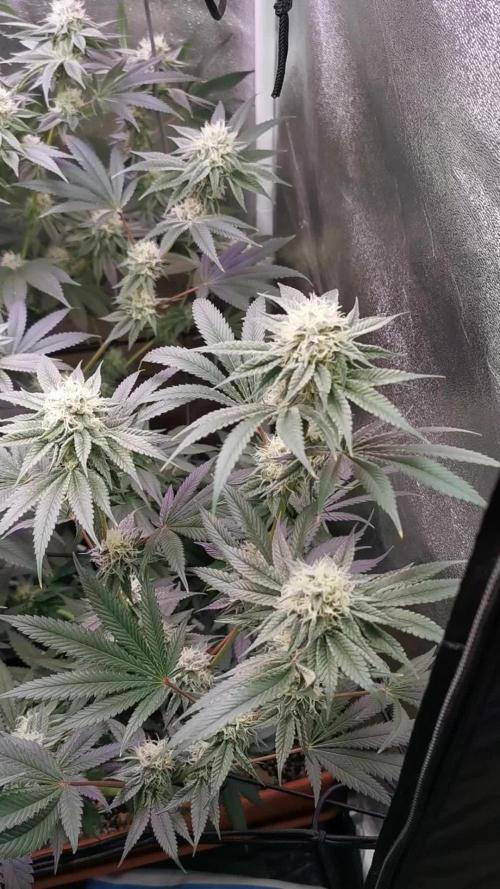

@HomeToGrow
Follow
Moin moin,
Die Blüte schreitet voran und viel Arbeit gab es nicht. Die Lemon Zkittle ist riecht top, ist aber winzig und die buds entwickeln sich auch nicht so gut wie erwartet. Die Apples and Bananas hat einen starken Geruch entwickelt den ich aber schwer zu beschrieben finde, als ersten wirkt der Geruch skunkig wird aber schnell von einer süßen leicht erdigen Aroma abgelöst.


Likes
2
Share
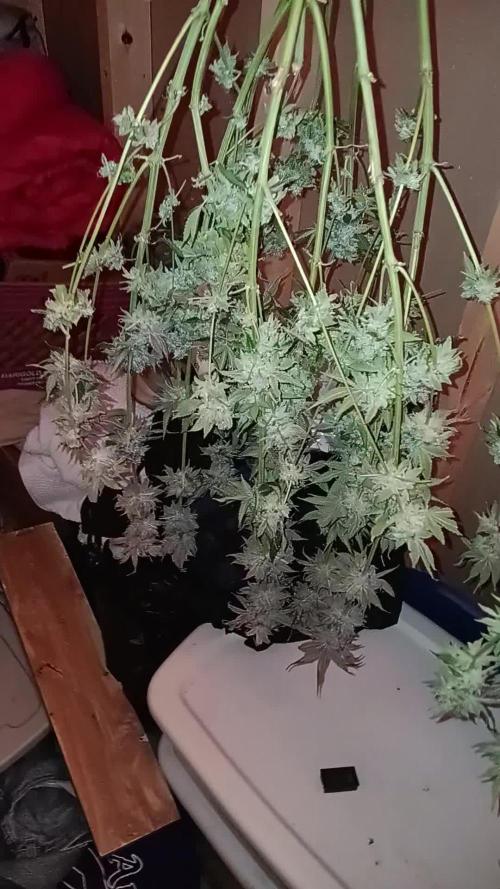

@CWolcott1991
Follow
Day 63 Chopped em down trimmed off all fan leaves and hung em whole plant in closet thay stays around 58% RH and 69°F
Likes
8
Share
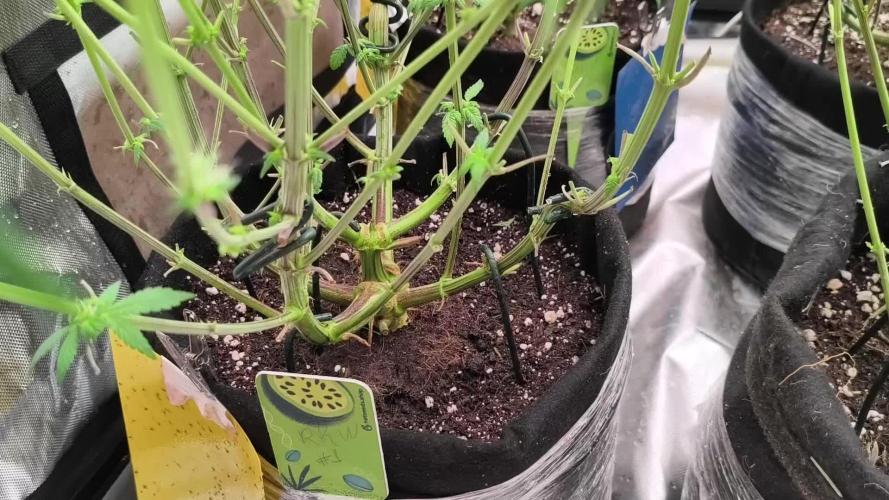

@Ganjudo
Follow
Dia 22 - Flora - 16/08. Inverti o foto período. Vou testar luzes ligando às 18:30 e desligando às 6:30
Dia 23 - Flora - 16/08. Dryback muito grande. Somente uma das plantas tinha folhas murchas. Deixei de regar por falta de tempo. E mesmo assim suportaram um calor de 37 graus hoje. Impressionante a resistência ao calor delas.
Fiz a desfolha grande dos 21 dias atrasado. Quase um lolipop.
REGA 2.2lts água com um FPJ que eu fiz com folhas delas próprias.
Todas elas ramificaram muito bem. Ficaria perfeita num scrog. Mas no meu caso, por falta de espaço acabei tirando vários ramos. A planta 4 tem uma ramificação realmente especial.
Dia 24 - Flora - 18/08. Como ontem os vasos estavam secos demais, reguei mais 1.5 lts por vaso com 1.5 ml de FPJ.
Dia 25 - Flora - 19/08 - 30 Graus C no grow. Bud com fasciação na planta 3 e galho completamente achatado deste bud.
Dia 26 - Flora - 20/08 rega 2.5 lts com easy coco receita meio de flora.
Dia 27 - Flora - 21/08.
Dia 28 - Flora - 22/08. Rega 2.5lts com FPE de babosa. Tirei algumas folhas fan

Likes
55
Share


@IstrGrow
Follow
Hi, I'm Istr, an indoor cannabis grower. I currently cultivate Gorilla Punch Autoflower using GardensGarage lights and Advanced Nutrients.👻
(Merhaba, ben İstr, iç mekanda kenevir yetiştiricisiyim. Şu anda GardensGarage ışıklarını ve Advanced Nutrients kullanarak Gorilla Punch Autoflower'ı yetiştiriyorum.)
I love autoflowers for their quick lifecycle and suitability for indoor growing. I share my growing techniques through workshops and online forums, helping others improve their cultivation skills.👹
(Otomatik çiçekleri hızlı yaşam döngüleri ve iç mekan yetiştiriciliğine uygunlukları nedeniyle seviyorum. Büyüme tekniklerimi çevrimiçi forumlar aracılığıyla paylaşarak başkalarının uygulama becerilerini geliştirmelerine yardımcı oluyorum.)
Feel free to follow my journey and share your thoughts on my progress. You can ask if have any questions or need advice on indoor growing.👍👍
(Yolculuğumu takip etmekten ve ilerlemem hakkındaki düşüncelerinizi paylaşmaktan çekinmeyin. İç mekan yetiştirme konusunda sorularınız varsa veya tavsiyeye ihtiyacınız varsa sorabilirsiniz)
During the germination process; (çimlenme süreci)
I planted the plants after soaking them in water for 24 hours and in a napkin for 24 hours, and they emerged from the soil within a day.👽
(Bitkileri 24 saat suda, 24 saat de peçetede beklettikten sonra diktim ve bir gün içinde topraktan çıktılar.)
👉Week 1: On the third day, the leaves began to show. I continue to keep my girls in the humidity dome.🙏
Day 7: The water grains on the leaves warped the leaves a little, so I continue with the humidity machine.
(Üçüncü gün yapraklar çıkmaya başladı. kızları nem kubbesinde tutmaya devam ediyorum. 7. günde kubbeleri yapraklar çirkinleştiği için çıkardım. Nem makinasıyla nem veriyorum.)
👉Week2: we are on day 12 I continue the same routine by just adjusting the light, I will do a transpalant on the 15th day.
I did a transpalant to 15lt pots on the 14th day and used revive to relieve stress.
(12. gündeyiz, aynı rutinle devam ediyorum, 15. günde bitkilere transpalant yapıcam. 20. günde de belki topping.
14. günde 15 litre saksılara ekim yaptım, stresi azaltmalası için revive kullandım)
👉Week3: They seem to be developing well after the transpalant on the 18th day! Everything is fine
On the 20th day, I topping one of the plants, but I did not touch the other plant because I saw the pistil nests.
(18. günde yapılan transpalanttan sonra iyi bir gelişme gösteriyorlar! Herşey yolunda
20. günde bir bitkiye topping yaptım, diğerinde pistil yuvası gördüğüm için yapmadım)
👉Week4: I did low stress training on the 21st day on the plant that I did not top.
I continue LST on the 24th day, the condition of the plants is very good, one of them is considered to be in bloom.
(21. günde topping yapmadığım bitkiye lst yaptım.
24. günde LST yi devam ettiriyorum, bitkilerin durumu gayet iyi, bir tanesi çiçeklenmeye girdi sayılır)
Bloom
👉Week5: Everything is going well, the pistils are starting to form, I see bruises on the inside of the buds of the plant on the right, I hope I have purple buds 😻😻
(her şey yolunda ilerliyor, sağdaki bitkinin tomurcuklarında morlaşmalar görüyorum, sanırım mor sömekli olacak 😻 )
Likes
5
Share


@Willy_Balls
Follow
Doing ok. Hard to battle humidity even though I have dehu and ac running . It’s 25 degrees and raining outside. some botrytis is showing up. Already ordered some particulate filters for air recuperators.
Botrytis spores are supposedly 4 microns large or more. These filters are supposed to catch particulates smaller than one micron. Lets see if it helps stop the grey mold fucking bullshit.
Likes
12
Share


@Siriuz
Follow
Sorry for the delay on the updates guys
I am a daddy of a newborn baby boy and it's really time consuming plus the Mary ladies but we keep on the great work nothing wont stop us we go all the way up!
Alright here you go
Day 87 Starting week 13
Day 88 Gorgeous grapefruit smells like heaven
Day 89
Again sorry for the late update but being a first time daddy leaves you without time
Day 90
She's gorgeous isn't she?
(alright guys so what happened here was that I started flushing too early and took advise from other canngrower and instantly added again all nutes, that's why I left her a lil longer until week 14 when I started to flush again, we are going to show you very well what we did, since it was our first time we were unsure if flushing at week 11 was alright but then we decided at week 12 that she could stay longer and she did)
You might say we wasted some nutes but in terms of reality we did not, because we have a full bottle of 3.7gal mix with flora nova grow and flora nova bloom in the other, measuring ppm always to make sure we got the correct amount, otherwise we add more water or more nutes depending on the plant needs but we never waste away all precious nutes are precious resources, in this part of Latin America is really hard to find anything good, so we got to bring everything from Europe or United States that's why we doing the best we can with the money we got. Hey any donations are more than welcome if you guys like what we do, yeah it's risky around here but we don't give a F.
You know that patients need their medical cannabis and Id say I'm one of them
And by the way very proud
Peace and love canna growers
We will continue to fill the grow diaries


Likes
25
Share


@mrlovesgrow
Follow
Lots of learning curves! Started using a king led only to find out it didn’t cover all the plants, leaving just the mother growing in the middle! On with the hps!

Likes
17
Share
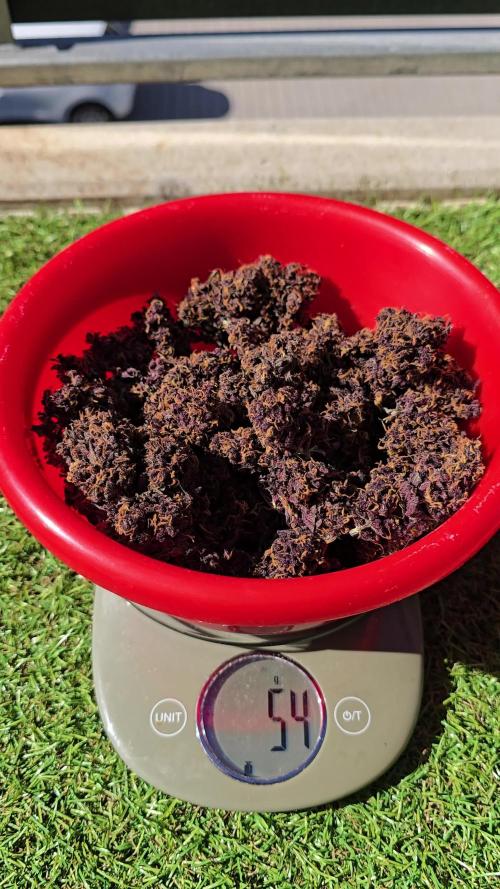

@Naujas
Follow
Today marks Day 66 from seed to harvest for my Purple Haze Auto by FastBuds.
Overall, this girl had a smooth and healthy life cycle from start to finish. She responded very well to HST (High Stress Training), which helped create a more open canopy and improved light penetration across the plant. Throughout the grow, she showed strong vigor, good resilience, and steady development.
At harvest, I ended up with 231g of wet buds. The flowers are covered in beautiful, shiny trichomes that give them an impressive frosty appearance. The buds look very promising, with excellent resin production and great bag appeal already visible before drying.
One of the things I enjoyed most about growing this strain was how easy and rewarding it was. She handled training well, stayed healthy throughout the grow, and produced attractive flowers with plenty of sparkle. The aroma became more noticeable toward the end, adding to the excitement of harvest day.
The harvest is now drying, and I'm looking forward to seeing the final dry weight, terpene profile, and smoke quality once curing begins.
So far, I'm very happy with the results and the overall
Likes
20
Share


@CampExotic
Follow
Just flipped the daddy Mac! Fukushima is beastly. Smells are coming from the tent. Fukushima is a heavy yielder.

Likes
17
Share


@Lazuli
Follow
Very intense high, hits very fast and long. Im not stoned but still sleep like a rock after a few hits

Likes
1
Share


@Kohoutek
Follow
🍋🍪 SOUR MAKI – COMING SOON
Leute, es gibt Neuigkeiten aus der Kategorie: Der Film startet erst im Dezember, aber der Trailer muss natürlich schon mal raus. 😂🌱
Durch die Canna Community Germany habe ich die Möglichkeit bekommen, beim Sour Maki Community Run dabei zu sein! 🤝🌿
Auf dem Papier klingt die Dame schon mal interessant: Sour Garlic Cookies × Blue Zushi, 65 % Indica und 35 % Sativa. Dazu ein angekündigtes Terpenprofil aus würzig, säuerlich und Diesel. Das könnte spannend werden. 👀🍋
📅 Der offizielle Start ist allerdings erst für Mitte bis Ende Dezember geplant.
Jetzt fragt ihr euch natürlich, warum das Grow Diary schon existiert und die Keimung dort bereits gestartet wurde …
Tja. 🤫
Man muss die Community schließlich frühzeitig auf Temperatur bringen. Und ein paar zusätzliche Likes wachsen bekanntlich nicht von allein. 🤣
Nennt es strategische Vorfreude, professionelles Marketing oder schlicht dreistes Like-Farming. Ich nenne es Community-Pflege mit botanischem Hintergrund. 😂
Bis Dezember heißt es also: dranbleiben, Spannung aufbauen und schon mal einen Platz in der ersten Reihe sichern.
🍋 SOUR MAKI – COMING SOON.
Der eigentliche Run kommt später.
Die Likes dürfen schon mal vorgehen. 😎🌱

Likes
12
Share


@BrainStorm22
Follow
Una cocecha abundante de flores gordas y resinosas con un verde muy fuerte verdaderamente fue una variedad productiva se la recomiendo a cualquieta que busque este aspecto


