Likes
5
Share


@SkunkyDog
Follow
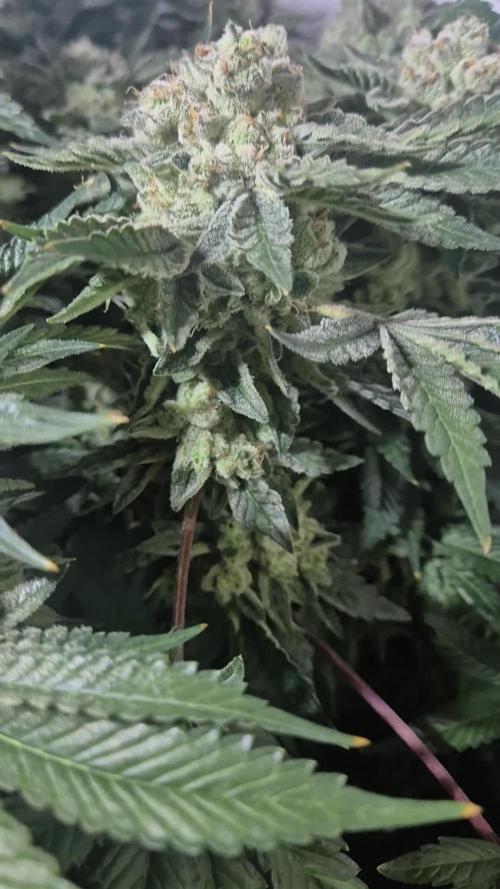
Hallo zusammen 🤙.
Sie wächst sehr schön und riecht schon leicht nach Haze 😜

Likes
170
Share


@Tropicannibis_Todd
Follow
👉Alrighty Then👈
This plant finished out just around 90 days from seed
👉Puffed a bunch of it , and its Pungent, this plant destroyed my grow room in flower 🌼 👈 the buds are tight and smoothered in resin 👌
This is a one off cultivar from GHS in honor of Fanco👈 it's definitely not for everyone cause when i say its stanky i mean stanky .......
She destroyed the house last night smoking this stuff , there's know hiding this one period ....
This was a huge surprise for me and do to its powerful stank the terps lead the way to some icky sticky stanky smoke its brutal awsome .....
Would definitely grow this one again and would recommend 😳 This one is special ..... it's definitely not for everyone .....
Persian Pie from Greenhouseseeds
Full Gas from Greenhouseseeds
Babba Kush from Greenhouseseeds
Rainbow Melon from Fastbuds
Papaya Sherbet from Fastbuds
Weddingcheesecake FF From Fastbuds
Purple Oreoz F1 From Seedsman
Slurricane From Premium Cultivars
Soil by Promix
Nutrients by Cronks
This was a crap ton fun 🙃
Thanks to all my growmies out there for stopping by its much appreciated 👈
👉Happy Growing👈


Likes
91
Share


@DreamIT
Follow
🌵🐵 PEYOTE GORILLA BY SEEDSMAN 🐵🌵
🌵 26.3 ...
🌵 27.3 Beautiful plant, the red veins are beautiful, I can't wait for it to start scenting
🌵 28.3
🌵 29.3
🌵 30.3 all great, new irrigation today
🌵 31.3
🌵 1.4
____________________________________________________________________________________
📜 A look at the details of what I'm growing 📜
🌵🐵 Peyote Gorilla🐵🌵
⚧ Gender
▪️ Feminised
➰ Genes
▪️ 60% Indica / 40% Sativa
🎄 Genetics
▪️ Gorilla Glue #4 (Chem Sister x Chocolate Diesel) x Peyote Purple (Bubba Kush purple pheno)
🚜Harvest
▪️ 600 g/m²
🌷Flowering
▪️ 65 - 70 days
✨THC
▪️ 26.0%
✅CBD
▪️ 1.0%
🏡Room Type
▪️ Indoor
🌄Room Type
▪️ Outdoor
🕋Room Type
▪️ Greenhouse
🎂Release Year
▪️ 2019
__________________________________________________________________________
📷🥇 Follow the best photos on Instagram 🥇📷
https://www.instagram.com/dreamit420/
🔻🔻Leave a comment with your opinions if you pass by here🔻🔻
🤟🤗💚Thanks and Enjoy growth 💚🤗🤟
Likes
58
Share


@Haoss
Follow
This beautiful girl turned out to be a real strong queen who withstood very strong stresses, she is very persuasive for ScrOG, in 2-3 days when she comes out of the stresses I will switch the light cycle to 12/12.💚💚💚

Likes
6
Share


@The_Holy_Herb
Follow
Hello everyone and welcome back to my diary.
Tomorrow marks the end of the fourth week of growth for Titan F1.
I don't think the plant is ready to flower yet and I think it needs at least another week to grow. Only time will tell if I'm right or not.
This week has been quiet, but we have two important updates.
1) At the beginning of the week, I gave it some care and removed a few leaves that I thought were unnecessary. A bit of defoliation. Like 6/7 leaves removed.
2) Today, it had some more maintenance, this time more intensive.
I removed two excess leaves and applied the LST technique for the first time.
Honestly, I enjoyed modifying the pot to accommodate the holes where the string would be attached.
To tell the truth, this low-cost adventure is becoming interesting, and I am having a lot of fun doing it and experimenting.
To tell the truth, my LST seems a bit aggressive and excessive, but we'll see in the next few days how the plant decides to respond and react to the LST. Maybe it will die, hahaha.
During this week, and reading other diaries for comparison, I determined that my plant is NOT drinking enough water.
The problem arises because I am unable to determine how much water is left in the soil/pot.
So today I decided to use a little cunning and weigh the pot when it was completely dry and then again after I watered it.
I watered it with about 1050/1100 ml of water mixed with its weekly dose of nutrients.
This time there was excess water, resulting in excess dripping.
In the final weighing after watering and after the excess water had drained away, the final weight increased by about 720/730 grams. The water I added was around 1050 grams. So 75% of the water remained in the soil. Dry it was 4400 grams, wet it reached 5120 grams. I don't know if this is good or not, I hope the plant is doing well.
In the meantime, I have ordered a device that allows me to check several parameters in the soil, such as moisture, acidity and other things that are important to us growers. I feel like a child at Christmas :).
I also bought a pH meter for the water, as mine broke and I had to buy another one, and I haven't been able to check the acidity levels for the last two waterings. I hope it doesn't bother the plant too much and that it continues to grow.
I've deduced that it drinks little because I'm forced to water it practically once a week. I expected it to consume more water, especially in its current pre-flowering phase.
The new device on its way will help me keep all the parameters under control: the soil, the plant, the temperature, the water levels, the humidity and a few other things I can't remember.
Everything should be ready next week.
The lamp is on full power all the time, at 100% with a 24/0 cycle, 7 days a week.
The plant has reached 20 centimetres in height. I wonder if this LST will keep it small. I have some space issues, so I can't let it grow too tall, which is why I'm using LST.
Otherwise, everything seems to be going well, I hope I'll be able to smoke this one.
Thanks everyone, see you next week with new updates, who knows, maybe it will start flowering :)

Likes
48
Share

@Tower84
Follow
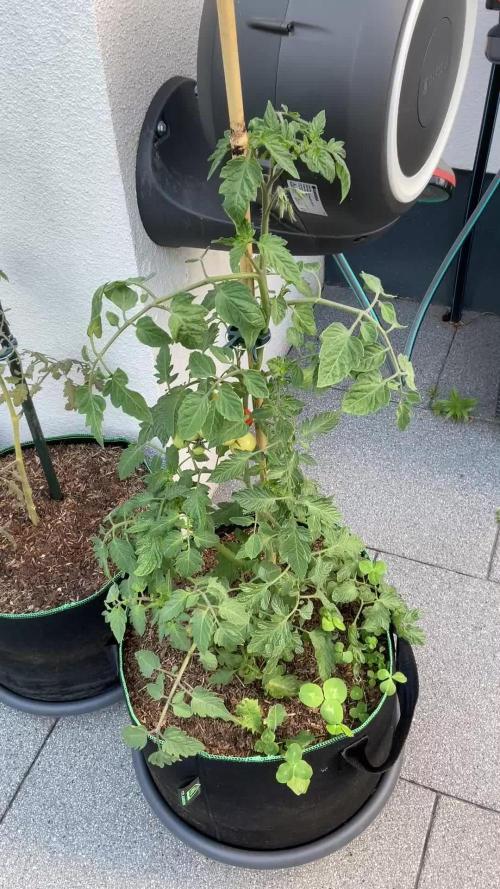
Weekly Update
This week showed a very noticeable difference between the two Primabella tomatoes. The plant on the right is growing in Sonnerde vegetable soil, while the one on the left is planted in Neudorff tomato soil. Unfortunately, I only had enough Sonnerde left for one plant, so the other three tomatoes ended up in the Neudorff mix.
The difference in vigor and overall health is quite striking. The Sonnerde plant has established itself much better and shows stronger growth, while the plants in the Neudorff soil are clearly struggling and lagging behind.
I contacted Neudorff about the issue, and they suggested that the soil may have been stored for too long at the garden center. As compensation, they offered to send me a bottle of tomato fertilizer free of charge. While I appreciate the gesture, I am still quite disappointed, especially considering that this was one of the more premium potting soils available at the store.
For now, I will continue to monitor the plants and hope that the Neudorff tomatoes can recover and catch up over the coming weeks. 🍅🌱


Likes
101
Share


@DogDoctorOfficial
Follow
OMG the smells are becoming so intense, from lemon to the sweet caramel mix with chilies and a touch of pine trees, i think i cant put in words what im smelling and were is taking my mind, but i can tel this, what an amazing combination of fragrances that are flying around
The tricomes are shouting up as they become fatter and frostier, all cristal clear so far, i think i still have 3 mb 4 more weeks to harvest, lets see 😜
Just calculate my VPD and it’s 0.98 kPa need to increase this up to 1.2 for now s i’m moving my ligth up a bit and see if it works 🙏🤓🙏
Thank you all for following, comment, like and all 🙏 100 likes 😅🙏 🙌🙌🙌🙌🙌🙌🙌🙌 ❤️❤️❤️❤️
Loving this LED Tec 😍
Girls:
1-BlueBerry
2-Alaskan Purple
3-Poyote Gorilla
4-Hindu Kush
5-Whitw Mango
6-Super Glue
7-Badazz Cookies
8-S.A.D.
tent -8x8 / 2.4x2.4 but i'm only using 1/2 so 4x4 / 1.2x1.2
Led - Lumatek 465w Compact Pro at 100%
All i Grow is medicine for myself,
Stay safe, stay tuned and B Happy
Peace out
D


Likes
26
Share

@TrickzGrowz
Follow
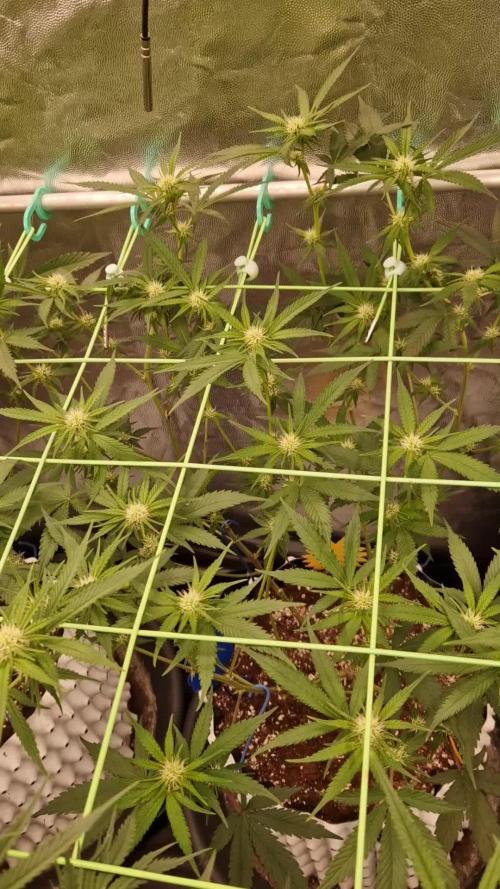
Servus Moin!
Die Permanent Melon wurde diese Woche entlaubt und gelollipoppt. Der Stretch ist wieder mega krass gewesen.
Likes
20
Share


@eldruida_lamota
Follow
Esa familia, buenas de nuevo, siento la tardanza, asuntos propios ya me entendéis... pero ya actualizo y es que esta farm cheese de genofarm esta ya apunto de caramelo. Se espera el corte muy pronto y la verdad que promete , se ve increíble y huele que flipais.
Ph controlado temperatura por debajo de 27 grados y humedad por debajo de 40%.
Estoy muy contento porque el genotipo cheese es de mis preferidos y está en concreto tiene ese olor tan peculiar.
Un saludo y nos vemos fumetillas.

Likes
6
Share


@Naujas
Follow
My house is full of sweet chocolate and fruit aroma:) her flowers are full of shiny trichomes :) the girl only bloomed for 57 days, but she is already ready, maybe her flowering sped up in my grow box, high temperature 33°, because of that under my arm my light was set to 85%. From the first days, the girl showed fast and healthy growth:) I made a timelapse video, but unfortunately due to problems with the SD memory card, it takes 3-4 days at the end of the video, besides, my tent is too small for that :D I also made bubble hash from sugar leaves myself :) I tried Zamnesia seeds for the first time - I hope that someday this seed bank will offer me its products to try again :) thank you all. you were together :) good luck with the growing.


Likes
14
Share


@Bakeryguy420
Follow
Bluedream flowing through week 6 offlowering another week of nutrients then Istart flushing her down till around week 9 and half 10 then chop her :) Terps are actually really good on smells super fruity diesel :)


Likes
30
Share

@farah4weed
Follow
Hi everyone😍👽
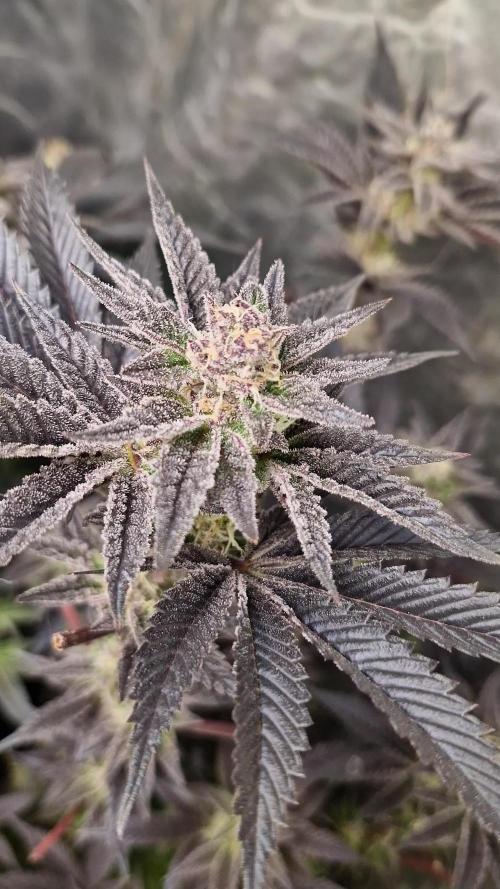
We’ve reached week seven of flowering.
This project is a genetic test made from OG Kush × Cakes n Cream,
using the STS technique.
I decided to name it OG Cream.
This is my first time trying something like this,
and honestly, I’m pretty happy with the results so far for a first run.
Now I’m just waiting to finish it up and polish things a bit more.
Thanks a lot for your feedback and for taking the time to leave comments — really appreciate it!🔥👽😍
"farah4weed"
Likes
4
Share


@GanjaFarmer101
Follow
I didn't pay much attention to this grow - as I was mostly exhausted from all the previous autos harvests. So, to say I was pleasantly surprised would be an understatement - I'm still in total shock at the yield here. Trimming took about 4 hours almost non-stop :)
Edit: 2nd plant harvested the next night - 396g (wet) :)
Likes
16
Share


@bsplayerone
Follow
It’s been a heck of a journey so far. All my other fast bud seeds have been super fast moving. This one has been slow so far. Hope this week it really takes off.
Likes
43
Share


@GrowerGaz
Follow
So I have been busy building a new grow space in the cellar had walls and a roof , then after three days of rain the cellar is under 2cm of water. So today I pulled my finger out and repotted all my plants. 4 will be in the autopots 15 litres, with the addition of airdomes this run. They will stay in my 90*90 tent till the roots hit the bottom of the pots and I can use the autopot resivoir . I have used bio bizz light mix with perlite, added some Greenhouse powderfeed bio bloom to the soil along with silica powder from Biotabs. I then top dressed with a little bio grow to keep them going until I flower them in a week or two.

Processing
Likes
3
Share


@LittleBigTrees
Follow
Still not given any food at 35 days since popping. She's growing well and I've put her in a 4ltr pot.
I've pinched the top out to slow down the vertical growth.