


Likes
Comments
Share


@Brendanfromtherose
Follow
I've brought the PPM down again and kept the pH at 5.7-5.8, plant looks great first grow so very happy, Alot of Trichomes and don't know if I should be getting ready to flush and harvest, buds still getting fatter and she's still thirsty and drinking water but a lot of amber pistils and not sure if the crystals are clear or Milky but plant looks Great, just unsure when to harvest,
I've reduced nutes a little more and calyxs still fattening up, gonna hopefully start flushing at end of this week for about 2-3 days in my 4gallon bucket

Processing
Likes
3
Share


@Ogbangbang2981
Follow
I harvested my pollen sacks plant looks healthy at this point I dont feed till harvest just water every 3-4 days. think o got 21 more days to go b4 harvest but until then I'm just checking out my trichomes so that I dont harvest to late .....one love and dont forget weed is love so share the love with those you know .......

Processing
Likes
14
Share


@DonPato
Follow
14 días desde la aparición de su fase de plántula y es como si estuviesen montadas en un cohete 😮! la mezcla de "Superguano" y "Microvita" de Top Crop en las medidas exactas, hace que las plantas crezcan increíblemente bien, fuertes y sanas, estoy enamorado sin duda alguna.
Ahora comenzamos con la tercera semana, estoy sacando fotos diariamente para que se pueda ver el crecimiento de ellas, ayer domingo 17 de noviembre, hice el primer riego con 1,5 litros de agua con un 50% de "Top Veg", esto quiere decir 2 ml. de nutriente, por 1 litro de agua. No hice fotos de hoy en la mañana, pero en la tarde subiré un vídeo de como vienen. Les recuerdo que pueden ver más fotos y vídeos de todos mis cultivos anteriores, mis "tips" y otras cosas en mi instagram @donpato_cultiva.
_______________________________________________________________________________________________________________________________________
14 days since the appearance of its seedling phase and it is as if they were mounted on a rocket 😮! The mixture of "Superguano" and "Microvita" by Top Crop Nutrients in the exact measurements, makes the plants grow incredibly well, strong and healthy, I am in love without a doubt.
Now we start with the third week, I am taking photos daily so you can see the growth of them, yesterday Sunday November 17, I made the first irrigation with 1.5 liters of water with 50% of Top Veg, this means 2 ml of nutrient, per 1 liter of water. I did not take pictures today in the morning, but in the afternoon I will upload a video of how they come. I remind you that you can see more photos and videos of all my previous crops, my tips and other things in my instagram @donpato_cultiva.
have a nice week!
___________________________________________________
que tengan una hermosa semana., gracias por ver.
Buenos humos!👽


Likes
9
Share


@SlickCityOrganics
Follow
Debating on cutting Blackstrap on Friday. Not seeing much amber. But lots of cloudy trichomes. But we will see in the next days if any amber will show. Peach Crescendo is frosty. Can't wait to taste it. We will see. Fat bastard just doing her thing. Smelling fruity and gassy. Just giving them water till harvest. Ppm is kinda high on Fat Bastard.


Likes
6
Share
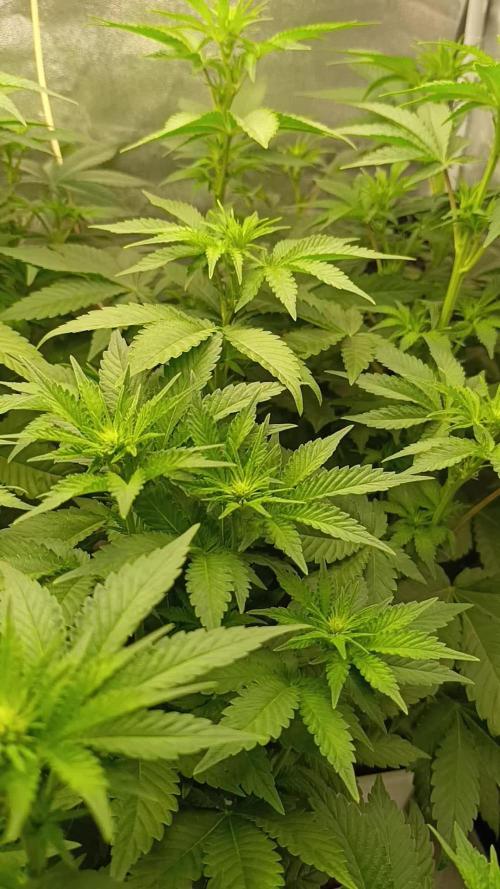

@Nazgul420Hafoun
Follow
Ahoj všichni 😎
Holky kvetení zvládají ???
Tak za týden+- defoliace
Ať se daří vše 🍀

Likes
3
Share


@Growrnotashowr
Follow
Buds are fattening and the smell is a mix of gas, berries and something else funky I cant put my nose on it

Likes
62
Share


@MeaCulpa
Follow
8th week of flowering. There is a light at the end of the tunnel. After a tip from here, I put all the LED lamps I had in the tent. Doesn't matter how cheap they are. The two light bulbs produce 6500k daylight... And it really bears fruit. The resin production around it is clearly visible. I'm excited. I realize that the trichome photos are a little too early, but I'll test the photo quality.


Processing
Likes
12
Share


@chrisss
Follow
Heating Mat to keep temp in 80’s
Day15)( Week 3 Day1) No water,good Added Mushie Man
Day 16) idk if I’m right but growth seems a lil slow hopefully nothings wrong
Day 18) Added c02 yesterday night , gonna put the lights at 50 watts
Day19) Feeding stronger, keep bringing light up more as the plant grows so it’s 30 inches above the plant
Day20) GROWTH IS AMAZING , idk if it’s the co2 or it’s just getting older, prolly both either way it’s great news, moving light up more, I’ll start LST on Sunday which is day 22, cleaning fan cause of humidifier ( tap water), keep humidity in high 50s and temp above 80 , for humidity reasons I only turn on in-line fan for a couple hours some afternoons
Day 21) Fed Calmag, grow and micro to tap water(PH 6.2), added more coco to the top,will LST tmrw

Likes
2
Share


@EyeMKing
Follow
As week 2 comes to an end 4 of the 5 have shown great growth 1 is behind (#5) but it also has a mutation and has a few 4 leafers on it. #3 is shorter and has wider leaves.

Likes
187
Share


@Ju_Bps
Follow
Hello growmies 👩🌾👨🌾🌲🌲,
👋 We're now on the last week, Buds bump a bit during this last week, looking not so bad, very frosty ❄️❄️
No water this week
Harvest today
💧Give water each 2 or 3 days
NO WATER
PH @6
💡Mars Hydro - SP 3000
80% 37 cm.
🔥 Thanks community for follow, likes, comments, always a pleasure 👩🌾👨🌾💚🌲.
Mars Hydro - SP 3000 💡💡
https://www.mars-hydro.com/sp-3000-samsung-lm301b-greenhouse-led-grow-light
NUTRI NPK 💥🔥
https://www.nutrinpk.com/product/npk-mix-pak-for-4-to-5-plants-cannabis-fertilizer/
Sweet Seeds - Mimosa Bruce Banner XL Auto 🌲🌲
https://sweetseeds.es/en/autoflowering-seeds/3232-mimosa-bruce-banner-xl-auto.html

Likes
49
Share


@masterofsmeagol
Follow
6/9 I can't believe it but I had faith. The transplant yesterday LOOKED like it was fucked. I cleaned it up though and left it outside. This morning it was standing straight up. Both transplants were! I put tarps up to block the wind tunnel between buildings. It's still overcast and rainy. Sun isn't supposed to come out for a couple poke days. Chance of thubder storms tomorrow but I'm going to try to get everyone in their forever homes today. Or at least most of them. I plan to light dep a few right in the 3 gallon. I'm sure I'll be updating this after I get some work done.
UPDATE: I WENT OVER AND GOT THREE MORE TRANSPLANTED. THAT MEANS FIVE ARE OUTSIDE IN THE CAGE. TWO 10TH PLANET, 2 BLUEBERRY CHEESE AND A LITTLE PURPLE PUNCH. THE 3 GALLON POTS WERE RELATIVELY HEAVY SO I PICKED THE LIGHTER ONES TO TRANSPLANT. I LEFT THE ORHER TWO 10TH'S IN THE GARAGE WITH THE DOOR OPEN WITH THE REMAINING PLANTS. I ALSO ADDED WIND BREAKS AND SUPPORTS TO EVERYTHING. I WANTED TO GET EVERUTHING DONE TODAY BUT THERE MAY BE A THUNDER STORM SO IF I DONT GET IT DONE ITS NOT A BIG DEAL AND ILL FINISH TOMORROW. TRANSPLANTS WENT SMOOTH. I THINK THEY'LL GO EVEN SMOOTHER IF THEY DRY OUT A BIT. STILL HAVE THE 50 AND 40'S TO FILL. Took a bunch of videos but the don't want to load. I'll have to try tomorrow or later tonight.
UPDATE: I TOOK TONS OF PICTURES AND VIDEOS BUT THEY DONT WANT TO SEEM TO UPLOAD. IVE GOT SIX IN THERE FINAL HOMES OUTDOORS 20s and 30 gallon smart pots. Still have massive plants but I'm going to out those in the 50 and the 40. I'll finish this shit up tomorrow and get all the girls in their forever homes and if I don't have room for some I was planning on doing a light dep anyway so that will work out good. I learned a lot and transplanting went a lot smoother todsy than before. I feel really proud of myself. The last Transplant I did break a few leaves off that I didn't notice but whatever. I used tomato cages for suppirt on two and bamboo poles and string on the others. I'll add the vertical trellis as they grow. I'm proud of myself.
6/10 I got a lot done yesterday. Six are outside already. Two are in 20s in the garage. I'm planning on transplanting the rest today or tomorrow. I'll update later. Accidently uploaded lots of stuff on the wrong week. UPDATE: I TRANSPLANTED THAT SUPER TALL PURPLE PUNCH THAT I DIDNT TOP OR HST AT ALL INTO A 40 GALLON TUB. ROOTS WERE DRY AND THIS TIME IT ACTUALLY LOOKED LIKE THEY FELL AWAY. THE PLANT HOWEVER STAYED STANDINGVUP FINE. I THINK THIS PHENO IS GOING TO BE A TOUGH ONE. LOOKS GOOD LIKE AN HOUR LATER. I HAD THE 50 READY TO TRANSPLANT THIS MONSTER BLUEBERRY CHEESE I FIMed BUT THE POTS WERE SUPER HEAVY AND I FIGURED I NEEDED TO SLOW DOWN AND THINK. WE HAVE THUNDER STORMS COMING TONIGHT. TOMORROW IS GOOD. I MAY TRY TO FINISH UP TONIGHT BUT WE SHALL SEE. THE GOOD THING WITH DOING IT A FEW AT A TIME IS THAT IF SOMETHING HAPPENS OUTSIDE IVE STILL GOT A CROP INSIDE LOL. WHAT IM PLANNING TO DO IS EITHER LIGHT DEP THAT BIG BLUEBERRY CHEESE OR PUT IT IN THE FIFTY BUT IM PLANNING TO LIGHT 3 RIGHT IN THEIR 3 GALLON CONTAINERS. HAVENT DECUDED FOR SURE BUT IM THINKING THATS WHATS GOING TO HAPPEN.......of course videos won't upload and the ones that do are old videos. Damn. I need to sharpen my computer skills....and my growing skills. Especially transplanting. I suck at transplanting. I decided not to out all my eggs in one basket and left the 10th planet amd Blue berry cheese in the 20s in the garage. I pulled them out for light further but I'm ousting them back a little tonight. That way I'll have a back up if something catastrophic happens. I doubt it but better safe than sorry. I'm proud of what I've accomplished thus far. I've successfully uploaded my 1 minute plus video several times but it won't appear. Oh well. I'll try to load the videos tomorrow I guess. Just started raining. Just a light rain. Probably what fresh transplants like.
6/11 BEAUTIFUL outside. Today is the day. Most is done and I'll add the supports as trellis as they grow. This new grow space gets about twice as much sun as my old spot. The tar stops the burrowing insects. I'm getting everything out today. I just need to decide if I'm going to light dep that MASSIVE blueberry cheese or bite the bullet and put it in the fifty. Maybe I'll try to get some help from my cousin. Plants withstood the thunderstorm like Champs. I'll update as the day goes on. I planned better this year so I SHOULDN'T have an unmanageable jungle. UPDATE: WATERED THE 3 PLANTS LEFT IN THE 3 GALLONS (1 10th PLANET WITH GREAT BRANCH STRUCTURE AND TWO PURPLE PUNCH THAT WERE THE SMALLER ONES. IM GOING TO LIGHT DEP THEM. EVERYTHING IS OUTSIDE NOW IN A MIX OF 1/3 FOX FARM OCEAN FOREST, HAPPY FROG AND ROOTS ORGANIC 707 IN EQUAL PARTS. TRANSPLANTED WITH MYKOS. EVERYTHING IS OUTSIDE NOW. FINALLY DECIDED TO GET The MONSTER BLUE CHEESE I FIMed INTO ITS FOREVER HOME A 50 FALLON POT. IT WAS TGE EASIEST BEST TRANSPLANT OF THEM ALL. JUST LIKE AETTING A POT IN THE WHOLE. I DONT EVEN THINK THE PLANT NOTICED. ONE OF THE PURPLE PUNCHES HAD ROOTS OB ONE OF ITS LEAVES WHEN I LOOKED BUTVIT WAS STILL STANDING UO STEAIGHT. I KNOW SOME OF THE PLANTS LOOK DROOPY BUT WEVE HAD SEVERAL DAYS OF RAIN AND A MASDIVE THUNDER STORM. I BROUGHT OUT THE EARLIER TRANSPLANTS AS WELL. THEY ARE OUT OF THE SHOCK. WIND IS PRETTY HIGH BUT I DONT WANT TO ADD MORE TARPS. I THINK THINGS ARE SECURED GOOD ENOUGH FOR NOW. IM SUPER STOKED THAT TRANSPLANT WENT SO GOOD! Went back at 7:30pm. Some plants have a little bit of transplant shock and a little bit of burn but it's negligible considering they've been through a thunderstorm with pouring rain and extremely high winds. That blueberry cheese in the 50 transplanted so easy and still looks like it didn't even know the difference. I'll start light dep once I get a plan. Plants are recovering nicely but should something happen to one I could replace it. I'm interested in the light dep though and I've got a pretty good idea how to start.
6/12 The plants that had a little transplant shock are coming out of it. We had a thunderstorm and pouring rain the day of some of the transplants. Wasn't forecasted. High winds moved the plants around a bunch bit they are tough as hell. Everything is out now. Suppisedcto have showers the next few days. I'm putting together a feeding schedule abd setting up a spit to start light dep on the three plants I decided to flower early. The cage now gets twice as much sun as before. This is going to be a good year.
Went back over and plants are perking up and doing even better everytime I see them. I took a video but it might not upload until tomorrow. I may start a new diary for the light dep. I have a few places I'm thinking to use for light dep. I need to make a solid plan before I start so maybe a day or two. Trying to upload again but I doubt it.
6/13 Had a rushed morning but I watered the plants in the 3 gallons as they were dry. I had added more soil to a couple of the bags. The top soil is startingvtj dry out but the plants look good and we are supposed to get rain so I don't really want to water if it's going to be raining. I think I've found my light dep spot and schedule. I'll update after I do something.
WENT BACK OVER AND SPRAYED A LITTLE BIT OF WATER ON THE EXTREMELY DRY TOPSOIL THAT I HAD TOPPED SOME OF THE PLANTS OFF WITH. SHITTY THING IS THAT WAS ADDED AFTER THE THUNDER STORM SO IT MAKES IT HARDER TO JUSTE THE PLANTS WATERING NEEDS. I CAN TELL THAT ONE OFCTHE FIRST TEANSPLANTS IS STILL HOLDING WATER. I MEAN WE GOT A DOWNPOUR AND I DONT WABT TO WATER IF WE'RE GOING TO BE GETTING RAIN ANYWAY. IM GOING TO LOOK BACK OVER THE DIARY. THATS ONE GREAT THING ABOUT THESE. YOU CAN GO BACK AND CHECK YOUR WORK.
6/14 Glad I held off watering. It's raining today. Just showers. We haven't gotten any of that extreme wind we usually do. I have the plants supported but I still worry. Definitely more than I should. Plants are still doing good and acclimating to there homes. I have not started the light dep with the 3 gallons but I think I've found my spot. Once I start it will just be staying consistent putt8ng them in and out. I need to train them anyway. I have some research to do and a joint to smoke so I'll update later.
Likes
4
Share

@SirNutalot
Follow
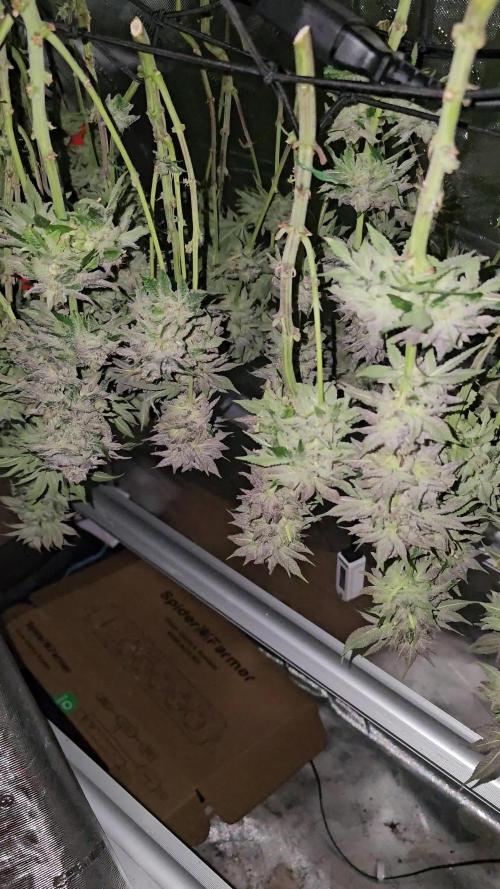
Dry hanging for 1 or 2 weeks try to hold air humidity by 60 and temp 20


Likes
26
Share


@eldruida_lamota
Follow
Estoy fascinado, con la velocidad del progreso de las Zkittalicious de Exotic Seeds, en tan solo 5 semanas de floración llevan estos progresos, sin palabras…
Yo creo que no más de 3 semanas las tendré listas.
Apuré a aplicarles el ExplotaCogollos de Agrobeta. Llevan una dosis de medio gramo y a partir del siguiente riego va directamente un Grano de Pk fuerte.
El color es perfecto, se ven bien sanas, y es que no puedo pedir más.
Agrobeta:
https://www.agrobeta.com/agrobetatiendaonline/36-abonos-canamo
Mars hydro:
Code discount: EL420
https://www.mars-hydro.com/
Las maximas de temperatura no superan los 26 grados y las mínimas no bajan 20, así que no me puedo quejar.
Los niveles de humedad también son los correctos van entre 50%/65% de humedad relativa.
Por supuesto el Ph lo estamos dejando alrededor de 6.
Hasta aquí es todo, buenos humos 💨💨💨.

Likes
5
Share


@Johngrowbr
Follow
First week of pre flowering, just changed the schedule of the lights and the photoperiod


Likes
9
Share


@Chupadeos
Follow
Buenas shurs después de la poda FIM,las plantas han respondido muy bien excepto sweet skunk que no se si sera por su raza o por que ella simplemente es así pero están muy bien,se ha hecho una selección de clones,las plantas están en 28/32 cm siendo las sweet skunk las más pequeñas a las más altas se les ha repetido la poda FIM cuando termine esta semana comenzaremos la floración,en cuanto a abono todas están deseando de coger aún más nutrientes,veremos la reacción de ellas tras una segunda poda FIM. saludos y dulces humos
Likes
20
Share

@MrGrowDiarie
Follow
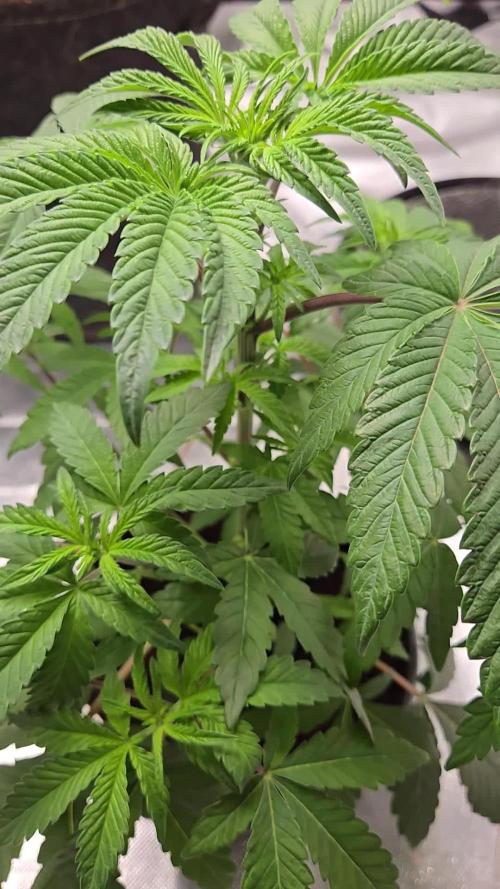
Day 35
The leaves are broad with multiple leaflets (likely 5 to 7 on the larger leaves), characteristic of a strong growth phase. The stem is upright and sturdy, and there is active new growth visible at the nodes, with bright green young shoots developing.
💦💦💦Watering💦💦💦
Woche 5
18.10.2025 – Watering 0 ml
19.10.2025 – Watering 0 ml
20.10.2025 – Watering 0 ml
21.10.2025 – Watering 0 ml
22.10.2025 – Watering 0 ml
23.10.2025 – Watering 0 ml
24.10.2025 – Watering 0 ml

Likes
10
Share


@Abadakor53
Follow
So she look good for now even with low humidity 😄 i try to spray water as often as possible and i can get around 45% humidity.
I hope low humidity wont make her grow too slow
Likes
4
Share

@Jayscott1992
Follow
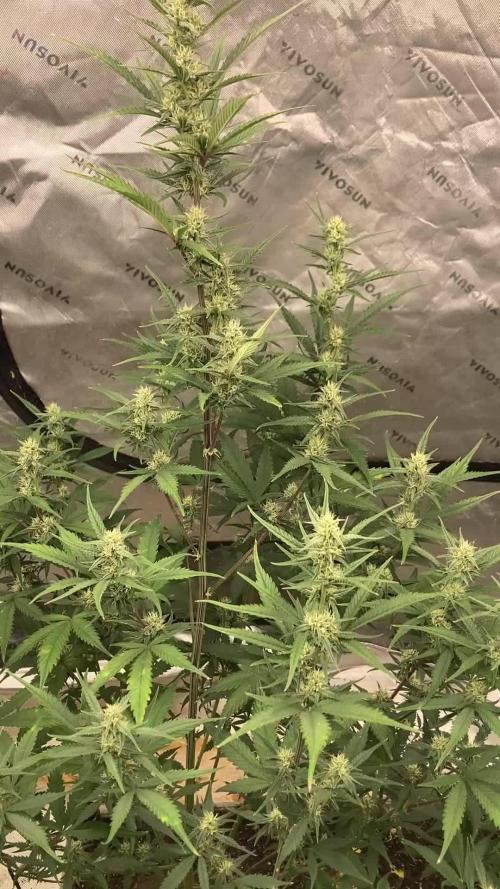
This strawberry gorilla as inspired me with her strong vigorous genetics Shes just starting to swell
Likes
27
Share


@MrJones
Follow
I harvested four plants today, putting 884 grams of wet flowers into the dry tent. I am trying to keep the environment as close as possible to 60F / 60% RH, but with the current temperatures, I will be lucky to keep it around 65. I am looking forward to the terpenes moving towards the skunky aromas.
