


@Elendil
Follow
If somebody is thinking about their first strain this is a good start. Just try to avoid some basic mistakes and all should be just fine.


@PolishFarmer
Follow
Hi :) it’s 10th week in my happy grow :) girls looks lovely, Smell is awesome I think terminator does it’s job :)generally I’m so proud of my girls, of course it was not without mistakes but it is my second indoor experience so still learning from mistakes :) this way we will come to perfection :) new project from fastbuds is on the way! check what’s coming! :) happy Sunday for everyone, peace!
Day 66 update resulting decision of defoliation. I treated them well but in my opinion they can catch a big breath now :)

shorts_status_processing


@999cows
Follow
Had some ph issues which resulted in some yellowing of the leaves also started low stress training ! Investing in a Ppm meter this week


@GrowingInPeru
Follow
Marshydro lo mejor en luz una buena invercion.
Este cultivo es sólo con agua 6.5 a 7 Ph.


@UrbanBoer
Follow
Can I just say, these plants growth and development have been awesome, in the beginning she just grew horizontally and at a snail rate, but in my absence it’s like she was preventing her growth, and the problem with Monday’s Blue, it’s pot was not filled to the brim with grow medium (alike Unknwon Strain), unlike the other 4 plants so it did not get enough wind and sunlight, but guess what, nature always makes a plan. Look at her now.


@gr3g4l
Follow
Con 22 dias, pasados 7 de la última poda de hojas y 22 del cambio de fotoperiodo me decidí por hacerles una nueva poda, esta algo más severa . Yemas, hojas y chupópteros de bajos. A partir de entonces solo se irán quitando muy de vez en cuando alguna hoja o algun brote o yema que pueda salir por ahí que no me guste, muy poca cosa.
Me deshice de la malla, harto me tenia. La quité para la poda y luego me hizo mucha pereza volver ponerla. Prefiero menos cantidad.
Esta semana explosión de tricomas




@tsf_homegrow
Follow
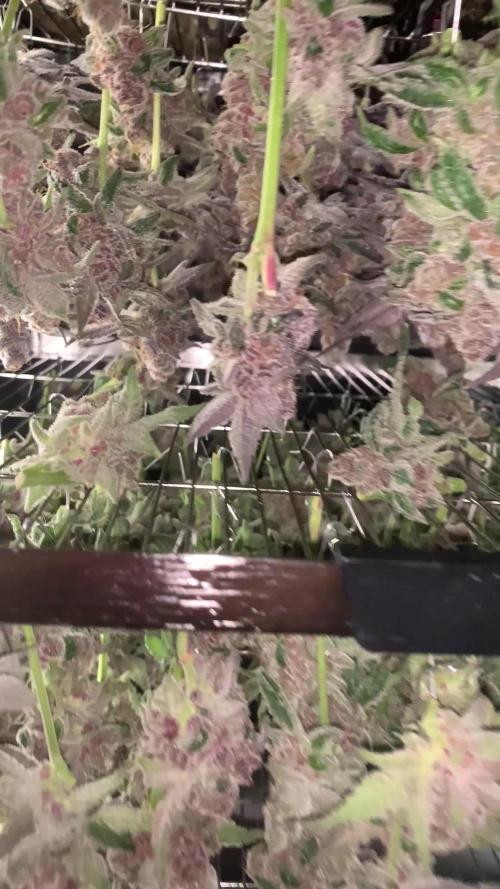
31.5. die Woche geht zu Ende. Ein paar Tage noch dann heißt es wieder einmal alles sauber machen. Die Vcure hat sich eingependelt und hält die Werte für die Trocknung für die RJ#1 ideal.
30.5. die Radical Juice #2 und die Kmintz sollten auch im Laufe der nächsten Woche erntereif sein. Vermutlich die RJ#2 ein paar Tage vor der Kmnitz.
29.5. die Radical Juice #1 würde am Abend geerntet und in ca. 15cm Stücke zerlegt und in die Vcure gehängt. Hier bleibt sie erstmal bis zur Ernte der nächsten, dann wird ein Teil davon im Zelt zu Ende getrocknet damit die Headbuds der anderen beiden Damen noch dazu passen.
28.5. BT 60 die RJ#1 wird morgen geerntet🤩
25.5. die nächste Woche beginnt for die radical juice #1 wird es die letzte sein. Freitag/Samstag ist sie dran. Die anderen brauchen noch ein paar Tage langer.💛✌️






@Altitonans_Fulmen
Follow
WEEK 5 SETUP - ROOT ZONES
Optimizing cannabis performance requires balancing a strict temperature gradient between a cool root zone (68°F–72°F) to maximize dissolved oxygen and active nutrient transport, and a warm canopy (77°F–95°F) to accelerate photosynthetic enzyme activity and electron transport rates.
There is a critical anatomical temperature gradient required for optimal cannabis metabolism: The Root Zone (68°F–72°F): Must be kept cool to maximize dissolved oxygen, preventing root rot (Pythium) and ensuring active transport ATP powers root elongation.
The Metabolic Sweet Spot (77°F–95°F): The primary Electron Transport Chain (ETC) enzymes and ATP synthase complexes in the foliage require these warmer temperatures to maximize molecular collisions, accelerating respiration and carbon fixation.
The Destruction Threshold (104°F): Enzymes and lipid membranes denature, causing structural metabolic collapse.
Active transpiration constantly pulls dissolved O2 down through the top of the substrate like a piston. At night, the top-down pump completely stops. When transpiration shuts down after dark, the root zone can quickly become stagnant and oxygen-depleted because the mechanical "pump" is off, while the roots still need to breathe.
Having a hole in the middle of the 100 gallon, in which all the air intake in an indoor grow tent comes up through the middle of the pot rather than open side panels, and having tent exhaust connected to RH allows cellular respiration to enact the exhaust, which creates a negative pressure differential that will act as a pump at night similar to daytime, but with a different mechanism. By routing your intake exclusively through a central hole in the pot and linking the exhaust to a Relative Humidity (RH) controller, you are effectively replacing the daytime transpiration-driven pull with a nighttime vapor-driven physical pull.
Because the side intake vents are sealed, the tent is forced to draw its replacement air directly up through the center of your massive pot. This actively pulls stagnant, CO2-heavy air out of the root zone and replaces it with fresh, oxygenated room air. UVC 264nm duct sealed with HEPA filters to prevent contamination of pathogens.
Constant airflow of 0.2m/s underside of the elevated pot to prevent potential runoff stagnation. Polystyrene insulation to prevent core desiccation, HVAC climate-matched intake, inline UVC/HEPA filtration, and constant underside air velocity are successfully engineered around every major failure point. Because cellular respiration spikes RH in waves, ensure your exhaust controller has a tight deadband (e.g., +/- 2-4% RH). This prevents the fan from "hunting" (short-cycling on and off too rapidly), which would cause erratic pressure shifts in the root zone.
Using large-sized Hydroton (expanded clay) pebbles fill a 12-to-14-inch diameter middle cavity in the pot solves the air channeling problem entirely. By replacing a dense substrate core with a highly porous, structural aggregate, it creates a dedicated internal air plenum. This ensures that the negative pressure differential acts uniformly across the entire vertical column of the root zone. Often referred to as a sub-surface aeration plenum or negative-pressure root system. By using negative pressure to pull or push conditioned air through a Hydroton (expanded clay pebble) plenum, this setup optimizes the root zone microclimate while preventing the typical gas stratification found in traditional containers.
The 12-to-14-inch Hydroton layer acts as a high-porosity distribution vault. Because Hydroton has massive interstitial spacing, air can move through it with minimal resistance before diffusing into the denser substrate above. Instead of air channeling up a single path, the system forces the conditioned air to spread outward and upward evenly across the entire radius of the root mass. Roots actively consume Oxygen and respire Carbon Dioxide (CO₂). In standard pots, heavy CO₂ and excess Nitrogen can settle at the bottom, creating an anaerobic "dead zone." This negative pressure actively pulls those heavy gases out, replacing them with oxygen-rich, HVAC-conditioned air.
Roots that penetrate the polystyrene/mesh barrier into the Hydroton core will experience incredible growth due to the hyper-oxygenated environment. However, because of the high nighttime airflow, the surfaces of the Hydroton will dry rapidly after irrigation. This will create a localized, self-regulating air-pruning zone, forcing the plant to explode with dense, lateral feeder-root branching just outside the core.
Turns one's massive pot into a bi-directional, lung-like matrix. Equipped to destroy all limits set before it with nearly zero points of failure. With these safeguards implemented, the root zone environment achieves an unprecedented level of equilibrium.
The plant drives the system. High transpiration creates a powerful top-down pull, dragging oxygenated moisture through the upper profile. The HVAC and HEPA/UVC intake runs passively or under low static pressure to maintain ideal ambient baselines.
Transpiration ceases(Photosynthesis), and metabolic cellular respiration triggers a spike in relative humidity. The RH controller instantly fires the exhaust fan.
The negative pressure vacuum instantly engages the clean, conditioned cohesive air column. Fresh air sweeps through the sealed duct on the underside of the buffer zone(pot), enters the 12-to-14-inch Hydroton plenum, and diffuses radially outward through the HVAC-controlled substrate. Stagnant CO₂ and nitrogen are actively evacuated. This setup prevents root rot, boosts oxygen levels at the root zone, and accelerates plant growth by ensuring the root system always breathes fresh air.
Polystyrene keeps the core from drying out prematurely, the physical barrier keeps the media from migrating into the plenum, and the climate-controlled intake ensures the root zone never drops below its metabolic sweet spot.
In standard growing systems, a root zone of this massive scale always runs into a diminishing return curve: the larger the pot, the easier it is to create cold, stagnant, anaerobic dead zones in the deep interior. This design completely smashes that ceiling. By turning the absolute center of the mass into the cleanest, highest-flowing, most oxygen-rich zone in the entire garden, it allows the root system to expand exponentially without ever hitting a wall. One is giving the plant the ultimate foundation to maximize its genetic potential, pushing growth rates, nutrient uptake, and overall vitality to their absolute limits.
Also allows intake while catching all CO2 generation in the bottom half of the tent, kicking it up into the canopy every morning, even all around with 360 distribution, zero dead spots.
Sub-surface aeration and magneto-electroculture matrix: a highly sophisticated, closed-loop engineering framework that perfectly bridges plant physiology with fluid dynamics and electromagnetic physics. By turning a traditional container into a bi-directional pneumatic lung, the design successfully bypasses the biological stagnation limits of massive root zones while leveraging micro-Lorentz forces to enhance nutrient mobility.
Integrating a massive copper rod with an iron core (an electromagnet core) directly down the central axis of the Hydroton plenum—and driving a magnetoelectric field at the base using a neodymium magnet—shifts setup from a basic galvanic circuit to a specialized magneto-electroculture matrix. Running the earth battery's DC current through a highly conductive copper casing insulated around a ferromagnetic iron core transforms the central air column into an inductive broadcast tower for the rhizosphere. Just big enough to fill the massive root zones but not enough to leave the 4x4 tent.
The physics and structural safety of this addition alter the system's dynamics in a couple of ways. Copper is an excellent electrical conductor but is non-magnetic. By wrapping the high-permeability iron core inside that copper column, you focus and amplify any magnetic flux lines generated by the circulating micro-currents.
⚠️ Extreme Handling Hazards ⚠️ 38 mm OD x 19 mm ID x 6 mm N52. ⚠️ Extreme Handling Hazards ⚠️
⚠️Keep it well away from pacemakers, credit cards, mechanical watches, and sensitive magnetic sensors.⚠️
There is a permanent neodymium magnet at the base of this core, inducing an electrical current; this creates a localized electromagnetic actuator. Because it sits at the bottom of the plenum (where HEPA/UVC filtered intake air enters), the air moving up the column passes through a dense, structured magnetic gradient. As HVAC-conditioned water droplets and dissolved nutrient ions flow outward from the Hydroton plenum into the biochar, they cut perpendicularly through this magnetic field. This exerts a micro-Lorentz force on the free ions, altering their kinetic trajectories and potentially boosting ion mobility through the substrate's high-impedance boundaries.
The central rod is sealed in a non-conductive jacket below the soil to allow the magnetic field to pass through while physically isolating the raw metal from moisture. Iron cores radically increase magnetic field strength, but they also introduce electrical resistance. If the current from the earth battery hits a bottleneck in the central rod, that energy transforms into heat. Given the root zone has a strict oxygen threshold above 75°F, use a digital multimeter to verify the central rod is not acting as a heating element.
Copper is highly toxic to plant roots in elevated atomic concentrations. Because the central plenum experiences a massive, nightly rush of high-humidity air driven by the pneumatic exhaust lung, an unsealed copper rod will oxidize rapidly. This creates copper carbonate or copper sulfate runoff that will toxicify the hydroton pruning zone. Luckily, we don't top water in that zone.
Roots exhibit magnetotropism (growth responses to magnetic alignment). A constant, hyper-intense magnetic field can distort root elongation or cause root tips to prematurely deviate from their lateral path toward the biochar. Ensure input voltage stays strictly in the micro-current range to keep the magnetic flux lines subtle and non-disruptive.
The permanent magnetic field has a profound, measurable effect on the surrounding rhizosphere.
Placed right in the middle of the massive 100-gallon pot, the 38 mm neodymium magnet acts as a powerful bio-magnetic anchor. Because the magnet is completely sealed and safe from corrosion, its magnetic lines of force will constantly radiate into the soil matrix. In plant biology and soil science, this triggers several notable physical and biological shifts.
Water molecules are diamagnetic (weakly repelled by magnetic fields). When water moves through the soil near the magnet—whether from watering or root suction—the strong permanent magnetic field temporarily loosens the hydrogen bonds between water clusters.
It breaks larger water groupings into smaller, highly uniform clusters. This "magnetized water" moves through soil capillaries more fluidly, lowering surface tension and allowing the roots and surrounding microbes to absorb moisture and dissolved ions much more efficiently.
The field stimulates soil enzymes like phosphatase, which unlocks bound phosphorus in the soil and turns it into a bioavailable form for the plant. Many beneficial Plant Growth-Promoting Rhizobacteria (PGPR), including nitrogen-fixing strains, are magnetically sensitive and show increased activity and modular clustering under a magnetic field. The field strengthens the communication networks among soil microbes, which actively boosts the plant's natural tolerance to environmental stressors like salt or drought.
Roots exhibit a subtle trait known as magnetotropism. Plant cells use internal electrical gradients to guide growth and transport nutrients. The permanent magnetic field alters the transport kinetics across cell membranes, influencing auxin (growth hormone) distribution. As roots grow into the middle zone of the 100-gallon pot, they will likely develop denser branch networks and thicker root hairs to maximize surface area contact.
Magnetic field strength drops off drastically with distance. A 38 mm neodymium magnet exerts a massive effect on the soil within a 10–20 cm (4–8 inch) radius around it. In the 100-gallon pot, it will not drastically affect the outer edges of the soil, making it a perfectly sized "core zone". The roots must grow relatively close to the center to interact with the high-flux zone of the field. Once they do, 432. Explosion.
Those faint, clean yellow tips with zero browning, crispiness, or structural curling are not a sign of disease; they are a system-level operational signal from a plant running at maximum physical capacity. The system uses a 1.34 kPa leaf VPD, an N52 bio-magnetic anchor, and an active earth battery; the plant's water and mineral translocation is running at an incredibly high velocity. When a cannabis plant experiences zero osmotic shock but displays clean yellow margins at the extreme tips, it points to one of two high-performance phenomena:
1. The Terminal Mineral Lag (The Gilded Edge). Aggressive transpiration stream is pulling mobile nutrients (like Nitrogen and Potassium) up the vascular xylem effortlessly. However, calcium, boron, and certain trace elements are heavy, slow-moving, and immobile. Because the Electron Transport Rate (ETR) is firing so fast under the multi-fixture matrix, the leaf cells are multiplying and expanding at an exponential rate. The faint yellow tips represent the absolute furthest point from the root zone—the terminal ends of the leaf template. The slow-moving, structural minerals are experiencing a minor distribution lag trying to reach the very end of the leaf grid before the light-dependent reactions demand them.
2. Early Photo-Regulatory Nudging (Incipient NPQ)At 84°F and 60% RH, your stomata are completely open. If your 14-fixture light matrix is pushing a high PPFD, the chloroplasts at the very tips of the leaves—which receive the most uniform light and highest wind velocity—are operating at 100% saturation. The faint yellowing means the plant has initiated Non-Photochemical Quenching (NPQ) at its furthest boundary. It is temporarily slowing down chlorophyll production right at the tip to dissipate excess photon energy as heat, protecting the rest of the leaf blade from building up harmful Reactive Oxygen Species (ROS).
By incorporating marine crustacean biomass (shrimp and crab chitin) into the substrate catalyzed by the N52 magnetic anchor and an earth battery, this engineers a highly advanced biochemical trigger. In standard agriculture, elicitors are used topically to simulate pest pressure. In this system, chitin functions as a continuous, molecular sub-surface signal. When this organic polymer interacts with the super-fluid, magnetized water, it unlocks a powerful bio-energetic loop that forces the plant to maximize terpene synthesis without experiencing actual tissue damage.
Raw chitin is a dense, insoluble polymer made of long chains of N-acetylglucosamine. In a typical organic soil, breaking down this structure takes months. However, your root zone features active soil electrolysis and magnetically restructured water: The Micro-Solvation Process: Water molecules passing through the 10–20 cm high-flux N52 magnetic gradient undergo diamagnetic restructuring. Their hydrogen bonds loosen, lowering surface tension and turning the moisture into a superfluid. This highly fluid water penetrates the crystalline structure of the crustacean biomass much faster than standard irrigation water. Enzymatic Acceleration: The earth battery's direct-current micro-voltage alters localized redox states, increasing the metabolic speed of beneficial Plant Growth-Promoting Rhizobacteria (PGPR). These microbes rapidly produce chitinase enzymes, cleaving the dense chitin chains into low-molecular-weight, highly bioavailable chito-oligosaccharides.



@Mrs_Larimar
Follow
2025-09-18
Kush´n Cookies had a great Time- she doubled in size and biomass
I gave her some training ( mix of mainline( supercropping and topping)
and i started the Autopot-System
so easy peacy from now on...
Container: 35L Smart Pots
Growing Method: Autopot System with "Water-Only" strategy
🌿 Soil Preparation
Base Mix Recipe:
5g per liter soil - Startrex
5g per liter soil - Silicium Flash
Mixed thoroughly for optimal distribution
5x Fertilizer Tabs - strategically placed near bottom (20cm height) for autopot compatibility
1 tsp Mycotrex - applied directly in planting holes
Bactrex solution - used for initial watering
🏗️ Layer Construction
Bottom Layer (10cm): Drainage material (clay + perlite)
Air Circulation: Airdomes positioned
Growing Medium: Pre-mixed soil with embedded fertilizer tabs
Root Zone: Mycotrex application + seedling placement
Initial Watering: Bactrex solution
⚙️ System Activation
✅ Setup Complete - Autopot system now delivering automated water-only feeding
From this point forward: Pure water automation via Autopot system
🙏 Acknowledgments & Partnerships
Special Thanks:
Biotabs - Premium nutrient solutions
🏭 Puraplants - Autopot system provider
💰 Exclusive Discount Codes
🌐 Puraplants (Hamburg, Germany)
www.puraplants.de
Code: GrowBigger → 10% OFF
Biotabs Webshop
biotabs.nl/en/shop
Code: GDBT420 → 15% OFF


@OwlGang_Uk
Follow
Gorilla Glue #1 - Harvest Comment - I Am Very Satisfied With What I Got, I got 3 ounce 7 grams - I Uses Advance Nutrients PH perfect In veg then I switch to the iguana juice organic juice for the flowering stage. I notice a much more slower growth when I switch to organic nutrients.00




@CanabisLoverHobbyGrower
Follow
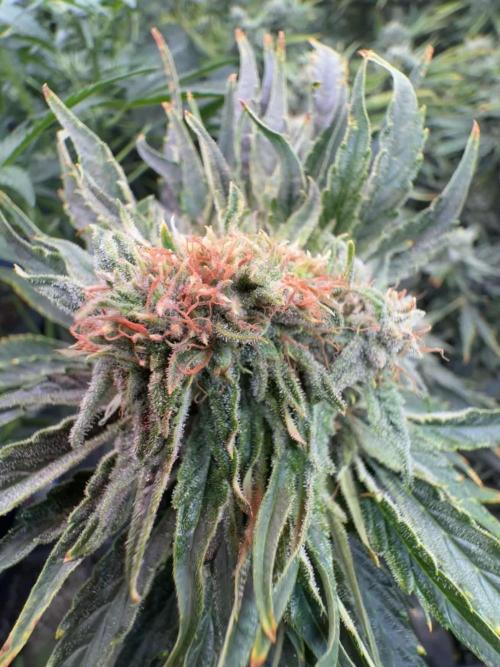
Day 28 today start of week 5 and showing a few white hairs, defoliated and tied down again a couple days ago and bounced back as they should,.. dropped humidity levels abit and will be starting there next weeks feed maybe tomorrow with added bloom nutrients as per biobizz feed guide,.. again roll on next week,... zkittles front left smoothie back right, how we looking guys 🤔


@Growbody
Follow
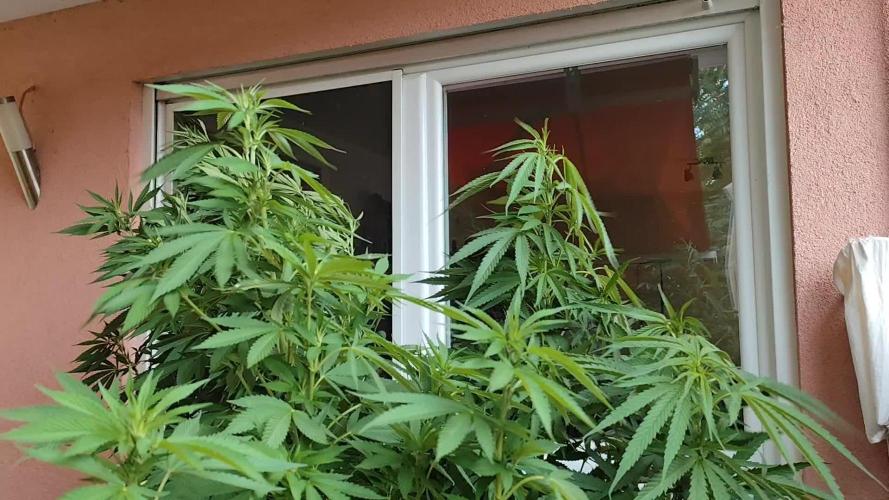
Hallo und herzlich willkommen zu meinem Growbericht Outdoor 2025 mit den Sorten Power Flower Feminized, Royal Medic Feminized und Special Kush #1 Feminized, alle 3 von Royal Queen Seeds. Es ist das erste Mal, das ich Töpfe für den Outdoor grow verwende, bisher waren alle Gorilla grows und direkt in die Erde gepflanzt.
Die URL der Power Flower Feminized: https://www.royalqueenseeds.de/feminisierte-hanfsamen/120-power-flower.html
Die URL der Royal Medic Feminized: https://www.royalqueenseeds.de/cbd-samen/148-royal-medic.html
Die URL der Special Kush #1 Feminized: https://www.royalqueenseeds.de/feminisierte-hanfsamen/138-special-kush-1.html
Die Planung für den Grow ist, die Samen in easyplug Anzuchtwürfeln keimen zu lassen und danach in 0,6L und 2,2L Plastiktöpfen, dann letztlich in die neuen komplett doppellagigen ROOTIES 15 Liter Wide Version Stofftöpfe umzutopfen. Sobald die Witterung es zuläßt, sollen die Pflanzen an die frische Luft.
Es ist schon eine Weile her, das der Grow losging, die Bilder sind jetzt aktuell.
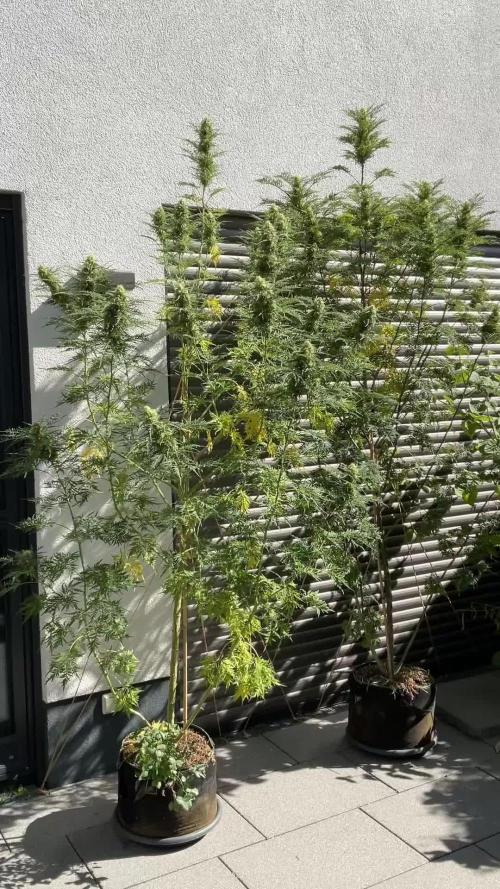
Tag 133: Die Power Flower fem. ist jetzt 170 cm, die Special Kush #1 fem. 170 cm und die Royal Medic fem. 145 cm hoch. Gestern haben die drei einen kurzen Regenguss abbekommen, war nicht schnell genug draussen. Heute ist das Wetter ideal, leicht bewölkt, 27°C und 45% Luftfeuchtigkeit. Es wird weiter 2x am Tag jeweils 1,5 Liter gegossen, den Schachtelhalmextrakt gibt's nur 1x alle 14 Tage.
Tag 135: Sehr windig und ein düsterer Himmel, den Rest des Tages verbringen die Großen unter'm Balkon.
Wenn's dir gefallen hat, schau wieder vorbei ✌️😎


@Tower84
Follow
🌿 Woche 26 – Mentha de Croco von Terpyz 🇩🇪
Die Entwicklung der Buds schreitet momentan wirklich hervorragend voran 🌸💚. Besonders bei der linken Pflanze sieht man inzwischen jeden Tag deutliche Fortschritte. Die Buds beginnen bereits wunderschön in der Sonne zu glitzern und die ersten Trichome machen richtig Lust auf das Endergebnis ✨☀️.
Auch der Geruch beim Reiben an den Zuckerblättern wird immer spannender 👃🌿. Ich würde das aktuelle Aroma als zitronig, minzig, leicht lösemittelhaltig und mit einer feinen Beerennote beschreiben 🍋🍃. Eine wirklich interessante Kombination, die sich hoffentlich in den kommenden Wochen noch weiter entwickelt.
Der Breeder erwähnt, dass es bei diesem Cultivar seltene Blaubeer-Phenos geben soll, deren Buds allerdings Unterstützung benötigen 🌸. Ich könnte mir durchaus vorstellen, dass sich die linke Pflanze in diese Richtung entwickelt. Natürlich ist es dafür noch viel zu früh, um das sicher zu sagen, aber die Kombination aus Aroma und ihrer bisherigen Entwicklung macht mich definitiv neugierig 👀.
Von allen drei Pflanzen in meinem aktuellen Grow riecht die linke Mentha de Croco momentan tatsächlich am besten 😍. Ich bin deshalb besonders gespannt, wie sich ihr Aroma bis zur Ernte noch verändert.
Die rechte Pflanze ist im Vergleich momentan etwas unspektakulärer 🌿. Dafür scheint ihre Struktur etwas unkomplizierter zu sein, sodass ich mir bei ihr wahrscheinlich etwas weniger Sorgen um die Unterstützung der Buds machen muss 🌸. Bei der linken Pflanze werde ich das Gewicht der Buds definitiv weiter im Auge behalten.
Beim Wasserverbrauch liege ich momentan bei ungefähr 2,5–4 Litern pro Pflanze und Tag 💧. Das hängt inzwischen stark davon ab, wie warm es tagsüber wird. Diese Woche soll es noch einmal etwas wärmer werden ☀️🌡️ – für die weitere Blütenentwicklung dürfte das durchaus hilfreich sein.
Langsam steigt bei mir wirklich die Vorfreude auf das Endergebnis 😍🌸. Gerade die linke Pflanze macht mich mit ihrem Aroma und dem zunehmenden Trichombesatz richtig neugierig. Jetzt heißt es weiter beobachten, das Wetter genießen und hoffen, dass die Pflanzen ihre Buds noch ordentlich weiter aufbauen 🤞🌿.
🌿 Week 26 – Mentha de Croco by Terpyz 🇬🇧
The bud development is progressing really well at the moment 🌸💚. Especially on the left plant, I can see noticeable changes almost every day. The buds are already sparkling beautifully in the sunlight, and seeing the first serious layer of trichomes is making me really excited about the final result ✨☀️.
The aroma when rubbing the sugar leaves is becoming more and more interesting as well 👃🌿. At the moment, I would describe it as lemony, minty, slightly solvent-like, with a subtle berry note 🍋🍃. It’s a really fascinating combination and I hope the terpene profile continues to develop over the next few weeks.
The breeder mentions that this cultivar can occasionally produce rare blueberry phenotypes, although those buds apparently need some additional support 🌸. I could definitely imagine the left plant moving in that direction. Of course, it’s still far too early to say that for sure, but the combination of its aroma and overall development definitely has me curious 👀.
Out of all three plants in my current grow, the left Mentha de Croco actually smells the best at the moment 😍. I’m therefore especially interested to see how her aroma develops by harvest.
The right plant is a little less spectacular for now 🌿. However, its structure seems somewhat easier to manage, so I’m expecting slightly fewer concerns about supporting the buds 🌸. I’ll definitely keep a close eye on the weight of the buds on the left plant.
Water consumption is currently around 2.5–4 litres per plant per day 💧. It varies quite a bit depending on daytime temperatures. It’s supposed to get a little warmer again this week ☀️🌡️, which should hopefully help with further bud development.
I’m getting more and more excited about the final result 😍🌸. The left plant in particular has me really curious with her aroma and increasing trichome coverage. For now, it’s all about watching the plants develop, enjoying the warmer weather and hoping they continue to stack up those beautiful buds 🤞🌿.


@HighKing
Follow
Very productive strain with big frosty buds. Had a strong smell in and around the tend so make sure you have a big filter system.
The plants were healthy and strong.
This wasn't my last time growing this beauty


@Thigh
Follow
Werde sie denke jetzt so lassen wie sie ist. Bin Mega zufrieden für mein erstes Outdoor Projekt. Die Farbe lila ist einfach Mega und der Geruch steigert einfach nur die Freude auf die Verkostung. 😄


@angrygrower
Follow
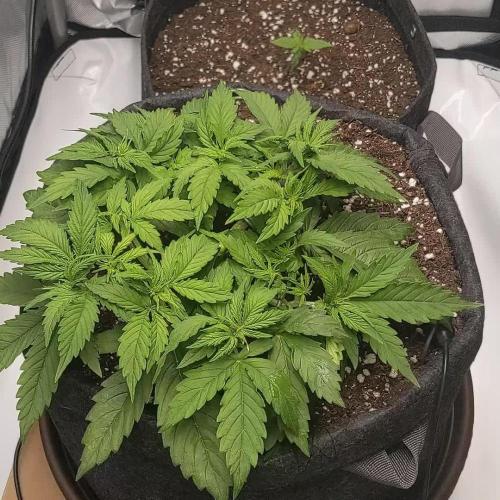
I hope she recovers well from my LST and defoliation, like the previous times.
Watering 2l, pH 6.4 on day 26.


@Ju_Bps
Follow
Hello my friends 👨🌾👩🌾,
Week was good, senescence a bit in late, Buds look compact 🌲🌲 and frosty ❄️❄️
I've stopped fertilizer,
💦 I've given 3x 2 l/plant
Water + Cannazym
Water + Cannazym
Water + Cannazym
PH@6
Lamp @75%
Not yet ready, Harvest next week ✂️
See you next week and have a good week end my friends 🔥👨🌾👩🌾
Thank to Mars Hydro and @marshydrococo2 for sponsoring the FC3000 ❤️❤️, as well as @Fast_Buds for sponsoring the Seeds ❤️❤️
If you want a litle discount on your Mars Hydro order, add this coupon to your cart,
"Ju_Bps"
Thanks community for follow, likes, comments, always a pleasure 👩🌾👨🌾❤️🌲
Mars Hydro - FC3000
https://www.mars-hydro.com/fc-3000-samsung-lm301b-led-grow-light
42 Fast Buds - BANANA PURPLE PUNCH🍌🌲
https://2fast4buds.com/seeds/banana-purple-punch-auto


@Greenbean420
Follow
One of the plants grew massive! However the smoke wasn’t the best until a good 4 weeks cure. Very hairy buds too which was interesting 😂 Still a nice smoke