Likes
Comments
Share
Likes
12
Share
@SkunkyDog
Follow
Hallo zusammen 🤙. Habe sie heute geerntet. Wir sehen uns in 3 Wochen mit dem Ergebnis wieder. Bis dann 🤙
Likes
5
Share
@Ekoms
Follow
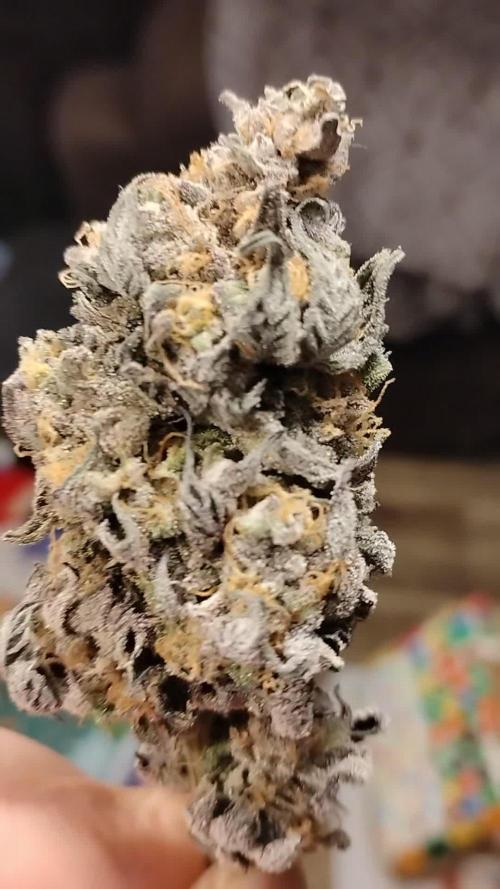
"Last days for Biscotti 2 and 3. I think I'll harvest them in 3 to 5 days. They smell amazing! BM 1 needs 7 to 10 days max, but I might just cut everything at once to make room for the next round. We'll see what the trichomes show."
Likes
16
Share
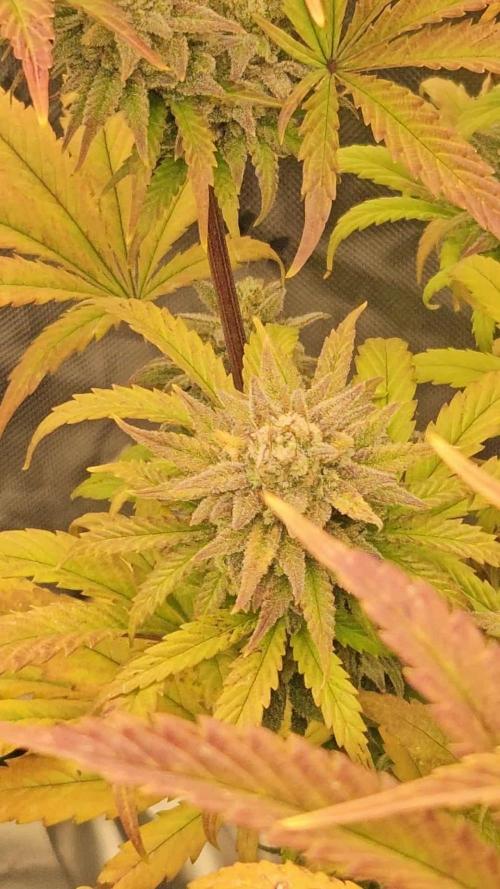
Vamos familia, aquí os traigo la octava semana y tercera de floración de estas Royal Gorilla de RoyalQueenSeeds. Vaya color, y van con buen ritmo. La temperatura maxima es de 26.5 y la Mínima se queda en 23.5. En cuanto a la humedad está estable en 50% No tienen vergüenza los de grow diaries lleva 3 semanas dando errores la web… y no hacen nada Agrobeta: https://www.agrobeta.com/agrobetatiendaonline/36-abonos-canamo Mars hydro: Code discount: EL420 https://www.mars-hydro.com/ Hasta aquí es todo , espero que lo disfrutéis, buenos humos 💨💨
Likes
1
Share
@TTerpz
Follow
Start of week 5 8/20/25 Flushed with sledge hammer : 8/21/25
Likes
167
Share
🗓️ 4° WEEK FLO // DAY 22-28 (from switch) // DAY 99-105 (from dry seed) ⚡- Light: 30 cm / 250 watt; ⌛- Schedule: 12/12; 🌡️- 22.5° C - 65% RH average; 📑- PH 5.8 - EC 2.2; 💧- 6° DWC change; 🍔- Flowering blend: tap water EC 0.4 + Silic 0.5 ml/l + CalMag 1 ml/l + Hydro A-B 1.6 ml/l + Oligo Spectrum 2 ml/l + Green Sensation 1 ml/l; 🥅- Still bending the branches trough the ScrOG-net. That was the last week, branches are stiffening; 🌱- I did my best to flat that canopy, next week I'll remove some leaves and some branches.
Likes
5
Share
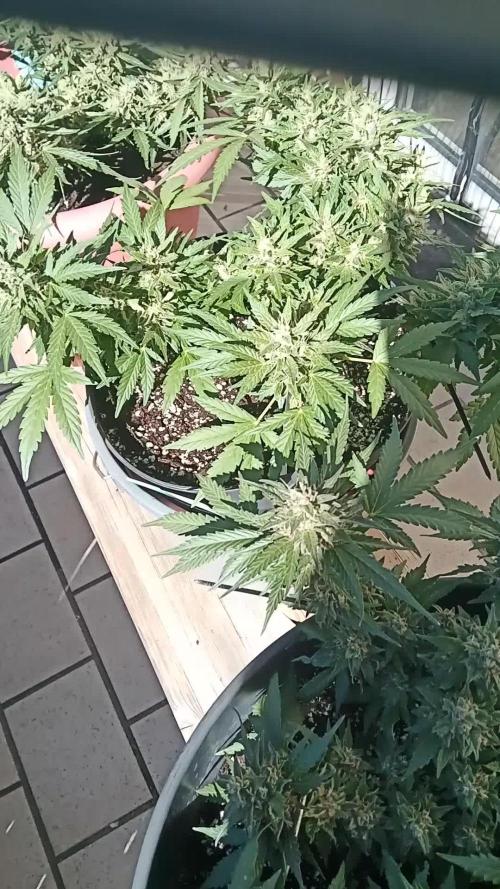
Now this is where things get interesting. According to the growth cycle of autoflowers, we’re now hitting the end of the vegetative phase, and the first flowers are starting to form. The plants have developed an even canopy and look relatively bushy. I reckon this favors an indoor setup, since the light comes straight from above with little to no diffusion—aside from reflections off the inner tent walls. I am aiming for a VPD between 0.7 and 0.8 kpa now to support plant growth! I’ve adjusted the watering schedule to 1.5L per plant every third day from now on—bigger plants, bigger thirst! Bonus: Tomatoes and an absolute Hulk of a parsley plant!
Likes
3
Share
Likes
6
Share
@Kannamar
Follow
Well that was a special day, it always make me sad in a way, but this time, I enjoyed the moment a lot. As I wrote in a reply to a comment, things can always be better, and they are with good decisions at the right time. These are the smallest and the biggesr plant, one seed didn't germenated and that's why I had to put a Red Gorilla. Not sure I will try a main mlinning on auto flowering strains any more.... but I think I did it wrong, first I took the one that seemed less strong for the experiment, and having 2 other plants to compete for lights. FIM is definetly a technique I will reuse if needed. It's so nice to have these genetic contrasts, colors, aromas, shapes. Many thanks for all the help you gave, precious. 19/04/2024 lower popcorn buds seems dried already! But still branches don't crack on bends. Will check again on Monday. I finally have received, lately a portable microscope, will be more ususeful next year! But this confirms that lower buds might have need more maturity but did the choice to not over complicate by harvesting in 2 times, my indoor tent is also my drying tent, and I wouldn't have any other place to dry the upper buds separetly while allowing the remaining to harvvest with more maturity. In general I think I might have began the Final part too early. BTW, we smoked the popcorn bud, and it's very promissing, we liked it.
Likes
6
Share
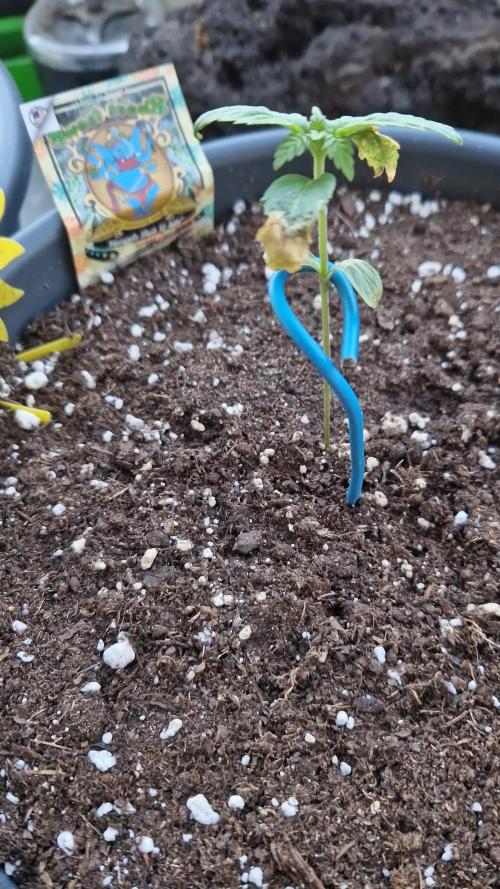
I think everything was well but then i see the Doppler Plant starts automatically to bloom 😳🤯 and that under a 18/6 Cycle. I know that S1 Strains (self pollinated Mother Plant) are not Automatic Plants. Only when one of their Parents have these Genes. So i was a little bit confused and started to write with the Breeder about that. They are really curious too, how this can happen Was a wild Week with that News. But don’t worry i give her the best Light Intension as i can for the other Plants Veg. PPFD Range was between 500 and 600. Get the Pot higher that she get enough Sun. For now it was not that bad I‘m sure there come not really an Stretch. I started to spread the Plant out as much as i can with LST Mixed her before i discovered that 500ml Water with 20ml Orgatrex and 1g Bactrex in it. It wasn't quite what I expected, as I now drive one Auto and three Photperiods. But I'm still in a good mood 🤩
Likes
3
Share
Likes
3
Share
Again I haven't taken any pictures of this plant was on the side of the fan that didn't go down I've inspected her all over and I've found no evidence of mold or bud rot. This plant is now drying separately to the offer plant I just didn't want to take photos for it all to end up in the bin but this should be a nice harvest
Likes
5
Share
@TJHeadley
Follow
This week was a little late due to the holiday. This is the week RSQ Wedding Cake flipped to flower. I accidentally super cropped her when trying to bend a branch over. After that she started drinking a whole lot more (hence the underwatered pictures)
Likes
Comments
Share
@SpliffDoc
Follow
She got flipped on day 36. Saw pistils a couple of days later. She isn't big, but she's a beauty. I think this strain would be better left to grow naturally rather than pissing around LST'ing. The response hasn't been what i expected. The proof is in the end product though so let's see😁🏻
Likes
21
Share
Heyókȟa I desire to study nature, and to know better the mind of God, the creator, Holy art thou, O Father. 12x12=144, A dodecahedron is a polyhedron with 12 faces, and in coordination chemistry, it refers to a geometry where ligands surround a central metal atom (in this case, Magnesium) in a specific, 8-coordinate arrangement. Dodecahedrane is a hydrocarbon, meaning it's composed solely of carbon and hydrogen atoms. The carbon atoms are arranged at the corners of a dodecahedron, a 3D shape with 12 pentagonal faces. The water molecules in the dodecahedron form hydrogen bonds that are individually slightly weaker than in either the dimer or the tetramer. However, because three-quarters of the O -H groups in the dodecahedron form hydrogen bonds, it has a more negative energy per molecule than has either the dimer or the tetramer. Magnesium (Mg2+) is the essential, central metal ion in the chlorophyll molecule, crucial for photosynthesis by enabling light absorption and energy transfer. It is chelated by four nitrogen atoms within the porphyrin (or chlorin) ring structure. Chlorophyll appears green because it reflects light in the green region of the visible spectrum, specifically between 490 and 570 nm. The main resonance electronic frequency of a neutral Magnesium (Mg) atom corresponds to the transition from the ground state to the first excited state. Resonance Line Wavelength of Mg2+: 285.1nm (UVB light). The central atom of the chlorophyll molecule is Magnesium (Mg2+), which is coordinated within a porphyrin ring. The electronic "resonance frequency" of this central atom—meaning the frequency at which its electrons absorb energy—is primarily driven by the electronic transitions (ETR) of the surrounding conjugated chlorin ring structure, rather than a discrete atomic transition of the Magnesium atom itself. The resonant electronic frequencies of the chlorophyll porphyrin (technically, a chlorin) ring are determined by the energy required to promote π-electrons within its conjugated system, primarily appearing in the blue and red regions of the visible spectrum. In standard physics, Chloryphyll b has peak absorption at 460nm (Blue). If we take the peak wavelength 460nm and a UV-B, UVR8 peak absorption wavelength 285nm Tryptophan-285 (W285) Sensing protein. 460/285=1.618 Φ, "natural harmony" and the "structure of light". The cryptochrome photoreceptor (CRY) is a UV-A/blue light receptor that shares this dual sensitivity with several other biological structures and functions, including significant sequence similarity and a common evolutionary ancestor with DNA photolyase enzymes. These are light-activated enzymes that use blue/UV-A light to repair DNA damage caused by UV-B radiation in plants. Dodecahedrane (C20H20) is a hydrocarbon with a cage-like structure where carbon atoms form 12 pentagonal faces (a regular dodecahedron). It is highly symmetric (icosahedral), contains no delocalized electrons (no aromaticity), and has minimal angle strain, but significant torsional strain. Water Dodecahedron (H2O) forms hydrogen-bonded cages. While individual hydrogen bonds in this structure are weaker than in the linear dimer or tetramer, it has a more negative total energy per molecule. This is because three-quarters (75%) of the groups are involved in hydrogen bonding, creating a very stable, closed-shell configuration. a 3D carbon hydrocarbon (C20H20) to stable water clusters in hydrate, while the Magnesium ion acts as the central activator within a conjugated ring in biological systems, with its electronic absorption dominated by the ring, not the atom itself. Effective quantum efficiency of photosystem II, often denoted as ΦPSII In horticultural lighting, adding 730 nm (far-red) LEDs alongside standard red/blue lights has been shown to increase canopy photosynthesis by 20–30% in several crops by acting synergistically with shorter wavelengths. However, the limitation is that excessive, pure IR/Far-red light (without accompanying red light) can trigger the "shade avoidance response," causing plants to grow tall, weak, and spindly rather than robust. Knowing is half the battle however, engineering or utilizing infrared light (specifically the 700-750 nm far-red range) is a viable method to boost photosynthetic efficiency. It acts as a bridge to allow PSII to utilize a broader spectrum of light, breaking the traditional 700 nm barrier. Extend, then multiply. UVR8-mediated signaling (often in conjunction with CRY proteins) triggers protective mechanisms that maintain the stability of the photosynthetic apparatus (including LHCII and reaction center proteins), thus ensuring that the efficiency of Photosystem II remains higher in UV-B-exposed plants compared to plants lacking this receptor. ΦPSII indictates the rate of electron transfer from water to plastoquinone, which drives the production of ATP and NADPH. There is a close link between ΦPSII and the true rate of CO2 fixation (Φ*co2), particularly in C4 plants. Effective quantum efficiency of photosystem II, often denoted as ΦPSII, represents the proportion of light absorbed by Photosystem II (ΦPSII) that is actually used in photosynthetic electron transport. It is a key indicator of how efficiently a plant is using light for photosynthesis, as opposed to losing it as heat or fluorescence. ΦPSII (effective quantum yield of photosystem II) functions primarily as a "multiplier" (a coefficient of efficiency) rather than an additive factor when estimating the overall photosynthetic electron transport rate (ETR). Multipliers are considered far more beneficial than additions because they generate exponential growth, leverage existing resources to their full potential, and create sustainable, self-multiplying capacity, rather than just incremental, linear increases. Humans, and most other mammals, rely on other mechanisms, such as nucleotide excision repair, to manage and repair UV-induced DNA damage. As such, humans do not have the direct, light-driven repair mechanism that photolyase offers in plants.
Likes
16
Share
@Dunk_Junk
Follow
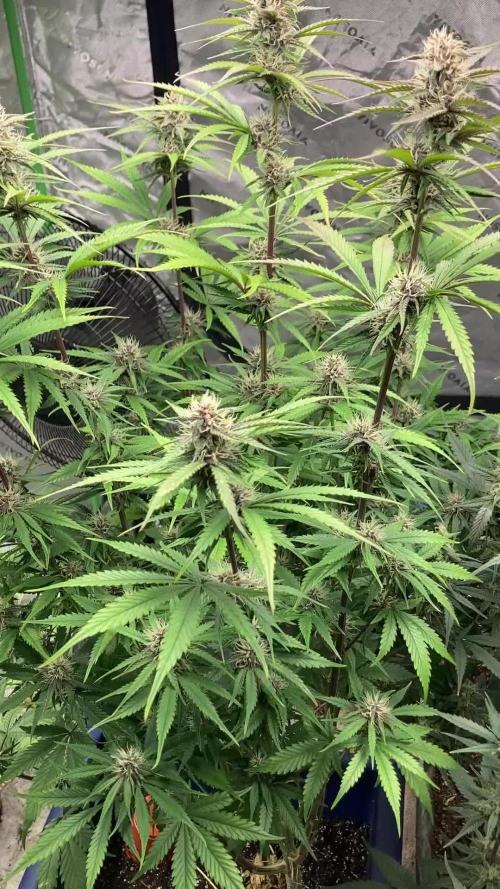
Wow she's grown loads this week. 22cm vertical growth. Flowering going full steam ahead!! 😎 💪