


Likes
Comments
Share


@Cariboo_OG
Follow
The Number's;
Started with;
564g Wet on the Scale
Finished with;
263g Dried Flower.
Plus some Pollen for a Personal project..
IMO; Definitely decent yields for a pheno hunt.
Two tents filled with Pheno 3... would be OFF the Chart yields :) That is coming soon !
Big Thanks to EVERYONE who stopped in to support this diary.. your the real MVP's
Until Next Time,
Cariboo.


Likes
38
Share


@MadeInGermany
Follow
Info:
Unfortunately, I had to find out that my account is used for fake pages in social media.
I am only active here on growdiaries.
I am not on facebook instagram twitter etc All accounts except this one are fake.
Have fun with the update.
Flowering day 30
since time
change to 12/12.
Hi everyone 😀.
Another very nice week.
This week it was poured twice with 1 l.
1 g enhancer per liter of water was added.
Otherwise, like every week, everything was checked, everything was cleaned and refilled.
Have fun with the update.
Stay healthy 🙏🏻
You can buy this Strain at :
https://www.zamnesia.com/de/4532-zamnesia-seeds-gorilla-glue-feminisiert.html
Type:
Gorilla Glue
☝️🏼
Genetics:
Chem's Sister x Chocolate Diesel
50% Sativa/50% Indica
👍
Vega lamp:
2 x Todogrow Led
Quantum Board 100 W
💡
Bloom Lamp :
2 x Todogrow Led
Cxb 3590 COB 3500 K 205W
💡💡☝️🏼
Soil :
Canna Coco Professional +
☝️🏼
Fertilizer:
Green House Powder Feeding
☝️🏼🌱
Water:
Osmosis water mixed with normal water (24 hours stale that the chlorine evaporates) to 0.2 EC. Add Cal / Mag to 0.4 Ec Ph with Organic Ph - to 5.5 - 5.8 .




Likes
26
Share


@Rock_n_Roll_Randy
Follow
DID SOME MORE MAJOR DEFOLIATION ON ALL THE PHOTOPERIODS AGAIN, THE 2ND WEEK IVE DONE IT, SO THE LIGHT CAN PENETRATE THE BOTTOM BRANCHES . NOT MANY LEAVES LEFT AGAIN LOL. CHECK EM OUT NEXT WEEK TO SEE THEM HOPEFULLY EXPLODE
FINALLY STARTING THE PHOTOPERIODS AND I HOPE MY TIMING IS GOOD FOR CHOPPING THE AUTOFLOWERS..........SEEDS PUT INTO THE SOIL ON JUNE 22ND.
RUNNING OUT OF ROOM IN THE 8X8 TENT SO I PUT ALL THE PHOTOPERIODS IN THE 5X5 WITH A TSW2000. SOME FAN LEAVES ARE BIGGER THAN MY HAND NOW.
SORRY TO EVERYONE WHO TRIES TALKING TO ME....I STILL CANT TALK TO ANYONE BECAUSE I TRIED CHANGING MY EMAIL ON HERE AND IT MESSED EVERYTHING UP. I CANT LIKE ANYTHING OR COMMENT ON ANYTHING. THE WORST IS I CANT JOIN CONTESTS
STRIVE NUTRIENTS IS THE BEST IVE EVER USED. A MUST TRY AND I BUY IT MYSELF. GOT A SAMPLE LAST YEAR AND ITS SO GOOD I BOUGHT MORE. ITS A 2 PART POWDER NUTRIENT THAT DISSOLVES IN MINUTES AND YOU MIX THE SAME STRENGTH OF THE 2 PART NUTRIENTS FROM WEEK 2 UNTIL THEY ARE FINISHED (BESIDES THE FLUSH), NO MORE BULLSHIT OF SWITCHING TO BLOOM FERTILIZER. THATS MY FAVORITE THING BESIDES THE RESULTS.
CHECK EM OUT AND BELIEVE EVERYTHING YOU READ BECAUSE ITS NO BULLSHIT, AWESOME FRIENDLY AND HONEST PEOPLE
Likes
34
Share


@Weedeep
Follow
Well the grow was very pleasant, she got amazing structure an look of the buds, very frosty and amazing smell...so thank you Mephisto genetics you did insane job. i have ordered few seed from Mephisto but they lost i guess(((coz i have not receive them. So thanks guys for support and helping me for this grow all GD Family,Luv you all!!! Peace

Likes
10
Share


@Mr_Ewell
Follow
9 weeks from sprout. Week 3 in flower.
Everything's going smooth.. i think. Had degrees up mid 90s for a couple days and plugged in the ac. My bedroom is cold as fuck now which has my closet ranging from 77 at night to 81 during the day. I really don't want any colder than that. They are starting to smell jus a little more these past three days. At first i didn't smell them unless i touched em for the most part.
Ppms staying between 2000 and 2300...
Playing the damn waiting game.
I got some free time tomorrow. Maybe ill take some of them close up glam-style shots of some buds starting to form.

Likes
46
Share


@PureMedicin
Follow
Coming along Very nicely and i already harvested one blueberry 1 week too early but still a very strong smoke and pretty aggressive to the throat. Amasing strain from AMS every seed were pretty amasing one standing out tho and its very frosty.

Likes
2
Share


Likes
64
Share


@CHILLING_RACOONS
Follow
Dear Friends ❤️
in this week we topped again and bended these two Slurricane by Anesia Seeds.
They recovered really fast from this stress again, from now they will develope a lot of bud sites!
I missed to give top crop Big one at 14 october, it is important to give 10 days before flowering
The last day of this week we switched the light to 12/12
week #5 of vegetation
The 240w light is working at 50% power and now it is combined with the 480w quantum board.
I consider week 4 the week from 18/10 to 24/10.
day to day fert schedule:
📅 18/10
📅 19/10 NEEM OIL
📅 20/10
📅 21/10 Top Veg 3ml/L-Deeper Underground 2ml/L - Green Explosion 2ml/L - big one 2ml/L - PURPINATOR 1,2ml/L
📅 22/10
📅 23/10
📅 24/10
we are starting a new grow cycle with a lot of AMAAAAAZING genetics. We can't wait to show you our progresses with these little babies.
I really want to thank Martin of Anesia Seeds, he helped us with the strain's choiches, so THANK YOU Martin, thank you Anesia seeds.
Seeds and merchandising ( my god we love these things ❤️❤️❤️) were sent in a dark discret package, shippin was incredibly fast, now is our mission to achieve the best from these lovely seeds.
Germination was incredibly fast, less than 36Hours to make the root sprout on.
ABOUT: Slurricane
Slurricane was created by crossing two first-class trend varieties: a Nor-Cal-Cut of Do-Si-Dos was crossed with an extremely potent and long-selected Purple Punch. The result is an outstanding Indica dominant hybrid with an extremely high THC content and a complex terpene profile.
Slurricane is currently one of the most popular strains in the United States. We became aware of the genetics early on and got down to work to get the best out of it and bring the strain to its limit. Anesia ‘s Slurricane is currently one of the strongest cannabis strains in the world and can produce an incredible THC level of up to 30%. Its resin production is gigantic and the aroma is simply stunning.
The plants from the Slurrican seeds are easy to cultivate, grow quickly and vigorously. With sufficient light, the plants develop into real gems that leave nothing to be desired. Within the flowering period of 64 days, the variety forms very dense and compact flowers that have an oversized resin production. The buds are covered with a glittering thick layer of resin.
The aroma is intensely fruity and sweet like berries with a fresh citrus note. Not only its taste becomes an unforgettable experience. The high offers an amazing potency, with strong physical and cerebral effects. Slurricane is a knock-out strain and the effects last long and create happiness. It will bring your body to complete relaxation and envelop you in a warm cloud, while at the same time creating positive feelings that bring all your senses to a higher level.
The thick, dense buds carry a very unique und tasty trichome covering that make them ideal for producing cannabis concentrates.
Data sheet:
genetics: Do-Si-Dos (Nor-Cal-Cut) x Purple Punch
• feminized seeds
• flowering period: 64 days
• 60% Indica, 40% Sativa
• yield: 450-500 g/m²
• Medical uses: mood enhancement, stress, pain, muscle tension
💸💸💸💸💸Buy Slurricane https://anesiaseeds.com/product/slurricane/
🔧💡WHAT WE ARE USING💡🔧
-LIGHTS:
💣Quantum board - 480w - 4x120w Boards by Zhoangshan Koray Opto-Electronic Ltd.
Samsung LM301B 288 led/board
+24led/board led Osram 660nm
Efficiency 2.6 umol/J 220 lm/w
Driver: Meanwell HLG-480H-36B
temperature: 3000k
Heat dissipator board: No
Noise: 0dB
💣Quantum board - 240w - 2x120w Boards by Shenzen Yuanhui Led Ltd.
Samsung LM301H 504 led
+24led/board led Osram 660nm
Efficiency 2.7 umol/J 220 lm/w
Driver: Meanwell HLG-240H-48B
temperature: 3500k
Heat dissipator board: YES 15MM
Noise: 0dB
-ESTRACTION FAN:
Blauberg 125 Turbo Pro Series
Power: 42-50W
RPM: 1940-2620 minimum -1
Maximum air flow: 430-560 m³ / h
Sound pressure level at 3 m: 32-44 dBA
-FANS:
A)OSCILLATING FAN
Maximum consumption: 20 W
Minimum consumption: 17 W
Fan diameter: 15 cm
Housing diameter: 20 cm
Height with handle: 35 cm
2100 revolutions per minute
Two speeds
B) COMPUTER FAN Sunon DP200A - 230V
Nominal power: 22/21 Watt
Noise level: 44 / 49dB (A)
Rated speed: 2700/3100 RPM ± 10%
Air delivery: 95/115 CFM
C)Cornawall Electronics Multifan Turbo, three speeds, can be used both on support surfaces and mounted on the wall. High capacity, about 740 m3 / h, can be used in medium-sized rooms. High silence and reliability make it adaptable and versatile.
Technical details:
Rotation range of 90 degrees
Tilt adjustment
Three speeds of rotation
Suitable for wall and ceiling suspension
Power Consumption: 35 Watts
Air Flow: Approx. 740 mc / h
Operating noise: approx. 39 db
Diameter: 20 cm
Voltage: 220-240V
Frequency: 50Hz
Dimensions: L 28 x D 16 x H 28 cm
💊💉💊FERTILIZERS:
MAIN FERTILIZER BRAND: TOP CROP
I use these products:
-DEEPER UNDERGROUND: to stimulate roots system
-TOP VEG: for a excellent growth in the vegetative phase
-GREEN EXPLOSION: to promote creation of bud sites and to allow a faster growth
-MICRO VITA: bacterias for equilibrate the soil and to make the plant healty
-BIG ONE: to stimulate bud sites and to stimulate resin production
-TOP BLOOM: to achieve excellent big and hard buds
-TOP CANDY: to feed the buds with molasses for a tastier smoke and to gain weight
-TOP BUD: to enlarge buds and to gain weight
PLAGRON: PK 13-14 to have big and hard buds and to feed plants with lower effort
ADVANCED NUTRIENTS: Sensi Cal-Mag Extra-> for cal mag deficiency
GROTEK: CAL MAG for cal mag deficiency
HESI: PowerZyme to clean and balance the soil. It feeds the plant cleaning the soil.
GHE: - Final Part (ex Ripen) accelerate the final flowering phase, dissolves minerals in excess
- Flash Clean to flush the plant and to be sure that all excesses are out from plant and pot
These two products improve A LOT the smoke of our babies
-PURPINATOR to stimulate flavonoids and to have a better taste and smell.
____________________________________________________________________________________________
❤️ THANK YOU FOR BEING HERE ❤️
Please leave a comment with your opinions, it is very important to us to have a comparison.
If you like our job, tap the weed button and follow us. It will be really appreciated.🙏
🌿Thank you again🌿
❤️Sweet hugs❤️
👨🌾CHILLING_RACOONS👩🌾

Likes
41
Share


@DOOBS_N_BREWS
Follow
I got a very cool time lapse video of this plant bouncing back from its topping/ mainlining. I haven't feed with any nutrients I've been focused on balancing PH and feeding the soil with microbes right now to support the roots. The plant seems very healthy and isn't telling me she wants nutes yet! I have 6 colas now but I might go for 10-12 im not sure yet! Im so excited about how she is growing and im hoping to cut a few clones from her to keep these good genetics!
I have a ExHale Co2 bag in the tent its properly propagating and producing co2 at this point. It states that it supply up to 1500 ppms of C02 but I have no way to measure it. I place the bag at the bottom of my tent (because c02 is heavier than air). I have a box fan on low and no ventilation running in my tent. This is so I can maintain higher moisture levels in the tent and also because I don't really need ventilation these plants don't smell. By turning off the ventilation I have significantly higher moisture

Likes
23
Share


@Firepharmer
Follow
In to week 7 now starting to flush!!
Very impressed with this run 💚🌱💚🌱
I’m now running the Futur vert 30 W uv led for 5 hours of the 12/12 with the Futur vert flora max series


Likes
23
Share


@DreamIT
Follow
-Sponsored by:
⚖️HUMBOLDT SEESDS⚖️-💡VIPARSPECTRA💡-💐GREEN BUZZ LIQUIDS💐-🛠️WEDRYER🛠️
🏁18/6 hello growerz, with today I start the resumption of diaries on GD. I have 13 new genetics in germination and as many diaries. I start by putting the seeds in water for 24 hours, after a day I will put the two seeds in two different jiffies, one with humic acid from greenhouseseeds and the other with just plain water. Get comfortable and follow the updates 😉👋🦄
19/6 The seeds were divided and placed in two different jiffies, one with humic acid and one with water only.
21/6 after another 24 hours in the dark the jiffies were moved under the lamp. let's start the dances!
23/6 still nothing to report
24/6 still nothing to report
25/6 the seed in jiffy with humic acid has sprouted, the other still nothing
30/6 the seed born goes well, tomorrow I check the second seed, if it does not check it will make room for another genetics always signed by humboldt seeds
__________________________________________
Personal advertising (contains affiliate links)
__________________________________________
🦄 Highly professional graphics and website, one-of-a-kind genetics, and a legendary story! Anonymous shipping!
✅https: //bit.ly/HumboldtSeedsCompany
__________________________________________
Did you know that Green Buzz Liquids fertilizers are 100% vegan? A complete line of products ready to give the best to each of your plants! Visit the site and see my journals to see how they work 🦄
🤯 And with the code "dreami t" you will immediately receive a 15% discount on your purchases
✅https: //bit.ly/GreenBuzzLiquidsPro
__________________________________________
👀 Are you looking for a good lamp to start with? 👀
🌞Viparspectra has something more than the others, take a look at their site.
⏩ Use "GDVIP" for an extra discount or "DREAMIT3" for an extra 5 %% discount
👀 Search for it on Amazon
✅Amazon USA: https://amzn.to/30xSTVq
✅Amazon Canada: https://amzn.to/38udUVe
✅Viparspectra UE: bit.ly/ViparspectraUE
✅Viparspectra USA: bit.ly/ViparspectraUS
______________________________________________
🌈 Tired of blowing on your weed hoping it dries quickly? Check out the Wedryer website! You will find a well-made accessory that will help your weed dry in just 8-10 days without the annoying risk of finding mold or other annoyances! (no affiliate links)
✅https: //bit.ly/Wedryer_
______________________________________________
📷🥇Follow the best photos on Instagram 🥇📷
https://www.instagram.com/dreamit420/
Backup
https://www.instagram.com/dreamit4200/
🔻🔻Leave a comment with your opinion if you pass by here🔻🔻
🤟🦄💚 Thank you and good growth 💚🦄🤟

Likes
12
Share


@Todzilla
Follow
We finished up with a pound and a half of cured buds, and one pound of fresh frozen that contributed to 2 ounces of hash.
I lost at least another pound of bud to the caterpillars.
The light dep was hard to keep up with for 12 weeks. The quality was darn good. Super dense and sweet smelling nugz.


Likes
16
Share

@420DeepGrow
Follow
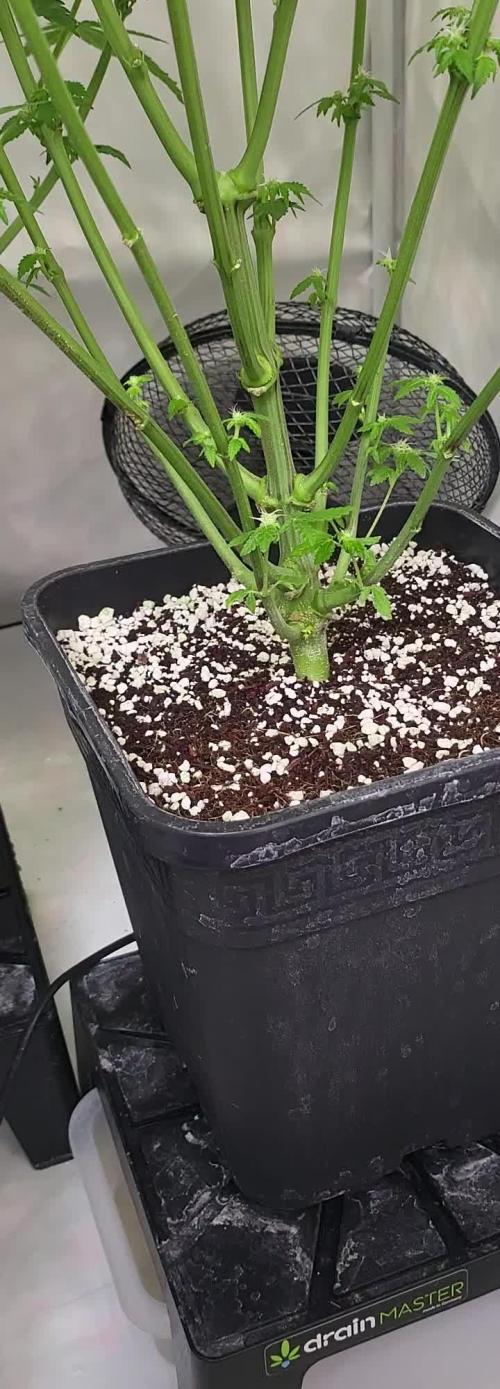
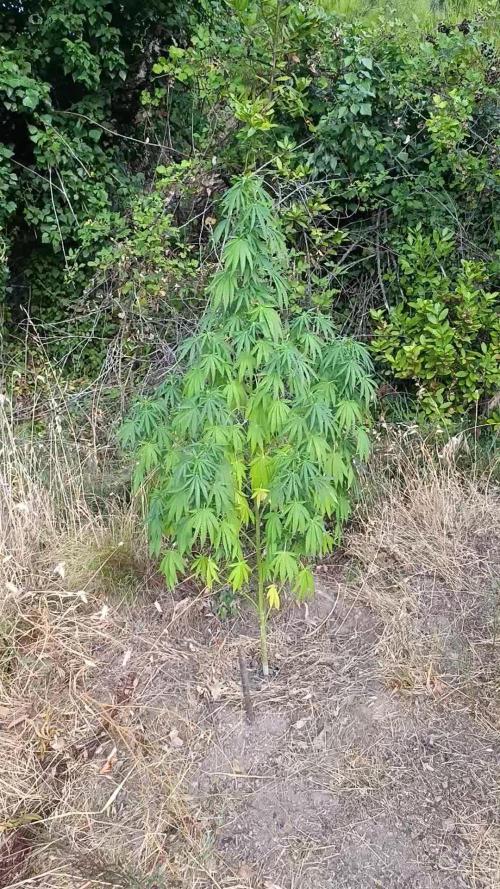
📆 Semana 6
Durante esta sexta semana, la planta continúa recuperándose del estrés sufrido durante la evacuación. Aunque todavía presenta algunas hojas amarillentas, mantiene una estructura fuerte y las nuevas puntas muestran buen desarrollo.
La mayor regularidad en los riegos, normalmente un día sí y otro no, está ayudando a recuperar progresivamente su vigor. A pesar de haber pasado nuevamente tres días sin agua, la respuesta ha sido positiva.
⚡ EC: 1.2–1.3
💧 pH: 6.2–6.5
🌡️ Agua: 20–23°C
🌫️ Humedad: 50–60%
💡 PPFD: Luz solar exterior
🌡️ Temp. ambiente: 20–32°C
🔥 Nota: La recuperación avanza bien y la planta mantiene una estructura muy fuerte. Ahora toca seguir con constancia y dejar que termine de recuperar su vigor.
Seguimos creciendo fuerte 💪!

Likes
101
Share

@DreamIT
Follow
🍓🍌🚗 Red Strawberry Banana Auto by Sweet Seed 🍓🍌🚗
🍌8.8
🍌9.8
🍌10.8
🍌11.8
🍌12.8
🍌13.8 It resumes with the updates yeeeeah !!!! I have developed 18 branches at the moment, and I will stop here, now I wait for it to come into bloom, very ready to give my best. yeah !!! Super Big Up for the Sweet Seeds sponsor who continuously produces these wonders 🤘🤘🦄🦄🦄🔥
🍌14.8
__________________________________________
❓ Are you new to the world of the cultivation and don't know where to safely buy your seeds?
😮From SweetSeeds you can find award-winning, sweet, fast, fragrant, beautiful, and delicious genetics !!!
✅http: //bit.ly/SweetSeeds_
__________________________________________
👀 Are you looking for a good lamp to start with? 👀
🌞Viparspectra has something more than the others, take a look at their site.
⏩ Use "GDVIP" for an extra discount or "ViparDreamIT" for an extra 5 %% discount
👀 Search for it on Amazon
✅Amazon US: https://amzn.to/30xSTVq
✅Amazon Canada: https://amzn.to/38udUVe
✅Viparspectra UE: bit.ly/ViparspectraUE
👀 Watch my ViparSpectra XS1000 unboxing on YouTube, leave a like and write to the channel 🦄
✅http://bit.ly/UnboxingViparSpectraDreamIT
______________________________________________
📷🥇 Follow the best photos on Instagram 🥇📷
https://www.instagram.com/dreamit420/
🔻🔻Leave a comment with your opinion if you pass by here🔻🔻
🤟🦄💚 Thank you and enjoy the growth 💚🦄🤟

Likes
14
Share


@madlangs
Follow
All going well. This was there final weekly treat. Plain water from now on.
29.1.24
feed 1.5L each
4ml/L Bio heaven
4ml/L Acti Vera
4ml/L topmax
4ml/L Bio bloom
Bactrex 6 spoons
Recharge 4 spoons
Ph6.2
Ec 1.2

Likes
3
Share


@Andres
Follow
She is growing strong and healthy... I am fighting with fungus ion the leaves... the first flowering.

Likes
19
Share


@LockDownGrow
Follow
So these ladies are in full swing of flower and the stretch I have tucked any branches I can under my netting too spread out the plants and too fill the tents canapy they are growing about 1 or 2 cm every other day at the moment so tucking under is the order of the week
Really into the massive stretch now I am having too move the climate control probe and thermostat every day now and these girls will soon cover the WiFi camera too , probably growing around 2 or 3 cm per 24 hours at this stage , " day 4 of week 5 "
The tent is filling up nicely but the fbt7 is a clear winner so far , be is my cock up of snapping the main stem and fixing it ? The ftb7 is double the size of all the other 3 plants and is a very nice little bush , the smoothie has been very consistently healthy and vigorous and is around 22cm now and is one I did not lst , the BlackBerry has finally woken up and is now the same height as the others another plant I didn't lst , the c1 started very vigorously and was strong , them week 3 started too show signs of very early flower , she is now is fully fledged flower at week 5 and looking fantastic , and I was lucky enough too get all the side branches out and bend over the main cola too the netting and has made up for in lst what it lacked in size due too the early flowering ,