


Likes
Comments
Share


@ClosetGrower
Follow
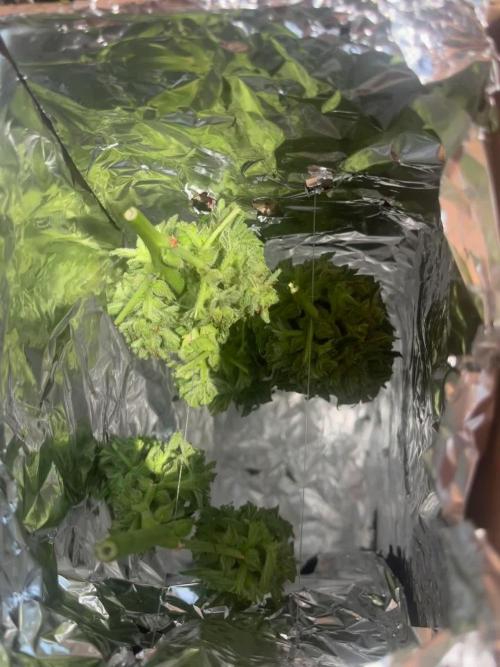
This week I added 9 ml of nutrient per gal of water to prepare for switching to flowering. Grow 5 inches this week getting ready to start flowering.
I lowered the light to eight inches which really had these plants growing faster and thicker.




Likes
10
Share


Likes
4
Share


@Altitonans_Fulmen
Follow
The thoughts shared in this journal are my own—a snapshot of personal understanding at the exact moment of writing. It is not intended as a reference of absolute fact, but rather as an exercise in ἐπίνοια (epinoia): an exploration of thought, intuition, and creative insight.
Epinoia(ἐπίνοια) is a Greek term meaning thought, intention, purpose, or conception, stemming from "mind" (nous) and "upon" (epi), representing the mind's reflective or creative process, used in philosophy (Aristotle, Gnosticism) and theology to discuss understanding and divine names, appearing once in the New Testament for the "intent of your heart" (Acts 8:22). It signifies the mind's operation to form ideas or designs, contrasting with raw data or innate perception, and in Gnosticism, it's an emanation of divine wisdom (Sophia).
"Φsis" is a stylized spelling of the Ancient Greek word φύσις (physis), which translates directly to "nature" or the intrinsic essence of a living thing.
Exploring the deep intersection of science, intuition, and creative insight often leads to breakthroughs that challenge our understanding of what is possible. When we approach high-performance cultivation not just as a hobby, but as an exercise in pushing a biological system to its absolute genetic ceiling, the results can transform from simple data points into profound proof of concept. Achieving a highly optimized environment requires a shift in mindset away from empty promises and directly toward verifiable proof, building true confidence through a detailed archive of past lessons and strategic adjustments.
This philosophy turns a standard space into a precise mass and energy balance equation, where every variable is managed to eliminate biological bottlenecks entirely. In a recent project four individual plants produced 344 grams, 280 grams, 445 grams, and 255 grams respectively, resulting in a total harvest of 1,324 grams, or 47.2 ounces, of dry product. Operating with a 600-watt light source inside a four-by-four footprint, this brings the final efficiency to an exceptional 2.21 grams per watt.
To put this in perspective, the standard traditional indoor benchmark has long been established at 1.0 grams per watt, while expert commercial operations target 1.5 grams per watt, and elite commercial systems push the envelope between 1.8 and 2.0 grams per watt. Reaching 2.21 grams per watt places the outcome squarely within the top 0.1 percent of global benchmarks, acting as a true statistical outlier that demonstrates what happens when flawless environmental parameters meet a cultivar pushed to its maximum potential. Reaching this level of mastery demands that we move past the common trap of the mirror fallacy, where the ego mistakes its own limited perspective for universal truth and views different ideas as personal threats. True progress requires curiosity and dismantling the illusion that our immediate viewpoint is the objective standard, shifting the focus instead toward how a system actually operates under the absolute laws of physics. In a high-performance setup, maximizing output is never about adding random additives or forcing growth, but rather about systematically removing the limitations that hold the organism back. By maintaining a perfect vapor pressure deficit, ideal root-zone oxygenation, and precise structural canopy training every single minute of the cycle, the plant is freed to express 100 percent of its DNA potential without any lingering genetic latency.
Managing a dense canopy inside a tight footprint presents the ultimate challenge of mitigating stagnant air and preventing moisture issues. Overcoming this bottleneck relies on a sophisticated synganic approach, which seamlessly marries the precise control of synthetic mineral inputs with the natural resilience of active organic living soil. This method transforms the room into a closed-loop system where the internal microclimate is entirely isolated from external weather fluctuations and pests. Rather than openly exhausting the atmosphere, the air is continuously recirculated, enriched, and scrubbed using 264-nanometer ultraviolet light.
The foundation of this thriving ecosystem is a comprehensive substrate composition designed to provide perfect aeration, structural integrity, and biological buffering. The primary media base integrates expanded clay aggregates, coir chunks, premium coco coir, sphagnum peat moss, horticultural perlite, vermiculite, pumice, and volcanic basalt rock. To continuously condition the soil and fine-tune mineral availability, the mixture is amended with agricultural gypsum, wollastonite, dolomitic limestone, basalt rock dust, micronutrient-rich volcanic ash, greensand, crushed seashells, biochar, and shungite. This mineral architecture creates an incredibly stable environment where active soil biology naturally prevents salt toxicity and ensures steady, reliable nutrition throughout the entire life cycle.
Living organisms within the substrate play a vital role in maintaining this delicate biological balance and breaking down organic material. Red wigglers continuously process organic matter into easily accessible plant nutrients while aerating the media; specialized predatory mites offer excellent biological control against common soil pests, and pillbugs excel at breaking down tough, woody elements. These biological components are further supported by a rich layer of organic amendments including high-phosphorus steamed bone meal, high-nitrogen dehydrated blood meal, fish bone meal, cold-processed kelp meal, dehydrated moringa powder, spirulina powder, and marine crustacean biomass rich in chitin. Combined with biological inoculants like mycorrhizal fungi, premium worm castings, and concentrated humic and fulvic acids, the entire system operates as a flawless biological transducer of light and energy.
Ultimately, shifting our perspective to view a grow space as a complete mass and energy balance equation changes the entire nature of agriculture. Success ceases to be a matter of luck or anecdotal habits and instead becomes the predictable result of meticulous design, patience, and the strategic elimination of failure. When science, biology, and engineering converge so harmoniously, we gain a deeper appreciation for the intricate natural systems that sustain life and growth. By sharing these detailed insights and refining our techniques, we can continue to unlock the absolute maximum potential hidden within the living world around us.
Comprehensive Substrate Composition:
1. Substrate Base & Aeration Media
Expanded Clay Aggregates (Hydroton Pebbles)
Coir Chunks & Horticultural Coco Coir
Sphagnum Peat Moss
Horticultural Perlite
Horticultural Vermiculite
Horticultural Pumice
Volcanic Basalt Rock
2. Mineral Amendments & Soil Conditioners
Agricultural Gypsum (Calcium Sulfate)
Wollastonite (Calcium Silicate)
Dolomitic Limestone (Calcium Magnesium Carbonate)
Basalt Rock Dust (Trace Mineralizer)
Azomite (Micronutrient-Rich Volcanic Ash)
Glauconite (Greensand)
Crushed Seashells (Calcium Carbonate Source)
Pyrolyzed Carbon Feedstocks (Biochar & Horticultural Charcoal)
Shungite (Carbonaceous Mineraloid)
3. Organic Nutrient Amendments
Steamed Bone Meal (High Phosphorus)
Dehydrated Blood Meal (High Nitrogen)
Fish Bone Meal (Phosphorus & Trace Calcium)
Cold-Processed Kelp Meal (Ascophyllum nodosum)
Dehydrated Moringa Oleifera Powder (Botanical Nutrient)
Spirulina Powder (Arthrospira platensis / Cyanobacteria Nutrient)
Marine Crustacean Biomass (Shrimp & Crab Chitin)
4. Biological Inoculants & Organic Acids
Mycorrhizal Fungi Inoculant (Endomycorrhizae / Ectomycorrhizae)
Vermicompost (Premium Worm Castings)
Humic & Fulvic Acids (Concentrated Humates)
Human Body
65% Oxygen (in all liquids and tissues, bones, and proteins)
18% Carbon (everywhere)
10% Hydrogen (in all liquids and tissues, bones, proteins
3% Nitrogen (in all liquids and tissues, proteins
1,5% Calcium (lungs, kidney, liver, thyroid, brain, muscles, heart, bones)
1% Phosphorus (urine, bones, DNA)
0,35% Potassium (enzymes)
0,25% Sulphur (proteins)
0,15% Sodium (in all liquids and tissues) (in terms of salt)
0,05% Magnesium (lungs, kidney, liver, thyroid, brain, muscles, heart)
Plant
Mother-nutrients: Carbon 47%, Oxygen 43%, Hydrogen 4%.
Macro-nutrients: Nitrogen 3%, Phosphorus1%, Potassium1%, Calcium1%, Magnesium0.5%, Sulfur0.5%.
Micro-nutrients: All the rest combined 1%
More energy, more blueprint.
Although CO2 is a naturally occurring gas that both humans and plants use, it is invisible and odorless and can be fatal at high-levels. If you’re supplementing carbon dioxide in your grow room, ensure there are no leaks in any CO2 devices and always use a CO2 monitor and alarm.
0.02% Life unsustainable
0.03% Life OK
0.04% Current ambient atmospheric co2
0.04%-0.1% =400-1000ppm standard indoor co2.
0.1%-0.2% = 1000- 2000 ppm (prolonged exposure: drowsiness).
0.2%-0.4% = 2000-4000ppm (Headaches, fatigue, stagnation, stuffiness, poor concentration, loss of focus, increased heart rate, nausea).
1% is toxic
5% is quick death.
"Dabo vobis quod oculus non vidit, nec auris audivit, nec manus tetigit, quod in cor hominis non ascendit."
Likes
6
Share


@Cannabot
Follow
The 3 amigos doing well.My 3 baby sharks starting to grow teeth lol.Very uniform growing to each other.Smells are coming through.Happy plants.They loving the lst

Likes
95
Share


@Magnetous_tryko
Follow
Hi all! Back with more phone pics!! 😅
Made some changes beginning of the week. The corners where getting a bit too high so I lowered her by removing the grid underneath. This gave her an extra 15cm / 6inch of space.
I fed her with some micro elements using Acti-Vera and she really liked it! She was missing some of those I think, now the leaves are pointing to the sun and she even regained some green color.
I have to admit that this lady gets me quite exited!! 😃 Red here and there that a lot of growers have quitted before the end so I hope I'll be able to bring her to the finish line!
See you next week!

Likes
4
Share


@eldruida_lamota
Follow
Venga familia que ya viene la cosecha de estas Forbidden Mochi de Seedstockers, que ganas que tenia ya de darles tijeretazo.
Que variedad , me encantó cultivarla , sacaron unas flores bien resinosas y alucinantes.
Las flores aparte son muy pegajosas.
a sido una genética con la que disfruté bastante, fue muy fácil cultivarla. Y a la vez es medio resistente, teniendo trips desde la 4/5 semana incontrolable salieron bastante bien.
La flor tiene una tonalidad morada rosácea bastante llamativa.
Agrobeta:
https://www.agrobeta.com/agrobetatiendaonline/36-abonos-canamo
Mars hydro:
Code discount: Eldruida
https://www.mars-hydro.com/
Hasta aquí es todo , espero que lo disfrutéis, buenos humos 💨💨.

Likes
16
Share


@Oimjr
Follow
Wish I'd know about this site when she started. In week 9 since dropping the seed. Started Jan. 1st.


Likes
1
Share


@kauilmayel1996
Follow
Primeros días de la semana 7
Los cogollos están agarrando forma
Se me hace súper gracioso que 3 de estás plantas salieron del mismo pack de semillas ...
Solo una está pintando morado y una de ellas si se acoplo bien al agua
Obvio la mas grande😅
Misma genética diferente crecimiento
No me quejo ya que se ve que todas me darán algo bueno de medicina....
Uso rootzNutrients ya que es una empresa mexicana y les tengo confianza y es bastante accesible y facil de conseguir aquí...
Likes
8
Share


@Appoldro420
Follow
Today, I spent some time tying down branches under the net again. It’s still a tricky task as the branches are quite brittle and break easily. Fortunately, the plants recover quickly, and so far, I’ve mainly noticed new growth sprouting from where the branches broke.
Watering Experiment: Too Much or Just Right?
Two days ago, I decided to give each plant an additional 2 liters of water to test the effects of what felt like overwatering. The results were interesting:
High Humidity: The relative humidity spiked to 74%, which I consider a minor downside.
Lower Temperature: Dropped to 29°C.
Explosive Growth: The plants responded with vigorous growth!
Given the humidity increase, I’ve decided to water the plants heavily only once a week. This approach should give them time to rest and prevent the growth of more mushrooms in the soil—yes, I’ve spotted a few popping up from the pot’s surface.
Monitoring pH and Nutrient Reservoir
I’ve also noticed that the pH has crept up to 6.2, indicating that the nutrient water hardness is decreasing. This suggests it might be time for a full reservoir refresh. Tonight, I plan to inspect the reservoir and clean it out. Thankfully, my hydro pump makes draining it a quick and easy process.
Observations & Next Steps
Continue training and monitoring branch recovery.
Stick to the adjusted watering schedule.
Refresh the nutrient reservoir and recalibrate the pH if needed.
The grow is progressing nicely, and the plants seem happy despite some of the challenges. Let’s keep it going! 🌱
Cheers
30/11: Added some pictures, not to much to say because I didn't look at them the last 2 days and they just went crazy..
01/01/25:
Happy New year!!
Leaving them alone is not an option... If they keep growing like this, I'll take it! This weekend, I'll do some heavy pruning. For now, I’ve snapped a few stems and tied some others to see which method gives better results. I’ve done about half so far, but I need to head to bed because of work. Tomorrow evening, I’ll tackle the other half. Also, I’ll look for some more subtle zip ties.
Likes
13
Share


@LocoMarco
Follow
The clone is in 1L pot and the godfather og in 3L pot
Just experiment in small aquarium 🤭
Also its first indoor grow for me.
Any helps/ good tips?

Likes
15
Share


@Viccrazyweed
Follow
Hello guys!! Trip is closely going to end and it was the first and by the time the best trip of my life, cannaculture its amazing
Next step: chop
19 February;
Last weekend i added just the “bloom plantastic” wich is organic and only sugars, this week ladys haven’t seen a drop of water, im gonna pour clean could water on the soil 2/3 hours before harvesting to calm the thirst and make the buds go heavier
I have been reducing photoperiod this week, 15 minutes every 2 days, rn 11/13 hours, winter is coming and im just letting her now she has to be quick and use the last single drop of food
It seems like the critical its on point, looks like in her peak of THC, haven’t seen orange trichomes, just milky ones but 90% of pistils are orange so i think im gonna chop her tonight, at 4:20 😜
Probably ill let the cookies a few days to mature correctly but im afraid if i wait longer for the critical i could regret it
What do you think about? Was this diary a good experience to follow?
Personally i enjoyed it to the maximum and thank you everyone that has come with me through this


Processing
Likes
23
Share


Likes
53
Share


@gottagrowsometime
Follow
Welcome to my Green House Seed Super Lemon Haze Diary. Be sure to drop a like and or comment so I can visit your diaries. Either way, thanks for dropping by.
As for the plant. She is doing well. Really healthy. I've mixed it up with ripen a bit. I know its only for the last few days, but I'm trying something out, it suits my growing style, I know what it does. So I've lowered the PPM to 480 on this water change, I've cut the bloom down to 1/3 .33 and I've matched ripen ml/ml .33 and to keep some N in the mix I added half of the bloom boosters. So mixing them like this works out a really good NPK ratio. I reckon 2-5-5. I've changed the water, haven't added any H2o2 yet, as it's not needed and it'll only attack my roots, it's been a learning experience with h2o2 but I think I'm getting close to getting a better grips of how bacteria works. I adjust the PH 2-3 times a day, I won't need to today as I've only changed the water so should get 40hrs or so out of it. I'll have to add H2o2 tomorrow. Water temps will jump up to 26c before lights go out tonight. So I should be fine till tomorrow. I haven't had to do much but just keep a eye on the water, watch for slime, I know the smell of rot and root water now, both a foul but rot water is unmistakable. My roots are very weak, I'm afraid to add silica at this point because of what hit my other DWC I do not know. All I know it had silica in the water. So, I've pult back off it and the h2o2 has taken a beaten on my roots. But I'm learning and the degradation is a lot less, and to be able to grow a healthy plant at 27c water is just amazing I think. And I know no hydroguard wouldn't keep the rot away at that temps. The roots are black now just because of the PH + adjuster has turned them that way but they are healthy and so is the plant. She has her old wounds of course and I could get rid of all them leafs to show a 100% healthy looking plant but if I were to do that, I'd have to remove 20% of the leafs and the top is already very thin on leaf growth. Just going to keep a close eye on her and try get her over the next 20days. The buds are getting so heavy branches are having real trouble keeping themselves up. I've had to keep tucking them behind stronger nodes. The buds aren't big and have long colas like my soil mainline but these buds are smaller but still big stand alone buds that are rock hard and have very little trim. She's extremely frosty. I had a little taste of her, she was sadly very disappointing. DWC definitely needs to be cleaned. All I could taste was nutrients. Very hard to get a taste of the weed, that I know is there, I got super high of it, but was super harsh, I know chemical cough when I smoke it. Will need 5-10days on flora kleen or just soft water maybe with some light cal from green house feeding.
Want to thank my sponsor from marshydro, she's great, thanks for picking me up. And shout out to all of mars all working together, the reps, ppl who put the lights together, are doing a great job, love your new upgraded lights.
Also shout out to my main man at GHS for sponsoring me with new unreleased strains in the pic above and also for giving my kings tart to run which the diaries will be added soon just waiting on full GreenHouseFeeding line to be delivered.
COUPON FOR MARSHYDRO
Use code GGS for a small discount at any marshydro site


Likes
10
Share


@StoneyMelony
Follow
Week 11 day 78, you can see buds are really fattening up, some good trichome production as well, The smell is really awesome , sort of a sweet flowerish cannabis smell. All my other plants has grown big as well so there is not many room left. i did some defoliation but you hardly notice.😁 i gave a PK boost again this week also

Likes
20
Share


@Donkeybuds
Follow
Once again had no issues had very good growth on all my plants, mother plant seems to use about 12/15l of water every 4 days just have to keep on top of that. Topping I did couple of weeks ago went a bit side ways as some plants seem to have 3 nodes at the top some how,
Think is will be the last week in veg going to change light times next week to start flower,
What would people’s views be on defoliation on the before flower should I do it now while there in veg or when I change the light cycle
Likes
2
Share


@Nebula
Follow
Looking forward to this yummy strain. Seems like she is slow to push her leaves out. I am hoping that some more air will get things going. Organic Grow on this run using GreenGro.
Likes
19
Share


@Naujas
Follow
this week, the girl grew as expected, which makes me very happy :) she has already started to bloom, but I still have to use LST, because her two main crowns will escape:) everything is fine, she looks healthy and strong :)