


Likes
Comments
Share


Likes
57
Share


@ClubRiot
Follow
Start week 8 , Bio Bloom 4 ml/L + Sensi Cal-Mag Xtra 2 ml/L + CarboLoad 2 ml/L + Top Max 4 ml/L (Ph 6.7).

Likes
5
Share

@Shivashamboom1
Follow
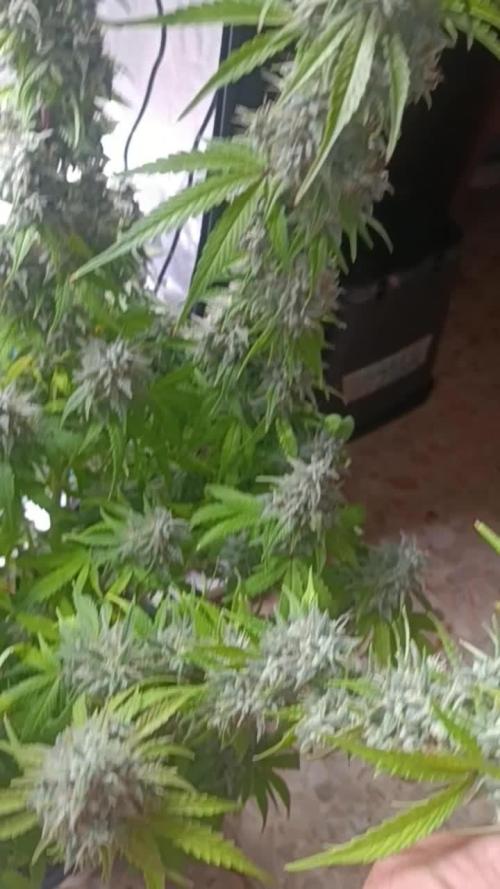
ultima settimana di flush....una delle 3 grape,quella toppata, è forse un pochino più indietro delle altre. tutte e tre hanno un profumo delizioso, mi fa venire l'acquolina in Bocca 😂😉💪💚💛❤️
Likes
10
Share

@Gamfin
Follow
// Day 91
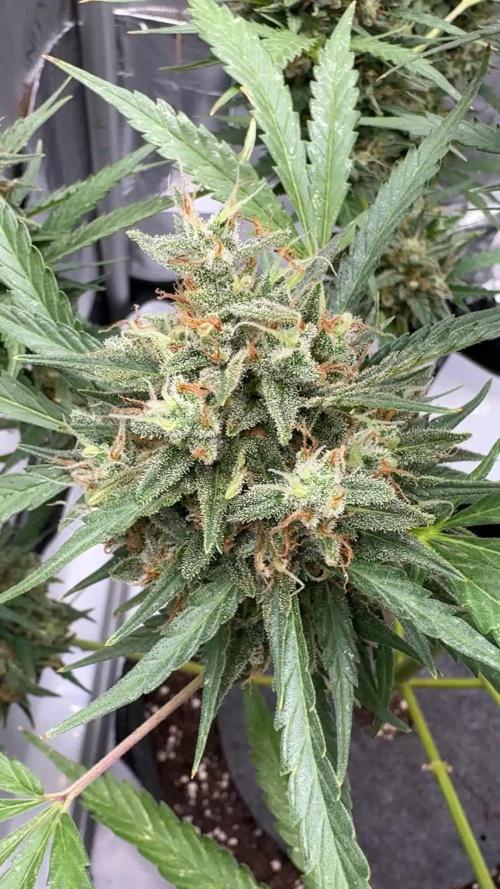
She is getting there. The buds ware not fattening up as much as I wanted to but her trichomes are almost all cloudy and a very low minority is amber. So I guess I give her 2-3 more days and cut her down on friday or saturday. This time I try out the bro science: Befor cutting, I'll let her stay in the dark for 48h. So maybe I turn off the lights tomorrow until friday and chop her down.
The bro science hypothesis is that the not ending darkness will give her a last stress which boosts trichome production.
|| Edit: I‘m not here for bro science, so I am not doing that shit
// Day 94
Those are the last videos and pictures from her.
I chopped her down today. Since I need to do a bud wash (spider mites, outdoor grow), I can't hang the plant whole. So I cut the stems into as big pieces as possible and washed them with deluted hydrogenperoxide. I hanged them into the tent and try to dry them as long as possible.


Likes
8
Share


@Pierrougarou21
Follow
Yo les amis. Les fleurs commencent a gonfler et l odeur se développe

Processing
Likes
7
Share


@xX_The_Chef_Xx
Follow
Pretty quiet week in the tent. We did a little defoliation during the middle of the week but they are already full little bushes again. We raised the light up a bit to try and get them to stretch from the pots so we can lollipop in a few weeks. Our soil plants are doing very well too, @Foxfarm has really proven to be a great soil and the northen soul strain loves it. The smell inside the tent is definitely strong and they have been drinking alot more water.

Likes
13
Share


@cookingwithninja
Follow
Day 12 pushing hard like the last 4 grows. I’m very impressed so far. Maybe a little calcium that’s about it
Processing
Likes
5
Share


@Easygrower
Follow
Hello growers and we are back in the garden with crystal meth sorry iv missed a few weeks but have been occupied elsewhere but I’m back on track day 49 today I didn’t have high hopes for this girl as she has got white leafs up 1 side of the plant and she took awhile to get going but I’m glad I left her to do her thing as her buds are pure purple 😁 I can’t wait to see the end product I did do a purple lemonade but she didn’t have the colour like this 1 until next week be safe and happy growing ✌️
Likes
4
Share

@DogDoctorOfficial
Follow
🌿 Gelonade – Week 4 Veg
Grower: Dogdoctor
Strain: Gelonade (Zamnesia Seeds)
Type: Feminized
Environment: Indoor Tent | Dual Zone | Full Spectrum LED | Full Control Ecosystem
⸻
🌱 The Plants: Branching, Glowing, Flourishing
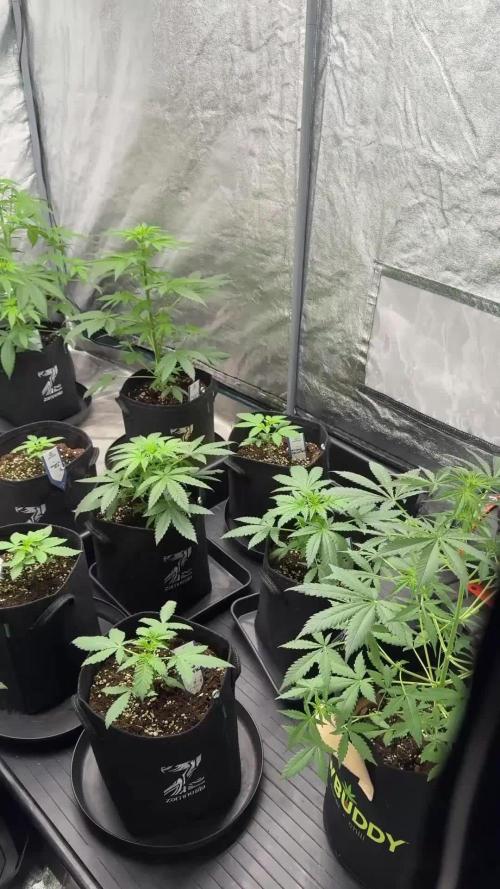
Our Gelonade girls are THRIVING. Four weeks into veg and both phenos are showing off, with no signs of transplant stress and a burst of branching energy that’s filling out beautifully.
• Stems are strong, upright, and thickening nicely
• Leaves are broad, vibrant, and reaching
• Internodal spacing is tight — perfect for shaping later
• Side branches are already declaring themselves
We took both beauties out for a special photoshoot this week. The studio lighting captured their posture, color, and symmetry, and let’s just say… they’re already stars. 🌟
⸻
🔧 Gear Check – Ecosystem in Harmony
This grow is powered by tech and intention, a custom environment designed for precision and balance. Let’s break it down.
💡 Lighting:
We’re running dual light ecosystems in an expanded 8x8 grow area:
• Future of Grow – Black Series 600
• Full-spectrum, ultra-efficient, deep canopy penetration
• ThinkGrow Model One LED
• High PPFD uniformity, smart dimming, daylight-mimicking balance
Both are controlled via the TrolMaster system, allowing:
• Timed schedules
• Sunrise/sunset ramping
• Real-time PPFD monitoring
🌞 Each light is tuned to deliver exactly what the plants need, no more, no less.
⸻
Sensors & Controllers
The TrolMaster Tent-X Controller is the brain of the operation — feeding live data from sensors throughout the space:
• CO₂ Sensor – Ensures levels stay in the ideal range for vigorous veg
• Temp/Humidity Sensor – Live VPD adjustments and historical tracking
• PPFD Sensor – Calibrates light levels and spreads evenly across canopy
Everything is automated, or monitored manually as needed. This allows you to focus on plants, not guesswork.
⸻
🌬️ Airflow & Filtration
Keeping the air clean, fresh, and moving is a core part of this grow. Here’s how it flows:
🔁 Extraction:
• Two 6-inch exhaust fans with carbon filters:
• AeroFan 6” – Controlled by TrolMaster Tent-X
• Spider Farmer 6” – Controlled by GGS Controller
• Both extract stale, warm air through carbon filters, scrubbing it clean and odor-free before it leaves the tent.
Intake:
• 6-inch filtered intake fan constantly bringing in fresh, oxygen-rich air
❓ Why Carbon Filters?
Even in veg, filters reduce:
• Dust & spores
• Unwanted scents
• Airborne pathogens
It’s not just about smell — it’s about clean air = healthy plants.
📹 A video walkthrough is now included in the diary to show this airflow system in motion, stay tuned for a narrated version soon.
⸻
💧 Feeding This Week
The girls are still on the Aptus Veg Foundation Mix, focused on:
• Cellular strength
• Root expansion
• Balanced nutrient delivery
Feed Mix (per liter):
• Aptus Regulator – 0.15 ml: Cellular support, heat resistance, uptake enhancer
• Aptus CalMag Boost – 0.25 ml: Frame and photosynthesis building
• Aptus All-In-One Liquid – 1 ml: Broad spectrum nutrition
• Aptus Start Booster – 0.2 ml: Ongoing root + early leaf architecture support
💡 Why keep Start Booster? Even at Week 4, it helps support the rapid branching phase and assists in developing feeder roots that stretch out horizontally.
⸻
🌼 Looking Ahead
Next week, we’ll begin shifting the feed to support the pre-flower transition. It’s not flower time yet, but the plants will begin “asking” for more energy and structural support soon. No rush, just flow.
Expect:
• More branching
• Thicker stems
• Early pre-flower signs (depending on light cycle)
We’ll be watching closely, letting the girls tell us when it’s time.
⸻
🌞 It’s Summer – and So Is the Grow
The seasonal energy is flowing right into the tent. Life is pulsing. Roots are diving. Leaves are dancing in the air current. From animals outside to chlorophyll inside, everything is alive right now, and the Gelonade girls are right in rhythm.
This is the joy of veg: potential made visible.
⸻
💬 Final Thoughts
This grow isn’t just about growing cannabis, it’s about building systems, creating harmony, and telling the story of life through plants.
The Gelonade run is a flagship grow:
Precision gear, intentional care, vibrant phenos.
And above all, love in every step.
We’re not just growing plants.
We’re growing a garden of learning, beauty, and experience.
See you in Week 5 🌿
With leaflight and root-deep respect,
DD (Dogdoctor) 💚
📲 Don’t forget to Subscribe and follow me on Instagram and YouTube @DogDoctorOfficial for exclusive content, real-time updates, and behind-the-scenes magic. We’ve got so much more coming, including transplanting and all the amazing techniques that go along with it. You won’t want to miss it.
• GrowDiaries Journal: https://growdiaries.com/grower/dogdoctorofficial
• Instagram: https://www.instagram.com/dogdoctorofficial/
• YouTube: https://www.youtube.com/@dogdoctorofficial
⸻
Explore the Gear that Powers My Grow
If you’re curious about the tech I’m using, check out these links:
• Genetics, gear, nutrients, and more – Zamnesia: https://www.zamnesia.com/
• Environmental control & automation – TrolMaster: https://www.trolmaster.eu/
• Advanced LED lighting – Future of Grow: https://www.futureofgrow.com/
• Root and growth nutrition – Aptus Holland: https://aptus-holland.com/
• Nutrient systems & boosters – Plagron: https://plagron.com/en/
• Soil & substrate excellence – PRO-MIX BX: https://www.pthorticulture.com/en-us/products/pro-mix-bx-mycorrhizae
• Curing and storage – Grove Bags: https://grovebags.com/
⸻
We’ve got much more coming as we move through the grow cycles. Trust me, you won’t want to miss the next steps, let’s push the boundaries of indoor horticulture together!
As always, this is shared for educational purposes, aiming to spread understanding and appreciation for this plant. Let’s celebrate it responsibly and continue to learn and grow together.
With true love comes happiness. Always believe in yourself, and always do things expecting nothing and with an open heart. Be a giver, and the universe will give back in ways you could never imagine.
💚 Growers love to all 💚

Likes
2
Share


@KeemBboomin
Follow
Once again these girls don’t really need much just watering when dry but other than that we are on cruise mode. I have been checking trichomes for about a week now and man is she almost there I should be giving them lights out with in another week or two can’t wait
Likes
60
Share


@SooSan
Follow
12/12 + 61 jours
Vu qu’il y a 16 plantes mais que sur growdiaries on ne peut mettre que 8 variétés j'ai divisé en 2 diaries pour le bas de la tente
1️⃣
🏠 90x60x90
☀️ FC-E 4800 => puissance a 80%
🍁
1x Black Bomb / Philosopher Seed
2x Amnesia Lemon / PEV Seeds
1x Blueberry / PEV Seeds
1x Blueberry / 00 Seeds
1x Wappa / Paradise Seed
1x Dark Phoenix / Green House Seed
1x Quick Sherbet / Exotic Seeds
1x Mango Cream / Exotic Seeds
1x Banana Frosting / Sensi Seed
1x Hindu Kush / Sensi Seed
3x Fast Mix / Sweet Seed
📎 https://growdiaries.com/diaries/122084-grow-journal-by-soosan
📎https://growdiaries.com/diaries/124052-grow-journal-by-soosan
2️⃣
🏠 30x60x50
☀️TS1000 => puissance a 100%
🍁 4x Quick Sherbet - Exotic Seed
📎 https://growdiaries.com/diaries/122080-grow-journal-by-soosan


Likes
2
Share

@GrowdadGage
Follow
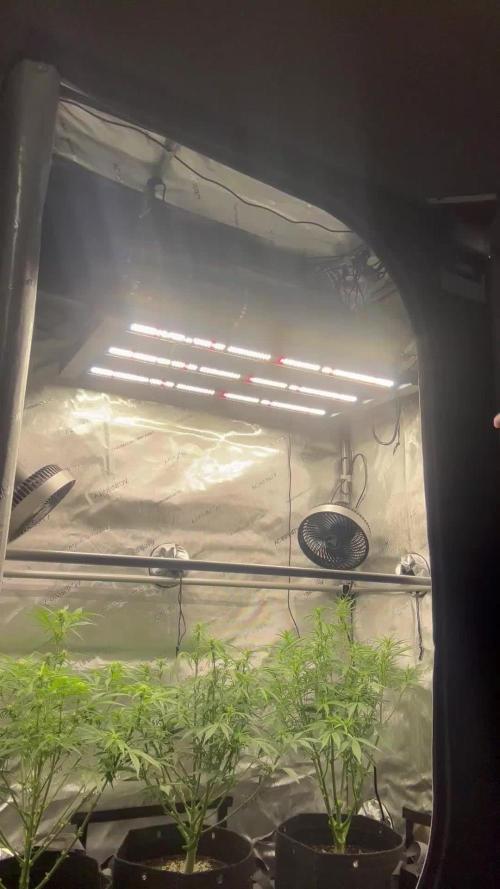
Lots of defoliation to help with humidity levels. Flowering time now fingers crossed for nice big dense buds. Advanced nutrients in full use with a tiny cheap dehumidifier added but doesn’t seem to be getting humidity down to target levels yet so may need to invest in something better.
1 liter of water almost everyday and feedings are 3 times a week. Tuesday/ Thursday/ Saturday feeding schedules with nutrients added right to each plants water intake for the day.

Likes
2
Share


@Cannaapeace
Follow
Hey
From now on I will only give water for the remaining 2 weeks, in the last week of the flush I will water with ice water to provoke a purple color.
We're coming to an end, that's great :)
I’m exited for the relentless seeds for the next run 🙌🏻
Cannaapeace

Processing
Likes
23
Share


@eldruida_lamota
Follow
-En primer lugar dar las gracias a zambeza por creer en mi en todo momento,y por darme a conocer esta gran pagina y familia, espero que sea para largo esta colaboración.
•Hemos germinado 9 semillas, 3 de cada raza, lemon , power plant xl, northern light xl, y que pasadas 48h fueron colocadas en maceteros pequeños, los cuales iluminaremos con un bajo consumo las primeras semanas.
•Esperemos que este seguimiento sea más completo y más extenso que el anterior , (que lo edite todo en una noche,aún que me llevase casi 4 meses el jodido proyecto).

Likes
4
Share


@Adkguerrilla44
Follow
So far so good they are starting to fill out the 1/2 and 1 gallon velcro transplant bags with roots very nicely. I still havent fed them any grow nutrients just some mammoth mycos,hardy gro ultra-bio and a liquid soil inoculant i got from ebay. I will them some NPK raw grow and cal/mag next week.
Likes
26
Share


@Hawkbo
Follow
Man rocbudinc continues to impress me more and more with every plant I grow from him. His photoperiods are always my frostiest but I grew a few of his autos and they resembled photoperiods more than any other auto breeder out there. He chooses his cuts to breed with wisely I guess and his autos also grow bigger than most. These are killin it, started flushing the mac and purple candy paint yesterday 8 days shy of day 60.
Took some pics saturday, I added in my slurroc keeper cuz it's been in all the videos and it's pretty.
Likes
4
Share


Likes
3
Share

@Yahti
Follow
D56 - Plants were looking good | 6L of Water DLI | 43
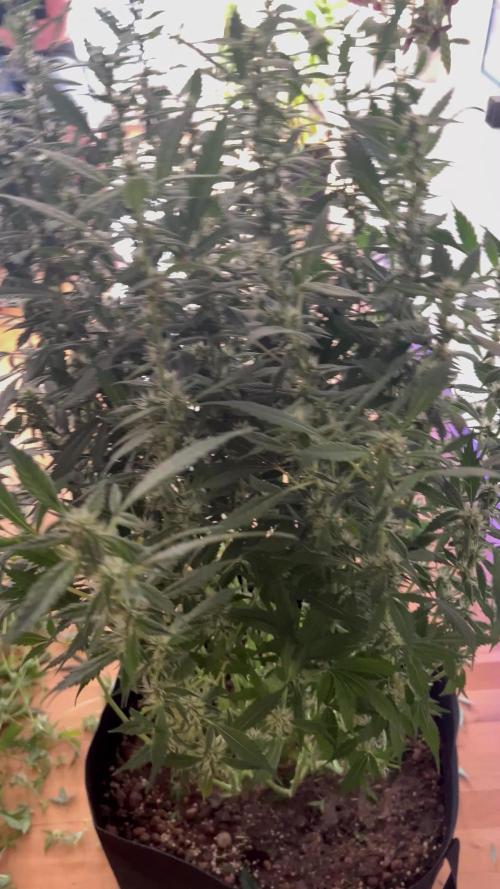
But while watering saw that the left plant was a herm.... Saw a couple pollen sacks and plucked them but overall decided not worth it and culled it.
Shame... Flipped on day 38 would push out to 49 next time
Did some LST and supercropping on the survivor to fill up the tent.
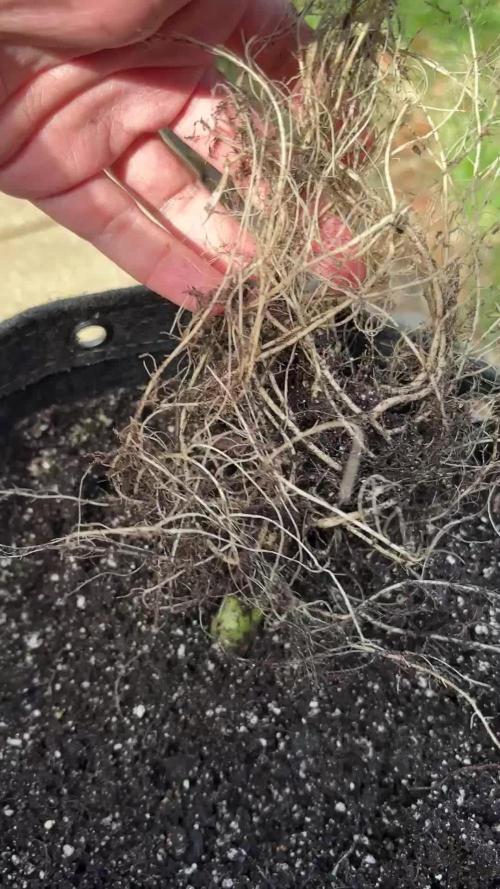
D57 - Did an autopsy on the herm'd out plant.. Taking a look at the main root ball she was root bound.
When i did the transplant, right afterwards... I remembered I should've roughed up the roots (out of the cup form). The video shows what I mean.
The roots were growing well but were all twisted and crossweaved.
Found a handful of pollen sacks today on the survivor, the outlook is ominous, this one likely has the same root issue going on. Will check over the next few days but not holding out much hope, once the herm trait is activated, there's no reversing it...

Processing
Likes
3
Share


@Fintastic
Follow
Hi all,
My second week posting on here.
Just to confirm that the plants are in London, in a basement. 38 plants in a room approximately 4 meters my 3 meter.
It’s been a busy one! Lots of jobs done, tho not sure if I’m getting things right... if you’d like to comment please feel welcome to make suggestions, or call me and my ideas stupid lol
SATURDAY
At the start of the week I started pruning the plants. I removed all buds, leafs and non-main branches from the bottom 20% of the plants.
MONDAY
After giving the plants a couple of days to recover and so I was sure my pruning didn’t have a negative affect I started removing small buds and all of the older fan leafs from the rest of the plants
I started a different watering routine today after learning that the humidity was too high. It was between 65-85. Cropping a lot of the leafs off the plants helped, so did installing fans to suck air in from outside. Also I stopped leaving buckets of water in the grow rooms.
Yesterday I did not water the plants at all. So this morning they were all very dry, but looks good too. Today they had a lot to drink.
Added more circulation fans too.
Anyway, managed to get the humidity to 40 when lights on, and up to 60 when off. Still working on bring it down to below 50 at night.
WEDNESDAY
Finished pruning today. With half the plants I took off 65% of the leafs, stems and buds, leaving only the bigger bud areas and sugar leafs, plus a few fan leafs.