Likes
Comments
Share


@4F1M6
Follow
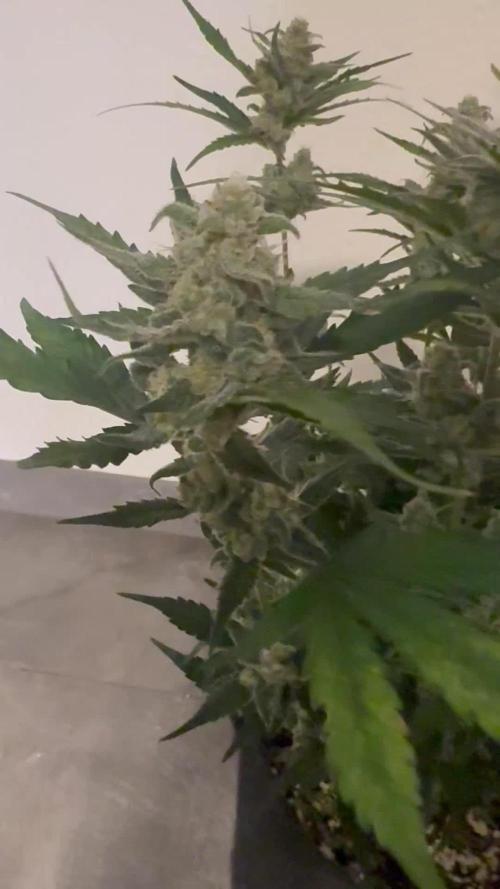
Pollen was dropping like crazy as the male flowers got ripe and ready. The females got good and coated and fully pollinated. I harvested the males to collect and preserve the pollen. Some dried and I veiled it up. But the bulk majority is still drying up.
I left just the bottom portion of the male kicking for some extra pollen well the females throw off. The diary will now begin to focus on the pollinated females. The journey to beans is well under way! Until next update. Happy growing and stay lit fam.

Likes
8
Share


@Growing88
Follow
problems with fungusa gnats, the plants are weak and have deficiencies, I hope to eradicate it as soon as I have the opportunity to buy the grube granade predators

Likes
3
Share

@carlitoshaze44
Follow
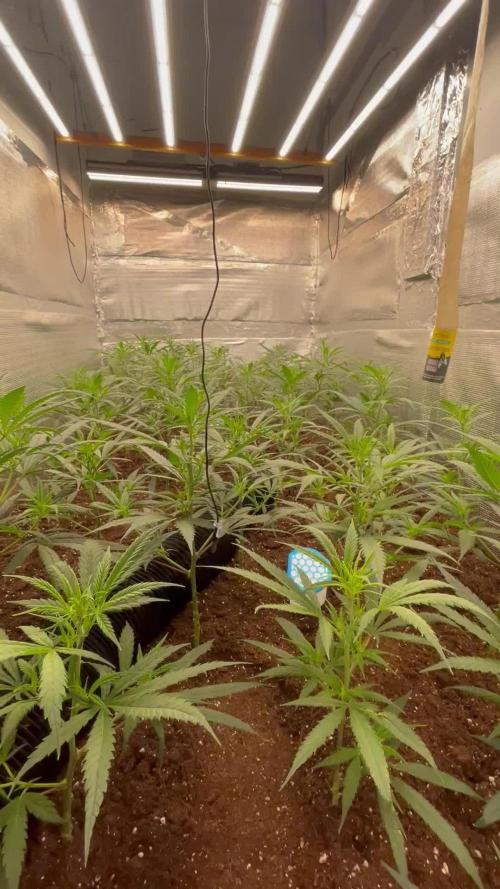
Día 6 de diciembre ,tenemos una amanecida de gran niebla que se mantuvo en la mañana con ello una alta temperatura en la noche del cultivo amaneciendo este a 90% de humedad
Después del encendido de la luminaria y colocar dos pequeños humificadores de usar y tirar..en dos horas ,la humedad se mantiene bien.
55%
En el día de antes de ayer se le aplicó un buen riego.

Processing
Likes
68
Share


@themartian911
Follow
hello some news on vegeation day 29, she has developed well,i put more RJ and BG,
and u can see on one pic the branch that had cracked got in shape now it's cool 💪😬
peace. 😀👍


Likes
23
Share


@Chase13852
Follow
Been slacking at updating this. Putting in a lot of OT at work and the diary has fallen to the wayside for a bit. Had to put the trellis netting up. The two Lemon Haze plants are getting chunky and falling over under their own weight. Looks like they only have a couple weeks left where as the two Grandaddy Purp on the left side look more like they have 3 to 4 more to go. Hard to tell as they don't seem to be swelling up as much as the other two. Getting so close I can SMELLLLL IT!!

Likes
4
Share


@kathlane24
Follow
Orange Sherbet FF (Fastflowering) is a finely balanced hybrid that produces some of the tastiest orange-flavored weed out there, making it an excellent choice for top-notch extractions. With up to 26% THC, this citrus terps powerhouse matches its wonderful taste with potency, offering a long-lasting uplifting high that puts you in the right mindset to chill and have a good time. It’s the ideal strain for growers with all levels of experience, especially beginners looking to get their hands on low-maintenance yet highly productive photoperiod varieties that deliver in both quality and quantity as fast as possible and without extra effort.
Bud Description This superfast feminized photoperiod strain grows light, almost neon-green colored buds with fat calyxes that get encrusted with trichomes by harvest time, giving them a fluffy, silvery-white appearance. Orange Sherbet FF flowers reek of a very distinct mix of citrus that can be described as a tangerine and orange smoothie with a very sharp and sour background that hypnotizes your nostrils as soon as you take the first whiff. Smoke Reports Despite its 26% THC, Orange Sherbet FF offers a joyful high that’s very calm and relaxing in nature. The effect starts as a slightly euphoric head rush that comes hand-in-hand with a relaxing body buzz, leaving you in a focused, peaceful, and overall happy state of mind. It’s the perfect everyday, all-day strain as its long-lasting high will always put you in the right mood without fail while getting rid of muscle pain, stress, and anxiety along the way.Plant Appearance This is a medium/tall-sized hybrid that grows up to 150cm and yields up to 650 g/m2 while developing that typical hybrid structure. Orange Sherbet FF grows fast and flowers faster, growing super dense buds with a distinctive mint-green color and a high bud-to-leaf ratio, making your trimming sessions a breeze. It’s a well-rounded variety that doesn’t need much maintenance and will thrive in almost every climate, rewarding growers of all levels with extremely resinous orange-tasting buds.
Likes
10
Share


@HideAndFly420
Follow
Day 76 HARVESTED 💚💚💚🌱🌱🌱 growing this lady has been so easy and fast. Buds are heavy and full, smell has been so strong since the beginning this time.
I get 200 wet gr. From this lady. I hope to get 70 dried as they’re really nice and heavy :)
Will update in some weeks for the most important information :)
Let’s goooooo!!!
Likes
36
Share


@valiotoro
Follow
Super frosty & rock hard buds💥
Delicious terps🤤
Perfect buds leaf ratio
Likes
8
Share


@Donwon310
Follow
266 grams out of all 4 plants, roughly over half elbow. Went with grove bags. Did 5 day dry then put into totes for few days and bagged after trimmed. Sticky buds with the piney nose to it with heavy gas .


Likes
8
Share

@Chucky324
Follow
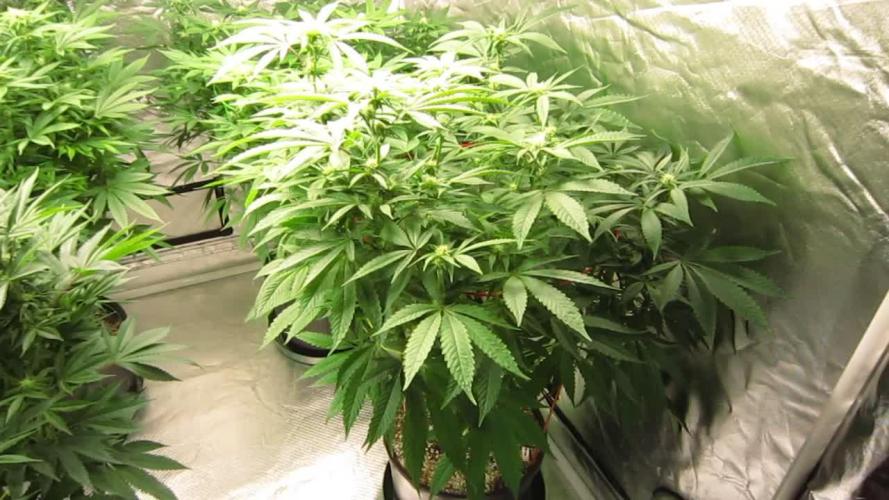
Hello this is the end of week 3 and the beginning of week 4 of flowering.
Did a trim up last week. Removed the bottom sucker branches and fanleaves and some top fanleaves.
For better air flow and light penetration. Better chance of "not" getting bud rot and WPM with better airflow... And
A bud get bigger, with the more light it gets. So cut back some of those top fan leaves for bigger middle buds.
The pics show the resin is just starting on the top leaves by the flowers.
Time to turn up the light to 65%... and 75% next week
OK. Be Great.
Chuck.

Likes
3
Share


@Kokot
Follow
First week to flower (i think all plants stopped growth and only flower) should i be adding Growth nutrients? Also i m going to vacation again, if i come back and the flowers are underwatered again… i will knockout the shit out of my roommate and kick him out.
Also i wrote to every single plant what strain i
Think it is… just my guesses
Likes
43
Share


@Coopmc
Follow
Good for sure
Might be 7 week flower to finish such great indoor plants!!
The shortest FruitWalker I have found with s Short SVF !!
Likes
9
Share


@Muffinboy92
Follow
Moved them inside last week and then chopped one down. Rot was taking over quickly. Buds hadn’t fully formed underneath but the main colas and tops were ok. Bit disappointing but the weather has just been terrible where I am this autumn 😂 what can you do.
Likes
21
Share


@The_La
Follow
I don't know if I am just getting impatient but these GTH are taking ages . IM 7 weeks in and they could go as far as another 5 weeks!!
Christmas is coming and my buds ain't getting fat 🙄
I just need to be patient.
I'm going to add another 600w as I can afford it heatwise and after so long flowering i want to do all I can think to good result .
I can't wait to see the back of this one 👊
3 days after this post I had a good growth spurt and some major development in my bud structure, on reflection, my plants look lovely. THe leaves are healthy and shiny, they are dark . I tied a lot of branches down and defoliated . THis has helped keep humidity levels down during lights out and also have given me the chance to have a good look at what's going on below the colas. I'm really pleased 😁.
I was a bit down at the start of this week as you can tell by the start of my diary but by the looks of things it's gonna be a monster. I am just getting used to the strain so it has been a Step into the unknown ,
Thanks for the support ant to the fellow growers who have offered their advice
Big up 👊


Likes
25
Share


@Ultraviolet
Follow
Permanent Marker weed strain possesses the genetics for high anthocyanin production, which is responsible for its signature deep purple. While the genes are present, the expression of these colors is often enhanced by "thermal stress" (lower temperatures) during the final three weeks of flowering, which triggers the production of these pigments.
👋 Raising the Carbon-to-Nitrogen (C:N) ratio in the growing medium to avoid over-immobilizing nitrogen, on the flip side, being careful not to trigger early autophagy. Moderate, controlled increases in sugar support the energetic demands of flowering and act as a signal trigger, but excess sugar is more likely to inhibit flowering or damage the plant. Balance, like everything else. Visually, when the chloryphyll green gets darker, it is a subtle indicator that the concentration of nitrogen is increasing / more is being stored than is being used. I noticed when you push very high intensity lighting, it slowly fades the green as the plant degrades chloryphyll faster than it can be replenished. When the green of the leaf continually gets darker, it is an indication that the concentration levels of nitrogen are increasing, and I dont want to increase light intensity.
Turn down the nitrogen faucet. C:N ratio dictates the rate at which nitrification occurs, if at all.
The Carbon-to-Nitrogen (C:N) ratio acts as a critical biological "on/off switch" (or regulator) for nitrogen turnover by determining whether microbes
immobilize (consume/tie up) or mineralize (release) nitrogen during the breakdown of organic matter. This ratio regulates microbial activity by defining the balance between available energy (carbon) and building materials (nitrogen). The C:N ratio in a medium acts as a critical regulator of nitrification, effectively functioning as an "on/off" switch for the dominance of either autotrophic nitrifying bacteria or heterotrophic bacteria.
The shade of green in chlorophyll is subtly linked to the enzyme Rubisco through a co-evolutionary, functional relationship designed to optimize photosynthesis. Chlorophyll absorbs blue and red light for energy, reflecting green light, a process that ensures the "light-dependent" reactions provide the correct, controlled amount of energy (ATP and NADPH) needed by Rubisco to perform its "light-independent" carbon fixation. Because Rubisco is a relatively inefficient and slow enzyme—often considered the bottleneck of photosynthesis—chlorophyll and the overall structure of the leaf have evolved to manage energy distribution to prevent overwhelming the Calvin cycle.
While chlorophyll absorbs mainly red and blue light, it is not perfectly efficient, and leaves appear green because some green light is reflected or transmitted. This reflection allows light to penetrate deeper into the leaf, preventing the surface chloroplasts from becoming overloaded and enabling a more efficient distribution of energy to the high volume of Rubisco located throughout the leaf's mesophyll.
The rate of chlorophyll-driven electron transport (light reactions) is matched to the potential rate of carbon fixation (Rubisco activity). If Rubisco were faster, leaves might be darker; however, the "shade of green" represents a balance that prevents chlorophyll from producing more energy than the inefficient Rubisco can process. The green color itself is a byproduct of a photosynthetic system tailored to feed a slow, yet crucial, enzyme (Rubisco) just enough energy to maximize carbon assimilation without inducing excessive oxidative stress or inefficiency.
The shade of green in leaves is directly linked to the concentration of chlorophyll, which is in turn strongly correlated with the amount of
Rubisco (Ribulose-1,5-bisphosphate carboxylase/oxygenase) and, consequently, the rate of carbon fixation. Darker green leaves generally indicate a higher concentration of both chlorophyll and Rubisco, signifying greater capacity for photosynthesis.
Increase output or reduce input. Subtle tells.
While an excess of nitrogen (specifically ammonium) can cause an imbalance, nitrification—the microbial conversion of ammonia to nitrate—is highly sensitive to a variety of environmental, chemical, and physical factors. Because it depends on specific, slow-growing bacteria (Nitrosomonas and Nitrobacter) and archaea, anything that stresses these organisms can disrupt the process.

Likes
7
Share