The Grow Awards 2026 🏆
Likes
Comments
Share
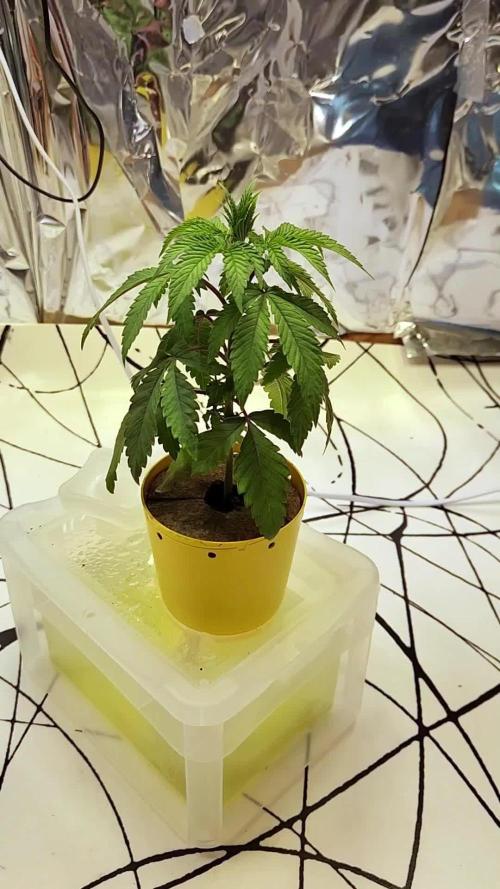
After 48 hours, these things are beast. I thought they needed more time, I couldn’t judge how long they were. I had to dig them out of the paper towel, learned that I need to use cheaper paper towels. 6 out of 6 germinated on my first grow. Let’s keep the same growth going. ******************************* 14 Hours After Potting ************** TEMPS The most recent video showing the domes is 14 hours after potting them. The temps have been very stable at 83F and 70% humidity. My ambient temp outside of the tent is 70F. AIR FLOW I’m currently only running a 6 inch fan above the light for circulation. I have not used the exhaust, I think the idea at this stage is to keep humidity high, any thoughts would be great. LIGHTNING I do have my TSW on max and lowered the height to 36 inches it was almost twice the height yesterday. I didn’t want to make the change so drastic and waited a bit before lowering the height. WATERING The top soil did feel a bit dry and a little moist under. Under the dome it still looks very moist. I sprayed the plastic domes, I’m using distilled ph’d water. I did some light watering on the soil but I’m not sure how much water I should be using . Now that I lowered the height soil should dry out quicker, any thoughts?
Likes
3
Share
Terminando la 7° semana el talló esta duper firme y ya an crecido buenos brazos ya e soltado los cables del lst y ahora a dejar que tire para arriba a full para volver a guiarlos
Likes
33
Share
Como ya he dicho, siempre ofrece resultados increíbles, la he cultivado tanto en interior como en exterior y siempre sale increíble
Likes
2
Share
Shit got out of control, i had to perform an LST to keep the big sister under control and she is the biggest plant I’ve ever grown although She is developing buds everywhere and im not really sure but for me this is bad as i think sometimes less is more, its clear that the plant just can’t distribute the same nutrients on 10 buds/20buds, so i expect them to be soft and not potent, maybe THAT xxl pheno, im sure someone else could have get even more, shame that I can’t clone her Little sister is looking so nice tho, Perfect structure, just amazing looking and beautiful to its maximum
Likes
39
Share
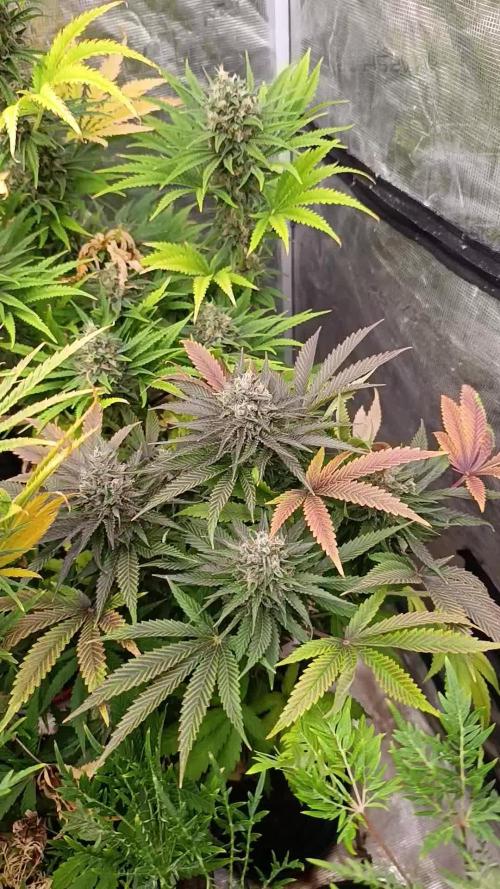
4/15/25 Things are progressing nicely. Some plants dont seem to be doing too much but 3 of them or so that are really standing out. Im curious if some of these are going to be longer flowering time than anticipated with the very obvious sativa dominant plants.
Likes
6
Share
@Weedzoks
Follow
Jour 21: Palissage et taille de deux bourgeons secondaires uniquement, arrosage 1l avec engrais Jour 25: Installation de la lampe Mars Hydro TSW2000. Arrosage 1,75l avec engrais. Jour 26: Apparition des premiers pistils Jour 27: Engrais foliaire, 3ml de vita race par litre.
Likes
4
Share
day 70 was harvest day !! really fast strain, 24h light ON really played a big role as well frosty buds and amazing strawberry smell, now lets dry it !!
Processing
Likes
Comments
Share
@shazyk2
Follow
All plants have had some good form, kinda perfect
Likes
4
Share
Anche queste albicocche crescono molto bene.....sempre complimenti a fast buds e a me🤣😂💪.sono robuste e anche lei con tanti punti dove fiorire....
Likes
14
Share
Just been flushing her these past 12 days, and she is starting to fade, so I'm harvesting her this weekend. Gonna try bud washing her as well, I'm excited to see if it has any effect on the quality of the smoke.
Likes
7
Share
Diese Woche hat sich einiges getan, die Blueberry hatte kurzzeitig starken Kalzium,Mangel der aber gut behoben werden konnte mit Canna Mono Kalzium und zusätzlich Bittersalz. Sie ist ein richtiges Monster geworden ❤️❤️❤️ Das Bewässerungssystem arbeitet hervorragend und funktioniert auch zusätzlich sehr gut, um gewisse Mängel auszugleichen, wie zum Beispiel den Kalzium Mangel.
Likes
3
Share
Hi harvested 4 of 5 they start to dry Chears ✌️
Likes
89
Share
@Targona
Follow
04/01/2023 - 56 days since my little girl sprouted from a seed Third week of bloom for my Banana 🍌🍌🍌 Nutrients: Jungle Indabox - the girl responded well to the change in nutrients, so I continue to feed the same as last week when I adjusted the nutrients for flowering Jungle Environ X - bud stimulators 🌼 Bud Candy - bud stimulators 🌼 Atami - ATA Calmag - it is recommended to use Calmag when growing under LED lights I stopped the Hesi Root Complex - no longer recommended this week Training: LST: just a slight LST, I attached some small twigs with string to let more light shine on them 💡💡 Defoliation: I did more defoliation so that the leaves did not overshadow the already forming buds and the plant could breathe freely - Banana was not so leafy, but it still needed a good cut 🍃🍃 Light: Mars Hydro TS1000, the girls are doing amazing under this great light, I can see a big difference compared to my past results 💡💡💓 In general: The girl is very strong, she has a strong stem - trunk, that is the basis for a proper plant 🌴. It is a sativa, which is why it has the highest photoperiod in the tent. Buds are already forming at the ends of the twigs 🌸 and there are many branches 🌾. It resembles a small dense bush. I'm already proud of her 😇 Apology: Being sick I'm late with my diaries, for which I apologize 🤒🤒 The tent emits a soft scent that is mainly reminiscent of fruit, but it is a gentle whiff 🍇🍌 Thanks for the likes and you can follow me on Twitter 🐦: @ Targona666 See you soon 😍
Likes
30
Share
@Plihan
Follow
Неделю держал на воде,промывал.сегодня первый раз на цвет пролил.
Likes
49
Share
@Roberts
Follow
FBT 2401 is sprouted and doing well. This was the second seed. I forgot to water the first seed, and it was too late by the time I got to it. This was my mistake. This seedling is doing good though. She has Athena blended line nutrition in the solution waiting for her. Noting else to report at the moment. Thank you Fast Buds. 🤜🏻🤛🏻🌱🌱🌱 Thank you grow diaries community for the 👇likes👇, follows, comments, and subscriptions on my YouTube channel👇. ❄️🌱🍻 Happy Growing 🌱🌱🌱 https://youtube.com/channel/UCAhN7yRzWLpcaRHhMIQ7X4g If anyone needs to purchase fastbuds here is a link for my affiliate program https://myfastbuds.com/?a_aid=60910eaff2419
Likes
57
Share
The cannabis strain Grape Guava can be a purple strain, depending on its specific phenotype and genetic makeup. While not all phenotypes of Grape Guava are purple, some variations, such as the Zatix Grape Guava, are noted for their striking purple appearance due to the genetic expression of anthocyanin pigments. Grand Cru Genetics is a cannabis seed bank that emerged in 2018 from a group of breeders in Madrid to provide a satisfactory experience to all cannabis users. "If we do things, we do them well. Due to our experience in the sector and our taste for excellence, we know high quality and we seek it in everything we propose and do." "We have a “cultivate without giving up” philosophy that we apply to everything we do. We do not give up, we are friends of change, and we adapt as necessary in a still restricted sector." "We speak relaxed because we know how to relax. We are not intense or preachy; we accept everyone as they are, and we understand that farming is not for everyone. But for those who do, we are here to accompany you. We like to do it and tell it. We are experts in the field because we are the first to do it. We speak from experience and connect with others because we share the passion for cultivation." "Cannabis has the ability to show us a world of possibilities. When you cultivate and live its growth process, you enjoy a path full of emotions and not just the final destination. At Grand Cru we find beauty in small things. We are attentive, observant, detail-oriented and aware of everyday things, and we savor them without rushing." In a garden of green, Grape Guava gleams, With its fruity aroma, enchanting dreams. Clusters of grapes, guava's sweetness ignite, A strain so divine, in purple and white. Euphoria whispers, a lush fruity haze, Grape Guava's embrace, a tranquil daze. Off and away.@1400ppm. The increased CO2 allows plants to thrive at higher temperatures, which in turn necessitates higher humidity to maintain the ideal VPD for healthy growth and transpiration. 80F -5F = 75F LST with 70% RH = 0.72 kPa. Higher temperatures and humidity promote rapid growth, nutrient uptake, and photosynthesis while maintaining a lower stress level. Temperature influences the rate of enzymatic reactions involved in aerobic respiration. Enzymes, such as those involved in glycolysis, the Krebs cycle, and the electron transport chain, work most efficiently at an optimal temperature range. In low temperatures, enzymatic activity will slow down, thus reducing the rate of aerobic respiration. In high temperatures, enzymes can become denatured, thus impairing their function and stopping the process of aerobic respiration. Glucose is the primary fuel for aerobic respiration. The rate of aerobic respiration increases with the availability of glucose, as it is the starting point for glycolysis. If glucose levels are low, cells may rely on alternative energy sources such as fatty acids or amino acids , but these processes may yield less ATP or be less efficient. To determine this effect, carbon dioxide volume was measured (as carbon dioxide is an output of aerobic respiration) 18/6 with the 6 being IR. The near infrared (IR-a) borders around 700nm up to 1400nm @ photon par flux density of 1.8 instead of darkness, keeping temps overnight a neat 77F-80F. I think of my tent as a lung. What goes in must come out. When the rate of air going out exceeds the amount of air coming in, it creates a negative pressure. Tent concaves (bends in). If set up correctly, the RH will begin to drop slowly to the desired level I set, and the extraction turns off when it reaches the desired RH. The plant, as it performs cellular respiration, will always release more water into the air; therefore, the RH% of the tent overnight will increase, as long as oxidative phosphorylation is occurring. As soon as the RH% creeps back up to 55%, the extraction turns back on, over and over. This creates a strong pressure differential, which will work wonders with mass flow. Replicating high and low-pressure fronts in nature. Critical for oxygen diffusion at the critical time of peak cellular respiratory function.. Moisture will not transfer from a saturated atmosphere to another if that air is already at or above its saturation point, meaning the air can't hold any more water vapor. Once I understood that water is produced as a by product during cellular respiration, specifically at the very end of the electron transport chain (ETC) where electrons are finally transferred to molecular oxygen, the higher the RH of the air, the more resistance there is for more moisture to be added to that environment, and effects the ease with which it does so. But none of that water comes from the pot; it's pulled from the air. If you run high daytime RH, your medium/pot is 100% reliant on transpirational root pull to move water. ZERO evaporation happens across the atmosphere if the tent air has high RH%, the medium cannot release its water through evaporation. Once a canopy develops, light no longer slowly wicks and evaporates from the topsoil. The Soil-Plant-Atmosphere Continuum (SPAC) describes the continuous pathway and process of water movement, driven by a gradient in water potential, from the soil, through the plant's roots, stem, and leaves, and finally evaporating into the atmosphere through transpiration. There is evaporation, there is transpiration, and then there is evapotranspiration; Evapotranspiration (ET) is the combined total of two processes: evaporation (water lost directly from soil and surface water into the atmosphere) and transpiration (water released from plants to the atmosphere through their leaves). Evapotranspiration represents the total amount of water that moves from the medium into the air. There is no such thing as a medium with too much water, only a medium that retains too much for too long. The water must always flow efficiently from one atmosphere(Medium) to another(Air) in a timely manner. Moisture is a critical factor for bacterial growth and decay. Dictating how long it's allowed to sit in any one location for any given period is a key preferred control. To ensure a net reduction in a bacterial population, the rate of removal (ET) must exceed the rate of bacterial growth (decay rate), which is often modeled as a growth rate for the specific bacterium under the given conditions. By optimizing daytime VPD, we also optimize conditions for bacterial growth to explode exponentially above 77°F.. If water is allowed to sit in a medium without an escape within a timeframe, nothing good will happen. IF High RH is maintained overnight as well as during the day, placing 100% of water movement at the behest of daytime transpiration, roots can only pull where they can reach, and if soil is compressed above a certain point, moisture will become trapped in a medium with no way of moving day or night. This will begin the countdown for decay to take hold. When water stagnates in a medium, it loses oxygen, creating anaerobic conditions that foster the growth of harmful microorganisms like bacteria and fungi, which can produce toxins and disease vectors. Thigmomorphogenesis, the process by which plants respond to mechanical stimuli like touch by altering their growth and development, results in significant morphological changes to improve survival against mechanical perturbations. This complex response involves sensing touch and initiating physiological and genetic responses, leading to changes in form and structure over days or weeks. The process is triggered by physical forces such as wind, rain, or touch. Plants adapt to these stimuli by changing their shape and structure, which may include slower growth, thickened stems, or altered leaf development. Plants possess sophisticated mechanisms to detect even subtle mechanical stimuli and initiate responses. A variety of molecules, including calcium ions, jasmonates, ethylene, and nitric oxide, are involved in signaling these mechanical inputs. Touch can induce the expression of genes that encode proteins for calcium sensing, cell wall modification, and defense mechanisms. A plant exposed to constant wind may become shorter and sturdier. A plant that is touched frequently might grow more slowly to conserve energy and develop thicker cell walls. These changes increase a plant's resilience and ability to survive in harsh environments. Let's get Thiggy with it.
Likes
30
Share
@Naujas
Follow
159 dienos!!! Na, mano projektas baigėsi, tad visas šis augimas buvo neįtikėtinai įdomus :) ir aš jau pasimokiau iš savo klaidų ir padariau išvadas, ką kitais metais darysiu kitaip :) Nors tai autoveislė, jai prireikė daug laiko, kol pražydo, todėl mano balkonas ilgai buvo gražus :) jai reikėjo dar savaitės brendimo, kad išskleistų apatinius žiedus, bet, deja, oras labai pablogėjo ir pradėjo daug lyti, per vieną naktį pamačiau 2 supuvusius pumpurus, tad nerizikuoju ir nuimu derlių :) „Biotabs“ maistinės medžiagos išgelbėjo šį augimą, nes turėjau atostogas, kai mergytė liko viena, tuo metu negalėjau jos maitinti vandeniu su maistinėmis medžiagomis, išskyrus gryną vandenį per atstumą su „Wi-Fi“ laistymo įranga, todėl nusprendžiau į žemę pasėti „Biotabs“ tablečių (jos nuostabios), žydėjimo metu vis duodavau jai papildomų „Plagron“ stimuliatorių (jie fantastiški), po pirmojo laistymo pastebėjau ryškų, gardų terpenų kvapą, o jų žieduose gerokai padaugėjo :) Taip pat surinkau daug cukrinių lapų, iš kurių gaminsiu burbulinį maišą :) taigi, apibendrinant: neįtikėtinai smagus augimas, daug sėkmių, įgijau naujų žinių, kiekvienais metais mano mergaitės atrodo vis geriau ir geriau, esu labai laiminga :) ir sėkmės visiems, (po derliaus nuėmimo bus atnaujinimas :)).
Likes
4
Share
RAW GROW is a tested blend of all 12 RAW Soluble plant nutrients, essential elements and supplements. This blend has been proven to be an optimal all-in-one base “Grow” horticultural fertilizer. RAW GROW is used through out the entire vegetative stage. Derived from: Plant protein hydrolysate, mono potassium phosphate, potassium sulfate, cane molasses, sodium borate, copper sulfate, iron DTPA, magnesium sulfate, manganese sulfate, zinc sulfate and azomite. Also contains non-plant food ingredients: Humic acids derived from leonardite and peat, kelp (ascophyllum nodosum), silicon dioxide derived from diatomite and yucca extract. When you overlap a copper wire to attract ions, it is called ion exchange. Copper wire is often used as a material for ion exchange because it has a high affinity for positively charged ions, such as copper, zinc, and nickel. When copper wire is overlapped or wound into a coil, it creates a surface area that attracts ions and allows them to bind to the wire or gather within the space. This process is used in various applications, such as electroplating, water treatment, chemical separation processes and cultivation. Electrolysis is a chemical process that involves passing an electric current through a liquid or solution containing ions. This process causes the ions to migrate towards the electrodes, where they undergo a chemical reaction. In the context of plant growth, electrolysis is used to increase the availability of your nutrient-rich solution that can be used to feed plants. Electrolysis and nutrient rich reservoirs work well together since your cannabis nutrients are salt based. The process involves passing an electric current through a solution of water and plant nutrients, which causes the water molecules to break down into their constituent parts, hydrogen, and oxygen. The hydrogen ions (H+) then combine with the nutrients in the solution to form a nutrient-rich substance that can be absorbed by the plant roots easier. This will only work in a nutrient rich solution as it requires the salt-based nutrients to engage. This process, known as hydrolysis, provides the plant with a continuous supply of nutrients and oxygen, which can help to increase plant growth and improve yields. By providing the plant with a more efficient method of absorbing nutrients, electrolysis can help to increase the uptake of essential elements such as nitrogen, phosphorus, and potassium. Additionally, electrolysis can help to maintain the pH balance of the growing medium, which is essential for optimal plant growth. One of the key advantages of using electrolysis to increase plant growth is that it allows for greater control over the growing system. This is exactly why this is generally a technique reserved for advanced hydroponics growers. By adjusting the voltage and current levels, cultivators can custom control the nutrient concentration and pH level of the solution, ensuring that the plant receives the optimal amount of nutrients sitting perfectly on potential hydrogen spectrum. Carotenoids absorb light in the blue-green range of the visible spectrum, complementing chlorophyll's absorption in the red range. Carotenoids protect photosynthetic machinery from excess light. They deactivate singlet oxygen, which is a harmful oxidant formed during photosynthesis. Carotenoids quench triplet chlorophyll, which can be harmful to photosynthesis. Carotenoids scavenge reactive oxygen species (ROS), which can damage cell membranes and proteins. Carotenoid derivatives signal plant development and responses to environmental cues. Carotenoids provide precursors for the biosynthesis of phytohormones like abscisic acid (ABA) and strigolactones (SLs). Carotenoids are pigments that give fruits and vegetables their orange, red, and yellow colors. They also act as free radical scavengers to protect plants during photosynthesis. Beta-carotene is the most common provitamin A carotenoid. It's found in orange and yellow fruits and vegetables like carrots, sweet potatoes, and mangos. Other carotenoids include lycopene, lutein, and zeaxanthin. These carotenoids have antioxidant and photoprotective properties. In plants, Vitamin A is found as carotenoids, which are pigments that give plants their color. Vitamin A is a fat-soluble vitamin. Vitamin B plays a vital role in plant growth and development. It acts as a coenzyme in many metabolic reactions, which are the basis for plant growth and maintenance. Vitamin B helps plants metabolize nutrients, which are essential for growth and development. Vitamin B helps plants respond to biotic and abiotic stress. Vitamin B can help plants grow new roots, which can reduce transplant shock. Vitamin B can help plants grow shoots, especially slow-growing plants. Vitamin B1 Also known as thiamine diphosphate, vitamin B1 is a key component of metabolic pathways like glycolysis and the tricarboxylic acid cycle. Vitamin B3 Also known as nicotinamide or niacin, vitamin B3 is a biostimulant that can improve plant growth and yield. Vitamin B6 Vitamin B6 acts as an antioxidant and cofactor, and is involved in plant stress responses. Vitamin C, also known as ascorbic acid, is a vital nutrient for plants that helps with growth and protects them from excess light. Vitamin C acts as a redox buffer, which is important for regulating photosynthesis. Vitamin C helps enzymes that regulate photosynthesis, hormone production, and regenerating antioxidants. Vitamin C is a coenzyme in the xanthophyll cycle, which converts excess energy into heat. This process helps plants protect themselves from too much light. seedlings to young plants can feed on 200-400 PPM, Teenage plants that have a maturing root zone can feed on 350-550 PPM and adults will feed 600-1000 PPM. The more you feed plants and watch them grow you'll get a feel for how much to give them. Less is more when trying to grasp this. High level of CEC in organic soil so I'm watering 5-gallon
Likes
27
Share
Week 5 for Kalini Asia by Zamnesia, Shes still doing very well, looking happy. She was topped once again for now shes at 8 tops. Her new pot is cooking atm for a week or 2 before i transplant her into her final pot. Have been fighting high humidity but atleast i still in veg😅 Will be buying a dehumidifier for flower time.
Likes
11
Share
These ladies did'nt stretched much so far in week 2 but that could be due to the light intensity and distance I had it at in week 1 of the stretch period. This strain is really starting to show signs of that Gassy, Sweet, Creamy smelly that I was looking for and so far these ladies have been a breeze to grow.