


Likes
Comments
Share


@DrewbieDoobieNoobie
Follow
These were all pretty Uniform in height and weight even with #3 being replanted 2 weeks in, lots of Haze smell diesel and pungent on the front end and some sweet at the tail, I should of let these go a few more weeks I think it would be better. I have read and have heard that the flowering time the breeders recommend is based on a 1000w set up. and light plays an important roll in yield as far as flowering goes Its all about time. and maybe next time I will grow these to a more perfect pant. but this round as a grower I give myself a 6 out of 10 got some buds to some and turned the trim and larf to hash, not a huge return and the Trichomes were mainly in the 25 micron range with a minimal amount in the 76 micron bag. so My thinking is that these were all small and under developed trichomes, this leans into my theory that they could have gone another 3 or for weeks, Failure has been my greatest teacher and I really enjoy this hobby. Next grow will be an Organic Dry Amendment Auto Flower with new lights no more Blurple import lights. I got my 1st vaccine shot. hope you all are staying safe and lifted.
BDH#1 13 oz wet
42gm buds
30gm larffy trim
BDH#2 13 oz wet
26gm buds
42gm larffy trim
BDH#3 13oz wet
20gm buds
42gm larffy trim
TOTAL 39oz wet
TOTAL 94 gm buds 97gm larffy buds


Likes
43
Share

@Growbody
Follow
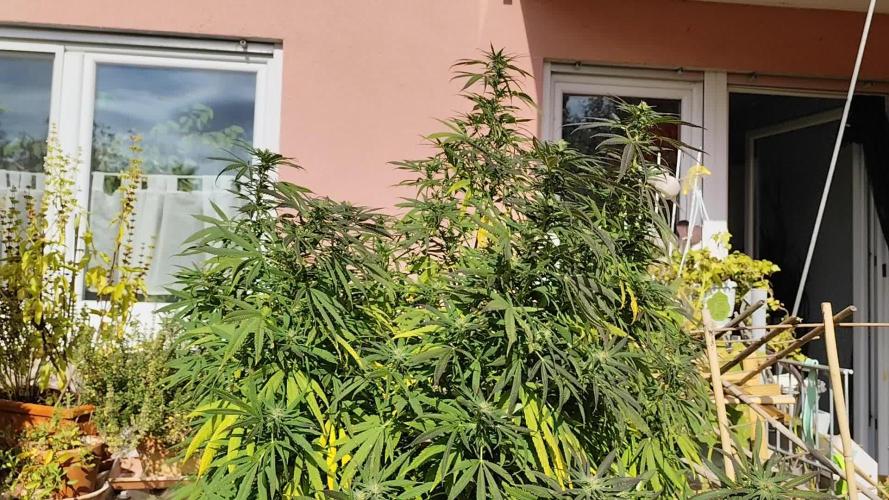
Hallo und herzlich willkommen zu meinem Growbericht Outdoor 2025 mit den Sorten Power Flower Feminized, Royal Medic Feminized und Special Kush #1 Feminized, alle 3 von Royal Queen Seeds. Es ist das erste Mal, das ich Töpfe für den Outdoor grow verwende, bisher waren alle Gorilla grows und direkt in die Erde gepflanzt.
Die URL der Power Flower Feminized: https://www.royalqueenseeds.de/feminisierte-hanfsamen/120-power-flower.html
Die URL der Royal Medic Feminized: https://www.royalqueenseeds.de/cbd-samen/148-royal-medic.html
Die URL der Special Kush #1 Feminized: https://www.royalqueenseeds.de/feminisierte-hanfsamen/138-special-kush-1.html
Die Planung für den Grow ist, die Samen in easyplug Anzuchtwürfeln keimen zu lassen und danach in 0,6L und 2,2L Plastiktöpfen, dann letztlich in die neuen komplett doppellagigen ROOTIES 15 Liter Wide Version Stofftöpfe umzutopfen. Sobald die Witterung es zuläßt, sollen die Pflanzen an die frische Luft.
Es ist schon eine Weile her, das der Grow losging, die Bilder sind jetzt aktuell.
Tag 211: Für heute waren 20°C vorhergesagt, tatsächlich steckt die Sonne hinter dickem Hochnebel und es sind gerade mal 14°C. Heute Nacht geht's mit 2 °C Richtung Gefrierpunkt. Alle drei Ladies purpeln im Laub. Sie bekommen nur noch pures Brunnenwasser. Der abgebrochene Ast der Special Kush ist wieder komplett angewachsen.
Tag 215: Endlich mal wieder ein Sonnentag, Die Power Flower fem. hat sehr schöne Farben bekommen.
Tag 217: Auch heute hat es wieder bis nach Mittag gedauert, bis der Nebel weg war. In der Sonne kommen die Farben der drei Großen voll zur Geltung und die Trichome glitzern um die Wette.
Wenn's dir gefallen hat, schau wieder vorbei ✌️😎

Likes
40
Share


@BudBoutique
Follow
! this is my current status, gonna upload my last veg weeks within the next week - got a bit busy around Spannabis - thank you for your understanding! 💚
Welcome to Bud Boutique Grow Diary - really appreciate all your love and support :)
Don't forget to check out my other current grows!
🗓️ This Week:
after 48 hours of complete darkness (important for seedlings to make sure all plants switch into flower same time), I finally switched my lights to the 12/12 schedule and sent my ladies into the flower.
- super strong and praying up
- still lack of nutrients, especially calmag which I increased slowly for this plant.
- Day 3: Foliar spray with APTUS Regulator and APTUS Nutrispray to give them extra micronutrients and give them a little shell for protection.
! always use APTUS Regulator first and mix well with your water before adding any other nutrients for Feeding or Foliar!
Thank you for still staying with me 💚
___________________________________________
--- 🌱 Strain (Sponsor) ---
🏷️ Wedding CheeseCake by Fast Buds
https://2fast4buds.com/seeds/wedding-cheesecake-fast-flowering
--- 🥗 Nutrients and Feeding (sponsored by APTUS: APTUS Ambassador) ---
🍸 APTUS: full nutrient schedule extreme
-- Regulator, N-Boost, P-Boost, CaMg-Boost, K-Boost, Allin1 Liquid, Startbooster, Topbooster, Enzym+ every feeding
-- Fulvic-Blast, NutriSpray as Foliar each once a week
🔗 https://aptus-holland.com/
--- ♻️ Grow Control (Sponsor) ---
TROLMASTER: TENT-X + LM14 Light Adapter to dim/sunrise/sunset lights + Temp & rH Sensor all remote on App
🔗 https://www.trolmaster.eu/
--- 🏭 Grow Setup ---
💡LUMATEK Zeus Pro 600
* 🏠🌿 Indoor: Homebox 120x120x200cm (4x4)
* 📐🌀 PrimaKlima exhausting Fan 1180m3/h (running on 60-80%)
* 🌀 Can Light Filter 800m3/h & 1x Fanbox 1x Dyson fan for Air circulation
🔗 https://lumatek-lighting.com/zeus-600w-pro-29/
🔗 https://primaklima.com/de/shop/ventilatoren-de/ec-ventilatoren/pk160ec-tc/
🔗 https://canfilters.com/products/filters/
All Likes and comments are highly appreciated!!!
👨🌾 don't forget to check out my Instagram for daily educational content: budboutiquee
- Bud Boutique

Likes
Comments
Share

@Anon73
Follow
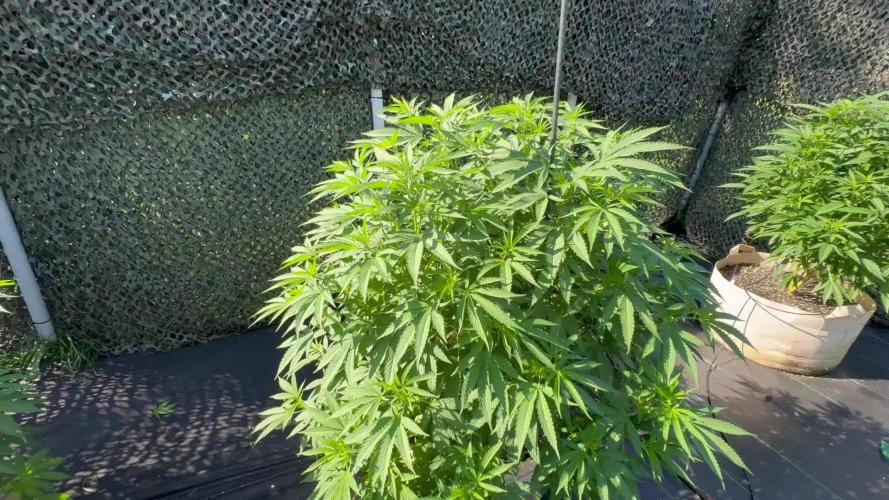
Growth is exponential now.
I had to install poles to stabilize several plants, some were tilting. It seems as if they grew so fast they were leaning over.
I have topped them several more times and removed some of the inner wasteful branches.

Likes
47
Share


@Mrs_Larimar
Follow
March, 30th
One Plant was ready, and was Harvested today
She smells like fruit Bubblegum. Buds are smaller but very solid
The other Plants still flowering, and smelling very much and quite deilicious
They are drinking like Barmaids, around one LLiter per Day
Feeding every other Day. And Buds are swelling more and more each Day.
Its a big Fun to open the Tent
UPDATE
The Harvested Buds are shiny like diamonds,,, gittering allover, nice dense Buds
Likes
1
Share
@Wierie
Follow
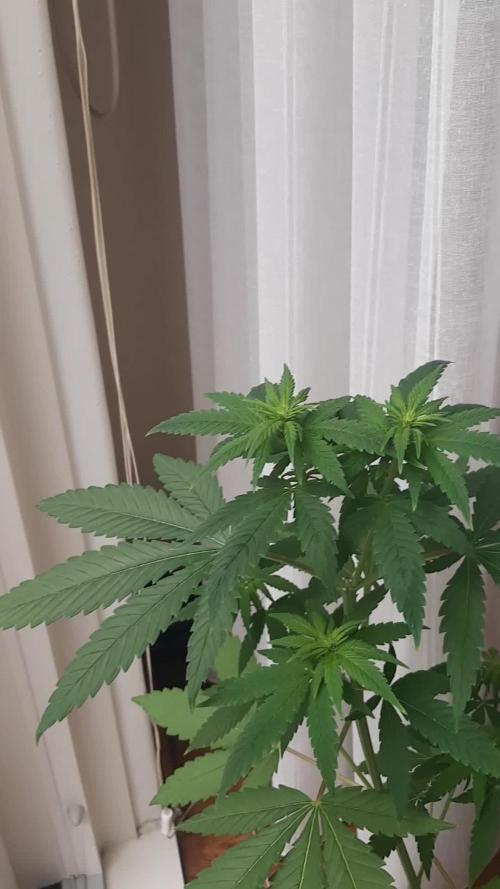
I added some more plagron supermix
Took the lower nodes off....
Will start givin plagron pk 13/14 tomorow (3th week of flower)
Sun is coming this week ....lady will be happy 👍🌴

Likes
Comments
Share


@GorkedOut
Follow
86 days from seed in soil until chopped. Roughly 40g dry weight. I ended up pressing most of it into Live rosin, however I kept some in flower form to smoke. Personally, I'm not big into the scent or smell of this strain, but it stays true to it's sativa roots and everyone who has tried it has really enjoyed it.
I'm not a big fan of this strain, purely based off the fact that my nose doesn't like the smell of this plant. It smells like chicked-peas (the stuff hummus is made from). It's very odd I know. However every one who has smoked it, including myself has enjoyed it. But if I'm picking and choosing, then this one would be near the bottom.
I ended up turning a vast majority into live rosin and it is much, much better. Amazing for listening to music and cleaning the house👌


Likes
14
Share


@TickTockCroc
Follow
So, I harvested my 2 older girls around 4 weeks ago, the 2 younger ones took that extra 4 weeks, just chopped them now! Initially, I was really upset when I harvested the first two - they just looked really bad and loads of fluffy larf. So, I wrote a negative review but I deleted it because when I smoked some, it was really good! LOL. But still just had no good aesthetic. I decided to feed the younger ones way more nutes than I was giving the other ones, and increased the rate of water feeds... and WOW. They responded so well and they came out HUGE!!!! MAN!!! These nugs came out beastly. The older ones 100% were being fed way too low a dosage of nutes, and were not watered frequently enough.
I've only just chopped them all and hung up to dry. Will update with a smoke report when they're ready!
So, the pics im posting are of the two younger plants that were harvested later. I do not have pics of the earlier harvest, unfortunately, but it looked terrible (from my own doing it seems as I mentioned above). As you can see in the first pic, I had to hold her up as she was falling over on her own weight because the nugs were so heavy (actually had to use many ties to keep both the plants from falling in the final 2 weeks).
Not too many pics but just an idea of how they were looking. Dense, big, frosty - not SUPER gassy in smell but still smells good! The side branches were all looking like main colas! Didn't LST or anything, just a bit of lollipopping and let it do its thing! Each pic is of a different bud site. Will also update with more details such as weight when it's dry!
Stay safe, friends!
┏(^0^)┛
-TickTockCroc
Likes
11
Share


@Listening2thestatic
Follow
Day 95 / FL day 15,
Gave both plants a heavy defoliation to allow light into all bud sites. I think I'm pushing my luck with the amount of stress I've been giving these plants. But I also think they can take it. Only time will tell.
Day 98 / FL day 18,
Plants have recovered well after heavy defoliation. Lots of new leaf growth. Hopefully this will help to increase nug size.
Day 101 / FL day 21,
Topped dressed plants with a 3/4 inch layer of living soil for a little bit of extra nutrients. Waiting until week 5 of flower to add another round of Gaia Green dry amendments.

Likes
17
Share


@Hawkbo
Follow
Autos are just starting to flower the photos are dying for some bigger pots. I've been trying to bring up the overall plant health in general since moving everything to a basement the temps are a little lower than ideal. I had a space heater delivered today and monitored the temps but they only went up to around 78°f I want it to be atleast 82°f ideally 85. The heater uses 1500 watt and only increased it about 2 or 3°. I dont think it's worth the extra cost for such little boost. I'm thinking about returning the heater and throwing a 1000w hps in one of the other tents and see if that will raise it anymore. Especially with LED and co2 higher temps would be very beneficial in veg and early flower but the room is so big its gunna be tough to pull off without killing me on electric costs. Any suggestions are welcome. I know this room does decent in flower but I havnt done much veg work down here and I'll have some autos growing this round so it's important I get it up.

Likes
11
Share


@TheThiccBud
Follow
So i dont think i need to explane much XD you can see it all in the Videos 😍
Likes
9
Share


@420DeepGrow
Follow
Gracias a James, Royal Queen Seeds, Marshydro y XpertNutrients sin ellos esto no seria posible.
💐🍁 Wedding Crasher:
Para crear las semillas Wedding Crahser, los criadores de Royal Queen Seeds cruzaron la deliciosa Wedding Cake con la Purple Punch.
Los cogollos resinosos de la Wedding Crasher desprenden un característico aroma a uvas, con un ligero toque de vainilla. Si la fumas en porro o vaporizador, podrás disfrutar de una hierba suave y dulce con un fondo de frutos del bosque. Los efectos de la Wedding Crasher son alegres y energizantes, pero también relajantes
En lo que respecta a sus cosechas, esta variedad produce hasta 500g/m² en interior en condiciones óptimas, tras una floración de 9-10 semanas
🚀 Consigue aqui tus semillas:
https://www.royalqueenseeds.es/semillas-feminizadas-de-marihuana/538-wedding-crasher.html
💡FC6500: Eficiencia líder en el mercado: la lámpara de cultivo LED FC-E6500, que ostenta un estatus líder en el mercado, es una solución rentable con un PPE de 2,8 µmol/J y un rendimiento máximo de 2,5 g/vatio. Ofrece un PPF alto de 2026 umol/S y es adecuada para una cobertura de vegetación de 1,50 m x 1,50 m y una cobertura de flores de 1,20 m x 1,20 m.
Iluminación versátil y uniforme.
https://marshydro.eu/products/mars-hydro-fc-e-6500-730w-commercial-led-grow-light/?gad_source=1&gclid=Cj0KCQjw1qO0BhDwARIsANfnkv9IIrYSbmJqz8PqpJOIyWwJfp5bc3SGJgUV68USLQ4tjmXDYwoBuAsaAue3EALw_wcB
🚥 MarsHydro ADLITE UV/IR/RED:
Para lograr un crecimiento óptimo de las plantas y maximizar los rendimientos es un arte simple que depende en gran medida de las condiciones ambientales adecuadas. Reconociendo las limitaciones de la iluminación natural y las soluciones de iluminación tradicionales para satisfacer estas necesidades únicas, lanzamos ADLITE. Estas luces especiales UV, IR y roja están diseñadas para llenar áreas del espectro, proporcionando las altas longitudes de onda que las plantas necesitan para un crecimiento y desarrollo óptimos.
🚀 Consigue aqui tu Adlite:
https://marshydro.eu/collections/adlite-supplemental-lights/
🏠 : Marshydro 1.50 x 1.50 x 1.80, carpa 100% estanca con ventanas laterales para llegar a todos los lugares durante el grow
https://marshydro.eu/products/diy-150x150x200cm-grow-tent-kit
🌬️💨 Marshydro 6inch + filtro carbon para evitar olores indeseables.
https://marshydro.eu/products/ifresh-smart-6inch-filter-kits/
🍣🍦🌴 Xpert Nutrients es una empresa especializada en la producción y comercialización de fertilizantes líquidos y tierras, que garantizan excelentes cosechas y un crecimiento activo para sus plantas durante todas las fases de cultivo.
Consigue aqui tus Nutrientes:
https://xpertnutrients.com/es/shop
📆 Semana 14:
Última semana de lavado de raices antes del corte final, ha quedado una planta con cogollos muy compactos y llenos de resina.
Likes
4
Share

@LST420
Follow
Week 13 Although the plant looks en smells great I did discover some small beginning banana's aka male flowers so in other words my girl turned into a hermaphrodite. I removed the ones I could see with a pincet which were all on top of some of the buds, usually between around 1-3 per bud. Let's hope 'she' still turns out worthwhile! And let's end with a positive note the terpenes are phenomenal it smells like a combination of Fernandes Red Grape soft drink, Hubba Bubba chewing gum, cherry candy and vanilla.


Likes
31
Share


@kingmcdaid
Follow
Another week down week 5 flower has brought huge gains in bud growth the structure of critical kush is awesome. And the best bud production is yet to come this should be a healthy yielding plant stay tuned !

Likes
10
Share


@DeepRootsGrowTrees
Follow
MIMOSA ZKITTLEZ FF /
GANJA FARMER
WEEK #5 OVERALL
WEEK #4 VEG
This lady is a fast grower is how I must stay this week she's a plant that will take the training you provide to her I'm using the budtraining clips to help train her as well I've as topped her. Great genetics with this lady!! Stay Growing!!
Thank you for stopping by and taking a look it's much appreciated!!
Thank you GANJA FARMER!!!
MIMOSA ZKITTLEZ FF GANJA FARMER
.

Likes
9
Share


Likes
5
Share


@Mr_nugs_lover_David
Follow
In this week the buds are starting to get more and more compact, very sticky flowrs, and the pheno #2 smells a little stronger than this pheno but still the same strong amnesia smell very apreciated, I'm a big fan of amnesia strains, and this amnesia pro by gea seeds is an amazing version of amnesia hypro very happy with her performance so far! Stay with me to see how this lady until the end of the road! 💛❤️💚👨🌾


Likes
19
Share


@Yessi_squeeze
Follow
1/4 is being harvested
2/4 being flushed
Runt is a giant and her buds are getting there
