


Likes
Comments
Share


@Screwie
Follow
Evening ladies and genitals, this week is amazingly better than the last few weeks.
Reasons are:
1. i upgraded the fan in my grow tent. Its tall and oscillates.
2. I’ve figured out how to get the vapor from the humidifier directly into the tent as you can see in the video. As the extraction fan is running 24/7 it pulls in the air from the only open air intake hole pulling in the vapor.
3. I repotted from the teeny tiny pots into 2 litre pots with Sohum Living Soil. So I've upgraded the soil type. For a beginner like me this releases a lot of internal pressure from worrying about the nutrient deficiencies.
With all that said the ladies have responded great. I’ve started to weigh each pot to guage how much water is being evaporated so i dont overwater.
Some issues remain on the leaves from my previous overwatering but I’ve learnt that the damaged leaves will stay damaged. You can see the tips are hella bent in 1 pic at the ends. Hopefully it will be OK for the new leaves at least. I cut off damaged leaves on 2 of the girls but left the others. I want to see what happens when they are left to grow naturally and mindful of the fact that if defoliating at not the right intervals will stunt their growth . I will do LST but at the moment i cant cause they're not really big enough yet.
Till next time, peace out. 420 right around the corner!


Likes
32
Share


@TheItalianGrower
Follow
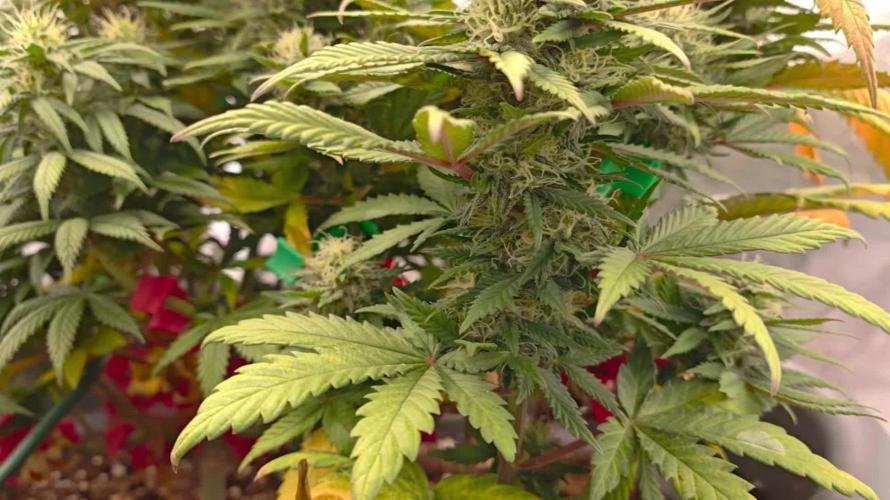
This week I had some problems with the electricity .. Now everything is fine, and the plants are fine .. They have resumed their normal growth .. Another 4 days and I will switch to flowering

Likes
3
Share

@Sunny_Balboa
Follow
Nochmal ein kleines Update in Form eines Videos.
Bisher ist alles gleich geblieben, gleiches Licht, gleich gedüngt, gleich gegossen.
Bin schon mega gespannt wie das Endergebnis aussehen wird.
Likes
15
Share


@Dirty_rich
Follow
Bastante bonita, buen producción a pesar de que le dio botrytis en la copa principal y tuve que cortar por prevención.
Un olor muy original, honestamente me gusto mucho, la considero fácil de cultivar con un plan de nutrientes medios.

Likes
4
Share

@HealthHunterFarms
Follow
End of week9
Sensi Seeds got back to me and told me that Jack Herer is a inbreed line and we are probably looking at the F4 Generation. I made the Seeds for this run last year from the Original Pack.
Likes
8
Share


@AlpenZilla
Follow
🏆 Harvest Report – Cherry MAC Muffin
Final dry yield: 161.71 g
The highest-yielding plant of the entire grow – dense, heavy flowers with excellent structure and minimal stem weight.
The buds cured into a standout mix of:
🍒 Cherry sweetness
🍦 Soft creamy undertones
🌈 Deep purple highlights on the tips and sugar leaves
The resin concentration was extremely high, giving the buds a frosted, almost glassy look.
Drying went smoothly thanks to the tight flower formation and healthy fade-out during flush.
No oversaturation, no nutrient residue – everything finished clean and aromatic.
Cherry MAC Muffin ended the run as the visual and aromatic highlight of the tent.
Outstanding vigor, strong late-flower development, and one of the densest structures of the grow.

Likes
148
Share


@CrazyHorse
Follow
After a hard week, you can finally see the effects of my efforts, if you look at the photo of my girl from day 43 and you compare it with 45, you can see the differences in the color of the leaves. The new set of fertilizers works and my darling seems to be happy, let it be like that all the time without any problems :)
This is the first time that I am growing a photopyriodic girl, after changing the light cycle to 12/12 you can finally see her reactions.
I am excited and waiting for the situation to develop 😍
By the way, she drinks 1.25 liters a day, 5 liters in 4 days.
If I drank as much as she did, I wouldn't have liver anymore
All The Best, You Lovely Girls Growers :D

Likes
3
Share


@Casa_das_Arvores
Follow
Final da semana 2, planta com 15 dias desde seu nascimento em 6 de Agosto.
Aparentemente já poderia ter aumentado o feed para algo próximo de 1.5, coisa que farei ao longo dessa próxima semana


Likes
17
Share


@Laxguy420
Follow
All training removed and into the final push. Could really use some expert eyes on chopping time for max potency

Likes
44
Share


@The_Good_Twin
Follow
24 Oct 2021
Week 16 began yesterday, but the first watering of the week was today. I’m keeping up with the flush, starting the 2nd week today. Hopefully I’ll be able to harvest in a few days.
My Trio is looking really lovely. Their buds are covered in trichomes that glisten under the lights. They are starting to darken in color in some areas like their mother did. They may take on some pinkish/purple hues before it’s all done. Some of their leaves are turning purple as well. The sugar leaves are somewhat dark, but still green. All three of them are very nice to look at, and their smell is super strong! It’s really nice in my grow room!
Yesterday I went out and got some more of those support sticks from the local home store and provided support for all of the branches that needed it. Which was a lot! I got 7 new support sticks and used them all. All of the branches are now supported and flourishing!
Today each of my girls received a gallon of properly pH’ed water, and each had a sufficient amount of runoff from which to gather measurements. The process went as follows:
C1 & C2 had an initial pH of 6.9, and C3’s initial pH was 6.8.
I added .2ml of pH DOWN to each gallon which adjusted the pH to 6.4 for C1, and 6.3 for C2 and C3. TDS going in was 88 ppm for C1, 86 ppm for C2, and 84 ppm for C3.
Runoff measurements were a little weird. The runoff pH for C1 was 5.9. The TDS was (at first) 600 ppm. I thought that was an incredible drop from the other day, so I did it again. It was 603 ppm the second time. Ok, moving along nicely! The runoff for C2 was pH - 5.8, and TDS was 1101 ppm. 😳 That’s a lot more than C1. C3 had a pH of 5.6, and TDS of 1212 ppm. Which is even more; so I measured a little more from C1 again, and the 3rd time it measured 736 ppm. 🤔 That seems weird to me, but I’ll keep an eye on it. If it continues to be that low then I will end up harvesting it before the others which won’t be so terrible. I’ll just have to wait and see.
The temperature in the tent was 81F, and humidity was 47%.
My ladies are looking lovely and growing better than I could have hoped for. This grow has been awesome, but I can’t wait to be done.
Happy growing everyone!
27 Oct 2021
Feeding/flushing time again! I was somewhat perplexed the other day when I got the runoff reading for the TDS in C1. It was 500-600 ppm less than C2 & C3 respectively. Since I was having some issues with the TDS meter I thought that IT may be the cause. I made a note to check on it today, and there seems to be no problem with the TDS meter at all. Keep reading for details.
My plants are still looking as lovely as I could ever have hoped for! C1 has started showing more color changes than the other 2, and the only thing I can say the difference is, is that I defoliated some of C1’s larger fan leaves last week, and wasn’t able to do the same for the other 2. That is the ONLY thing I can think of that has been different between all 3 plants this entire grow. Regardless, all 3 plants are looking wonderful!
Today each of my lovely ladies received a gallon of property pH’ed water with an expected amount of runoff for testing. The preparation went as follows:
C1 & C2 had an initial pH of 6.9, and C3 was at 7.0.
I added 0.2ml’s of pH DOWN to each gallon which adjusted the pH of all 3 gallons to 6.3.
TDS going in for C1 & C2 was 85 ppm, and C3 was 84 ppm.
Runoff levels were different for all three plants. C2’s runoff pH was 5.7, and TDS was 1041 ppm. C3’s pH was 5.6, and TDS was 1059 ppm. Last time C1 was significantly lower than the others, and I thought that maybe it was a TDS meter issue. Evidently it wasn’t. C1’s TDS today was 526 ppm! 😳 still much lower than the others, and pretty much ready for harvest.
The temperature in the tent was 81F, and humidity was 43%.
Although harvest time is much closer, I don’t believe it will be done in time for this month’s grow diary of the month contest. So sad, but that’s life.
Happy growing everyone! See you again soon.
29 Oct 2021
Today is the last day of week 16. I was planning on continuing the flush today, but remembered something that I had forgotten about….
I remembered the branch that had broken off of C1 back on October 10th in week 14. She had held on for well over a week in a can of water, but finally her leaves started to droop. I hung it up all by itself in my small tent to dry. Until today that is!
I took it outside and trimmed it on my deck. Even outside, in a pleasant breeze, the amazing smell of this branch was easily detected. It’s kind of windy, rainy, and chilly here today, but still …. That sweet blueberry muffin smell was there.
Her buds; still covered in the dried, crystallized trichomes were super sticky! I must admit that they are the stickiest buds I have grown to date.
I weighed the dry bud to add to the grand total of C1’s harvest later. Then I ground it up and smoked it.
All I am going to say is that from my reaction to smoking it; I have decided that no additional flushing is needed. After all, what I smoked today broke right before I started flushing, and I could taste nothing other than what I would hope to taste.
So my fellow Growmies; I am ending this week right here. The next report you will see will be the harvest report!!
Stay tuned!


Likes
1
Share


@Ultraviolet_
Follow
Not all minds think the same, its a hard concept to grasp from one who has only ego. When someone operates solely from the ego, they tend to view their own perspective as the objective truth. To them, if someone else thinks differently, it is seen as a flaw, a lack of intelligence, or a personal affront, rather than simply a different, valid experience.
The ego assumes that others are just extensions of itself. It cannot easily differentiate between "I think this" and "This is the universal truth". This is called the Mirror Fallacy. True understanding of another mind requires stepping out of oneself. The ego, by definition, is obsessed with self-preservation and being "right," which blocks empathy. Different perspectives are interpreted as attacks on the ego's stability. Instead of curiosity, it feels defensive. Acknowledging that others have entirely different internal worlds—with unique motivations, fears, and histories—requires dismantling the illusion that the world revolves around one’s own viewpoint. It’s a shift from "Why are they wrong?" to "How did they get to that perspective?"
Gospel of Thomas #17 "I shall give you what no eye has seen, what no ear has heard, and no hand has touched, and what has not come into the human heart." precedes saying #18, which questions the "beginning" and "end".
First, you need The Eyes to See, The Ears to Hear & The Mind of the Heart.
"Alpha to omega" refers to the first (Α/α) and last (Ω/ω) letters of the Greek alphabet, symbolizing "the beginning and the end". It represents totality, eternity, or the entirety of something.
Revelation 22:13, "I am the Alpha and the Omega, the First and the Last, the Beginning and the End" (NKJV, NIV).
Alpha & Atom: Both originate from Greek. Alpha (Α/α) is the first letter of the Greek alphabet (representing the beginning). Atom comes from atomos, meaning "indivisible," often seen as the foundational "first" particle of matter.
Adam & Atom: In some esoteric and linguistic theories, the biblical name "Adam" (Hebrew for man/earth) is connected to "atom" because both represent the original, foundational unit (the first man vs. the first particle).
Alpha Particles are particles emitted during radioactive decay, named "alpha" because they were the first type of nuclear radiation discovered. They are atomic nuclei consisting of two protons and two neutrons.
The study of the atom often deals with the "beginning" (alpha) of chemical reactions and fundamental building blocks.
The terms are linked primarily as symbols for "the beginning" (Alpha), the "fundamental unit" (Atom), and the "original man" (Adam).
The uppercase symbol Omega (Ω/ω) is primarily used in electronics and physics to measure electrical resistance in ohms, representing how materials resist electron flow. It is also used in various fields to represent the density parameter in cosmology, solid angles in physics, and special constants or asymptotic growth rates in mathematics.
In quantum mechanics, "Omega" (Ω/ω) can refer to several concepts related to measuring or representing quantum coherence, generally categorized into dynamical, mathematical, or physical parameters:
Dynamical Coherence Measures
Omega Pattern (Superconducting Circuits)
Coupling Strength
Angular Frequency
Quantum Coherence Framework (Omega v24.0)
Electron flow is not the same as electrical conductivity, but they are intimately related. Electron flow is the physical motion of electrons, while electrical conductivity is the material property that determines how easily that flow can happen.
Electron Flow (The "What"): The physical movement of negatively charged electrons through a conductor (usually from negative to positive). It is the act of carrying charge.
Electrical Conductivity (The "How Well"): An intrinsic material property that measures how easily a material allows electrons (or other charge carriers) to move through it.
Electron Flow (The Action): The actual physical movement of electrons from one molecule (donor) to another (acceptor) in a pathway, such as the photosynthetic electron transport chain or cellular respiration. The current itself (dynamic electricity).
Electrical Conductivity (The Property): An intrinsic property of a material (like copper vs. glass) that measures how easily it allows electric current (electron flow) to pass through it. A measure of ease. A high-conductivity material has low resistance and lets electrons move freely.
Electron transport rate (ETR), the rate at which electrons travel through the chain.
You can have Electron Flow occurring (electrons moving through the chain), but a very low Electron Transport Rate if the plant is in the shade. If light increases, the Electron Flow still follows the same path, but the Electron Transport Rate increases because more electrons are moving per second. In summary, ETR is a quantitative measure of electron flow.
The Electron Transport Rate (ETR) is not exactly the same as Electron Flow, although they are intimately related. Think of "Electron Flow" as the movement itself, and "Electron Transport Rate" as the speed or quantity of that movement.
Photosystem II (PSII) is a critical multi-subunit protein complex in thylakoid membranes that initiates photosynthetic light reactions by splitting water and transferring electrons.
"Et lux in tenebris lucet, et tenebrae eam non comprehenderunt,"

Likes
3
Share


@lilred100
Follow
Lemony gassy terps overall I love his strain. First ever grow organic coast of Maine stonington blend and teas in a 3 gallon

Likes
13
Share

@DogDoctorOfficial
Follow
Week 13 from seed.
Around week 8 flower in our 12/12 galaxy. 🙂
And now… everything is changing.
The room feels different this week. The colors are shifting everywhere. Leaves are fading naturally across the canopy, hairs are turning deeper orange and copper tones, trichomes are getting thicker and cloudier by the day, and the plants are entering that final stage where the grower does less, observes more, and lets time do its work.
The “almost no nutrients” strategy is still rolling beautifully. At this point we are basically running enzymes and patience. No heavy feeding. No panic corrections. Just letting the plants finish the way they want to finish.
Less became more in this run.
From the beginning, the goal was simple:
minimal stress, minimal interference, and let the plants grow naturally into the lights under 12/12 from seed.
No endless training sessions.
No constant manipulation.
Just a little leaf tucking here and there, careful observation, and letting the room guide itself.
And honestly… these Skywalkers rewarded that trust.
Heavy fruits everywhere. Dense flowers from top to bottom. Plants leaning under their own weight and asking for support from the yo-yos. Colors stacking on the pistils. Resin thickening every single day.
One thing I’m especially happy with is the lower canopy development. The under-canopy lighting keeps helping the plants mature evenly from top to bottom, and the difference is very noticeable now. What could have become airy popcorn buds simply never had the chance. The lower flowers are dense, developed, and fully part of the harvest.
What used to be “sea buds” became real flowers… or disappeared completely during cleanup.
We also continue using the far-red strategy:
15 minutes after lights-off, while slowly increasing reds during lights-on as well. The idea is to help simulate the end of the season and encourage those natural finishing responses from the plants. Maybe terpene expression, maybe flavonoid response, maybe simply stress-signaling and seasonal behavior… but whatever is happening, the room is speaking loudly right now.
And the yellowing leaves?
At this stage, that’s not something scary here. That’s the plant redistributing energy, consuming reserves, and moving toward the end of its cycle. After 13 weeks together, this is part of the story.
Now is not the time to rush.
There’s no point harvesting early after all this patience. We’ve already come this far together. At this stage, the grow is less about “doing” and more about understanding when to simply wait.
Calmly.
Observing.
Checking.
Smelling.
Watching the trichomes.
Letting the plants tell us when they are truly ready.
Next week?
Expect more fading. More swollen flowers. More support needed. More aroma. More late-flower personality.
But don’t expect panic harvesting just because the finish line is visible. We wait for the moment that feels right.
Huge thanks to everyone stopping by this diary:
the OG followers, the silent lurkers, the new growers, the skeptics, the supporters, the lovers, the haters, the community, the platform, the breeders, the sponsors, and everybody spending even five minutes here with us.
Positive vibes to all of you. Always.
Skywalker OG 🌱
12/12 from seed.
Week 13.
Still flying.
📡 DELETED @ 1K Please stay tuned.we never quit https://www.youtube.com/@TheDogDoctorOfficial NEW 🙏 Thank you for your patience and continued support.
FOR DISCOUNT CODES AND MORE JUST FOLLOW THE LINK https://website.beacons.ai/dogdoctorofficial
📲 Don’t forget to Subscribe and follow me on Instagram and YouTube @DogDoctorOfficial for exclusive content, real-time updates, and behind-the-scenes magic. We’ve got so much more coming, including transplanting and all the amazing techniques that go along with it. You won’t want to miss it.
GrowDiaries Journal: https://growdiaries.com/grower/dogdoctorofficial
Instagram: https://www.instagram.com/dogdoctorofficial/
YouTube: https://www.youtube.com/@dogdoctorofficial Deleted by Youtube - https://www.youtube.com/@TheDogDoctorOfficial NEW
Vimeo : https://vimeo.com/dogdoctorofficial Under construction stay tuned ⸻
Explore the Gear that Powers My Grow
If you’re curious about the tech I’m using, check out these links:
🔆 Lighting & Environmental Control
• Future of Grow — Advanced LED lighting technology
https://www.futureofgrow.com/
DISCOUNT CODE: DOG20
• Lumiflora — Under-canopy LED lighting
https://lumiflorade.com/
• TrollMaster — Environmental controllers and automation gear (past collaboration)
⸻
Genetics
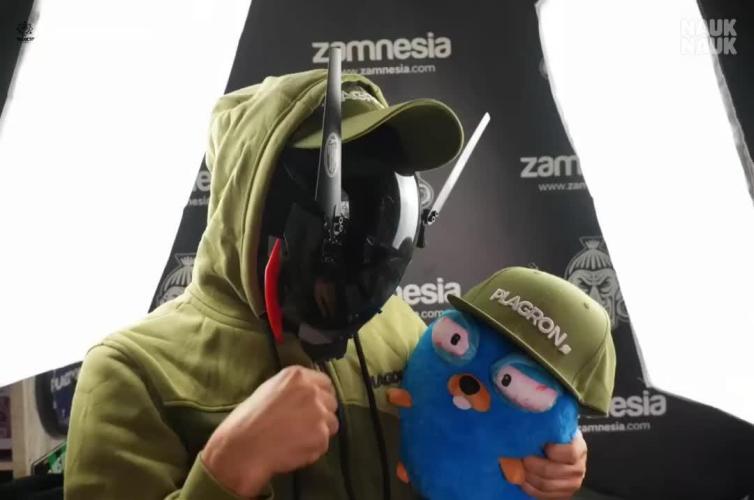
• Zamnesia Seeds — Genetics used in this project
https://www.zamnesia.com/
⸻
🌱 Soil, Substrates, Boosters & Root Support
• Plagron — Substrates, bio mixes, and supportive products
https://plagron.com/en/
⸻
🎒 Storage, Curing & Preservation
• Grove Bags — Curing and storage solutions
https://grovebags.com/
⸻
📸 Photography Equipment & Tools
(Not sponsors, but part of my creative toolkit)
• Sony A6700
• Sony full-frame macro lens + few more
• Stacking photography workflow - learning
• iPhone (for behind-the-scenes shots)
We’ve got much more coming as we move through the grow cycles. Trust me, you won’t want to miss the next steps, let’s push the boundaries of indoor horticulture together!
As always, this is shared for educational purposes, aiming to spread understanding and appreciation for this plant. Let’s celebrate it responsibly and continue to learn and grow together.
With true love comes happiness. Always believe in yourself, and always do things expecting nothing and with an open heart. Be a giver, and the universe will give back in ways you could never imagine.
💚 Growers love to all 💚
📸 P.S. – The Eye Behind the Lens
All photos in this diary (for now — except for the ones showing the camera, which I took with an iPhone) are taken with a Sony A6700 paired with a Sony full-frame macro lens and a few more.
Photography is part of the story — it’s how we share the fine textures, the glow, and the quiet details that words can’t always capture.
I’ve also started experimenting with photo stacking — a technique where multiple images, each taken at a slightly different focus point, are layered together to create one perfectly sharp image from front to back.
It’s not digital enhancement or AI; it’s pure photography — a way to reveal the plant’s beauty in microscopic depth, from trichome to petal.
You’ll even see a few shots of "ghost me" capturing the shots — camera, lens, setup — because every grow deserves not just to be cultivated, but documented like art.
FOR DISCOUNT CODES AND MORE JUST FOLLOW THE LINK https://website.beacons.ai/dogdoctorofficial
NEW DISCORD - Official Server Invite Link : https://discord.gg/ksjAkA5T74

Likes
33
Share

@MrGrowDiarie
Follow
Day 120
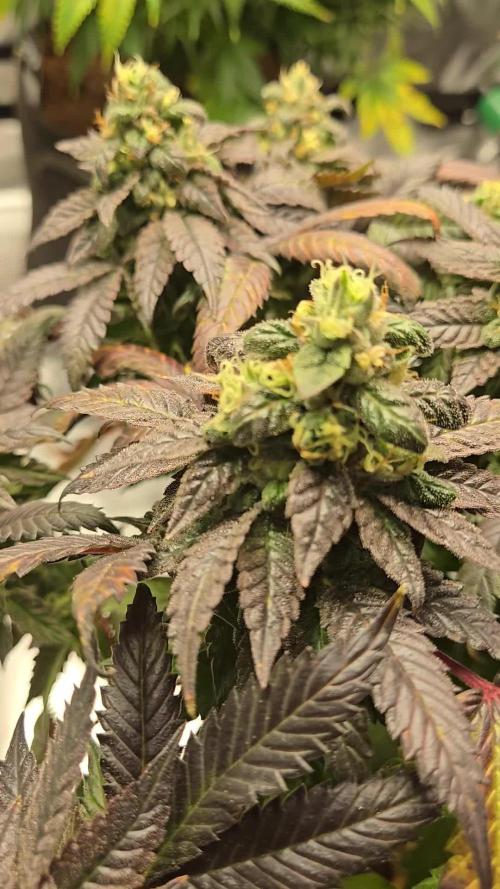
The buds look dense and frosty, with swollen calyxes and visible trichome coverage-clear signs that the plant is nearing harvest. Some leaves are fading or curling slightly, which is normal at this stage as the plant directs its remaining energy into the buds. The environment appears stable, with reflective tent wo!!- controlled lighting, and monitoring equipment

Likes
4
Share


@HowtoBubatz
Follow
The second week of vegetation is going well! This time, I’ve decided to try the Green House Feeding BioEnhancer instead of BioBizz Root-Juice.
I’ve had issues with the shelf life of Root-Juice in the past, so I’m curious to see how BioEnhancer performs.
The plant is looking healthy now, but it had a bit of a rough start. I initially planted it in soil that was too heavily pre-fertilized, which caused the first leaves to turn yellow.😔
Thankfully, it recovered quickly and seems to be thriving now. 💪
To keep the plant as stress-free as possible during vegetation, I’ve decided not to train it for now.
I want it to focus on strong, natural growth without any added strain.
I’m excited to see how it progresses over the next few weeks—things are looking promising!🌱😊
Likes
60
Share


@BudBoutique
Follow
Welcome to Bud Boutique Grow Diary - really appreciate all your love and support :)
Dont forget to check out my other current grows!
🗓️ This Week:
After 14 Days drying inside tent with about 60% rh and 18° Celcius ( I know could be even lower).
- trimmed all well and put them straight into Grove bags for curing.
That is the end of this Diary, thank you all for sticking with me. The next new onces are already up so feel free to check out
Thank you for still staying with me 💚
___________________________________________
--- 🌱 Strain (Sponsor) 🌱 ---
🏷️ Cookie Haze by Kannabia Seed Company
https://www.kannabia.com/en/feminized-cannabis-seeds/cookies-haze
--- 🥗 Nutrients and Feeding (sponsored by APTUS: APTUS Ambassador) ---
🍸 APTUS: full nutrient schedule extreme
-- Regulator, N-Boost, P-Boost, CaMg-Boost, K-Boost, Allin1 Liquid, Startbooster, Topbooster, Enzym+ every feeding
-- Fulvic-Blast, NutriSpray as Foliar each once a week
🔗 https://aptus-holland.com/
--- ♻️ Grow Control (Sponsor) ---
TROLMASTER: TENT-X + LM14 Light Adapter to dim/sunrise/sunset lights + Temp & rH Sensor all remote on App
🔗 https://www.trolmaster.eu/
--- 🚿 PetraGrow (Sponsor) ---
CannaFogger Foliar Spray
🔗 https://www.petratools.com/product/petragrow-cannafogger-atomizer-new-mini-fogger
--- 🏭 Grow Setup ---
💡LUMATEK Zeus Pro 600
* 🏠🌿 Indoor: Homebox 120x120x200cm (4x4)
* 📐🌀 PrimaKlima exhausting Fan 1180m3/h (running on 60-80%)
* 🌀 Can Light Filter 800m3/h & 1x Fanbox 1x Dyson fan for Air circulation
🔗 https://lumatek-lighting.com/zeus-600w-pro-29/
🔗 https://primaklima.com/de/shop/ventilatoren-de/ec-ventilatoren/pk160ec-tc/
🔗 https://canfilters.com/products/filters/
All Likes and comments are highly appreciated!!!
👨🌾 don't forget to check out my Instagram for daily educational content: budboutiquee
- Bud Boutique



Likes
20
Share


@Smokwiri
Follow
Heyheyhey, look, this one popped out of the soil and is looking nice and healthy, waiting for the second set of leaves now.
Slowly stretching towards the new lights.
https://www.viparspectra.com/?aff=Smokwiri-discount&utm_source=affiliate
If you dont want to use the affiliate link, you can go to their website and get 8% discount at checkout with coupon code: RUFFSELEKTAH
