







Likes
17
Share


@420DeepGrow
Follow
Gracias al equipo de Zamnesia, Marshydro, XpertNutrients y Trolmaster sin ellos esto no sería posible.
💐🍁 Frosted Guava:
La Frosted Guava es una cepa índica dominante y súper resinosa, que es un cruce de la Guava y la Frosted Skywalker. Con unas características de cultivo muy versátiles, un aroma exótico y afrutado, y un subidón relajante y lúcido, la Frosted Guava es ideal para cualquier plantación de marihuana.
🌻🚀 Consigue aqui tus semillas:
Código Descuento 20%: ZAMMIGD2023
💡TS-3000 + TS-1000: se usaran dos de las lámparas de la serie TS de Marshydro, para cubrir todas las necesidades de las plantas durante el ciclo de cultivo, uso las dos lámparas en floracion para llegar a toda la carpa de 1.50 x 1.50 x 1.80.
https://marshydro.eu/products/mars-hydro-ts-3000-led-grow-light/
🏠 : Marshydro 1.50 x 1.50 x 1.80, carpa 100% estanca con ventanas laterales para llegar a todos los lugares durante el grow
https://marshydro.eu/products/diy-150x150x200cm-grow-tent-kit
🌬️💨 Marshydro 6inch + filtro carbon para evitar olores indeseables.
https://marshydro.eu/products/ifresh-smart-6inch-filter-kits/
🍣🍦🌴 Xpert Nutrients es una empresa especializada en la producción y comercialización de fertilizantes líquidos y tierras, que garantizan excelentes cosechas y un crecimiento activo para sus plantas durante todas las fases de cultivo.
Consigue aqui tus Nutrientes:
https://xpertnutrients.com/es/shop/
💻 Trolmaster Tent-X TCS-1 como controlador de luz, optimiza tu cultivo con la última tecnología del mercado, desde donde puedes controlar todos los parametros.
https://www.trolmaster.com/Products/Details/TCS-1
📆 Semana 2:
Gran primera semana, ella ha dado un gran estiron estos días, si sigue así será una gran cosecha.
Esta semana se practica defoliacion, poda de ramas bajas y se le agrega Sticky Fingers .
La carpa está ocupada al 100%, sigue una floracion explosiva gracias a @Marshydro y @Xpertnutrients y @Trolmaster con esta gran genética 💪.
Potencia de la lámpara: 70%

Likes
6
Share


@UnorthadoxDude
Follow
Wow what a week this has been, the plants have all undergone fair dramatic changes. A real flurry of leaf yellowing, pistil darkening/curling, and bug swelling. The smell is really coming along now, I think we're really quite close to harvest. On the assumption that pre-flowering was two weeks, this strain should be ready at the end of week seven flowering, so in the case of this diary the end of week nine (i.e. one week to go!).
Pistils are about 70-80% amber, and the lower pistils on buds have started curling inward.
Trichomes look to me to be something like 10% clear 80% Milky 10% White.
I have smoke tested a small bud off the lower part of plant 3 today after quick-drying overnight in the airing cupboard, taking into consideration the obvious chlorophyll from the fast dry, the high was much closer to what I am expecting than the last smoke test. It came on at the normal pace, was quite effective, and lasted a good while. I am really hoping I can navigate my way through the next process, as I feel quite close now to having some home grown bud for the first time.
The plants are being well watered this evening with just water, and this will be the last time that I water them until harvest.
I will continue to monitor these daily, I intend to harvest at the first sign of any amber trichome.
Advice and comments welcomed.
P.S. Exciting news! My order from Green House Seeds arrived today for my next diaries! :)

Likes
1
Share


@El_gordito99
Follow
•Terza settimana•
Ciao amici !! In questa settimana c’è poco da dire le piante crescono bene, mantenendo irrigazioni costanti ogni 2 giorni con quasi un litro d’acqua per pianta. Da metà settimana, come anticipato prima, riprenderemo con la melassa 2 ml xL ad ogni irrigazione.
(Tutte le foto sono in ordine crescente)
Likes
8
Share


@Mon_monde_onirique
Follow
Les branches de Purple shine sont assez épaisse même un peu trop, le LST est vraiment galère à faire pour l'instant je vais encore attendre un peu qu'elle se développe plus et j'envisage peu être de supercropped les 4 branches principal une fois plus développé afin de former la base(a voir les prochain jours 🤔)
Le 1/05 rempotage de Purple Shine, elle a bien colonisé son air pot 1l passage en 4L géotextile dans un supersoil composé de (lombricompost,guano verre, sang et corne de boeuf sèché, phosphate naturel, zéolite, sel Epsom+ mycorhizines) et terreau covercrop
Le 3/5 début du LST , pose de clip lst pour former les 4 branches principal, petit accident lors de la pose des clips un apex c'est bien cassé et ne tien que sur 1mm. Je fait une tentative pour essayer de le sauver mais je doute de résultat 😥.
Le 4/5 perte de l'apex accidenté 😮💨😥 ce matin la branche avait les feuilles flétrie et la tige recroqueviller, fini pour elle le sauvetage a été un échec😥.
Le 5/5 on se relève de cette déception et envisage quelques changements dans le programme pour que cette connerie deviennent profitable😉.
Nouvelle taille des apex, on passe à 6 pousse maintenant je laisse un temps de repos à purple shine avant une nouvelle taille je prévoyais 8 apex et au final j'en aurai 12😉🔥.
PS: même s'il t'arrive une couille, baisse pas les bras et relève toi, arrange toi pour que cette galère te soit profitable😉🔥


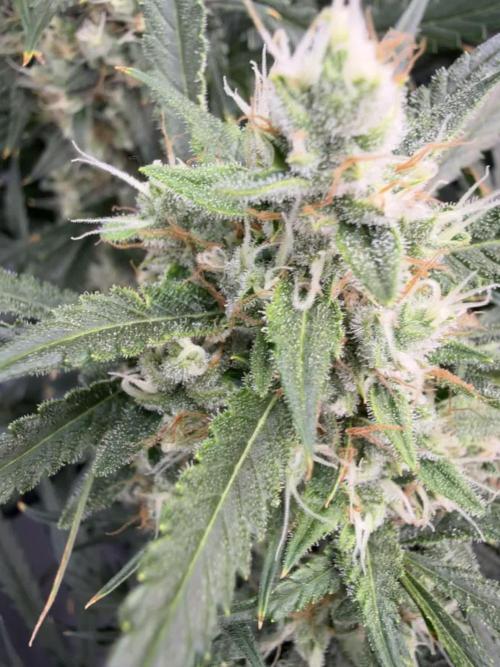



Processing
Likes
23
Share


@GrowGuy97
Follow
Everything seems to be going great for them to all be random bag seeds! Temp is staying a little higher than I would like trying to figure out some ways to cool it down may just order some new lights!
Likes
5
Share

@DerEkstaseHase
Follow
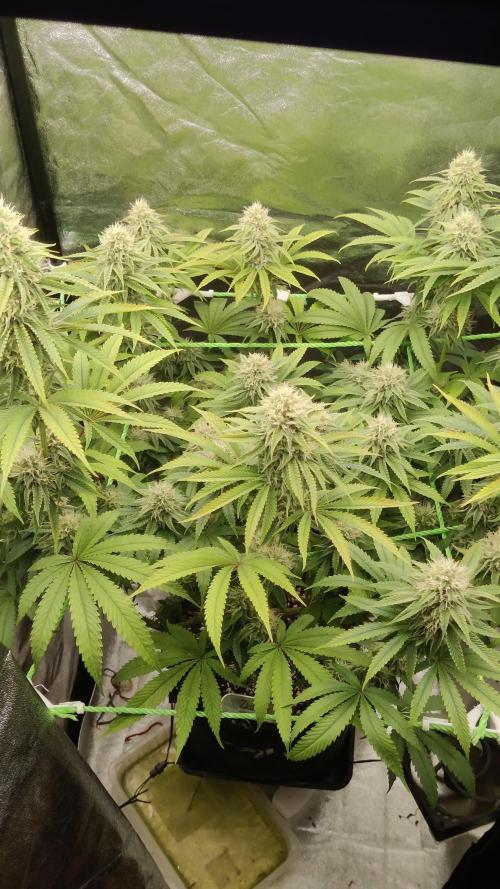
Richtig fett 🤩
Diese Woche noch Vollgas, ab nächster Woche wird der EC runter gefahren um Verbrennungen zu verhindern und die Natürliche Farbgebung zu stärken.
Die Pflanze sieht sehr vital aus und die Blütenbildung und vorallem der Geruch sind umwerfend.
Jetzt werde ich noch ein letztes mal Blätter entfernen um der Fettung und Reifung der Blüten das beste Milieu zu bieten.
Die Luftfeuchtigkeit ist etwas niedrig aber das ist schon ok, die Pflanze verträgt das scheinbar sehr gut.
Demnach habe ich keine Angst, das hier Schimmel entsteht.
Frohes growen :)

Likes
37
Share

@GermGrowFox
Follow
28. März
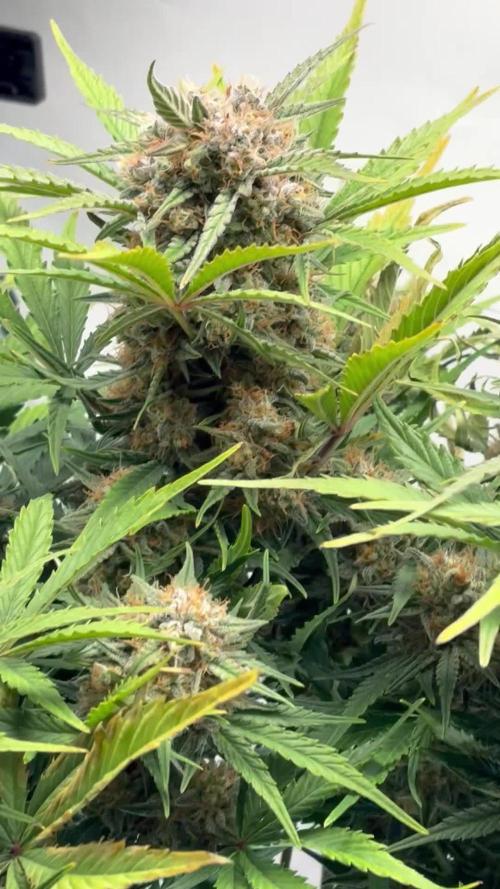
Die Purple Punch sieht schon ziemlich fertig aus ☺️
Die neuen Lampen sind jetzt auch drinnen. 2x vertikal und 2x horizontal. Werde vermutlich nächsten run alle horizontal ausrichten.
Gibt sonst nicht viel zu berichten :)


Processing
Likes
19
Share


@xbabybitchx
Follow
I just transplanted these two into 1L pots from solo cups, fed PH balanced water. Not much to report on, besides growing fast! I'm wondering if these two will grow how the other GB is.. short n bushy.
2019.12.29 still good, just installed a fan into small tent for these girlies, put the auto great white sharks in the tent too- they are thriving.

Likes
6
Share


@Creatorknbsland
Follow
Uuma semana de crescimento dessas meninas do mr soma!so na água e substrato enriquecido com humus de gongolos!(piolho de cobra)essa semana entro com os fertilizantes bem minimo 250 ppm!

Likes
6
Share

@Growbody
Follow
Willkommen zu meinem Anbaubericht der Peanut Butter Breath Automatic von Zamnesia Seeds. Sie entstand aus einer Kreuzung mit Do-Si-Dos, Mendo Breath F2 und Ruderalis. Sie ist ein Hybrid und soll süß, erdig, nussig und cremig schmecken. Das wird ein schöner Dampf für Weihnachten.
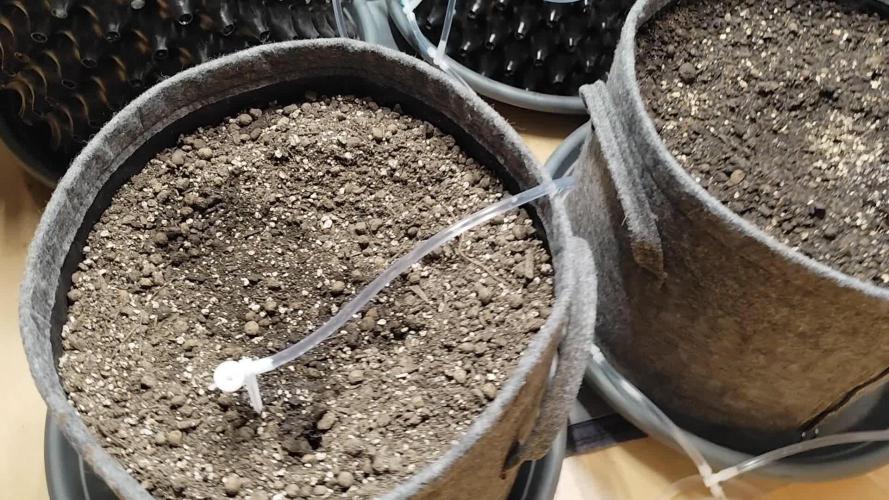
Tag -6: Zeit, den Growroom vorzubereiten. Im "Erdlager" reift die Sonnenerde vom letzten Indoorgrow schon einige Monate. Ich hatte sie mit Monster Bud Mix Living Soil und Hornspänen gefüttert, jetzt kommt noch aktivierte Pflanzenkohle von Jungle Vibes aus Freiburg dazu, Dann kommt die Erde in die Pötte. Nächstes Mal werde ich das wieder draussen machen und die Töpfe reintragen, gab 'ne ganz schöne Sauerei und ich konnte den Growroom nochmal putzen...
Tag -3: Zeit, das automatische Bewässerungssystem zu testen. Ich erhoffe mir dadurch eine gleichmässigere Bewässerung, sowohl von der Menge als auch von der Temperatur des Giesswassers. Die restlichen Tropfer sind schon bestellt.
Tag 0: Endlich ist es soweit, die Samen kommen in SmartStart Plugs von Zamnesia, die sich in Seedbooster Plus editiertem Wasser vollgesaugt hatten.
Tag 5: 1 cm am ersten Tag, die Schale klebt noch dran.🌱
Tag 6: 2 cm am zweiten Tag, die ersten echten Blätter sind gerade so zu erkennen. Sie läßt sich etwas Zeit.
Tag 11: Auch sie will einfach nicht wachsen.
2. Tag 0: Die Peanut Butter Breath Auto von Zamnesia bekommt eine 2. Chance. Dieses Mal will ich sehen, ob der Same gut keimt, deshalb kommen die Samen in Kanabia's Smart Germinator.
Tag 3: Der Keimling kommt in ein geteiltes Smart Plug und dann direkt in den Topf. Zur Erhöhung der Luftfeuchtigkeit kommt noch ein Marmeladenglas drüber. Come on baby.
Sehr schön, du hast dir meinen Grow angesehen. Das freut mich auch beim nächsten Mal wieder. Seid friedlich und passt gut auf euch auf 👋😎
Likes
13
Share
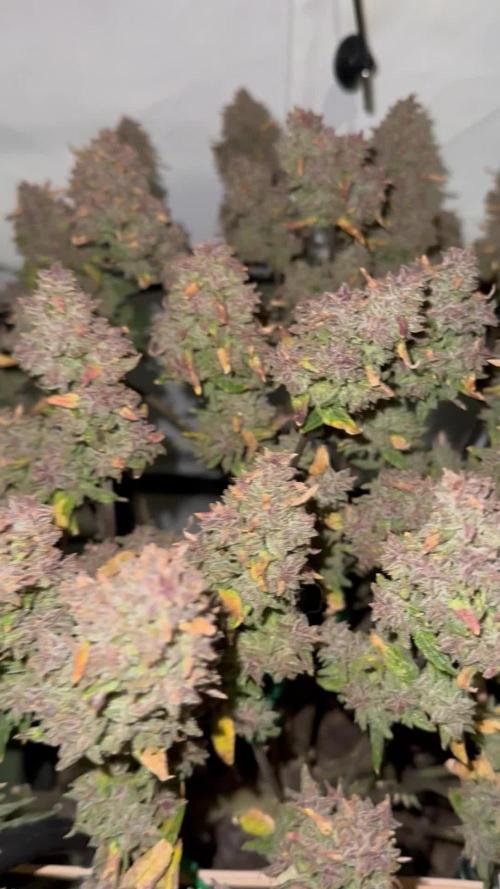


Likes
12
Share


Likes
410
Share


@Rock_n_Roll_Randy
Follow
It's been 68 days of flower now and they only got another week or week and a half left. I have been flushing them for 10 days now. Almost there 🤘🤘. I'm very happy how they have turned out, the color, the smell, the crystals 👍. Very proud of what I created. VERY IMPRESSED with the fc4800 and I was already very happy with the tsw2000 👍
The gals are still loving the new fc4800, TSW2000 and their new 8x8 mars hydro grow tent as much as I do👍 leaves are sticking straight up towards the light. Love how easy the zippers are to open and close. Nice and strong and guaranteed to last. It has extra material on the backside of the zipper that helps for light leaksand enough ports and vents for anything you need in it👍. the tsw2000 is still going strong and is also a very good light. Its been going almost nonstop for 6 months and still working the same as when I got it👍. not much heat off both lights but the fc4800 is alot cooler and the heat-sinks work extremely well. I have it daisy chained to the tsw2000 and 1 dimmer controls the other and i don't need to be reaching in too far to dim the other light, it's awesome and I can't wait to buy more lights to daisy 4 together👍. I would recommend this light to everyone that grows with leds and have trouble with temperatures getting too high. Even if you grow with HPS lights I think any mars hydro light is a MUST TRY. I like how heavy both lights are because I know it means they are built soild and strong 💪. Very good sign with the frost they are starting to get thanks to bith mars hydro lights. I can notice more frost under the fc4800 and I'm thinking it's from the UV DIODES they put on the fc4800 👍. 2 days ago they all smelt like my nuken, sweet marshmallows. But now I can smell the monkey dough and gorilla glue and skunk monkey coming through👍. I touched a bud on the gorilla and monkey fingers smelt like fruit loops👍 really pleasant smell. Lingered on my fingers for atleast 30 min. I'm glad mars hydro is under priced compared to some brands and for how popular they are. usually companies would charge more. Thanks mars you guys are awesome 🤘🥁🎸. I'm getting a new exhaust fan soon. An 8 inch that will work alot better than my 4 inch lol. Wayyy to small for a 8x8 Grow Tent. Dehumidifier is going almost non stop to try and get the humidity down. I love how both lights on 100% power only raise my temperature 2 or 3 degrees 👍. You can rest your hand on the lights and not much heat comes off them. Obviously there is some heat but for the brightness of the lights and only raising the temp that much is awesome 👌. And if I wanted to I could remove the driver from the fc4800 and run it on the outside of my tent because the cord is so long but 2 or 3 degrees is barely nothing👍. The girls are starting to bulk up abit now and only 3 weeks of flowering, these lights are awesome 👌. My last run of monkey dough and gorilla glue didn't start showing alot of crystals until week 4. These were only 2.5 weeks and I started noticing some frost. Next week I will be able to tell more about what these custom bred seeds will be like. I love how the smell is changing now. Didn't want all them to smell like nuken marshmallows lol. It's awesome that I can get right inside the tent to do any work i need👍. Even if I wanted an 4x8 tent. I'd rather this 8x8 because it's so easy to work with the plants and have so much room to move around and massive headroom when I'm in there chillin with the gals🤣🤘.
FOR EVERYTHING MARS HYDRO VISIT:
www.mars-hydro.com
PROMO CODE: rocknroll
VISIT THE ALIEXPRESS STORE:
@marshydro_aliexpress2
Instagram: @marshydropenny
https://youtube.com/channel/UChU5ZWwNi-DvnO3oWVU3ceA
Thanks for taking the time to read and check out my shit🤜🤛
GET THE MAX FROM MARS👍: Welcome one of the newest members of the Mars Hydro family🤜🤛🤘. The Mars Hydro FC 4800 480W LED Grow Light can accommodate up to a 4' x 4' area for flowering. It has OVER 2000 LED chips consisting of the best selling Samsung LM301B diodes which has a Luminous Efficacy of: 220 lm/W
0.2 W, 3 V mid power,
Osram 660nm Diodes, Infrared light and UV LIGHT👍. It boasts the incredible efficiency of 2.8 µmol/J, maximum 2.5gram yield per watt with 30% higher Average PPFD. This High-intensity spectrum is beneficial for plants at all stages - from veg to bloom, and creates Big dense Buds👍. achieve 50% higher yields & quality compared with the old lights! Only consumes 480W for 4x4ft personal grows, and 3x3ft for commerical grow. It comes with a dimmer and daisy chain function with a maximum of up to 15 lights, the master light controls the rest👍. Wide 6-bar design offers even & wide canopy coverage and can maximizes your grow space. slim 180° FOLDABLE DESIGN... YES I SAID FOLDABLE🤘🤣 , making it compact and easy to install, it's IP65 WATERPROOF and will give you no worries while growing in a humid environment and makes it a flexible high performance commercial grow light for enormous SUPER FROSTY yields.😛😛😛. MARS GETS EM FROSTY BOYS👍
AWESOME HEAT DISSIPATION: The Low energy consumption FC4800 growing light has 6 passive-cooled bars and an aluminum heat-sink a removable driver you can upgrade later or have it outside your tent. with zero noise you can save up to 50% in your electricity bill compared to HID's or HPS lights!
It also has a removable driver so you can upgrade it in the future or have it outside your grow space for better heat control in your growroom👍
UPGRADED FULL SPECTRUM: Yield Max Spectrum with enhanced red (Top-Bin Samsung 3000k-5000knm, Osram 660nm Deep Red), speed up blooming & fruiting, perfectly suited for full-cycle growing. The FC4800 LED grow lamp was born for Big Buds, perfect for commercial, grow tent, grow room, hydroponics, and all soil grows.👍
THE BEST SAMSUNG DIODES: THE FC4800 has Top Bin genuine Samsung Osram Diodes, combined with remarkable 2.8 µmol/J Efficacy, 30% higher Average PPFD, 50% less energy consumption, to maximize your yields. They give you a TRUSTED 3 years warranty 100% Satisfactory guaranteed!!!
The MARS HYDRO 8x8 Grow Tent interior is made of a unique diamond design mylar which is highly reflective. (Other companies mylar and reflective rate is as low as 50%, and it won't provide efficient light. They use thick 1680D oxford canvas, and being double stitched, it is tear proof and perfect for locking in the light. Their grow tent keeps 100% of the light inside the tent and helps your plants absorb more light. EXTRA-THICK material means No light leaks or rips at all.👍
Strong Stable metal corner adapters and poles are the trustful supporters of the tent. It's very sturdy, neither rusting or paint flaking off. quick and easy tool-free setup. They use heavy-duty metal zippers, with double layer black lining, by far the best on the market which creates a light-proof seal.
The Easy observation windows are made by double layers of cloth. Observe the growing conditions of your plants without opening the tent and avoid disturbing your plants. The observation windows also serves to dissipate heat and ventilate the air.
The tent includes 2 removable waterproof floor trays to hold soil and water. The removable tray can be taken out to wash easily.
They guarantee the grow tents are easy to install even if you've never done something like this before. Clear Instructions and no tools needed! They also offer 30-day unconditional refunds for quality problems. Just contact their friendly 24 hours customer service 👍
Likes
19
Share


@ArtisticGrown
Follow
Here we gooooo! We are headed i to weel seven going strong! This plant here is definitely taking her time to flower, starting to produce thriclomes! Im not too sure if I stunned her in week 5. How ever this is a Sativa dominant hybrid. I've learned that sativas have a bit longer of a flowering time! Im thinking we have 3 to 4 more weeks of flower to go!
Still keeping my main focus on keeping the plant healthy and fed! With a great flowering environment, vpd, humidity.
I did have a few colder days last week so I was a bit worried about the fluxation in heat, but shes doing well! Much love and happy growing!
Im excited for the weeks to come! ✨️✨️✨️✨️ Lets Go GUAVA SLUSHY