


Likes
Comments
Share


@GrowingGiant
Follow
Day 30. Worried about running out of space. I have been tying the plant down perform LST which is helping. Only change in feeding schedule is I have reduced call mag from 5.0 Ml to 3.0 ML and have added big swell by aurora nutrient lines 2.0 ml

Likes
34
Share


@HomeGrowHeaven
Follow
We chopped down the plants. Now they hang out to dry in the tent.
The Trichs looked very good. Some milky, some amber, hardly any clear. Just the way I want it. The popcorn buds were rather milky. So we have more of a couchlock effect on the head buds and the maximum THC on the popcorns. I'm really looking forward to the taste💚

Processing
Likes
11
Share


@TheVerdini
Follow
Coming along nicely. Large number of bud sites, starting to grow but still far from mature. Nice aroma every time I open the tent. Starting to become a bit frosty.

Likes
4
Share


@Willy_Balls
Follow
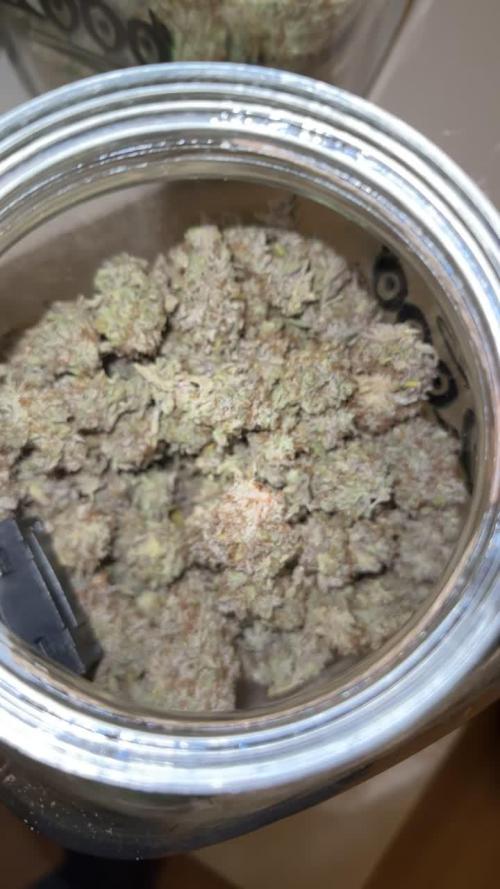
Runoff ph is a bit high this time. Don’t know why. Around 6.8. Average ph going in is 6.0.
Also the big fan leaves on ice cream cakes are kind of strange shaped. Will see how they are going to look later.



Likes
23
Share


@adam_pawloski87
Follow
This grow was pretty simple ! They went a total of 103 days from seed! Very trichomy dense buds with the smell of Berries vanilla and skunk ! This is a must try for you all Fastbuds has the greats!!!

Likes
15
Share


@Insaniac_0
Follow
Flower Week 6 Day 42 to 48 - 3/26 to 4/1
Stepped up my attention with these this week and hope I didnt let them go too far for a decent harvest. I defoliated for the last time this week and spotted more purple leaves. The buds are super dense so I have higher hopes than I did last week
Feed this week was 1.25 gallons 2 times. 700ppm total before add-ins. I used 400ppm Bloom concentrate mix (recipe week 5). Then I added 1ml/gal of CaliMagic (General Hydroponics 1-0-0) PH balance this week was 6.6
I plan to feed 1.25gal 2 times with 6.6ph and half nutes. This will also be the same for all remaining feeds before harvest. From this point Im simply watching for signs to harvest in the pistils, calyx, and trichomes

Likes
36
Share


@MadeInGermany
Follow
Hey everyone .
This week she was left in her 1 L pot, and will not be in the 11 L pot until next week :-).
She was topped again and accepted it super 😃.
By the time she is repotted next week and given Green House Powder Feeding for the first time, she will have received a small portion of Canna Vega :-).
Otherwise it grows very quickly and vigorously, and they look beautiful 😍👌.
I wish you all a lot of fun with the new update, stay healthy and let it grow 🙏🏻👍
You can buy this Strain at :
https://sweetseeds.es/de/sweet-skunk-f1-fast-version/
Type:
Sweet Skunk F1 Fast Version
☝️🏼
Genetics:
Sweet Skunk Auto (SWS34)
X
Early Skunk
👍
Vega lamp:
2 x Todogrow Led
Quantum Board 100 W
💡
Bloom Lamp :
2 x Todogrow Led
Cxb 3590 COB 3500 K 205W
💡💡☝️🏼
Soil :
Canna Coco Professional +
☝️🏼
Fertilizer:
Green House Powder Feeding
☝️🏼🌱
Water:
Osmosis water mixed with normal water (24 hours stale that the chlorine evaporates) to 0.2 EC. Add Cal / Mag to 0.4 Ec Ph with Organic Ph - to 5.5 - 5.8 .


Likes
10
Share


@Sadhus
Follow
Très jolie stretch qui c'est maintenant calmer, les fleur grossissent tranquillement, l'odeur est forte et incroyable, un vrai bonbon au citron acidulé

Likes
13
Share

@GoodTimesOrganics
Follow
Hi liebe Community and Welcome Back! 🌿💚
Willkommen zur siebten vergangenen Blütewoche!
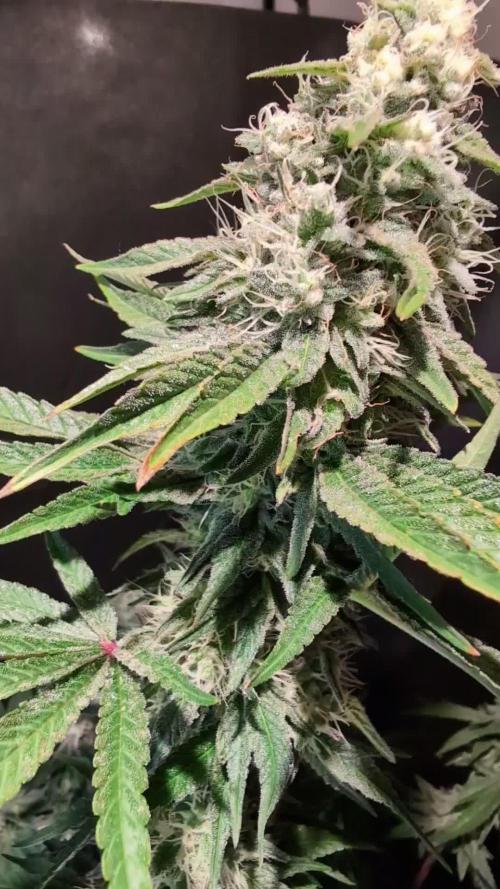
Hier im Bio Tabs NL Grow, erreichen wir aktuell eine höhe von 140cm. Und eine richtig krasse Breite von 69cm.
Die Blütenansätze schwellen weiterhin immens an.
Insgesamt zeigt sich hier in diesem Grow eine stärkere Blütenausbildung, als bei der anderen Pflanze.
Jetzt im direkt Vergleich muss ich sagen dass dieser Phenotyp eine richtig ordentliche Entwicklung hinlegt.
Ein süsslich fruchtiges Aroma verbreitet sich im Zelt und hier schlägt definitiv mehr die GG#4 Genetik durch..
Es zeichnet sich ein durchgängis schönes und gesundes Wachstum ab.
Die Umgebungsgegebenheiten sind aktuell mit Wetterbedingungen etwas hoch in der Luftfeuchtigkeit.
—————
🌞 Temp: 26
🌚 Temp: 18°C bis 19°C
💨 RH: 56%
VPD: 1,10kPa
💡ppfd: 830 mpm
—————
Viele Grüße 👋
Likes
7
Share


@Koalastoned27
Follow
She likes a lot of Cal Mag for sure. I can't believe how purple she got given the average temperatures during the whole grow was 24'C!
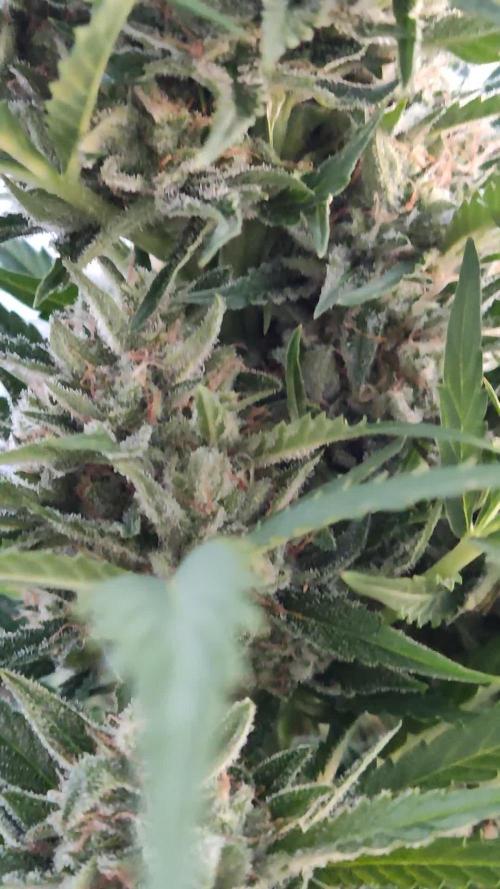
Smoke is Lovely, was harvested on the 3rd of November and after 7 day of drying and she's only been curing for 5 day but she already smells delicious! And look at those little resin drops! Nice euphoric high, perfect for watching comedy on the couch followed by a wonderful sleep.
Harvest was 44g after 7 days of drying in a closet with a dehumidifier set at 50%. Any advice for pushing this plant further would be welcome!!!


Likes
14
Share

@Smoking_Joe_Frazier
Follow
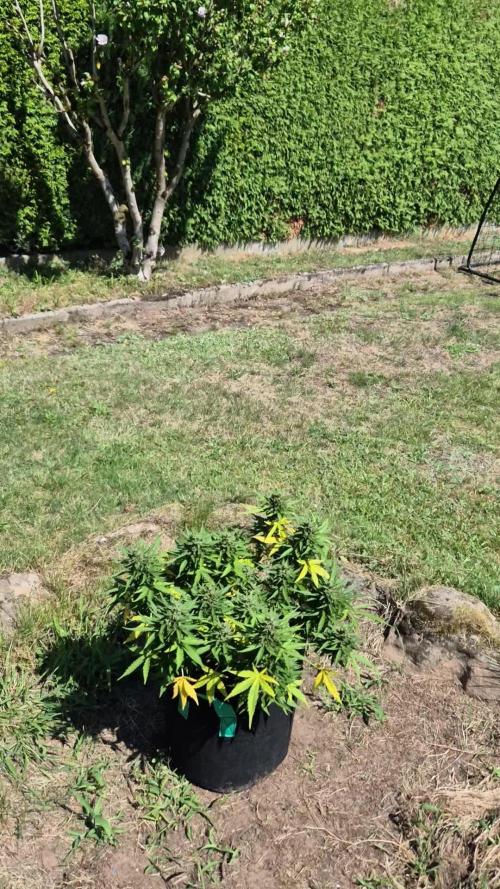
Week 12: Partial Harvest & Bruce's Final Stand
Update: 10.08.2025 | Day 87
Big updates as predicted: I chopped two girls due to bad weather. Fear of big losses was bigger than my need to get to the max. Harvested Forbidden Runtz and Green Crack as they were almost fully ripe. 20% amber and 80% milky trichomes have to be good enough. Weather conditions were far from good - but both girls fought through it like Rocky. Great resilient genetics FastBuds. Hats off!
Now let's come to our last survivor - Bruce Banner:
Although trichomes are mostly cloudy with only scattered amber trichomes, there are still a lot of white pistils left in the budsites. She's still in bloom mode but resin isn't there like with my other two girls. Next days are forecasted with extremely hot weather (35°C again!) - hope this gives her the last kick.
Next steps:
- Keep her on the edge to use up all internal resources
- Check for mold daily
- Find the perfect chop moment
I think the next update on this girl will be the harvest report, my friends. It was a pleasure to grow these three girls and I enjoyed the minimum maintenance and resources approach in comparison to last year's coco daily feeding hustle. The plants know themselves best what they need and it's only on me to read my plants and react only if necessary.
Thanks to all of ya for joining me on this amazing journey 😍
And last but not least thanks FastBuds for creating such amazing strains and genetics.
Smoking_Joe_Frazier
Likes
88
Share


@Kitties_and_Colas
Follow
~_~_~_~_~_~_~_~_~_~_~_~_~_~_~_~_~_~_~_~_~_~_~_~_~_~_~_~_~_~_~_~_~_~_~_~_~_~_~_~_~_~_~_~_~_~_~_~_~_~_~_~_~_~_~_~_~_~_~_~_~_~_~_~_~_~_~_~_~_~_~_~_~_~_~_~_~_~_~_~_~_~_
❤️💡🌱😽💨
Just a quick update, we've been moving tents again and haven't got too many pics however we did get some trichome shots..buds are swelling fast and the smell is extremely strong now..the lemon smell is overpowering the cheese from our "Kiss" strain.. we hope to have our 5x5 up soon to give these girls some breathing room.. thanks for plopping by and happy harvest friends! ❤️🌱
~_~_~_~_~_~_~_~_~_~_~_~_~_~_~_~_~_~_~_~_~_~_~_~_~_~_~_~_~_~_~_~_~_~_~_~_~_~_~_~_~_~_~_~_~_~_~_~_~_~_~_~_~_~_~_~_~_~_~_~_~_~_~_~_~_~_~_~_~_~_~_~_~_~_~_~_~_~_~_~_~_~_

Likes
3
Share


@PineappleMuffinMan
Follow
Big thicc buds. Hard to imagine what these will look like at the end in about 3 more weeks. Used twine over the last few weeks to individually tie up about 15-20 branches to the three stakes I put in. A trellis would’ve helped a lot, but she’s sharing a room with plants earlier in flower now, which is why I decided not to use one a few weeks back.

Likes
14
Share


@suchydog5
Follow
2-3 buds were moldy so i had to cut them hope it doesnt spread further😳
to be honest i havent seen more beautiful flower than this purple one❤️
Likes
39
Share


@J_diaz420
Follow
Nuevamente se realizó una pequeña defoliación a hojas que tapen alguna flor 👍👨🌾🍀


Likes
29
Share


@Prilyfe13
Follow
February 23, 2024 Day 8
Both plants were watered today with 250 ml PHed to 5.8 around the whole surface.
I plan to bump it up to 500 ml next watering possibly with recharge.
I'd like to note that both plants look identical. Even both have the exact same yellow leaves. I think they are hungry. The recharge should bring the soil back to life.
I probably should have started the recharge today, but I don't want to add anything that will cause any stress. It's strange. They are both growing perfectly. But the leaves are yellow.
I may ask a question about this issue. First I'll try the recharge though.
The lighting is perfect. I haven't had to change a thing yet. PPFD is the same, power is still at 30% and the distance is about a half inch shorter. I'll switch to DLI when they start getting nodes. I'll also switch to discuss individual plants at the same time.
The environment is also near perfect. Temps are 77° during the day and around 68 at night. I think I'll increase the temp to 70° or 72° at night. That should improve the VPD as well. Currently it hovers around 0.77 kPa. I'd like it to be around 0.85 kPa. I'll also slowly drop the RH down through the course of this week. It's in the sweet spot range, but I want it around 60% by the end of the week. It should put the VPD to about 0.95 kPa. Perfect for Veg.
Grow System Environment:
Temp: 74.6°
RH: 71.7%
VPD: 0.82 kPa
February 24, 2024
Today we start to focus on these yellow leaves. I've decided that it's definitely a deficiency and maybe the soil needs that slight boost. So to help things along a bit, I added 1/4 tsp of Recharge to the gallon today. I gave 250 ml to both ladies, but this time I covered them up with a Starbucks cup. It seemed to do what I wanted. The goal was to get more outside soil moisture to promote the roots to spread out. However, I don't necessarily want to soak the base with a new nutrient. Hopefully, the roots will grow into the nutrient rich soil outside of the cup.
As for watering itself, I feel like I'm not watering enough to prepare the soil for late veg. I feel like 250 ml every other day was fine for the early seedling stage, but I need the soil to be moist throughout the container by the end of the week. I'd like to see a tiny bit or runoff.
In theory, the roots should evenly spread throughout the container and take more time to grow down. It may increase the veg time however. I don't really want that, but I also don't want underwhelming plants.
As for tackling the yellowing, hopefully it goes away in a day or 2. It should if a deficiency is the issue.
I'd also like to mention the temp is a bit low today. 16° outside. That being said, the tent temp is currently at 70° but should be climbing throughout the rest of the day. Hopefully in the next couple of hours.
Grow System Environment:
Temp: 73.4°
RH: 67.6%
VPD: 0.90 kPa
February 25, 2024
I have a feeling I was right about more water. The soil moisture level has dropped to 35% and I definitely need it to stay around 45% while I continue getting the entire container. That being said, I may do another 250 ml today. If not, I'll do 500 ml tomorrow. Half of the watering will be done with the domes off and the other half will have domes on like last time as to not over water the plants.
Speaking of plants, these 2 looks great. Still yellowing leaves, but it seems to be going away. The leaves are nice and broad from what I can tell so far. But it's just the beginning. Also, the first set of true leaves is now on its own node and has started to stretch a bit. The Seedling stage is almost over. Welcome to the Veg stage.
Starting next week, I'll be adding the Advanced Nutrients 3 part base along with Recharge. I do have Bud Candy, so I'll be adding that as well. Very small doses though. I want to see how they do without a massive regimen of nutrients, although I have a feeling I'll be needing them. At least I'm mostly set up for the Flowering stage. There's just a few things I need. Bud factor x, Big Bud, B-52, Rhino Skin and Bud Ignitor. Hopefully I'll be getting those in the next couple of weeks. Especially because of the super short veg time this strain is supposed to have. I'll need it all in like 2 to 3 weeks.
Anyway, that should be all for the day. Lighting is fine. Temp is still a bit low this morning, but I'm certain it'll be perfect in a couple of hours. It's not freezing out today.
Update: I decided to water in the 250 ml Recharge after all without the dome this time. Tomorrow I'll water another 250 ml with domes on and so forth until the container is properly watered. I'll stop using the domes when the plants get too big. Probably before the container is watered. But I'll still continue the outside watering until then.
Grow System Environment:
Temp: 73° currently
RH: 63.5% estimated
VPD: 0.94 kPa estimated
(The estimations are based on the averages of 2 probes. One at soil level and one just above the seedlings. The RH is vastly different between the two. It's mostly due to the small humidifier in the center. It covers all of the plants, but doesn't lift up enough to get to the canopy probe. So the canopy probe is at 47.6% while the probe at soil level is 81.4%. Same thing for the VPD. Just used the average of the 2 probes.)
February 26, 2024
As I said yesterday, I watered in 250 ml today with domes on. This will be the last dome on watering. They are already just barely touching the sides. Anyway, 250 ml of Recharge today.
Nothing else to do today.
The yellowing seems to have stopped, but it's still yellow and not turning green yet. Regardless, they are in great shape. Nice growth.
Lighting is at 280 ppfd.
DLI: 18.1 mol/m²/d
The plants are also about 2 3/4" tall or 6 cm.
Honestly, every time I hit this part of the seedling stage, I freak out because the plants don't grow. It's just the roots that are spreading right now, hence the extra watering. I have to keep up with the spread. So far I'm hoping that's working. I'll keep up with the 250 ml per day for the rest of this week. Then I'll move to 500 ml every other day for week 3. Then I should be good to go after that. Hopefully I won't have to water much after that until flowering starts. We shall see if my technique is correct. I still have to install the basins and fill them up. Maybe I'll do that after week 3 or until the plants need to be spaced out for size. Which ever comes first. I think it will be based on the water and not size.
Grow System Environment:
Temp: 73.5°
RH: 51.6 kPa (currently 70%)
VPD: 1.34 kPa (false) (currently 0.83 kPa)
February 27, 2024
Today, both ladies got a nice misting and will be getting 250 ml without dome PHed to 6.0 when the water reaches room temp.
Either I'm getting used to the yellowing or it's getting better. I can't tell. Hahahaha. Anyway, they are very healthy from what I can tell. The leaves are nice and broad with upward growth is super smoothe. Outward growth is also quite steady.
Nothing else for the day so far. I'll update as needed.
Grow System Environment:
Temp: 74.7°
RH: 60.6%
VPD: 1.16 kPa
February 28, 2024
Both ladies got their daily dose of 250 ml water PHed at 5.95 with the moisture level hovering around 50%. I'm not sure if the 250 ml at a time is enough to start penetrating deeper into the soil.
However, when I start the 500 ml per watering next week, it should start penetrating deeper. That way the fast growing roots have perfectly moist soil to travel down to. I believe it's time to allow the tap root to dig deep.
Lighting is looking really good. Next week, I'll increase the intensity to 350 ppfd or a DLI of 22.7 mol/m²/d. The ideal DLI is 20 mol/m²/d, but I feel like these ladies like the slightly extra light. They may even like even more. They are praying almost perfectly. So I'll leave it alone for now. I think instead of dropping the light distance, I'll increase the power and adjust accordingly.
Both of the plants are still fairly light. Not exactly yellow anymore, but still light. I think the boost of base nutrients will help with the possible nitrogen deficiency. I'll also add Cal/Mag. Covering all the primary basics. Plus I don't really have any other nutrients for the veg stage. I'll also start the regular regimen during week 3 of veg. Big Bud, Bud Candy, Tasty Terpenes so far. I'll try to get a few other nutrients that are supposed to be in my regimen as well. I may not be able to get them in time, but if I can, I will.
Grow System Environment:
Temp: 75.4°
RH: 62.9%
VPD: 1.09 kPa
February 29, 2024
It's the last day of this week. As we move into week 2, things will be changing quite a bit. Watering will change and the nutrient regimen will be started. Lighting will also be changing. Everything increased.
These two are still a bit light green. Not quite as yellow as before, but I expect that will change in the next day or two, when they start getting the nutrients they clearly need.
Lighting will be increased as well.
DLI: 22.7 mol/m²/d
PAR: 350 ppfd.
I may increase the power and leave the light, but I think it will be a mix of both. I'd like to keep the light at 30% for the next few days before the growth really starts. Then I can increase the power. I'd like to keep the light a bit higher than 24" as I believe I have enough power to keep the distance for a good footprint.
I'll be changing the watering schedule from 250 ml daily to 500 ml every other day. I also plan to install the bottom feed system as soon as the plants hit the edges of their containers. Given the fact that I'm going to start the Advanced Nutrients 3 part base solution tomorrow, I should see some immediate growth from these two.
I'd like to note that both plants are very healthy and look great! One thing I did notice is their height. The rear plant (Tropicana Cookies) is about a half inch taller than the front plant (Tropicana C). However, from the light, the distance is the exact same. That being said, I found that the rear containers soil level is about a half inch lower than that of the front. Interesting indeed. I will keep note of the height as well. If I'm right, the height should remain roughly a half inch difference until I start training. Either way, it's an interesting observation, but won't matter soon enough. The whole canopy will be level anyway.
Update:
I realized my plants were reaching a bit too much and leaning in toward the light. That being said, they definitely need more light, so I lowered it until I hit a DLI of 19.8 mol/m²/d. That way when I bring it up to 22.7 mol/m²/d it won't be hit so hard immediately. I should have dropped the light down a day or two ago, but oh well. It will be on point for the rest of the grow.
Also, the temp is back to normal. Just waiting for the RH to catch up.
Grow System Environment:
Temp: 72.9°
RH: 62.1%
VPD: 1.04 kPa