


Likes
Comments
Share


@PineappleMuffinMan
Follow
The thing I love about this strain is how little the largest branches stretch and how much the lower branches come up to the main level. With some diligent training I was able to get probably the most dense and even canopy I’ve ever accomplished. Can’t wait to see how this progresses through flower.

Likes
14
Share


@OilyEliteOrganics
Follow
Growing how it is growing. Grows great outdoors.
Still smells like coconut and strawberries.
Haven't been adding anymore fertilizers just letting it grow naturally.
Likes
121
Share


@ctm_dzagi
Follow
It should be noted that with the current share of blue in the spectrum, the sprout does not stretch at all, I will probably adjust in favor of red in the coming days

Likes
5
Share

@Abendkraut
Follow
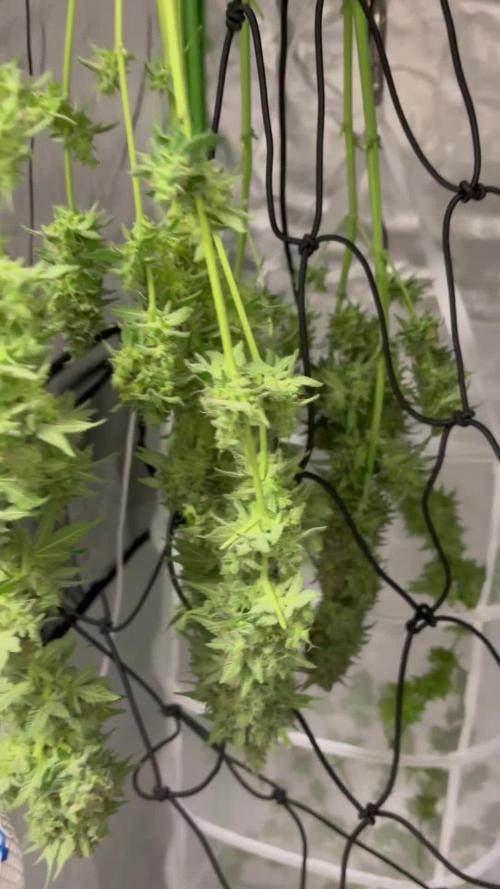
Last week of flowering is behind us and today I harvested.
Since I barely defoliated my plants I had quite a bit of leaves to remove.
I hung them up to dry in a dark growtent with light airflow.
Expect a Harvest report in about two weeks




Likes
28
Share


@NatureSolutions
Follow
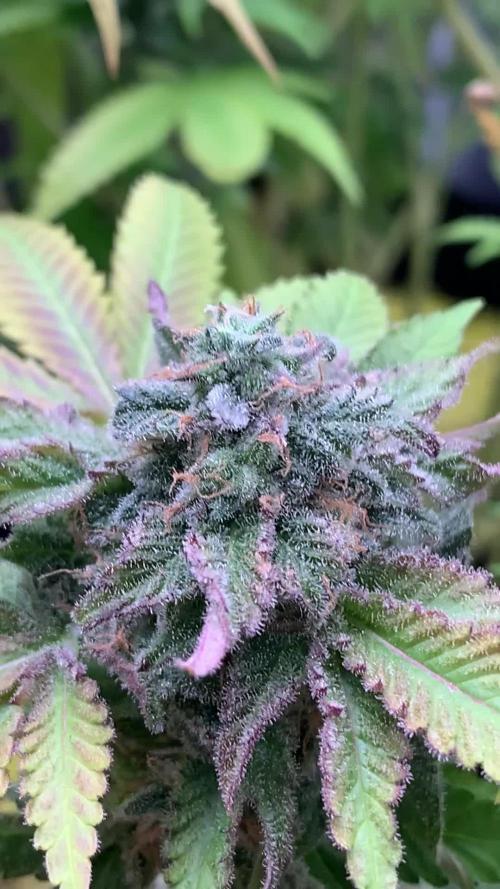
Everything went allright as usual, kept a good splash of water on it at all times. Dont panic if nothing happens first few days, outerlayer needs some time to soak and burst. Cant say if this is the best method, yet it never failed me.

Likes
8
Share


@johnnybuds
Follow
Germinaron perfectamente!
Se pasaron a sustrato de 70% coco
30% perlita
De momento no se añadió calcio ala base de 260ppm de agua corriente de la llave

Likes
25
Share


@NorseGrower
Follow
Week 8: Everything is going great. I didn't plan on taking them all out again till they got chopped, but decided to get them out one at a time today and give them a good thorough defoliation, peeled off any undergrowth and water and feed them all. Temps remain completely under control and no longer an issue, even in 90 degree weather here. I've continued to alternate between feeding and just water, cal mag and fish shit. The only plant of the 6 to show any deficiencies was the #1 Skunk. Every leaf on leaf chart looks same to me lol. I upped today's feeding to 3/4 strength instead of half strength. If I had to guess, I would say that this is the last feeding for the Creme de la Chem, Strawberry Couch and the Double Grape. Those three will likely all fall in the 70-80 day harvest range and those three are at day 58. Not 100% on the #1 Skunk or not, it may get one more feeding, along with the Watermelon Skittles. The Fruit Punch? Well there is a chance I will be smoking cured Creme de la Chem before that one gets chopped lol. It will continue to get fed for a while as buds still very under developed. Today's defoliation was barely anything for a couple plants like the Watermelon Zkittles. A few big fan leaves blocked bud sites, but the Skunk needed thinned out badly and I took a good 20 minutes to go around the outside them come in from over top to really get in there and try to make some airflow and better light penetration. These are definitely drinking at different rates but in order to not be mixing up stuff daily, I feed them all on the same day and the couple that still had some weight to them just get less. I think these will all meet and exceed my 2 ounce goal per plant and 5 of the 6 after topping and training have conformed to the types of plants I really want to grow with the space I have. Thats 6-8 tops on a short compact plant. The Fruit Punch went off the reservations waiting till day 50 to start flower and is acting like this is a 3 plant grow not a 6. But shoving it in corner and putting short Skunk plant by it on bucket to raise up canopy along with raising one side of my TSL2000 and lowering other side towards shorter plants appears to be working great. Its great to be thinking about the flush. Having plants out, I did check trichomes on a couple just for the fun of it and mainly clear so got couple weeks or more for most of these.


Likes
5
Share

@RanTanPlan_69
Follow
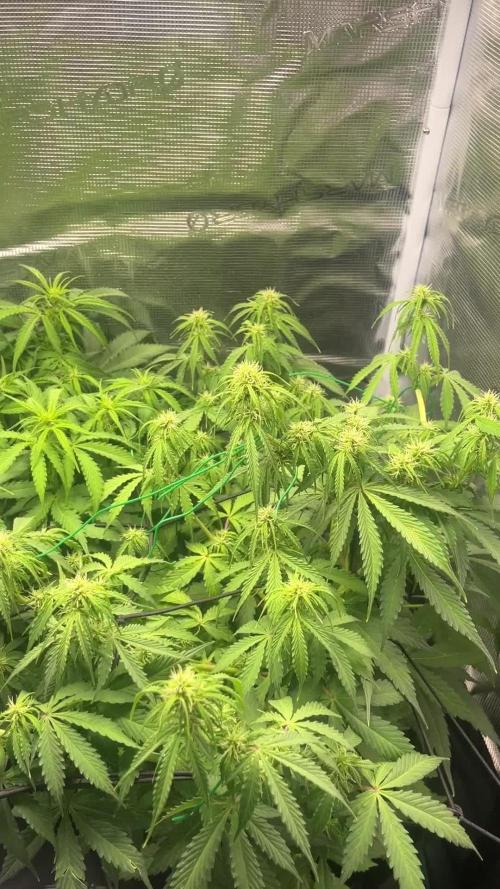
Starting the sixth week of my ladies. Cleaning the bottom and removing the « suckers » (future popcorn buds at the basis) to get more energy to the top !

Processing
Likes
4
Share


Likes
Comments
Share

@DogDoctorOfficial
Follow
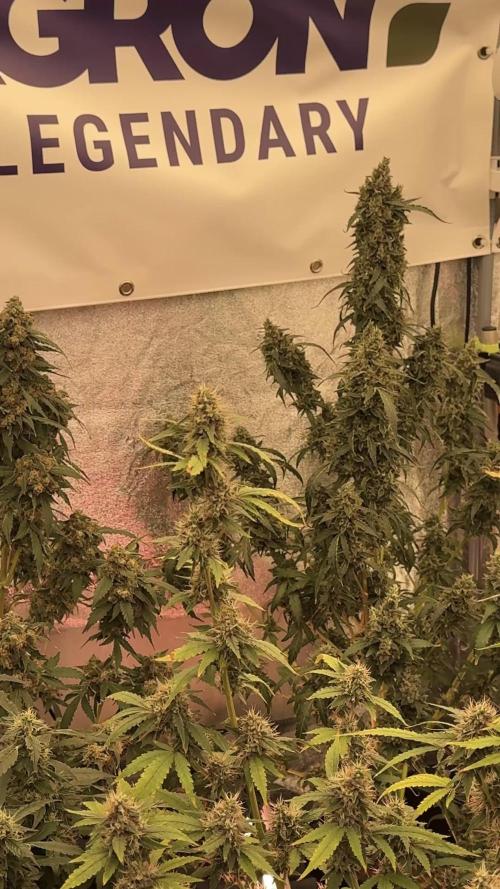
🌿 Frosted Guava Auto by Zamnesia | Pheno B | Week 12
🦄 The Dark Little Unicorn Is Just Doing Her Thing ❄️💚
Welcome back to another chapter of the 8×8 Adventure! 🌿💚
Well...
Here we are again.
And honestly?
This is probably one of the most boring parts of growing.
😂
Not because the plants are boring.
Quite the opposite.
They're beautiful.
They're developing.
They're stacking.
They're getting heavier.
They're doing exactly what we want them to do.
But...
there comes a point where the grower doesn't have a whole lot left to do.
And Frosted Guava Pheno B?
She's a perfect example.
She's moving.
She's growing.
She's developing.
Her sister is doing the same thing.
And we're standing here watching both of them basically say:
"Don't worry. We've got this."
😂🦄🌿
So what do we do?
We do what we have to do.
We provide what they ask for.
We keep the room running.
We keep an eye on everything.
We make the necessary adjustments.
And then...
we watch the show.
That's pretty much where we are now.
And honestly?
I'm perfectly happy with that.
────────────────────────
🦄 WEEK 12 – SHE KEEPS MOVING
────────────────────────
Frosted Guava Pheno B continues to move beautifully.
She's not sitting still.
She's not waiting around.
She's continuing to develop those beautiful flowering structures we've been watching build week after week.
And what I really like is that her sister is doing the same thing.
Both Frosted Guava girls are moving.
Both are developing.
Both are showing us their own expressions.
But they're still not identical.
And that's exactly what makes this so interesting.
Same genetics.
Same room.
Same general environment.
Same lighting.
Same nutritional strategy.
And yet...
two individual plants.
Two individual stories.
Two different expressions.
That's the beauty of having multiple phenotypes side by side.
🌿🦄🌿🦄
────────────────────────
🌸 THE BORING PART OF GROWING
────────────────────────
Let's be honest.
😂
This part can be a little boring for the grower.
You've already done the exciting structural work.
You've trained.
You've tucked.
You've adjusted.
You've shaped.
You've moved things around.
You've watched the stretch.
You've watched the flowers appear.
You've watched the plants build.
And now...
what?
😂
You stand there.
You look at them.
You check them.
You make sure everything is where it should be.
And then you walk away.
Because sometimes...
the best thing you can do is nothing.
Not literally nothing, of course.
We still have responsibilities.
We still provide what the plants need.
We still monitor the room.
We still make the necessary adjustments.
But we're no longer trying to create the plant.
She's already created herself.
Now we're watching her finish the work.
────────────────────────
🌿 THE PLANT HAS DONE THE WORK
────────────────────────
That's probably the biggest change in the role of the grower at this stage.
Earlier:
"What should I do?"
Now:
"Does she need anything?"
😂
That's a completely different question.
The structure is established.
The flowers are established.
The plant knows where she's going.
And our job becomes much more about observation than intervention.
Frosted Guava Pheno B doesn't need me standing there trying to redesign her.
She doesn't need me telling her where every flower should go.
She doesn't need me constantly changing things.
She's already doing it.
She's growing.
She's stacking.
She's developing.
She's becoming heavier.
So...
let her.
🦄💚
────────────────────────
❄️ STILL THE DARK LITTLE UNICORN
────────────────────────
And yes...
she's still our dark little unicorn.
😂🦄
That deep green character is still one of the first things that catches my eye.
It gives her flowers such a beautiful background.
The darker foliage.
The developing flowers.
The bright pistils.
The frost.
The texture.
Everything comes together beautifully.
She's not necessarily the biggest girl in the room.
She doesn't need to be.
She's got her own personality.
And I think that's becoming more obvious every week.
She's Frosted Guava Pheno B.
Not her sister.
Not another plant.
Not somebody else's description of the genetics.
Her.
And I really like her.
────────────────────────
🌸 THE FLOWERS KEEP BUILDING
────────────────────────
The flowers are still doing what flowers are supposed to do at this stage.
They're building.
They're developing.
They're gaining presence.
They're becoming more substantial.
And that's really what we're watching now.
Not whether she can flower.
She clearly can.
We're watching what those flowers become.
The structures are becoming increasingly defined.
The plant is becoming more substantial.
And the whole thing is starting to feel more mature.
It's a very satisfying transition.
The plant isn't changing dramatically overnight.
It's changing incrementally.
Week by week.
Day by day.
And when you compare the photographs...
you can see it.
That's the beauty of documenting the journey.
Sometimes the changes are too subtle to notice while you're standing there.
But put two weeks side by side...
and suddenly:
"Oh..."
😂🌸
There she is.
────────────────────────
👭 HER SISTER IS RIGHT THERE TOO
────────────────────────
And I really enjoy having her sister in the same room.
Because now we're watching two Frosted Guava expressions develop simultaneously.
Her sister is moving fast.
Pheno B is moving fast.
Both are doing their thing.
But they're still giving us their own little interpretation of the same environment.
That's exactly what I wanted from this project.
Not identical plants.
Not identical results.
But a chance to see how individual expressions develop when the environmental variables are kept broadly consistent.
And these two girls are giving us a beautiful little comparison.
🦄🦄
Same family.
Different personalities.
────────────────────────
💚 NO NEED TO FORCE ANYTHING
────────────────────────
This is where I'm becoming increasingly comfortable just letting the plants be plants.
There is always a temptation as a grower to feel like:
"I should be doing something."
😂
Because if you're not touching something...
are you really growing?
Yes.
You are.
Sometimes you're growing by leaving the plant alone.
Sometimes you're growing by observing.
Sometimes you're growing by recognizing that the work has already been done.
And that's where we are with Pheno B.
She's healthy.
She's developing.
She's moving.
She's building.
So I'm not going to invent work just to feel busy.
😂
I'll give her what she needs.
I'll keep watching.
And I'll let her do the rest.
────────────────────────
💡 SAME PHOTONS. SAME ROOM. HER OWN STORY.
────────────────────────
The lighting environment remains the same upgraded setup we've been running across the 8×8 Adventure.
The additional Future of Grow Black Series 600W fixtures remain part of the room's expanded lighting capability.
And again...
we're not trying to make every plant respond identically.
That's impossible.
The same photons enter the canopy.
The genetics decide what happens next.
And Frosted Guava Pheno B is clearly using those photons in her own way.
She's building flowers.
She's developing structure.
She's continuing to mature.
And she's doing it beautifully.
That's the part of this experiment I never get tired of.
Same artificial sun.
Different stories.
☀️🌿🦄
────────────────────────
☀️ MORE CAPABILITY, LESS INTERVENTION
────────────────────────
The lighting upgrade gave us more capability.
It didn't give us more reasons to interfere.
😂
That's an important distinction.
We have more lighting available.
We control the output.
We watch the plants.
And then...
we let them respond.
Frosted Guava doesn't need me to stand there explaining photons to her.
She's already catching them.
😂☀️
She's doing exactly what plants do.
Turning light into growth.
And now we're simply watching where that growth takes her.
────────────────────────
⚗️ THE ROOM IS STARTING TO TRANSITION
────────────────────────
The nutritional program is also beginning to move into its next phase with the rest of the room.
We're starting to decrease the nutrition as part of the normal progression of the run.
Nothing dramatic.
Nothing strange.
Just another transition.
The plants have spent weeks building.
Now we're entering the part where we're increasingly watching them mature.
And again...
I'm not trying to create a special situation for Frosted Guava Pheno B.
She's moving with the room.
Same overall strategy.
Same general approach.
And she's handling the transition beautifully.
🌿💚
────────────────────────
🌡️ SAME ROOM. SAME CONDITIONS. SAME GIRL.
────────────────────────
The overall room environment continues to be managed consistently alongside the rest of the 8×8 Adventure.
Same general temperature and humidity strategy.
Same 12/12 schedule.
Same upgraded lighting environment.
Same room.
Same grower.
Same ecosystem.
And yet...
look at the different stories coming out of it.
That's the experiment.
The environment gives the plants the stage.
Genetics decide what kind of performance we get.
And Frosted Guava Pheno B is giving us a very interesting one.
────────────────────────
😂 SOMETIMES THE HARDEST THING IS DOING LESS
────────────────────────
This is something I think every grower eventually learns.
Sometimes you have to fight the urge to interfere.
Because you see the plant.
You see the flowers.
You see the changes.
And your brain immediately says:
"Maybe I should..."
😂
Maybe you should not.
Maybe she's fine.
Maybe she's doing exactly what she's supposed to be doing.
Maybe your job is simply to observe.
And that's what I'm doing with this girl.
Watching.
Learning.
Enjoying.
And doing what needs to be done when it actually needs to be done.
That's it.
────────────────────────
🌿 SHE'S DOING HER THING
────────────────────────
And honestly...
that's the perfect description for this week.
She's doing her thing.
😂🦄
She's growing.
She's stacking.
She's developing.
She's getting heavier.
She's becoming more mature.
And she's doing all of it without asking us to reinvent anything.
She's not demanding a dramatic intervention.
She's simply continuing the journey.
And I love that.
Because there's something very satisfying about watching a plant reach this stage where you can finally say:
"Okay...
I've done my part.
Now show me what you can do."
And she's showing us.
────────────────────────
❄️ THE FROST IS STILL THERE
────────────────────────
Of course...
the frost continues to be one of her signatures.
❄️🦄
The flowers continue to show that beautiful textured appearance.
The closer you look...
the more details you find.
Pistils.
Resin.
Flower structure.
Texture.
Tiny little details that make each cola different.
And that's why these photographs matter.
Because the whole plant tells one story...
but every flower has its own little chapter.
📸🌸
And Frosted Guava is giving us plenty of chapters to document.
────────────────────────
📸 ANOTHER WEEK OF WATCHING THROUGH THE LENS
────────────────────────
I love the fact that we're still taking these photographs even during what feels like the "boring" part.
Because this is exactly when you can miss the changes.
One week:
"Looks good."
The next:
"Wait a minute..."
😂
The plant has changed.
The flowers have gained more volume.
The structure has become more mature.
The frost has become more noticeable.
The colours have shifted slightly.
Nothing dramatic.
Everything meaningful.
That's why the weekly diary exists.
To catch the things we might otherwise overlook.
────────────────────────
🦄 THE UNICORN DOESN'T NEED A SCRIPT
────────────────────────
I've stopped trying to predict what this girl is going to do.
😂
She has already shown us that she's perfectly capable of writing her own story.
She's an autoflower.
She's under 12/12.
She's surrounded by photoperiods.
Her sister is behaving in her own way.
And somehow...
everything works.
That's what makes this project so much fun.
You can make plans.
You can create expectations.
You can have theories.
And then the plants look at you and say:
"No."
😂🦄
And then they grow beautifully anyway.
────────────────────────
🔍 WHAT AM I WATCHING NOW?
────────────────────────
At this stage, I'm watching the details.
🌸 Flower development.
❄️ Resin development.
🌿 Overall plant health.
⚖️ Weight and structure.
🎨 Colour changes.
🦄 And, of course...
what this little unicorn decides to do next.
We're getting closer to the next major chapter.
But we're not there yet.
So I'm not rushing her.
I'm not trying to force the timeline.
I'm just watching.
And enjoying the process.
────────────────────────
👑 LET HER HAVE HER SPOTLIGHT
────────────────────────
Some plants demand the spotlight.
Some plants accidentally steal it.
And some...
quietly earn it.
Frosted Guava Pheno B is becoming one of those girls.
She's not necessarily the loudest.
She's not necessarily the biggest.
But she has personality.
She's got beautiful flowers.
She's got frost.
She's got that dark green character.
And she's moving beautifully.
So yes...
she deserves her spotlight.
🦄❄️👑
Let's give it to her.
────────────────────────
💭 FINAL THOUGHTS – SOMETIMES WE JUST WATCH
────────────────────────
Week 12.
Frosted Guava Auto Pheno B.
And honestly...
there isn't some huge dramatic event to report this week.
And that's okay.
😂
She's simply continuing to grow beautifully.
Her sister is moving fast.
She's moving fast.
The flowers are developing.
The plant is becoming more substantial.
And we're doing what we need to do.
That's growing.
Not every week needs to contain some crazy intervention.
Not every week needs a dramatic transformation.
Sometimes the most important thing happening is simply...
the plant keeps growing.
And our job is to let her.
We're providing the environment.
We're providing the support.
We're making the necessary adjustments.
We're watching.
We're documenting.
And we're waiting for the next chapter.
The big work has already been done.
Now we're watching the show roll out.
🌿🎭🦄
And I really like what I'm seeing.
Frosted Guava Pheno B is becoming a beautiful plant.
She's moving.
She's stacking.
She's developing.
She's getting heavier.
She's staying beautifully herself.
And that's more than enough.
So...
let her shine.
Let her grow.
Let her do her thing.
And let's enjoy the quiet part of the journey.
Because before we know it...
the quiet part will be over.
And then...
we'll have the scissors in our hands.
😂✂️
But that's another chapter.
For now?
We're just watching.
────────────────────────
🙏 THANK YOU
────────────────────────
Another week.
Another chapter.
Another beautiful phenotype continuing to write her own story.
A huge thank you to GrowDiaries for giving us the space to document these individual journeys, share experiences and learn together.
Thank you to Zamnesia for the Frosted Guava genetics and for giving us these beautiful girls to follow.
Thank you to Plagron for supporting the nutritional side of the adventure.
A huge thank you to Future of Grow for supplying the additional Black Series 600W fixtures and allowing us to explore the expanded lighting setup. 💡💚
Thank you to LumiFlora for helping illuminate the deeper areas of the canopy.
Thank you to TrolMaster for helping keep the environment stable behind the scenes.
And of course...
thank you to everyone following the 8×8 Adventure.
Every comment.
Every question.
Every observation.
Every person who takes the time to stop by and watch these girls develop.
It genuinely means a lot. 💚
And Frosted Guava Pheno B?
You're doing exactly what you need to do.
You're growing.
You're stacking.
You're developing.
You're getting heavier.
You're becoming more beautiful.
And you're doing it without asking for much from me.
Honestly...
that's a pretty good deal.
😂🦄💚
So let's give this beautiful girl the spotlight.
Let's let her shine.
Let's keep watching.
Let's keep documenting.
Let's keep doing what needs to be done...
and nothing more.
Because sometimes...
the plants are doing all the interesting work.
We're just lucky enough to be here to watch.
🌿❄️🦄👑
Growers Love, my friends, and happy growing! 💚🌱
See you next week in the 8×8 jungle...
where the plants keep moving,
the flowers keep stacking,
the work slowly becomes less about growing and more about observing,
and our little dark unicorn keeps quietly doing exactly what she wants.
😂🦄🌿
Let her shine.
Likes
18
Share


@ganjameister
Follow
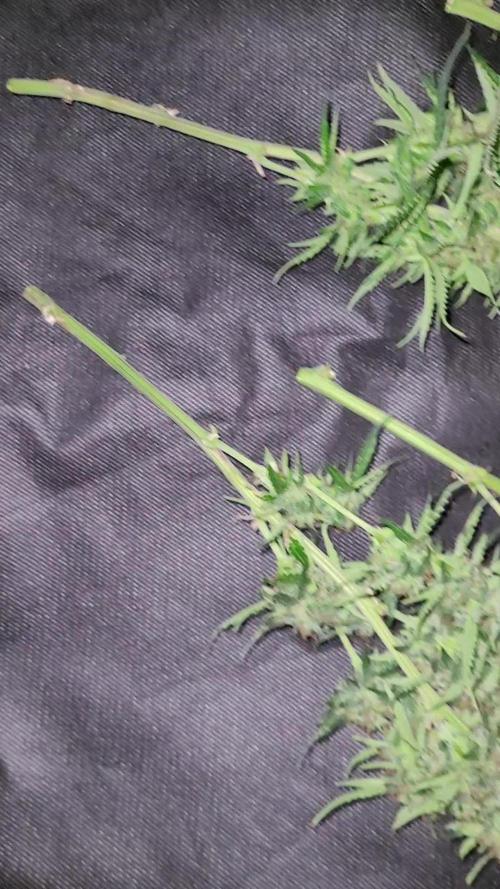
Harvest was done on a lovely summer day.
Since summer was approaching, half of the harvest was hung upside down with the classic 60/60 and rest is stored in a wine cooler for drying. There’s also an oscillating fan below for airflow!

Likes
17
Share

@StonedSteve
Follow
It wasn't a full week
The harvest 26.3. (91day)
The last two waterings were only 4 liters of clean water.
Here are a few photos and videos from the harvest sorry about the quality, but I'm not Saudek.
This is my second grow, and I have to say it was a success. The plant has shown great potential.
I'll add more photos after the buds has dried.


Likes
12
Share


@Belverde
Follow
I really like all three pheno..I was have some problem because I was use a new led light for the first time..
But in the end of the day I'm very Happy, really happy for the result..
For the bloom I setting the timer at 12/12 light cycle..
Not 18 or 20..
And in the end they gives me some nice looking flowers..
Very stycky too..
The plants was easy to grow..i cut only the first two branches in close to the end of week four..
Anyway..
I have described exactly what happened every week if you want to learn more ..
But nothing to special growing cycle..
Nice smell nice taste and nice effects, all bilancaded for me..
Sweet, candies, earthy and somntingh else..
I try it with two vaporizers and I like it(use mighty /ghost mv1)
I do not talk a lot about the effect because it is subjective, and in any case I think is a quiet cannabis that can be used all day..
Even with regard to the flavor, it is always difficult to grasp the characteristic features, apart from some super obvious ones .. I speak for me of course..
In about one or two weeks I will try for the second time but in to the organic rolling paper, pure nice green joint..
Thanks for the time🙏..
Hope you enjoy 🌱
Happy end of 2019..
And good year too..
See you in another diary..
Ciao✌️


Likes
17
Share


@Glizzy420
Follow
had a lot of issues with my ph and overfeeding so i flushed her the last 2 weeks , overall im happy with the results. Not my best yield but it'll keep improving. She smells great citrus and lemon sense!
🙂


Likes
20
Share


@Mr_nugs_lover_David
Follow
She's looking so beautiful,very nice strain to grow for sure,I'm trying to give her a good shape before flowering starts. I add organic liquids nuts only once a week and looks like she loves it,let's keep up the work!! 💚💛❤️🌱🤩

Likes
28
Share


@J_diaz420
Follow
Comienza la floración de estas pequeñas!!
Cambiamos línea de fertilizantes gracias a b.a.c 👍👨🌾🏻🍀
