Likes
Comments
Share


@Tweak
Follow
So this Mybfirst attempt at straining via ScrOG. I think is going pretty good. Experienced ScrOG gets I’m happy to hear some constructive criticism. I did some light defoliation this past week, a few here and a few there for a couple days strain just to uncover some new bud sights. Someone mentioned I’d never fill that 3x4 screen with just that one plant in a 10 gallon, but I have faith.


Likes
24
Share


@Frank_cultiva
Follow
Mismos riegos que la semana anterior de acuerdo a la tabla de advanced nutrients.
Las 4 nenas que están en floración(maceteros de 11lt) beben mucha agua, 8lt cada dos días y reciben un riego a la semana con nutrientes, el resto de riegos sólo con agua.
Mientras que las otras 2 que siguen en vegetación (maceteros de 30lt) están bebiendo 9lt cada tres días, también con sólo un riego con nutrientes por semana.
Saludos! Muy buenos humos a toda la gente que le da vida y vibra positiva a este mundo 💚🍀🤓

Likes
60
Share


@DaGrowQueen
Follow
Hey, growers
I hope that all is well with your grows.
I'm here to do my wk.2 check-in to update y'all on my greencrack grow. Everything is going very well so far, started all 3 of them on a small ½ tsp dosage of foxfarm's grow big and big bloom on day 10 of veg and they responded nicely. I'll be starting lst this week and will again give them ½ tsp of each nutrient in their feed.

Likes
2
Share


@PhinolaGreen
Follow
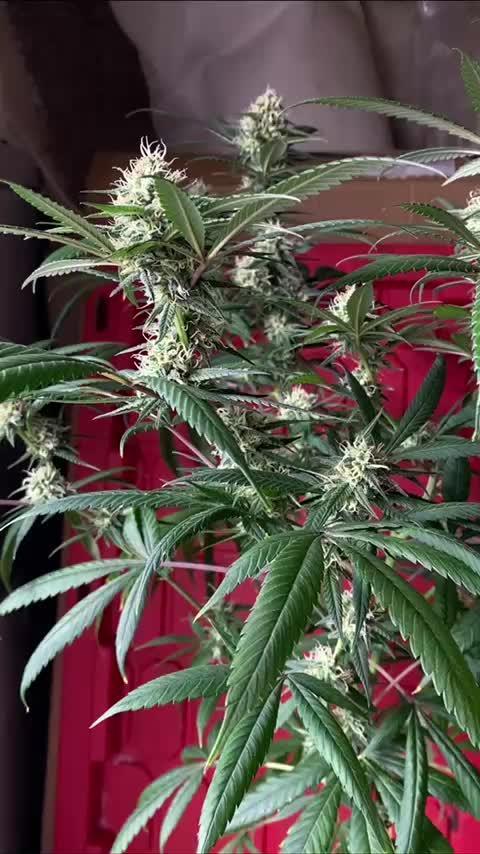
2. Woche
Sie hat es zum Glück überstanden und befindet sich schon in Woche 2.
Mittlerweile gab es auch das erste Mal Dünger 😁
In ein paar Tagen werde ich sie Toppen 😌



Likes
11
Share


Likes
16
Share


@Virgosmokes
Follow
This week is pretty good! Temp was a bit low but resolved this now. This is my 2rd attempt but I only have a 1×.5 space so im playing around a little!

Likes
8
Share

@Dendegrow
Follow
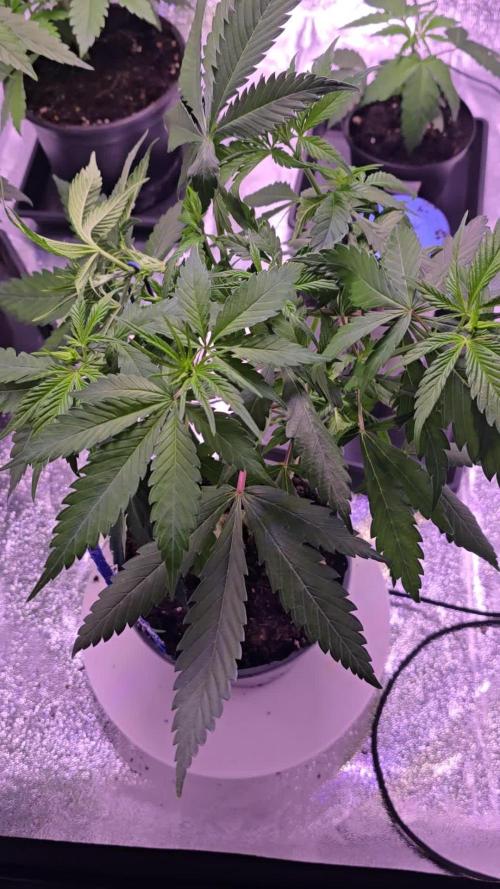
🎨 Monster Marker – Week 3 🌱
Last week, I accidentally snapped the main stem during low-stress training 😅✂️.
Luckily, she’s healed up perfectly 💪🌿, and now the side branches are just as tall as the main one – looks really cool! 😎
The smell is absolutely insane 🤯🔥, and I can’t wait to see what she will produce! 🌸✨
---
🎨 Monster Marker – Woche 3 🌱
Letzte Woche habe ich beim Low-Stress-Training leider den Hauptstamm abgebrochen 😅✂️.
Zum Glück hat sich die Pflanze perfekt erholt 💪🌿, und jetzt sind die Seitentriebe genauso hoch wie der Haupttrieb – sieht richtig cool aus! 😎
Der Geruch ist absolut pervers 🤯🔥, und ich bin mega gespannt, was am Ende dabei rauskommt! 🌸✨
Likes
38
Share


@Green_Mountains
Follow
Another good week. Watered them twice. I'm not planning on feeding them again. A little defoliation. I definitely think they are in the last 2 weeks before harvest.
Still seeing some nutrient burn developing on the leaves. I don't think I watered enough through the whole grow! I'd love to hear opinions on this!
Took some videos of the buds with an iPhone 12 at 6X magnification. Decent quality!
Otherwise, still looking to successfully harvest these plants! Thinking about the next grow. Probably going to be Auto Strawberry Cheesecake and Auto Anesthesia.
Peace!
Likes
16
Share


@nurari
Follow
Растут девочки... Посмотрите на ствол он весь усыпан трихомами :) что дальше будет я боюсь представить! Дельта 9 работает во всей красе судя по всему
Likes
294
Share


@StarLorr
Follow
Welcome to my Ðivine ØĠ Ķush diary.
In this diary:
Seeds: sponsored by Ðivine Șeeds
Media: Promix HP
Nutrients: Advanced Nutrients, Diablo Nutrients.
Light and Weather: Şun☀️and Mother Earth.🌎
___________________________
Feeding:
Tue 23Jul: 4L nutrients pH'd 6.5 and 4L water not pH'd
Wed 24Jul: 11L water not pH'd
Thu 25Jul: 4L water not pH'd
Fri 26Jul: 9L water not pH'd
Sat 27Jul: 4L nutrients pH'd 6.5 and 2L water not pH'd
Sun 28Jul: 10L water not pH'd
Mon 29Jul: 8L water not pH'd
*please note that most water only feedings are 2L at the time throughout the day in bottom saucer*
___________________________
What a beautiful summer that we're having. Just one day last week it was cloudy and colder and got some rain, rest of the week sublime weather.
My Ðivine Ladies are pre flowering and hopefully will be blooming soon, next week update should be FLO fingers crossed😄
______________________________
Kush Kush is doing well from her 88" inches tall, can't believe imma have to get my ladder to do some defoliation in a couple weeks😂
_____________________________
Øpi was found with a spider mites nest..squished the squatter with my thumb and index... all 3 Ðivine Gals got the spa treatment, soap insecticide
spray 2 litres each soaked them real good, before flowering it was a smart move😉
______________________________
Thanks for stopping by, likes and comments are appreciated!👊🏻😎
Keep on growin!
Keep on tokin!!!
😙💨💨💨💨💨

Likes
8
Share


@Aeson
Follow
Geerntet am Blütetag 66. Die meisten Trichome waren milchig und die ersten fingen an bernsteinfarben zu werden. Die Buds sind schön fest. Fächerblätter wurden entfernt und die Pflanze hängt jetzt kopfüber in der Growbox.

Likes
33
Share


@SAC87
Follow
Day 29 fm seed/Week 1 flower: I did some LST/HST to the plants to try to even out the canopy. The light is set to 80% and is creating some good growing conditions. Flower has started and most of the plants are showing little bud clusters and pistils. They are starting to smell already, just mild skunkiness. I say this every time, but there are some super short plants like the skunk and tall lanksters like the Blackberry. There is some stacking on some and mega stretch on others, such is the case when you grow 7 different genetics. It’s all good tho, we’ll train them up. Did some leaf tucking and removed a couple beastly light and site blocking fans. Other than that we’re just gonna watch and see how this plays out. 👍🏻👍🏻👍🏻
Happy Growing 🌱
Likes
36
Share


@nonick123
Follow
Día 59 (29/07) Este cultivo no es muy entretenido con solo agua, asi que...
Le hago supercropping a todas! 😁 A ver como reaccionan!
Riego 500 ml H2O pH 6,5 SÓLO a OnionOG #1
Día 60 (30/07) Las plantas se están recuperando muy bien del supercropping! 😁
Todos las puntas hacia arriba! 💥
Come onnnnnnn! A por esa floración en 2-3 semanas!
Riego 500 ml H2O pH 6,75
Día 61 (31/07) Las plantas se han recuperado genial del supercropping y están lanzando TODAS las ramas hacia arriba 😍
Un espectaculo la fuerza de estas plantas! 💥
Redistribuyo las plantas, para ver si OnionOG está más protegida del sol, ya que consume muchisima agua y voy a estar en unos días fuera...
También reubico ligeramente la malla de sombreado, debido a que en mi latitud el sol empieza a incidir lateralmente por las tardes...
Riego 500 ml H2O pH 6,55
OnionOG: Riego 1 Litro H2O pH 6,5
Día 62 (01/08) OnionOG me impresiona con su vigor. Sus ramas se están estirando de forma impresionante!
OnionOG le hago una poda de partes bajas de las ramas para mejorar el flujo de aire y que concentre su fuerza en las ramas superiores
Vuelvo a redistribuir las plantas en el invernadero dejando a OnionOG todavía más protegida del sol directo, para tratar de disminuir su consumo de agua estos días que no voy a estar...
Pongo una protección "visual" en el invernadero en el lado que da a los vecinos (cara norte), porque he "cazado" miradas indiscretas...
Riego 500 ml H2O pH 6,55
OnionOG: Riego 1 Litro H2O pH 6,5
Día 63 (02/08) Debido a que me voy de vacaciones unos días, adelanto el riego semanal con Té y la aplicación foliar de Kelp
Riego con 1 Litro de Té Vegetativo de Lurpe Solutions. Preparación: 24 horas con bomba de aire (oxigenación) con ingredientes:
Green Sunrise 8 ml/L + Insect Frass 16 ml/L + Hummus Lombriz 8 ml/L + Melaza 1 ml/L + Kelp Hidrolizado 0,25 g/L
Aplicación foliar Kelp hidrolizado de Lurpe Solutions a 0,25 ml/l
Día 64 (03/08) Cerrado por vacaciones
Día 65 (04/08) Mi amigo viene a casa a hacer un riego con 1 Litro de H2O pH 6,5
💦Nutrients by Lurpe Solutions - www.lurpenaturalsolutions.com
🌱Substrate PRO-MIX HP BACILLUS + MYCORRHIZAE - www.pthorticulture.com/en/products/pro-mix-hp-biostimulant-plus-mycorrhizae

Likes
13
Share


@BigEd420
Follow
Rainy weather is clearing up . Lots of sunshine this week. Can’t wait to see the progress week 6

Likes
8
Share


@DogDoctorOfficial
Follow
💙 Project Blue Tent – Week 13 💙
🥒 Pickle Lemon Haze F1 – Pheno B
🌸 Same Tent, Different Genetics, One Beautiful Frosty Girl! ❄️💙
Hello everyone, and welcome back to another chapter of Project Blue Tent! 💙🌱
My friends, here we go again!
Another week, another beautiful girl, and another reason to spend far too much time standing in front of the tent with a camera in my hands! 😂📸
LOOK AT HER!
Pickle Lemon Haze F1 Pheno B is looking absolutely beautiful. She's super frosty, the aroma is amazing, and those white pistils are still giving us plenty to look at as she continues towards the finish.
But before we get carried away with the photographs, let's take a moment to explain what's happening inside Project Blue Tent this week.
We have four plants sharing the same tent, the same general environmental conditions, the same lighting setup, the same irrigation system, and the same reservoir.
But we're working with two different cultivars: Blue Waffle F1 and Pickle Lemon Haze F1.
Same room. Same ecosystem. Same passion.
But two different cultivars, different genetics, and plenty of individual characteristics to appreciate!
This week, we're continuing to lower our nutrient concentration, reducing the overhead LED output gradually, and keeping the two LumiFlora under-canopy fixtures running.
We've also stopped using PLAGRON Green Sensation, which is an important correction to the nutritional updates I mentioned in the previous reports.
Power Buds remains in the recipe for now, while Hydro A and Hydro B have both been reduced.
We're moving into the final stage of this journey, and I'm particularly curious to see how the four girls progress from here.
Will they finish together, or will some be ready before the others?
Will we have half the room ready for harvest first, or will the whole room finish around the same time?
I genuinely don't know yet, and that's one of the things I'm looking forward to discovering!
But today, we're giving Pickle Lemon Haze F1 Pheno B her own chapter.
Let's get into it! 💙🌿
🌸 WEEK 13 – ANOTHER BEAUTIFUL GIRL APPROACHING THE FINISH
We're now in Week 13 of flowering, and the entire room is gradually moving towards the final stage.
The structural work has already been completed. The plants have been trained, topped, managed through the stretch, and supported with our SCROG setup.
The second layer of support remains in place, the airflow system is established, and the under-canopy lighting experiment continues.
At this point, we're concentrating on observing the plants, maintaining the environment, and making gradual adjustments where we believe they make sense.
We're not trying to change everything at once.
Instead, we're lowering the nutrient concentration, reducing the overhead lighting output gradually, and bringing the temperatures down as we progress through this final stage.
And meanwhile, the girls are doing what they do best.
Developing their flowers, showing us their individual characteristics, and giving us plenty of reasons to keep the cameras ready!
Pickle Lemon Haze F1 Pheno B is looking fantastic.
She's compact, frosty, and full of character.
And the smell?
Absolutely amazing! 😂💙
🥒 PICKLE LEMON HAZE F1 PHENO B – HER OWN MOMENT IN THE SPOTLIGHT
One of the things I love about keeping separate diaries is that every plant gets her own story.
Although Pheno B shares the room with her Blue Waffle F1 sisters and another Pickle Lemon Haze F1 plant, she's still an individual plant with her own development to document.
We're not simply copying the same description from one diary to another.
We're looking at the individual plant, recording what we see, and following her progress as she moves towards the finish.
Her structure is beautifully established, the flowers are looking impressive, and the frost is one of the first things that catches my attention.
And then we have those white pistils!
They're still very noticeable, giving the flowers a beautiful appearance as the plant continues developing.
She's not finished telling us her story just yet.
And honestly, I'm happy to let her take her time.
We're approaching the final stage, but we'll continue observing the overall development rather than deciding that she's ready based on one characteristic alone.
The flowers, the pistils, the trichomes, and the general condition of the plant all form part of the picture.
For now, Pheno B is looking outstanding, and I'm enjoying every moment of documenting her journey.
❄️ THE FROST – ANOTHER REASON TO GRAB THE CAMERA
You know me by now, my friends.
If there's frost to photograph, there's a good chance you'll find me standing in front of the plants for far longer than I originally intended! 😂📸
And Pheno B is giving me plenty of reasons to do exactly that.
The close-up photographs reveal the intricate details of the flowers and the surrounding sugar leaves.
There's so much to appreciate when we take the time to look closely.
From a distance, we can see the overall structure and the way the flowers are distributed throughout the plant.
But when we move closer, we start noticing all those little details that make macro photography so enjoyable.
The trichomes.
The pistils.
The developing flower structure.
The different textures across the flowers and sugar leaves.
And all those details that are easy to overlook when we're simply looking at the entire canopy.
That's one of the reasons I enjoy focus stacking so much.
It gives us another way to document the plants and share a closer look at what we're seeing inside the tent.
And this girl is certainly making the effort worthwhile!
She's frosty, she's beautiful, and she's giving us another fantastic subject to photograph.
💙❄️🌸
? WHITE PISTILS – SHE'S STILL PROGRESSING
One of the most noticeable characteristics in this week's photographs is the amount of white pistils still showing across the flowers.
And honestly, I love seeing how the plant continues to develop.
The pistils remain prominent, even as we're moving further into the flowering cycle.
This is a useful observation to record, but it's important to remember that the colour of the pistils alone doesn't tell us exactly how mature a plant is.
Different flowers can develop at different rates, and pistils can remain white even as other parts of the plant continue maturing.
That's why we're looking at the whole picture rather than relying on one visual sign.
We're observing the flowers, following the changes in the trichomes, and keeping an eye on the overall development of the plant.
Pheno B is still progressing, and we'll continue documenting her until we have a clearer picture of when she'll be ready.
She's an ace, my friends!
😂💙
And I don't want to rush her just because we're excited to see the finish.
Good things take time, and we're going to give this beautiful girl the attention she deserves.
📸 PHOTO STACKING – FEWER STACKS FOR THIS GIRL, BUT STILL PLENTY TO SEE
Photography continues to be a big part of Project Blue Tent.
This week, we've included several photo stacks, along with a video showing a little more of the focus-stacking process.
Some of the plants have more stacks than others this time around.
That's simply how the photography worked out this week.
Every plant presents slightly different opportunities, and the time available for photographing, processing, and stacking the images isn't unlimited.
Sometimes we manage to produce several stacks of a particular plant, while another gives us fewer finished images.
And that's perfectly fine.
The purpose isn't to make every diary identical.
It's to document each plant as well as we can and share the results with the community.
The video gives you a little glimpse behind the scenes, showing more of the process involved in creating these detailed photographs.
Focus stacking takes patience. We capture multiple images at different focus distances and combine them to produce a final image with a greater depth of field.
When working with small details, that can make a big difference to how much of the subject we can bring into focus.
Of course, the result depends on the source photographs, the conditions during capture, and the stacking process itself.
But I really enjoy experimenting with this technique.
It gives us another way to appreciate the flowers, and it allows us to share details that a single photograph might not capture as clearly.
So, even though Pheno B has fewer stacks than some of the other girls this week, she's still getting her own photographic spotlight.
And I'm happy with that!
A few beautiful stacks, a look behind the scenes, and another chapter in our growing photographic record.
📸💙🌿
🌿 SAME TENT, SAME ECOSYSTEM – BUT TWO DIFFERENT CULTIVARS
This is something worth repeating throughout Project Blue Tent, because it's an important part of what we're documenting.
We have four plants sharing the same tent.
Two Blue Waffle F1 plants.
Two Pickle Lemon Haze F1 plants.
They share the same general environment, the same reservoir, the same irrigation system, and the same lighting arrangement.
But they belong to two different cultivars.
And that's where things become particularly interesting.
Although the growing conditions are shared, we shouldn't expect every plant to develop in exactly the same way.
Different cultivars can have different growth characteristics, flowering patterns, and expressions.
Individual plants can also show their own differences within a cultivar.
That's why we're keeping separate reports rather than treating the entire room as one uniform group of plants.
Pickle Lemon Haze F1 Pheno B deserves her own observations, her own photographs, and her own record of development.
And the same goes for every other girl in this tent.
The shared environment gives us a common starting point for comparison.
The individual reports allow us to document what actually happens.
That's the beauty of this project.
Four plants. Two cultivars. One ecosystem.
And plenty to learn from every one of them! 💙🌱
🌡️ THE ROOM IS GETTING COOLER – PREPARING FOR THE FINAL STAGE
Now let's talk about the room, because the environmental adjustments apply to all four plants.
We're gradually lowering both daytime and nighttime temperatures as we move towards the finish.
Our current daytime air temperature is approximately 25°C.
During the night, when the plants are resting, we're aiming for around 19–20°C.
We've also brought both the solution temperature and substrate temperature down to approximately 21°C.
These changes form part of our approach to the final stage of the grow.
We're interested in maintaining a balanced environment while observing how the plants continue to develop.
Cooler conditions can influence colour expression in some cultivars, but the response depends on the individual genetics and the overall environment.
We're not assuming that every plant will respond identically.
Instead, we're observing each girl separately while keeping the shared room conditions as consistent as possible.
That's particularly interesting now that we're approaching the finish.
We have two cultivars in the same tent, and I'm curious to see whether their finishing timelines will be similar or whether we'll see a more staggered progression.
We'll keep monitoring the plants and let the observations guide us.
💧 HUMIDITY – OUR NORMAL TARGET IS AROUND 55%
Our normal relative humidity is approximately 55%.
You might notice that some photographs show a higher reading when I'm working inside the tent.
That's because the humidity can temporarily rise while I'm moving around, checking the equipment, taking photographs, and breathing inside the room.
Even with the air conditioning running, those temporary changes can show up on the controller.
For the report, we're using approximately 55% as the normal operating humidity.
The goal is to maintain stable conditions while continuing to monitor the plants throughout this stage.
As always, the room readings give us a reference point, but we still need to consider the overall environment and the conditions around the canopy.
💡 OVERHEAD LEDS – GRADUALLY REDUCING THE POWER
We've now reduced the overhead LED output to approximately 90%.
From here, the plan is to continue lowering the power gradually, by around one or two percentage points per day.
We're taking a measured approach rather than making a sudden change.
The objective is to manage the lighting as the plants approach the finish while keeping the wider environment in mind.
We're not chasing maximum output simply because the equipment can deliver it.
We've already established the canopy, and now we're adjusting the lighting gradually while observing how the plants progress.
Light intensity is only one part of the picture.
Temperature, humidity, plant condition, and the overall lighting arrangement all matter too.
So we'll continue making gradual adjustments and observing the results rather than assuming that one setting is automatically best for every situation.
💡 TWO LUMIFLORA FIXTURES – THE UNDER-CANOPY EXPERIMENT CONTINUES
The two LumiFlora 150W full-spectrum under-canopy fixtures remain part of our setup.
They're arranged in an X-cross configuration beneath the canopy, supplementing the primary lighting from above.
For now, we're keeping their output around 90–95%.
We'll continue with this approach through the remaining stage, potentially lowering the output closer to the end.
The reason we're experimenting with supplemental lighting beneath the canopy is to explore how it affects the lower flowering sites and the overall distribution of light throughout the plants.
We're particularly interested in observing how the flowers in different positions develop as the plants progress.
Could this lighting arrangement help the different parts of the canopy develop more uniformly?
That's one of the questions we're exploring.
But we're not going to claim a result before we've documented it.
We're keeping the setup consistent, observing the plants, and recording what happens.
That's what makes this project interesting.
It's not simply about adding more equipment.
It's about understanding how the different parts of the environment work together and learning from what we observe.
💧 IRRIGATION AND DRAINAGE – KEEPING THE SYSTEM RUNNING
The automatic irrigation and drainage system continues supporting all four plants.
They're sharing the same reservoir, which helps us maintain a consistent nutritional approach across the room.
The recorded watering volume is approximately 1.6 litres per plant over 24 hours.
That's our recorded figure, while actual water demand can still vary depending on the plant and the conditions.
We continue observing the system and making sure everything is operating as expected.
At this stage, we don't need to make unnecessary changes to a system that's working well.
We want to maintain consistency, monitor the plants, and concentrate on documenting their progress.
Sometimes the best thing an irrigation system can do is keep working quietly in the background while we enjoy looking at the flowers!
😂💧🌿
🌱 NUTRITION UPDATE – LOWER EC AND NO MORE GREEN SENSATION
Now, this is an important update, and I also want to correct something from the previous reports.
We've now stopped using PLAGRON Green Sensation.
We've also reduced both Hydro A and Hydro B, bringing the overall nutrient concentration down.
The reason for the lower EC is therefore not simply the reduction in Hydro A and B. We've also removed Green Sensation from the current recipe.
At this late stage, I've decided that we don't need to continue adding the PK product to the reservoir.
Power Buds remains in the recipe for now, while we continue reducing the overall nutrient concentration.
The current recorded recipe is:
PLAGRON Hydro A – 1.8 ml/L
PLAGRON Hydro B – 1.8 ml/L
PLAGRON Power Buds – 1 ml/L
PLAGRON Green Sensation – discontinued
PLAGRON pH Plus and pH Minus – used as required for pH adjustment
The pH shown in the current diary screenshot is approximately 5.98, and the EC is around 1.86 mS/cm.
Those readings are consistent with the lower nutrient concentration we're now running.
Our target is to keep the pH close to 6, allowing for small variations above or below that point.
We don't want to spend the entire day chasing a perfectly fixed number when the reading is already within our intended range.
We monitor it, make adjustments when necessary, and avoid unnecessary interference.
The nutrient changes are being applied across the shared reservoir, so Pickle Lemon Haze F1 Pheno B is receiving the same general solution as the other girls.
This is also an important correction to the earlier reports.
I mentioned Green Sensation in the previous nutritional descriptions, but we have now stopped using it, and the current recipe needs to reflect that change.
From this week onward, the reports will document the updated recipe accurately.
Consistency in the grow matters.
Accuracy in the diary matters too.
And that's exactly what we're aiming for! 💙🌱
🌸 THE HARVEST QUESTION – WILL THEY FINISH TOGETHER?
This is something I'm particularly curious about now.
We have four plants sharing the same room, but two different cultivars.
And even though they're progressing together, there's no guarantee that every plant will be ready at precisely the same time.
The differences between the cultivars, along with individual plant development, could mean that we end up with a staggered finish.
Perhaps some of the girls will be ready before the others.
Perhaps the whole room will progress towards harvest together.
At this stage, I genuinely don't know.
And that's part of the excitement!
I'm looking forward to observing how each plant develops from here, comparing their individual progress, and deciding when each one is actually ready.
I'm not going to force the decision simply because one plant appears further along than another.
We'll continue looking at the flowers, monitoring the trichomes, and considering the overall maturity of each plant.
The aim is to make the decision based on the individual plants rather than the calendar alone.
Will we harvest half the room first?
Will we have a full-room harvest?
Let's see!
I'm very curious to find out, and I'm sure the coming weeks will give us plenty to talk about.
💙🌿
🔭 WHAT I'M WATCHING NEXT
As we move closer to the finish, I'll be keeping a close eye on several things.
I'm watching the development of the flowers and the changing appearance of the pistils.
I'm monitoring the trichomes and the overall maturity of the plant.
I'm interested in how the flowers continue developing under our gradually reduced overhead lighting and the supplemental under-canopy fixtures.
I'm also watching how the plants respond to the cooler temperatures and the lower nutrient concentration.
And, of course, I'm comparing the progress of our two Pickle Lemon Haze F1 plants with the two Blue Waffle F1 girls.
Will the different cultivars finish at similar times?
Will one group be ready before the other?
Will individual plants within the same cultivar also show differences in timing?
Those are the questions we'll continue exploring.
For now, we're keeping the system stable, making gradual adjustments, and giving each plant the time she needs.
No unnecessary rushing.
No assumptions.
Just observation, documentation, and a little excitement about what's coming next! 😂💙
💙 FINAL THOUGHTS – SAME PASSION, SAME LOVE, ANOTHER BEAUTIFUL GIRL
My friends, Pickle Lemon Haze F1 Pheno B is looking absolutely outstanding.
She's super frosty, she's beautiful, and the aroma is incredible.
The white pistils are still very noticeable, and we're continuing to watch her as she progresses towards the final stage.
The room is moving into a different phase now.
We've lowered Hydro A and Hydro B, stopped using Green Sensation, and kept Power Buds in the recipe for the moment.
The EC has come down, the overhead LED output is now around 90%, and we're gradually reducing it further.
The two LumiFlora under-canopy fixtures remain part of our experiment, while the temperatures are being lowered for the final stage.
The irrigation system continues running, and the four girls are sharing the same general environmental conditions.
But even in this shared environment, each plant has her own story.
Pickle Lemon Haze F1 Pheno B is giving us plenty of reasons to smile.
The flowers are beautiful, the frost is impressive, and the aroma makes spending time in the room an absolute pleasure.
And now I'm genuinely curious to see how the harvest timing develops.
Will we have half the room ready first, or will all four plants finish together?
Only time will tell.
We'll continue observing, documenting, and making decisions based on what the plants show us.
That's the way I want to finish this project.
With the same passion.
The same love.
The same curiosity.
And the same appreciation for every individual plant that has brought us this far.
Four plants. Two cultivars. One beautiful ecosystem.
And another week closer to discovering how this story ends.
Let's keep the cameras ready, my friends!
😂💙🌸❄️
💬 COME JOIN THE DOGDOCTOROFFICIAL DISCORD COMMUNITY!
Before we finish, I want to invite everyone to join our Discord community!
If you're already there, you know how much fun we have together.
And if you haven't joined yet, you're more than welcome!
We've built a beautiful community where growers can share their experiences, exchange ideas, show their gardens, ask questions, and enjoy the hobby together.
No level required.
No need to be an expert.
Everyone is welcome, and we want people to feel comfortable joining the conversation.
We also organize giveaways and photo championships, with prizes for the winners!
It's a fantastic place to meet other growers, share photographs, learn from one another, and become part of a community that feels like family.
So come and say hello!
💙 DogDoctorOfficial Discord:
https://discord.gg/dogdoctorofficial
Join us, introduce yourself, share your garden, and become part of the fun.
Everybody is welcome!
🙏 A HUGE THANK YOU
A huge thank you to Zamnesia for making Project Blue Tent possible and giving us the opportunity to document these beautiful Blue Waffle F1 and Pickle Lemon Haze F1 plants individually.
Thank you to PLAGRON for the Hydro nutrient line supporting this project, including the products we've been using throughout the journey.
A massive thank you to Zamnesia for the Phytonaut LED lighting, curved scissors, and clip fans that have become important parts of this ecosystem.
Thank you to Mars Hydro for the irrigation and drainage equipment helping us maintain consistency throughout the tent.
And a special thank you to LumiFlora for the 150W full-spectrum under-canopy fixtures that we're using to explore supplemental lighting beneath the canopy.
Thank you to GrowDiaries for providing the platform where we can document the plants, share our photographs, record our experiments, and learn from the entire process.
And, of course, thank you to everyone following Project Blue Tent!
Your support makes sharing these individual reports even more enjoyable.
We're getting closer to the finish, but there's still plenty to observe, document, and appreciate.
Until next week, my friends...
More flowers.
More frost.
More photographs.
More observations.
And hopefully, a clearer idea of which girls will be ready first!
Growers Love, happy growing, and take care everyone! 🌱💙🥒🌸❄️