


Likes
Comments
Share


@jst4kicks420
Follow
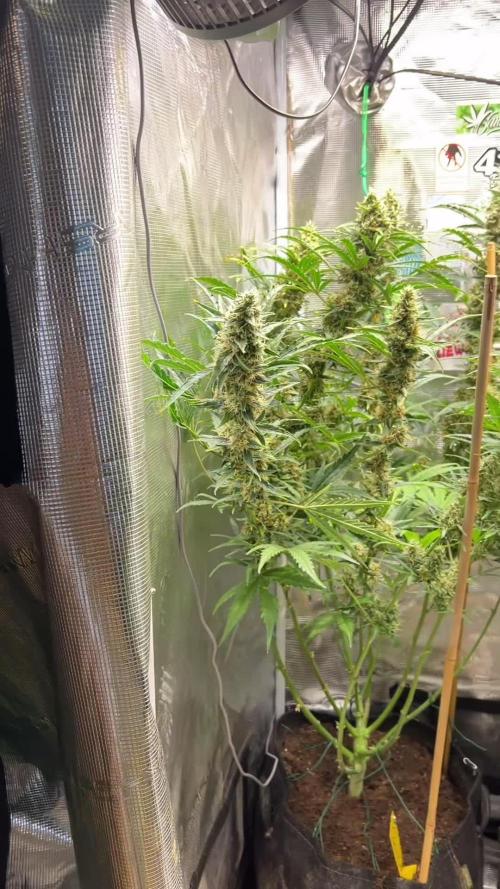
first pic is second day this week its may 12 well i think they are doing pretty dam good if you ask me bt i only know so much soo lol let me know what everyone thinks let see i added hydro plex to the mix not really sure if it added to my growth i my opinion growth had already been amazing aha bt we will see spent quite a bit of time pushing big leaves out the way under the second net ehh don’t really think i did any harm bt i cut out everything tiny and under the blanket mid of to nets and down if it look bigger then my fingers it’s survived this round aha broke one water leaf up top on accident ehh oh well not much else just been watching them grow gonna have to change the chains that hold my light they hand about 12 in of the top that i can’t move up any more and plants started catching bit more light burn sadly i definitely need more space bt in the end things are looking good to me end of the week i’m feeling more then blessed with the progress everything just getting fatter tried crimping two branch way to low about to days ago bt there still alive and growing again so all it well decided to try to pull the other two down instead lol hope all had a great week and happy growing (not that you guys should care bt is my birthday today 17th )aha til next time


Likes
38
Share


@BUZIMAN
Follow
Nothing much to report this week — everything is progressing normally. The buds are starting to put on some size, getting more aromatic, and are beginning to become covered in trichomes.
The Runtz n Roses is drinking about 1.5 liters of nutrient solution per day, while the Pickled Lemon Haze is taking almost 3 liters.
😎✌️☮️

Likes
18
Share


@GUGU_choices
Follow
Hello to all the growers following along with another week of the Jack Herer journey. We’ve moved into the fifth week of flowering. The plants are gradually starting to increase their bud volume, so I'm starting to really enjoy photographing them. That's what I love the most! By the fourth week of flowering, a nice coating of trichomes can already be seen, so I'm looking forward to seeing how Hungry Jack performs in the coming weeks. So far I am extremely satisfied..
-
Zdravím všechny sledující growery u dalšího týdne cesty s Jackem Hererem. Přehoupli jsme se do pátého týdne květu. Rostliny začínají postupně navyšovat objem palic, takže si jejich focení začínám užívat na plno. To je to, co na tom miluji nejvíce! Na čtvrtý týden květu lze vidět už pěknou pokrývku trichomů, takže se v následujícíh týdnech těším na to, jak se hladový Jack předvede dále. Zatím jsem maximálně spokojený..

Likes
56
Share


@Ultraviolet
Follow
What's in the soil? What's not in the soil would be an easier question to answer. 16-18 DLI @ the minute. +++ as she grows.
Probably not recommended, but to get to where it needs to be, I need to start now.
Vegetative @1400ppm 0.8–1.2 kPa 80–86°F (26.7–30°C) 65–75%, LST Day 10, Fim'd Day 11
CEC (Cation Exchange Capacity):
This is a measure of a soil's ability to hold and exchange positively charged nutrients, like calcium, magnesium, and potassium. Soils with high CEC (more clay and organic matter) have more negative charges that attract and hold these essential nutrients, preventing them from leaching away.
Biochar is highly efficient at increasing cation exchange capacity (CEC) compared to many other amendments. Biochar's high CEC potential stems from its negatively charged functional groups, and studies show it can increase CEC by over 90%. Amendments like compost also increase CEC but are often more prone to rapid biodegradation, which can make biochar's effect more long-lasting. biochar acts as a long-lasting Cation Exchange Capacity (CEC) enhancer because its porous, carbon-rich structure provides sites for nutrients to bind to, effectively improving nutrient retention in soil without relying on the short-term benefits of fresh organic matter like compost or manure. Biochar's stability means these benefits last much longer than those from traditional organic amendments, making it a sustainable way to improve soil fertility, water retention, and structure over time. Needs to be charged first, similar to Coco, or it will immobilize cations, but at a much higher ratio.
a high cation exchange capacity (CEC) results in a high buffer protection, meaning the soil can better resist changes in pH and nutrient availability. This is because a high CEC soil has more negatively charged sites to hold onto essential positively charged nutrients, like calcium and magnesium, and to buffer against acid ions, such as hydrogen.
EC (Electrical Conductivity):
This measures the amount of soluble salts in the soil. High EC levels indicate a high concentration of dissolved salts and can be a sign of potential salinity issues that can harm plants.
The stored cations associated with a medium's cation exchange capacity (CEC) do not directly contribute to a real-time electrical conductivity (EC) reading. A real-time EC measurement reflects only the concentration of free, dissolved salt ions in the water solution within the medium.
98% of a plants nutrients comes directly from the water solution.
2% come directly from soil particles.
CEC is a mediums storage capacity for cations. These stored cations do not contribute to a mediums EC directly.
Electrical Conductivity (EC) does not measure salt ions adsorbed (stored) onto a Cation Exchange Capacity (CEC) site, as EC measures the conductivity of ions in solution within a soil or water sample, not those held on soil particles.
A medium releases stored cations to water by ion exchange, where a new, more desirable ion from the water solution temporarily displaces the stored cation from the medium's surface, a process also seen in plants absorbing nutrients via mass flow. For example, in water softeners, sodium ions are released from resin beads to bond with the medium's surface, displacing calcium and magnesium ions which then enter the water. This same principle applies when plants take up nutrients from the soil solution: the cations are released from the soil particles into the water in response to a concentration equilibrium, and then moved to the root surface via mass flow.
An example of ion exchange within the context of Cation Exchange Capacity (CEC) is a soil particle with a negative charge attracting and holding positively charged nutrient ions, like potassium (K+) or calcium (Ca2+), and then exchanging them for other positive ions present in the soil solution. For instance, a negatively charged clay particle in soil can hold a K+ ion and later release it to a plant's roots when a different cation, such as calcium (Ca2+), is abundant and replaces the potassium. This process of holding and swapping positively charged ions is fundamental to soil fertility, as it provides plants with essential nutrients.
Negative charges on soil particles: Soil particles, particularly clay and organic matter, have negatively charged surfaces due to their chemical structure.
Attraction of cations: These negative charges attract and hold positively charged ions, or cations, such as:
Potassium (K+)
Calcium (Ca2+)
Magnesium (Mg2+)
Sodium (Na+)
Ammonium (NH4+)
Plant roots excrete hydrogen ions (H+) through the action of proton pumps embedded in the root cell membranes, which use ATP (energy) to actively transport H+ ions from inside the root cell into the surrounding soil. This process lowers the pH of the soil, which helps to make certain mineral nutrients, such as iron, more available for uptake by the plant.
Mechanism of H+ Excretion
Proton Pumps: Root cells contain specialized proteins called proton pumps (H+-ATPases) in their cell membranes.
Active Transport: These proton pumps use energy from ATP to actively move H+ ions from the cytoplasm of the root cell into the soil, against their concentration gradient.
Role in pH Regulation: This active excretion of H+ is a major way plants regulate their internal cytoplasmic pH.
Nutrient Availability: The resulting decrease in soil pH makes certain essential mineral nutrients, like iron, more soluble and available for the root cells to absorb.
Ion Exchange: The H+ ions also displace positively charged mineral cations from the soil particles, making them available for uptake.
Iron Uptake: In response to iron deficiency stress, plants enhance H+ excretion and reductant release to lower the pH and convert Fe3+ to the more available form Fe2+. The altered pH can influence the activity and composition of beneficial microbes in the soil. The H+ gradient created by the proton pumps can also be used for other vital cell functions, such as ATP synthesis and the transport of other solutes. The hydrogen ions (H+) excreted during photosynthesis come from the splitting of water molecules. This splitting, called photolysis, occurs in Photosystem II to replace the electrons used in the light-dependent reactions. The released hydrogen ions are then pumped into the thylakoid lumen, creating a proton gradient that drives ATP synthesis.
Plants release hydrogen ions (H+) from their roots into the soil, a process that occurs in conjunction with nutrient uptake and photosynthesis. These H+ ions compete with mineral cations for the negatively charged sites on soil particles, a phenomenon known as cation exchange. By displacing beneficial mineral cations, the excreted H+ ions make these nutrients available for the plant to absorb, which can also lower the soil pH and indirectly affect its Cation Exchange Capacity (CEC) by altering the pool of exchangeable cations in the soil solution.
Plants use proton (H+) exudation, driven by the H+-ATPase enzyme, to release H+ ions into the soil, creating a more acidic rhizosphere, which enhances nutrient availability and influences nutrient cycling processes. This acidification mobilizes insoluble nutrients like iron (Fe) by breaking them down, while also facilitating the activity of beneficial microbes involved in the nutrient cycle. Therefore, H+ exudation is a critical plant strategy for nutrient acquisition and management, allowing plants to improve their access to essential elements from the soil.
A lack of water splitting during photosynthesis can affect iron uptake because the resulting energy imbalance disrupts the plant's ability to produce ATP and NADPH, which are crucial for overall photosynthetic energy conversion and can trigger a deficiency in iron homeostasis pathways. While photosynthesis uses hydrogen ions produced from water splitting for the Calvin cycle, not to create a hydrogen gas deficiency, the overall process is sensitive to nutrient availability, and iron is essential for chloroplast function.
In photosynthesis, water is split to provide electrons to replace those lost in Photosystem II, which is triggered by light absorption. These electrons then travel along a transport chain to generate ATP (energy currency) and NADPH (reducing power). Carbon Fixation: The generated ATP and NADPH are then used to convert carbon dioxide into carbohydrates in the Calvin cycle. Impaired water splitting (via water in or out) breaks the chain reaction of photosynthesis. This leads to an imbalance in ATP and NADPH levels, which disrupts the Calvin cycle and overall energy production in the plant. Plants require a sufficient supply of essential mineral elements like iron for photosynthesis. Iron is vital for chlorophyll formation and plays a crucial role in electron transport within the chloroplasts. The complex relationship between nutrient status and photosynthesis is evident when iron deficiency can be reverted by depleting other micronutrients like manganese. This highlights how nutrient homeostasis influences photosynthetic function. A lack of adequate energy and reducing power from photosynthesis, which is directly linked to water splitting, can trigger complex adaptive responses in the plant's iron uptake and distribution systems.
Plants possess receptors called transceptors that can directly detect specific nutrient concentrations in the soil or within the plant's tissues. These receptors trigger signaling pathways, sometimes involving calcium influx or changes in protein complex activity, that then influence nutrient uptake by the roots. Plants use this information to make long-term adjustments, such as Increasing root biomass to explore more soil for nutrients. Modifying metabolic pathways to make better use of available resources. Adjusting the rate of nutrient transport into the roots. That's why I keep a high EC. Abundance resonates Abundance.
Likes
9
Share
@chrizzle
Follow
went a bit down with ‚Autoflower Supermix‘ (22ml/10L)
7.06.2026: reduced light to 18hrs because some of the upper leaves were tacoing

Likes
Comments
Share

@Samsationalseeds
Follow
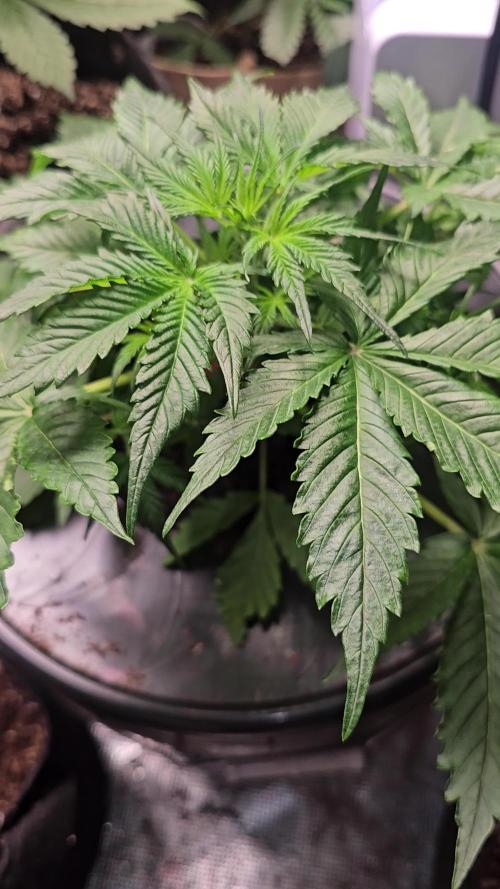
the two BPP R3 in soil went into bloom. the dwc are starting to enter bloom slowly as well
36-42
The veg and seedling cycle on the three gallon pot was short and it's gone into bloom with very little stretching. All of the plants look healthy, they look fine, no nutrient. Or PH issues
Likes
7
Share


@100Trillion
Follow
Week 3 of Flower we focus on Defoilation. This really is going to test the genetics response to extreme stress. Performed a 5 day Schwazze to minimize stress instead of ripping off most leave in one day. Plant seem to have reacted well so far. This technique has really opened the canopy and expose many bud sites. Preparing for a top feed at start of new week.



Likes
35
Share


@Eryan
Follow
Harvest starts today on Day 56. 36 Hours of darkness begins now. Watered yesterday. Don't have time to upload/process photos, will do so later. For now just the one video of trichomes. You can also see an unwelcome guest at the beginning, although I'm not sure if it's a spider mite. Not taking any chances though, and the trichomes have begun to decay anyways, so harvest time it is.
I'm kind of in shock about reaching this point in the grow 😨
Day 57 - Harvest early tomorrow :) Going to control the humidity to be about 55%.
Day 58 - Harvest. And oh my god that smell. Is...Grape soda, which has been sweetened a little too much. It's overpowering when smelling it, but it doesn't get the room too smelly (also have decent ventilation though).
I'll post harvest and effects later, after it has dried for a few days and then cured for a week or two. Yield won't be much I think, somewhere between 20-30 grams. Wet weight with stems is around 75.

Likes
16
Share


@Northern_Ent
Follow
July 13: first heat wave of the year was last week, and there is another forecast for next week, but for now this is pretty ideal cannabis weather.
Added a third Scrog layer and tied it off to some weights (partly filled water bottles) to open up the canopy further. Works, simple, and easy to move around the yard as needed.
I really like this plant and how it’s going so far.
July 14: re-scrogged again to widen the canopy further. Supercropped the ends to maintain the same elevation at the various growth tips. Four stems in middle were topped to keep them from getting ahead of the others. Experimenting to see how it goes.
July 16: hot again. Increased water volume and sometimes misting air with garden hose water for the evaporative cooling. She looks great.
July 17: another 32 C day. Watered four times today so likely 7-8 L in the heat with the growing plant.
July 18: hot again. Mixed Power Bloom and malted Barley with some soil and added as a top dressing.Hit 34 C and 20% relative humidity which is far too hot and dry for cannabis. Lots of watering, and misting of leaves and air to provide some moisture and cooler temperatures.

Likes
3
Share


Likes
40
Share


@GYOweed
Follow
Keeping this just for maybe flowering it later.
It doesnt like small containers


Likes
74
Share


@Rasta_Faraev
Follow
14.09.21.Банане 2 недели, развитие сумасшедшее. Опрыскиваю по листу на ночь динамиксом.русские производители обещают эффект мегафола, а он мне понравился. Так как цена демократичная, я решил попробовать этого производителя. Также купил стимулятор для корней, аналог радифарм. Ок. Девчонке нравится. Лист выглядит здоровым, сочныма корневая мне не видна😁, но вершки хороши, значит и корешки в норме. Пересадили в 16 л airpot в 12 дней. Полет продолжается. Буду добавлять мысли в течение недели. Всем растафарай!
15.09.21 сегодня начались тренировки у девчонки. К lst я отношусь всегда творчески и с азартом. Каждое растение как и человек - уникально, тренировки интересны возможностью применять весь потенциал своей фантазии на 100%. За это растения благодарят нас большими урожаями и эстетической красотой.
17.09.21 Банана растёт и пухнет. Дал корневой стимулятор рутфарм. 2мл/л. Со вчерашнего дня у нас похолодание до +10 днем и +3 ночью, поэтому решено было включить днат 400, так как мой бокс расположен на балконе. Ещё немного подогнул ствол и убрал листья от боковых побегов. Полет продолжается, спасибо за ваше внимание, гровер!))
19.09.21. Немного растянуд девчонку сегодня днем, растёт не плохо, но видно, что после пересадки переключилась на корни. Поливаю через день, полет продолжается! Всем спасибо, что уделяет внимание моему дневнику🙏🙏🙏

Likes
82
Share


@UnorthadoxDude
Follow
Hello growmies! Welcome to week six of An Epsilon Adventure! Massive thanks to both Shogun and Royal Queen Seeds for sponsoring this grow!
So here we are at week six and every one of these girls are at a slightly different stage, it is quite fascinating to watch them develop one after the other.
Today I made the last adjustment to the light possible. I removed the adjustable hangers and affixed a carabiner which I tightly tied to the top of the tent bar. There is about 1.5 inches of space between the top of the shade and the tallest part of the roof of the tent. Plant 1 is already taller than this, and it looks like plant 6 and maybe even plant 5 are going to join it. It's a madness. I am sure you have already looked at the photos but just in case you do what I do and read the diary first...
Here is my assessment at the beginning of week 6:
Plant 1:
Height: 1st (137cm) - what can I say about this ridiculous plant? Day 36... 137cm tall. I have had to raise the light to as high as it is physically possibly to raise it and it's still not high enough. She is done stretching now, she may add 3-5cm over the next week or so but I don't expect more than that, so her top of her main cola going to have to develop above the level of the light. Nothing I can really do, nothing wise anyway. What a monster plant.
Maturation: 4th - early into flower - bud sites developing, pistils just starting to explode.
Plant 2:
Height: 4th (111cm) - this plant has been there or there abouts as the tallest plant for most of the grow, but she has topped out at 111cm. She will gain some during flower but not much more than a few centimetres. Very impressive plant, loads of bud sites, really big strong secondary branches. This one is going to be colas galore.
Maturation: 3rd - well into flower - all white pistils
Plant 3:
Height: 6th (95cm) For some brief days the tallest plant in the room, she peaked early and is now the "shortest" at "only" 95cm for this "50-70cm" strain. She is utterly dwarfed by four of her five sisters in just about every department, being quite a bit smaller even than plant 4 (although I have removed the most lower nodes from this plant). Compared with her sisters she is almost a runt... except that she is 25cm taller than the strain top-end average and matches the maximal height of the previous tallest Epsilon F1 plant I am aware of. It's not that she is small, actually she's pretty big for an Epsilon F1, it's just that the rest of the girls are on another level altogether. Plants 1, 5 and 6 are all absolute beasts.
Maturation: 1st - well into flower - first shades of brown in some pistils.
Plant 4:
Height: 5th (98cm) although only 3cm taller than plant 3, overall she is a much larger plant. Her secondary nodes are the same height as plant 3.
Maturation: 2nd - well into flower - all white pistils
Plant 5:
Height: 3rd (113cm) - one of the two thick/short girls who have grown at a similar pace all along - she is further ahead than plant 6 but not by much and I think she will probably exceed 120cm this week, though I do not think she will outgrow plant 1 or 6.
Maturation: 5th - early into flower - bud sites developing.
Plant 6:
Height: 2nd (120cm) - my predictions were correct about this girl and her continued growth. I now think she might actually outgrow plant 1, which is quite worrying.
Maturation: 6th - early into flower - bud sites forming - by far the least mature plant of the six.
###
Week 6 Day 2 23:00 30/7
Photographed. Raised the light. Rotated the plants. Inspected, measured and reported on each plant.
###
Week 6 Day 3 23:00 31/7
It has not escaped my attention that the plants that are more advanced into flower have darkened and have some burnt tips. I need to flush them and lay off the base nutes a bit. These plants are just growing and maturing so quickly that I cannot keep up.
###
Week 6 Day 5 02:30 2/8
Fertigated 3l of nutrient mix, without either COCO A or B.
###
Week 6 Day 6 01:30 3/8
photographed
---
Thanks for reading growmies! 👊
==========
Tent: 120cm x 120cm x 180cm
Light: 600w HID Elite Dual Spectrum HPS + Angel Wing Reflector
Air: 5" duct fan system with carbon filter ~300 m3/hour + RAM 9" floor fan + 4" intake fan
Pots: Air Pruner Fabric Pots 30l - UGro XL Coco + horticultural grade perlite (~20%)
Seeds supplied by Royal Queen Seeds https://www.royalqueenseeds.com
Nutrients supplied by Shogun Fertilisers https://www.shogunfertilisers.com/en
==========


Likes
24
Share


@DogDoctorOfficial
Follow
Germination method 🌱 @thecannakan
Nutrition
@aptusholland 🌿
@aptus_world 🌎
@aptus_es 🌍
@aptusbrasil 🌱
@aptus_thailand 🌿
@aptus_portugal 🌳
@aptususa_official 🍀
@aptusplanttechnz 🌺
@aptusplanttechaus 🍃
Ambient controls🎮
@trolmaster.eu @trolmaster.eu.support @trolmaster.support @trolmaster.agro
Soil @promix_growers_eur @promix_cannabis
LED - @lumatekeu
Watering- @autopot_usa @autopot_global
Love and attention- @dogdoctorofficial
#aptus #aptusplanttech #aptusgang #aptusfamily #aptustrueplantscience #inbalancewithnature #trolmaster #trolmastereurope #trolmastersecrets #Autopots #GreenJoy
As always thank you all for stopping by, for the love and for it all , this journey of mine wold just not be the same without you guys, the love and support is very much appreciated and i fell honored and so joyful with you all in my life 🙏
With true love comes happiness 💚🙏 Always believe in your self and always do things expecting nothing and with an open heart , be a giver and the universe will give back to you in ways you could not even imagine so 💚
More info and complete updates from all my adventures can be found ⬆️ link in the profile description ⬆️
Friendly reminder all you see here is pure research and for educational purposes only
💚Growers Love To you All 💚
Likes
13
Share


@Mrs_Larimar
Follow
2022-10-30
The Seed was gifted to me by my Growmie @Oimrausch
thy Buddy!
She was growing from beginning very well
Turned out to a strong well structured Plant
Buds are dense and Thick, she smells super
This Run was one of my Best, I feel iam reaching good Levels in the Growingconditions
VPD, Wind, and Fertiliser helped the Genetics to show
what they got!----
Especially to mention are the Hyphotonflux HPF-4000.
All Plants responded very well to the Lightspectrum

Likes
18
Share


@Jays_Not_Here_Man
Follow
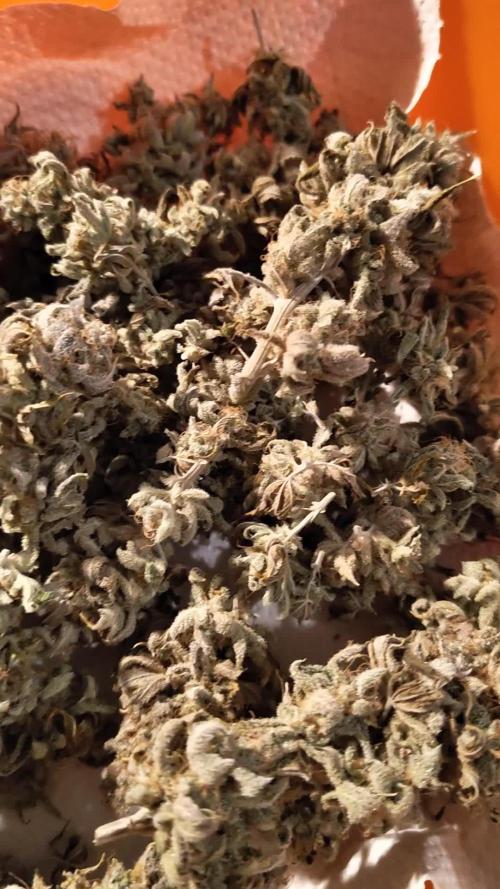
More to come once I think this over, and finish up the dry and cure 🌱💨
Likes
8
Share


@TegridyCal
Follow
We are literally drooling. In the vegetative phase it was seen that it was beautiful but in the flowering phase it really gave its best. The two lateral peaks are large, white and full of trichomes, the central ones due to the topping effect a little lower but equally slender. We are moved by having made one of the myths of our 20 years and believe me it seems to get on the delorean and take a journey through time, when as young university students we experienced this spectacle of nature for the first times. Taste, beauty, flavor and memory <3