Likes
Comments
Share


@Ganjaman19
Follow
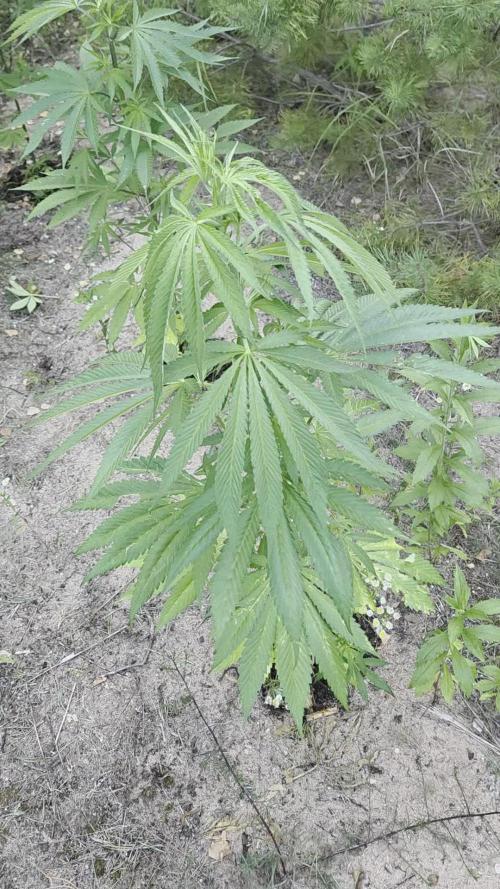
Week 5 flower is over and things are going great they are all fattening right up thanks to TON O BUD these Nutrients are really good easily my favourite range.
Thanks to my sponsors for the help along the way I can't thank yous enough and we can do some work whenever you guys and gals want.
I've recently had to get some ona gel and some inline air fresheners as the smell is getting super strong i got the gel and 2 of the fresheners foronly £35 from @HydroproWashington and they work really well you can smell lemons from the second you open the door so these are highly recommended for anyone who's struggling to keep the smell down even with my new filter these were stinking the house out.
Please follow my sponsors on social media and get sow fire in your tent ⛺.
@Anesiaseeds
@divineseeds
@HydroproWashington
See yous next week and happy growing team


Likes
27
Share


@RDWCGrowing
Follow
5/23/2023
Week 7- Day 1 of Flower (Day 110 overall) (Day 49 of Flower)
There was a couple of small super small sucker buds on the lower stocks that needed to be cleaned off but that was it. Just watching them Flower!!
5/24/2023
Week 7- Day 2 of Flower (Day 111 overall)
Tucked a few fan leaves below lower buds but didn't see any blatant offenders that needed to be removed. I typically do start my checks in Week 8 but since this is a new strain I decided to go ahead and do a Trichome check just to see what was what.. Just as I thought nothing but clear glassy Trichomes. I will check again in one week....
5/25/2023
Week 7- Day 3 of Flower (Day 112 overall)
Just letting them grow today!! Smell is getting stronger I would say it is a hint of Pine and a heavier fruity smell.
5/26/2023
Week 7- Day 4 of Flower (Day 113 overall)
I did Nothing but took some pics and I enjoyed it!!!! It is nice to be able to just sit back and watch them on auto pilot.. :-) Tomorrow Water Change Day!!
5/27/2023
Week 7- Day 5 of Flower (Day 114 overall)
I admit it.. I had to defoliate a little bit.. I looked in while changing the water today and there were just a couple blatant offenders blocking the light from lower bud sites and those leaves they just had to go. Other than that I changed the water and this week is where I drop everything and start preparing them for this last phase of the grow. Loving a few of these buds they are starting to beef out very nicely.
I added 36 gallons
Mammoth Silica = .5Mil/Gal= 18Mil
Root DRIP = 1Mil/Gal= 36Mil
CalMag= .5Mil/Gal= 18Mil
FloraMicro = 3.8Mil/Gal= 137Mil
FloraGro= 2.8Mil/Gal= 100Mil
FLoraBloom= 4.6Mil/Gal= 166Mil
LiquidKoolBloom= 2.5Mil/Gal= 90Mil
TPS SIGNAL= 4.0Mil/Gal= 144Mil
ORCA = .5Mil/Gal= 18Mil
Water Temp= 70.1
Tent Temp= 76
Humidity =64 ** I have two dehumidifiers running on Ink bird controllers to try and keep the humidity down, In late in flower I like to keep the humidity above 45 but below 60.
5/28/2023
Week 7- Day 6 of Flower (Day 115 overall)
Opened the back of the tent today and boy did she need some defoliation love in the back. Other than that I took off a few little sucker buds trying to form. I did start to setup my Dry space as well as did a Trichome Check today and the brown tips are coming in nicely.
5/29/2023
Week 7- Day 7 of Flower (Day 116 overall)
Found a few baby sucker buds trying to form so I removed them. Other than that I am enjoying watching her mature.
I also started my Reverse of the Clone I took 6 weeks ago in Apr from #3. I am uploading footage of the reversing process for your viewing pleasure.

Processing
Likes
67
Share


@Ageddd
Follow
Whats up GD !!!
------------- GROWTH-------------
Topped one of the plants, the bigger one (it is 3 days younger than the other)
------------- IRRIGATION-------------
Watered both ladies, around 0.2-0.3l each one with Biogrow.
------------- NUTRIENTS-------------
BioGrow 1ml/l
---------------------------------------
Good vibes !!
_04/04/2018_

Likes
3
Share


@CalGonJim
Follow
3/19 230pm I just got the three new ones and I’m really excited to start them. I’ll be using Cannakan for germination 3pm That was easy all done.
3/20 12am almost ready. 2am poured out the water put in new distilled water below the notch and we are good to go. Set at 88 for 78 target.
130 pm I got the dirt work finished. It’s the part that I hate the most. I try to keep it as clean as I can. They are ready to go. I’ll be putting them in the dirt in a little bit.👍👍👍
3/21 1am..... going to see if they woke up.. I put the dirt in without much mess. The dirt is clean and easy to work with. I poured CAREFULLY in lines in both directions of a red party cup of Rapid Start and pH 6.5 each💦. nothing yet, but gnats...
3/22 Surgery was a success times 3!!!! All delivered happy and healthy!!!!!
3/23 12 am looking great!!!

Likes
9
Share


@GYOweed
Follow
Not a great selection. Low yield. Hopefully it will taste and smoke great as it looks.

Likes
7
Share


@Meksi2790
Follow
total end end dry weight was 2453g very nice strain to grow recommend to anyone dried them for 9 days 68fh and 50-53rh

Processing
Likes
41
Share


@FrostyGardens
Follow
Added humidifier. A bit late but I keep it pumped up during lights go. It will stay around 60-70 for the next three weeks. Looking to encourage some stretching. Plants are very short and bushy. I may not even need a scrog. Lets see how they grow over the next few weeks.
10/29 The ladies seem to really like the extra humidity. They are still vegging as to be expected. Really short and bushy compared to my last run!

Likes
1
Share

@JoeCNote
Follow
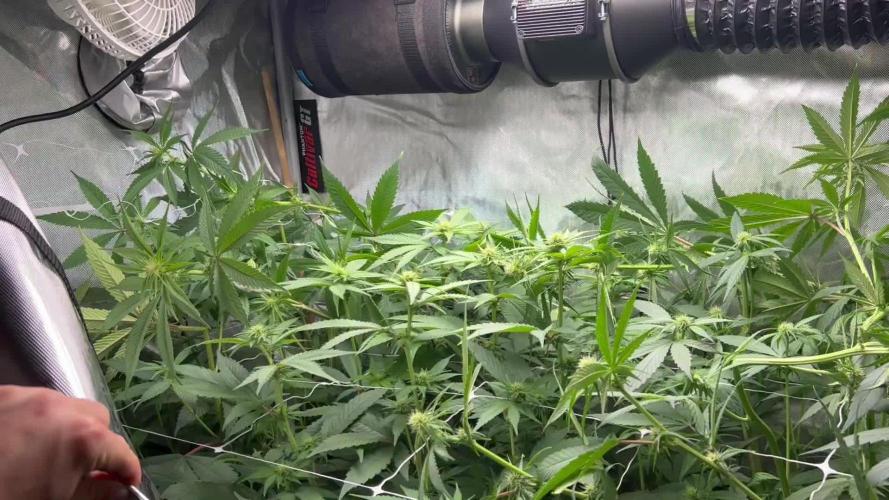
They ended up getting too tall and if I had let the cola's develop where they were, they would've outgrown my tent so instead I did some super cropping and bent over most of the top branches on pheno's 3 & 4 (left & right).
Likes
15
Share


@YOZYY
Follow
Did some defoliation very light just made sure nothing is blocking the lower nodes to much but other than that been feeding heavy then watering with just cal mag for two waterings then heavy. Next watering will be a 900 to 950 ppm mix.

Likes
22
Share


@bypado_farm
Follow
16 days of slow drying each plant with the environment controlled inside the tent with 2 meters.
I have two fans on, pointing at the floor to circulate the air
temps - 20 - 23 º
humid - 50- 60 %
Likes
2
Share


@Organic473
Follow
Just been feeding her water once a week..she continues to swell I will give her some molasses one for the road and just water until week 8.
Likes
25
Share


@Kakui
Follow
Estuve un tiempo sin actualizar el diario porque me contagie de COVID, ahora un poco mejor vuelvo a actualizar.
Flower58, las plantas están listas para la cosecha, en uno o 2 días empezaré a cortar y colgar para su secado.
Drying, secando con parámetros de humedad de 60% a 16°c por aproximadamente 2 semanas, están a 2 o 4 días de estar listas para pasarlas a frascos y ver cuánta cantidad final se logró.


Likes
18
Share


@KushAllDayLong
Follow
Week 4 was pretty solid for overall growth and for bud growth. I think the stretch phase is definitely done and the bud will start to pack on size from here on out. This seems like the fun part but it's becoming very smelly and sticky..extremely sticky. I touch it once and my fingers are glued together. Seems to me that they are all happy!!
Normal feeding except for more bloom nutrients and no more adding nitrogen.
I needed up buying Fox Farms Beastie Bloomz and gave the girls a nice feeding which they loved!
I also bought a trellis net and added it, I also bought fabric pots but wont use until next run. I also got a Govee device to monitor humidity and temp better so I can dial in the VPD! Learning so much and VPD is definitely one of the most important aspects to dial in!
So far so good this week! I'm loving the trellis net addition! Makes it look so nice!
Thanks for any advice!!
Likes
39
Share


@AestheticGenetics
Follow
3/18/25
Start of another week. Plants just finished 2nd week of flowering so these most recent pictures are day 14 since the flip to 12/12
Some plants are only 28-30 inches and others are stretched up to 36-40 inches
3/22/25
R3 looks like shes going to produce the most mass.
everything looks really happy.
Everything looks happy and healthy

Likes
Comments
Share

@IslandTerps
Follow
Strains: Fast Buds – Mendo Guava Auto & Guava Auto RF3
Grow Type: Indoor
Pot Size: 3 Gallon Pots
Medium: Peat Moss & Perlite
Nutrient Line: Athena
Week 7 Update
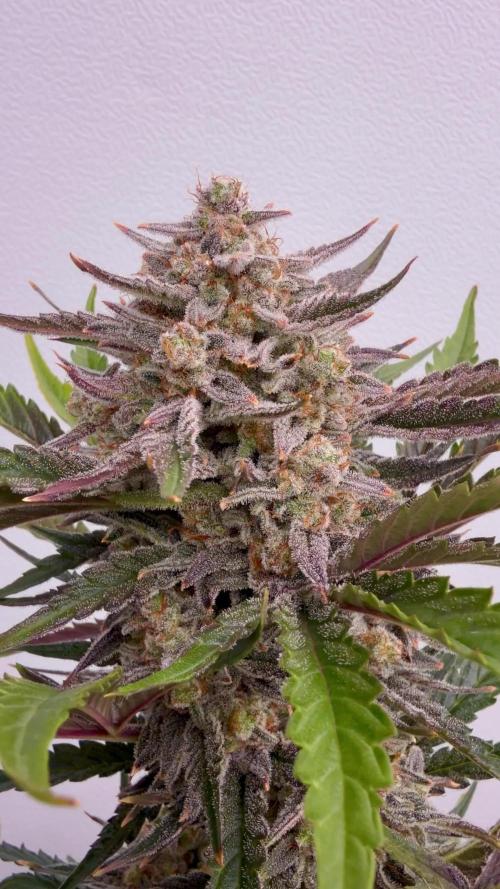
Aren't these girls pretttyyyy?! I'm really loving how this run is finishing up. The plants may be a little on the smaller side, but they definitely made up for it with how beautiful they turned out.
Both Guava Auto RF3 girls are officially down . I started flushing them at the beginning of the week before chop, and I'm really happy with how they finished.
The two Mendo Guava girls need a little more time, so they're going to run for another week. I'll begin flushing them now and let them enjoy their final days before they come down as well.
Overall, I'm really pleased with these four. I'm looking forward to seeing how everything turns out once they're dried and trimmed.
Feeding
Guava Auto RF3: Flushed before harvest
Mendo Guava Auto: Beginning flush
Nutrients: None during flush
pH: 6.2
PPM: Low / water only
Frequency: As needed
Indoor Climate Conditions (Late Flower)
🌡️ Temperature: 20–25°C
💧 Humidity: 45–50%
📈 VPD: 1.3–1.5 kPa
And don’t forget to use my discount code ISLANDT for 15% off your next order at Fast Buds 🌿🔥
Likes
5
Share


@Deli_Weed
Follow
Esta semana fue solamente de flush 🚿 en esta ocasión decidí usar florakleen para ver con cual obtengo mejor resultado si con este o con flawless finish, lo hice así, primero hice un lavado con pura agua con ph de 6.2 lo hice desde el ultimo día de la semana anterior, fue lavado doble, uno en cuanto se encendio la luz y otro justo antes de apagarse, luego empezando esta semana regué dos dias usando el florakleen y ph de 6.2, el tercer día no regué y al final de ese día le di corte ✂️ y la colgué, actualmente ya la tengo curando, la tuve 10 días secándose con una humedad de entre 50 y 60% para un secado lento.


Likes
7
Share


@FrecheOma60
Follow
Insane color, insane structure, insane sugar and some very intense smell.
They are nearly ready its only about some days maybe 3-4 days until harvest i guess.
Only watering with plain rain water, dont actually flush but put the clear water into my tent so they take a bath.
My next update is when they are dry

Likes
2
Share


@DogDoctorOfficial
Follow
👑 8×8 Adventure – Week 14 🌿
Godfather OG – Pheno A 👑🔥
💚 The Unhappy Girl Is Finishing Like A Queen — Dense, Loud & Beautiful
Hello everyone, and welcome back to another chapter of the 8×8 Adventure! 🌱💚
And here she is...
Our Godfather OG Pheno A.
Our difficult girl.
Our unhappy girl.
Our little Queen who has made us work for every bit of progress throughout this adventure.
😂👑💚
And look at her now.
Seriously...
LOOK AT HER!
She's finishing fast.
She's beautiful.
She's compact.
She's carrying some seriously dense flowers.
And the smell?
OH. MY. GOD.
😂🔥👃
This girl smells so, so, so, so good!
I genuinely cannot get enough of it.
And honestly, after everything we've been through with this phenotype, seeing her looking like this makes me smile.
She's not the biggest plant in the room.
She's not trying to compete with the giants.
She's not trying to stretch across the entire tent.
She's compact.
She's dense.
She's building her own little collection of beautiful flowers, and she's doing it in a way that makes me very curious about what we'll discover when we finally get to harvest, dry, and cure her.
I have a feeling those dense flowers are going to be something special to handle.
Of course, we'll have to wait and see what the final dry weight tells us. We can't judge the finished weight from appearance alone.
But visually?
She's looking fantastic.
And aromatically?
She's already making a very strong argument for herself.
👑🌸🔥
So let's put the difficult weeks aside for a moment.
Let's appreciate where she is today.
And let's give this Queen the spotlight she absolutely deserves!
────────────────────────
👑 FROM THE UNHAPPY GIRL TO A BEAUTIFUL FINISH
If you've followed this diary from the beginning, you already know that Godfather OG Pheno A hasn't exactly been the easiest girl in the 8×8 Adventure.
She's had her struggles.
She's had her unhappy moments.
She's made us question things.
She's demanded attention.
And there have been times when I looked at her and wondered how this particular story was going to unfold.
But that's the reality of growing different phenotypes together.
Not every plant reacts identically to the same environment.
Not every plant has the same level of resilience.
Not every plant develops at the same pace.
And not every plant gives you an easy ride.
This girl has made that very clear. 😂
But here's what matters now.
She's still here.
She's still developing.
She's still producing beautiful flowers.
She's becoming increasingly interesting as she approaches the end of her journey.
And she's smelling absolutely incredible.
That's a pretty wonderful place to be after such a challenging ride.
I'm not going to pretend the earlier difficulties never happened.
They're part of her story.
But they don't have to define the entire story.
Because when I look at her now, I don't just see the unhappy girl we've been trying to understand.
I see a beautiful phenotype that's made it this far and is giving us something genuinely exciting to appreciate.
And that's worth celebrating.
💚👑🌸
────────────────────────
🌸 NOT THE BIGGEST — BUT LOOK AT THAT DENSITY!
One of the things that really stands out about this girl is her compact structure.
She's not a giant.
She's not taking over the room.
She's not producing the kind of enormous overall plant structure that immediately attracts attention from across the tent.
But look closer.
😂📸🌸
The flowers are dense.
The plant is compact.
And there's something satisfying about seeing how she's developed within the structure she has.
This is another reminder that plant size and flower density are two different things.
A larger plant doesn't automatically mean denser flowers.
A smaller plant doesn't automatically mean a disappointing result.
And we shouldn't judge the final outcome simply by looking at how much space a plant occupies.
Godfather OG Pheno A has her own expression.
She's compact.
She's carrying beautiful, dense-looking flowers.
And she's giving us plenty of reasons to look forward to the harvest and the chapters that follow.
I'm especially curious to see how the flowers feel and look once the drying process is complete.
Will that density translate into a satisfying finished result?
We'll find out.
For now, I'm enjoying what I can actually see.
And what I can see is a beautiful little Queen doing her thing.
👑🌸💚
────────────────────────
⚖️ WILL SHE HOLD HER WEIGHT?
Now, here's something I've been thinking about while looking at her flowers.
Because these buds look so dense, I have a feeling this girl may retain a satisfying amount of substance once she's dried.
But let's explain what I mean properly.
Fresh flowers contain a substantial amount of water.
During drying, they lose moisture, and their weight drops considerably. That's completely normal.
Even dense flowers lose water.
Density doesn't mean that a flower somehow escapes the drying process or retains all its fresh weight.
What I'm wondering is whether the compact structure and density of these flowers will translate into a satisfying final dry result relative to their size.
That's something we can only judge properly once she's harvested, dried, and weighed.
And that's what makes the next stage so interesting.
Right now, I'm looking at a compact plant carrying dense-looking flowers.
I'm not going to invent a dry weight before the scales tell us the truth.
😂⚖️🌸
We'll let the numbers speak when the time comes.
And whatever the final result is, we'll document it honestly.
Because that's the whole point of this adventure.
We observe.
We learn.
We measure.
And we share what actually happened.
────────────────────────
👃 AND THAT SMELL... MY GOODNESS!
Okay.
Let's return to the subject that keeps making me smile.
THE AROMA!
😂🔥👃💨
This girl smells amazing.
Seriously amazing.
And I don't mean that as a little side comment at the end of the report.
It's one of the biggest things standing out to me right now.
She's making her presence known, and she's doing it beautifully.
In a room with twelve different plants, that's something I really appreciate.
Every phenotype has its own journey, and aroma is one of those characteristics that makes the later stages so exciting.
But I also want to keep the story honest.
What we're smelling now is the aroma of the plant at this stage of development.
The aroma can change during harvest, drying, and curing.
Some characteristics may become more pronounced.
Others may change.
And the final experience may be different from what we're noticing today.
So I'm not going to pretend we already know her finished aromatic profile.
We'll get there.
We'll harvest her when she's ready, document the drying process, allow the curing stage to unfold, and then give her a proper review.
But right now?
I'm enjoying every opportunity to appreciate this girl's aroma.
She's making a very strong impression.
And yes...
I'm curious.
Very, very curious.
👑🔥👃💚
────────────────────────
🌿 ONE PLANT DOES NOT DEFINE THE ENTIRE ROOM
This is something I really want to talk about because it's one of the most valuable lessons from this adventure.
We've got twelve plants sharing the same room.
They're not identical.
They don't have identical histories.
They don't have identical responses.
And they don't all experience the grow in the same way.
Godfather OG Pheno A has had a difficult journey.
She's been one of our more challenging girls.
But that doesn't mean the entire room is doing badly.
Quite the opposite.
The rest of the room has been developing beautifully, each plant in its own way.
And this is exactly why we document individual phenotypes rather than treating the entire room as one single plant.
One plant having a difficult time doesn't automatically mean the shared environment is wrong for every other plant.
Equally, one plant looking fantastic doesn't prove that every other plant is receiving exactly what it needs.
We have to look at the individuals.
We have to observe their responses.
We have to distinguish between a shared environmental condition and an individual plant's reaction to it.
That's part of the challenge.
And it's also part of what makes this experiment so interesting.
Godfather OG Pheno A has taught us plenty through her difficult moments.
And now, as she approaches the end, she's giving us another opportunity to appreciate her individual expression.
One plant doesn't define the whole room.
And one difficult chapter doesn't define the entire plant.
💚🌱👑
────────────────────────
🔬 SAME ROOM — A DIFFERENT RESPONSE
For anyone discovering this diary for the first time, welcome to the 8×8 Adventure!
Twelve plants.
Different genetics and phenotypes.
One shared room.
One general environmental strategy.
One 12/12 lighting schedule.
One lighting ecosystem.
One nutritional philosophy.
And twelve individual stories.
That's what makes this project worthwhile.
We provide a shared environment and observe how the plants develop within it.
Some stretch.
Some stay compact.
Some move quickly.
Some take their time.
Some are relatively easy to follow.
Others make us work a little harder to understand their needs.
And Godfather OG Pheno A?
She's been one of the girls who has kept us thinking.
😂👑
But she's also a reminder that the story keeps moving.
Her early difficulties are part of the diary.
Her current appearance is part of the diary.
Her eventual harvest, drying, curing, and final review will become part of it too.
That's the value of following an individual phenotype from beginning to end.
We're not just documenting the pretty photographs.
We're documenting the journey.
────────────────────────
💡 THE ARTIFICIAL SUN — FUTURE OF GROW BLACK SERIES
Our upgraded lighting setup remains part of the 8×8 Adventure.
The Future of Grow Black Series LEDs continue providing the main lighting, with the two additional Black Series 600W fixtures supplied for this experiment remaining part of the setup.
After adding the extra fixtures, we reduced the output to approximately 59% from the plug.
Our previous working reference was around 1,500 PPFD across the upper canopy, with actual intensity varying according to plant height and position.
The important part is that we've expanded our lighting capability without needing to operate everything at maximum output.
We have the capacity available, and we can control the output according to the setup we're running.
And under that same general lighting environment, Godfather OG Pheno A has developed her own expression.
She's compact.
She's dense.
She's moving toward the end of her journey.
And she's giving us plenty to observe.
Same artificial sun.
Different plant.
Different response.
That's the 8×8 Adventure.
A huge thank you to Future of Grow for supplying those additional Black Series 600W fixtures and allowing us to explore this upgraded lighting setup.
💡🌱💚
────────────────────────
🔴 THE RED-LIGHT UPDATE — WHAT ARE WE ACTUALLY DOING?
As with the other individual reports this week, let's talk about our additional 15-minute red-light period after the main lighting period.
We're documenting this as part of the lighting routine used in the room.
Plants respond to the spectrum and timing of light, not simply to a single measurement of brightness.
One important group of plant photoreceptors is the phytochrome system, which responds to red and far-red wavelengths and helps plants interpret changes in their light environment.
Those responses can influence plant development, but the outcome depends on the wavelengths involved, their intensity, the timing and duration of exposure, and the plant's physiological state.
That's why I think it's important to discuss the science without promising results we haven't measured.
Our additional 15-minute red-light period is an experimental part of our routine.
We're not claiming it automatically increases yield, improves flower density, or guarantees a better final result.
Those are claims that would require suitable measurements and comparisons.
And I would rather be honest about what we're doing than tell people that a particular lighting routine guarantees something simply because it sounds interesting.
We're observing.
We're learning.
We're documenting.
And we're keeping an open mind.
🔴🌱💡
────────────────────────
🔬 THE EMERSON EFFECT — TWO PHOTOSYSTEMS WORKING TOGETHER
While we're talking about light, let's revisit the Emerson effect.
This is an established phenomenon in photosynthesis that demonstrates how different wavelengths of light can interact to influence photosynthetic activity.
In simplified terms, the Emerson effect describes a greater-than-expected photosynthetic response when certain red and far-red wavelengths are supplied together under the relevant experimental conditions.
The explanation involves two cooperating photosystems:
🌿 Photosystem II (PSII)
🌿 Photosystem I (PSI)
Both are essential parts of the light-dependent reactions of photosynthesis.
They work together in the process of converting light energy into chemical energy.
Their light-absorption characteristics differ, and under suitable conditions, combining particular wavelengths can improve the balance between their activity.
That's the fascinating part.
However, we need to separate that established phenomenon from our particular lighting routine.
The Emerson effect doesn't mean that any red-light treatment automatically increases photosynthesis.
It also doesn't mean that our additional 15-minute red-light period necessarily reproduces the classic Emerson effect.
To establish whether our routine produces a measurable benefit, we'd need to know the actual spectrum and intensity and compare suitable treatments under controlled conditions.
The Emerson effect is real.
The science is fascinating.
But a specific benefit from our own lighting routine shouldn't be assumed without evidence.
And that's how we keep this educational adventure honest.
We can be curious.
We can experiment.
We can discuss the science.
And we can be clear about what we've actually demonstrated and what remains a question.
🔬💚🌱
────────────────────────
🌙 RED LIGHT AFTER THE MAIN LIGHTING PERIOD
One more distinction is worth remembering.
Red light and far-red light aren't interchangeable.
They interact with plant photoreceptors differently, and their effects depend on the conditions in which they're used.
A short red-light period after the main lighting period isn't automatically equivalent to a far-red treatment, and neither guarantees a particular outcome.
For this project, we're documenting our additional 15-minute red-light period as part of the lighting routine.
We're not presenting it as a proven yield-enhancing treatment or claiming that it necessarily improves the plant's transition into darkness.
To determine whether it makes a measurable difference, we'd need suitable comparisons and measurements.
Until then, we can explain the science, document what we're doing, and remain open to what the evidence shows.
That's what I love about growing.
There's always more to learn.
And we don't need to pretend we already have every answer.
💚🔬
────────────────────────
🌱 NUTRITION — KEEPING THE APPROACH CONSISTENT
The previous nutritional reference for the room was:
🌱 Plagron Pure Zym — 1 ml/L
⚗️ Plagron pH Plus — 0.03 ml/L
🍋 Plagron Lemon Kick — 0.03 ml/L
🌸 Plagron Terra Bloom — 2.0 ml/L
🌿 Plagron Power Buds — 1 ml/L
🍯 Plagron Sugar Royal — 1 ml/L
🌱 Plagron Green Sensation — 1 ml/L
Our previous solution readings were approximately pH 6.04 and EC 2.05 mS/cm.
These are the last recorded reference values, not a claim that every parameter was measured again this week.
As the plants progress, we're observing their individual development and keeping the overall approach consistent rather than making dramatic changes just to have something new to report.
Godfather OG Pheno A is moving toward the end of her journey, and we're paying attention to what she's showing us.
The important thing is to keep observing the plant rather than making assumptions based on a calendar alone.
────────────────────────
🌡️ WEEK 14 — ROOM CONDITIONS
The previous shared room reference readings remain:
🌸 Flowering — Week 14
💡 Light schedule — 12/12
💡 Lighting — Future of Grow Black Series, upgraded setup
🔌 Approximate lighting output — 59% from the plug
☀️ Upper-canopy PPFD reference — ~1,500
🌡️ Day temperature — ~26.5–27°C
🌙 Night temperature — ~25–26°C
💧 Relative humidity — ~60–61%
🌱 Substrate temperature — ~25–26°C
💦 Nutrient solution temperature — ~25°C
⚗️ Previous pH reading — ~6.04
⚡ Previous EC reading — ~2.05 mS/cm
🌬️ CO₂ — ~693 ppm
💧 Previous irrigation reference — ~1.4–1.45 L per plant / 24h
🌱 Pot size — 15 L
Same general room.
Same lighting ecosystem.
Same overall environmental strategy.
But twelve different plants expressing themselves in twelve different ways.
And this Queen?
She's compact, dense, aromatic, and moving quickly toward the end of her story.
👑🌸💚
────────────────────────
📸 THE QUEEN DESERVES HER CLOSE-UP
And of course, we're continuing to photograph her.
Because this is exactly the stage where looking back at the previous photographs becomes so rewarding.
We can compare the structure.
We can observe the changing colours.
We can see how the flowers have developed.
We can appreciate the compact shape of the plant.
And we can document the visual progression before harvest.
The camera captures the details.
The weekly diary preserves the timeline.
And the final harvest report will give us another piece of the puzzle.
I want to remember this girl as she actually was.
Not just the difficult weeks.
Not just the beautiful finish.
All of it.
Because the complete story is much more interesting than a single photograph.
And Godfather OG Pheno A has certainly given us a story worth remembering.
👑📸🌸
────────────────────────
💚 THE DIFFICULT GIRL DESERVES HER SPOTLIGHT TOO
It's easy to celebrate the plants that make everything look effortless.
The ones that grow beautifully from the beginning.
The ones that seem happy with every decision.
The ones that never give you much to worry about.
But I think it's just as important to appreciate the plants that make the journey more complicated.
Godfather OG Pheno A has had her challenges.
And yes, there have been moments when she wasn't looking particularly happy.
But she's still part of this adventure.
She's still worth documenting.
She's still worth learning from.
And she's still deserving of the same attention as every other phenotype in this room.
We don't need to pretend she had a perfect run.
We don't need to rewrite her history.
We can acknowledge the difficult parts and still celebrate the beautiful things happening now.
Both can be true.
She had a challenging journey.
And she's looking beautiful as she approaches the finish.
That's her story.
And I think it's a pretty special one.
💚👑🌸
────────────────────────
💬 COME JOIN THE DOG DOCTOR COMMUNITY!
If you're enjoying the 8×8 Adventure and want to discuss genetics, lighting, equipment, growing experiences, or the lessons we discover along the way, come and join us on Discord!
We enjoy a good discussion, and we welcome questions, different experiences, and respectful debates.
Whether you're following the diaries, running your own experiments, or simply curious about what we're doing, come say hello.
💚🌱
🔗 https://discord.gg/dogdoctorofficial
Bring your questions.
Bring your observations.
Bring your own growing stories.
Let's keep sharing what we learn and helping one another along the way.
Growers helping growers!
────────────────────────
❤️ FINAL THOUGHTS — THE QUEEN IS FINISHING BEAUTIFULLY
Week 14.
And our Godfather OG Pheno A is moving toward the end of her journey.
👑🌸🔥
She's not the biggest plant in the room.
But she's compact.
She's carrying beautiful, dense-looking flowers.
She's changing.
She's developing.
And she's smelling absolutely amazing.
I have a feeling her final dry result is going to be particularly interesting because of the density we're seeing, but I'm not going to predict a number before the scales give us the answer.
We'll harvest when she's ready, dry her properly, weigh the result, and document everything honestly.
That's how we'll know what this girl has delivered.
And I can't wait to see it.
What makes this moment especially satisfying is remembering where she started.
She wasn't always the happiest girl.
She gave us some difficult moments.
She made us pay attention.
She made us learn.
And now, despite those challenges, she's approaching the finish with flowers that make me genuinely happy to look at.
That's something worth celebrating.
And it also reminds us why one plant cannot define an entire room.
The other girls have been developing beautifully in their own ways, while this particular phenotype has had her own set of challenges.
Different plants.
Different responses.
Different journeys.
And that's exactly why we're following them individually.
So let's give the Queen her spotlight.
Let's appreciate her compact structure.
Let's appreciate those dense flowers.
Let's appreciate that incredible aroma.
And let's remember the entire journey that brought her here.
👑💚🌸
Godfather OG Pheno A...
you haven't always made things easy.
😂
But you're finishing with style.
And I'm genuinely happy to see it.
────────────────────────
🙏 THANK YOU
A huge thank you to Zamnesia for the Godfather OG genetics and for giving us the opportunity to follow this individual phenotype throughout the 8×8 Adventure. 🌸🙏
Thank you to Plagron for supporting the nutritional side of this journey.
A massive thank you to Future of Grow for the Black Series lighting and especially for supplying the two additional Black Series 600W fixtures we're testing in this room. 💡🔥
Thank you to LumiFlora for adding another lighting dimension deeper into the canopy.
Thank you to TrolMaster for helping us monitor and maintain the environment behind the scenes.
And, of course, thank you to everyone following these diaries on GrowDiaries.
Thank you for the comments.
Thank you for the questions.
Thank you for the support.
And thank you for following the difficult chapters as well as the beautiful ones.
Because that's what makes this adventure real.
Not every plant has the same journey.
Not every week is perfect.
But every individual plant has something to teach us.
And Godfather OG Pheno A has certainly taught us plenty.
She's had her struggles.
She's made us work.
And now she's giving us a beautiful chapter to enjoy as she approaches the finish.
👑🌸💚
If you'd like to join the conversation, come and find us on Discord:
🔗 https://discord.gg/dogdoctorofficial
Let's keep sharing experiences, asking questions, and learning together.
Until next week...
Keep shining, Queen.
You've earned your spotlight.
Growers Love & Happy Growing! 🌱💚👑🔥