


@Batista
Follow
This week nothing special. We stopped training and are just giving water and fertilizers. We're using a lower dosage than recommended by the manufacturers and so far the plant has not shown any apparent deficiency.


@Cannabeast40
Follow
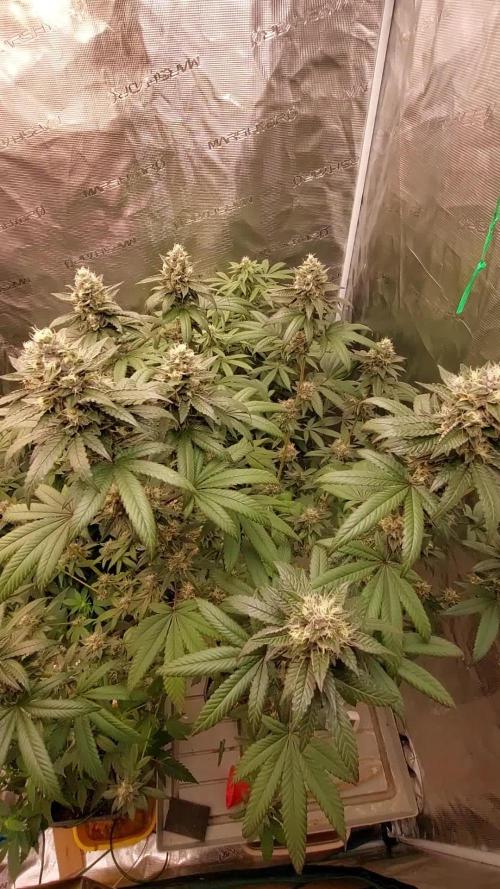
Finally harvest time arrived 🤗
It’s been a great run, though I had to improve a lot along the way. But as usual there was a way to get things done and finished up😎
After a long heatwave I decided to chop the whole tent, just a bit before I actually wanted to. But I see amber trichomes and heavy buds, so I think it’s safe to chop now, so here we go. 🤩
Can’t wait to taste this after so long watching over it🤤
More details to come.






@fubar_1337
Follow
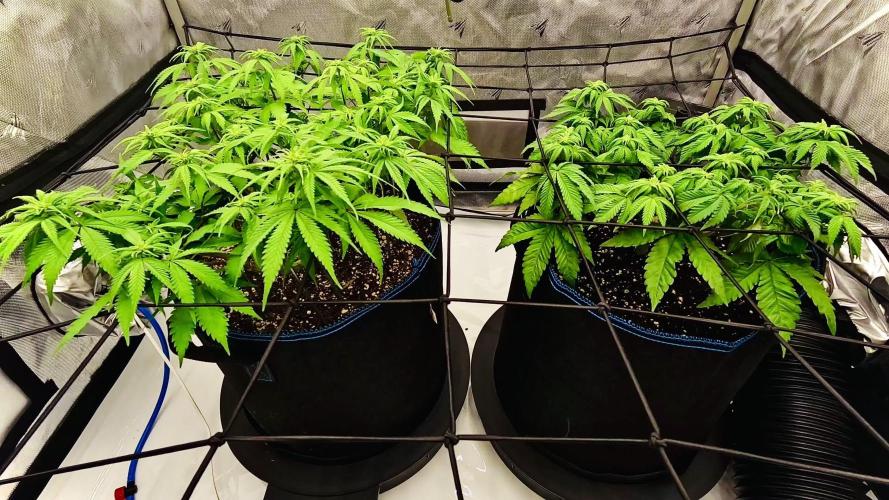
This week was marked by stable climate control and healthy plant response after the recent transplant. The SCROG net was maintained, and light defoliation was performed on the larger plant to open up the canopy. The smaller plant, though bushy, was left mostly intact to avoid over-stressing after transplant. Both plants showed daily leaf movement — reaching for the light during the day and relaxing at night — a sign of good turgor and rhythm. Environmental conditions stayed well within target, with VPD averaging around 1.14 kPa during the day and 0.92 kPa at night. On Sunday, a corrective action was taken to address minor color variations: the feed was adjusted to include the full bloom-phase nutrient mix at 75 % strength. Spoiler: within 24 hours, the color balance already started to improve.
Reason for transplanting the smaller plant:
The smaller Special Queen was transplanted from an 11 L fabric pot into an AutoPot system to ensure more consistent watering and nutrient delivery during the bloom stretch. The original pot was starting to dry out unevenly, which risked fluctuations in moisture and root zone health. By moving it into the AutoPot setup, we aimed to stabilize its environment, promote steady root expansion, and allow it to keep pace with the larger plant under the SCROG. The transplant was carried out carefully to minimize root disturbance, and the plant showed no signs of transplant shock in the following days.


@Pedrojuan
Follow
Bueno, en el inicio de la fase de floración, hemos cambiado la solución nutritiva con ml x ltr , metí la red scrog y he notado que esta cepa se estresa con facilidad, tras el cambio de agua y nutrientes y la red quedaron full stress, poverine... Empiezan el fotoperiodo con mucho olor a vegetal y esto me hace temer que tendrán mucho olor los futuros cogollos... esperemos tener suerte también en este cultivo. Estoy muy contento, no pensé que gracias a ZOE SPACECAKE me iba a apasionar tanto cultivar el cannabis.


@LSchnabel
Follow
Same old same old. No changes this week at all. Having changed it up to watering every day has made a huge difference and this plant is really bulking.
My guess will be another 2 weeks till chop time.
The smell is very strong and when rubbing a leaf I still pick up a fruit smell.


@Ultraviolet
Follow
Its time to prepare for war. *Blows bagpipe*
FISH SH!T THE ORGANIC SOIL CONDITIONER (used twice before and always noticed instantly)
Fish Shit is a living product! It provides a complex Microbial profile that includes thousands of different species of bacteria, fungi, and protozoa. This profile is closer to a natural ecosystem than anything you will find on the market. Fish Shit helps release essential oils and terpenes which contribute to the building of a myriad of flavonoids. Flavanoids play a key role in the development of the most potent aromas and tasteful flavors of a plant and its fruit. Fish Shit contains beneficial microorganisms that help plants maximize nutrient uptake. It does this by transforming nutrients into more usable forms and keeping these nutrients in the soil longer. During photosynthesis plants naturally produce exudates (chemicals that are secreted through their roots). Through these exudates, plants can attract the types of good bacteria that are beneficial to them at different points in their growing cycle. These good bacteria cover the roots and act as a barrier to the invasion of disease-causing organisms that may harm the plant.
What Are Enzymes?
Before we dive headfirst into how, exactly, enzymes can benefit cannabis plants, it helps to understand a little about what these microscopic proteins do. Essentially, enzymes facilitate chemical reactions. They do so by binding with a substrate and forming or breaking molecular bonds. In this context, the substrate is the molecule upon which an enzyme acts to boost the efficiency of a reaction.
•substrate /sŭb′strāt″/
•noun
•The material or substance on which an enzyme acts. A surface on which an organism grows or is attached. An underlying layer; a substratum.
Enzymes are proteins with complex 3D shapes that feature regions called active sites. When the substrate binds to these active sites, it forms an enzyme-substrate complex that causes a chemical reaction to take place, temporarily changing the structure of the enzyme and ultimately causing molecules to either come together or break apart. As a result, molecular products are released, and the enzyme returns to its original shape.
Specific enzymes are capable of binding with certain substrates, as the substrate fits into the active site more or less via a lock-and-key principle. Although, new research suggests a more accurate theory of "induced fit", in which enzymes and substrates undergo structural changes to facilitate the reaction.
If you take the human body as an example, we have an abundance of enzymes in our saliva and digestive system. These molecules bind with substrates in these regions (food particles), working to break down the food we eat into usable parts before converting them to energy.
Enzymes in cannabis work in a similar way to the example highlighted above. Typically, enzymes occur in soil naturally, but if your soil mix is lacking organic material, or you're growing hydroponically, then adding enzymes directly to the substrate is crucial.
By using them in cannabis growing, enzymes not only help break down essential nutrients into smaller, more readily available pieces, but they also support the digestion of dead root cells, clearing a direct path for nutrients.
Overall, enzymes make it easier for your cannabis plants to absorb all the elements they need to reach their full potential. For growers, a plant that reaches its full potential means a bucketload of juicy buds come harvest. This is essential if you want to reuse a pot with old systems left over like mine.
Common plant enzymes include:
•Cellulase
•Xylanase
•Beta-glucosidase
•Hemicellulase
•Amidase
Amino acids are a crucial, yet basic unit of protein, and they contain an amino group and a carboxylic group. They play an extensive role in the gene expression process, which includes an adjustment of protein functions that facilitate messenger RNA
Nitrogen, phosphorus, and potassium are the three main pillars of nutrient solutions and fertilizers, but there are countless other nutrients that your cannabis plants need to produce the best possible harvest. Amino acids are one of them.
You may have noticed that amino acids get a lot of attention from bodybuilders and other athletes. That’s because they play a key role in the synthesis of protein, which, as you probably know, is super important for sports recovery and muscle growth. Amino acids are the building blocks of protein and the foundation of both plant and animal life.
But what do amino acids do for cannabis?
WHY IS PROTEIN IMPORTANT FOR CANNABIS?
Just like proteins are important for the human body, they are equally important for the growth and development of plants.
For example, proteins help plants:
•Facilitate the growth of intracellular plant structures
•Promote energy generation
•Stimulate metabolic processes
•Facilitate the absorption and transportation of nutrients
So, where do plants get these vital proteins from? Well, unlike humans, plants can’t source proteins or amino acids from other organisms. Instead, they need to create their own amino acids, and then use these to build protein. That's why gardeners, much like athletes, go wild for amino acid supplements.
Amino acids help plants by…
• Increasing their production of chlorophyll, which ultimately improves their ability to photosynthesize
• Serving as an easily absorbable form of nitrogen
• Stimulating the synthesis of key vitamins
• Improving their resistance to pests and diseases
• Boosting the strength of their cells
Amino acids also serve as the precursors to auxins, a group of plant hormones produced in the meristems—the apex of the stems where new leaves and stems are born.
Auxins play a key role in the plant, activating genes for plant growth and development by triggering a multitude of vital plant functions. In other words, they determine what its size and architecture will look like. Auxins influence the development of branches, flowers, and roots, and even help to regulate the photoperiod response of the plant.
Some amino acids, like cysteine, also work together with antioxidants like glutathione to help cannabis plants deal with oxidative stress, which can be caused by high-intensity lighting, some nutrient solutions, and high levels of CO₂.
Unlike humans, plants can synthesize all the amino acids they need to survive and develop properly. Unfortunately, however, amino acid synthesis is a really high-energy process, and plants may struggle to produce enough amino acids when exposed to stress.
WHAT FACTORS AFFECT A PLANT’S ABILITY TO SYNTHESISE AMINO ACIDS?
Any kind of stress can affect a plant’s ability to produce enough amino acids.
This includes:
• Drought
• Temperature extremes
• Poor soil health
• Pests
• Diseases
• Poor lighting
• Lack of space
• Poor root health
WHAT DOES ALL OF THIS MEAN FOR WEED PLANTS?
If you want to push your plants to their extreme in terms of floral growth and resin production, you should look into amino acid fertilizers. By making amino acids readily available to your plants, they’ll be able to use crucial energy to grow and bloom, rather than focusing on synthesizing amino acids themselves. Game of Inches, this is another Plants can absorb amino acids via their roots and leaves. They can also benefit from amino acids during both their vegetative and flowering phases. The fastest way for plants to absorb amino acids is via their leaves. The foliar application of amino acids is believed to improve the transportation of nutrients, increase transpiration, and boost photosynthesis. Hence, I recommend feeding your plants with foliar amino acid fertilizers. When doing so, however, carefully measure the amount of fertilizer you use, as—like with any nutrient—overfeeding can damage your plants.
FOLIAR FEED AND SOIL SOAK
• 1 crushed queen anne carrot
• Add 2 tbsp of NPK Raw powdered water-soluble cane molasses
• 20ml h2o2
• 1 crushed radish
• 0.25 tsp NPK Enzymes
• 0.25 tsp NPK Amino Acids
• 50ml coconut water ( nature's own amniotic fluid packed with amino, enzymes )
+ The sound of songbirds.
Onto the predators
1250 -Green Lacewings
Lacewings are extremely voracious predatory insects that feed on several pests. In adulthood, it feeds on pollen and nectar. In the larval stage, it feeds on aphids, thrips, and mealybugs at all stages of growth. It can also attack spider mites in moderate quantities. It is initially an aphid predator, but very effectively controls thrips and mealybugs infestations. It is so voracious that in the absence of prey, it will feed on its congeners. Lacewings are cannibalistic if there is no food available for them. It is therefore important to introduce them into an infestation situation, and not just preventively.
•congener /kŏn′jə-nər/
•noun
•A member of the same kind, class, or group.
•An organism belonging to the same taxonomic genus as another organism.
•A thing of the same kind as. or nearly allied to, another; specifically, in botany and zoology, a plant or an animal belonging to the same genus as another or to one nearly allied.
Ideal temperature 20°C – 26°C
Ideal humidity 60% – 70%
Predatory stage life cycle 21 days
Introduction rate 4 weeks
Storage Refrigerator
Use Immediately
Are there any specific instructions on how to use this predator?
Lacewings are available on small paper cards that you can hang to plant stems. On the cards are dozens of eggs ready to hatch. There are also sterile eggs they can feed on once they have hatched before they are ready to disperse in the foliage. It is important to use them quickly upon receipt to avoid cannibalism. If you don't use them right away, you can store the cards in the refrigerator for 24 to 48 hours to prevent the eggs from hatching too quickly. Avoid storing them for longer than this or you risk losing eggs. 1250 eggs are divided into 7.5 cards, 2500 eggs on 15 cards, and 5000 on 30 cards. The application rate is one card per square meter of growing surface.
Is this predator best used for preventive or curative treatments?
Lacewings are used as a curative solution.
Anything else I should know?
Lacewing eggs hatch approximately 24-72 hours after the cards are exposed to room temperature. When they emerge, the lacewings are just 1.5-2 mm long. They are very small so they are difficult to see. Once hatched, they will stay on the cards for a few hours and then disperse in the foliage. You quickly lose sight of them if you have not witnessed the hatching.
They then live in the foliage for about 3 weeks. Often, you will see them towards the end of their larval cycle. After feeding for 3 weeks, they will triple and even quadruple in size. At that point, they are easier to see. But they remain very discreet insects, it is not abnormal not to see them.
Egg carcasses left behind on the cards do not disappear after the hatching has happened. It's normal to see eggs still on the cards. Visually it is very similar before and after hatching.
Also, on the boxes, there are sterile ephestia eggs which are used to feed the lacewings once hatched. Not all lacewing eggs are viable either. Only a certain percentage of lacewing eggs will hatch. Once hatched, the eggs are white. You can observe this using a magnifying glass.
With,
5000 Stratiolaelaps Scimitus
It is used to prevent or control thrips pupae, fungus gnats larvae, and root mealybugs in the soil. It can also be used for red mites in bird farms or hen houses. The adult is about 1 mm long and is medium brown with a beige triangle on its back. Another fun fact about them is they can survive without prey. They can eat algae and plant debris. This is why they can reproduce and stay in plants for long periods.
Ideal temperature 15°C – 23°C
Predatory stage life cycle 18 days
Introduction rate 2 weeks
Storage Room temperature
Use Within one week
Are there any specific instructions on how to use this predator?
Sprinkle directly on the growing media. They can live in all types of substrates like potting soil, coconut fiber, rock wool, cedar mulch, etc. Stratiolaelaps establish easily so they are permanently fighting pests. One introduction is generally enough unless you have an infestation. In this case, introduce them at least twice at a 2-week interval for best results. If you grow your plants in a 100% mineral substrate, it will have to be released more often since there is less organic matter than in traditional soil.
Do I need to take any specific precautions?
Stratiolaelaps breed in the top layer of the soil. So it is important not to disturb them in the first days following their introduction. They don't like temperatures below 8 ° C. So be sure not to introduce them in a water-saturated or cold environment. Release them 24-48 hours after your last watering. They are very sensitive to chemical acaricides and diatomaceous earth. These methods are incompatible with their use.


@Bluemels
Follow
Tag 21 war es zeit die Shogun umzutopfen und sie in ihr eigenes Grow Zelt umgezogen 😁
Schon an Tag 22 konnte ich die Pflanze bei 4 Nodien toppen 😃


@Naujas
Follow
when I came, I saw it blooming, which I did not expect.. the weather was gloomy, little sun, and quite a lot of rain, its stem is tall, but at the same time strong :) we will wait for ripening :).

shorts_status_processing


@Platinouuu
Follow
Seguimos en este lindo caminar con mis hijas! ya prontito a probar el fruto.



@NAG420
Follow
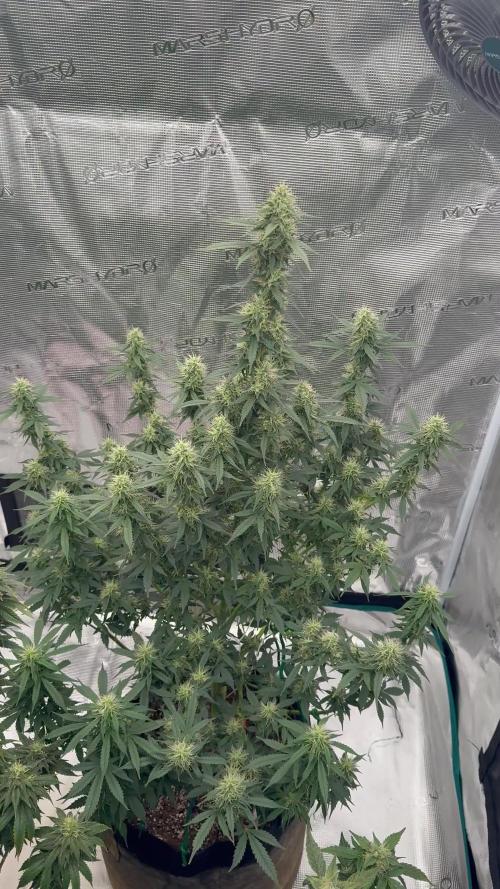
Wow she is getting bigger and bigger she is in the start of 11th week still have some time due to a mess up earlier on the grown I snapped the main branch lower part will post pick how the recovery took but slowed her down by two weeks or so. I really like how she is turning out 1st time using theseedconnectusa from AZ money will spent with the nice recovery and she still got bigger.


@GreenthumbJacobs
Follow
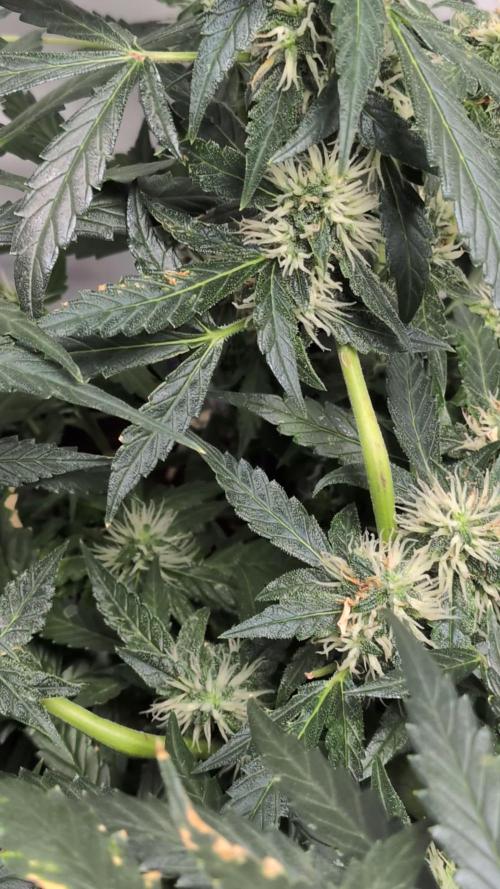
Heute geerntet und wow! Tag 83 und sie riecht so fruchtig ! Die trichome haben eine schöne gelbliche ,milchige Farbe.
Sie hat nass 352g auf die wasge
Heute den groben Trimm gemacht und gewogen. 105g und sie riecht so brutal gut und voller trichome



@wolfvb
Follow
The Final Countdown 🥦✨
Strain: Sticky Broccoli Automatic (Zamnesia Seeds)
General Observations:
We have officially hit Week 11, and the "Sticky Broccoli" is living up to its name! The buds are now noticeably denser and covered in a thick layer of frosty trichomes. The scent in the tent has intensified expecting those signature sweet and spicy floral notes to really pop now. Most of the pistils are beginning to turn that deep orange/brown and curl inward, signaling we are getting very close to the finish line.
Plant Health:
The canopy remains a healthy dark green, though I'm starting to see some natural "fading" (senescence) as the plant directs all its remaining energy into the flowers. The minor nutrient tip burn from last week hasn't progressed, so dialing back the feeding slightly was the right move.
Nutrients & Environment:
Nutrients: Following the Eternity Cup requirements, I’m still utilizing Plagron Green Sensation to maximize the bloom and resin production. I have reduced the base nutrients (Nitrogen) and am focusing on P-K to help the buds put on their final weight.
pH: Keeping it steady at 6.0.
Training/Maintenance:
No more LST at this stage; she’s locked into her shape. I’m just doing some light "leaf tucking" to ensure the lower bud sites are getting as much light as possible for the final swell.
Next Steps:
I’ll be watching the trichomes closely with the loupe over the next few days. I’m looking for that perfect mix of milky and a hint of amber before I start the final flush.
Grower Note: The Kewpie guards are still on duty and the vibes in the tent are at an all-time high! 👶✌️


@CanadianFillmore
Follow
Week 8 begins for mandarin dreams and divine storm. All four ladies are frosty, sticky and the mandarin smell is incredibly strong.
I love how these girls look and are growing under the TSW2000, they look better than round 1, grown under my own custom Samsung strip's.
Thank you Mars-Hydro for the light!
Thanks for stopping by growfessors 👽🌳💚


@field_nigga
Follow
had a little problem with watering I hadn't done it in a whole week so the plants looked really dehydrated but then I watered them and now they look fine though I honestly really did have to remove a lot of dead leaves sadly...I don't know if it's time to harvest I'm not sure cuz the trichomes look pretty cloudy and so do the hairs looking all brown yeah


@AERO_Grower
Follow
5° Semana- Aeroponía - Están muy bellas las raíces, están 100% sanas. Se realiza poda apical al quinto nodo,una pequeña defoliación y luego se aplica LST a las más grandes, muy contento con el crecimiento actual.
---------------------------------------------------------------------------------------------------------------------------------------------------------------------------------------------------------------------
5th Week- Aeroponics - The roots are very beautiful, they are 100% healthy. The fifth node is topped, and a little defoliation and then LST is applied to the largest ones, very happy with the current growth.


@Siriuz
Follow
Hey guys how you doing?
Time to add some stuff to this diary!
She is doing great from start
Very good each one of them #seedsmanseeds
Is really one of the best banks out there
I mean for real QUANTITY and good high
Yo I am glad I found you guys
Plussss well we gonna add more nutes eventually, just in a week or so
Around 600 would be alright tho....
Aight brothers blessings
Gonna keep working
UPDATED 06/07/2021
DOING SUPER GOOD THO
SHE IS GROWING GOOD
RESPONDED GOOD TO LST
PROBABLY GOING TO F. I. M HER SOON
ADDED NUTES EVERY 24 HRS PLUS WATER
AROUND 350/450PPM top.
200ml/350ml every 24/48hrs
Just keep them wet!
If you know what I mean
Never dry never let them dry completely
Unless you plan to stress her a lot
Keep showering always in circles
Like going around slowly
If you do it manually like me
And leave the center main trunk last when watering
Thanks a lot for your support
UPDATED 06/12
YOOOO SHE IS AWESOME
AND GROWING FAST
Check out the lastest week for more stuff


@santos45
Follow
I have noticed the two bigger Plants the EC was lower then the recommend and the soil PH was around 7.0. I have this weekend given more Bio grow for just this two plants and PH the water at 5.5 to lower the PH as the Advance silica when in the flex tank the PH goes up very quickly. I have change to only give Advance Silica when top feeding.
Flashed one of the plants as PH was 7.6 and EC 2.4 today.


@Lil_Queazy
Follow
Well it’s the beginning of week 7. Still now flowering ??? Not so speedy after all. A few of them have stretched a lot. Hopefully that means flowering soon. It’s going well other than one plant out of six that’s doing poorly. It looks ok.


@Mr_McNasty408
Follow
Day 43 (1/18/21)
Nutes:
Veg A: 4.6 g/gal
Veg B: 3.1 g/gal
PPM: 1350
Water temp: 63°F
pH: 5.8
Day 44 (1/19/21)
I’m sure my plants have salt buildup, that’s what I’m assuming from leaf symptoms. Starting to flush at lower strength.
Nutes:
Veg A: 3.07 g/gal
Veg B: 2.07 g/gal
PPM: 775
Water temp: 64°F
pH: 5.8
Day 45 (1/20/21)
Checked ppm of runoff and am very embarrassed it took me so long to diagnose🤦♂️ Runoff was 2000ppm
Nutes:
Veg A: 3.07 g/gal
Veg B: 2.07 g/gal
PPM: 775
Water temp: 64°F
pH: 5.8
Day 46 (1/21/21)
Nutes:
Veg A: 3.07 g/gal
Veg B: 2.07 g/gal
PPM: 775
Water temp: 64°F
pH: 5.8
Day 47 (1/22/21)
Nutes:
Veg A: 3.07 g/gal
Veg B: 2.07 g/gal
PPM: 775
Water temp: 64°F
pH: 5.8
Day 48 (1/23/21)
Plants seem to be making a comeback
Nutes:
Veg A: 3.07 g/gal
Veg B: 2.07 g/gal
PPM: 775
Water temp: 64°F
pH: 5.8
Day 49 (1/24/21)
Plants starting to look very good and healthy again 💪
Nutes:
Veg A: 3.07 g/gal
Veg B: 2.07 g/gal
PPM: 775
Water temp: 64°F
pH: 5.8