


Likes
Comments
Share


@Mrg7667
Follow
Day 74 and there getting chopped today! I thought the harvest was going to be broken into two separate weeks considering the times on the Choco was listed about 7-10 days sooner then the DD (wich was listed at 70 days for flowering)
However looking at the tricombs on the Chocolate Marshmallow most pheno didnt start getting amber untill the DDs did as well! A couple DD pheno could have maybe gone a couple more days but we will see!
Going for reveg on all the pheno, since i didnt get to take any clones. We will see how it goes!

Likes
4
Share


@QixxGrows
Follow
Using 2 seeds in a luke warm water shotglass. Placing in cupboard to germinate.
Day1: Nothing yet
Day2: One of the seeds started to sprout. Showing it's sexy little tail. I'll monitor the growth in the next 24hrs and then decide whether she's ready for the sproutling pot or not.
Day3: Tails were looking pretty good - forgot to take a photo :/ roughly 1cm for one of them, which is the one that I decided to plant. It really hurt when I chucked the other seed, but I really only need one plant. Soil mix for the sproutling: Coco Coir - 70%, Vermiculite - 15%, Perlite - 15%. I also added Greenhouse Feeding "BioGrow" and Mycorrhiza. The picture was taken from my RPi + Cam setup that will be taking 2 photos/min. I'll post the timelapse at the end of the day.
Day4: Running the whole day in the tent with ventilation running minimally. Light only at 20%. No action, so I deleted all the pictures except for the last one taken before the lights went out.
Day5: No activity above the soil level. Probably spent the whole day focusing on root growth.
Day6: At around 09:20 I watered again and with this uncovered the first signs of life! The rest of the day was mostly uneventful - until the evening. Roughly 2hrs before lights-out she started to move.
Day7: Things starting to look really good :)


Likes
9
Share


@JakeTheButcher
Follow
The stretch continues...It appears buds are setting and forming up quite nicely. I couldn't take watching the side with the vivosun bulb keep lagging behind more and more from the hortilux side, so I switched the bulb out. And within 3 days the jump in plant size was huge.
The aroma is getting slightly stronger by the day.
This is the last week with the early bud booster in the system. I have been putting the next weeks nutrient solution in my top off tank to steer the nutrients. It seems to work great!

Likes
22
Share


@GrowAndSmoke
Follow
Start of week 5, both are stretching now.
(Day 36)
Today i watered both 2.5L with nutrients (Day 37)
Watered 2000ml today and also did some LowStressTraining. It was a little to strong an girl #1 (Day 39)
Watered again 2500ml with nutrients. (Day 41)

Likes
7
Share


@Cultivatorcarlos
Follow
everything in the second week of flower went well. she really stretched and the buds quickly started getting fat. also every watering i would notice a very strong odor of weed.
december 22nd 2021: gaver her last half of gallon used in last feeding. also nothing was tested. ph tested at 6.6 last feeding and it usually comes out a little higher after a few days.
january 1st 2022 i noticed the first trichomes.

Likes
Comments
Share


@PrinceOfHerbs
Follow
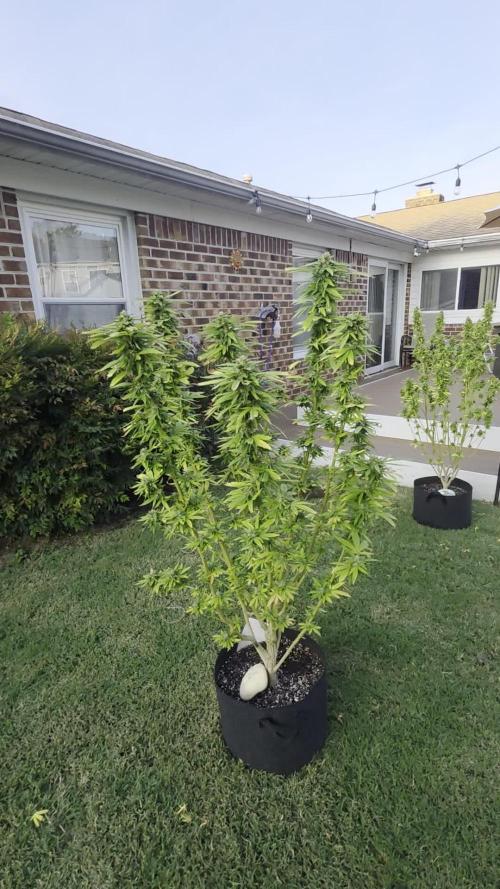
The plant looks quite healthy.
It is stretching a lot, so a net will be stretched over it next week.
Day of flowering: 5
Likes
Comments
Share

@Tponyou
Follow
Almost there,
had some stem rot on one of the branches so I had to cut it out, over all coming along. Still lots of clear trichomes on the lower buds


Likes
16
Share


@GutterHoe
Follow
Week wound down without any issues. I'm thinking that it's almost harvest but the times not right if it's a pheno. 4 weeks early. Could it be an auto? Please look at my tri pic and comment if you think it's harvest time.


Likes
3
Share


@Knowitall
Follow
This was just a temporary stage where I put the plants on a wilma to keep em watered n growing nicely while I built my table for them, not much went wrong this week.. the other little ens are in the little veg tent as well waiting to be potted up into there final home


Likes
4
Share


@gottagrowsometime
Follow
Welcome to my Wedding Cake, Freebie from Zamneisa.
0-35 Days. Week 0-5
She has a lovely shape. Grew very quickly.
Has that distinct from all the other Wedding Cakes I've seen here. Looking at other diaries. And after looking at this in my seed storage. I said let's go with it.
Possible 25% THC
all in the end of pics.
Lovely leafs, strong roots. No dying leafs. Has a lovely root ball. As she's in an 11L pot now as she was such a fast Grower out of the fems. Just behind Green House Seeds Lemon Orange. But, she's catching up. Soon I'll put her to LST, last Defoliation and will put her to the flip.
I was using power buds. And my god. So many stems with shoots. Tbh, I ended up removing a lot of those extra stems that were on my autos. It really does work. If you've the time. Which to bring all those nodes to full flower, would of added weeks to my grows. With this. She's a fem. I've removed at lot below and has long stems with a good few shoots, making for what should be some big tops (huge tops) by feeding right and with proper lighting. Also I've a trick by adding nearly 2 extra hrs during fattening with FAR RED 730NM which puts fems to sleep in 5m after 5-10m after a dose. Also have UVA for ripening.

Likes
249
Share


@Metatronix
Follow
A big hello to all the cannabis growing gardeners...and all the other visitors that came across my grow journal.
I'm a little bit late with starting this grow because the plants will finish around end of december or so, so i'm basically counting on a warm december :)
It was supposed to start earlier, and I did germinate 11 seeds last month but only three of the lot sprouted out, it was totally my fault and i did abort that grow so we could start with a clean slate and at least four plants....so here we are ;)
All three Do-Si-Dos seeds popped after 36 hours in a glass of water and after planting them in rockwool cubes all of them sprouted.
My original plan was to grow Kalini Asia and all of the Kalini Asia seeds popped after 36 hours in a glass of water, but thanks to my thick awkward fingers the little seedlings were manhandled by my big hands and non of them came out from the rockwool cubes...my fingers are killers to most of my little sprouts :/ Sorry for that Zamnesia.
We were gifted Do-Si-Dos and Kalini Asia seeds by Patricia from Zamnesia 🙏
Thank you Zamnesia, for giving me the opportunity to try out your stock. It's the first time we get to grow a Zamnesia cultivar.
https://www.zamnesia.com/uk/7686-zamnesia-seeds-do-si-dos.html
https://www.zamnesia.com/uk/5165-zamnesia-seeds-kalini-asia-feminized.html
This whole grow's main sponsor is Spider Farmer and as such I added a video of unpacking one of the parcels I got from SF.
Here are the links for people interested in the Spider Farmer products that are presented in the videos:
https://www.spider-farmer.com/products/spider-farmer-30w-uv-led-grow-light-bar/
https://www.spider-farmer.com/products/spider-farmer-30x-60x-jewelers-loupe-magnifier-for-led-light/
A big thank you to Jessie and the whole Spider Farmer crew for supporting my effort to grow the best cannabis I can.
Let's get this started already!
Thank you for your visit, please leave a like and hope to see you beck here in about a week.
Likes
1
Share

@Northern_Ent
Follow
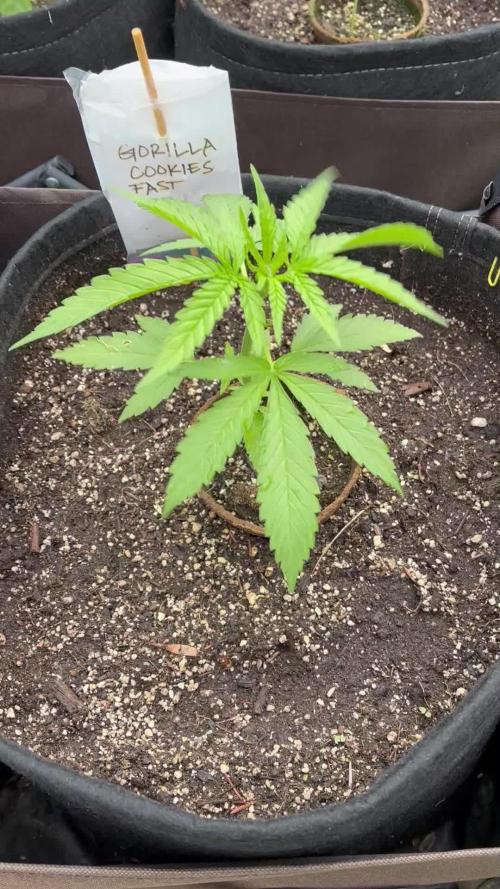
June 6 Day 36: last week was cool and rainy but growth will pickup here soon with warmer temperatures and direct sunlight. Will top it tomorrow to start the manifold. This will be a 16 cola manifold.
June 8 Day 37: plant had five nodes and I topped it back to third node and then removed lower growth tips and small leaves. This is the first of four rounds of topping needed to get 16 colas.
Likes
12
Share


@Chucky324
Follow
Hello. This is the end of week 3 and the beginning of week 4 of flowering.
Plants are finished stretching now and on their way towards fattening up.
The resin has started to flow now and I can see some on the edges of the upper fanleaves. Good sign.
I showed in the video that I blast oxygen into the reservoir water before the pump turn on. They get 3 minutes a day of solution
The 15 gallon reservoir will last 6 days if I do it that way. And I change the reservoir solution and clean on the seventh.
I water with rain water when they get dry. The rainwater here is around 6.5 ph. And It's soft water too.
It's been a cool spring here, but next week the high temps are coming.
I'm going to have to put up some shade cloth on the green house then to try to keep the temps down in there..
OK. Be Great.
Chuck.
Likes
11
Share


@Hickhhdgk
Follow
All looks good with this freak, starting to get big. Has more than doubled in size in 10 days, think I might have upped the feed a bit soon and got a bit of nute burn so back down a bit and seems to be fine. Gonna have to thin her out a bit as she is hella bushy. 🔥🔥🔥🔥🔥🔥🔥🔥🔥

Likes
Comments
Share


@Kevin_grows_hard
Follow
Honestly it feels to me like they took a couple finos of one plant and that's what they sold you. Couple of the plants came out a real fruity smell a couple of them came out a real dark gassy smell, what's crazy is I did the animal cookies and kept them separate and then I did the space cookies and kept those separate and one of the animal cookies and one of the space cookies turned out fruity and then one of the space cookies and one of the animal cookies turned out dark gassy smelling. That's why I think they just threw in a handful of phenos and called them whatever. Ordered from cookies/ lemonade for next crop. Better genetics better crop. I used LED for all of this made by Vipar Spectra the xs1500. This grow had nutrient lock out at one point hence the weird colors had to flush. Happy growing everybody!
Also anyone looking into emerald harvest I highly suggest it It's the closest thing to all natural while still providing all nutrients. This was all grown in soil so I would advise not to use as much and don't mix brands, Stick with one whole solution and try using coco, much better results in my opinion faster nutrient uptake. Coco is the closest to hydroponics without having to water constantly.

Likes
Comments
Share

@ThreeLittleHerbs
Follow
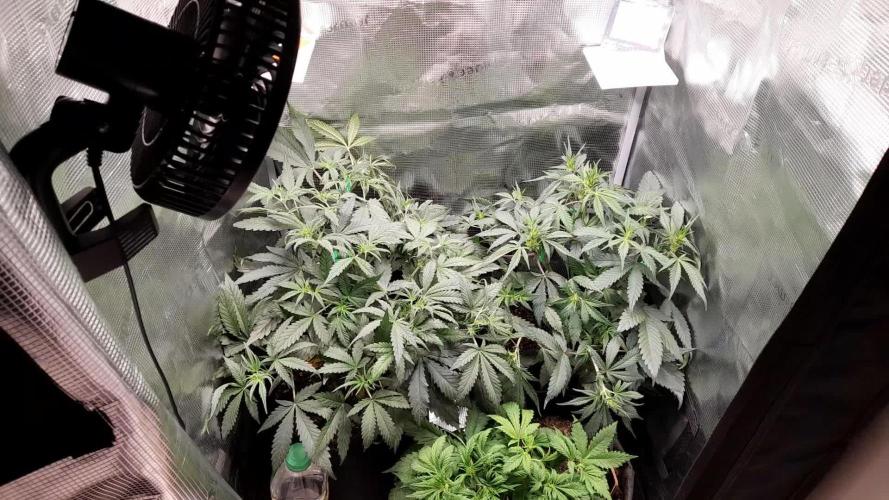
I had no pictures of week 4, s now it's 10 days later. The plants are now 1 month and week. Applestrudel (left) and Strawberry-G (right) are close to start to bloom and already stretched a bit. I tie down the outer branches to get more light inside. 😇
Lemon Cherry (in the front) is still has thin, light-green leaves and a short and compact structure. The most branches don't get enough light, but they are too small to tie down. 😑
Light is on 100% - 100W