Likes
Comments
Share


@Neo86
Follow
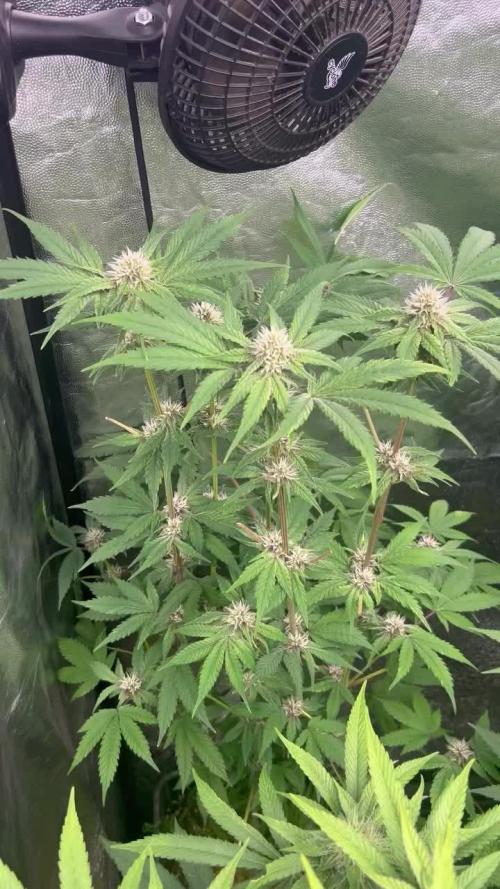
Quick little video tour today. I'll sort a proper detailed update a little later this evening ☺️
🌱✌️😉🤘🌱
Front row, left to right:
Phantom OG, Wedding Cake Auto, G13 x Blueberry Headband.
Back row, left to right:
Glookies, Ayahuasca Purple, Peyote Cookies.
The only girls receiving the Force nutrient are the Glookies and the Wedding Cake Auto but from now on, I'll only be feeding them plain water to cleanse them as much as possible before harvest. The rest of them still have a couple more weeks of feed before changing anything else 😎

Processing
Likes
8
Share


@GrownwithLED
Follow
After defoliating both Barbarian (=AK-47 x Barbara Bud) plants after week 11 they now develop more and amore flower clusters, since the light can penetrate deeper int the canopy now. The plants are producing trichomes like crazy, even the bigger sugar leaves are covered in them! VERY FROSTY PLANTS! The flower clusters clearly form colas now along all side branches and both plants fill up nicely. The smell is now strong and sweet with a clear peach aroma to it, it makes me smile every time I look into the tent. The plants love the Advanced Nutrients feeding schedule and are getting the recommended dose every watering.
Processing
Likes
1
Share


@DRAZ_420
Follow
This plant shot up out of no where and is definitely gonna keep getting taller. I dont think ill do any training on this plant since it seems kinda short want it to get really stocky. The smell is already appearing which is way cool at 4 weeks i think thats impressive. Probably has to do with the sweet candy nutrients.anyway happy with the progress hopefully things stay great

Likes
3
Share


@HowtoBubatz
Follow
The first week of vegetation is here, and it’s been a bit of a mixed start for my two plants.🌱
One of them is looking a little droopy, while the other has developed slightly yellow leaves.
I’m not entirely sure what’s causing these issues, but I’ve decided to give both plants their first dose of nutrients to help prevent further damage and hopefully get them back on track.
I’ve been checking on them daily and keeping a close eye on their progress. I’m staying hopeful that they’ll bounce back and show improvement by next week.🌱


Likes
4
Share


@603grower
Follow
The terps are finally here all three Saturns have a similar citrus pine-Sol . Extremely loud. And both gas cream cakes have a sweet candy like aroma. Earlier in the week a did a small top dress with terp tea bloom. I wish I waited on it because they need their last big top dress now as well and I don’t want to over do it seeing how they are looking great. A lot of purple is comming out of the gas cream. I don’t believe it to be a deficiency . I think it’s just genetics. I think this will be my last run in small pots I think I’m going to move on up to ten gals. Now they girls are drinking everyday or every other. This week I will do there final top dress


Likes
5
Share


@Mancha
Follow
17/08 - I had a 5 days travel, which worried me a little, mainly because my irrigation system did not arrive in time. But when I came back the plant seemed very healthy. The medium was dehydrated but as you can see even after some defoliation the plant continues to be very bushy.
19/08 - Very wide canopy! I have a 60x60cm tent and half of it it's taken by the Gelat. Og. Had to rearrange the tent. The Gelat. OG is little bit ahead of the other plant.
21/08 - Did defoliation to open more the canopy.

Likes
38
Share


@Chucky324
Follow
Hello. This is the end of week 9 and the beginning of week 10 of flowering.
Got 1 week of flushing done. I'll give the 3rd flushing tomorrow and and I should get another in before the harvest, starting on Aug 5, a Monday.
In years past, it's taken about a week to cut it down, hang the branches for a few days and then put the buds into curing bags.
Getting yellow leaves because of the flushing and there is another week to go so there will be more yellow leaves.
That's Ok. I think if you mistreat them a bit, you gets more THC at harvest.
The 3 plants I have inside were wilted when I checked on them. With the heat they went through their water faster since the last watering.
Now they have got lots of yellow leaves, especially Plant #8b. That twin has been a little strange since the start. Oh well?!?
The inside plants are a week behind the ones in the greenhouse and they will be harvested after I've finished in the greenhouse.
Showed some of my flowering peyote. They are self pollenating and the oldest is about 20 years old.
Finished book 5 of Weirdo. I've got more Freak Bros. comic books for the next diaries which will be Pink Kush and Death Bubba from weedasecgenetics.simdif.com/ or weedasec.org/
OK. Keep Growing Straight.
Chuck.


Likes
199
Share


@Teamdirtbag2
Follow
The autos are flowering and just loving the sun. They are drinking daily. What a difference the sun makes.
The others are moving soon. Gorilla is ready.
Slurricane is ready to be cloned. So I must find time to set up the cloner. Maybe I'll go old school with it. Once I top her she will start branching. This is what we need more clones.
I've been having trouble with seeds, got some more coming. I just dont have the time or energy to take care of them. That is obviously the problem here. The fluctuating humidity from 10% to 99% doesn't help.

Blue Gelato 41 · Barney's Farm
Gorilla Zkittlez · Barney's Farm
ShiskaBerry · Barney's Farm
CBD Lemon Potion Auto · Barney's Farm
Pineapple Express Auto · Barney's Farm

Cream Mandarine Auto® · Sweet Seeds

Foul Mouth · Dungeons Vault Genetics

Fire OG · Custom Breeder & Strain

Slurricane · In House Genetics

Moon Walker Kush · Spliff Seeds
Strawberry Lemonade · Barney's Farm
Purple Berry Kush · Spliff Seeds

Diesel Fire OG · Relentless Genetics
Spliffs Strawberry · Spliff Seeds
CBD Spliff Berry · Spliff Seeds
Citrus Farmer · Dungeons Vault Genetics
Tahoe Kush · In House Genetics
Likes
4
Share


@AustinRon
Follow
OG 4Q24 Flower Week 10
Orangegasm (Fem) [ IRIE Genetics ]
12/12 @ Bolt (Day 21)
Germination: 20 November 2024
#3A Earliest Harvest Date: 9 February 2025
#3B Latest Harvest Date: 19 February 2025
_________________________________________
Start of Week: [Wed Feb 12, 2024 CR2 4Q24 64:F:9:1]
End of Week: [Tue Feb 18, 2024 CR2 4Q24 70:F:9:7]
OrangeGasm Fertigation:
- MAX: EC: [ 1.6, mS]
- LightIntensity MAX: [ 850, µMol/m2/s]
______________________________________
__
Wed Feb 12, 2025
OG 4Q24 64:F:9:1
Refresh Reservoir
- Amount: [ 5, gal]
- EC: [ 1.6, mS]
- Primer A&B: [ 48, ml]
- SLF-100: [ 15, ml]
Reclaim Dehu
- Amount: [ 4, gal]
EC: 1.6
Runoff
- Amount: [ 1.25, gal ]
- EC: [4.3 , mS/cm2]
- EC∆: [ 1.6 , mS/cm2] # Danger!!! (I don’t think so - Happy Plants)
__
Thu Feb 13, 2025
OG 4Q24 65:F:9:2
Runoff
- Amount: [ 2, gal ]
- EC: [ 4.6, mS/cm2]
EC: 1.5
Refresh Reservoir
- Amount: [ 2, gal]
- EC: [ 1.5, mS]
- Primer A&B: [ 32, ml]
- SLF-100: [ 10, ml]
Reclaim Dehu
- Amount: [ 2, gal]
If we see the pistils of the last two plants shrink/collapse in the next 3 days, we may be ready Tuesday/Wednesday . . .
I also note we’re about 2 days after from OPTIMAL BUD Structure, Foxtailing is becoming less well formed at largest top and some of the sooner ready buds …
__
Fri Feb 14, 2025
OG 4Q24 66:F:9:3
EC: 1.4
1.5 gal dehu
3 gals+ refresh
Reduced Fertigation Time 50% as Tank is at refill after 4+ gal yesterday, again. :-{
__
Sat Feb 15, 2025
OG 4Q24 67:F:9:4
Reclaim Dehu
- Amount: [ 2.5, gal]
Refresh Reservoir - 2 Gal
- Primer A&B: [ 17.9, ml]
- Resin Bloom: [ 9, ml]
EC: 1.3
Runoff
- Amount: [ 0.5, gal]
- EC: [ 3.0, mS/cm2]
- EC∆: [ 1.7, mS/cm2]
__
Sun Feb 16, 2025
OG 4Q24 68:F:9:5
Refresh Reservoir - 2 Gal
- Primer A&B: [ 16.5, ml]
- Resin Bloom: [ 8.3, ml]
Runoff
- Amount: [ , gal]
- EC: [ , mS/cm2]
- EC∆: [ , mS/cm2]
EC: 1.2
__
Mon Feb 17, 2025
OG 4Q24 69:F:9:6
EC: 1.1
__
Tue Feb 18, 2025
OG 4Q24 70:H:9:7
1000
- Remove Plants from Tent
- Remove Drip Tray
- Remove Light
- found water unseen in bottom tray - the reason for unreasonable humidity
- Removed Drip Rings
- Dried bottom drip tray
- Resealed Tent - Low RH
_______________________
Harvest Log
Max Min Average
Height (in)
40 21.5 29.875
Weight (g)
700 157 385.5
Secondary Stem Count 30 17 21.125
Est Dried Trimmed Wt 140 31.4 616.8

Likes
18
Share


@Grower_Of_Persia
Follow
week intel:
its time to harvest some of plants the ones that is mature enough. indica dominant plants will done first always so we should harvest them first
because my base nutrients and one of boosters was salt based, i'll do flushing this week to get some relieve to plants in the last days
stresses :
flushing
Drought stress via watering only one time with flushing this week
feeding:
day 1 : i flushed them with Advanced Nutrients Flawless finish and adjusted ph
day 3 : no more feeding from now on
day 5 : no more feeding from now on
guide of the week :
i harvest in 2 parts : first i harvest top of the branches and will let the lower buds to ripe another week then ill harvest the second wave.
indica dominant plants will get done 1 or 2 weeks sooner than sativa dominant plants that will often takes more than 8 weeks so be aware to harvest them sooner.
my dry and cure style is this:
3 days of hanging upside down to get water activity lower to around 0.6 in 50% humidity and 26 C temp (i know its a little high but we are in a hot summer right now and i cant get it lower even with air conditioner) and then after 3 days of drying i remove leaves and stalks, trim buds and move them to jar for the rest of their life :D . and in the first 4 days of curing i open the jar door and let hem get some fresh air in the jar for about 5 minutes and close the jar door again, after 4 days of curing like that buds are smokable but they will get better as they getting cured about 1 month.
im happy as hell with this harvest :D.


Processing
Likes
9
Share


@Cultivators_Dream
Follow
Day 32: Well guys she is staying really short but she is growing strong. At first I was worried cause I hadn't seen any real change in height but when I looked at her I noticed even tho she was so short she was already on her 6th node. The space between each node is literally almost nothing they are so tightly stacked. Started to do some LST and she seemed to respond well so I'm just gonna stick with that instead of topping and mainlining( it was what I was originally going to do). I'm gonna let this lady veg out for a bit longer tho.. Keep stopping by for the latest updates ladies and gents and as always thanks for everyone's support 🙏 ❤️. Happy Valentines day everyone!
Likes
13
Share


@Dd_spgr2105
Follow
I am very pleased with this harvest, my buds are fragrant and very strong, I did not use too much of them, it gives me the ability to concentrate and think highly, the aroma and taste of mango and lemon. I have come very far with it. So great.
And happy grow.
Likes
3
Share

@Skunkiest_bender39
Follow
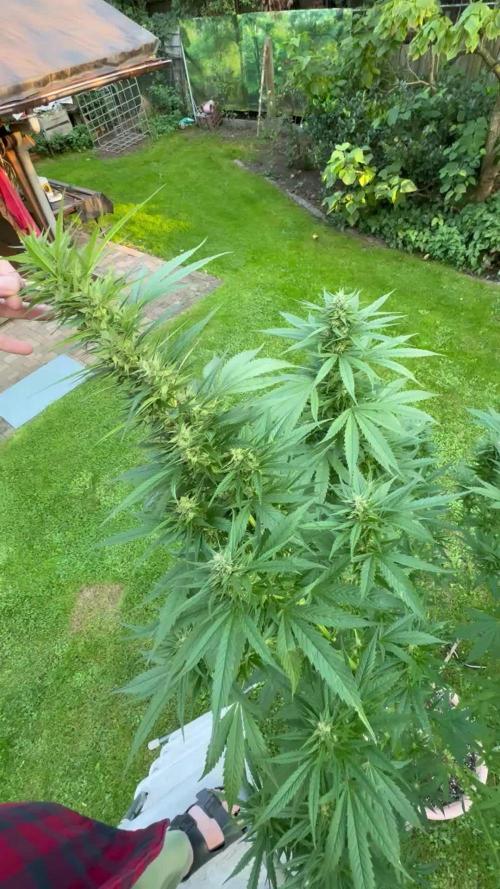
Umzug in Gewächshaus ist vollbracht. Die eine Dame ist viel zu groß geworden also bleibt sie solange draußen wie es nur geht! Die Damen im Gewächshaus haben ideale Bedingungen. Tagsüber bis 30* und um 30% LF. Nachts Heizung und Lüfter sorgen für 15* und ca 55% LF
Likes
19
Share


@Skinnytalls420
Follow
Day 68-16/02/22 I’ve harvested 6 of the 25 so far they are drying some more to come down over the next days all buds looking juicy and crystals everywhere!!!
Likes
13
Share

@Bread_n_Buds
Follow
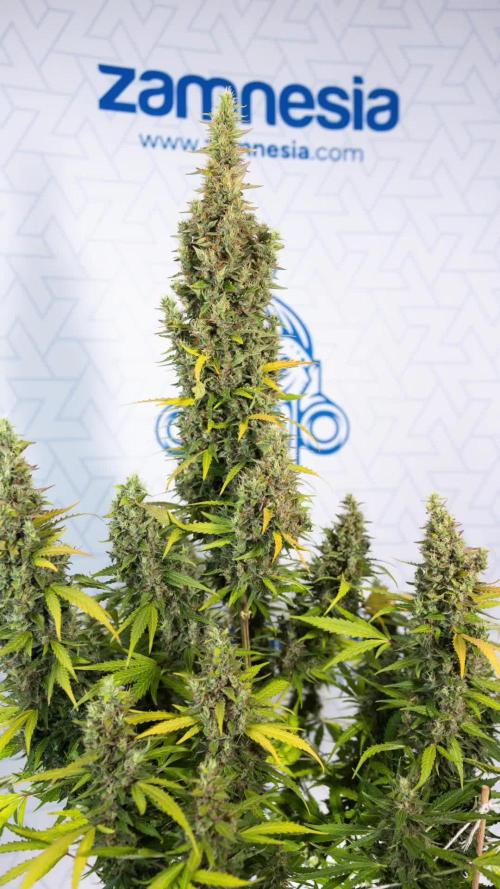
Our Karen Kush Automatic #1 is the biggest lady of this autoflowering series, reaching 130 cm (5.2 ft) tall and boasting a large yield.
The buds are plentiful and of high quality, both in the main cola and the periphery. We'll definitely exceed 100 grams in an 11-liter pot, which is excellent.
Maturity - The resin content is excellent. The trichomes are amber (about 20%), mostly white/opaque (40%), and several are still clear (40%). The pistils are 60% red, 40% red. I harvested slightly early because I wanted to preserve the most energy-dense properties of this plant.
The overall shape of the plant is truly splendid. It was harvested properly, perhaps a little early, but the important thing is to let it turn yellow, otherwise the flavor will be affected by the final, over-fertilized finish.
Techniques chosen: As mentioned, after a great LST plant, this one was left to grow, and it's a monster.
We're 100% organic and 1000% Plagron, as always.
The soil we've chosen is the recently launched Plagron Bio LightMix, which will allow us to start with smoother and more reliable watering, without the sudden changes that liquid fertilizers can cause. A week's worth of soil is enough, so don't overdo it.
Choose your preferred style and calculate your results on the website:
www.plagron.com
Visit the new Growshop area on the Zamnesia website:
Z - https://www.zamnesia.io/it/531-growshop
A high-yielding strain
above average!
Z - https://www.zamnesia.io/en/10783-zamnesia-seeds-karen-kush-auto.html
Z - Zamnesia Seeds - There's no need to complain about this strain: Karen Kush Auto will satisfy even the most demanding smokers with its dense flowers, fragrant terpenes, and high THC content. Created by crossing Monster Bud Kush, White Widow, and ruderalis, Karen Kush Auto boasts first-class genetics that leave no room for complaint. Inhale its sweet, spicy, and diesel aroma and enjoy the enveloping physical effect. After a few minutes, the only thing you'll want is a comfortable place to relax. And the best part is that you won't find this strain anywhere else, as it was created by the geneticists at Zamnesia Seeds.
Karen Kush Auto is a slightly indica-dominant strain, which manifests itself in its bushy structure, hardiness, and moderate height. Despite its name, Karen Kush Auto is anything but demanding. It only requires good soil, regular watering, and fertilizer to fuel its vigorous vegetative growth. When it enters the flowering stage, it will reach a final height of around 70-90 cm, depending on the space available.
If you like what you've read about growing Karen Kush Auto, wait until you smoke it. This 60% indica strain produces dense flowers loaded with resin and vibrant terpenes that evoke aromas of sweet citrus, black pepper, and diesel. The floral notes create the perfect backdrop for the pungent diesel scent. And after smoking, relax and let the waves of euphoria and strong physical intoxication glue you to the couch with a big smile and half-closed eyes. It's perfect for evening use or weekend relaxation!
You know, but I recommend it. You'll find so much beauty here, essentially "all the best nature has to offer."
Z - www.zamnesia.com
Music // www.radionula.com
+ Feng Shui Music
+ Frequency 432 Hz
Likes
Comments
Share