


Likes
Comments
Share


@Camo_greenthumb1
Follow
Now on day 49,47&41 flowering has started and they are looking lovely. Started adding 19-4-23 well water into every other watering ..

Likes
2
Share

@SkullRipper
Follow
Hi Greenies,
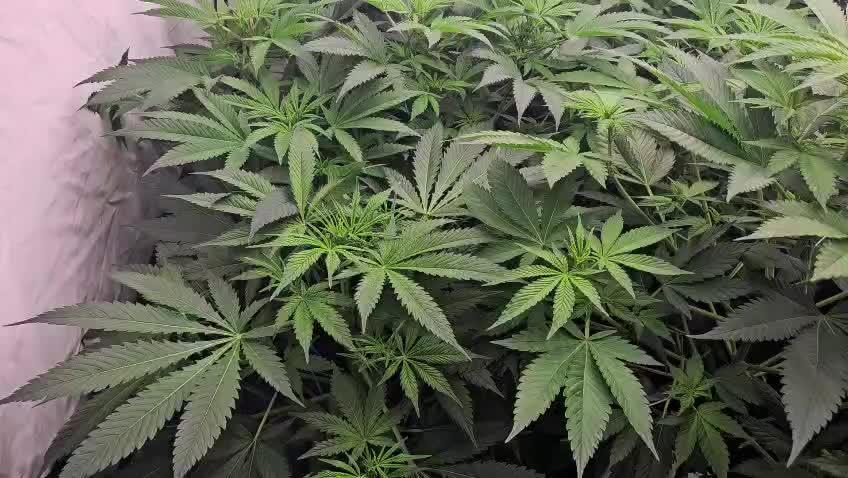
This week sees some happy ladies due to they healthy environment.
Due to the lack of humidity caused by heating I introduced the Vivosun H09 Humidifier and has really got that so important thrive into flowering.
I cant recommend this product Highley enough, not just as it been keep levels consistently it also needs no controller and is fully adjustable through the Vivosuns app. Although I will be purchasing the new Vivosun controller due out any time now in my country the E452+
Photos are todays as they end 1st week of flowing.
Ttfn Skully.

Likes
2
Share


@Cupboardgrowuk
Follow
Having some problems with blueberry I'm thinking lockout so going to flush. Limincello looking beautiful few more weeks should be done cannot wait

Processing
Likes
18
Share


@Beerus
Follow
Hello everybody,beginning week 7 with a nice boost. Im starting to see a lot of growth on the main and side branches. Also flowers are starting to show up. Now using Top crop nutrients. I bought a Ph regulator, now watering at 6.5
Accordingly to the breeder only 18 days are left to harvets. What do you guys think? Will she be ready? Im thinking am probably gonna have to wait at least on more week.

Likes
3
Share


@Earthsower
Follow
She is stable in growth with developing five fingers. She has had 100ml of root stimulator with amino acids. Double kush cake stands at 12 cm
Likes
9
Share


@TheGreenGroomer
Follow
🌿 Grow Diary Update: Week 5 Check-In 🌿
Hey growers,
Can you believe it's Week 5 already? Time's flying, and so is our girl – she's a beast now! I've been itching to defoliate more, but I've maxed out the amount of defol i can do and i have now stopped completely to avoid stressing her out too much :/
Overall, she's looking happy, but I noticed some leaves getting darker than I'd like, so I dialed down the nitrogen a bit...
Remember my PPMS struggle? Well, good news – got them down to 1200ppm but could not get it any lower.. i could lower the ppm/ec of intake even more to hopefully drop it but in this stage of flower feeding lower than 800ppms is too low unless you need to flush to reset the medium so i am just gonna keep sticking to the 800ppm feed for now and measure run off each time hopefully i can get it around 900-1000, yes these high ppm/ec levels are fine for cannabis but mostly when your using co2 thats like 700ppm+ but at the end of the day SHE LOOKS GREAT!
Here's to another week of growth and learning!
Happy growing,
TheGreenGroomer🌱
ps - sorry for over exposed/out of focus images i will get better images for next update, also smells allot stronger when humidity is on the higher end, she smells so good!

Likes
15
Share


@Messypies
Follow
04/07/2020 - 1st day of germination. All 4 have sank to bottom of glass. Now currently in paper towels in a warm dark area.
07/07/2020 - only 3 seeds germinated correctly . Planted, they have now sprouted and are looking good


Likes
6
Share


@GoldenWeedGrower
Follow
Legend
Timestamp: 📅
EC - pH: ⚗️
Temp - Hum: 🌡️
Water: 🌊
Food: 🍗
pH Correction: 💧
Actions: 💼
Thoughts: 🧠
Events: 🚀
Media: 🎬
D: DAY, G: GERMINATION, V: VEGETATIVE, B: BLOOMING, R: RIPENING, D: DRYING, C: CURING
______________
📅 D71/B34 - 25/06/24
⚗️ EC: 1.2 pH: 6.6
🌡️ T: 26°C H: 70%
🌊 10L
🍗 Calmag - Bloom A-B
💧pH-
💼 CO2 Dispenser added
🧠
🚀
🎬 4 nice pics and 1 TL video
______________
📅 D72/B35 - 26/06/24
⚗️ EC: 1.2 pH: 5.7
🌡️ T: 26°C H: 70%
🌊
🍗
💧
💼
🧠
🚀
🎬 1 TL video
______________
📅 D73/R01 - 27/06/24
⚗️ EC: 1.2 pH: 5.7
🌡️ T: 26°C H: 70%
🌊 12L
🍗 CalMag - Bloom A-B - B52 - Bud Candy - Overdrive
💧
💼
🧠
🚀
🎬 1 TL video trunked
______________
📅 D74/R02- 28/06/24
⚗️ EC: 1.2 pH: 6.0
🌡️ T: 26°C H: 70%
🌊
🍗
💧
💼
🧠 Last Timelapse videos are pretty useless. I'm thinking to don't them anymore..
🚀
🎬 1 TL video
______________
📅 D75/R03 - 29/06/24
⚗️ EC: 1.3 pH: 5.4
🌡️ T: 26°C H: 70%
🌊
🍗
💧
💼
🧠
🚀
🎬 1 TL video
______________
📅 D76/R04 - 30/06/24
⚗️ EC: 1.3 pH: 5.4
🌡️ T: 26°C H: 70%
🌊
🍗
💧
💼
🧠
🚀
🎬 1 TL video
______________
📅 D77/R05 - 01/07/24
⚗️ EC: 1.3 pH: 5.0
🌡️ T: 26°C H: 70%
🌊
🍗
💧
💼
🧠
🚀
🎬


Likes
12
Share


@Kayaboy
Follow
New week and this means official flowering for the girl, stretching, preflowers, pistils and a big smile after some 9 weeks of vegetation and mainline formation.
I believe this is a very promising strain very sturdy, never seen any slowing of growth after any cutting or stress low or high and hoping for some big fat frosty colas with the new addition of more missing nutes such as Silica, voodoo juice and sensizym as I believe roots are very important too and I saw immediate results when I added those missing elements to my other autoflowering plants which apparently stopped drooping just before lights off and just from day 2 and never saw them droop since...check other diary...
Peace
Mid week update:
Had to take a few more shots of this lady as Im impressed the way the buds form so quickly and look so packed even from such early stage, it proves the main lining technique works and will deliver what promises, big fat dense colas...


Likes
54
Share


@WishiFishi
Follow
***Mar 22
Week 2 of flower, looking really good. I made sure to give the reservoir a little extra ppm this time around, because last week the plant ended the week hungry. I put a little extra Plant-Prod in this week, hopefully the extra 300 ppm will be enough this week!
I went in and took off some leaves that were blocking the inner nodes, but I didn't take off any small bud sites on the inside *YET* ...I want to wait til stretch is done before taking anything major off, just in case it catches up by then. I will say that it is looking a lot more open now that I took a handful of leaves off. Most of them were overlapping other leaves, or just straight up too big. Others that didn't seem like much of a threat, just got tucked under other branches or leaves. I'm trying to be as hands-off with this grow as I can. Freakshow doesn't seem to like being played with too much.
PPM is at 1850 and PH is at 6
Lots of pictures to start this week off, and also a small video to better detail how to plant is growing. I may have to switch CalMag brands by the end of the grow, unless the bottle will last me (I'm sharing my nutrients with my partner), but I don't think that would make too much of a difference, but it's worth noting.
I also would like to note that I have not topped, LST'd, or any other training method to be precise, other than taking the top two leaves off as they get too big, I have not done anything else to make this girl get so wide. The canopy has been doing it' all on its own. The roots have been growing around and over the bubbles in the water, making them spread out almost like a cup (my partner has a theory that may be why the plant has been getting wide instead of tall... He believes the plant tends to take on the shape of the container it is it; aka the shape of the roots).
I can now confirm that she is a female, as shown in the picture, you can see 2 long pistils coming out! ✊
I think I have the smallest amount of powdery mildew starting, because of the humidity being so high, BUT I have taken all other plants out of the tent, so this freak is all on her lonesome inside the tent now. I have seen an immediate improvement this morning, so I am not concerned over it.
Beautiful start of the week, and can't wait to see how it goes the rest of the week! Should expect to see a lot of bushing and hopefully some trichome production by the end of it. Have a wonderful week everyone! 😻
***Mar 24
Already drank 2 full cups of water (around 2L) and down from 1850ppm to 1600ppm ... oh boy!!! She's so hungry I wonder if I'll be able to keep up hahaha. She's looking really happy and healthy. Roots are still growing like mad. I wanted to trim them, but going to hold off a bit so I don't stress it out.
***Mar 26
...The amount of water she is drinking is outrageous. I actually had to feed a little bit more nutrients (Plant-prod 15-30-15 about 0.3 tsp to bring the ppm from 1200 to next to 1500 to get through til monday/tuesday) and a sprinkle more of soluble seaweed.
I did a little lollipopping tonight as well! Looking much more open and I took out a lot of the small bottom bud sites and leaves that weren't really getting any light. Everything is looking super good, and still no health issues. Doesn't seem to be missing any nutrients, but also doesn't seem to be bothered by having extra nutrients either.

Likes
Comments
Share


@Chamed33
Follow
Getting close harvest!! The fan leaves 🍃 started releasing nitrogen and buds are starting to ripe
I have have decreased amount of nutrients since she’s getting closer to harvest I’ll be watering her with water to remove any excess nutrients buildup from the bottom and to allow her to take the rest of nutrients left till her times comes..
I also did not add plant Height because I had done LST on her so I will be hard to know exact Height on mine

Processing
Likes
28
Share


@No_Clout
Follow
06/03/19 - unfortunately this was my own fault for being gullible with a mix of just not thinking, but I got a cal deficiency on my OG which was fitting seeing as everything was going well, but I think I have resolved the problem as I’m not see the new growth being affected but I do think it has slowed down in growth abit but I’m guessing that’s understandable, I’m really happy I’ve turned to mills as I can tell a difference from my previous grows, this slight hiccup was my fault but they were that healthy I’m almost positive it’s gonna spring right back 🤞🏻
09/03/19 - definitely looks like it stopped growing for awhile as the gelatos are a hell of a lot bigger now compare to my OG but I think the problems been solved as their was only a little progression on some of the newer leaves but the newest set of leaves seem unharmed includeding the side branches.
12/03/19 - a lot smaller than the gelatos but never the less I’ve started the LST/leaf braiding with the OG aswell to make sure the side branches catch up as they were stunted from the cal mag def

Likes
7
Share


@PlantMike
Follow
The Chicken N Waffles has this 3x3 absolutely packed. Growing to the lights, I gave final defoliation today, great air movement through the tent and the VPD has been very stable. Not really any noticeable terpenes yet, maybe a subtle sweetness in the one pheno. Plants are starting to stack and they seem quite happy with the set up. We should be swelling by next week!

Likes
61
Share


@TrickOrTrip
Follow
End of week 7 ! No more nutrients now only ph water ! 10 days and i will cut them ! They looking so helthy and smells so good ! The buds have very good size and i hope big harvest !!!!


Likes
15
Share


@Diips
Follow
gave a big defoliation of the bottom on all the plants. and fed them 4 ml of both orgatrex and bio pk 5-8. hopefully they like it 🤞❤️🌞
Likes
43
Share


@Rasta_Faraev
Follow
Крупная, сативная, ветвистая, набирает медленнее индичного cmog. Жду движения и энергии от этого мороженного. 😋🍧🍨🍦

