




Likes
11
Share


@emeraldlabs
Follow
Chugging along. This girl has shown signs of being a lil hungry, so I increased feeding again this week; my limited experience with Ethos has taught me to feed heavy with them in future runs. Since she has been so hungry, and since I enjoy experimenting with my grows, this will be the first where I don’t flush. Hell, I may even try the 48 hours of darkness!
Had to touch her yesterday to add an anchor to the post, my hand smelled SO strong of fruit punch 20+ mins later. Beyond anxious to have a sample of this girl when cured.
Looking forward to dropping those night temps even more and seeing if we can pull the purple out.
Video/photos taken 91 days after breaking soil, day 42 of flower.


Processing
Likes
13
Share


@ladyjane
Follow
7/11 - Top dressed all with Foundation Grow, Foundation Uprising, Oregonism XL, and Nitro Bat Guano. Watered w/ RO water & Extreme Serene. They are looking great.
7/12 - Fed with liquid nutrients today followed by some selective defoliation. Also adjusted the LST and added a little coco mulch.
7/14 - Watered with plain RO water and added Mosquito bits for pest prevention. Also did a foliar spray of Ancient Amber. They look very happy and healthy.


Likes
4
Share

@Guerrilla_grower777
Follow
16/10/2025
18:25
15°C 64%RH
Here i am,man these plants smells a lot,super Fire🔥🔥
When every tree in the forest have yellow and brown falling leaves two hidden in plain sight marijuana plants stays green and keeps bumping juicy buds especially Coco fresh
Days are now shorter,colder and the wettest days of the year are now officially beginning
30 minutes after we went out of the forest an heavy rain started and didn't stop until 18/10 morning,i'm honestly worried about my plants,😭
#1 Coco Milk 89 days from seed
Buds are now putting on some weight ,i don't expect a big yield from her but the quality Is here better than any expectation
Keep smelling like milk and coconut simply stronger than 5 days ago
At 1:50 you could see a strange calix formation,that thing Is enormous and it's the only one in both plants
I'm not worried about this,i find It funny and i'm intersted if someone can explain It scientifically
#2 Coco fresh 77 days from seed
Bigger bigger and bigger!!!
This one doesn't give a fuck if nights are longer and colder,the buds have a totally different dimension in less than a week,smell is now coming through pretty similar to her sister Coco Milk with a funky candy twist not so potent right now
According to the moon phases theory i will harvest probably 4/5 november when the moon will be full again
Apricot and part of the gorilla z was harvested during the so called super moon and the difference on the smell and crystal coverage are pretty impressive being honest
That's why i will push until the next full moon even with impossible climate
Pictures and #3 Coco milk sample wet trimmed,have to say hard to trim,but the final result looks and smells AMAZING
I know that Is better to wait but i have to try this ASAP,i have to know how It tastes
Tomorrow i will update smoke report of gorilla z and apricot auto,next guerrilla spot update 22/10 maybe

Likes
41
Share


@bruxup
Follow
Week 15: July 5 2020 - July 11 2020
It was insanely hot again this week. The plants were drinking pretty much daily and they needed it.
Finally got a break in the weather with some rain this weekend. Plants are thriving and super healthy.

Likes
17
Share

@Joni2017
Follow
Hello again, Growdiaries family! 😎
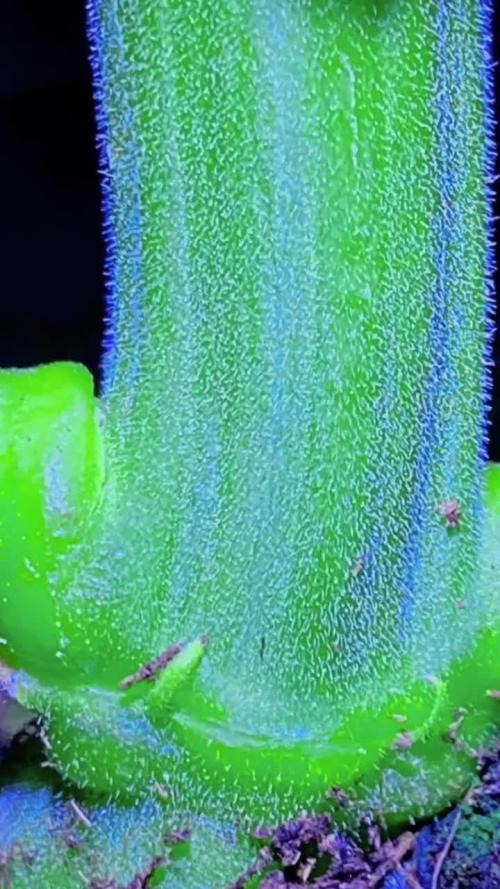
We have officially entered the flowering stage, and the transformation is becoming visible day by day. My Critical has reacted to the 12/12 flip with impressive vigor, showing that all the work during the vegetative stage was worth it.
📏 Evolution & Stretch: The plant has reached 24 cm today. The internodal spacing is stretching just as expected, and the 4 main colas are starting to aim for the light with more intensity. The canopy remains remarkably uniform.
✂️ Applied Techniques:
Final Canopy Check: No more high-stress training. I’m letting the plant focus all its energy on flower development.
Airflow & Structure: Thanks to the previous thinning, air is moving perfectly through the center and around the fasciated stem, which is crucial now that humidity needs to be kept in check.
Visual Update: From now on, all the images I upload will be from the last day of the week (today) to show the most up-to-date progress.
💧 Watering & Nutrition:
Volume: 1 Liter of water.
The Bloom Cocktail: Today I fed her with a balanced mix: 1 ml/L Bio-Grow (to sustain the stretch), 1 ml/L Bio-Bloom, and 1 ml/L Top-Max.
Temperature: Still using lukewarm water (approx. 21°C) to keep the roots comfortable in the terrace environment.
🌤️ Environment:
Lighting: QBK1500PLUS with the Bloom switch ON (adding Red/IR spectrum). I’m keeping the 100% intensity at a 56 cm distance to maximize photosynthesis.
Bunker Stats: Temperature remains stable at 27°C (ON) and 18°C (OFF). The double-tent insulation is doing a great job against the cold outside.
Aroma: The 'fresh green' scent is turning slightly more complex and sweet.
Summary: The plant is healthy, praying to the light, and starting to show the first signs of pre-flowers. The structure is solid enough to support the future buds. Now, we wait for the real stretch!
Thanks for your support and happy growing! 😉👍
Likes
4
Share


@DaddyPrime2
Follow
10/26/24
she gets thirsty thirsty. her fan leaves are damaged and messed up considering needing to reveg and fight bugs but she is very nice looking in the pistils and sugar leaves
10/30
she has a nice candy smell to her already. i sprayed all of my plants with spinosad. the spidermites seem to jump from one plant to the others if i only get some of them. she has seemed absolutely wrecked this whole grow but the qualityvis shining through
11/01/24
shes fighting fairly well. aesthetically she looks rough with thw reveg leaves and then the fan leaves dying from dehydration amongst other things. but shes really shining through all the bullshit. the biggest issue is having her veg for so long in such small pots. she was root bound in a solo cup and then a 1 gallon. if i wouldve put her in a bigger pot like 7 gallon or maybe even bigger, i think wed have a better time with keeping her soil moisture levels stable. if i dint water her daily, she struggles bad and i think its just the root to soil ratio is way off.


Likes
1
Share


@Mr_nugs_lover_David
Follow
This wedding cake is looking as healthy as her sister however she's in a bigger pot 25 liters. Let's see if she does as good as her sister,she's enjoying life right I don't think I'll have any type of issue,she's being fed 100% organically,with lactobacillus liquid made by me,liquid bat guano,and she has in her soil florians living organics and more bat guano and seaweed,mycorrizae,humic and fulvic acids,beneficial bacteria and fungus. She's gonna be a wonderful plant at the end I'm sure. Stay tuned guys! 💚🌱✌️

Likes
27
Share


@Hawkbo
Follow
This is what's left in the tent, the gelato is comin down tonight and maybe the 2 smaller lemon aks maybe tmm. The cream cookies and other lemon AK will come down soon too and then I can get some pics. The pineapple and blue dream get 1 more flush
Likes
3
Share


@CannaGods
Follow
Last week I had decided to flower the plant as it is growing very large, here are a few notes for new growers.
Always flip your plant's light schedule when the plant is at the desired height this plant is now 3 1/2 feet tall. Cannabis plants tend to double in size depending on how well they are taking care of.
If you do not pay close attention to the height of your plants you will inevitably have a plant that will outgrow your tent.
Here are a few notes for some growers that have not grown in h20.,
First you can grow your cannabis in any substrate you want, the substrates that growers put here are common that you can find all over the Internet and in some local flowering shops however, all that matters is that the roots touch the water. You can grow in the glass fish balls, you can grow in non-toxic gel balls, you can pretty much grow in any substrate you want.
Second note: growing in h20 in my opinion is a lot more easier than growing in soil. Some growers will say that cannabis has a different taste in soil there is no science that concludes that the cannabis will taste any better or any less good in H2O or soil. It is all opinion.
However, growing in H2O does need to be taken care of carefully. Always remember to make sure no light is getting inside the reservoir and keep the reservoir clean of all debris. It's the same concept of having a pool. If you have a pool with no debridement it will stay crystal-clear with no filtration for a very long time. However, if you get debris in a pool unwanted organisms will start to grow such as algae bacteria, and other things that you would not want to touch your body, take that concept and apply it to a cannabis plant.
Hydro guard is a failsafe in case you are too lazy to keep the reservoir clean. It will prevent root slime rot and many root problems (It's beneficial bacteria similar to what is in recharge only for H2O)
Lastly, Your plants if grown in hydrogen will grow rapidly more rapidly than in soil you yield will be produced faster. Also, remember the substrate is free, if you cannot purchase deionized water you can use regular tap water as long as the PPM is low, even so, you can offset the PPM as long as it's tested. You will save hundreds of dollars in soil Perlite, and other fertilizers. Some growers will state that the chemical fertilizers are bad for you, that is completely untrue and also unproven. Again NASA uses general hydroponics To grow produce in space.

Likes
14
Share


@suchydog5
Follow
2-3 buds were moldy so i had to cut them hope it doesnt spread further😳
to be honest i havent seen more beautiful flower than this purple one❤️
Likes
29
Share


@Smokwiri
Follow
Welcome to week 8 of my Zamnesia seeds - Wedding cake diary
Plant looks great, buds are fattening up a bit now, steep development.
Running towards finish....
10% discount on Zamnesia seeds with code GROWITGD

Likes
17
Share


@Ash4009
Follow
Noticed the purple hues come out more with the use of ice on top of the soil.


Likes
6
Share


@MG2009
Follow
10/03/2020
Flowering has commenced!
And I like how she is stretching, More than my cookie cake did and right at start of flower.
I have decided not to top again, but I am going to take clones 2(SOIL) latter in the week, and 1 for DWC.
More pics when I take clones
(before and after)
Likes
96
Share


@CBD_Sweden
Follow
Euphoria is a superior blend of selective heredity between the popular cannabis strains of Royal Medic and Shark Shock. Royal Medic is a strain of cannabis that owes the majority of its genetics to the Juanita la Lagrimosa and is recognized as one of the high CBD strains and those genetics have been passed on to Euphoria.
THC: 9%
CBD: High
Yield Indoor : 450 - 500 gr/m2
Yield Outdoor: 450 - 500 gr/plant
Height Indoor: 60 - 100 cm
Height Outdoor: 120 - 150 cm
Flowering: 8 weeks
Harvest month: Early October
Genetic Background: Great White Shark x CBD dominant plant
Type: Sa 20% In 80% Ru 0%
Effect: A motivating and inspiring feeling
Climate: Mild
--------------------------------------------------------------------------------------------------
2017-10-16. Week 5, day 25 from germination.
This girl knows how to take it easy in the growing department, there is nothing more to say about her right now.
She is 11 cm tall.
Im waiting to be able to fim her and i hope she picks up the pace now. Added a couple of picks.
---------------------------------------------------------------------------------------------------------------
2017-10-20. Week 5 day 4. The girl are in the final 12 liters autopots and have moved into my newfixed second growroom with 5 other girls.. I have fimed her. Added video of new growroom.

Processing
Likes
8
Share


@Max1973
Follow
Day 35 - few pics and vids..... everything going along nicely 👍
This is a pretty big update, so i'll add to it over the next few days, as i
finish building it all....
i'm building these 2 x SS haze, the full tent, just finishing up the setup.....
trimming them, changing solutions to 12/12 and flower.....
changed the exhaust fan and filter setup to the better outside the tent method....
and installed 12v CPU computer fan, lol ("alta9" fits in 4in ducting perfectly), drops wattage on extractor fan.... 10w tops...
got a few kg of active carbon and making/replacing the carbon filter ....
i'll add afew vids of the new setup in afew days...
Day 36 - few pics/vid of new tent setup...... "alta 9" fan :)
post tomorrow after i finish trimmin and settin up night mode etc......
and into tomorrow we go, lol ... Day 37....
slowly getting there..... little bit more to go...
this should make things abit more interesting..... right tank (short babie) has : 19 lts of tap water @18oC + 150 ml -dutch master one gold FLOWER.... 6.4 PH - 1400 PPM
left tank has : 19 lts of tap water @18oC + 50 ml of elements a and 50ml of b and 10 ml of nitro and 20ml of Crystalic (molasses/pot) .... 6.5 PH - 1200 PPM
more pics / vids of the finished tent setup.... roots, transfer, etc... Day 37 is alot of vids of the clean and change to flower.....
edit - day after build noticed left tank (nutrifield) not enough bubbles..... pulled out the 4 air pump and swapped to the 2 x original oxipumps...
much better, also to fix the problem with ph goin high, and bubbles not stirin the mix, was to add another 10ml of crystallic and another 5ml of nitro...
then pumped both tanks with ph down and set em to 5.8-6.2 - both plants have fully recovered from the big trim, and bounced back within 12-24hrs,
post pics/vid in abit.....
Day 39 - made a freaky video... was curious about what the plants would see looking up at the lights...
the lights and buzzing of air compressors and bubbling tank water, and dazzling lights turned out pretty cool in vid editor,
was in selfie mode....
and final vid of the bounceback from trim :)
👍😎
