


Likes
Comments
Share


Just gave her a bikini waxing AKA lollipop I'm trying a lot of techniques that I've never tried before this one

Likes
Comments
Share


@Nony_grows
Follow
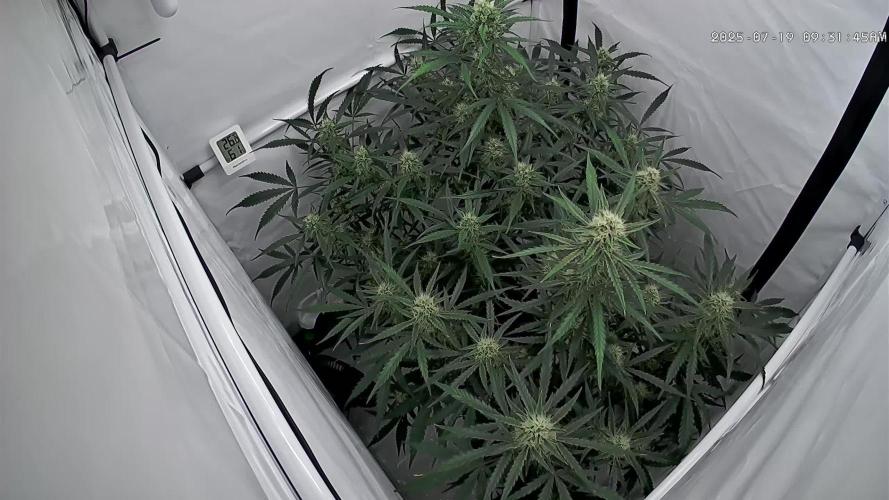
Installed a trellis net to even the canopy and to prepare for early flower stretch

Likes
2
Share

@MR_S_theGardener
Follow
Z-up #1 scheint immer noch von der budentwicklung bisschen hinterher zu sein. Denke sie wird nicht die selbe Struktur aufbauen können wie ihre Schwester, aber wirkt generell sehr gesund und wird auch einiges abwerfen, auch wenn es vielleicht keine harten blüten werden.
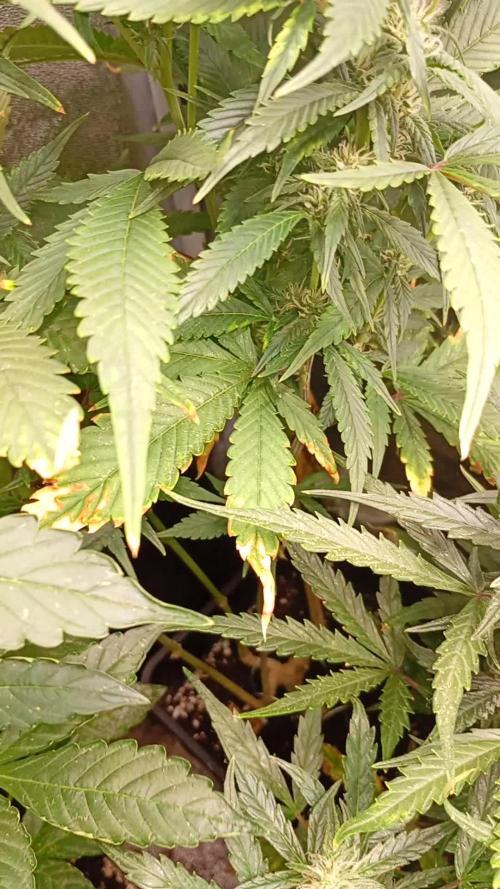
Z-up #2 hat eine schöne Blütenstruktur, riecht auch fantastisch. Leider ein bisschen calmag mangel, aber lässt sich jetzt auch nicht mehr ändern.


Likes
8
Share


@Esjey
Follow
they said that from seed to harvest 8 weeks and my titan is already 10 weeks old, strange. it looks healthy so it's probably ok.
🤘✌️


Likes
14
Share

@PhinolaGreen
Follow
10. Woche
Strawberry Gorilla Auto RF3 Fastbuds wird immer größer, die hört gar nicht mehr auf zu wachsen 😉 😄
Update nach 3 Tagen: ich wollte sie eigentlich Toppen wber habe mich jetzt für einen Super-Cropp entschieden. Mal sehen was das wird. Da hat gar nicht mehr aufgehört zu wachsen und war schon bei 130 wtf...
Processing
Likes
12
Share


@AtomicOrgy
Follow
The first pistil showed up! Nice!
I look at it 24 hours a day hahaha
Likes
3
Share


@Gram_Solo
Follow
All 3 apple strudle popped up and looking good and healthy. May need to add support soon to the stem if they get any taller , lowered the light to help this also.
I have now moved the seedlings into a 3x3 tent with a 650w philzon LED light
Just until late veg early flower then they are going back under the Spider Farmer for the Full MOT and Output lol
Humidity has been easy to deal with luckily . I have been spraying around the solo cups and near the stem with plain water to keep it moist and Humid. Seem to be loving it so far 👌
Next step is wait til these are reaching edge of solo cup and transplant into bigger pots.
Germination was a success 🙌
Party time now
❤️👌
Likes
2
Share


@Ninjabuds
Follow
It's been a great week for the seedlings! They've really taken off and are looking strong. I'm planning to transplant them into larger pots in the next few days, so next week's photos should show some impressive growth. I'm so excited to see how they thrive in their new homes! I've been giving them distilled water from the start, and I'm still doing that, but I just started adding 10 milliliters of Fox Farm Big Bloom and 1 milliliter of Fox Farm Grow Big. All of the seedlings are doing really well, and there's not really any visible difference between all the ten strains. I started all ten packs of each strain and kept all the best seedlings, so that's why they're all doing so well.

Likes
3
Share


@birdmountain
Follow
Die extrem hohe Luftfeuchtigkeit, verursacht durch die vielen Regen dieser Woche hat auch bei ihr Spuren hinterlassen. Ich musste eine daumennagelgroße Stelle aufgrund Budrot säubern. Der Ventilator lief zwar die ganze Zeit im Folienzelt, aber oszillierend, ich habe auf Dauergebläse direkt auf den Haupttrieb gestellt (Etwas ernten möchte ich schon noch.). Die Luftfeuchtigkeit war teilweise nachts bei 91%, der Ventilator kann es auf 74-81% herunterdrücken. Es sollen zwei regenreiche Tage kommen, danach solle wieder wärmer werden und damit höhere Temperaturen und auch hohe Luftfeuchtigkeit.
Ansonsten ist sie auf dem Höhepunkt der Blüte, nur die kleinen unteren Buds sind noch im Wachstum. Der Duft ist stark und sehr süßlich geworden, die Buds werden harzig.
Auch um Schimmelbildung zu minimieren habe ich die Wasserversorgung sehr eingeschränkt, sie wird von nun an auch ohne Dünger für die letzten zwei Wochen auskommen.
Wenn sie es bis zur Ernte in ca. zwei Wochen schafft, ist noch eine gute Ernte für Outdoor zu erwarten. Aber bis dahin kann viel passieren.
Wünscht mir viel Glück, ich kann es diesen Sommer gebrauchen.
---
The extremely high humidity caused by the heavy rainfall this week has also left its mark on her. I had to clean a thumbnail-sized area due to bud rot. The fan was running continuously in the foil tent, but oscillating, so I set it to continuous operation directly on the main shoot (I would still like to harvest something). The humidity was sometimes 91% at night, but the fan can reduce it to 74-81%. Two rainy days are forecast, followed by warmer weather with higher temperatures and high humidity.
Otherwise, it is at the peak of flowering, with only the small lower buds still growing. The scent has become strong and very sweet, and the buds are becoming resinous.
To minimize mold growth, I have also greatly restricted the water supply, and from now on it will have to manage without fertilizer for the last two weeks.
If it makes it to harvest in about two weeks, a good outdoor harvest is still to be expected. But a lot can happen between now and then.
Wish me luck, I can use it this summer.


Likes
10
Share


@DogDoctorOfficial
Follow
💙 Project Blue Tent – Week 13 💙
🥒 Pickle Lemon Haze F1 – Pheno B
🌸 OH MY GOD, SHE'S BEAUTIFUL! Frost, White Pistils, and Another Girl Approaching the Finish! ❄️😂
Hello everyone, and welcome back to another chapter of Project Blue Tent! 💙🌱
My friends, seriously...
IS SHE BEAUTIFUL, OR IS SHE BEAUTIFUL?! 😂❄️
Every week, I walk into this room thinking I already know what to expect. Four girls, two cultivars, the same environment, the same equipment, and the same general approach.
And then I look at the flowers again.
And there I go, grabbing the camera and spending another ridiculous amount of time admiring these girls!
😂📸💙
This week, we're giving Pickle Lemon Haze F1 – Pheno B her own spotlight.
And what a beautiful girl she is!
She's dense, compact, seriously frosty, and carrying plenty of those beautiful white pistils. Her colours are developing towards lighter shades, and much like her Pickle Lemon Haze sister, she's showing a different finishing progression from our Blue Waffle F1 girls.
The flowers are looking fantastic, the aroma is amazing, and I'm genuinely curious to see how everything develops from here.
Will the Pickle Lemon Haze girls need more time than the Blue Waffles?
Will we end up harvesting some plants before the others?
Or will the entire room surprise us and finish closer together than we're expecting?
Let's see, my friends!
We're not going to decide the ending before the plants show us what's happening.
For now, we're keeping the ecosystem running, making our latest environmental adjustments, reducing the nutrient concentration, and observing each plant individually.
Same room. Same equipment. Same passion.
But every girl has her own story.
And today, Pickle Lemon Haze F1 Pheno B is the star of the show!
💙🥒🌸
🌿 SAME TENT, SAME ECOSYSTEM – FOUR PLANTS, TWO CULTIVARS
Let's begin with the bigger picture.
Project Blue Tent brings together four plants sharing the same growing environment.
We have two Blue Waffle F1 plants and two Pickle Lemon Haze F1 plants.
They're sharing the tent, the irrigation system, the reservoir, the overhead lighting, the supplemental under-canopy lighting, and the general environmental conditions.
We're maintaining a consistent approach across the room while documenting each plant separately.
And this is where things get interesting.
Even when plants share the same environment, their individual development doesn't have to be identical.
Different cultivars can express different characteristics, and individual plants can show their own variations as flowering progresses.
That's exactly why we're keeping separate diaries.
We want to document what we actually observe rather than treating all four girls as one identical group.
And Pickle Lemon Haze F1 Pheno B has plenty of individual characteristics worth documenting.
She's compact and dense, with beautiful flowers, impressive frost, lighter colours, and plenty of white pistils still showing.
She's looking fantastic, but her progression appears a little different from the Blue Waffle girls.
We're not going to assume that means we know her exact harvest date.
Instead, we'll continue observing her development alongside her sisters and see where the journey takes us.
That's what makes this project so enjoyable.
Four plants. Two cultivars. One ecosystem.
And four individual stories unfolding side by side!
💙🌱
🌸 PICKLE LEMON HAZE F1 PHENO B – DENSE, COMPACT, AND ABSOLUTELY FROSTY!
Let's talk about this beautiful girl!
One of the first things that catches my attention is her flower development.
The flowers are looking dense and compact, with an impressive amount of visible frost across the developing buds and surrounding sugar leaves.
The structure is established, the flowering sites are developing throughout the plant, and we're now concentrating on observing how everything progresses towards the finish.
This is the stage where I love comparing the photographs from different weeks.
Earlier in the project, our attention was focused on building the structure.
We were topping, training, managing the canopy, performing defoliation, and supporting the branches through the flowering stretch.
Now, we can appreciate the results of that earlier work while giving the flowers the attention they deserve.
And Pheno B certainly deserves it!
She's beautiful from a distance, but the close-up photographs reveal another level of detail.
The trichomes, the pistils, the flower structure, and all those little details that make macro photography so rewarding.
Honestly, my friends, I could spend hours looking at these photographs.
And knowing me, I probably will!
😂📸❄️
? WHITE PISTILS – SHE'S STILL WRITING HER STORY
One of the most noticeable things about Pheno B this week is the number of white pistils still visible across her flowers.
They're giving the buds a beautiful appearance, and they're one of the characteristics that stand out when we compare her with the Blue Waffle girls.
The Pickle Lemon Haze plants are showing lighter colours and still have plenty of white pistils, while the Blue Waffles appear to be progressing towards the finish a little faster.
At least, that's what we're observing at the moment.
And I find that fascinating!
We're keeping the same general environment and nutritional approach across the room, yet the plants are showing differences in their development.
Of course, white pistils alone don't determine whether a plant is ready for harvest. Their appearance can vary throughout flowering, and different parts of the same plant can mature at different rates.
So we're looking at the complete picture.
The flowers, the trichomes, the pistils, and the overall development of each individual plant all matter when we're assessing maturity.
For now, Pheno B is still showing plenty of white pistils, and we're going to keep watching her closely.
There's no need to rush.
She'll tell us more as the weeks progress, and we'll document what we see.
💙🌸
🎨 LIGHTER COLOURS – ANOTHER INTERESTING DIFFERENCE
Something else I'm enjoying observing is the colour development.
Pickle Lemon Haze F1 Pheno B is showing lighter colours as she progresses through flowering.
Compared with the Blue Waffle girls, her appearance is taking a different direction.
And that's one of the things that makes growing different cultivars in the same environment so interesting.
The same room doesn't mean every plant will express the same colours or follow precisely the same visual progression.
Genetics, plant development, and environmental conditions can all influence what we see.
We're not going to attribute every difference to one particular cause without enough evidence.
Instead, we're recording the observations and comparing the plants as the project continues.
Right now, Pheno B is looking beautiful with her lighter colours, dense flowers, and impressive frost.
And if she continues developing in the direction we're seeing now, I'm very curious to see how her appearance changes over the coming weeks.
The Blue Waffles are showing their own characteristics, while the Pickle Lemon Haze girls are giving us another expression to appreciate.
Same ecosystem, different expressions.
That's the beauty of documenting the individual plants!
💙🥒🌿
❄️ THE FROST – AN ABSOLUTE PLEASURE TO PHOTOGRAPH
I know, I know.
I keep talking about the frost.
But look at her!
😂❄️
The close-up photographs reveal beautiful details across the flowers and sugar leaves, giving us another opportunity to appreciate the plant beyond what we can see from a normal viewing distance.
This is why I enjoy macro photography so much.
When you're looking at an entire plant, your attention naturally goes towards the overall structure, the canopy, and the distribution of the flowering sites.
But when you get closer, the details become the main attraction.
The trichomes.
The pistils.
The textures of the flowers.
The small features that make every close-up worth examining.
And Pheno B is giving us plenty to work with!
The visible frost is impressive, and I'm genuinely happy with the photographs we've managed to capture.
We're not simply taking pictures to fill the diary.
We're creating a visual record of the plant's development, allowing everyone following Project Blue Tent to see more of what we're observing inside the tent.
And honestly, I think that's one of the best parts of documenting a grow.
We can share the experience with the community, even when everyone can't be standing beside us looking at the flowers.
So, my friends, enjoy the photographs!
Because this girl deserves every bit of attention she's getting.
💙📸❄️
📸 THREE PHOTO STACKS – 664 PHOTOGRAPHS COMBINED!
And now, let's talk about the photography!
For Pickle Lemon Haze F1 Pheno B, we created three separate photo stacks.
Here's the breakdown:
Photo stack 1 – 204 photographs.
Photo stack 2 – 213 photographs.
Photo stack 3 – 247 photographs.
That's a combined total of 664 individual photographs across the three stacks!
😂📸
Now, that's a considerable amount of work for a few final images.
But that's part of the fun.
Focus stacking allows us to combine photographs taken at different focus distances to create a final image with greater depth of field.
When we're photographing small details, the area in focus can be extremely narrow.
One part of a flower might be perfectly sharp, while another section just a little further away falls outside the focus plane.
By combining multiple frames, we can bring more of those details into focus in the finished image.
Of course, the quality of the result depends on the original photographs, the shooting conditions, and how well the stacking process handles the images.
But when everything comes together, the results can be beautiful.
And that's what we're trying to achieve with these stacks.
We created three different views of Pheno B, each giving us another opportunity to appreciate the flower structure and visible frost.
Some of the other girls have more stacks this week, while Pheno B has three.
That's simply how the photography worked out.
Every plant presents different opportunities, and we're working with the time and conditions available to us.
The goal isn't to produce the same number of photographs for every diary.
It's to document every plant as well as we can.
Three stacks. Hundreds of frames. One beautiful Pickle Lemon Haze F1 Pheno B!
And I'm delighted to have them included in her diary.
💙📸🌸
💡 OVERHEAD LEDS – GRADUALLY REDUCING THE OUTPUT
Now, let's move back to the shared room setup.
We're continuing to adjust the overhead lighting as the plants approach the final stage.
The current approach is to run the main LEDs at approximately 90% and gradually reduce the output by around one or two percentage points per day.
We're taking a measured approach rather than making sudden changes.
The objective is to manage the lighting while observing the plants and maintaining a balanced environment.
More light doesn't automatically guarantee a better result, and maximum output isn't necessarily the goal at this stage.
We've already established the canopy and completed the major structural work.
Now we're concentrating on the final stage of development, making deliberate adjustments and observing the plants' responses.
The lighting is one part of the system, but it doesn't work in isolation.
Temperature, humidity, airflow, irrigation, and the condition of the plants all matter too.
So we're continuing to look at the complete environment rather than focusing on one setting alone.
And, as always, we're documenting what happens rather than promising a particular outcome.
💡🌿
💡 TWO LUMIFLORA 150W FIXTURES – UNDER-CANOPY LIGHTING
The two LumiFlora 150W full-spectrum under-canopy fixtures remain part of our setup.
They're arranged in an X-cross configuration beneath the canopy, supplementing the primary lighting from above.
For now, we're keeping their output around 90–95%, with the possibility of reducing it closer to the end.
The purpose of this experiment is to explore supplemental lighting beneath the canopy and observe how the lower flowering sites develop.
With a substantial plant structure, the amount of light reaching different parts of the canopy naturally varies.
That's why we're interested in seeing how the lower portions of the plants develop under this arrangement.
We're not assuming that the additional lighting automatically produces a particular result.
Instead, we're documenting the setup, keeping the other conditions as consistent as possible, and observing the plants as they progress.
This is one of the interesting aspects of Project Blue Tent.
We have the equipment, we have the plants, and we have the opportunity to follow the development over time.
And now we're watching the results unfold.
💙💡🌿
🌡️ TEMPERATURE AND HUMIDITY – PREPARING FOR THE FINISH
The temperature adjustments apply to the entire room, so Pheno B is sharing the same general environmental conditions as her sisters.
Our current approach is to maintain a daytime air temperature around 25°C and bring nighttime temperatures down to approximately 19–20°C.
The solution and substrate temperatures are being kept around 21°C.
We're also maintaining our normal relative humidity target of approximately 55%.
These adjustments form part of our approach as the plants move towards the final stage.
We're looking at the relationship between temperature, humidity, lighting, and plant development rather than treating each parameter separately.
We want to maintain a balanced environment and observe how the different cultivars respond.
One interesting detail is that the Pickle Lemon Haze girls are showing a different visual progression from the Blue Waffles.
However, we're not assuming that the temperature adjustments alone explain those differences.
We're recording what we see and allowing the individual plants to show us how they develop.
If the room conditions remain stable while the plants continue progressing, we'll have a clearer record of what happened throughout this stage.
And that's exactly what we want from this project.
Consistent records, individual observations, and no unnecessary assumptions.
💧 IRRIGATION AND DRAINAGE – THE SAME SYSTEM FOR ALL FOUR GIRLS
The automatic irrigation and drainage system continues supporting the four plants.
All four girls share the reservoir, which allows us to maintain the same general nutritional approach across the tent.
The recorded watering volume is approximately 1.6 litres per plant over 24 hours.
That's the reference value in the diary, although actual demand can still vary between individual plants.
We continue monitoring the system and observing the plants rather than assuming that every plant will behave identically.
The irrigation setup is an important part of the overall ecosystem, but when everything is running as intended, we don't need to make unnecessary changes.
The goal is to maintain consistency while allowing us to concentrate on the plants themselves.
And that's what we're continuing to do this week.
The system remains established, the plants are progressing, and our attention is increasingly focused on the flowers and the approaching finish.
💧🌱
⚗️ NUTRITION UPDATE – LOWER EC, GREEN SENSATION DISCONTINUED
Now, let's document the current nutrient program correctly.
As explained in the previous Project Blue Tent reports, we've stopped using PLAGRON Green Sensation.
We've also reduced both Hydro A and Hydro B, while keeping Power Buds in the recipe for the moment.
This is an important change because it explains why the EC has come down.
We're not simply reducing the A and B components while leaving the entire previous recipe untouched.
Green Sensation has been removed from the current mixture as well.
At this late stage, I've decided that I don't need to continue adding the PK product to the reservoir.
The current recorded recipe is:
PLAGRON Hydro A – 1.8 ml/L
PLAGRON Hydro B – 1.8 ml/L
PLAGRON Power Buds – 1 ml/L
PLAGRON Green Sensation – discontinued
PLAGRON pH Plus and pH Minus – used as required for pH adjustment
The current diary readings show a pH of approximately 6.0 and an EC of 1.86 mS/cm.
We're continuing with the lower nutrient concentration and monitoring the plants as they progress.
The pH target remains close to 6, with small variations being acceptable within our intended range.
We don't need to chase an absolutely fixed number throughout the day if the reading is already where we want it.
We monitor, adjust when necessary, and keep the records accurate.
Because all four plants share the same reservoir, this nutritional adjustment applies to the entire tent.
That consistency is an important part of our approach.
And just as importantly, the written diary needs to reflect what we're actually using.
From this week onward, we're recording Green Sensation as discontinued, Hydro A and B at the reduced rates, and Power Buds as remaining in the recipe for now.
That's the current situation, and that's what we'll continue documenting.
💙🌱
🥒 PICKLE LEMON HAZE VS. BLUE WAFFLE – WHO WILL FINISH FIRST?
This is the question I'm really looking forward to answering!
We have two different cultivars growing side by side in the same tent.
The Blue Waffle girls appear to be progressing towards the finish faster, while the Pickle Lemon Haze girls are still showing plenty of white pistils and lighter colours.
Both Pickle Lemon Haze plants are looking beautiful, dense, compact, and frosty.
But their visual progression appears to be a little slower than that of the Blue Waffles.
And now I'm curious to see what happens next.
Will the Blue Waffles be ready first?
Will the Pickle Lemon Haze girls need additional time?
Will we have a staggered harvest, or will the plants come closer together as flowering progresses?
I genuinely don't know.
And I don't want to pretend that I do!
The appearance of the pistils and the colours of the flowers are useful observations, but they don't tell us everything about maturity.
We'll continue checking the trichomes, observing the flowers, and looking at the overall condition of each individual plant.
The decision will be based on the plants themselves, not simply on the fact that they're sharing the same room.
If some girls are ready before the others, we'll have to decide how to manage that.
If they all finish together, fantastic!
Either way, I'm looking forward to seeing how the four individual stories come together.
This is exactly why keeping separate diaries is worthwhile.
We can follow each plant individually and compare their progress without assuming that they'll all follow the same timeline.
Let's see what the next chapter brings!
😂💙🌸
🔭 WHAT I'M WATCHING NEXT
As we move closer to the finish, my attention is on the details.
I'm watching the flower development and the changing appearance of the pistils.
I'm monitoring the trichomes and the overall maturity of Pheno B.
I'm observing how the lighter colours develop and whether her appearance continues changing over the coming weeks.
I'm also watching the effects of our gradually reduced overhead lighting output, the supplemental under-canopy lighting, and the lower nutrient concentration.
And, of course, I'm comparing her progress with that of her Pickle Lemon Haze sister and the two Blue Waffle girls.
Will the differences in their development become more noticeable?
Will the Pickle Lemon Haze plants continue taking their time?
Will the Blue Waffles be ready first?
We'll keep documenting the journey and let the plants answer those questions.
No rushing.
No assumptions.
Just observation, patience, and plenty of photographs!
💙📸🌿
💙 FINAL THOUGHTS – OH MY GOD, SHE'S BEAUTIFUL!
My friends, what a pleasure it is to document this girl!
Pickle Lemon Haze F1 Pheno B is looking absolutely fantastic.
She's dense, compact, seriously frosty, and carrying plenty of beautiful white pistils.
Her colours are moving towards lighter shades, and her overall progression appears a little slower than that of the Blue Waffle girls.
But that's exactly what makes this stage so interesting.
We have four plants sharing the same room and the same general conditions, yet we're seeing differences in their development.
The lighting setup remains established, the under-canopy fixtures continue supplementing the main LEDs, and the irrigation system keeps supporting the plants.
We've reduced the nutrient concentration, stopped using Green Sensation, and kept Power Buds in the recipe for now.
We're also gradually lowering the overhead LED output and maintaining the cooler environmental conditions we've established for this stage.
And through all of this, Pheno B is continuing to give us plenty to admire.
The photographs are beautiful.
The frost is impressive.
The aroma is amazing.
And I'm genuinely curious to see how she develops from here.
Will she finish after the Blue Waffles?
Will the Pickle Lemon Haze girls need a little more time?
Will we harvest the room in stages?
Let's see!
For now, I'm happy to keep observing, keep documenting, and give every girl the time she needs.
Because that's what this project has always been about.
Learning, experimenting, appreciating the individual plants, and sharing the journey with the community.
Same tent.
Same ecosystem.
Same passion.
Same love.
But every plant deserves her own moment in the spotlight.
And today, that moment belongs to Pickle Lemon Haze F1 Pheno B.
She's beautiful, my friends.
Simply beautiful!
😂💙🥒🌸❄️
💬 COME JOIN THE DOGDOCTOROFFICIAL DISCORD COMMUNITY!
And before we finish, the invitation remains open to everyone!
If you're already part of our Discord family, you know how much fun we have together.
And if you haven't joined yet, come and say hello!
We welcome growers of all experience levels who want to share their gardens, exchange ideas, discuss equipment, share photographs, and learn from one another.
It's a place to meet people who enjoy the same hobby, ask questions, and become part of the community.
We also organize giveaways and photo championships, with prizes for the winners!
So don't be shy.
Come introduce yourself, share what you're working on, and join the conversation.
💙 DogDoctorOfficial Discord:
https://discord.gg/dogdoctorofficial
Everybody is welcome!
🙏 A HUGE THANK YOU
A huge thank you to Zamnesia for making Project Blue Tent possible and giving us the opportunity to document these beautiful Blue Waffle F1 and Pickle Lemon Haze F1 plants individually.
Thank you to PLAGRON for the Hydro nutrient line supporting this project and helping us document the nutritional changes throughout the journey.
A massive thank you to Zamnesia for the Phytonaut LED lighting, curved scissors, and clip fans that have become important parts of this ecosystem.
Thank you to Mars Hydro for the irrigation and drainage equipment helping us maintain consistency throughout the tent.
And a special thank you to LumiFlora for the 150W full-spectrum under-canopy fixtures that we're using to explore supplemental lighting beneath the canopy.
Thank you to GrowDiaries for giving us a platform where we can document the plants, share our photographs, record our observations, and learn from the entire process.
And, of course, thank you to everyone following Project Blue Tent!
Your support makes sharing every individual chapter even more enjoyable.
Four plants. Two cultivars. One beautiful ecosystem.
We're getting closer to the finish, but there's still plenty to observe, photograph, and appreciate.
Until next week, my friends...
Keep growing.
Keep learning.
Keep taking photographs.
And keep enjoying the journey!
Growers Love, happy growing, and take care everyone! 🌱💙🥒🌸❄️

Likes
13
Share


@gr3g4l
Follow
Una vez pasados los dias huele bién, sabe bién y buen efecto.
Sabor: Matices dulces y cítricos
fácil de cultivar.

Likes
11
Share


@BrigadeDesTerps
Follow
Mise en route des graines pour ce test
Jour 1 : mise en pot 24/09/24
13graines ont germer
Recette du living soil pour 10l
5litre terreau compost équin bovin ovin végétal
5litre terreau intérieur
500gr biochar
900gr lombric
50gr luzerne
5gr micro granulée it45
5gr pollen d’abeille
5gr levure de bière
50gr tourteau karanja
10gr bactérie soluble
200 zeolith chabasit
10gr Levures Saccharomyces Cerevisiae
2gr Endomycorhizes RHIZOPHAGUS IRREGULARIS
2gr Bacillus IT35 Amyloliquefaciens
Il est actuellement en maturation depuis 2semaine j’attends que les graines germes et développe bien leur racines
Ensuite je rempoterai dans des pots de 300/400ml que je garderais pour une végétation de 3/4/5 semaines le temps que je récolte ce qui a dans la tente
Ça s’annonce beau !
Le terreau Terralba ou terre 4 composts est un terreau naturel exceptionnel. Il s'utilise tel quel en extérieur pour stimuler la vie de vos sols, planches de cultures, grands pots...
Augmente le stock d'humus dans le sol, la rétention d'eau et d'air. De la germination à la récolte. Sans risque de brûlure.
Ce terreau universel peur s'utiliser dans tous les cycles de cultures extérieures.
Nous vous conseillons un mélange à 50/50 avec notre terreau Horticole INNT pour une base de culture durable et réutilisable en intérieur.
Composition : composts équin, bovin, ovin et végétal maturés 24 mois minimum.
Composition :
1% (N) total
0,7% (P205)
0,9% (K20)
0,5% (MgO)
3,6 (CaO)
24% de MO
C/N : 11
PH : 8
Le terreau Terralba est un terreau universel exceptionnel.
Ce terreau innovant très drainant avec innovation fibre de mousse et fibre textile recyclées est comparable à un substrat de type fibre de coco. Il est aussi enrichi en compost. Il peut servir de la germination jusqu'à la récolte.
Nous vous conseillons un mélange à 50/50 avec notre terreau 4Xcomposts EXT&INT pour une base de culture durable et réutilisable.
Écologique, restructurant, la terreau enrichie et aère le sol durablement - notamment les sols argileux - tout en lui redonnant jeunesse !
Composition :
• 1,2% (N) total
• 0,4% (P205)
• 0,8% (K20)
• 49% de MO
• C/N : 22,4
• PH : 7,3
Le charbon végétal actif est capable d’absorber jusqu’à cinq fois son poids propre en eau ainsi que les éléments nutritifs qui s’y trouvent. Il joue ainsi le rôle de catalyseur et d'amplificateur pour les fertilisants traditionnels, qu'ils soient d'origine organique ou minérale. Ce pourquoi il est idéal pour activer un sol et pour les thés de compost oxygénés.
Le charbon végétal améliore la diffusion et la disponibilité des éléments nutritifs dans le sol et offre des conditions propices au développement des micro-organismes.
Le Biochar peut être introduit dans une grande variété de sols. Il est particulièrement efficace dans les sols pauvres, difficiles et acides.
Pour faire agir rapidement et efficacement sa capacité d’amendement, le charbon végétal est enrichi et biologiquement activé avec des micro-organismes. Le Biochar se comporte ainsi comme un structurateur et un activateur dans le but de valoriser les sols.
Composition :
• Charbon végétal actif 31%
• Matière organique 33%
• Matière sèche 75%
• C/N : 17
• PH : 7,2
• Azote (N) : 2,1 % dont 1,2 % azote organique
• Phosphore (P205) : 0,74%
• Potassium (K20) : 1,18%
• Calcium (Ca) : 6,8%
• Magnésium (MgO) : 0,65%
Le lombricompost apporte à la plante des éléments nutritifs tels que l'azote, le phosphore et le potassium, qui sont essentiels à sa croissance. En outre, il contient de nombreux oligo-éléments et micro-organismes qui peuvent être bénéfiques pour la plante.
Le lombricompost a également une forte capacité de rétention d'eau et peut améliorer la structure du sol, ce qui peut être bénéfique pour les plantes. En utilisant du lombricompost, vous pouvez ainsi favoriser la croissance de vos plantes de manière naturelle et écologique.
Le lombricompost est un fertilisant, amendement organique à la formule haut de gamme. Totalement naturel, il résulte de la digestion de fumier bovin et équin par des vers de terre. Les lombrics transforment ces déchets en un compost riche en nutriments et en micro-organismes bénéfiques pour les plantes.
Le lombricompost présente une texture fine et friable, regorgeant de nutriments essentiels tels que l’azote, le phosphore, le potassium et d’autres micro-organismes bénéfiques pour les plantes. Son utilisation améliore la qualité du sol, favorise la croissance des plantes et contribue à la conservation de l’environnement en réduisant les déchets organiques.
Le lombricompost est donc une source naturelle de nutriments et de matière organique pour les plantes, et peut être utilisé comme engrais ou comme amendement du sol. Il surpasse ainsi le compost, grâce au travail du lombric (E. Foetida) qui transforme le fumier en un super compost ! 10kg de fumier sont nécessaire pour obtenir 1kg de lombricompost.
Composition :
• Matière sèche 65,3%
• Matière organique 48,7%
• Ph 7,9 CE 5,98dS/m
• Azote (N) 2,4% dont NO3 0,28%
• Phosphore (P205) 3,2%
• Potasse (K2O) 3,8%
• Acides Humiques 6,2%
• Acides Fulviques 0,9%
• C/N 11,8
La luzerne fait un excellent paillis, c'est un inoculum de bactéries et de champignons ! Elle contient des niveaux élevés de protéines. Elle fournit de nombreux minéraux importants, dont l'azote, le potassium, le calcium, le fer, l’acide folique, etc.
Elle stimule la croissance saine des racines et elle contient des hormones naturelles qui aident à prévenir les maladies des racines. Idéal pour les thés de compost oxygénés (TCO)
Protéines : 16%.
Naturellement riche en protéines, minéraux, vitamines, enzymes et acides aminés.
Micro granules it45 Amendement calcaire, dolomie et gypse avec préparation microbienne à base de Bacillus Amyloliquefaciens IT45 et Saccharomyces cerevisiae LYCC6420
Formulation : micro granulés (1 – 1,6 mm) à base de rhizobactéries favorisant la croissance des plantes qui se multiplient et colonisent rapidement la zone des racines, et de levures Saccharomyces cerevisiae souche LYCC ayant un effet probiotique.
Les PGPR produisent des enzymes qui solubilisent le phosphore à partir de complexes inorganiques et organiques dans le sol et stimulent la croissance des racines efficaces augmentant ainsi la zone d'interception des éléments nutritifs. Les levures LYCC permettent une occupation de la rhizosphère par une flore bénéfique.
Composition :
• Matière sèche : 96,8%
• Matière organique : 91,5%
• N total : 6,6% dont N soluble dans l'eau 0,17%
• P total : 2%
• K total : 1,7%
Micro-granulés :
• Oxyde de calcium (CaO) total : 30%
• Oxyde de magnesium (MgO) total : 7%
• Anhydride sulfurique (SO3) : 13%
Le pollen d’abeille est l'ingrédient de base de la fabrication du miel par les abeilles. Riche en vitamines et minéraux, il est qualifié « d'aliment parfait », y compris pour les plantes !
La levure de bière est une matière vivante qui permet un meilleur fermentation pour les thés de compost oxygénés notamment conseillé pour accompagner les croissances ou apporter un gros coup de pousse pendant la floraisons.
La levure de bière stimule la vie des sols également à l'arrosage direct en apportant tout aussi bien que dans le TCO sa population l'espèce micro-bactérienne positive pour votre sols ainsi que des oligo-éléments et diverse vitamines.
Composition :
• 2,8% (N) total dont 1% (Norg),
• 2,3% (P205)
• 1,6% (K20)
• 35% de MO
• C/N : 8. PH : 8,4.
Le tourteau de Karanja est un complexe absorbant (argilo humique) qui renforce et stimule la vie microbienne du sol.
Riche en éléments fertilisants, il permet une assimilation lente et progressive de l'Azote et donc une régularité de l'apport.
Composition :
• 4,3% (N-Azote)
• 5,2% (P205-Phosphore)
• 2% (K2O-Potasse)
Matières Organiques : 67,3%
Carbone Organique : 33,7%
Les bactéries solubles sont utiles pour enrichir les sols, activer le processus de compostage et favoriser la création d'humus.
Avec plus de 55 éléments nutritifs, ce produit concentre un mélange de vie microbienne bénéfique à tous types de sols.
Véritable concentré de matières végétales et minérales, et d'une sélection de végétaux naturels compostés, nos bactéries solubles permettent une libération immédiate des nutriments.
• 2,8% (N) total dont 1% (Norg),
• 2,3% (P205)
• 1,6% (K20)
• 35% de MO
• C/N : 8. PH : 8,4.
Une zéolithe se comporte comme une « Super Argile » perméable qui retient l’Azote et les éléments minéraux nutritifs au voisinage des racines et les relâche lentement en fonction des besoins de la plante. Cela se traduit par une croissance constante mais rapide du végétal.
La zéolithe permet de réduire à la fois le nombre d’arrosages et la consommation en fertilisants car ces derniers sont moins soumis aux effets du lessivage et de l’évaporation. Améliore durablement la fertilité foncière des sols. Peut s’utiliser en mélange à tous types de substrats.
Récolte les surplus d’eau et réagit à la chaleur en suintant.
Diffuse lentement les éléments minéraux nutritifs et l’azote retenus dans l’eau (évite l’acidification des sols.
Riche en oligo-éléments, permet un développement racinaire soutenu. Retiens les pollutions des sols (nitrate, mercure).
Se mélange à tous types de substrats et toutes les cultures.
Idéal bonsaïs, plantes arides
Accroit la capacité d’échange globale du « complexe argilo-humique ».
Agit comme anti-mottant.
Allège les sols lourds et bloquants trop argileux en améliorant le drainage et le ressuyage en surface. Volume poral de 47%.
Améliore la structure des sols en s’opposant à l’acidification de ceux-ci par son effet tampon et par le retard de la nitrification de l’azote ammoniacal.
Apporte des oligo-éléments.
Augmente la résistance au piétinement.
Diminue la fréquence des rempotages.
Empêche le pourrissement des racines.
Favorise la ramification.
Modère le développement des mousses.
Permet des économies d’eaux et d’engrais.
Résiste au dessèchement et diminue la formation de « feutres ».
Retient l’eau sans changement de volume.
Sert de support aux microorganismes, ce qui contribue à la dégradation des déchets de coupes.
Les zéolithes sont des roches cristallines, présentant des capacités d'adsorption particulièrement importantes vis à vis des polluants que l'on rencontre dans l'eau et dans certains liquides, ainsi que dans l'air et les gaz. Elles sont extrêmement poreuses comme les charbons activés et elles peuvent être chargées électriquement pour opérer comme des échangeurs d'ions.
La zéolithe est un produit naturel qui respecte notre environnement. Utilisé dans le milieu industriel depuis de longues années déjà, ce minerai aux propriétés filtrantes particulières commence à se vulgariser dans le domaine de la piscine privée, de l'aquariophilie, des bassins d'agrément, de la récupération des eaux de pluie, ou encore de la culture des bonsaïs et autres plantations diverses par exemple...
4 points techniques majeurs :
- Grâce à leur propriété hydrophile, les zéolithes peuvent adsorber l'eau jusqu'à 30% de leur poids total et sans aucune variation de volume : pas de gonflement en présence d'eau ni de craquement en cas de déshydratation comme certaines argiles. Les zéolithes sont d'ailleurs de puissants agents anti-mottant (anti-agglomérant). Cette propriété est très appréciée dans le cas des terrains de golf et autres aires de jeux.
- Les zéolithes ne captent pas l'eau de façon irréversible, elles se comportent comme une réserve au voisinage des racines. Celles-ci peuvent capter l'eau en fonction de leur besoin. Les zéolithes permettent ainsi de réduire les besoins d'arrosage jusqu'à 35 %.
- Une zéolithe se comporte comme une "Zone de Stockage" qui retient l'azote et les éléments minéraux nutritifs au voisinage des racines et les relâche lentement en fonction des besoins de la plante. Cela se traduit par une croissance harmonieuse mais rapide du végétal.
- La capacité d'adsorption et l'énorme rapport surface/volume des zéolithes, vont permettre à la fois la rétention de la solution du sol et une bonne oxygénation au voisinage du système racinaire. Les zéolithes favorisent donc l'organisation biologique des sols en contribuant au développement de la micropopulation. L'apport en nutriments (N, P, K) est réduit de 20 à 25 %. Ces derniers, adsorbés par la zéolithe, sont beaucoup moins sensibles au lessivage et à l'évaporation.
Composition minéralogique :
Chabasite 70 %
Phillipsite 2 %
Feldspath 5 %
Augite 3 %
Illite - Mica 2%
Analyse atomique:
Sio2 52 %
AL2o3 17 %
CaO 5,7 %
K2O 6,1 %
MgO 2 %,
Na2O 0,6 %
Fe2O3 3,6 %
Cerevisiae Souche LYCC 6420
STIMULE LA VIE DU SOL PAR DÉCOMPOSITION 100% naturel, sans OGM et sans additifs, il a une action rapide qui permet la libération d'éléments nutritifs et la stabilisation des agrégats.
Conséquences ? Les besoins de la plante sont synchronisés, meilleur rendement et qualité à la clé !
• Stimule les population de micro-organismes « décomposeurs » : +32% de population 24 heures après apport
• Libère les éléments nutritifs fixés sur la matière organique : 40 à 50 U d’N, 5 à 15 U de P, 15 à 30 U de S libérées 1 à 3 mois après apport
• Améliore la structure du sol : stabilisation des agrégats
• Réduction de la fertilisation minérale et préservation de l’environnement
Sous forme de poudre mouillable. Il contient des spores du champignon mycorhizien Rhizophagus Irregularis MUCL57891 avec des levures inactivées spécifiques. 2000 spores/gramme d’endomycorhize Rhizophagus Irregularis MUCL57891 et Saccharomyces Cerevisiae LYC6420 inactivée. Se connecte efficacement au système racinaire et forme un vaste réseau souterrain de filaments, qui agissent comme des extensions pour atteindre les nutriments et l’eau au-delà de la rhizosphère
La bactérie Bacillus Amyloliquefaciens se fixe dans la rhizosphère en se nourrissant des exsudats racinaires. En contrepartie, elle stimule la croissance racinaire en sécrétant des métabolites de croissance et solubilise le phosphore en sécrétant des phytases (enzymes).
Effet probiotique consistant en l’utilisation de micro-organismes bénéfiques pour la nutrition et la santé des plantes.


Likes
14
Share


@ThatoneAKguy
Follow
It’s hard to believe this amnesia haze is only in week two of flower! She is kicking butt and LOVING the HLG 550v2 as are her neighbors. I got a little stretch out of her but it appears that’s about it. The colas look like they’ll be about 8-10”. I moved the light down for a day and gave them 85,000 lux and while they are still reaching I don’t think they liked it as much as 65k so I brought it back up. I did take a few of her pie plate sized leaves of just to let a little extra light to the lower sites as well.
Thanks for looking and happy growing!

Likes
18
Share


@Mr_Dior21
Follow
This week has been all about shaping the plant. I’ve learned from last that the colas weren’t the same height, because I let the plant do it’s things with just a bit of training. Now I know what to look for so I’m trying my hardest.
I top dressed this week with crab meal, Gaia green all purpose 4-4-4, insect frass, kelp meal, bone meal, azomite, and covered it with a healthy serving of worm castings (about an inch to 2 inches). All of which was sprinkled on all the chopped and dropped leaves/branches. I believe in adding biomass to soil, especially for an indoor growing who is money conscious. Doing that can help save me money going back to the store for more soil.
Likes
88
Share


@Cannabeast40
Follow
Finally harvest time arrived 🤗
It’s been a great run, though I had to improve a lot along the way. But as usual there was a way to get things done and finished up😎
After a long heatwave I decided to chop the whole tent, just a bit before I actually wanted to. But I see amber trichomes and heavy buds, so I think it’s safe to chop now, so here we go. 🤩
Can’t wait to taste this after so long watching over it🤤
More details to come.

Likes
10
Share


@Blazeman
Follow
Auto looks done.
Pakistan Valleys look almost done.
Candy may need another couple weeks.
What do u think i should do guys? Should i wait and harvest all together? Or harvest the auto now, then the kush and lastly the Candy? What's the best way.
Also i had been planning to dry them all in my tent. If I do a staggered harvest, i have to build a box or empty out a closet to try and dry them in 😫


Likes
17
Share


@OrganicBuds030
Follow
So langsam fangen beide Phenos an zu riechen. Pheno#1, die etwas größere Pflanze mit kleineren Buds, riecht leicht nach dem typischen Runtz Geruch und etwas doller als Pheno#2 mit sehr großen Buds. Beide Pflanzen sind schon gut frosty.
Likes
18
Share


@SpotWeed420Original
Follow
Y bueno Fumetillaas ya en la semana 10 cumpliendo con el propósito de este medio ... Ir informando que pasa x ende querías decirles que nunca medimos ec... La verdad no podía frenar el amarillento o esas carencias ... Controlaba ph y suficiente... Ahora empezaremos a medir ec y ph para poder tener mejor electro conductividady tener mejor absorción de nutrientes ya que medimos macetas después del riego y tenemos una ec de 4.5 a 3.5 la cual deberia estar en otros parámetros por ende ... Siempre tuvimos alimentos suficientes para ellas solo que no teniamos la implementación necesaria... Después de la 11 a 12 cortamos y subimos el final de esta planta que luchó con todo