


Likes
Comments
Share


@GrowinHome
Follow
The buds are growing nicely, but the fanleaves look like SH*T!
I cant figure out what exactly is going on with the plants. Especially the middle plant is showing much more signs of (something I cant figure out)🤷♂️🏽

Likes
257
Share


@Bloombuster
Follow
the Best of the tasty 😇👌
Интересный путь к урожаю, я очень доволен результатом и эффектом от урожая! Спасибо команде GD за возможность общаться и обмениваться информацией с другими гроверами, за конкурсы и продвижение идеи фермерства! Очень благодарен всем кто читал мой дневник и меня поддерживал! Урожай за 7 недель цветения - 167 грамм соцветий.
Спасибо, Delicious Seeds - достойные результаты, хорошая генетика. : 1:😇👊 Всем удачи! 👋😇

Likes
2
Share


@Ultraviolet_
Follow
18 hours in seconds, 60x60x18 = 64,800 seconds, now multiply by the 833μMol/s reading off the PAR metre. μMol/s (micromol) is the unit in which P.A.R. is expressed.
64,800x833=53,784,000μMol
53,784,000μMol = 54 Mol
54 DLI @ 800ppm, powerful combination. Pushing photosynthesis to peak capacity, accelerated growth and increased biomass. Applied net, stretching her around for a week. Maintaining a minimum air velocity of 0.3m/s within the inner canopy.
E=MC2 looks like a simple multiplication problem; it describes a fundamental physical truth: mass and energy are the same thing. The equation doesn't just calculate a value; it reveals that mass is effectively "congealed" energy. Energy is just numbers. Energy isn't a physical "substance" you can hold or touch. It is essentially an abstract, calculated number that we assign to a system to predict how it will change, interact, or move. A numerical label we attach to matter to track how it behaves. Because the universe runs on laws of symmetry (specifically, that the laws of physics don't change over time), a single global number must be conserved. We call that number "energy".
How well a seedling grows is down to how much knowledge one can acquire to increase the level of conversion to occur. Applying knowledge effectively requires intuition, which comes from hands-on experience. A seasoned stoner learns to read subtle signs—like a slight change in leaf turgor (stiffness), subtle color shifts, or the specific texture of the soil—before a textbook diagnosis can be made. Ultimately, growing is the application of botanical science blended with active observation. Knowledge dictates your potential, but adaptability and attentiveness to the plant's immediate environment determine your results. The human eye is capable of distinguishing more shades of green than any other color in the visible spectrum.
1.618
Nature mathematically optimizes quantum energy transfer and light absorption efficiency within the photosynthetic machinery, as it naturally dictates energy scaling hierarchies and resonance dynamics. External vibration or electromagnetic wave that perfectly matches a plant's natural frequency directly influences plant growth. Low-frequency sound waves and targeted electromagnetic fields stimulate cellular processes and boost photosynthetic efficiency. An angular frequency aligned with the Golden Ratio is often used in wave mechanics and quantum physics to optimize energy transfer.
Does it produce better yields? All I know is the IVM loves being aligned with it. Here is how I "think" of it to simplify it for myself when I give it thought. Quantum is the firmware, DNA is the software read/write expression.
Alignment with that of which already exists.
Law of nature, not my opinion: Constructive interference occurs when two or more overlapping waves meet in phase, meaning their crests and troughs perfectly align. Their amplitudes add together, creating a new, amplified wave with greater intensity than the individual components.
Constructive interference is the foundational mechanism that establishes a resonance hierarchy across physical, structural, and acoustic systems.
"Frequencies utilizing this ratio naturally minimize resistance (or impedance) and allow for highly efficient resonance, which can facilitate an increase in Electron Transfer Reactions (ETR) or energy pathways in molecular structures."
Quantum coherence in photosynthesis occurs when a photon of sunlight strikes a leaf; the energy it carries must travel to a reaction center to be converted into chemical energy. This process operates at nearly 100% efficiency. If the energy moved in a traditional "bunching" or random hopping manner, a large portion of it would be lost as heat. Instead, plants utilize quantum superposition. The energy particle (exciton) doesn't just take one path; it exists in a wave state and explores multiple pathways simultaneously. It essentially "chooses" the most efficient route to the reaction center simultaneously.
Research shows that molecular vibrations and the specific network arrangements of chlorophyll molecules (like the naturally evolved Chlorophyll A & B ratios) actively protect against energy overflow, optimizing light capture across different light intensities. Enzymes are the biological catalysts that speed up chemical reactions within a plant's cells, allowing them to grow, metabolize, and repair. Rather than relying solely on the classical kinetic energy of molecules colliding, plants use quantum tunneling. Subatomic particles like electrons and protons (hydrogen ions) can literally "teleport" through energy barriers that they normally wouldn’t have the energy to climb over. This makes vital metabolic reactions happen far faster than classical physics could ever explain!
Chloryphyll b has peak absorption at 460nm (Blue) and at 647nm(Red). If we take the blue peak wavelength 460nm and a UV-B, UVR8 peak absorption wavelength 285nm, Tryptophan-285 (W285) Sensing protein. 460/285=1.618 Φ If we take chlorypyhll b's Red absorption peak 647nm and a UV-A of 400nm, we get 647/400=1.618 Φ. "Structure of light". The cryptochrome photoreceptor (CRY) is a UV-A/blue light receptor that shares this dual sensitivity with several other biological structures and functions, including significant sequence similarity and a common evolutionary ancestor with DNA photolyase enzymes. These are light-activated enzymes that use blue/UV-A light to repair DNA damage caused by UV-B radiation in plants. Synergistic.
Effective quantum efficiency of photosystem II, often denoted as ΦPSII, represents the proportion of light absorbed by Photosystem II (ΦPSII) that is actually used in photosynthetic electron transport. It is a key indicator of how efficiently a plant is using light for photosynthesis, as opposed to losing it as heat or fluorescence. ΦPSII (effective quantum yield of photosystem II) functions primarily as a "multiplier" (a coefficient of efficiency) rather than an additive factor when estimating the overall photosynthetic electron transport rate (ETR). Multipliers are considered far more beneficial than additions because they generate exponential growth, leverage existing resources to their full potential, and create sustainable, self-multiplying capacity, rather than just incremental, linear increases. This fascinating observation is rooted in the intersection of subatomic geometry, fractal scaling, and quantum dynamics. In specific molecular arrangements—such as in conjugated polymer networks or biomolecular architectures—the Golden Ratio (PHI) naturally dictates energy scaling hierarchies and resonance dynamics. Mathematically tied to the fine-structure constant, which defines the strength of the electromagnetic interaction. The Golden Ratio can be mapped geometrically as the Golden Angle (137.5 degrees) in atomic structures, linking the charge of the electron to fundamental quantum constants like Planck's constant.
An electromagnetic wave is neither electric nor magnetic, but a combination of both. 137.5
The Golden Angle (137.5) This angle is derived from the Golden Ratio (1.618). It is the smaller of two angles created when a circle is divided such that the ratio of the arcs equals the Golden Ratio.
An electromagnetic wave (like light or radio waves) is not a static electric field or a static magnetic field, it is a self-propagating combination of both. An oscillating electric field creates an oscillating magnetic field, which then regenerates the electric field. They feed off each other and travel together through space at the speed of light, carrying energy without needing a material medium.
The Fine-Structure Constant Alpha (Α/α): In quantum physics, is the approximate denominator of the fine-structure constant (often represented by the Greek letter Alpha (Α/α). It is a fundamental, dimensionless number that dictates how strongly charged particles (like electrons) interact with the electromagnetic field. Its value has puzzled physicists for over a century, as it bridges quantum mechanics, electromagnetism, and relativity.
In quantum mechanics, Omega (Ω/ω) usually represents angular frequency. When applied to "quantum coherence"—the ability of particles to exist in overlapping states without immediately degrading—is key to calculating how long these states last.
The Golden Angle, the value 137.5° is the geometric Golden Angle. It is derived from the Golden Ratio (1.618) and is famously responsible for the beautiful, mathematically optimized spiral patterns found in nature (such as sunflower seeds, pinecones, and leaf arrangements). Because of this, theoretical physicists and mathematicians have long speculated about why nature relies so heavily on the number 137 and the golden angle to govern everything from subatomic light interactions to the macroscopic geometry of the universe.
Quantum coherence allows particles to maintain superposition and entanglement. In realistic, open environments, interactions with a noisy background typically cause decoherence, destroying the system's quantum information. A major challenge in quantum physics and quantum computing is preventing this decoherence at large scales. In quantum optics and driven systems, the Greek letter Omega (Ω/ω) often represents the Rabi frequency, which dictates the strength of the coherent driving laser or electromagnetic field interacting with the quantum system.
The interaction of light and water generates specific Coherent Domains. Trapped electromagnetic fields cause water molecules to vibrate in unison at a coherent frequency, separating the liquid into structured quantum areas and an unstructured phase. When water interacts with hydrophilic (water-attracting) surfaces, the energy from UV and Infrared light can drive the formation of larger, structured layers known as Exclusion Zone (EZ) water. Exclusion Zone (EZ) water represents a structured, negatively charged phase of water critical to cellular biology. Driven by light energy and hydrophilic surfaces, this ordered state acts as a natural biological battery, with far-reaching implications for cell function and human health. In this domain, water molecules arrange themselves into a highly ordered, negatively charged lattice that excludes solutes and particles. At higher energy levels, UV light acts as a catalyst for photochemical reactions. Photons can provide enough energy to break the hydrogen and oxygen bonds in molecules, resulting in free radicals and a plasma of quasi-free electrons. This transfer of electrons forms the fundamental basis for redox reactions and energy metabolism in ALL biological systems.
Input: The energy, time, and focus you dedicate.
Process: Continuous growing, refining, and learning.
Output: A superior, highly polished final product.


Likes
20
Share


@WeEdandGrowLover
Follow
The lil Big Bud is still growing really well😎.
I started to add master grower massive bloom from hydropassion since day 45.(0.3gr/L).
She really starts to smell good😊.


Likes
7
Share


@Danger90946
Follow
Here we are in week six of flower and not a lot has happen this week other than the usual watering and letting her do her thing. Only trouble this week was updating GoPro had to try a few times. Other than that we got some rain in my home town and collected about 60 gallons that I'm going to use to finish the rest of the grow. Also, got my new AC Infinity CLOUDLINE T4, Quiet Inline Duct Fan System with Temperature and Humidity Controller, 4-Inch. I was really hoping this two plants would finish before the year ended, however, it looks like they got others plans. See you guys next week.

Likes
281
Share


@OrganicNature420
Follow
Germination date 🌰 26/01/2021
Day 49 🌱 20/03/2021
Strain 🍁
🍉Watermelon zkittlez auto Barneys farm 🍉
Nutrients 💉
All mix slow release fertilizer 3lts/90lts of soil (guanokalong) Organic Wormcastings 25% of bag and added small amount slow release organic bloom to soil. Will top, top soil up in 3weeks 5weeks 7weeks as they say they're 70day auto. Will be adding in bat guano and bloom to water 5weeks on
Set Up
⛺ amazon special not super cheap
💡 spiderfarmer sf4000
📤📥 AC infinity 6inch
Notes ✏️🗒️
Will take some more pictures later and update..
Coco plants are taking up all my time at the minute so lucky these autos are packed with dry amendments and keeping themselves going. Considering there not getting much attention this strain is so frosty and it stinks. I know if I put my full attention into these they would be mega frosty. Other 2 are behind and will most probably end up outside as I dont want to super veg the photo periods 1st time round. Purple matcha is growing like a beast and looks like it's going to hog a lot of room come flower. Definitely making things harder with doing photos and autos together, wont be doing that again unless I extend my grow space in the future. Pk week for the bigger one.
Happy growing everyone 🌱🍁
Updated some pics, let me know what you all think. Spider farmer 4000 is proving to be a very good purchase and no I didnt pay the stupid amazon price 😂 Managed to get for under £400 on black friday last year direct so if your thinking of getting one go direct to spiderfarmer 👍🏻
Vitalink buddy and pk doings its job nicely. Girls are packing on some weight 🍁👍🏻

Likes
4
Share


@growrichgrow
Follow
She’s starting to fill out the tent. She’s in early flower so I’ve turned on the intake fan to help manage the humidity.

Likes
36
Share


@AutoCrazy
Follow
These plants were great. I messed things up a bit but they still turned out a half decent yield. The taste and smell of the final product are great.
I am growing one of these plants in my greenhouse and I can’t wait to see what it produces as I don’t have the small space to confine the plant.
I love Humboldt genetics and can’t wait to grow more.

Likes
53
Share


@xbrico
Follow
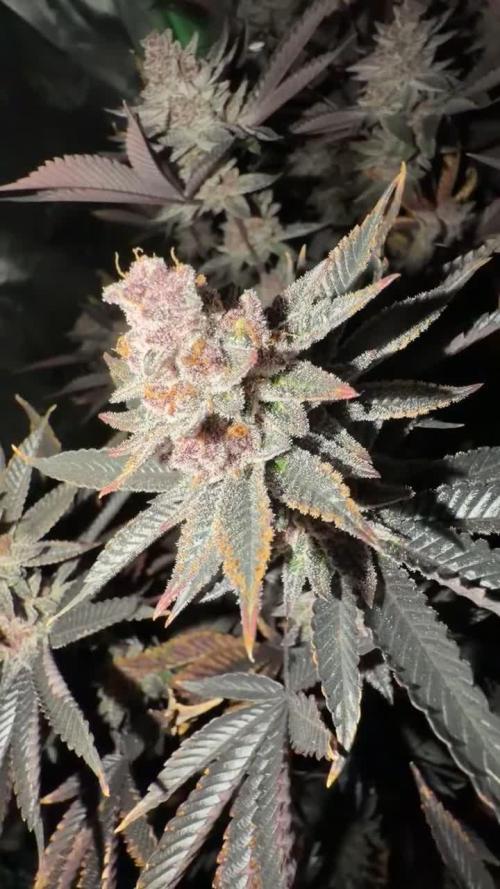
D78/FD50 - Apologies, a week late on my report. So, the Cookies are being a bit of a dick really!!! The Cheese is striking them and trying to take a few wee bits here and there to save the crop but dont know if I am being agressive enough...Time will tell!!! Tried a bit of Cinnamon around the affected buds and it does appear to stop the rot on contact but don't know how it will impact them. Will continue to monitor...
**Update** D84/FD56 - Cookies have become a real problem...Partial harvest time!!! Taking what looks to be "ripe enough" off the girls and leaving some lower buds to mature...hopefully they've not been too impacted. Had some real obvious ones that had to go and though I had some nice keepers, until I started trimming them down for the box to dry and random buds in the bunch had wee bits of grey mold at the stem!! Mild but just not doing it!!! Total bastard!!! Lost about 3-4oz (expected dry weight) easy!!! So no trim kept, all binned or burnt!
All a bit of a ballache but, what can you do!!! Anyway, happy growing all!!! 💪



Likes
8
Share


@dreamLife
Follow
Primera semana de floración, todo marcha bien. esperemos que no se estire tanto en prefloración.

Likes
5
Share


@Lasninasverdes
Follow
En nada empiezan la semana 9. Estoy orgullosos de mis niñas van muy bien😍


Likes
9
Share


@LetsGrowSome
Follow
Starting week 4 flower now. Theses ladies are doing great. No signs of any deficiency thus far. Decided to hold off on potash at this point. Noticed ladies fighting for light hard and middle lady trying to take it all. I removed the exhaust fan and opened the tent on the sides. Then I added another king led 4000w light. Both 24 in with bloom only turned on at a par of 850. That was done on Saturday, and by Sunday could already see a big difference in bud production. Added recharge with last watering. Hoping the ladies continue on happy and building!

Likes
4
Share

@Bear_Grows_Green
Follow
Chopped her down this morning got her having in about 63degress and 59% humidity with a little fan running on the floor. Stinking up the whole house since the drying closet has no filtration.

Likes
4
Share

@RooftopFarmer
Follow
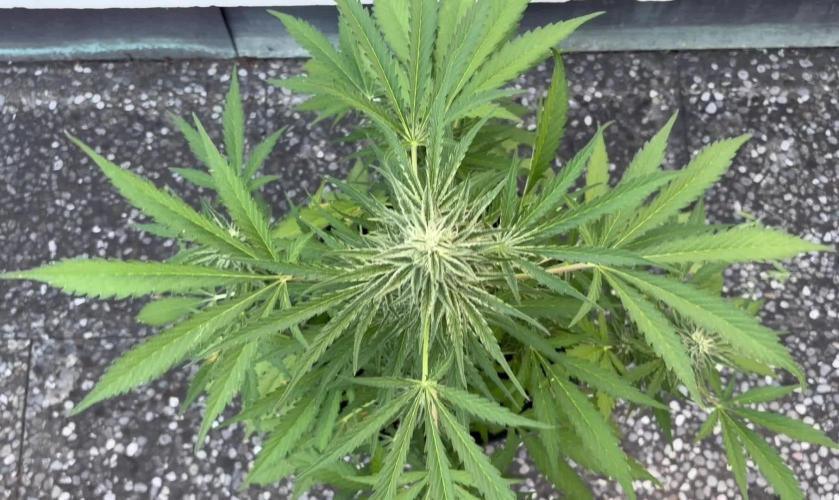
Guava Runtz – Week 9 (Fast Buds Outdoor 2026)
Weather was okay. Guava Runtz is receiving stronger nutrients following the schedule and continues to look good.
She is now around 52 cm tall with plenty of leaves and is fully in the flowering stage. A light sunflower like scent is noticeable and getting stronger. The trichomes are still mainly glassy with a few starting to turn milky. Steady progress.
Likes
5
Share


@asdfghjkl404
Follow
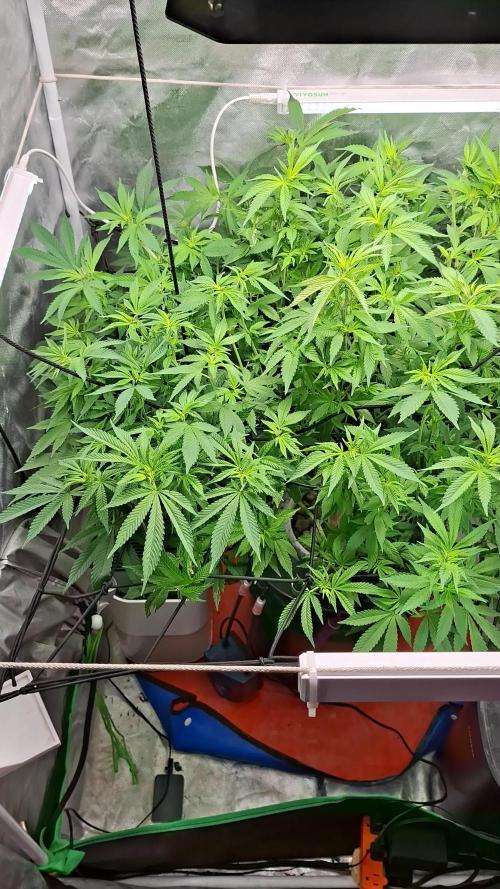
semana 4
dia 22
dia 23 st a la sour diesel pequeña
dia 24 riego con 500ml y sus fertilizantes estoy esperando que el sustrato se seque sobre todo en la diesel auto mas pequena
dia 25 no tengo luz full expectrum y estan con clf unos dias.
dia 26. se le ven los pistilos de prefloracion
dia 27: riego con 500ml con sus fertilizantes
dia 28:

Likes
35
Share


@nonick123
Follow
Día 9 (10/06) N/A
Día 10 (11/06) N/A
Día 11 (12/06) Llueve mucho. Humedad alta por aquí. Eso les favorece
Día 12 (13/06) Se empiezan a desarrollar las hojas verdaderas a una buena velocidad! Todo en marcha! 💨
Día 13 (14/06) Riego ligero 100 ml sólo H20 EC 0,5 en previsión del trasplante en el día 15 de la planta
Día 14 (15/06) Se nota que estamos en el día 14 desde germinación y la mayoría de las plántulas van viento en popa!
Día 15 (16/06) Hoy procedemos a trasplantar a las chicas a su maceta intermedia de 6,5 litros
Se prepara con 5,5 Litros (85%) de sustrato PRO-MIX HP BACILLUS+MYCORRHIZAE + 1 Litro de Insect Frass (15%) + 65 gramos de Earth Vibes Super Soil (10 g/L substrato)
Se llena la maceta de sustrato con las manos (limpias) y rompiendo los trozos más gruesos, para que el sustrato esté aireado y esponjoso, sin presionar
Se coloca una maceta vacía de 1L para que quede la forma perfecta de la maceta donde están las plántulas (ver fotos)
Se espolvorea la parte proporcional de la probeta de microorganismos sobre el agujero de trasplante
Se saca la plántula de su maceta actual (bonitas raíces 😍) y se coloca en la maceta final
Se riega muy lentamente hasta percolación profunda con H2O EC 0,5 pH 6,5
Se coloca mulch (acolchado) de paja para evitar traspiración excesiva y cuidar a los microorganismos del suelo
A ver como reacciona al trasplante!
💦Nutrients by Lurpe Solutions - www.lurpenaturalsolutions.com
🌱Substrate PRO-MIX HP BACILLUS + MYCORRHIZAE - www.pthorticulture.com/en/products/pro-mix-hp-biostimulant-plus-mycorrhizae
