The Grow Awards 2026 🏆 









Processing
Likes
Comments
Share
@GrowCaCola
Follow
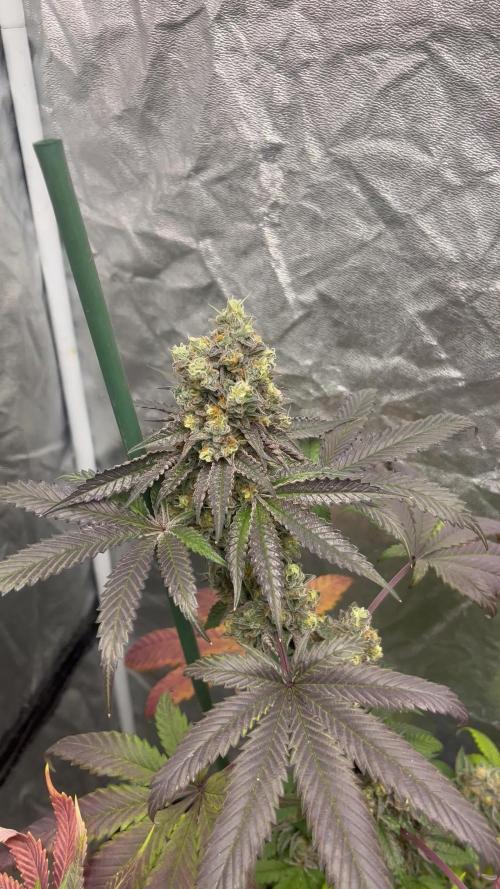
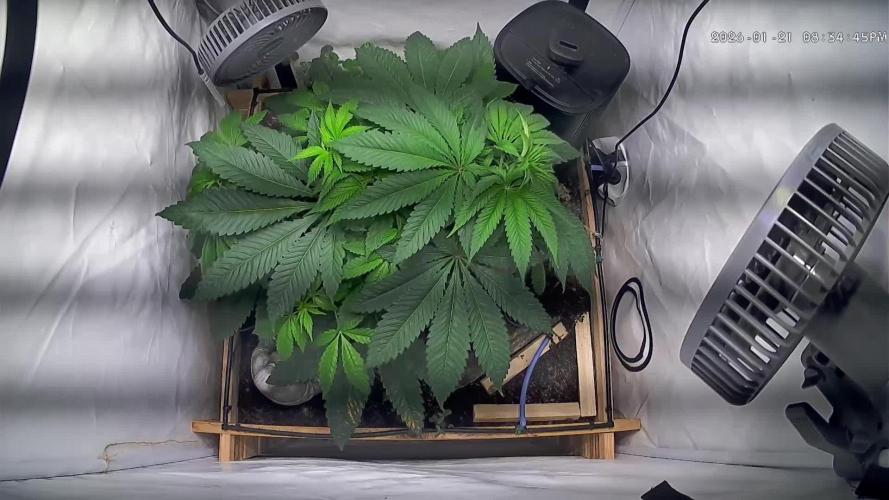
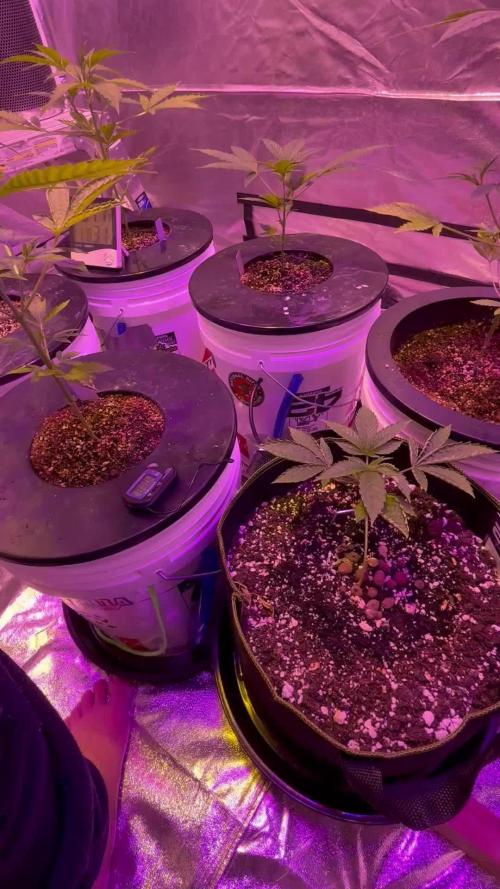
They are really starting to take off now - The Fungal gnats hit early this run so I have the mosquito bits in now. Anyone have a good way to deal with Fungal Gnats that doesnt involve any non-organic pesticides? I use mosquito bits. I know predatory Nematodes are supposed to work well but I havent tried them yet. Any other ideas?
Side Note - that OG Teas Veganic Special Sauce was a tip from my buddy @roningarden over at Instagram. Trying it for the first time this run, looks like its gonna be a good'n.👌🙏🙏🙏


Likes
10
Share
@eldruida_lamota
Follow
Vamos familia, actualizamos la octava semana de floración de estas Gelato 44 de RoyalQueenSeeds.
La temperatura que estuvo entre los 24-26 grados y humedad dentro de los rangos correctos.
En cuanto a las plantas las veo verde sano, estiraron bien y ensancharon bastante también.
Se nota que los nutrientes de la marca Agrobeta cubre todas las necesidades de cada ejemplar, empecé añadir el mega pk y el Thor.
Hay que reivindicar que en este armario no tengo trips ni plagas.
Las flores están madurando bien, por el momento todo correcto, os dejé también alguna novedad y un cambio en la sala, agradecer al equipo de Mars hydro por el nuevo TSW2000. (los últimos 5 años cultive solo con los leds de esta marca) los cuales probé, TS600, TS1000, TS3000, TSL2000.
- os dejo por aquí un CÓDIGO: Eldruida
Descuento para la tienda de MARS HYDRO.
https://www.mars-hydro.com
Hasta aquí todo, Buenos humos 💨💨💨

Likes
39
Share
@eldruidamx
Follow
Day 92. Watering with fertilizers.
Day 93. Watering with clean water.
Day 94. Watering with fertilizers.
Day 95. Watering with clean water.
Day 96. Watering with fertilizers.
Day 97. Watering with clean water.
Day 98. Watering with fertilizers.


Likes
Comments
Share
@marcian
Follow
Semana #2
La catástrofe.
Al llegar a mi casa, encuentro este triste escenario.No cerré bien una de las entradas del indoor y una de mis gatas entraron.
Murieron tres plantas.Dos Auto Brooklyn Sunrise y una Xtrem Haze.
Sentía que este cultivo tenia que ser desechado por todos los problemas iniciales, pero decidí continuar para ver que tanto pueden aguantar las plantas y por la inversion en estas semillas.
Las sovrevivientes se veian un poco torcidas, pero veremos que tal siguen.
Por todo esto, a las sobrevivientes (3 Auto Mazar y 2 Xtrem) no les haré ningún tipo de técnica y trataré de abonar con lo mínimo un par de semanas.

Likes
39
Share
@MyStery21
Follow
2-3 more days till harvest... some flowers need a little extra time. trichomes are 40% -50% amber.
6/19 17 weeks, baby it's about to be harvested, how she looks?... i just put this plant inside my room with the AC ON. THE SMELL MAKES ME SMOKE WEED TILL SUNSET , VERY VERY SWEET 😲

Likes
21
Share
@Jays_Not_Here_Man
Follow
A-Day 53 (into week 8) B&C-Day 49 (end of week 7)
A - She is stacking well, and feeling greasy! The smell is coming on stronger everyday, frost is just starting to build up. There is a distinct transition as the leaves go through veg to early flower to late flower. Uniform all around, not very tall, but she is hardy and thiccc!
B- Full flower now, so many tops! She has shown to be a slower flower developer than A, but the flowers she are developing are almost completely uniform all across the 🌱! I assume because there are so many they will be a little slower. I put her ties back on, and the middle shoots exploded with new stretch and growth, so she is still in that stretch/flower stage.
C- what can I say, patience is a virtue. She is looking lush and vigorous. With this being a slightly longer to finish auto strain, she has had time to recover from a) being a runt, B) having slow growth, c) having almost no training and lighter nutrient feeds her whole existence. This is also my control for Topping, she was not, A and B were. This strain is clearly hardy and able to withstand multiple techniques, we’ll see what the end the result is compared to her sisters.
All three plants received a full nutrient feed x2 this week. That was: 3 gallons dechlorinated water mixed with 12 ml Micro, 12 ml Bud, 20 ml Grow, and 6 ml Sensi Extra CalMag, PH’d to 6.2. And another very low feeding of 1/3 that mixture mixed into 3 gallons of water. Ive heard many growers who instead of just watering, they will do a much lower strength of nutrients included in their watering, and ultimately never not feed their plants nutrients until flush. Thoughts?

Likes
31
Share
@Hashy
Follow
📋Comment
I do like this strain, I wouldn't have joined this competition if I didn't like it.
📋 Data
Seed to havest=105 days.
Veg time=28 days.
Flower time=77 days.
Wet weight=609g
Dry weight=50g
📋 Smoke report
I started trimming after she had been hanging for 14 days. Had time to trim 30g and did the remainder the night after. The buds went into groove bags on 6/5/25.
The trim is frosty so I'll do a hash run, there was only 4g of larfy buds which will go into my hash run. 25/6/25 Had a sample, by far the strongest runtz i have grown. Highly impressed,
📋Grow stats for GDG 23
#1 Runtz=50g
#2 Fat Bastard=86g
Total=136g
Lights on.
20hrs×7days=140hrs
18hrs×21days=378hrs
12hrs×77days=924hrs
Total hours=1442hrs
Light power=147.73Kw
Rad power=105.69Kw
Extractor=34.12Kw
4 gang=47.02Kw
Top fan=17.72Kw
Total electricity=352.28KW
Electricity cost @£0.25/Kw=£88.07
Average light power a day=1.4Kw
Average watt per hour=102w
g/watt=(136÷102)=1.33g/w
£/g=£0.64/g
📋Final word.
I should have been more proactive then reactive with this plant, if I had raised her a lot sooner she would have produced a bit more and fought for more space.
I'm happy with with my results from the grow. Runtz is always a good strain to have. I'm also loving the green sensation, and the Plagon tera nutes, last 2 grows have had lots of frost since switching to them.
Unfortunately I didn't win the Eternity Cup or place in the top 10. I have looked through loads of the diaries that entered and damn there was some 🔥 diaries, what a great competition to have been apart off.
Congratulations to @Cauli, @naujas, @DogDoctorOfficial, for placing in the top 3 of the Eternity cup, excellent diaries, and congratulations to the remaining winners.
👏👏 to those that haven't kicked off about not winning. It's best to be a loser then a sore loser.
Back soon.
Take it easy.
********************************************

Likes
27
Share
@GrowinHome
Follow
Day11
Today I did some defoliating.
It took me quite some time laying on my stomach😅
I also like a clean growing space as u can see😁

Likes
18
Share
@VanTheMan
Follow
Day 22 - 06/04-2024 - Watered 2L - I am trying out LST with this one. Starting out with a soft bend using cotton thread. before bending i gently rubbed the stem between my fingers to soften it up
Day 25 - 09/04-2024 - Watered 1,5L - I am really satisfied with my LST work so far and now i regret i did not try this out earlier....

Likes
11
Share
@MadeInGermany
Follow
Flowering day 1
since time change
to 12/12
Hey guys :-)
The ladies are developing really well 😊.
After the pictures she came into the flowering tent Was poured 2 times with 1 l each (groundwater see description at the bottom)
I will spontaneously decide whether to keep her or not because all 3 phenotypes of her had seeds in the weed.
But all 3 phenotypes taste really delicious.
This phenotype 1 here only had a few single seeds so I'll give it another run and keep an eye on it.
Everything was made clean.
Fresh osmosis water is applied and the plants are sprayed and checked.
Stay healthy 💚🙏🏻
👇🏼👇🏼👇🏼👇🏼👇🏼👇🏼👇🏼👇🏼👇🏼👇🏼👇🏼👇🏼
You can buy this Nutrients at :
https://greenbuzzliquids.com/en/shop/
With the discount code: Made_in_Germany you get a discount of 15% on all products from an order value of 100 euros.
👇🏼👇🏼👇🏼👇🏼👇🏼👇🏼👇🏼👇🏼👇🏼👇🏼👇🏼👇🏼
You can buy this strain at :
Clearwater Seeds
Water 💧 💧💧
Osmosis water mixed with normal water (24 hours stale that the chlorine evaporates) to 0.2 EC. Add Cal / Mag to 0.4 Ec Ph with Organic Ph - to 5.8 - 6.5
MadeInGermany

Likes
22
Share
@MasterKush714
Follow
------=======😎👹👺👌12/05/2023 YOOOOO UPDATE GANG!!!!!!!!!! WEEK 13 IN FULL EFFECT GROMIE LFG!!!!!!!!👌👺👹😎=======------
--------------------------------------------------------------------------------------------------------------------------------------------------------------------==================================================================================================
👹👽👺***12/05/2023 10:44 AM DAY 85***---YOO WHATS BRACKIN GD FAM!!! THOUGHT I'D STOP BY N' GIVE YALL AN UPDATE FROM THIS LAST WEEK OF WORK!!!!!
SO I DID A FEEDING SUNDAY NIGHT, 1.2 GAL FEEDING TO BE EXACT SPLIT BETWEEN INTERVALS OF 15 MINS TO HELP PROPER ABSORPTION PH'D TO 6.3, ONLY DID
A 20/20/40 FEEDING OF NUTRIENTS, NEXT FEEDING WILL ONLY BE JUST WATER AS MENTIONED BEFORE, BUT OTHER THEN THAT SHE'S LOOKING GREAT SMELLS AMAZING LITERALLY
LIKE RUBBING GRAPE SKIN TOGETHER IN UR FINGER TIPS HAHA REALLY AMAZING STUFF, GOING TO GET HER READY FOR NEXT WEEK AND THEN
THE CHOP PROCESS BEGINS!!!!!!!!!!!!!!!!!! STAY WELL GROMIES AND STAY TUNED!!!!! THANKS FOR STOPPING BYYY!!!! STAY UP!!!!!!👽👌👺👹😎
--------------------------------------------------------------------------------------------------------------------------------------------------------------------==================================================================================================
👹👽👺***12/07/2023 10:44 AM DAY 87***---YOO WHATS BRACKIN GD FAM!!! THOUGHT I'D STOP BY N' GIVE YALL AN UPDATE====-------****
-----------------------------------------------------------------------------------------------------------------------------------------------------------------------
FLUSH HAS BEGUNNN!!!! SO LAST NIGHT I DID THE FIRST FLUSH IN THE BATH TUB WITH 6.3-6.5 PH ADJUSTED DISTILLED WATER,
AND USED ABOUT 2 GALLONS OR SO TO FLUSH PROBABLY ABOUT 2.3 GALLONS, WAITED 30 MINUTES BETWEEN EACH WASH,
DEFINETLEY SAW ALOT OF STUFF COMING OUT OF THE BOTTOM BUT I WILL CHECK AGAIN 2MARO NIGHT AND SO THANKS GUYS!!!
ALLLLSOOOOo!!!!!!!!!!!!!!!!!!!!!!!!!!!
YOOOOOO GO CHECK OUT THE NEWEST VIDEO QUALITY IS AMAZINGGG!!!!!!!!!!!!!!!!!!!
Likes
1
Share
@MyLittleGarden
Follow
Blütewoche 2:
Nachdem sich die Do-Si-Dos bereits in den ersten drei Wochen nicht richtig entwickelt hatte und die Keimung stagnierte, musste ich mich von ihr trennen. Zusätzlich habe ich mich letzte Woche auch von der Blue Sunset Sherbet verabschiedet, da sie sich eindeutig als männliche Pflanze herausgestellt hat. Schade drum, aber so ist es nun einmal.
Nun kann sich die Amnesia Lemon alleine im Zelt ausbreiten, ohne Rücksicht auf andere Pflanzen nehmen zu müssen. Da sie bereits gut in die Höhe gewachsen ist, habe ich mich dazu entschieden, sie seitlich herunterzubinden, um ihr und insbesondere den Seitentrieben mehr Platz sowie Licht zu verschaffen.
Leider hat sich das Band, das ich zum Runterbinden verwendet habe, zu stark in den Stamm eingeschnitten. Als mir das aufgefallen ist und ich es korrigieren wollte, ist mir dabei der Headbud abgebrochen. Sehr ärgerlich und leider nicht mehr zu retten.
Positiv betrachtet bekommen die Seitentriebe nun deutlich mehr Licht, und die Energie der Pflanze kann sich stärker auf diese verteilen. Insgesamt macht die Amnesia Lemon weiterhin einen sehr vitalen Eindruck und wächst stabil. Die Blätter zeigen ein sattes, kräftiges Grün. Die Umgebungstemperatur passt sehr gut und auch der VPD-Wert liegt weiterhin im optimalen Bereich.

Likes
4
Share
@OlyGrower
Follow
Growing fine except one Original Glue that is lagging behind. Perhaps not worth doing but we will see after the stretch.
- New addition to the tent , Purple lemonade FF
( for next run, clones )
Some LST
12/23 - pre flowering indications on all plants
Switching out the metal halide for the HPS. Time to start budding.


Likes
146
Share
@Natrona
Follow
I increased feed to 1 gal when watering. I water 2 liters let her absorb that and 30 minutes or so later i give her anothet 2 liters. The small amount of run off is absorbed by the following morning. Historically my plants have drank 2 liters and yielded 57 smokaeble grams. They say the amount of consumption is an indication of estimate yield. If my hypotheses holds true, Apollo should yield about 113 grams (4oz), twice what I've accomplished in the previous grows. Fingers crossed.
Fragrance in the tent is Sweet citrus diesel smell. Gently pushing the stems down and out, my hands, arms, and fingers are sticky.
RQS says harvest at 70-75 days from seed. I think within 2 weeks for harvest. Based on 9/14 pop soil, my calendar indicates it's gonna be around the 20th. So before Thanksgiving.


Likes
13
Share
@cookingwithninja
Follow
Day 14, some supercropping
Day 15 .. it’s under control 😂🤣
Day 19 lights almost maxed to tent height unless I zip tie led to the top ceiling frame, last bit of monster cropping. Lost 2 top nugs to physical led burn but it’s ok. Everything is fine. Still going very hard on soluble N, and Pk along with b+, fishsh!t, microbial mass, humic acid. Carbs every day with organic booster


Likes
14
Share
@PREPPYPUNK
Follow
will have to see but at 8 & 10 weeks, i think they look a little small. as long as i continue watering, this new maxsisun mf2000 should fatten these buds up. cant wait for next grow with the new light in 3x3 tent. this is becoming the best hobby i can recall next to working in my garden all summer. and this grow diary is great as you can have an honest review of progress etc...i have learned so much from this community. Thanks and Blessings for all!

Processing
Likes
6
Share

