The Grow Awards 2026 🏆
Likes
10
Share
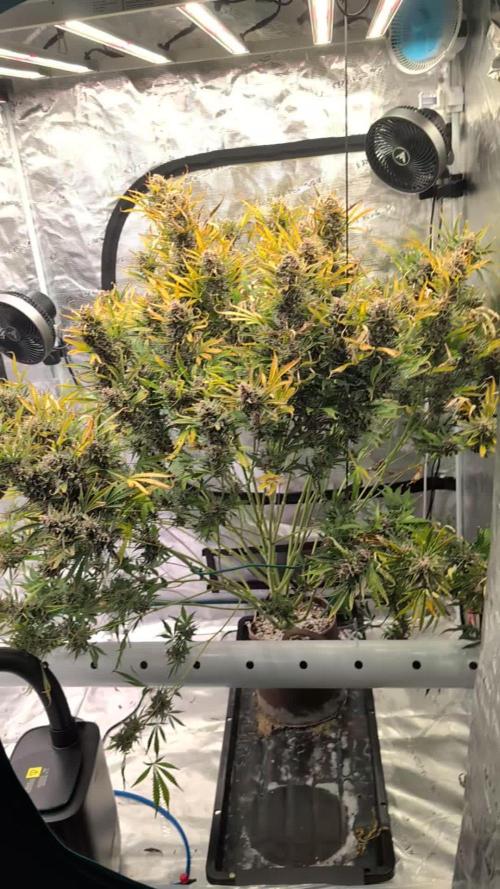
Benvenuti nella mio prato!!! 13/10 inizio settima settimana, siamo a piĂš di metĂ  strada con i tempi .. sinceramente le vedo un po troppo alte con piccoli steli sottili quindi gli ho messo un listello di legno per supporto. Se ti piace lascia un like ! Buon cultivo!!
Likes
181
Share
🍼Greenhouse Feeding BioGrow & Bio Bloom 🌱GARDEN OF GREEN SEEDS ⛺️MARSHYDRO The ⛺️ has a small door 🚪 on the sides which is useful for mid section groom room work. 🤩 ☀️ by VIPARSPECTRA (models: P2000 & XS 2000)
Likes
92
Share
🌸 Week 4 Flower Report: Growth, Challenges & Big Changes! 🌸 Hey, Grow Diaries Fam! ✨ We’re here at Week 4 of Flower, and what a week it’s been—packed with challenges, adjustments, and exciting progress! Before diving into the details, let’s start with a note on my flowering timeline. While this is Week 4, I don’t start counting flower days the moment I flip to 12/12. Instead, I wait for the plants to show true signs of bloom. It’s a small but significant distinction that keeps things accurate and aligned with the plants’ development. 🌱 Defoliation: Timing is Everything! Defoliation is a critical part of the flowering stage, and I typically wait until Day 21. However, this week, I tackled it earlier on Day 17 because: 1️⃣ The room was simply too full. 2️⃣ And most importantly—the Papaya Zoap had other plans! She’s a fighter—determined, defiant, and constantly reaching for the moon. Despite intense training like super cropping, she’s still pushing upward, nearly outpacing the LED lights. Challenges like this remind us of a simple truth: gardening mirrors life. It’s about resilience, adaptation, and unwavering determination. 💪 This week, I added a second SCROG layer. While this net will support the flowering colas, it’s also there to strategically manage the Papaya Zoap. Why? Because experience has taught me that if she grows out of the LED’s range, she won’t finish properly—and that could disrupt the balance for every other plant in the tent. It’s all about teamwork, even in the garden. 🌟 Defoliation was intense, removing nearly all the leaves with stems to clear space and boost airflow. The tent now looks dramatically different! For the full before-and-after transformation, be sure to check out my YouTube channel—trust me, you’ll want to see this process up close! 🎥✨ Switching to Aptus Holland Minerals A major milestone this week: I’ve transitioned entirely to Aptus Holland Minerals. 🌊 From now on, it’s just minerals—no more organic inputs. This marks the start of a new chapter, and I’m incredibly curious to see how the plants react to these changes. Here’s the current nutrient mix: • System Clean: 0.5 ml/L • Regulator: 0.15 ml/L • RO Water Conditioner: 0.8 ml/L • All-in-One Liquid: 2.1 ml/L I’m keeping the pH at 6.1 and TDS at 556 ppm, and so far, the plants are thriving. This week also included a thorough system clean, ensuring everything runs smoothly as we enter the final flowering stages. 🌿 Bud Development: Pure Magic! The bud formation across all the genetics is nothing short of incredible. Every plant is thriving, and the canopy is lush, vibrant, and full of potential. I’ve raised the PPFD to 750 for this stage, with temps steady at 25°C and RH at 63%—keeping the VPD dialed in at 1.11. The TrolMaster ecosystem, paired with the AutoPots, makes managing these precise conditions seamless. With more time to focus on the plants, I can give them the daily care they deserve. 💚 Shoutouts & Gratitude A huge thank you to my sponsors and supporters: TrolMaster, Aptus Holland, Pro-Mix, Cannakan, and the amazing seed banks. Your incredible products and technology make this journey possible. 🌟 To the Grow Diaries community and all my followers—thank you for your energy, love, and even the challenges from the haters. It all fuels this incredible process, and I apprecilove every bit of it. Special shoutout to Brother Daggadna—check him out on Instagram and show some love! 💚 The plants are heading into the next phase of bloom, and I can’t wait to share how this story unfolds. 🌸✨ As always, stay tuned, stay positive, and let’s keep growing strong together! 🙌 Growers’ love to all 💚 #TrolMaster #AptusHolland #GrowLife #CannabisCommunity #FlowerWeek4 #NeverGiveUp #GrowWithLove #IndoorHorticulture #Defoliation #PPFD #ControlledEnvironment #SCROGNet #DogDoctorOfficial Discount Codes so you can save big on your next check out 💚💚💚 Kannabia - DOGDOCTOR 30% off SeedsmanSeeds - DOGDOCTOR 10% off CannaKan- DOGDOCTOR 15% off terpyz.eu - DOCTOR 15% off The Neutralizer - PORKIT5-DOG 15% off As always thank you all for stopping by, for the love and for it all , this journey of mine wold just not be the same without you guys, the love and support is very much appreciated and i fell honored and so joyful with you all in my life 🙏
 With true love comes happiness 💚🙏 Always believe in your self and always do things expecting nothing and with an open heart , be a giver and the universe will give back to you in ways you could not even imagine so 💚 Friendly reminder all you see here is pure research and for educational purposes only Growers Love to you all 💚💚💚 P.S. – A Deep Dive into the ICL-300: Revolutionizing Under-Canopy Lighting The ICL-300 isn’t just another LED—it’s a game-changer for under-canopy lighting. Unlike traditional LED systems that project light in a single direction, the ICL-300’s 300-degree design ensures even light distribution beneath the canopy. 🌟 This unique feature means that no part of your plant is left in shadow, creating a balanced environment for lower buds to thrive. Key Tech Specs & Benefits: • 300-Degree Light Distribution: This design fills the under-canopy space with optimal light, enhancing photosynthesis where it often gets neglected. 🌱 • Full Spectrum Output: Tailored to meet the specific needs of plants at every stage, ensuring quality growth from base to apex. • Energy Efficiency: Advanced LED technology delivers maximum output with minimal energy usage, keeping costs down and sustainability up. 💡 • Durability & Heat Management: Built with high-quality materials, the ICL-300 stays cool and reliable, even in intense growing environments. Why It Matters: Under-canopy lighting is a game-changer for growers aiming to maximize yield and quality. Typically, lower buds receive less light, resulting in larfy or underdeveloped flowers. The ICL-300 changes that dynamic entirely by turning shadows into opportunity. 🌟 With light evenly dispersed across the entire plant, you’re not just growing; you’re sculpting a masterpiece. For me, the ICL-300 is more than a tool—it’s a partner in innovation. It ensures that every plant in my grow room has equal opportunity to shine, from the top colas to the smallest buds at the base. When paired with a carefully managed ecosystem, like the one powered by TrolMaster, the potential for consistent, top-quality harvests reaches new heights. This isn’t just about adding light—it’s about adding value, efficiency, and balance to the grow process. I’m beyond excited to see how the ICL-300 transforms the game in my tent, and I can’t wait to share the results with you all! 💚
Likes
68
Share
Removed autoflower and put her in her own pot outside the tent. Foliars applied in strong blue 430nm with 4000Hz tone. 20-minute dose prior to application. In essence, you're seeing a combination of the infrared light reflected by the plant, which the camera perceives as red, and any residual visible blue light the plant reflects, which results in a purple hue. I was doing more stretching of the stems, adjusting weights, just a little too much, and it snapped almost clean. I got a little lucky in that it was still connected, wrapped her almost instantly while holding her in place with yoyo's. The core framework is now in place. If your soil has a high pH, it's not ideal; you want a pH of 6.4, 6.5, or 6.6, which is ideal. If you are over a pH of 7, you have no hydrogen on the clay colloid. If you want your pH down, add Carbon. If you keep the pH below 7, you will unlock hydrogen, a whole host of new microbes become active and begin working, the plant will now be able to make more sugar because she has microbes giving off carbon dioxide, and the carbon you added hangs onto water. Everything has electricity in it. When you get the microbes eating carbon, breathing oxygen, giving off CO2, those aerobic soil microbes will carry about 0.5V of electricity that makes up the EC. The microorganisms will take a metal-based mineral and a non-metal-based mineral with about 1000 different combinations, and they will create an organic salt! That doesn't kill them, that the plant loves, that the plant enjoys. This creates an environment that is conducive to growing its own food. Metal-based: Could include elements like iron, manganese, copper, or zinc, which are essential nutrients for plants but can exist in forms not readily accessible. Non-metal-based: Examples like calcium carbonate, phosphate, or sulfur are also important for plant growth and potentially serve as building blocks for the organic salt. Chelation in a plant medium is a chemical process where a chelating agent, a negatively charged organic compound, binds to positively charged metal ions, like iron, zinc, and manganese. This forms a stable, soluble complex that protects the micronutrient from becoming unavailable to the plant in the soil or solution. The chelate complex is then more easily absorbed by the plant's roots, preventing nutrient deficiency, improving nutrient uptake, and enhancing plant growth. Chelation is similar to how microorganisms create organic salts, as both involve using organic molecules to bind with metal ions, but chelation specifically forms ring-like structures, or chelates, while the "organic salts" of microorganisms primarily refer to metal-complexed low molecular weight organic acids like gluconic acid. Microorganisms use this process to solubilize soil phosphates by chelating cations such as iron (Fe) and calcium (Ca), increasing their availability. Added sugars stimulate soil microbial activity, but directly applying sugar, especially in viscous form, can be tricky to dilute. Adding to the soil is generally not a beneficial practice for the plant itself and is not a substitute for fertilizer. While beneficial microbes can be encouraged by the sugar, harmful ones may also be stimulated, and the added sugar is a poor source of essential plant nutrients. Sugar in soil acts as a food source for microbes, but its effects on plants vary significantly with the sugar's form and concentration: simple sugars like glucose can quickly boost microbial activity and nutrient release. But scavenge A LOT of oxygen in the process, precious oxygen. Overly high concentrations of any sugar can attract pests, cause root rot by disrupting osmotic balance, and lead to detrimental fungal growth. If you are one who likes warm tropical high rh, dead already. Beneficial, absolutely, but only to those who don't run out of oxygen. Blackstrap is mostly glucose, iirc regular molasses is mostly sucrose. Sugars, especially sucrose, act as signaling molecules that interact with plant hormones and regulate gene expression, which are critical for triggering the floral transition. When sucrose is added to the growth medium significantly influences its effect on floral transition. Probably wouldn't bother with blackstrap given its higher glucose content. Microbes in the soil consume the sugar and, in the process, draw nitrogen from the soil, which is the same nutrient the plant needs. Glucose is not an oxygen scavenger itself, but it acts as a substrate for the glucose oxidase (GOx) enzyme, effectively removing oxygen from a system. Regular molasses (powdered if you can), as soon as she flips to flower or a week before, the wrong form of sugar can delay flower, or worse. Wrong quantity, not great either. The timing of sucrose application is crucial. It was more complicated than I gave it credit for, that's for sure. When a medium's carbon-to-nitrogen (C:N) ratio reaches 24:1, it signifies an optimal balance for soil microbes to thrive, leading to efficient decomposition and nutrient cycling. At this ratio, soil microorganisms have enough nitrogen for their metabolic needs, allowing them to break down organic matter and release vital nutrients like phosphorus and zinc for plants. Exceeding this ratio results in slower decomposition and nitrogen immobilization, while a ratio below 24:1 leads to faster breakdown and excess nitrogen availability. Carbon and nitrogen are two elements in soils and are required by most biology for energy. Carbon and nitrogen occur in the soil as both organic and inorganic forms. The inorganic carbon in the soil has minimal effect on soil biochemical activity, whereas the organic forms of carbon are essential for biological activity. Inorganic carbon in the soil is primarily present as carbonates, whereas organic carbon is present in many forms, including live and dead plant materials and microorganisms; some are more labile and therefore can be easily decomposed, such as sugars, amino acids, and root exudates, while others are more recalcitrant, such as lignin, humin, and humic acids. Soil nitrogen is mostly present in organic forms (usually more than 95 % of the total soil nitrogen), but also in inorganic forms, such as nitrate and ammonium. Soil biology prefers a certain ratio of carbon to nitrogen (C:N). Amino acids make up proteins and are one of the nitrogen-containing compounds in the soil that are essential for biological energy. The C:N ratio of soil microbes is about 10:1, whereas the preferred C:N ratio of their food is 24:1 (USDA Natural Resource Conservation Service 2011). Soil bacteria (3-10:1 C:N ratio) generally have a lower C:N ratio than soil fungi (4-18:1 C:N ratio) (Hoorman & Islam 2010; Zhang and Elser 2017). It is also important to mention that the ratio of carbon to other nutrients, such as sulfur (S) and phosphorous (P) also are relevant to determine net mineralization/immobilization. For example, plant material with C:S ratio smaller than 200:1 will promote mineralization of sulfate, while C:S ratio higher than 400:1 will promote immobilization (Scherer 2001). In soil science and microbiology, the C:S ratio helps determine whether sulfur will be released (mineralized) or tied up (immobilized) by microorganisms. A carbon-to-sulfur (C:S) ratio smaller than 200:1 promotes the mineralization of sulfate, when the C:S ratio is low, it indicates that the organic matter decomposing in the soil is rich in sulfur relative to carbon. Microorganisms require both carbon and sulfur for their metabolic processes. With an excess of sulfur, microbes take what they need and release the surplus sulfur into the soil as plant-available sulfate A carbon-to-sulfur (C:S) ratio higher than 400:1 will promote the immobilization of sulfur from the soil. This occurs because when high-carbon, low-sulfur materials (like sawdust) are added to soil, microbes consume the carbon and pull sulfur from the soil to meet their nutritional needs, temporarily making it unavailable to plants. 200:1 C:S 400:1: In this range, both mineralization and immobilization can occur simultaneously, making the net availability of sulfur less predictable. This dynamic is similar to how the carbon-to-nitrogen (C:N) ratio regulates the availability of nitrogen in soil. Just as microbes need a certain amount of nitrogen to process carbon, they also require a balanced amount of sulfur. Both mineralization and immobilization are driven by the metabolic needs of the soil's microbial population. Sulfur is crucial for protein synthesis. A balanced ratio is particularly important in relation to nitrogen (N), as plants need adequate sulfur to efficiently use nitrogen. A severely imbalanced C:S ratio can hinder the efficient use of nitrogen, as seen in trials where adding nitrogen without balancing sulfur levels actually lowered crop yields. Maintaining a balanced carbon-to-sulfur (C:S) ratio is highly beneficial for plant growth, but this happens indirectly by regulating soil microbial activity. Unlike the C:N ratio, which is widely discussed for its direct effect on nutrient availability, the C:S ratio determines whether sulfur in the soil's organic matter is released (mineralized) or temporarily locked up (immobilized). Applied 3-day drought stress. Glucose will hinder oxygenation more than sucrose in a solution because glucose is consumed faster and has a higher oxygen demand, leading to a more rapid decrease in oxygen levels. When cells respire, they use oxygen to break down glucose, and this process requires more oxygen for glucose than for sucrose because sucrose must first be broken down into glucose and fructose before it can be metabolized. In a growth medium, glucose is a more immediate and universal signaling molecule for unicellular and multicellular organisms because it is directly used for energy and triggers a rapid gene expression response. In contrast, sucrose primarily acts as a signaling molecule in plants to regulate specific developmental processes by being transported or broken down, which can be a more complex and slower signaling process. Critical stuff. During wakefulness (DC electric current) life can not entangle electrons and protons. During the daytime, the light is sensed as multiple color frequencies in sunlight. Coherence requires monochromatic light. Therefore, at night, IR light dominates cell biology. This is another reason why the DC electric current disappears during the night. The coherence of water is maintained by using its density changes imparted by infrared light released from mitochondria in the absence of light. This density change can be examined by NMR analysis, and water is found to be in its icosahedral molecular form. This is the state that water should be in at night. This is when a light frequency is lowest and when the wave part of the photoelectric effect is in maximum use. 3600
Processing
Likes
2
Share
@Palermo91
Follow
They look good to me ... keep give all the nutrient .. I gonna wait maybe 3 more days and I gonna topping 👍👍😊😊👌👌
Likes
23
Share
Started withholding nutrients too early and she literally just started eating herself. We are close to the finish. Buds are swelling up and trichomes get thicker by the day. Video update New video of The 91Grapes ripening. So I’m not too sure about the information that this strain is ready for harvest in 65-70 days as you can see today is day 90 and still chugging along. The grow light transmitts color in 3700(k) so not true at all , I will to locate a light with a truer color for better pictures.
Likes
48
Share
@valiotoro
Follow
Buds are fat, dense, and heavy just how we like ’em! 🔥
Likes
3
Share
@Dunk_Junk
Follow
She's still growing well this week. 8cm growth. It's her first week on 12/12. Changed to 6-12-36 powdered nutrients now.
Likes
12
Share
esta Emana cambiaremos el foco a 12horas, y dentro de nada entraremos en l ase de floraciĂłn . Estiraron muy bien esta semana se notĂł mucho el trasplante esta semana.
Likes
6
Share
Likes
5
Share
@Zeaiache
Follow
En su Nuevo suelo y con los microbios ganaron vigorosidad, las hojas están frondosas, y sus tallos engordaron, la verdad siento que prometen mucho 😈
Likes
6
Share
Another week down. I'd say 3 more to go for a majority of the plants here. One of the zkittles phenotypes is about ready and her immune system is starting to fail so I harvested her. She was an early flower most likely due to root bound stresses. Not a fan of this pheno for structure and mold/stress resistance. The others are looking awesome. Barely any mold
Likes
61
Share
Week 7 Bloom started. Day 42 - buds got really nice and i got like 70% milky trichomes already, placed some predatory mites today aswell against the thrips. Also i will only give water from now on and prob gonna Flush them tomorrow
Likes
27
Share
I use the glass of water for 24 hours and the papertowel method right after untill I see a nice size root
Likes
32
Share
Not much to say this week. This batch is almost over. Checking trichomes everyday. Currently clear turning opaque. looking like a real nice haul. I imagine ill chop these next weekend or the weekend after that. What a beautiful purple jungle.@fastbuds hopefully im doing them justice?
Likes
3
Share
Low stress training a few I think there looking ok so far
Likes
25
Share
The Terp tent in full flush mode.... started flawless finish on day 75/81 and flushed all 4 plants throughly let dry out on day76 at night b4 loghts out i then fed 1 liter each plant of plain ph reg water 6.0 ... day77 marked plain water 5.95ph. With slight run off about 3 liters. Day 78 /84 is today which upon checking my trics id say they will be ready for 48 hrs of straight darkness on day 83/89..... from there they will be sawzawed unless yall got a pair of scissors that can cut through 3 inch stems hahaha damn rhino skin .....(buyit) All 3 cookies gelato are turning purple 😋 💜 😍 ya babe shine for me Cg1 is a yeilder that smells like straight up Blueberry pancakes with some side muffins Cg2 is short but she got cake bro ..... sticky n will be a trimmer Cg3 no joke smells like candy gas and so frosty I think we might class this one as the best I might ever grow lol no shares on this lady fingerprint scanner on the jar opener ....... Green gelato is one hella weird growing plant to me idk why maybe I did something wrong or right but these buds r still skinny but fattened up alot tha ks to over drive .... they are about 20 inch buds and 6 main colas that long smells like lemon candy and gas earthy mix deff gonna be a trimmer but a decent yeild I bet for how small the bud sticks are lol 😆 they like foot long hotdogs but like 2 of em in 1 lol 😆 😂 👌 Anyways so far so good kept it clean tidy and fulfilled my passion for thc ... What more could always bored needed something to do carpenter with zero side time ask for honestly tho for my 1st ever grow eith 100%brand new equipment not knowing what I'm doing , I think I did well I pat myself on. The back ... I hope to make my name in the I dusty somehow someway down the line ... possibly breed my own strains and brand it the terp tent thanks for those who veiw my.grow and stay green fams. Till next week when we get some hopefully final pics b4 dry?????
Likes
21
Share
@Demonus
Follow
Germination conditions: ________________________ Average Temperature: 25°C. Relative Humidity: 65% - 75%. Water: I saturated the entire pot with filtered tap water before I planted the seed(pH: 6.5). Nutrients: None. Light Schedule: 24 hours (2500 Lumens). ________________________________________ ________________________________________ Additional notes about the grow environment: _____________________________________________ Airflow: - 12V intake fan in bottom bucket. (In use during Germination, Veg and Flower) - 5V inline intake fan in midsection. (In use during Veg and Flower) - 5V fan in midsection of bin interior. (In use during Germination, Veg and Flower) - 12V inline extractor fan mounted next to the 100w light and directly above the 50W light. (In use during Flower) - Detachable 12V inline fan with activated carbon filter and hose. (In use during Flower) - 5v Usb humidifier. (In use during Germination and Veg) Light: - "100W" Full Spectrum LED Grow Light mounted in the lid of the bin. (In use during Germination, Veg and Flower) - "50W" Full Spectrum LED Grow Light mounted on the side of the bin interior. (In use during Flower) - Bin interior is spray painted with Rustoleum Flat white. These lights are extremely inexpensive. I continuously doubt their efficacy. So far so good...
Likes
131
Share
Hallo zusammen, wie gestern angesprochen ist es nun so weit. Die Green Gelato´s und ihre nebst Gefährtin Secret Source, haben ihr Lebensziel erreicht und wurden kopfüber in 2 separaten Zelten aufgehängt. Es wurde schon sehr eng in dem 80er Zelt, wo die drei Gelato´s verblieben sind. Wir haben auch beide Zelte miteinander mit der Luftzufuhr verbunden, so das wir beide Zelte jetzt mit einem 100er Abluftventilator betreiben. Der Abluftschlauch liegt im Fenster- Kit, was noch von dem Klimagerät vorinstalliert war und wird nach außen abgeführt. Die ideale Trocknungstemparatur (höchstens 18° Grad Celsius) bekommen wir aufgrund des Sommers leider nicht ganz gewährleistet. Aber auch positiv, wir sind keine 10° Grad Celsius drüber^^ Zur relativen Raumfeuchte: Wir fahren im Moment mit ca. 66- 68 % was trotz momentanen Regen nicht schlecht ist zum Anfang. Ein wildes Tagebuch mit einigen Tiefen Aber uns das ist uns das wichtigste, mit einem positiven Ende trotz allem :-) Wir hoffen, dass wir auch mit negativen Momenten den ein oder anderen ggf. vielleicht bei seinen nächsten ähnlichen Erfahrungen eher helfen können bzw. etwas mitnehmen konnten. Auch wir, haben in diesem Lauf wieder vieles gelernt, festigen und oder verbessern können. Einige Stellschrauben werden wir demnächst eher stellen, anders Einstellen. Es hört nie auf und das, dass ist glaube ich das Leidenschaftlich phänomenale für uns auf dieser Ebene :-) Ansonsten viel Spaß mit einigen Fotos und Video! Ein herzliches Danke schön auch an alle großartigen Growmies, die stets mit Rat und oder auch guten Zusprüchen wie Komplimenten uns zur Seite standen! Auch ihr habt uns sehr animiert ;-) Eigentlich sind wir schon etwas müde, dennoch müssen dieses Jahr noch Restanten und aufgearbeitetes auf ihrem Weg begleitet werden. Da mir (männlich) im Herbst ca. auch wieder eine größere OP bevor steht, wird das dann für dieses Jahr auch mal der letzte Lauf sein. Auch den Garten werden wir in Zukunft aufgrund dessen erstmal sein lassen. Smoke Report wird noch folgen, die Buds sehen wieder schön fest aus und zeigen ein starkes Terpenen Profil. Wir hoffen sehr, dass es auch so mundet wie es doch final aussieht. Vielen Dank an alle Growmies die unsere Updates verfolgen, liken und oder auch Kommentieren. Wir wünschen allen ein angenehmen terpigen Sonntag und viel Erfolg für die kommende Woche! VG euer Team Roots