


Likes
Comments
Share


@DrAnandamida
Follow
El proceso sigue "viento en popa y a toda vela" 🌬️🌿 Aunque me he encontrado un pequeño contratiempo, algunas hojitas están siendo mordisqueadas por pequeñas orugas. Si bien es cierto que sólo he encontrado algunos ejemplares en esta cepa, también hay hojas mordisqueadas en las otras cepas, compañeras de cultivo (Red Pure Auto - Sweet Seeds y OG Kush - Dinafem). El tallo sigue creciendo en tamaño y consistencia, por lo que no necesitamos los soportes/guías, pese a que ha alcanzado los 45cm de altura 🤩 Aumentamos la cantidad de agua, progresivamente, según van pidiendo/necesitando las plantas.
Sigo intentando no utilizar ningún tipo de "ayuda extra", salvo la tierra enriquecida de CANNA Terra Professional Plus donde están plantadas. Seguimos con el agua mineral, luz solar, mucha paciencia y mucho amor!🤞😍 Aunque para controlar la aparición de pequeñas orugas he añadido: 20g de tierra de diatomea (Diatical de TRABE), directamente sobre el sustrato (1-2 veces/mes y se puede aplicar en cualquier momento del cultivo). 50ml de Super Kukulus (fitofortificante ecológico)/1 litro de agua para riego foliar, tanto en el anverso como en el reverso de las hojas (2-3 veces/sem y se puede aplicar en cualquier momento del cultivo has 2 días antes de la cosecha). Además, añadiré unas pequeñas tiras (Yellow Sticky Traps) para mayor tranquilidad, veremos los resultados en las próximas semanas! 💪😅

Likes
2
Share

@Phaleg
Follow
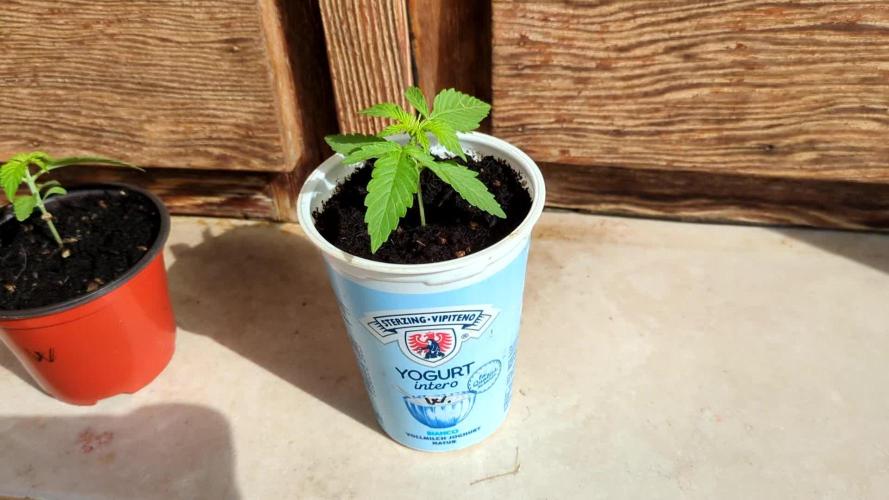
This week spaced among different types of weather, from rain and hail storms, to sunny and heat
(I took the plants indoors for the hail)
Height looks the same, because I added some ground, so they grew but it looks they did not.
They get water once a day and the point leaf count is increasing.
Soon they will be moved to 14 liters pots, what do you think? I normally wait that they have 5 points (or more) per each whole leaf
Thanks for following me and in case you want to share anything, feel free to text me or comment
PEACE

Likes
7
Share

@BtownOrganics
Follow
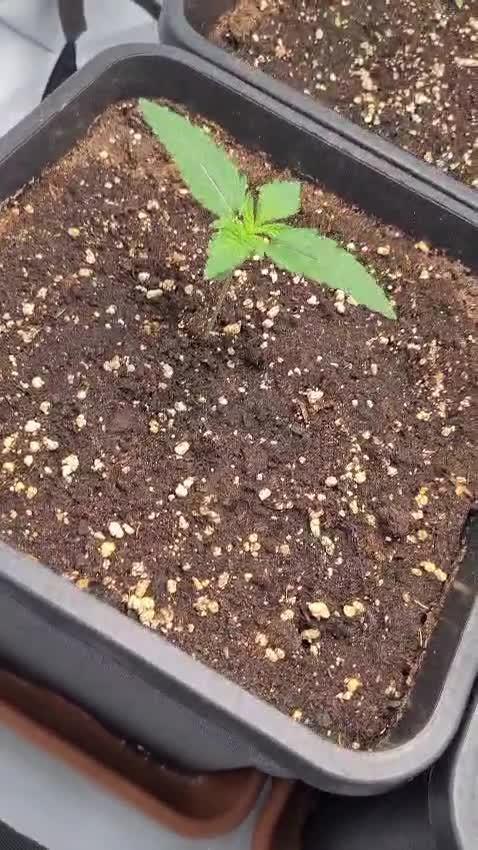
06.09. Sprayed the soil a bit with around 100ml water for each plant.
07.09. 200ml water for each plant.
08.09. 200ml water for each plant. First time used a bit of Bio-Grow (0,4ml/1l).
09.09. Sprayed the soil a bit with around 100ml water for each plant.
10.09. 200ml water for each plant with Microbes.
11.09. 200ml water for each plant with CalMag, Heaven and Acti Vera.
12.09. Sprayed the soil a bit with around 100ml water for each plant.

Likes
23
Share


@nonick123
Follow
Día 20 (13/05) Todas las plantas muestran las preflores!
Día 21 (14/05) Baño de sol de 2 horas!
Día 22 (15/05) NYC Sour D Auto empieza a mostrar algo de clorosis intervenal...
El gran @Thecannalife420 me diagnostica deficiencia de Mg
Aplico foliarmente Sales de Epson
Día 23 (16/05) Las plantas han reaccionado muy bien a las sales de Epson!
Riego 750 ml H2O + Regulator 0,15 ml/l + CaMg-Boost 0,25 ml/l + Startbooster 0,25 ml/l - pH 6.2
Día 24 (17/05) Las plantas salen al exterior! 😍 Les aplico heno como mulch (acolchado)
Día 25 (18/05) Riego 250 ml solo agua todas las plantas
Día 26 (19/05) Riego 250 ml H2O + Regulator 0,15 ml/l + CaMg-Boost 0,25 ml/l + Startbooster 0,25 ml/l + TopBooster 0,2 ml/l- pH 6.2
💦Nutrients by Aptus Holland - www.aptus-holland.com
🌱Substrate PRO-MIX HP BACILLUS + MYCORRHIZAE - www.pthorticulture.com/en/products/pro-mix-hp-biostimulant-plus-mycorrhizae

Likes
15
Share


@Ctsbestsmoke
Follow
Place these seeds in the paper towel literally 24hrs later the tap roots were nice and long. I then placed them in jiffy pods and within 24 hours this is how they looked. So far amazing from what I see. Shout out to fast buds!!! This will be ram in the growace Aircube system.
Likes
84
Share


@PEAKYPLANTERS
Follow
heylà my best grower friends
my second cultivation ...... my first technical experiments .... my first stages of approach with the most beautiful plant on the planet ....I'm also trying the fresh trimm because of the heat ..... but honestly I prefer the dry one. I have never been a gardener .... but fuck ... I would do anything for them ... and then I went to study to try to become one
I did everything with the utmost transparency and I hope it will help those like me who want to maximize yields by making the most of the power of these magnificent stumps
happy and abundant harvests to all of you friends
and many kisses to those who always support me
see you around


Processing
Likes
26
Share


@MG2009
Follow
02/01/2021
Going to sprout my last 2 Bluedreamatic seeds from
(fast buds). Will be sprouting in mini greenhouse on heat mat. Once seedlings are ready they will be moved under 1000w MH for veg and flowering.
10+hours later they are on bottom of water and time for paper towels in baggie.
02/03/2021
1 seed sprouted and I dropped the other in soil 🙏 I hope because it disappeared! So got at least one Bluedreamatic on the way hoping to see other one sprout in mixing tray.
02/05/2021
She's above ground! Day #1 , currently under 150w compact flourecent 3 way bulb when first true leaves form
(Not single finger let)I will start veg cycle under 1000w MH see you in 3-4 days for weekly update.
topped seedling pot with vermiculite 1/2-3/4 inches
leaving the cotdtyledons 1/2-3/4 inches above surface. Roots should fill up this container quickly, moved under1000w MH light for vegging. Seedling is 3-4 ft away from light but also off to the side no serious heat just about room temperature. I could not feel heat from light where I put seedling, comfortable on your skin is good for plants.
02/11/2021
It's day #6 above the soil, she is doing well already grown 2" above where I topped with vermiculite. At lights out I put her in humidity dome with my tomato seedlings main area of grow gets very cool at night,so I try to keep her at a better temp 72°f.
Processing
Likes
15
Share


@ElegantBuds
Follow
Hello
This week was a ideal week for temperature and humidity.
Perfectly balanced.
I looked at the trichomes with a scope and I saw some amber pistols already.
I saw alot of clear trichomes to so I do know i am right on track.
This week they got their first pk 13/14. Finally the buds/cola’s can start getting fatter!
I think I will give a week pk 13/14.
After that normal nutrition week again. One or two and after I start flushing!
See you growers next week!


Likes
16
Share


@AltexGrower
Follow
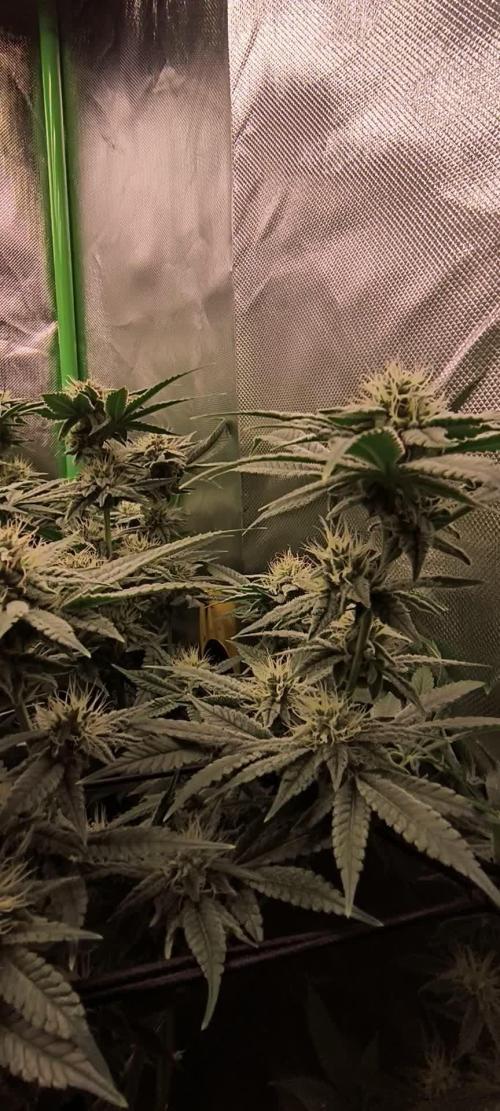
They are opening up a lot and making great progress. I'm adding a lot of rooter.



Likes
112
Share


@SwissKush
Follow
Day 64 - she is huge!
a. Kabul Bush is a monster! I can not think of a bigger stem
b. she enjoys her time inside with Big Bud in buddies tent
c. we wlll move her to back in barn tomorrow, should be warmer here region
d. we still have at least 40 more days!
Day 65 - back in barn
a. she is back in the barn tent in natural air flow
b. keeping temperature in barn tent above 10 degrees, kush likes cold, hoping to get some purple buds here
Day 66 - growing well
a. freshly cleaned DWC, the flowering nutrients are installed and being consumed, 750ppm
b. flowering is def happening nicely
Day 67 - buds have their stigmas out!
a. flowering in 15 degrees
Day 68 - environment is nice
a. no photo today, no disturb environment, holding in heat
Day 69 - changing to 4 hours off light
a. next week will change to 4 hours of darkness during the day when it is the hottest, without vents on
b. plant is very healthy, begging for more nutrients, raised it to 1000ppm. Raised the FloraBloom and KoolBloom
Day 70 - growing well
a. the buds are starting to grow, and get a little larger
b. the extra dose of flowering nutrients she enjoys
Likes
120
Share


@NugLife420
Follow
Well, I got the ladies transplanted. They seem to be doing fine and enjoying the new setup. I will as always be updating throughout the week. Thank you for your support. ✌️😎


Likes
31
Share


@Sider79
Follow
First week flush with off gassed tap water at a ph of 6.5 to 6.9. I'm pushing them extra long and so far results are responsive and look very promising 🍾 . On the suvineer box the seeds came in was labeled with 7 to 8 weeks indoor an 9 to 11 weeks outdoors.
Very happy with this from Victory Seeds ..... dripping with resin. 👌🤪👍


Likes
22
Share


@StrontiumGrow420
Follow
Ready for harvest, chopping this week. Flushed with molasses water for 6 days. Lost most of the fan leaves, yellowing off and some heavy reds in the leaf at the end of flower. Nice toke, OG flavour

Likes
5
Share


@Mackdad4000
Follow
Plant is really hungry,I thought she was finished but she just keeps going. I’m assuming my particular pheno is got to foxtail, buds are growing out the buds ! Wtf, she’s bigs asf her little sister is filling out
Likes
4
Share


@the_big_pink_place
Follow
Weeks going good, soon to be separating and starting to veg in there own tents. Today the day I'm updating is mid week and the growth from when I took those pictures are insane wait till next week's update. They monstered out on me.
Likes
42
Share


@GanjaReaper
Follow
Hey guys,
Like I said last week, this week was another cold rainy week. Discoverd some budrot on my Shamans, but not mayor problems.
Therefore I decided to Harvest my Shamans at the end of this week. Knowing that in the upcomming weeks it will get even more colder, more rain and more bud rot.
Luckly I only gave them water and one time with Humic-Blast and enzym+. Thats not a proper flush but better then full nutrients in the soil/plant.
If it wasn't for the colder climate, i would had let them flower for another 1 to 2 weeks because they really started to thicken and the flowers were swelling.
But at the end i rather have smokable buds then budrot buds,,,
Weather for the upcomming week is 70% to 92% rain with 11-14 degrees Celcius and at night even 7-9 celcius.
So there is no point by risking all of my buds to rot, in hope for some swelling which may never come with this colds
The Critical Kushes where in their 4th week of flowering, going into the 5th.
I have no other choice to keep them at least for another 2-4 weeks, lets see how it goes.
I don't mind spending nutrients on maybe a lost cost.
Somehow GD minimalize the videos after putting 10pictures on the diary, Just click on the next picture and
click on the right arrow to go to the videos.
See yall next week :)
